Translate

Thursday, April 07, 2022

Why People Are Acting So Weird? by Olga Khazan in The Atlantic

I've asked this question myself, numerous times. According to this piece, so much of this tracks back to the pandemic in combination with other factors like “high-stress, low-reward” situations associated with the loss of jobs, well-being, and tragically, loved ones, in combination with greater drug use and drinking, mental illness and trauma. Fewer services for mental illness and addiction have been costly. 

At the most general level, the pandemic itself has impacted societal bonds and established a kind of unsettling, "anomie," or normlessness, as once theorized by sociologist Émile Durkheim whose work pointed to the impacts of rapid social change in society. Check out this incisive quote herein:

"The turn-of-the-20th-century scholar Émile Durkheim called this state anomie, or a lack of social norms that leads to lawlessness. “We are moral beings to the extent that we are social beings,” Durkheim wrote. In the past two years, we have stopped being social, and in many cases we have stopped being moral, too."

I trust that we will have all learned the massively important message of this pandemic that no one is an island and that we all need each other and how that's not only a good thing, but part and parcel to what it means to be human. The good news is that these manifestations of not just "weirdness," but violence, will subside as the pandemic itself subsides. Like you, I hope and pray that we don't have to go through this again as the pandemic's impacts will no doubt reverberate for decades to come.

-Angela Valenzuela

LULAC Blasts Texas Governor Greg Abbott’s Plan To Send Migrants To Washington, DC

I've just become apprised of Gov. Greg Abbott's plans for undocumented migrant through this National LULAC Press Release. How offensive, inhumane, and irresponsible. I'm glad that our state and national leaders in LULAC are speaking out. Instead of political theater, he should be advocating for the kinds of structural changes mentioned below like more immigration agents mentioned by Lydia Guzman below.

-Angela Valenzuela


LULAC

LULAC Blasts Texas Governor Greg Abbott’s 

Plan To Send Migrants To Washington, DC

Nation’s Largest and Oldest Latino Civil 

Rights Organization Calls the Idea Mean-

Spirited, Overstepping His Power and 

Political Theater for Re-Election


Washington, DC – The League of United Latin American Citizens

(LULAC) today issued the following statement after Texas Governor

Greg Abbott said that undocumented migrants released along the

Texas-Mexico border would be shipped in chartered buses to the 

steps of the U.S. Capitol. “We are sending them to the United States

 Capitol where the Biden Administration will be able to more 

immediately address the needs of the people they are allowing to

come across our border,” said Abbott.


Domingo Garcia - LULAC National President


Today’s announcement by Governor Abbott that he will be chartering

buses from the border to DC is the height of hypocrisy. He uses human 

beings as political piñatas to score political points six months before

his election. It is mean-spirited to use refugees’ lives to manipulate 

public opinion and personal political gain. We expect Governor Abbott 

would treat these refugees humanely with Christian charity and welcome 

them with open arms. Our governor is helping and abetting hate-mongering

and scapegoating that we've seen in the past from far right-wing organi-

zations. We expect more of our governor; unfortunately, we're getting 

less civility and human decency.”


Rodolfo Rosales, Jr. - Texas LULAC State Director


“Texas LULAC is against Governor Abbott’s plan. He is exceeding his 

authority as the governor of Texas. This is a national issue, and Governor

 Abbott is violating the Constitution of the United States. He needs to

 concentrate on the voting public of Texas and stop worrying about federal

 issues that are not pertinent to the working men and women of Texas.”


Lydia Guzman - LULAC National Immigration Committee Chair


“Let’s call it what it is; nothing more than political posturing. What we 

need are real solutions to complex problems. This publicity stunt for

political purposes does nothing to help the situation. The solution 

needs to include funding for more border agents that can help process

initial asylum applications, staffing within USCIS to help process the 

backlog of applications already filed, more immigration judges to 

adjudicate cases, secure, stable housing facilities and shelters, NGOs 

to help when asylum-seekers are released into the community, 

embassies that can assist with processing asylum claims from countries 

of origination, and educational outreach campaigns to educate those

wishing to seek asylum on who does or does not qualify and possibilities 

of applying from home countries.”

About LULAC


The League of United Latin American Citizens (LULAC) is the nation’s

largest and oldest civil rights volunteer-based organization that empowers

 Hispanic Americans and builds strong Latino communities. Headquartered

in Washington, DC, with 1,000 councils around the United States and

Puerto Rico, LULAC’s programs, services and advocacy address the

most important issues for Latinos, meeting critical needs of today and the

 future. 

For more information, visit www.LULAC.org.

Tuesday, April 05, 2022

Perfect School Attendance Increase Absenteeism, Study Finds

This is worth reading, primarily because the findings on rewards for school attendance are counter-intuitive, accounting for their popularity. Despite this common practice, literally decades of research on extrinsic and intrinsic motivation show how rewards can work adversely to deprive children of (what should be) the joy of learning which manifests as an internal motivation to do well in school.

Do take a look at the Robinson et al. (2018) study cited herein to look at the results of their large-scale research on "prospective" and "retrospective" rewards and how both kinds turned out to be "de-motivators" for the very outcomes for which such rewards were designed.

This is why high-stakes testing, focused on sorting and ranking students, is a major hindrance, as opposed to motivator, in education. It's ludicrous that such justifications were ever used for having such top-down systems that, if anything, have lessened the quality of the educational experience that teachers and children should be experiencing in our schools.

Not that eliminating these tests or these perverse reward systems are "the solution." We must eliminate curricular tracking, too, and give every child, regardless of gender, class, or race/ethnicity, access to a high-quality education (KnowledgeWorks, 2021).

Excellent recommendations appear below, too, including one that I would place at the very top, namely, a culturally relevant curriculum. When students' cultures, languages, and community-based identities are valued, this kind of affirmation helps children make sense of who they are while nurturing in them a deep sense of belonging in school that so many students lack.

If we understand all children (and ourselves) as having multiple and shifting identities, the prescription here is never about what is disparagingly termed, "identity politics," but rather to valorize the totality of children's selves, enriching the classroom experience through the kind of trust and positive sense-making that an inclusive and respectful approach engenders.

We are always more than we are told we are or who we understand ourselves to be.

It's meaningful relationships, equally meaningful curricula, and that stirring journey to the heart that motivate and inspire. 💗

Angela Valenzuela

References

KnowledgeWorks. (2021, Nov. 2) Let’s Face It: Tracking Is Intentional Systemic Inequity [Blog] https://knowledgeworks.org/resources/tracking-is-intentional-systemic-inequity/

Robinson, Carly and Robinson, Carly and Gallus, Jana and Lee, Monica and Rogers, Todd, The Demotivating Effect (and Unintended Message) of Awards (July 24, 2018). HKS Working Paper No. RWP18-020, Available at SSRN: https://ssrn.com/abstract=3219502 or http://dx.doi.org/10.2139/ssrn.3219502


7 new ways to stem a rash of 

new school attendance problems

Educators, however, should not push for perfect attendance, as it can actually increase absenteeism.
By:  | April 4, 2022


The new causes of chronic absenteeism that arose during the COVID pandemic require a fresh set of solutions from educators. Transportation challenges, student health, school climate, mobility and poverty—long the leading causes of chronic absenteeism—also became much more severe during the pandemic.

At the same time districts were struggling to find enough bus drivers to bring kids to school, many families also stopped using public transportation for fear of contracting COVID. Prior to the pandemic, transportation was already the largest attendance hurdle, particularly for students who had to walk through high-crime areas or faced long commutes, according to a new report from Brown University’s EdResearch for Recovery team.

A decline in student engagement was another major challenge of the pandemic as a lack of internet access cut some families off completely and teachers struggled to transfer the in-person learning experience to the virtual classroom. The new research also details a number of less well-known reasons for absenteeism not directly caused by COVID. For instance, attendance is lower in schools where asthma rates are higher and the weather is colder. And children who experience more frequent conflicts with teachers and classmates are more likely to miss school, the report says.

Beyond the academic impacts of absenteeism, students who miss school regularly show less self-efficacy, eagerness to learn and social engagement. These impacts are more pronounced among low-performing and low-income students and English learners.

To reverse these trends, many district leaders are already working to improve the school climate. For instance, in high-crime areas, administrators can encourage students to walk to school in large groups that can be supervised by educators or other adults. Districts can also develop transportation plans that incorporate ride-share services and are targeted toward students experiencing homelessness or those living in foster care.


More from DAWhy two educators say elevating student voice is key to building back better


Here are several more attendance strategies detailed by EdResearch for Recovery:

  1. Home visits. These give teachers, nurses and other educators insight into why children are absent and can also improve relationships with families.
  2. Communicating with parents. Pairing detailed and timely information about a child’s absences with positive messages about their schools has been shown to improve attendance. Text messaging is a particularly effective way to connect with parents who are unaware of the extent of their children’s absences.
  3. Breaking down ‘morning barriers.’ Schools can help families navigate the logistics of getting children to school by providing laundry services and coordinating ride-shares. Another step in this process is to have teachers or educators greet students when they arrive at school.
  4. Access to health care. Schools see better attendance when they can provide dental care, vaccinations and other medical care to students. Improved ventilation will also help prevent medical conditions that cause absences.
  5. Culturally relevant classrooms. Students are more engaged, and more likely to show up, when their schoolwork connects to their identities and life experiences. When it comes to special education, students are more likely to miss school when they are segregated into special needs classrooms.
  6. Mentors make a difference. Students are more likely to come to school when they can look forward to working with a mentor or role model. Schools can develop mentorship programs in-house or work with community organizations.
  7. Creat [sic] absence intervention teams. Districts can form teams that comprise educators, social workers and other community organizations to diagnose and respond holistically to the many causes of chronic absenteeism. The teams should use data to pinpoint a student’s academic and behavioral issues.

Educators, however, should not push for perfect attendance. In fact, research shows that rewarding perfect attendance in one month can lead to lower attendance the next.

Saturday, April 02, 2022

How a Conservative Activist Invented the Conflict Over Critical Race Theory, by Benjamin Wallace-Wells | The New Yorker | June 18, 2021

I'm sure conservative activist Christopher Rufo thinks of himself as a hero—and that others, including Donald Trump, do, too. He's certainly at the tip of the spear of this trumped-up attack on Critical Race Theory with the false claim that CRT is getting taught in our nation's schools simply to create a polarizing stir. This cynical, divisive political move is similar to what Florida Governor Ron De Santis is accomplishing in Florida at the moment with his "Don't say 'gay'" discriminatory legislation euphemistically named the "Parental Rights in Education" bill. 

On a positive note, if this is the "best" the Republicans can do, they won't inspire another generation. In the meantime, we must continue to challenge them through all avenues, particularly via political, legislative, economic, and judicial means. 

-Angela Valenzuela


How a Conservative Activist Invented the Conflict Over Critical Race Theory

To Christopher Rufo, a term for a school of legal scholarship looked like “the perfect weapon.”

by Benjamin Wallace-Wells | The New Yorker | June 18, 2021


Remote work turned out to be advantageous for people looking to leak information to reporters. Instructions that once might have been given in conversation now often had to be written down and beamed from one home office to another. Holding a large meeting on Zoom often required e-mailing supporting notes and materials—more documents to leak. 

Before the pandemic, if you thought that an anti-racism seminar at your workplace had gone awry, you had to be both brave and sneaky to record it. At home, it was so much easier. Zoom allowed you to record and take screenshots, and if you were worried that such actions could be traced you could use your cell phone, or your spouse’s cell phone, or your friend’s. Institutions that had previously seemed impenetrable have been pried open: Amazon, the I.R.S., the U.S. Treasury. But some less obviously tectonic leaks have had a more direct political effect, as was the case in July, 2020, when an employee of the city of Seattle documented an anti-bias training session and sent the evidence to a journalist named Christopher F. Rufo, who read it and recognized a political opportunity.


Rufo, thirty-six, was at once an unconventional and a savvy choice for the leaker to select. Raised by Italian immigrants in Sacramento and educated at Georgetown, Rufo had spent his twenties and early thirties working as a documentary filmmaker, largely overseas, making touristic projects such as “Roughing It: Mongolia,” and “Diamond in the Dunes,” about a joint Uyghur-Han baseball team in the Chinese province of Xinjiang.

In 2015, Rufo began work on a film for PBS that traced the experience of poverty in three American cities, and in the course of filming Rufo became convinced that poverty was not something that could be alleviated with a policy lever but was deeply embedded in “social, familial, even psychological” dynamics, and his politics became more explicitly conservative.

Returning home to Seattle, where his wife worked for Microsoft, Rufo got a small grant from a regional, conservative think tank to report on homelessness, and then ran an unsuccessful campaign for city council, in 2018. His work so outraged Seattle’s homelessness activists that, during his election campaign, someone plastered his photo and home address on utility poles around his neighborhood. When Rufo received the anti-bias documents from the city of Seattle, he knew how to spot political kindling. These days, “I’m a brawler,” Rufo told me cheerfully.
Through foia requests, Rufo turned up slideshows and curricula for the Seattle anti-racism seminars. Under the auspices of the city’s Office for Civil Rights, employees across many departments were being divided up by race for implicit-bias training. (“Welcome: Internalized Racial Superiority for White People,” read one introductory slide, over an image of the Seattle skyline.) “What do we do in white people space?” read a second slide. One bullet point suggested that the attendees would be “working through emotions that often come up for white people like sadness, shame, paralysis, confusion, denial.” Another bullet point emphasized “retraining,” learning new “ways of seeing that are hidden from us in white supremacy.” A different slide listed supposed expressions of internalized white supremacy, including perfectionism, objectivity, and individualism. Rufo summarized his findings in an article for the Web site of City Journal, the magazine of the center-right Manhattan Institute: “Under the banner of ‘antiracism,’ Seattle’s Office of Civil Rights is now explicitly endorsing principles of segregationism, group-based guilt, and race essentialism—ugly concepts that should have been left behind a century ago.”

The story was a phenomenon and helped to generate more leaks from across the country. Marooned at home, civil servants recorded and photographed their own anti-racism training sessions and sent the evidence to Rufo. Reading through these documents, and others, Rufo noticed that they tended to cite a small set of popular anti-racism books, by authors such as Ibram X. Kendi and Robin DiAngelo. Rufo read the footnotes in those books, and found that they pointed to academic scholarship from the nineteen-nineties, by a group of legal scholars who referred to their work as critical race theory, in particular Kimberlé Crenshaw and Derrick Bell. These scholars argued that the white supremacy of the past lived on in the laws and societal rules of the present. As Crenshaw recently explained, critical race theory found that “the so-called American dilemma was not simply a matter of prejudice but a matter of structured disadvantages that stretched across American society.”

This inquiry, into the footnotes and citations in the documents he’d been sent, formed the basis for an idea that has organized cultural politics this spring: that the anti-racism seminars did not just represent a progressive view on race but that they were expressions of a distinct ideology—critical race theory—with radical roots. If people were upset about the seminars, Rufo wanted them also to notice “critical race theory” operating behind the curtain. Following the trail back through the citations in the legal scholars’ texts, Rufo thought that he could detect the seed of their ideas in radical, often explicitly Marxist, critical-theory texts from the generation of 1968. (Crenshaw said that this was a selective, “red-baiting” account of critical race theory’s origins, which overlooked less divisive influences such as Martin Luther King, Jr.) But Rufo believed that he could detect a single lineage, and that the same concepts and terms that organized discussions among white employees of the city of Seattle, or the anti-racism seminars at Sandia National Laboratories, were present a half century ago. “Look at Angela Davis—you see all of the key terms,” Rufo said. Davis had been Herbert Marcuse’s doctoral student, and Rufo had been reading her writing from the late sixties to the mid-seventies. He felt as if he had begun with a branch and discovered the root. If financial regulators in Washington were attending seminars in which they read Kendi’s writing that anti-racism was not possible without anti-capitalism, then maybe that was more than casual talk.

As Rufo eventually came to see it, conservatives engaged in the culture war had been fighting against the same progressive racial ideology since late in the Obama years, without ever being able to describe it effectively. “We’ve needed new language for these issues,” Rufo told me, when I first wrote to him, late in May. “ ‘Political correctness’ is a dated term and, more importantly, doesn’t apply anymore. It’s not that elites are enforcing a set of manners and cultural limits, they’re seeking to reengineer the foundation of human psychology and social institutions through the new politics of race, It’s much more invasive than mere ‘correctness,’ which is a mechanism of social control, but not the heart of what’s happening. The other frames are wrong, too: ‘cancel culture’ is a vacuous term and doesn’t translate into a political program; ‘woke’ is a good epithet, but it’s too broad, too terminal, too easily brushed aside. ‘Critical race theory’ is the perfect villain,” Rufo wrote.

He thought that the phrase was a better description of what conservatives were opposing, but it also seemed like a promising political weapon. “Its connotations are all negative to most middle-class Americans, including racial minorities, who see the world as ‘creative’ rather than ‘critical,’ ‘individual’ rather than ‘racial,’ ‘practical’ rather than ‘theoretical.’ Strung together, the phrase ‘critical race theory’ connotes hostile, academic, divisive, race-obsessed, poisonous, elitist, anti-American.” Most perfect of all, Rufo continued, critical race theory is not “an externally applied pejorative.” Instead, “it’s the label the critical race theorists chose themselves.”

Last summer, Rufo published several more pieces for City Journal, and, on September 2nd, he appeared on “Tucker Carlson Tonight.” Rufo had prepared a three-minute monologue, to be uploaded to a teleprompter at a Seattle studio, and he had practiced carefully enough that when a teleprompter wasn’t available he still remembered what to say. On air, set against the deep-blue background of Fox News, he told Carlson, “It’s absolutely astonishing how critical race theory”—he said those three words slowly, for emphasis—“has pervaded every aspect of the federal government.” Carlson’s face retracted into a familiar pinched squint while Rufo recounted several of his articles. Then he said what he’d come to say: “Conservatives need to wake up. This is an existential threat to the United States. And the bureaucracy, even under Trump, is being weaponized against core American values. And I’d like to make it explicit: The President and the White House—it’s within their authority to immediately issue an executive order to abolish critical-race-theory training from the federal government. And I call on the President to immediately issue this executive order—to stamp out this destructive, divisive, pseudoscientific ideology.”

The next morning, Rufo was home with his wife and two sons when he got a phone call from a 202 area code. The man on the other end, Rufo recalled, said, “ ‘Chris, this is Mark Meadows, chief of staff, reaching out on behalf of the President. He saw your segment on ‘Tucker’ last night, and he’s instructed me to take action.” Soon after, Rufo flew to Washington, D.C., to assist in drafting an executive order, issued by the White House in late September, that limited how contractors providing federal diversity seminars could talk about race. “This entire movement came from nothing,” Rufo wrote to me recently, as the conservative campaign against critical race theory consumed Twitter each morning and Fox News each night. But the truth is more specific than that. Really, it came from him.

Last Thursday, I travelled to visit Rufo at home in Gig Harbor, Washington, a small city on the Puget Sound with the faint but ineradicable atmosphere of early retirement—of pier-side low-exertion midmorning yoga classes. Rufo has a thin, brown beard and an inquisitive, outdoorsy manner, and when we met for lunch on a local café’s veranda he spoke about his political commitments (to conservatism against critical race theory) loudly enough for those around us to hear. Rufo and his wife, Suphatra, a computer programmer at Amazon Web Services who emigrated from Thailand in elementary school, moved to Gig Harbor last year, in part to get away from the intense political climate that had coalesced around him in Seattle. The move had coincided with his increasing prominence, and so Gig Harbor had not been as professionally isolating as he had at first feared. Wearing a gray flannel shirt and dark jeans, Rufo showed me the soundproofed home studio he’d recently built, with a hookup to send a broadcast-quality signal to Fox News.

Since his appearance on “Tucker Carlson Tonight” last fall, Rufo’s rise had matched that of the movement against critical race theory. He’d become a senior fellow at the Manhattan Institute, for which he had written more than two dozen document-based articles—mostly about anti-bias training in the government, schools, and corporations—which, he told me, had together accrued more than two hundred and fifty million impressions online. (“That’s a lot,” he said.) Carlson has been an especially effective ally; he relied on Rufo’s reporting for an hour-long episode this spring on “woke education,” and invited Rufo to join as a segment guest. Conservatives in state legislatures across the country have proposed (and, in some cases, passed) legislation banning or restricting critical-race-theory instruction or seminars; Rufo has advised on the language for more than ten bills. When Ron DeSantis and Tom Cotton have tweeted about critical race theory, they have borrowed Rufo’s phrases. He has travelled to Washington, D.C., to speak to an audience of two dozen members of Congress, and mentioned in passing that earlier in May he’d had drinks with Ted Cruz. In the 2016 Presidential election, Rufo had cast a dissenter’s vote for Gary Johnson. In 2020, he voted to reëlect Trump. Rufo said, “I mean, how can you not? It would have seemed rude and ungrateful.”

Rufo’s new position did not give him just a view up, into the world of Republican power, but down, into the mounting outrage at anti-racism programs across the country. Rufo set up a tip line last October, and has so far received thousands of tips, many of which he thought were substantive. (An assistant does the culling.) From among this pile, he’d discovered that third graders in Cupertino, California, were being asked to rank themselves and their classmates according to their privilege; he also learned about a three-day whiteness retreat for white male executives at Lockheed Martin and an initiative at Disney urging executives to “decolonize their bookshelves.” Some of the outrage appeared to have been ginned up by local political actors—a particularly combative and high-profile anti-C.R.T. parents’ group in Loudoun County was organized by a former Trump Justice Department official—but it was nonetheless deeply felt. In Loudoun, one parent had said, “If you spend millions to call people in our community racist, you better be able to prove it.”

In Rufo’s living room in Gig Harbor, I asked what he thought constituted the emotional core of the protests against critical race theory—was it simply that white people thought they were being unfairly called racist? “I think that’s a part of it, for sure, ” Rufo said, but he also listed other complaints. He’d spoken to parents in Cupertino, who, he said, “were incredibly pissed off because they were doing, like, race and gender theory during math class.” He’d also spoken to wealthy private-school parents who considered themselves liberals and who were worried, Rufo said, that too much race talk might bring about a form of “mental bulimia” among their children. A member of another group, of conservatives, reported suddenly feeling that “these institutions that I believe in”—the school, the workplace—“are being devoured by an ideology I don’t understand.”

Rufo opened his laptop and, after a couple of clicks, showed me a screenshot from the anti-racism training session that white male executives at Lockheed Martin had been required to attend. “Look at these dudes!” Rufo said. A Zoom array of middle-aged white male heads greeted me—a dozen men looking, on the whole, a little apprehensive. The Lockheed training had evidently included an exercise in which the executives had explained in writing what they hoped to get out of the session. Rufo had the responses and read them. One executive had written, “I won’t get replaced by someone who is a better full-diversity partner.” Another had said, “Evolving the white male culture so future generations won’t be stereotyped.” A third: “I’ll have less nagging sense of guilt that I’m the problem.” I thought these sounded less like expressions of outrage than annoyance, of a bunch of powerful people who would have preferred to return to selling bombers to the Air Force.

Rufo, who saw these statements as evidence of “humiliation,” said that what he often heard from conservatives in situations like this was that “there’s very heavy psychological stuff happening here at work.” That “heavy psychological stuff” reflected what Rufo thought of as a Marxist strain running through critical race theory: “a really profound pairing of the destructive instinct, a desire to smash society as it’s been known, paired with this very utopian instinct, that once we smash society something will happen that we can’t explain, outline, or predict, and it will elevate humanity—human nature will be different.” He added, “It’s the same stuff. I mean—in Lockheed Martin, it’s kind of bastardized and dumbed down. But that’s the impulse that I feel. It’s the pairing of destruction and utopia.”

The next day, I spoke by phone with Kimberlé Crenshaw, a law professor with appointments at Columbia and U.C.L.A., and perhaps the most prominent figure associated with critical race theory—a term she had, long ago, coined. Crenshaw sounded slightly exasperated by how much coverage focussed on the semantic question of what critical race theory meant rather than the political one about the nature of the campaign against it. “It should go without saying that what they are calling critical race theory is a whole range of things, most of which no one would sign on to, and many of the things in it are simply about racism,” she said. When I asked what was new to her about the conservative movement against critical race theory, she said that the main thing was that it had been championed last fall not by conservative academics but by Donald Trump, then the President of the United States, and by many leading conservative political and media figures. But the broader pattern was not new, or surprising. “Reform itself creates its own backlash, which reconstitutes the problem in the first place,” Crenshaw said, noting that she’d made this argument in her first law-review article, in 1988. George Floyd’s murder had led to “so many corporations and opinion-shaping institutions making statements about structural racism”—creating a new, broader anti-racist alignment, or at least the potential for one. “This is a post-George Floyd backlash,” Crenshaw said. “The reason why we’re having this conversation is that the line of scrimmage has moved.”

As she saw it, the campaign against critical race theory represented a familiar effort to shift the point of the argument, so that, rather than being about structural racism, post-George Floyd politics were about the seminars that had proliferated to address structural racism. I asked Crenshaw whether she thought that the anti-racism seminars were doing good. “Sure, I’ve been witness to trainings that I thought, Ennnnnh, not quite sure that’s the way I would approach it,” she said. “To be honest, sometimes people want a shortcut. They want the one- to two-hour training that will solve the problem. And it will not solve the problem. And sometimes it creates a backlash.” Many liberals had responded to the conservative campaign against critical race theory by arguing first that those loudly denouncing it often had no idea what they were talking about, and second by suggesting that the supposed grassroots outrage was really the work of Republican operatives. Both responses made sense, but Crenshaw was suggesting a deeper historical pattern, in which the campaign against critical race theory was not an aberration but long-lasting retrenchment. “The fact is there aren’t any easily digestible red pills,” Crenshaw said. “If we’re really going to dig our way out of the hole this country was born into, it’s gonna be a process.”

On this, at least, Rufo might not have disagreed too much. His adaptation of the term “critical race theory” was itself an effort to emphasize a deep historical and intellectual pattern to anti-racism, and he, too, found it predictable that people encountering it for the first time would be outraged by it. The rebranding was, in some ways, an excuse for politicians to stage the same old fights over race within different institutions and on new terrain. At my lunch with Rufo, I’d asked what he hoped this movement might achieve. He mentioned two objectives, the first of which was “to politicize the bureaucracy.” Rufo said that the bureaucracy had been dominated by liberals, and he thought that the debates over critical race theory offered a way for conservatives to “take some of these essentially corrupted state agencies and then contest them, and then create rival power centers within them.” I thought of the bills that Rufo had helped draft, which restricted how social-studies teachers could describe current events to millions of public-school children, and the open letter a Kansas Republican legislator had sent to the leaders of public universities in the state, demanding to know which faculty members were teaching critical race theory. Mission accomplished.

Thursday, March 31, 2022

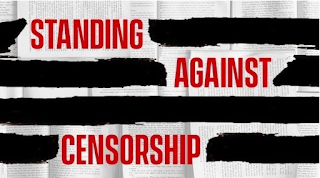
PETITION TO THE TEXAS STATE BOARD OF EDUCATION In Favor of Necessary Truth and Against the Nonsense of Censorship

Friends:

Next Wednesday, the Texas State Board of Education (SBOE) is hearing testimony on Social Studies TEKS standards (Item 10), the very ones that attach to the extremist move against the 1619 Project and Critical Race Theory (CRT) which we know is not actually taught in K-12 schools. Regardless, this law that the SBOE now has to interpret and implement—risks creating a chilling effect for K-12 teachers on the teaching of race in the schools.

Please read this change.org petition below and consider signing it as a statement against censorship that Senate Bill 3—Texas' anti-CRT bill—represents. We support instead teaching that is honest, hopeful, and healing: https://www.change.org/p/in-favor-of-necessary-truth-and-against-the-nonsense-of-censorship?signed=true (Note: copy and paste link in your browser if this link doesn't work.)

Also, if you're in the Austin area next Wednesday when the item will get heard, consider the following additional possible actions

  1. Attend our press conference against censorship at 10:30AM next Wednesday in the inside foyer of the William B. Travis State Office Building—home to the Texas Education Agency—at 1701 North Congress Ave., Austin, Texas, located across the street from the Bullock History Museum Building.
  2. Sign up TODAY to testify on Item 10 of the TSBOE that focuses on the social studies TEKS. Agenda: https://tea.texas.gov/node/358496 

  3.  (Links to an external site.)
    Sign up here TODAY to testify: https://tea.texas.gov/about-tea/leadership/state-board-of-education/sboe-meetings/public-testimony-registration 
Remember that your testimony needs to be focused on the actual item—in this case, Item 10 on which you intend to testify; also when you testify, you only get two minutes to speak. However, the board may ask you questions, extending your time, and you can also always submit written testimony.

The Texas SBOE is a 15-member board and you can locate your SBOE member here. While we keep pushing for Ethnic Studies in the legislature and at the Texas SBOE, regardless of SB3, we desperately need to continue advocating for more diverse representation in our state's K-12 content social studies standards as well as throughout the entire curriculum. Many organizations and coalition members are expected to be in attendance.

See y'all on Wednesday!

-Angela Valenzuela

#PutinizationOfPublicEducation
#SayNoToFascism #Fascism


In Favor of Necessary Truth and Against the Nonsense of Censorship

National Association for Chicana and Chicano Studies Texas Chapter


“Without Freedom of Thought, there can be no such Thing as Wisdom; and no such Thing as public Liberty, without Freedom of Speech.” — Benjamin Franklin

“Restriction of free thought and free speech is the most dangerous of all subversions. It is the one un-American act that could most easily defeat us." — Supreme Court Justice William O. Douglas


A very old enemy—CENSORSHIP—raises its ugly head as educators across the country have been advocating for an expanded public school curriculum that includes under-represented groups like Mexican Americans, African Americans, Indigenous communities, Asian and Pacific Islanders, and women. The Texas Legislature’s House Bill 3979 and Senate Bill 3—the latter signed by the governor—have given new life to CENSORSHIP by questioning the teaching of race in our schools and outlawing the 1619 Project, a reasonable proposal to incorporate a broader understanding of African American history into U.S. history. The Texas State Board of Education (SBOE) will now consider implementing the misdirected will of the Texas Legislature and giving new life to CENSORSHIP.

The problem is that the bills—and now the law—call for CENSORSHIP with the baseless argument of reverse discrimination that accuses our schools of knowingly and purposefully making White youth feel responsible for the racial “sins of their fathers.” The SBOE is now being called to embrace hateful CENSORSHIP and, in the process, discard two of its bedrock principles, that verifiable and trustworthy history serves as the foundation for our state’s standard curriculum; and that teacher training and certification programs as well as tested ethical principles in the profession and the ongoing oversight work of the SBOE assure the proper social-emotional development of all youth. The directive from the Legislature and the Governor’s office, in other words, not only proposes to CENSOR the teaching of subjects related to race; it also questions the integrity of public servants in the SBOE and the good judgment of well over 300,000 professional teachers in Texas.

The members of the SBOE and the general public should consider the legislative intent endorsed by the bills and the governor who signed SB3. According to State Representative Steve Toth, the author of the initial bill, the teaching of race and the 1619 Project cause “hateful classroom activities and a racially discriminatory curriculum” (Toth: Letter to members of the Texas House of Representatives, May 7, 2021). In his letter to fellow legislators, Toth offered as evidence one single children’s book that teachers from the Dallas Highland Park School District supposedly recommended to some of their students. Never mind that the book, Not My Idea; A Book about Whiteness (by Anastasia Higginbotham) represents a single reading recommendation, that an undetermined number—possibly one or a few—made. Whoever these teachers in question are, their recommendation arguably carries more weight than Mr. Toth who found its contents inappropriate for use in Texas classrooms (Consult the following site for a different view of the book, https://www.google.com/search?client=firefox-b-1-d&q=not+my+idea+video).

Mr. Toth adds insult to injury when he makes the unfounded and specious association of a growing rate of suicide among White youth with the teaching of race. He warns that suicide among children between the ages of 10 and 14 has “exploded” from .9 to 2 per hundred thousand between 2010 and 2021. Aside from failing to demonstrate the association of suicides with the teaching of race, Mr. Toth’s strained logic offers no substantiation for his observation, while also callously exploiting a mental health issue for political gain and, no doubt, injuring the sensibilities of Texas families who are indeed suffering such losses.

Although CENSORSHIP is being sold as an act of caring for White youth, it is having the opposite effect. According to the American Medical Association’s Everyday Health,

While parents may be tempted to shelter their children from issues that they find unfavorable or offensive, they may be restricting their child’s ability to grow and learn at the same time. These restrictive world views are the seeds of bigotry, with the implication being that anyone who believes differently from you must be foolish or misinformed. https://www.everydayhealth.com/kids-health/censorship-schools-effects-on-our-children/

Our goal as educators and parents is not to create obstacles to a healthy understanding of the world so that our children can be productive members of society. This is not a partisan issue. According to a CBS News poll, 80% of Americans favor the teaching issues related to race and the country's history of racism. The authors of the subsequent report conclude that “The idea that teaching about race makes students feel guilty about past generations or makes them less racially tolerant today gets little traction with most Americans.”

We are facing a massive shortage of teachers in the classroom, and the specter of censorship and book banning only serves to add undue stress on an already overburdened profession. Moreover, CENSORSHIP spreads fear of others and the banning of books does nothing more than foster anxiety and dread when learning should be purposeful and enjoyable. It is this fear that led the framers of the Constitution to ensure our freedom of speech as a core feature of democratic life.

Since the inception of this country, our very first act was to establish the freedom of speech. The very first Amendment to our Constitution states that,

Congress shall make no law respecting an establishment of religion, or prohibiting the free exercise thereof; or abridging the freedom of speech, or of the press; or the right of the people peaceably to assemble, and to petition the Government for a redress of grievances. https://constitution.congress.gov/constitution/amendment-1/

This cherished core value has been under attack during the past hundred years, but especially in recent times. The recent official view of the AFL-CIO underscores this fact:

The guarantee of access to a free and quality public education should be a right accorded to every child in this country. Securing that guarantee should be a goal and a value that unites all Americans and is supported by our public policies and policymakers at every level. [https://aflcio.org/about/leadership/statements/fighting-importance-public-education-our-children-our-economy-our.]

Clearly, our lawmakers seek to curtail an honest and diverse teaching of history and contemporary society and, in the process, hinder our children’s ability to fully understand and appreciate the complexity of our current world.

In response to the CENSORS, we say, EXPAND KNOWLEDGE, SUPPORT OUR TEACHERS, ENCOURAGE TRUTH-TELLING AND BUILD A BETTER WORLD OF UNDERSTANDING AND AUTHENTIC CARING.


Christopher Carmona, Ph.D.

Emilio Zamora, Ph.D.