Translate

Showing posts with label Ayotzinapa. Show all posts

Monday, May 04, 2015

7 Months After: investigative journalists talk about the Ayotzinapa Case

Excellent, albeit chilling, piece on the disappearance and presumed death of the 43 students from Ayotzinapa.  The critical, indeed radical, education that these students were receiving at their school is a presumed motive.  The question was asked whether legalizing drugs in the U.S. is the antidote to what really is state-sponsored violence in Mexico—not unlike, by the way, Freddie Gray's death in the U.S.  Here's the response:
What seemed to be of greater concern than legalizing drugs, at least from the journalists’ perspective, was ending the military aid that trains soldiers and police how to kill more effectively and provides them with the weapons needed to do so. Hernández believes those weapons and training are not used against drug traffickers or organized crime, but rather against the (innocent) civilian population.
We must work to end the federal Plan Merida initiative that pumps sophisticated weapons of destruction into Mexico.  As U.S. citizens and residents, we, too, need to consider the analogous implications of the enhanced militarization of our nation's police, together with the increased militarization of the U.S.-Mexico border.

-Angela 

#Ayotzinapa #BlackLivesMatter #Mexico #HumanRights #extrajudicialkillings #narcostate #PlanMerida #USA

11146540_1095578887125703_4566748538014530585_n
Graphic for Caravana43 in New York City by JR
Seven months after the attack on Ayotzinapa students, I remembered that unspeakable crime by attending a talk at my local branch library (Temescal) in Oakland. For several hours last Saturday, Anabel Hernández and Steve Fisher talked about their work as investigative journalists. Both are postgraduate fellows at the University of California Berkeley’s School of Journalism in the Investigative Reporting Program. [1] They are currently investigating the Ayotzinapa Case and have written several articles for the Mexican weeklyProceso.
Hernández and Fisher have debunked the federal government’s official version of the Ayotzinapa Case piece by piece. For example, the federal government denied that the Federal Police were involved. Hernández and Fisher obtained a key piece of evidence that told a different story: the September 26, 2014 monitoring record from the Center for Control, Command, Communications and Computation (C4), a computer-monitoring center connected to both state and federal police. That C4 monitoring record showed that the students were monitored from the minute they left Ayotzinapa for Iguala and that their location was reported to the Federal Police.
Perhaps the most interesting part of the government’s official version concerned the alleged “motive” for such a heinous crime: José Luis Abarca, Iguala’s mayor at the time in question, supposedly ordered the attack because he was afraid that the students would disrupt his wife’s presentation of her DIF [2] activities. The official version goes on to say: following the mayor’s orders, municipal police from Iguala and from the neighboring municipality of Cocula attacked and captured the students while the United Warriors (Guerreros Unidos) criminal gang murdered and then incinerated them, without the knowledge of the federal agents and soldiers stationed in the zone.
Hernández made a big point of saying that there is no way the mayor of Iguala and his small municipal police force, even with the aid of Cocula’s municipal police and “Guerreros Unidos,” had the ability to pull off an operation like the disappearance of 43 college students and the attack that preceded it. She stressed that the mayor was a “nobody” and Guerreros Unidos were never even heard of before this tragedy. She emphasized that Iguala was a place where large federal institutions dominated: the federal police, the Army and offices of federal agencies like Governance (SG) and the Attorney General (PGR).
It has been reported in the Mexican press that no murder or kidnapping charges have been brought against Abarca because there is no evidence to support either charge. A member of Caravana43 stated the same thing in a talk at Boalt Hall, the UC Berkeley Law School, and Hernández emphasized it. She added that Abarca’s wife, María de los Ángeles Pineda Villa, had finished her presentation and left the area by the time the student’s reached Iguala. The presentation of Abarca’s wife was not the motive for the attack!
As for the “confessions” from alleged members of Guerreros Unidos, Hernández said that photos of their appearances before a judge showed obvious signs of torture. The significance of this is that their confessions were obtained under torture and, therefore, should not be upheld up in court of law.
So what actually did happen? Who ordered and/or planned the attack and the disappearances and why? That is what Hernández and Fisher continue investigating. They want answers. So far, they have obtained information from the reconstruction of the crime, pieced together by the parents’ lawyers with survivors of the attack, as well as from cell-phone videos taken by survivors. They have obtained government documents and interviewed both survivors and detainees. They stated that they are planning to investigate why the EPR (Ejército Popular Revolucionario, EPR) issued a statement shortly after the attack pointing fingers at the Mexican Army as responsible for the murders and enforced disappearances. A baseless accusation or does the EPR know something? The parents certainly seem to believe that the Army was responsible. At the talk I attended in Berkeley a member of Caravana43 specifically said the parents and survivors believe the Army is responsible.
There was a hint in the first Proceso article by Hernández and Fisher that the leftist politics of the school may have been a motive:
“Moreover, according to the information obtained by Proceso at the Ayotzinapa Teachers College, the attack and disappearance of the students was directed specifically at the institution’s ideological structure and government, because of the 43 disappeared one was part of the Committee of Student Struggle, the maximum organ of the school’s government and 10 (others) were “political activists in formation” with the Political and Ideological Orientation Committee (Comité de Orientación Política e Ideológica, COPI).” [3]
And there was also an implication in the Saturday talk that the government suspected a connection between the students and the EPR or the ERPI [4] and that could have been the government’s motive.
The question and answer session was interesting. One of the questions that is always asked at public discussions involving the Drug War in Mexico is whether legalizing drugs here in the United States would solve the problem of violence in Mexico. What seemed to be of greater concern than legalizing drugs, at least from the journalists’ perspective, was ending the military aid that trains soldiers and police how to kill more effectively and provides them with the weapons needed to do so. Hernández believes those weapons and training are not used against drug traffickers or organized crime, but rather against the (innocent) civilian population.
Why has the Ayotzinapa case won so much support in Mexico and the world? Anabel Hernández answered that question by saying that since the beginning of Mexico’s Drug War, the federal government has generally blamed the victims; in other words, when government security forces (Army, Navy or federal police) cause civilian deaths, the federal government alleges that those civilians were working for drug trafficking gangs or had a family member involved in drug trafficking. She went on to say that the government likewise tried accusing the Ayotzinapa students, but it was so ridiculous that it wasn’t believed. Because the government could not connect these students to organized crime, the students represent the hundreds of thousands of innocent victims of the government’s Drug War and all those citizens that live in fear of the next massacre or disappearance. Thus, the parents of the dead and disappeared students and the survivors of the attack speak with an unprecedented moral authority.
The passion with which Anabel Hernández spoke was contagious and many of those asking questions were also passionate. A final thought I came away with was that Mexico’s Drug War affects everyone, regardless of skin color, economic status or social class.
I also came away with a question I have had for several years and one that was asked by another member of Saturday’s audience: Why isn’t there more of an effort in the U.S. to end the Merida Initiative and stop the supply of weapons to Mexico?
Submitted by Mary Ann Tenuto-Sánchez
——————————————–
[1] For more information about Hernández and Fisher and the program see:http://journalism.berkeley.edu/news/2014/dec/19/irp-fellows-investigate-governments-role-disappear/
[2] DIF – These are initials for the National System for Integral Family Development, a welfare program for families administered through the President, Governor and Mayor’s offices. The wives of the president, governor or mayor are usually the ones responsible for carrying out these responsibilities.
[3] http://www.proceso.com.mx/?p=390560
[4] Ejército Revolucionario del Pueblo Insurgente, an armed group in Guerrero
https://compamanuel.wordpress.com/2015/04/29/7-months-after-investigative-journalists-talk-about-ayotzinapa/


Friday, February 13, 2015

The Disappeared:The story of September 26, 2014, the day 43 Mexican students went missing — and how it might be a turning point for the country

By John Gibler 
By the first days of October, the outdoor basketball court at the Rural Teachers College in Ayotzinapa, a town in the Mexican state of Guerrero, had become an open-air waiting room of despair. Pain emanated like heat. Under the court’s high, corrugated tin roof, the families of 43 missing students gathered to face the hours between search expeditions, protests, and meetings with government officials, human-rights workers, and forensic anthropologists. Assembled in clumps at the court’s edges, sitting on the concrete floor or in plastic folding chairs formed in semicircles, they spoke in hushed tones and kept to themselves. Most had traveled from small, indigenous, campesino communities in Guerrero’s mountainsides. Many had arrived without a change of clothes. They had all come to look for their sons.
On the night of September 26, 2014, in the city of Iguala, 80 miles away, uniformed police ambushed five buses of students from the college and one bus carrying a professional soccer team. Together with three unidentified gunmen, they shot and killed six people, wounded more than 20, and “disappeared” 43 students. One victim’s body was found in a field the next morning. His killers had cut off his face. Soldiers at the 27th Infantry Battalion army base, located less than two miles away and tasked with fighting organized crime, did not intercede.
News of the attack was met initially with muted outrage, mostly because the reports out of Iguala, a highlands city of 110,000, were confusing. For several days, conflicting counts of the missing students circulated. It wasn’t until October 4, when state prosecutors announced that they had uncovered the first in a series of mass graves on the outskirts of Iguala that the national and international media descended on the region. When forensic workers confirmed that the first of the 30 charred human remains were not the missing students, anger and horror became widespread. Throughout October, marches and vigils took place across the country. In Chilpancingo, the Guerrero state capital, Ayotzinapa students smashed windows and set state government buildings on fire. In Iguala, protesters sacked and burned the municipal palace.
Although it was neither an isolated event nor the largest massacre in recent years, what occurred in Iguala has struck at the core of Mexican society. Perhaps it was the scale of the violence, or the sheer brutality, or that the victims were college students, or that the perpetrators were mostly municipal police, or that the mayor of Iguala, his wife, and the police chief were probably behind the attack, or that the state and federal governments were deceptive in their investigation and callous in their treatment of the mothers and fathers of the murdered, wounded, and disappeared. Whatever the cause — and it was likely a combination of all these reasons — it is impossible to overstate the effect of the attacks on the country. Mexicans speak of Iguala as shorthand for collective trauma. Mexico is now a nation in mourning, and at the heart of that grief are those 43 families on the Ayotzinapa basketball court and their agonizing demand: Bring them back alive.
Every year, 140 first-year students arrive at the all-male Raúl Isidro Burgos Rural Teachers College from some of the most economically battered places in the hemisphere, where elementary schools are often single-room, adobe structures without electricity, running water, or indoor plumbing. These are among the most committed youth of their communities for whom the system says there is no place: The ones apparently destined to enter the lowest ranks of the drug-warring armies or to scramble across the Arizona desert and pick bell peppers in California or wash dishes in Chicago. The teachers college, known as Ayotzinapa, offers them a different route: a profession. Ayotzinapa says to them, “You belong here.”
Tuition and board are free. The state government provides a meal budget that amounts to $3.70 per student per day, which usually means a diet of eggs, rice, and beans. The students do all the cleaning, tending, and a large part of the cooking. The first-year dorm rooms are windowless concrete boxes with no furniture. As many as eight sleep to a room, laying out cardboard and blankets for bedding. Some fasten empty milk crates to the walls to use as dressers. 
Rural teachers colleges were created after the Mexican Revolution to promote literacy in the countryside. By the mid-1900s, they numbered as many as 36. In 1969, the federal government closed numerous schools, and now only 14 remain. Ayotzinapa was founded in 1926, and, like all the colleges, has a long tradition of left-wing student organizing. Murals on school buildings depict not only internationally renowned revolutionary figures like Che Guevara and Zapatista rebel Subcomandante Marcos but also ’70s-era guerrilla leaders Lucio Cabañas and Genaro Vázquez, both Ayotzinapa graduates. Several murals memorialize two students who were killed by police in 2011 during a protest demanding an increase in the school’s enrollment and meal budget.
One of the most common “activities,” as the students call their actions, is commandeering buses. Traveling to observe teachers in rural areas is an essential part of the curricula, but the school has never owned many vehicles or had a budget to rent or acquire them. (In early September, the college had only two buses, two vans, and a pickup truck at its disposal.) The students have long secured transportation by heading to nearby bus stations or setting up a highway blockade, boarding a stopped bus, and informing its driver and passengers that the vehicle would be used for “the educational purposes of the Ayotzinapa Teachers College.”
Government officials decry the students’ actions as outright robbery. The students insist they are not thieves and that they always “reach an agreement” that includes payment. The bus drivers don’t abandon the vehicles; sometimes they camp out at the college, with meals provided, for weeks and occasionally months. When the students block highways, they typically do so at tollbooths. Surrounded by the students, drivers are inclined to “donate” the toll to the college’s transportation fund. None of these tactics is unique to Ayotzinapa, but what distinguishes them is that they have become integrated into the basic functioning of the school.
In May 2013, Televisa reporter Adela Micha interviewed Guerrero Governor Ángel Aguirre. She asked him how it was possible that the Ayotzinapa students had made a habitual practice of stealing buses. Aguirre responded that Ayotzinapa “has become a kind of bunker. Neither the federal nor the state governments can access the school. It is a place that has been used by some groups to indoctrinate these youths and cultivate social resentment amongst them.” Micha asked, “Who is indoctrinating them?” Aguirre responded, “A few insomniac guerrillas.”
The plan for September 26 was never Iguala. “We were interested in Chilpo,” Iván Cisneros, one of the second-year students who coordinated the activities that evening, told me, referring to Chilpancingo. “We always go to do our activities in Chilpo, but things had heated up there, and we didn’t want to put people at risk, so we opted to head toward Iguala.”
(The following account of what occurred on the night of September 26 is based on interviews with 14 students who survived the attacks and with more than ten residents, including four journalists, who also witnessed them. The names of the surviving students are pseudonyms.)
In mid-September, a group of second-years expropriated two buses at the Chilpancingo bus station. They needed the vehicles to transport students for three days of classroom observation. Upon their return, they held onto the buses — and the drivers — because many in the school were planning to travel to Mexico City for the October 2 march commemorating what’s considered the most infamous event in modern Mexican history: the 1968 army massacre of hundreds of students. The problem was that Ayotzinapa didn’t have enough buses to take everyone.
To get more buses, student coordinators — almost all second-years — scheduled an action for the evening of Friday, September 26. They decided, though, to avoid Chilpancingo because riot police had been posted at the bus station. Instead, the action would take place in the opposite direction, near Huitzuco, a small town about 70 miles from the school.
Around 5:30 p.m., coordinators filled the two buses with about 80 first-year students and headed out. By all accounts, the mood on the buses was festive. The students had been on campus for about a month. For many, Friday had been the first day of classes, and now they were about to participate in one of the school’s rites of passage, their first action. “We didn’t know what activity we were going to,” a first-year student told me. “They just told us, let’s go.”
They stopped outside of Huitzuco, and the students began to ask for donations and to keep an eye out for buses heading to Chilpancingo. Darkness fell, drivers were hostile, and no buses were coming. Cisneros called one of the other coordinators and said, “This is hopeless. We’re not going to be able to grab anything.”
The coordinators were getting ready to head back to Ayotzinapa when a bus approached. Students came to terms with the driver, who requested that he first drop off his passengers in Iguala, about 20 minutes away. The bus reached the city by 8:00 p.m., and all the passengers disembarked, except the nine students who had commandeered the bus. The driver said he needed authorization before departing for the college. “Wait for just a minute,” he told them.
A few blocks away, the political elite of Iguala and some 4,000 acarreados, people bused in to fill political events, were gathered in the Civic Plaza to hear what was billed as the second annual report of the National System for Integral Family Development’s Iguala office. A regional development agency is hardly one to lavish money on flowers, lighting, sound, food, and bands for an annual report. Journalists who covered the event say that it was a thinly veiled pre-campaign party for the mayor’s wife, María de los Ángeles Pineda, who was hoping to succeed him. Notable among those present was a colonel of the 27th Infantry Battalion.
Elected in 2012, Mayor José Luis Abarca and his wife have long treated Iguala as their fiefdom. In recent years, they have acquired 31 houses and apartments, nine businesses, and 13 jewelry stores. The Mexican Army donated part of the land on which the couple built a $23 million shopping center on the edge of town. At different times, state and federal prosecutors have accused Pineda’s parents and three brothers (two of whom have been murdered) of running an organized crime group known as Guerreros Unidos, or the United Warriors. In Iguala, the widely held view is that the police and the Warriors are synonymous. Pineda once threatened a reporter in public, telling him, “If you keep it up, I’ll cut your ears off.” Abarca has been accused of murdering a local activist named Arturo Hernández Cardona in 2013. A witness testified before federal prosecutors that Abarca shot Cardona in the chest and face. Cardona had been missing for four days when his tortured body was found on the side of the road.
Among those who did not know the accusations against Iguala’s political couple or that they were speaking at a rally a few blocks away were the nine students impatiently waiting for the bus driver to return. They watched him, as he continued to talk with the station’s security guards, who in turn spoke into their phones and radios. Fearing that the driver would refuse to get back on the bus, the students called their compatriots out on the highway, whose response was swift: They gathered rocks, got back on their two buses, and headed for the station.
When they arrived, the students parked the buses on the street and charged the station, their faces covered with T-shirts tied over their heads. The nine waiting students abandoned their bus and, along with the others, commandeered three more. Now aboard five buses, the police nowhere in sight, the students told the drivers to get them out of town as fast as possible. Two buses drove east toward Periférico Sur Avenue, which skirts the center of town and offers a direct route to the highway. The other three buses went north on Galeana Street toward the Civic Plaza. Ignoring the students’ demands to speed up, the lead driver cruised slowly down the street. By this time it was around 9:30 p.m. At the political rally, the talking was over, and the band had started to play.
As the three buses passed the Civic Plaza, police trucks approached from the side, sirens flashing. One truck pulled in front of the first bus, bringing the caravan to a halt. Students jumped off to clear the truck out of the way. More police arrived and started firing in the air. The students of Ayotzinapa presumed that fighting with the police was a kind of cat-and-mouse affair: If you were caught, you would be beaten and arrested, but being gunned down was not part of the game. They rushed forward, pelting the police truck with rocks and forcing its driver to pull back.
“I was in the third bus. When we heard the gunshots, we jumped out into the street,” Ernesto Guerrero, a first-year student, told me. “One of the second-year students said, ‘Don’t be afraid. They are shots in the air.’ But as we approached, we realized they weren’t shooting in the air. They were shooting at the buses and at us. So we decided to defend ourselves. I found four rocks and threw them.”
With the path clear, the three buses drove by the plaza and down Juan N. Álvarez Street, which runs some 15 blocks before it reaches Periférico Norte Avenue, a major thoroughfare. Police trucks pursued, along their side and from behind, firing repeatedly. The buses were a few yards from the intersection with Periférico Norte when a police truck cut them off. This time, the driver abandoned the truck. When students on the lead bus started to push the truck out of the way, police opened fire. A student named Aldo Gutiérrez Solano was shot in the head. In the confusion, the students who were moving the truck almost ran him over. “They finally saw him on the ground, bleeding from the bullet wound in his head,” Edgar Yair, a first-year student, told me. “We wanted to pick him up, but instead of the police letting us lift him, they fired more intensely at us.” At that moment, the students realized, everything changed. The presumed rules disintegrated.
The students ran, some jumping back onto the first bus, others hiding between it and the second bus. More police arrived, firing but not coming closer. Students shouted for an ambulance. When one finally arrived, the police prevented it from approaching, but the ambulance circled back, and paramedics took Solano to the hospital, where he was pronounced brain dead.
Most of the police had massed at the rear, behind the third bus, trapping the students inside. “After awhile, we heard screams,” Jorge Vázquez, a first-year who hid in the back of the lead bus, told me. “I peeked through a window and saw where the police were piling a number of compañeros in the police trucks and taking them away.” During the next 90 minutes, survivors say the police forced the students from the third bus to lie facedown on the street, hands behind their heads, before loading them into the back of police trucks and driving off. These account for 25 to 30 of the students who have not been seen since.
While this attack was occurring, the two buses heading directly out of Iguala became separated. One bus, with 14 students, found itself behind a bus carrying members of the Avispones, Chilpancingo’s third-division soccer team, which had won a game against Iguala earlier that day and was on its way home. “We were at the last overpass,” Alex Rojas, who was among the 14 students, told me, “when we saw beneath us, right beneath us, a bus and a whole lot of police trucks with their mounted machine guns in front of the bus.” This was the fifth bus. The students on it are among the missing.
Seeing the blockade, the driver of Rojas’s bus tried to turn around when police came speeding up and forced him to halt. The students abandoned the bus and began to walk in the opposite direction. Behind them, they heard the police shouting, “Get the fuck out of here or you will be dead!” Pursued by the police, the 14 escaped into a nearby field. In the ensuing three hours, they tried to reach the three buses on Álvarez Street but were prevented by the police, who shot at them and chased them up a hillside, where they hid until morning. Gunmen hunted down the bus carrying the soccer team on the highway to Chilpancingo and killed the driver, a 14-year-old player, and a woman riding in a taxi passing by, and wounded at least nine others.
By 11:30 p.m., the police left the scene of the first attack, after collecting gun shells and wiping blood off the street. The students slowly came out of hiding. They posted lookouts and placed rocks and articles of trash around the gun shells and bloodstains left behind in an effort to protect the crime scene. The inside of the third bus, from which police had taken all the students, was covered in blood. Soon, two vans of students arrived from Ayotzinapa — they had received distress calls during the first moments of the attack — and, bit by bit, a few journalists and residents began to appear.
Near midnight, the journalists, having photographed the bullet holes in the buses and the casings on the street, requested an interview with the Ayotzinapa student committee president who had come in one of the vans. The video cameras and audio recorders had been rolling for about four minutes when bursts of automatic gunfire rang out. “The students we were interviewing gave their names, and we started to hear shots,” one of the journalists told me. “They were machine-gun bursts. We started hearing the whizzing of the bullets and the sounds of windows breaking. So we ran toward the buses.” The reporter left his audio recorder on as he ran. One can hear the volley of gunshots and screams. Two students, Daniel Solís Gallardo and Julio César Ramírez Nava, fell dead in the street.
Coyuco Barrientos, a first-year student, was one of the few who had a look at the gunmen. He said there were three, dressed in black fatigues, wearing face masks, and shooting assault rifles from their waists. “The first killer,” Barrientos told me, “began shooting in the air. Then he started shooting at us. I turned back and could see the sparks from the bullets hitting the pavement. They looked like Christmas firecrackers, and all the sparks were moving toward us. In that instant, we all ran. Then two others appeared and shot at us. These were nonstop machine-gun bursts.” Most of the students were able to take refuge in nearby houses a few blocks away, where the residents turned off the lights and ushered them into backrooms.
Juan Pérez, a first-year who had been shot through the flesh of his knee during the first attack, was running down the street when a classmate next to him fell. He had been shot in the mouth. Several students helped Pérez carry the wounded student. A woman shouted from a second-story window that they could hide in her house, but they pleaded for directions to a hospital. Down the street, she said, they would find a small, private clinic. They banged on the door and windows, and two women let them in. Nearly 25 students and residents rushed in behind. The women lied, saying the clinic was an X-ray laboratory not a hospital. They pleaded with the women to call an ambulance.
After 20 minutes, the students heard a knock on the door. Outside were soldiers from the 27th Infantry Battalion in full uniform and battle gear. When the students opened the door, the soldiers, with their guns raised, shouted for everyone to get on the floor. “They took our phones and photographed us,” Yair told me. “Their comandante said that we didn’t have any reason to be there, that we were seeking our own deaths. We started to tell him that we were students from the teachers college. But he said, no, that for him, we were all just criminals.” Sometime between 12:30 and 1:00 a.m., the director of the clinic arrived, but he refused to care for the injured students. He and the soldiers expelled the students out onto the street. Within a few blocks, a family provided haven, while a small group of students found a taxi to take their wounded schoolmate to a hospital.
Sometime around 1:30 a.m., after passing through a police roadblock on the highway, the first group of reporters from Chilpancingo arrived at the intersection of Periférico Norte and Juan N. Álvarez. They found the bodies of the two dead students, facedown in the street, buses and cars riddled with bullets, and masked soldiers standing on the edge of the scene.
The next morning, students made their way to the state prosecutor’s office in Iguala. They identified 22 police officers who attacked them, talked to human-rights workers, and made a list of the missing. It was then they learned that the students whom the police had forced off the buses never arrived at jail. When they called their cell phones, no one answered. Initially, as many as 57 students were unaccounted for, but then they heard from the 14 students who had escaped to the outskirts of the city.
Around 7 a.m., a photograph began to circulate on social-media sites. The last time anyone had seen Julio César Mondragón Fontes, a first-year student from Mexico City — a rarity at Ayotzinapa — was around midnight on Álvarez. He had been talking to Juan Ramírez, another first-year student, and was frightened. “He said that he would go home the next day,” Ramírez told me, “because he didn’t want to risk his life. He said that he was thinking about his wife and his child, that they were the most important things to him.” Moments later, the three masked gunmen opened fire. In the photograph, Mondragón Fontes’s red shirt was pulled up around his chest, exposing dark bruises ringing his torso. His face and ears had been cut off. His eyes gouged out. His friends identified him by the gray scarf around his neck.
When the reports from Iguala first surfaced, Mexico was supposed to be in the grip of its Moment. Two years into his six-year term, President Enrique Peña Nieto had overseen sweeping education and energy reforms and the arrest of Joaquín “El Chapo” Guzmán, Mexico’s most wanted man. The images of mayhem that defined the previous administration of Felipe Calderón no longer dominated the dailies. Time magazine put Peña Nieto on the cover of its February 2014 issue with the headline “Saving Mexico.” The mid-September news of an army massacre in Tlatlaya led to the arrest of implicated soldiers, something that would not have occurred under Calderón. From a distance, it might have appeared that Mexico was finally emerging from one of its darkest periods.
Over the past eight years, during the so-called “drug war,” some 100,000 Mexicans have been killed and at least 20,000 have been disappeared (human-rights organizations believe the number is higher). These estimates do not include the tens of thousands of Central and South American migrants murdered and disappeared in Mexico during the same period. The roll call of massacres has become numbingly familiar. In September 2008, 24 bodies were found dumped near a park outside of Mexico City; ten were decapitated. In January 2010, gunmen broke into a house party and killed 15 high school and college students in Ciudad Juárez. In August 2010, 72 Central and South American migrants were found slain in a barn in San Fernando, Tamaulipas. None of these massacres led to national protests. The mobilizations following the 2011 murder of seven people in the state of Morelos, one of whom was the son of a respected Catholic poet, voiced the nation’s pain but lost momentum after attempts to negotiate with the federal government foundered.
The official logic of the drug war in Mexico has enabled many to accept as normal murder, massacre, disappearances, torture, and a political apparatus that not only allows these crimes to go unpunished but, in far too many cases, sanctions them. In a 2014 report, Amnesty International found that the use of torture by the Mexican military and police was widespread and routine. Indeed, the very concept of corruption in Mexico has become outmoded: In most of the country, the state forces and “narcos” are fully integrated, and none of the major political parties is exempt. Mexicans have a phrase: “The drop that spilled the glass.” It’s their version of “the straw that broke the camel’s back.” For many, Iguala was the drop that spilled the glass. It obliterated the government’s insistence that in the drug war, a clear distinction exists between good guys and bad, between law and lawlessness.
On September 27, state police arrested the 22 Iguala police officers whom the students had identified. On September 30, Mayor Abarca, his wife, and the police chief went into hiding. President Peña Nieto canceled a previously scheduled trip to Guerrero, citing unfavorable weather conditions but also giving the impression that the killings and disappearances were not his concern. He told a reporter that the “state government must assume its own responsibility to face what’s happening.” The search efforts during the first week involved state police driving groups of parents around Iguala, occasionally stopping to suggest that they knock on a door and ask if their children were hiding there.
Then, on October 4, the state prosecutor announced the discovery of four mass graves in the hills outside of Iguala. An initial excavation revealed an unknown number of charred human remains. The method that led state police to the hidden gravesite was apparently torture. “They squeezed one of those guys,” an officer told me, “and he sang.” The following day, the state prosecutor declared that a man in custody had confessed that he and other drug gang members had murdered, burned, and buried the students in the graves. By this point, the federal government had taken over the investigation, enacting its power to assume jurisdiction over cases involving organized crime, a tacit acknowledgment by the administration that the political fallout could no longer be ignored.
After the announcement about the mass graves, the newly formed parents committee held a press conference at Ayotzinapa and called on the government to change its search. Scores of anguished men and women sat in rows behind three family members they had selected to speak on their behalf. “We know the government and its police took the students and they know where they are,” Manuel Martínez, one of the representatives, told me. “The only thing that will stop our protests is our sons returning home alive.” The parents announced that an independent team of Argentine forensic anthropologists would represent them in the government’s investigation.
Over the next weeks, the parents undertook a series of fierce protests. They and students blocked federal highways, marched through cities, smashed the windows of and set fire to the Guerrero state congress and the governor’s offices. When DNA analyses confirmed that the remains found in the mass graves were not those of the students, the protests spread to cities across the country. On October 23, Governor Aguirre announced his resignation. Six days later, the parents met with President Peña Nieto and told him that if he was incapable of finding their children alive, he should follow Aguirre’s example.
By November, Iguala had become the worst crisis of Peña Nieto’s tenure. From the beginning, the administration had underestimated the depth of anger that Iguala had tapped and found itself, often erratically, trying to control events. On November 4, federal authorities arrested Mayor Abarca and his wife in Mexico City. (The police chief remains a fugitive.) Then, on November 7, Attorney General Jesús Murillo Karam held a press conference, announcing that the government had video-taped confessions from three men purported to be members of Guerreros Unidos.
According to Murillo Karam, on the night of the attacks, police delivered the students to a drug gang who drove them to a trash dump outside of Cocula, a small town a few miles from Iguala. When the three men arrived at the open-pit dump, they discovered that 15 of the students were already dead or unconscious. The men interrogated the rest, asking why the students had come to Iguala. “They said that they had come for Abarca’s wife,” one of the men claimed. The men proceeded to kill the students, pitch their bodies into the dump, and set the bodies on fire, using wood, tires, gas, and diesel to fuel the flames.
After 15 hours, only bone fragments and ash were left. The men gathered the remains in plastic trash bags and emptied all but two into the nearby San Juan River. The other two bags, they said, they threw in unopened. Murillo Karam explained that federal investigators had recovered the two bags and the tiny pieces of bone inside, which would be sent to the University of Innsbruck’s respected DNA laboratory in Austria. Fifty-eight minutes into the press conference, after leading reporters through the confessions, Murillo Karam cut short a reporter’s question by saying, “Ya me cansé” (I’m tired), and soon left.
If the purpose of the press conference was to wrap up the case and to undercut the protests, it had the opposite effect. Murillo Karam’s words soon went viral, becoming the object of social-media mockery. Within hours, Twitter users were flagging #YaMeCansé. Popular responses included: “If you’re tired, leave,” “I’m tired of fear,” and “I’m tired of politicians.”
Murillo Karam’s account raised more questions than it answered. How could three men subdue 43 young activists? How could they burn 43 bodies in the rain? Why were there no traces in the dump of the steel fibers from the tires the killers claimed to use in the fire? Why would the killers carefully dump six bags of human ash into the river but toss in two unopened? How could the students have told the men that their protest was aimed at the mayor’s wife when that had never been part of the action that night? More troubling, why had the government not presented the video-taped confessions of the 22 police officers identified by students as their attackers? Why had the government not released transcripts from police radios and cell phones, including Abarca’s and Pineda’s phones, that evening?
To many observers, the government’s story seemed too neat. Murillo Karam’s version focused so tightly on the three suspected gang members that Abarca, Pineda, and the police force blurred into the background. The contradictions and anomalies in the official account fed well-grounded fears that the federal government was more interested in a cover-up than a rigorous investigation.
Such an investigation would look into numerous reports of how the Iguala police force itself constituted an organized crime gang. According to one local journalist, the municipal police “is a façade. They are not municipal police. They are narcos with police uniforms, weapons, and guns. They are called ‘the belligerents’ (los bélicos). They are police inside the police.” According to a local official, los bélicos “are under the command of Pineda’s brother. They are police with squad cars and everything, but they patrol masked at night grabbing people on the street and giving them an hour to come up with $1,000 or else.” An investigation would examine how Iguala had become a “narco municipality,” in the words of Mario Patrón, director of the Miguel Agustín Pro Juárez Human Rights Center. An investigation would ask how such a narco municipality has been allowed to operate with an army base in town.
The day after the press conference, the parents watched from across the street as Ayotzinapa students threw rocks at the Guerrero state congress’s remaining windows and drove trucks up onto the entryway steps and set the vehicles on fire. Soon after, parents and students embarked in three caravans, traveling across the country to call for support. On November 20, the 104th anniversary of the Mexican Revolution, the caravans convened in Mexico City and led tens of thousands of people into the Zócalo, the city’s main square and the symbolic heart of the nation.
In the days both leading up to and following the march, everywhere one turned Ayotzinapa was there: on newspaper front pages and magazine covers, on radio talk shows, in overheard conversations, in graffiti and stencil art. In the hip Roma neighborhood, there was an untended altar of candles and poster-board signs demanding justice for the 43. In the working-class Obrera neighborhood, there was a large, white wall with 5-foot-tall red-block letters declaring: “Ayotzinapa: Fue el Estado” (Ayotzinapa: It was the State). The sports tabloid Record ran a blacked-out front page with the headline: “#INDIGNATION: Mexico has had enough; Mexico is in mourning.” Figures as diverse as Pope Francis, Mexican soccer star Chicharito, and the Grammy-winning band Calle 13 made statements supporting the families and students. Early one Sunday, some 700 runners organized an impromptu race down the length of Reforma Avenue, all of them wearing the number 043.
On December 6, the Austrian lab confirmed that the identity of one of the bone fragments was a 19-year-old student named Alexander Mora Venancio, one of the missing 43. In a press conference, Murillo Karam summed up the government’s investigation, saying they had arrested 80 suspects including Abarca, Pineda, and more than 40 metropolitan police. “This scientific proof,” he said, “confirms that the remains found at one of the scenes coincide with the evidence in the investigation and with the testimonies of the detained, in the sense that in said location and manner a group of people were deprived of life.”
Murillo Karam’s words confirmed many observers’ worst fears: The government was doing everything it could to close the case. The Argentine forensic team that had been working alongside the government quickly distanced itself from Murillo Karam’s account. “At the moment,” it said in a December 7 press release, “there is not enough scientific certainty or physical evidence to claim that the remains recovered from the San Juan River by authorities … correspond to those removed from the Cocula trash dump in the manner indicated by the accused.”
Which meant that 11 weeks after the attacks, the parents possessed little more information about their sons than what they had been told in the days immediately after the disappearances. This is what they knew. This is what we know. The police, aided by gunmen, killed three people, wounded more than 20, and disappeared 43. Three masked gunmen in civilian clothes returned to the scene of one of the attacks and killed two students and wounded others. Someone murdered and mutilated Julio César Mondragón Fontes. Someone murdered and burned Alexander Mora Venancio. The army forcibly removed wounded students from a private hospital but otherwise did not intercede. Everything else about what happened to the students after the police took them is either rumor, speculation, or based on dubious confessions.
In response to Murillo Karam’s statement, the parents warned of more protests. Many of them learned the news during a march in Mexico City and announced it while standing before Monumento a la Revolución, the towering edifice to the Mexican Revolution. Felipe de la Cruz, one of the fathers, told the crowd: “We will not sit down and cry. We will continue in our struggle to bring back alive the 42.” By then this demand — this heartbreaking and irreproachable demand — had come to speak not only for the disappeared sons of Ayotzinapa but also for the profound yearning to bring Mexico itself back from all the horror.

Monday, November 24, 2014

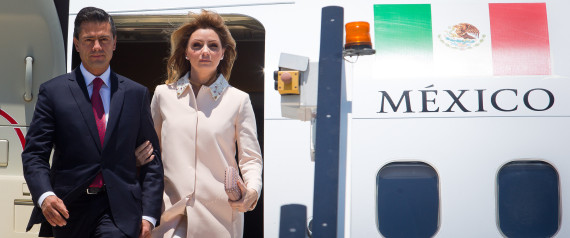
Mexico's President Forced into a Corner

Politically speaking, things are not well either with Mexico or with President Enrique Peña Nieto of Mexico (see Huffington Post piece below).  This is all connects to the 43 "disappeared"—now feared dead—students of Ayotzinapa.  

They were all students of the Raul Isidro Burgos Normal Rural School of Ayotzinapa that you can read about here, although the Spanish Wikipedia version here is more complete.  

According to this piece, titled, "College of missing Mexican students vows to maintain revolutionary zeal, this school is "one of 16 institutions around Mexico that arose following Mexico’s revolution nearly a century ago with the aim of training teachers to raise literacy and standards of living among the rural poor."  

Their most famous alums were Lucio Cabañas and Genaro Vasquez.  From 1962-63, Cabañas was elected Secretary General of Federación de Estudiantes Campesinos Socialistas de México (Federation of Socialistic Farm Worker Students of Mexico). Lucio Cabañas himself is an icon in Mexico similar to Che Guevara and Subcomandante Marcos. 

This interview also provides some interesting detail, too:

Outrage: Drug Cartels Kill 43 Students in Mexico

Eery ending to this piece:

Perhaps he [President Enrique Peña Nieto} should have remembered the words often attributed to Porfirio Díaz, the president who after 30 years in power resigned in 1911 at the start of the revolution: "In Mexico nothing ever happens -- until it happens."

-Angela


Mexico's President Forced into a Corner

Posted: Updated:
NIETO RIVERA
MEXICO CITY -- It was a sweet, prolonged honeymoon. During his first 18 months in office President Enrique Peña Nieto of Mexico signed a political agreement with the country's top three political parties, something unheard of in a country known for its acrimonious, highly partisan politics. He proceeded to get 11 major reforms approved by a divided Congress. Peña Nieto moved Mexico from the crime sections to the business pages of international newspapers. His energy reform opened up Mexico's oil, gas and electricity industries to private investment. The telecommunications reform has tackled powerful local business empires. In his annual state of the union report, on Sept. 1, a confident Peña Nieto claimed that, after a long paralysis, "Mexico [is] on the move."
 
MEXICO WAS MOVING
But the movement has turned into an earthquake. On the evening of Sept. 26 a group of first-year students of the Ayotzinapa Rural Teachers College arrived in Iguala, a city in the southern state of Guerrero. They had been ordered by their school "Struggle Committee," the radical leftist group that rules life at the college, to disrupt a celebration organized by María de los Ángeles Pineda, the wife of Iguala's mayor, José Luis Abarca, who had plans to succeed her husband.
The students had stolen buses. Mayor Abarca ordered the Iguala police to "stop" the students. When the police intercepted them, the students apparently threw stones at the police, who then reportedly responded with live bullets. According to eyewitness accounts, three students were killed right there. Forty-four others were taken away by the police. The others are presumed to have been taken to Cocula, a small town, and handed over to a drug organization known as Guerreros Unidos or United Warriors. The drug traffickers allegedly killed them and burned their bodies. The government claims the mayor and his wife had links with this drug organization.

Mexico is used to violence. President Felipe Calderón, Peña Nieto's predecessor, launched a war against drugs in 2006 and saw an increase in murders from 8 per 100,000 people in 2007 to 24 in 2011. A slow decline in homicides began in 2012. In 2013, the first year of President Peña Nieto's government, there were 19 homicides per 100,000 people. The reduction prompted Peña Nieto to promote the idea that violence was a thing of the past.
No more. The disappearance and apparent murder of the Ayotzinapa students has horrified Mexico and the world. Other acts of violence have also become public knowledge. When searching for the Ayotzinapa students, government investigators uncovered a number of clandestine burial sites in the state of Guerrero. They thought at first they were the Ayotzinapa students, but were proven wrong. Dozens of bodies have been recovered and are now painfully and slowly being identified.

CHE STILL HERO OF THE STUDENTS
The Iguala affair has turned into a political crisis for President Peña Nieto. The Ayotzinapa school is known for its Marxist bent. Instead of having pictures of the nation's heroes, it is decorated with portraits of Che Guevara and Subcomandante Marcos. Its classes are used for indoctrinating students on revolutionary struggle. Lucio Cabañas, a famous guerrilla fighter of the 1970s, was a graduate of the college -- and remains the most admired alumnus.
Dozens of left-wing organizations have now joined the Ayotzinapa Struggle Committee in a movement that openly seeks the resignation of Peña Nieto. This would appear strange. Neither the president nor his party, the Institutional Revolutionary Party, had anything to do with the events in Iguala. The mayor was a member of the moderate leftist Party of the Democratic Revolution.
Peña Nieto's attorney general has pretty much solved the crime, which is unusual in a country with a 98 percent impunity rate, and has detained more than 70 people, including the mayor and his wife. Many of the accused have confessed to the mass kidnapping and the executions of the students. Still, the leaders of the movement claim that this was "a state crime" and thus the head of the Mexican state must resign.
The president's public image has been further tarnished by information that his wife owns a $7 million residential compound in Mexico City's posh Lomas district. Images of the luxurious home have circulated widely. A former successful television soap opera star, Angélica Rivera issued an emotional video explaining that she purchased the property with her own resources. Part of the compound, however, was bought on credit from a government contractor. The first lady claims that she is repaying the loan with interest.
On Nov. 20, the anniversary of the Mexican Revolution, thousands of people demonstrated in the streets of Mexico City demanding Peña Nieto's resignation. At this point there is no indication that the president is even considering the move. His administration is constitutionally scheduled to end in November 2018.
But the government is now afraid to use public force to prevent demonstrators from blockading roads and streets, stealing buses and trucks, ransacking supermarkets and torching government buildings. President Peña Nieto has claimed that his patience has limits, but so far the Ayotzinapa movement appears to have forced him into a corner.

REMEMBERING A VIOLENT REVOLUTION
Many of the demonstrators on Revolution Day threatened President Peña Nieto with a revolution if he does not resign. Paradoxically, Peña Nieto said on that very same day, in a ceremony to commemorate the 1910 Revolution, that violence is not acceptable. Apparently he was not aware of the fact that the Mexican Revolution was a violent affair that cost the lives of perhaps 1 million Mexicans, one tenth of the population at the time. Perhaps he should have remembered the words often attributed to Porfirio Díaz, the president who after 30 years in power resigned in 1911 at the start of the revolution: "In Mexico nothing ever happens -- until it happens."
Sergio Sarmiento is a columnist for the Mexican daily Reforma and a TV and radio commentator.

Sunday, November 16, 2014

Mexico reels, and the U.S. looks away

Check out this Op-Ed piece from the L.A. Times.  There is a "political earthquake" taking place in Mexico right now—at a level that has perhaps not been seen in more than a hundred years. 
 To understand the historical significance -- and the moral and political gravity -- of what is occurring, think of 9/11, of Sandy Hook, of the day JFK was assassinated.
On Thursday, Nov. 20, the civil society movement will celebrate the 104th anniversary of the Mexican Revolution with a national day of marches and work stoppages. Will Americans notice?
 
-Angela

Mexico reels, and the U.S. looks away

The disappearance of 43 rural students has awakened Mexican despair and rage.
The violent disappearance of 43 students from the Ayotzinapa teachers college in Guerrero state has caused a political earthquake the likes of which Mexico has not seen in generations — perhaps even since the revolution of 1910.

That makes it all the more baffling how little attention most people in the U.S. have paid to the unfolding tragedy. To understand the historical significance — and the moral and political gravity — of what is occurring, think of 9/11, of Sandy Hook, of the day JFK was assassinated. Mexico is a nation in shock — horrified, pained, bewildered.
These emotions have been swelling since late September but have become overpowering since Mexican Atty. Gen. Jesus Murillo Karam held a news conference this month detailing the federal government's investigation into the students' disappearance, which relies heavily on testimony from men who allegedly participated in their slayings.

------------
For the record: An earlier version of this article said Jesus Murillo Karam's news conference detailing the investigation was held Nov. 10; it was Nov. 7.

------------
Within hours of the media event, a spontaneous vigil formed at the Angel of Independence, an iconic monument in downtown Mexico City usually reserved for raucous soccer victory parties. The vigil later became a march to Murillo Karam's headquarters. Nationwide there have been dozens of major demonstrations since the students went missing — most of them have been peaceful, but a significant few have turned violent.

Mexico is on the brink, and America is largely oblivious.
Murillo Karam's announcement that the students were almost certainly murdered was a devastating blow to the national psyche. Until then, Mexicans had nurtured their slim hopes that the students were still alive (a hope stoked by the parents of the missing, who have tenaciously agitated on behalf of their children).

Now people are struggling to grasp the enormity of a case that pulls together all the forces that feed the monstrous violence of the drug wars. In light of what happened, it is no longer possible to ignore the close links between virtually all the country's political institutions and organized crime.

Jose Luis Abarca and his wife, Maria de los Angeles Pineda, the then-mayor and first lady of Iguala, the city where the abductions took place, have been dubbed the “imperial couple.” On Sept. 26, authorities say, Pineda was upset that protesting students had commandeered buses to attend a demonstration, worrying that their actions might disrupt an important political event she was headlining. Her husband gave local police the order to make sure that didn't happen. After shooting six students and wounding several others, witnesses said, police handed the remaining 43 over to a local drug gang, Guerreros Unidos, to finish the job. Students who survived the attack said army personnel were in the area and aware of what was happening, yet did nothing to stop the massacre.

The fact that the local and state governments were both run by the leftist opposition Democratic Revolution Party, or PRD, decimated for many the fantasy that the modern Mexican left is a viable alternative to the center and right parties that have held the presidency in recent years. There is a sense that the entire ideological spectrum of the political class is tainted.
Finally, the portrait that emerged of the 43 disappeared — rural first-year teaching students from one of the poorest states in Mexico — made clear that they were not, as former president Felipe Calderon had intimated of the tens of thousands of victims during the early years of the drug war he initiated, corrupt and somehow deserving of their fate. They were simply innocent victims.

It was against this backdrop that Murillo Karam strode to the podium and began his news conference. How could he be perceived as anything other than the embodiment of a thoroughly contaminated state, one in which the narco is the politico is the police is the army? As he laid out the evidence, which included horrific descriptions of the assassins' attempt to leave no evidence, in the eyes of many Mexicans he might as well have been confessing to the crime himself.

A few hours after the news conference, the flames of a Molotov cocktail erupted before the National Palace in the grand Zocalo, or central square, of Mexico City, where a huge sign declared, “Fue el Estado” — “It was the State.” By and large, the leaderless civil society movement has proceeded peacefully, but on occasion, protesters have given the tainted state a dose of what they consider to be its own medicine — the very flames that burned the flesh of the students.

So if there is so much pain and passion in Mexico, our neighbor, a country with which we share a 2,000-mile-long border as well as profound economic and cultural ties, why such American indifference?

It has become something of a truism to point to how deeply the United States is implicated in the drug war. American demand, Mexican supply. American guns, Mexican bloodbath. And yet the merciless violence south of the border — which Mexicans now see as the state mutilating its own people — makes it easy to think of the drug war as Mexico acting out its dark obsessions. What Americans can't face is precisely that we've broken bad together with Mexico: that corruption is a binational affair, extending to rotten apples among our Immigration and Customs Enforcement agents and to an American political class that cynically keeps in place the amoral machinery of the drug war.

Shortly before Murillo Karam's news conference, the parents of the Ayotzinapa students, already informed of what was about to be revealed publicly, exhorted the world, “No nos dejen solos” — “don't leave us alone” — because no one can face such trauma without others. On Thursday, Nov. 20, the civil society movement will celebrate the 104th anniversary of the Mexican Revolution with a national day of marches and work stoppages. Will Americans notice?

Rubén Martínez is a professor of literature and writing at Loyola Marymount University. He is the author, most recently, of "Desert America: A Journey Across Our Most Divided Landscape."
Follow the Opinion section on Twitter @latimesopinion
Copyright © 2014, Los Angeles Times

Thursday, November 13, 2014

Mexico in Crisis: U.S. Drug War Funding, Ayotzinapa and Human Rights Violations

This piece is helpful because of the key policy solution it recommends.  Stop all war-on-drugs-related funding to Mexico that has resulted in 100,000 murdered in drug war-related violence.  End Plan Merida. That's what we can do in our country.  Talk to your Congressional Representatives about this.  Be heard.

-Angela


Mexico in Crisis: U.S. Drug War Funding, Ayotzinapa and Human Rights Violations

By  |  12 / November / 2014
imagesNote: This Fact Sheet, prepared by the CIP Americas Program, was delivered at a Congressional Briefing hosted by the office of Representative Hank Johnson (D-Georgia) on October 29 and co-sponsored by the Center for Economic and Policy Research, the Guatemala Human Rights Commission, Just Associates, CISPES and CIP-Americas. The video, by CEPR, can be viewed here (original Spanish not translated).

Mexico in Crisis: U.S. Drug War Funding, Ayotzinpapa and Human Rights Violations

On Sept. 26, Iguala police opened fire on students from the rural teachers’ college of Ayotzinapa, followed by more attacks throughout the night. Six persons were killed and 43 students are missing. The Ayotzinapa disappearances have triggered massive protests throughout the country.
Mexico is facing its worst political crisis in decades. U.S. policy has contributed to the crisis by funding corrupt security forces responsible for crimes against their own population.
  1. The vast majority of U.S. aid to Mexico is focused on fighting the war on drugs. This aid comes primarily through two channels: the Merida Initiative (MI) administered by the State Department and Department of Defense counternarcotics funds. The Merida Initiative, launched as a three-year plan by the Bush Administration in 2007 and funded in 2008, supports Mexican security forces, primarily in counternarcotics efforts to dismantle drug cartels. The Obama administration extended the MI “indefinitely”.
The Merida Initiative has already cost taxpayers $2.4 billion dollars. The Department of Defense has spent $214.7 million on the Mexican drug war just since 2011, when figures are available. Additional public funds for Mexico’s drug war come through the Department of Justice for extensive Drug Enforcement Administration (DEA) and Alcohol, Tobacco and Firearms (ATF) operations in Mexico. This means that:
The U.S. government has spent approximately $3 billion dollars on the war on drugs in Mexico alone.
What are the results?
* 100,000 murdered in drug war-related violence
* More than 25,000 disappeared, tens of thousands forced to flee their homes, thousands of orphans and incalculable psychological trauma
* Mass graves in Guerrero, Tamaulipas, Chihuahua and other states with unidentified bodies
* Rise in violations of the rights and physical safety of transmigrants in the country
* Rise in violations of the rights of women and sexual crimes, including femicides
* Increase in torture and extrajudicial executions
Mexican security forces routinely violate human rights and murder youth: Two Cases–Tlatlaya, Mexico State and Ayotzinapa, Guerrero
  1. AYOTZINAPA: 6 DEAD AND 43 STUDENTS MISSING IN ATTACK BY POLICE
On September 27, three busloads of students from the Rural Teachers’ College were stopped by local police of Iguala, who opened fire on the students without warning. Hours later, an armed commando shot at the unprotected group of students and there was also an attack on a youth soccer team and taxi on the road nearby. Three students and three other people are dead, and another student is reported brain dead after being shot in the head. Eyewitnesses show police taking the missing students into custody. Testimony from members of the criminal gang Guerreros Unidos picked up by police and video footage indicates that the local police delivered the students to the organized crime group, which says they killed them. The students have not been found, dead or alive, and their families’ still hope for the best but are frustrated by the government’s lack of response and results
Youth, educators, human rights activists and citizens are protesting throughout the nation. They call this a “crime of the state”. Although it is clear that organized crime controlled the Iguala mayor, much of his government and the local police force, the state and federal government’s knowledge of the situation and failure to respond have led to the governor’s resignation under pressure and widespread calls for the president to step down. The search for the students has revealed more than ten clandestine mass graves containing unidentified bodies in the area.
  1. TLATLAYA, ARMY ACCUSED OF EXTRAJUDICIAL EXECUTIONS IN DEATH OF 22 YOUTH
On June 30, the 102 Battalion of the Mexican Army confronted an alleged delinquent gang in San Pedro Limon, municipality of Tlatlaya, Mexico State, leaving 22 young people dead and no casualties on the side of the army. This sparked the interest of the press, which began to investigate the case. Later, local witnesses came forth who stated that the army executed the majority of the youth after they gave themselves up. Witnesses say 21 were executed, while the National Commission on Human Rights recognizes 15 victims with clear signs of execution. The crime scene was altered to reinforce the pretext of an armed confrontation. The unit was under the command of Lt. Ezequiel Rodríguez Martínez.
General José Luis Sánchez León, commander of the 22nd Military Zone responsible for Tlatlaya, was subsequently removed from his post without explanation. One officer and seven soldiers are under arrest and currently being investigated. A Mexican Congressional Committee has been formed to investigate. The State Department confirms that 5 members of the 102nd Battalion were trained by U.S. agencies, but neither government has released names to indicate whether those trained in the U.S. are directly implicated in the killings.
These cases are the most recent and among the most egregious cases of crimes by Mexican security forces, but they are not the only ones. U.S. aid to these forces, far from improving the situation is increasing abuses. It should be halted immediately.

Resources:
Comisión Nacional de Derechos Humanos, SOBRE LOS HECHOS OCURRIDOS EL 30 DE JUNIO DE 2014 EN CUADRILLA NUEVA, COMUNIDAD SAN PEDRO LIMÓN, MUNICIPIO DE TLATLAYA, ESTADO DE MÉXICO Oct. 21, 2014
http://www.cndh.org.mx/sites/all/fuentes/documentos/Recomendaciones/2014/REC_2014_051.pdf