Translate

Showing posts with label Academia Cuauhtli. Show all posts

Monday, June 30, 2025

Fund the Future: Support Academia Cuauhtli’s Growth at the ESB-MACC

Friends,

We are gathering signatures to show broad community support for continued funding—and future expansion—of Academia Cuauhtli, our beloved Saturday school in Austin, Texas. The signed letter will go to Mayor Kirk Watson.

With Phase B of the Emma S. Barrientos Mexican American Cultural Center (our physical home) scheduled for completion this November, we’re thrilled to return—and to grow. 

Thanks to our successful advocacy several years ago, we secured four classrooms with the intention of expanding our program to serve even more students as we enter our 12th year as a community-based initiative. However, in order for us to realize that vision, we need your support.

Please add your name to this community letter affirming your support: https://forms.gle/zBNACL1TJw5sahHN9

Your voice helps uplift our students, families, and educators. The letter with signatures will go to Austin Mayor Kirk Watson.

Thanks to Dr. Maria del Carmen Unda for taking the lead on this support letter.

Mil gracias for standing with us.

In community,

Angela Valenzuela

A Community Letter of Support for Academia Cuauhtli
Link to view signatures on this public better: https://tinyurl.com/SupportAcademiaCuauhtli


webpage: https://academiacuauhtli.com/
research: https://academiacuauhtli.com/publications/


For reference: EMMA S. BARRIENTOS MEXICAN AMERICAN CULTURAL CENTER ADVISORY BOARD RECOMMENDATION 20250305-6 https://services.austintexas.gov/edims/document.cfm?id=447154


Dear Mayor Kirk Watson and Austin City Council Members:

We write to you as parents, teachers, alumni, and community members who have directly and indirectly benefited from and deeply believe in the mission of Academia Cuauhtli (pronounced KWOWT-lee, meaning Eagle Academy). For more than a decade, this community-rooted program has transformed the educational experiences of hundreds of emergent bilingual students across Austin. We thank you for your past support and endorsement of our work. Today, we respectfully urge you to fully fund Academia Cuauhtli’s FY 2025–2026 $106,000 request put forward by the ESB-MACC for operations, alongside additional funding support for the establishment of a full-time Culture and Arts Education Supervisor position.

Located at the Emma S. Barrientos Mexican American Cultural Center (ESB-MACC), Academia Cuauhtli is more than a Saturday school—it is a lifeline. It provides free, high-quality, culturally sustaining education to our children in Spanish, English, and Nahuatl. It connects us as families, uplifts our heritage, and helps our children develop pride in who they are. The program has shown us that culturally relevant teaching is not only possible but powerful. Our children come home speaking about Tejano history, environmental justice, and ancestral knowledge—and they are excited to learn.

The program has supported over 800 AISD students, trained over 250 teachers, and generated more than 18 original curricular units. It has also helped parents access resources during the pandemic and created leadership opportunities for our youth. It has also become a pathway to master’s and doctoral degrees in educational careers at the University of Texas at Austin with whom we also partnered. Though we are also partnered with the Austin Independent School District, we lament that not a single dollar will go toward Academia Cuauhtli this coming school year.

Our community-driven, volunteer-based model ensures that every dollar goes directly into instruction, mentorship, and support for our families. However, we cannot sustain neither this impact nor our anticipated growth as we move back into our home at the ESB-MACC this November without your support. A full-time coordinator is urgently needed to manage and grow the program. For years, this work has been carried on the shoulders of volunteers and part-time staff. As the needs of our community grow, so must our ability to meet them. The funding request—part of the overall ESB-MACC budget—is modest compared to the transformational impact that Academia Cuauhtli has in our lives.

We ask you to stand with our teachers, children, families, and our community per the undersigned individuals and organizations. Please vote to approve both the ESB-MACC operations request as part of their budget request to the City of Austin for the $106,000 alongside additional funding support for the establishment of a full-time supervisor position. Investing in Academia Cuauhtli is an investment in equity, education, and community thriving which is so needed in these difficult times.

Sincerely,

Dr. Maria del Carmen Unda


Please Share widely !
View signatures on public letter: https://tinyurl.com/SupportAcademiaCuauhtli
Link to sign: https://forms.gle/zBNACL1TJw5sahHN9



Wednesday, September 18, 2024

Xinachtli Pedagogy, Thinking Outside of the Box, and Addressing the Water Crisis in Texas

Friends:

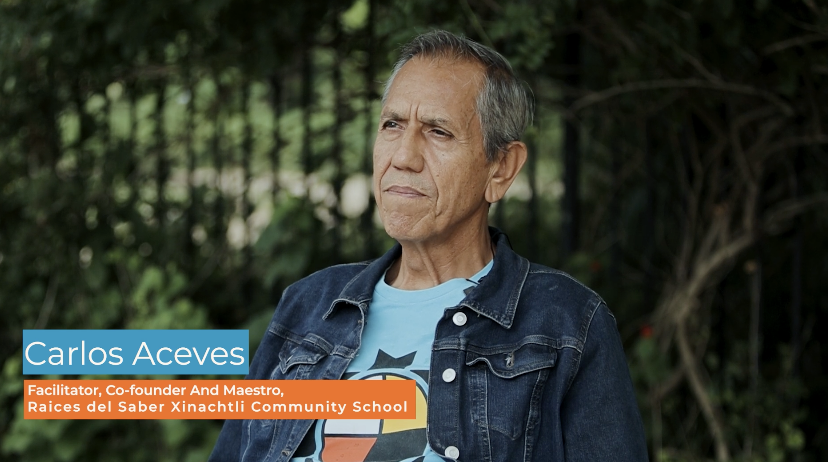
Xinachtli means "seed" in Nahuatl and as described in this wonderful video as
 a way of thinking "outside the box" of tradition, mainstream schooling in the U.S. Maestro Carlos Aceves shares, an Indigenous elementary school teacher his view that children do get a lot of information in schools, but they're objectified through processes and their corollary logics like high-stakes testing, tracking, drill and kill curriculum and the like, that reduce their sense of who they are and accordingly, their possibilities.

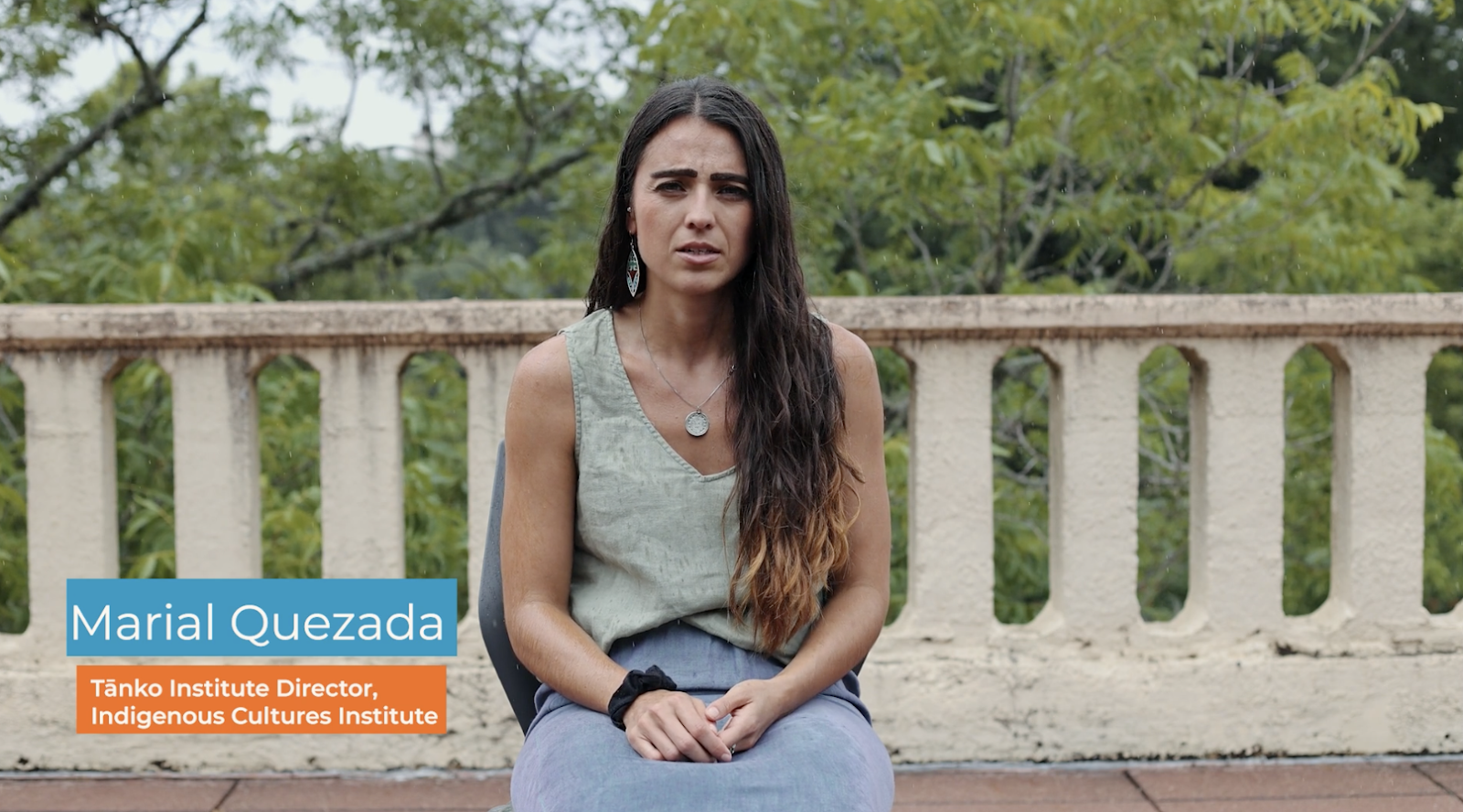
Indigenous Cultures Institute (ICI) Board of Elders Dr. Mario Garza and Maria Rocha and Director Marial Quezada, also a doctoral student in Cultural Studies at UT-Austin are featured in this film as the ICI regularly invites Maestro Aceves, who lives in El Paso, to provide instruction at the ICI's annual Tanko Institute both of which are in San Marcos, Texas. Our school, Academia Cuauhtli is partnered with the ICI with our teachers attending the Tanko Institute and a number engaged in Indigenous pedagogy. I see some of them in the video. 😊 Academia Cuauhtli students also annually attend the ICI's Sacred Springs powwow.

I recently corresponded with Maestro Aceves when I received one of his emails that expressed:

Restore the ceremonies, renew the covenants, return to the sacred places, and follow the story in the Sky.”

 As Natural Peoples we look to Creation for guidance. We were given ceremonies as textbooks, we made agreements with Natural Powers so that we can continue surviving as a people, we travel to special places of Creation on Earth to make offerings in appreciation of Life, and we learn the cycles above as patterns for our Natural Way of Life.

"Ceremonies as textbooks." These words touch me deeply. There is such beauty in his words that encourages us to think of the natural world differently. 

For Texans, this should be an urgent matter as according to a recent Instagram post by Progress Texas, our state is running out of water. Newsweek also has a recent story on this last week on September 11. It's shocking to learn from Agriculture Commissioner Sid Miller, "We lose about a farm a week in Texas, but it's 700 years before we run out of land, the limiting factor is water." Okay...  That's not a small "but" to me. In any case, you get the point.

What should also concern us is that recent statistics show that people from around the country are flocking to Texas because it's an affordable state. Long term, this places stress on our state's water supply that is additionally jeopardized by fracking. 

To combat all of this, we absolutely do need to address policy related to natural resources, but we also need a different kind of consciousness and permission structure where we are not estranged from the natural world but rather see ourselves as a part of it, even caught up with it as a form of destiny. If we change, the world changes. It's not either-or, but both-and. After all, it doesn't make sense to change policies when the thinking that got us to where we are remains in place.

This is what we are collectively about, Academia Cuauhtli, the ICI, the Tanko
Institute, and so many, if not all of us, in the Ethnic Studies Movement. Education is always about changing consciousness. Unfortunately, mainstream schooling with its colonial logics is often about reducing children to a number on a piece of paper—and not just the children, but their teachers and schools. This testing regime has been so terribly harmful. What is there not to love about spending time in nature and taking time to learn, not just from teachers, but from the natural world itself?  

For a paper I'm writing that is focused on our work at Academia Cuauhtli where I cite Maestro Aceves, I asked him how he identifies and this is what he shared,

Carlos Aceves Yolohuitzcalotl

Cihuacoatl for Kalpulli Tlalteca People of the Earth Community.

bilingual elementary school teacher

I have seen Maestro Aceves in action. He is the consummate Indigenous bilingual elementary school teacher. I would love to be in his elementary school classroom every single day, were it possible. 

Thank you, Maestro Aceves and thank you ICI for our partnership that from our own Xinachtli moment has grown and blossomed exquisitely over the years. 

-Angela Valenzuela


Tānko Institute || Xinachtli Pedagogy for Educators

Monday, January 01, 2024

Harvard Research Reveals The #1 Key To Living Longer And Happier—Wishing all a Happy 2024!

 Friends,

Happy New Year! May all have a wondrous, happy, and healthy year.  This report on this longitudinal study on happiness out of Harvard University strikes me as positive and helpful. It would be great if K-12 schools could be happy places, too, where youth experience an array of enriching, encouraging friendships and experiences.

Still, it's noteworthy that while happiness is often elusive to achieve, finding it can be as simple as it is profound. 

Many of you know of our work in the East Austin community (see earlier post) involving Academia Cuauhtli. It clearly requires of us all a significant amount of work and commitment by very busy people and mostly on a volunteer basis. 

We work closely with mostly elementary school youth and parents from 6 AISD schools involving numerous tasks ranging from weekly organizing meetings, developing curriculum, fundraising, data gathering, report writing, community and professional presentations, organizing breakfasts, field trips, bus transportation, advocacy, relationship building, strengthening our community partnerships, building new ones, and the like. It's a bit dizzying to ponder. 

Academia Cuauhtli is also our research site with several dissertations and a growing number of research publications emanating from this work, with several studies currently in process (see list of publications from our website). It is a fount of intellectual and theoretical ideas that blurs the lines between so-called "service" and "research," which amount to a false dichotomy that can ironically keep faculty members like myself from ever engaging in community-based research.

Hands down, the payback is personal, professional, and organizational growth and development, especially when facing challenges. This mix amounts to a deep sense of happiness and well-being born out of doing the right thing in and with our community that gives us all back as much as we give them. Throughout, our relationships have deepened. This is not only gratifying but also energizing and life-extending. 

The only thing I might add is that all relationships require work, some more than others. Still, there aren't any shortcuts as all of this takes time and investment. The proof is in the love, respect, and admiration that we hold toward one another, the beauty we make, and the stories and memories that we share, particularly of the children in our care.

Here's wishing everyone a Happy 2024!

-Angela Valenzuela


The longest study ever conducted on human happiness has revealed some fascinating insights about what really leads to health and fulfillment over a lifetime. I had the opportunity to find out more from the director of the 80-year Harvard Study of Adult Development, Dr. Robert Waldinger, as Chester Elton and I interviewed Bob on the Anxiety at Work podcast.

Dr. Waldinger is professor of psychiatry at Harvard Medical School and author of the important new book “The Good Life.” For more than 80 years, researchers like Bob have tracked the lives of people as part of this study. The project has followed participants from adolescence into old age, collecting data on their physical and mental health, jobs, relationships, and more.

Here’s what Dr. Waldinger says are foundational elements leading to happiness and a good, long life:

Relationships are Key to Health and Happiness

The #1 insight from the Harvard study is that close relationships and social connections are crucial for our well-being as we age. Having supportive and nurturing relationships is a buffer against life’s stresses and protects overall health. According to Dr. Waldinger, good relationships "keep us healthier and happier." People with more robust social connections showed lower rates of diabetes, arthritis, cognitive decline, and other chronic conditions. The researchers hypothesize that close relationships act as "stress regulators"—they help our bodies calm down and return to equilibrium after being revved up by challenging events.

Don't Just Let Friendships Happen, Be Proactive

More than 40 percent of adults say they feel lonely some or all of the time. The participants who actively cultivated relationships over their lifetimes reaped rewards. But they didn’t just let things happen. They made plans with friends, reached out to people, and joined community and social groups. These folks weren’t just posting online and hoping for “likes”; as Dr. Waldinger observed, "The people who were most successful at this didn’t just leave it to chance." He noted that they intentionally nurtured their in-person social connections.

Marriage Has Its Ups and Downs But Provides Lifelong Support

The study found that marital satisfaction was important to long-term happiness but does often follow a U-shaped curve over time. People are happiest when first getting together, and then satisfaction declines when children come along, rebounds when kids leave home, and drops again if adult children return to live at home. Overall, though, having a supportive spouse through life’s journey provided tangible mental and physical health benefits. Marriage offers partners emotional support through stressful events and can help build resilience.

Take Care of Your Body for the Long Haul

The Harvard study found that participants who exercised regularly and maintained their physical health throughout their lives were more able to thrive well into old age. One of the centenarians profiled in the research offered this advice: "Take care of your body like you're going to need it for 100 years."

Other researchers have come to similar conclusions about the essential role relationships play in wellbeing. Social neuroscientist John Cacioppo found that loneliness activates the body’s stress response and can lead to chronic inflammation. His research highlights the balancing role relationships play in regulating our nervous system. Likewise, behavioral economist Arthur Brooks has studied the intersection of happiness, relationships, and purpose. He validates the Harvard study’s finding that "taking care of our relationships" is critical, and that "our connections with others are nourishment for body, mind and soul."

As a practicing Zen Master, Dr. Waldinger brings a unique perspective on the role relationships play in wellbeing. He noted that his Zen training, which focuses on studying the self and seeking enlightenment, offers a complementary window into human experience alongside his Harvard research that has examined the lives of others. He summarizes his findings in this way: "Loneliness kills. Social connections are as important to our long-term health as diet and exercise."

While many ingredients go into a fulfilling life, the Harvard study clarifies that relationships are foundational. So, who have you connected with today?

Follow me on LinkedInCheck out my website

Sunday, February 21, 2021

***Academia Cuauhtli Winter Storm Emergency Fundraiser***

As mentioned in yesterday's post, he past few days on the heels of Texas' winter storm, our Academia Cuauhtli (AC) program coordinators, Itzel Garcia and Alejandro Quiahuihtl Martinez, have been calling our AC families representing the 40 students that we serve to see how they are doing. The majority are working class immigrant students living in East Austin who bore the brunt of this storm with few resources.

Specifically, several of our parents have mentioned that they have limited supplies of food and water. Additionally, a large portion of them have mentioned that due to inclement weather, they have not been able to work, such that they are struggling to pay their upcoming rent. 

Thanks to many of you who made donations over the holidays, we were able to donate the $2,500.00 we raised to our families in $50.00 amounts. Today, we ask for additional help so that we can address this big crisis situation they are currently in. 

It is my understanding rent is roughly $500 per month, per family, and possibly more. Today, we are reaching out to donate funds for our families. Thanks to Education Policy and Planning doctoral student, Maria Unda and Texas State University undergraduate, Monica Villafuerte who moved on this right away, we have already raised over $2,000.00, as we have a list of 13 families that are in need of immediate assistance.  

Any amount is greatly appreciated and will go a long way toward helping among the most marginal families in our Austin community. 

Thank you! Gracias!

-Angela Valenzuela


Friday, October 02, 2020

Inaugural Essay to a Blog Column authored by Itzel G. Garcia titled, "Weaving Healing in Spaces of Latinx Vulnerability"

It gives me great pleasure to introduce Itzel Guadalupe Garcia, 25 years old, an original thinker and gifted writer, published author, educator, and healer from the U.S.-Mexico border of South Texas and Tamaulipas. She has a B.A. in Journalism from the University of Texas at Austin and currently works as program coordinator for Academia Cuauhtli/Cuauhtli Academy, a language and cultural revitalization Saturday school in Austin, Texas.

Itzel has performed her poetry, short stories, and astrological-spiritual theories around academic and community spaces from Austin to Corpus Christi, to the U.S.-Mexico border, and Mexico City. In the current context of COVID and pejorative anti-Latina/o  rhetoric, policies, and politics, this column helps to fulfill her dream of weaving healing in spaces of Latinx vulnerability. 

Hence the title of her series to this blog is "Weaving Healing in Spaces of Latinx Vulnerability." Her introductory essay below is titled, "A Historical Moment of Dream Remembering: Returning Education to Rootedness." 

I am confident that you will enjoy her writings as much as we all do at Academia Cuauhtli.  Bienvenida!  Welcome, Itzel! Your soulful, powerful voice, poetry, and prose are much needed for our Latinx youth, and youth of color, generally, in these trying times.

-Angela Valenzuela

A Historical Moment of Dream Remembering: Returning Education to Rootedness


by


Itzel Guadalupe Garcia


      In the midst of the 2020 COVID19 pandemic, I return to the border to be with my family after they were violently sacked from our home in Ejido San Francisco, an agricultural community in Tamaulipas, Mexico. This is my historical moment as the U.S. is also impacted by the virus, by climate change, government, police and structural racist violence. Returning to Tamaulipas and being able to help my family after criminal violence returns me to my purpose as an educator, writer and healer. 

      I define historical moment as dualistic and holistic. Dualistic because it brings both death and creation. And holistic because it is frozen in time, collectively felt, experienced, perceived, analyzed, and processed by everyone and is thusly, irrevocable, altering the course of history. 

    In its life-creating phase, a historical moment has the power to influence the patterns of an era. It is historical because it exists in the Future; that is we have the capacity to accept change and let it shape the future in powerful ways. History is given a human status of remembering within the collective stories we are repeating to each other every day, they affect not only the core values of a society and groups of people, but also manifestations, creations by the individual and collective. The intentions are monumental. History is the creation of a collective dream. 

      So what dream are we dreaming? But one of Death. A dream where George Floyd is murdered, where Breonna Taylor is not only murdered but completely deceived from justice even after death, where immigrant women experience hysterectomies in the hands of ICE, a dream where the system is no longer sustainable emotionally, environmentally, financially, or psychologically. In its “deathening” phases, destruction—facing up to loss and a virus that is a reminiscent of the continuous relationship to ego and fear we experience in a capitalistic community, and social-institutional structures. At this point, element and individual have bounded with all that is public and political: environment and politics, both falling, both incinerating. 

      Despite this, within her own creation of life, death leads to rebirth, to creativity, and to life. This essay argues the potential to shift the historical paradigm through redefining our own historical moment, our roots, home and personal history. 

      I grew up in the elements, in la tierra, la siembra, el rio y el sol. Every morning, we would get up at sunrise. The sun would rise by our bedroom window where I slept with my grandmother and grandfather and set in our garden. The Moon would make her journey contrary to the Sun, starting from our garden and ending in our sleep. I knew the changes of the seasons meant different cycles for la siembra, for the crops, for the labor, where my great-grandfather and my grandfather would grow maiz, sorgo and calabazas. This was the wisdom that surrounded and educated who I was, Itzel. 

      As a young girl empath, I loved my community and the rhythms of nature and nurturing my community was teaching me. But within my community, I observed a need, which developed into a dream. I saw my community needed to resources and therefore needed a good school. There was a school. And I loved it in theory. I loved my teachers and wrote them letters. I occupied the first place in my class, and often held the Mexican flag when we practiced la escolta. I remember playing teacher under my grandmother’s orange trees. 

      But I wasn’t interested in math, and history seemed unsatisfactory. I was interested in creating stories, drawing paper goddesses and revealing in the imaginary senses. I realized that a school where children could be free and happy would radically transform my community.

      With time and through oppression, I forgot my dream. It remained hidden from me until adulthood. My desires had transformed as I moved through an American capitalist-education. I went from loving my community school, to a gringo fourth-grade class where I felt different from other children, inferior for not speaking English. I didn’t belong; so I competed twice as hard. 

      Until I found myself in Austin, studying journalism because I was discouraged from everything that gave me pleasure: Literature, Law, Justice. I graduated without pleasure, I didn’t even attend my own graduation. I was aware I was the first person and woman from my family who had graduated from a university, but I did not care. I was busy pursuing a romantic relationship that broke all of my senses, my mind, my spirit. 

      It wasn’t until 2016, that I applied for a position as a teaching artist with Creative Action, an after-school, non-profit organization. I didn’t know what else to do with my diploma. And this was like giving myself permission to learn what it is I had forgotten. That I loved school and childhood and creativity. It also didn’t matter that I had a diploma. I didn’t want to be anything in the world—but a teaching artist. I didn’t know what a teaching artist needed to be. 

      Teaching Artist was the first evolution of my childhood dream, but I would quickly move into further understanding of myself with Academia Cuauhtli. In the beginning of 2020, I was hired as program coordinator for Academia Cuauhtli—this was the official start of my historical moment.

      Cuauhtli would teach me that the roles of teachers, families, academics, community leaders, children and indigenous elders could all bloom every Saturday, a grand ritual being passed down. Every Saturday a historical moment for me. Every Saturday, the Sun rising to noon, the Eagle flying, gaining perspective, the ancestor returning with memories and gifts of the past, of what could be brought back from the dead. 

      This idea—that the dead, children and memory were intercepted had appeared in one of my dreams. In my dream, I was a teacher for a group of students. One of them asked me, “Ms. Itzel, why do you teach us so much about the dead?” And I replied that children were the bridge between the dead and the living. They are the many histories transmuting, remembering, planting seeds and intentions for the future of the ancestors, of the world. I was teaching children how to recover their ancestral memory by communicating with the dead/ dead energies. 

      At a time, where COVID19 has killed millions of people all over the world, and affected families, communities, nations, things I’m not even accounting for, but especially the way COVID19 has affected the Earth and the ancestors, too—there is a need that will become a dream. The need to grief, to learn to change, to learn that death can be symbol for outer and inner death. 

      Cuauhtli has especially taught me the tools of empowerment that can be replicated to foster space and nurturing to our past ancestors: radical and conscious education. Not just for children—but for the community. The role of the teacher becomes overburdened if the parents/family/society of the child are teaching the opposite values and opinions. Similarly, school becomes oppressive when it is not expressing the familial and cultural values of the student.  When these two forces contradict each other, when education no longer services the Future, it has lost its path. 

      In the year 2020, returning home is both holistic and dualistic, between the inner self and our outer environment, community and political structure. I offer these childhood dreams and ideas that have remained dormant within me for years. There is hope in transforming education to service not only the minds of children, but the past and history through the homes and families of our children. I don’t just think this is symbolism, but the radical notion that life may exist for 500 years more and what will survive should be the best of us so that it has the most hopeful potential of thriving.