Translate

Showing posts with label Iran. Show all posts

Thursday, June 19, 2025

"Are We Heading Toward War? A Growing Fear We Must Name," by Angela Valenzuela, Ph.D.

Are We Heading Toward War? A Growing Fear We Must Name

by 

Angela Valenzuela, Ph.D.

I write today with a heavy heart and a growing sense of dread. It’s a feeling I have not been able to shake for weeks now. With each news headline, each cryptic statement, and each political maneuver, I fear that our country is inching closer to war.

I am fully aware that the decision to go to war lies, constitutionally, with Congress. This is what our founding documents stipulate. This is what checks and balances are supposed to ensure. But I also fear we are in a moment where these democratic norms are being deliberately eroded—where precedent, law, and even public sentiment are too easily cast aside.

And yes, I fear that Donald Trump will not honor the constitutional process. He has made clear through both word and action that he does not feel beholden to the same limits and deliberations that define a functioning democracy. He has already said he would be a "dictator on day one." And when it comes to war—where the stakes are human lives, international order, and the future of our children—such authoritarian impulses should terrify us all.

A recent segment from The Daily Show with Jon Stewart was most definitely cathartic. I encourage you to watch it. He captures, with precision, the absurdity and danger of this political moment. His satire is a sharp political commentary that exposes the contradictions and rhetorical manipulations surrounding the current escalation. I love how he captures my feelings. 

I do not, as yet, see any legitimate provocation or evidence to justify war. And that is precisely what makes this moment so dangerous. History has shown us how easily wars can be waged under false pretenses. 

The 2003 invasion of Iraq, for instance, was premised on the existence of weapons of mass destruction that were never found. Despite repeated claims by President George W. Bush and Secretary of State Condoleezza Rice that Iraq posed an imminent threat—claims later proven to be misleading or outright false—Congress voted to authorize military force.

Most memorable was Rice's infamous warning in 2002, with words designed to instill fear and justify an unnecessary war:

“We don't want the smoking gun to be a mushroom cloud” (Rice, 2002).

Independent investigations, including the U.S. Senate Select Committee on Intelligence (2004), later concluded that key claims about Iraq’s weapons programs were unsupported by the available intelligence (also see Jackson, 2005). The report states:

“The intelligence failures leading up to the war in Iraq were serious and pervasive. So were the failures prior to the September 11 attacks. While the investigations will continue, reform must begin. There can be no delay when the safety and security of America and Americans are at stake” (U.S. Senate Select Committee on Intelligence, 2004, p. 510).

The results were hundreds of thousands dead, a destabilized Middle East, and a deep wound to America’s credibility in the world.

This isn’t just about politics. It’s about our very humanity. War is not an abstract concept. It is not a campaign strategy, a spectacle, or a “theater.” War devastates. It destroys homes, families, futures. And it leaves wounds, seen and unseen, that last for generations.

Some may say I’m being alarmist. But history has shown us what happens when we normalize lawlessness and look the other way. We cannot afford that complacency now. We must speak up, we must organize, and we must hold accountable anyone who threatens to drag our country—and the world—into another reckless and unnecessary war. 

demandpeace.org
The future is not written. But silence, indifference, and disillusionment help write the worst chapters. Let us choose instead to continue raising our voices, to demand peace, and to protect the fragile promise of democracy—while we still can.

One good thing we can all do today is reach out to whoever represents us in Congress and let them know how we feel, while there is still time. We must also demand that our media institutions not function as megaphones for power and instead rigorously press our elected officials for verifiable evidence of an imminent threat. Anything less is complicity in the manufacture of war.

References

Jackson, B. (2005, September 26). Anti-war ad says Bush, Cheney, Rumsfeld & Rice “lied” about Iraq: We find some subtle word-twisting, and place the claims in context. FactCheck.org. https://www.factcheck.org/2005/09/anti-war-ad-says-bush-cheney-rumsfeld/

New York Times. (2025, June 19). Trump Will Decide on Iran Attack ‘in the Next Two Weeks,’ White House Says, New York Times. https://www.nytimes.com/live/2025/06/19/world/iran-israel-trump-news

Rice, C. (2002, September 8). Interview on CNN’s Late Edition with Wolf Blitzer. https://transcripts.cnn.com/show/le/date/2002-09-08/segment/00

The Daily Show. (2024, June 16). Jon Stewart on Israel’s "urgent" Iran strike, Minnesota murders & MAGA’s blame game [Video]. YouTube. https://www.youtube.com/watch?v=3Q08a7BI9XI&t=118s

U.S. Senate Select Committee on Intelligence. (2004). Report on the U.S. Intelligence Community’s Prewar Intelligence Assessments on Iraq.
https://www.intelligence.senate.gov/sites/default/files/publications/108301.pdf

Wednesday, January 08, 2020

[Free PDF Download] "TEACHING ABOUT THE WARS," edited by Jody Sokolower in Rethinking Schools

Friends,

I am an author and fan of RETHINKING SCHOOLS.  Located in Milwaukee, Wisconsin, they produce a lot of first-rate research, content, and classroom curriculum and instructional approaches to the teaching of a number important and timely topics—like Ethnic Studies, the environment, and war.  These materials are great for the college classroom, as well.  

In any case, they are generously making available a book titled, "Teaching About the Wars," appropriate to these days of violence and turmoil.  Read the write-up below and consider downloading this volume for free.  

Also consider making a donation so that the important work of this organization can continue.

-Angela Valenzuela


Dear Rethinking Schools friends,

The Trump nightmare continues – this last week with the immoral, illegal, and reckless assassination of the Iranian military leader, Qassem Soleimani. As educators, we are left to help our students make sense of a world that just became more dangerous.

Seven years ago, we published Teaching About the Wars, a collection of Rethinking Schools teaching articles, lesson plans, and essays to help teachers make sense of the conflicts roiling the Middle East. Today, in recognition of how urgent it is to help students come to grips with the history of U.S. military intervention in that region, we offer Rethinking Schools readers a free PDF download of Teaching About the Wars. 

Teaching About the Wars offers age-appropriate ways to discuss topics of war in the Middle East with upper elementary through high school and college students.

Because the 45th president is so hateful and has such contempt for human decency, it is tempting to regard his presidency as uniquely awful. It is not. As materials inTeaching About the Wars show, the history of U.S. militarism and imperialism stretches through the decades. See, for example, Howard Zinn's essay, "Empire or Humanity: What the Classroom Didn't Teach Me About the American Empire."

Although the articles in Teaching About the Wars grow out of the "war on terrorism" following the September 11 attacks, the war in Afghanistan, and then the invasion of Iraq in 2003, the teaching strategies, the history, and many of the resources highlighted in the volume are still relevant today. For example, lesson suggestions encourage students to read and evaluate Dr. Martin Luther King Jr.'s "A Revolution of Values," in which he denounces the "giant triplets of racism, materialism, and militarism." A lesson, "Whose Terrorism?" asks students to define "terrorism," and then to apply their definitions to world events. Their conclusions about their own government are often startling. "The U.S. and Iraq: Choices and Predictions" looks at U.S. policy toward Iraq going back to the 1980s -- a history that also sheds light on today's relations with Iran.

What happens in the coming days in the Middle East may be largely beyond our control, but what happens in the long run will be shaped by how people, including our students, understand the broader context of this moment. It is up to us to make sure that our students think critically and historically about what is going on in Iraq, Iran, and the entire region. It is up to us to make sure that students learn to question, and learn that they can make a difference in the world.

Please join us in committing to teach about war and peace. And if you have teaching experiences you would like to share with other Rethinking Schools readers, please let us know. Our submission guidelines are here.


In the struggle for peace and justice,


Rethinking Schools editors and staff


Rethinking Schools · 6737 W. Washington St. · Suite 3249 · Milwaukee · Wisconsin · 53214

TEACHING ABOUT THE WARS

Edited By Jody Sokolower
Table of Contents
As President Trump pushes the United States toward war with Iran, it is more important than ever to equip students to think deeply and critically about U.S. military interventions around the world.
Teaching About the Wars breaks the curricular silence on the U.S. military engagement in the Middle East and Afghanistan. Even though the United States has been at war continuously since just after 9/11, sometimes it seems that our schools have forgotten. This collection of articles and hands-on lessons shows how teachers prompt their students to think critically about big issues. Here is the best writing from Rethinking Schools magazine on war and peace in the 21st century.
We offer Teaching About the Wars free to Rethinking Schools readers. We hope that you will share it with colleagues and use it to generate curriculum about this latest crisis.
Also see our books Rethinking Globalization: Teaching for Justice in an Unjust World and A People’s Curriculum for the Earth: Teaching Climate Change and the Environmental Crisis , which offer resources to teach about the colonial and environmental roots of today’s global crises.

Teaching About the Wars is divided into five chapters:
  1. Introduction: Breaking the Silence on War
  2. The Road to War
  3. The Human Face of War
  4. Military Recruitment
  5. Anti-War Resistance

Contributing authors include Bill Bigelow, Ann Pelo, Margot Pepper, Bob Peterson, Özlem Sensoy, and Howard Zinn.

Listen to an interview with editor Jody Sokolower about the book and why it's important we continue to discuss and teach about the wars.


Friday, January 03, 2020

Here’s why Trump viewed a president starting war with Iran as a guaranteed path to re-election

January 2, 2020

This is bone-chilling.  Trump just killed a revered Iranian general without approval from Congress 
and is thusly provoking a war with Iran.  Specifically, he killed one of Iran's most highest-ranking 
generals, Qassem Soleimani.  

Wonder if Mitch McConnell knew?  Democratic Senator Chuck Schumer was not informed of 
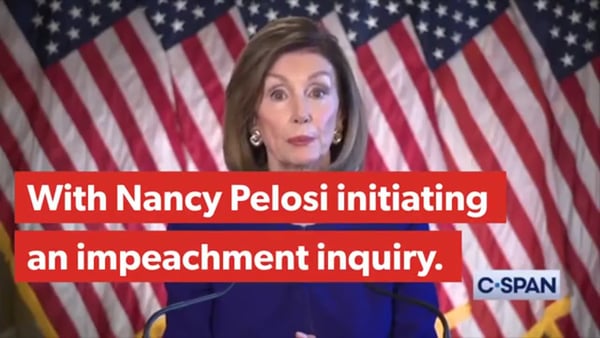
this decision. Nancy Pelosi just said on CNN this evening that she wasn't  informed either.

While the piece below suggests that this is a re-election ploy, his timing also suggests that he is 
creating a distraction from impeachment.

Regardless, this is a reckless and vicious act of aggression by a very twisted and evil man.

The Republicans should fire this president immediately.  He is a massive risk to the planet.

-Angela Valenzuela

Here’s why Trump viewed a president 

starting war with Iran as a guaranteed 

path to re-election

 
President Donald Trump’s Pentagon on Thursday claimed credit for the “hugely consequential” assassination of Iranian Gen. Qasem Soleimani in Iraq.
Soleimani is a “revered” figure in Iran, and the country’s state television cut scheduled broadcasts to show photos of the general with a call for prayers.
With Middle East analysts expecting retaliation — and even war — it’s important to remember Trump’s views on the subject.
In 2012, Trump was convinced that then-President Barack Obama would launch a war with Iran to boost his re-election effort. Political scientists refer to a “rally around the flag” rise in poll numbers for commanders-in-chief at war.
“I always said Barack Obama will attack Iran, in some form, prior to the election,” Trump tweeted in August of 2012.

00:0600:45
Two months later, Trump was still worried Obama would launch a war to bolster his political standing.
“Polls are starting to look really bad for Obama. Looks like he’ll have to start a war or major conflict to win. Don’t put it past him!” Trump warned.
He followed up again before the election, which Obama won without launching a war with Iran.
“Don’t let Obama play the Iran card in order to start a war in order to get elected–be careful Republicans!” Trump warned.

I always said @BarackObama will attack Iran, in some form, prior to the election.


Polls are starting to look really bad for Obama. Looks like he'll have to start a war or major conflict to win. Don't put it past him!


Don't let Obama play the Iran card in order to start a war in order to get elected--be careful Republicans!