This piece cites a report titled, Measuring Up in Higher Education, by the nonpartisan, nonprofit National Center for Public Policy and Higher Education. Texas gets an F in educating its young population. -Angela
Report: Texas failing in higher ed affordability
Thursday, September 7, 2006
Associated Press
HOUSTON - Sending a student to a public university costs low- to middle-income families in Texas almost half of their annual earnings, according to a report released Thursday.
The nonprofit, nonpartisan National Center for Public Policy and Higher Education gave the Lone Star State an "F" for higher education affordability. The state also received low grades for its college enrollment numbers and degree completion rates.
"Texas' underperformance in educating its young population could limit the state's access to a competitive work force and weaken its economy over time," the report card concluded.
For state legislators and education leaders, the report echoes what they already know.
"It's a very real threat to the state," said Ray Grasshoff, spokesman for the Texas Higher Education Coordinating Board, which advises the Legislature. Without an educated work force, the state will see personal incomes and quality of life drop, and demand on social services jump, he said.
Other findings of the report include:
-- 14 percent of students complete a certificate or degree; Texas' higher education graduation rate is lower than those of the Czech Republic and Hungary
-- a third of high school students are likely to enroll in college by age 19, an improvement for Texas but still low when compared to other states
-- adult whites are more than twice as likely to have a bachelor's degree than nonwhites; this is one of the widest gaps in the country
-- 36 percent of young adult whites are enrolled in higher education, versus 26 percent of nonwhites
"The good news," Grasshoff said, "is that it's not a secret and we're out there doing some things."
The state, for example, created the Texas Grant program for needy students who take college preparation courses in high school. However, Texas doesn't have enough money to award every student who qualifies, so this year, it started accepting private donations to the fund, Grasshoff said.
Texas has made progress in enrolling more students in colleges and universities, but it hasn't made much progress in the numbers of Hispanics, the largest minority group in the state, Grasshoff added. "That's a very big concern across the state."
Democratic Sen. Royce West, who serves on the state Legislature's higher education subcommittee, said he was very disappointed in Texas' performance.
"What it comes down to is whether we're going to prioritize higher education, not just in words but also in our deeds," said West, of Dallas.
The state hasn't kept its promises to make college more affordable. hasn't aligned its high school and college curriculums and hasn't figured out why students are dropping out, he added.
As the population changes, higher education has to change with it, West said. If minorities aren't represented in universities' leadership it will be difficult to understand the perspectives and meet the challenges of minority groups, he said.
Online at: http://www.dallasnews.com/sharedcontent/dws/dn/education/stories/090706dntexhighered.76be40b6.html
Monday, September 11, 2006

The Wages of Teaching
Check out this quote: "According to the Department of Education, one in every five teachers leaves after the first year, and almost twice as many leave within three. If any business had that rate of turnover, someone would do something smart and strategic to fix it." Quindlen expresses concern here about teacher incentive pay schemes and refers to the NEA's call for a minimum $40,000.00 salary for teachers. -Angela
The Wages of Teaching
No school administrator should ever receive a percentage raise greater than the raise teachers get. Neither should state legislators.
By Anna Quindlen
Newsweek
Nov. 28, 2005 issue - A couple of years ago I spent the day at an elementary school in New Jersey. It was a nice average school, a square and solid building with that patented classroom aroma of disinfectant and chalk, chock-full of reasonably well-behaved kids from middle-class families. I handled three classes, and by the time I staggered out the door I wanted to lie down for the rest of the day.
Teaching's the toughest job there is. In his new memoir, "Teacher Man," Frank McCourt recalls telling his students, "Teaching is harder than working on docks and warehouses." Not to mention writing a column. I can stare off into the middle distance with my chin in my hand any time. But you go mentally south for five minutes in front of a class of fifth graders, and you are sunk.
The average new teacher today makes just under $30,000 a year, which may not look too bad for a twentysomething with no mortgage and no kids. But soon enough the newbies realize that they can make more money and not work anywhere near as hard elsewhere. After a lifetime of hearing the old legends about cushy hours and summer vacations, they figure out that early mornings are for students who need extra help, evenings are for test corrections and lesson plans, and weekends and summers are for second and even third jobs to try to pay the bills.
According to the Department of Education, one in every five teachers leaves after the first year, and almost twice as many leave within three. If any business had that rate of turnover, someone would do something smart and strategic to fix it. This isn't any business. It's the most important business around, the gardeners of the landscape of the human race.
Unfortunately, the current fashionable fixes for education take a page directly from the business playbook, and it's a terrible fit. Instead of simply acknowledging that starting salaries are woefully low and committing to increasing them and finding the money for reasonable recurring raises, pols have wasted decades obsessing about something called merit pay. It's a concept that works fine if you're making widgets, but kids aren't widgets, and good teaching isn't an assembly line.
McCourt's book is instructive. Early in his 30-year career, he's teaching at a vocational high school and realizes that his English students are never more inspired than when forging excuse notes from their parents. So McCourt assigns the class to write excuse notes, the results ranging "from a family epidemic of diarrhea to a sixteen-wheeler truck crashing into the house." Pens fly with extravagant lies. You can almost feel the imaginations kick in.
The point about tying teaching salaries to widget standards is that it's hard to figure out a useful way to measure the merit of what a really good teacher does. You can imagine the principal who would see McCourt's gambit as the work of a gifted teacher, and just as easily imagine the one who would find it unseemly. Tying raises to pass rates is a flagrant invitation to inflate student achievement. Tying them to standardized tests makes rote regurgitation the centerpiece of schools. Both are blind to the merit of teachers who shoulder the challenging work of educating those less able, more troubled, from homes where there are no pencils, no books, even no parents. A teacher whose Advanced Placement class sends everyone on to top-tier colleges; a teacher whose remedial-reading class finally gets through to some, but not all, of a student group that is failing. There is merit in both.
The National Education Association has been pushing for a minimum starting salary of $40,000 for all teachers. Why not? If these people can teach 6-year-olds to add and get adolescents to attend to algebra, surely we can do the math to get them a decent wage. Since the corporate world is the greatest, and richest, beneficiary of well-educated workers, maybe a national brain trust might be set up that would turn a tax on corporate profits into an endowment to raise teacher salaries. Maybe states and communities could also pass regulations with this simple proviso: no school administrator should ever receive a percentage raise greater than the raise teachers get. Neither should state legislators.
In recent years teacher salaries have grown, if they've grown at all, at a far slower rate than those of other professionals, often lagging behind inflation. Yet teachers should have the most powerful group of advocates in the nation: not their union, but we the people, their former students. I am a writer because of the encouragement of teachers. Surely most Americans must feel the same, that there were women and men who helped them levitate just a little above the commonplace expectations they had for themselves.
At the end of his book McCourt, who is preparing to leave teaching with the idea of living off his pension and maybe writing—and whose maiden effort, "Angela's Ashes," will win the Pulitzer—is giving advice to a young substitute. "You'll never know what you've done to, or for, the hundreds coming and going," he says. Yeah, but the hundreds know, the hundreds who are millions who are us. They made us. We owe them.
URL: http://msnbc.msn.com/id/10116331/site/newsweek/
© 2006 MSNBC.com
The Wages of Teaching
No school administrator should ever receive a percentage raise greater than the raise teachers get. Neither should state legislators.
By Anna Quindlen
Newsweek
Nov. 28, 2005 issue - A couple of years ago I spent the day at an elementary school in New Jersey. It was a nice average school, a square and solid building with that patented classroom aroma of disinfectant and chalk, chock-full of reasonably well-behaved kids from middle-class families. I handled three classes, and by the time I staggered out the door I wanted to lie down for the rest of the day.
Teaching's the toughest job there is. In his new memoir, "Teacher Man," Frank McCourt recalls telling his students, "Teaching is harder than working on docks and warehouses." Not to mention writing a column. I can stare off into the middle distance with my chin in my hand any time. But you go mentally south for five minutes in front of a class of fifth graders, and you are sunk.
The average new teacher today makes just under $30,000 a year, which may not look too bad for a twentysomething with no mortgage and no kids. But soon enough the newbies realize that they can make more money and not work anywhere near as hard elsewhere. After a lifetime of hearing the old legends about cushy hours and summer vacations, they figure out that early mornings are for students who need extra help, evenings are for test corrections and lesson plans, and weekends and summers are for second and even third jobs to try to pay the bills.
According to the Department of Education, one in every five teachers leaves after the first year, and almost twice as many leave within three. If any business had that rate of turnover, someone would do something smart and strategic to fix it. This isn't any business. It's the most important business around, the gardeners of the landscape of the human race.
Unfortunately, the current fashionable fixes for education take a page directly from the business playbook, and it's a terrible fit. Instead of simply acknowledging that starting salaries are woefully low and committing to increasing them and finding the money for reasonable recurring raises, pols have wasted decades obsessing about something called merit pay. It's a concept that works fine if you're making widgets, but kids aren't widgets, and good teaching isn't an assembly line.
McCourt's book is instructive. Early in his 30-year career, he's teaching at a vocational high school and realizes that his English students are never more inspired than when forging excuse notes from their parents. So McCourt assigns the class to write excuse notes, the results ranging "from a family epidemic of diarrhea to a sixteen-wheeler truck crashing into the house." Pens fly with extravagant lies. You can almost feel the imaginations kick in.
The point about tying teaching salaries to widget standards is that it's hard to figure out a useful way to measure the merit of what a really good teacher does. You can imagine the principal who would see McCourt's gambit as the work of a gifted teacher, and just as easily imagine the one who would find it unseemly. Tying raises to pass rates is a flagrant invitation to inflate student achievement. Tying them to standardized tests makes rote regurgitation the centerpiece of schools. Both are blind to the merit of teachers who shoulder the challenging work of educating those less able, more troubled, from homes where there are no pencils, no books, even no parents. A teacher whose Advanced Placement class sends everyone on to top-tier colleges; a teacher whose remedial-reading class finally gets through to some, but not all, of a student group that is failing. There is merit in both.
The National Education Association has been pushing for a minimum starting salary of $40,000 for all teachers. Why not? If these people can teach 6-year-olds to add and get adolescents to attend to algebra, surely we can do the math to get them a decent wage. Since the corporate world is the greatest, and richest, beneficiary of well-educated workers, maybe a national brain trust might be set up that would turn a tax on corporate profits into an endowment to raise teacher salaries. Maybe states and communities could also pass regulations with this simple proviso: no school administrator should ever receive a percentage raise greater than the raise teachers get. Neither should state legislators.
In recent years teacher salaries have grown, if they've grown at all, at a far slower rate than those of other professionals, often lagging behind inflation. Yet teachers should have the most powerful group of advocates in the nation: not their union, but we the people, their former students. I am a writer because of the encouragement of teachers. Surely most Americans must feel the same, that there were women and men who helped them levitate just a little above the commonplace expectations they had for themselves.
At the end of his book McCourt, who is preparing to leave teaching with the idea of living off his pension and maybe writing—and whose maiden effort, "Angela's Ashes," will win the Pulitzer—is giving advice to a young substitute. "You'll never know what you've done to, or for, the hundreds coming and going," he says. Yeah, but the hundreds know, the hundreds who are millions who are us. They made us. We owe them.
URL: http://msnbc.msn.com/id/10116331/site/newsweek/
© 2006 MSNBC.com
Friday, September 08, 2006
Experts predict grim future for state if leaders don't address gap among students
These trends should concern us deeply. -Angela
Sept. 3, 2006, 11:33AM
Education the elephant in the room
Experts predict grim future for state if leaders don't address gap among students
By GARY SCHARRER
Copyright 2006 Houston Chronicle Austin Bureau
AUSTIN — Imagine a Texas with declining household incomes, tax revenues that can't keep up with growing demands for services and children growing up worse off than their parents.
That's what Texans can expect unless government does a better job educating the rapidly growing Hispanic population, which could become the state's majority by 2025.
It's a crisis in the making, said Steve Murdock, the state's top population expert, and it comes at a time when state services for low-income people, including hundreds of thousands of Hispanics, already are strained.
And whether the warning bells ring too distantly into the future or sound the alarm for problems that are too abstract, there's little indication the major gubernatorial candidates will invest much time responding to them before the November election.
"I'd like to say that I saw lots of signs that everything was changing, but I don't see it yet," Murdock said.
Without changes, starting with education, Murdock projects that within 35 years, the average Texas household will earn $6,500 less than it does now, more than that if the number is adjusted for inflation.
Unless education achievement improves — leading to better-paying jobs for more people — tax revenues will fall in the coming decades even as demands for health care, social services and prisons increase, Murdock said.
Last year, Hispanic students made up 45 percent of the public school enrollment, and they are on the verge of becoming the majority.
Yet the dropout rate for Latino students continues to hover around 48 percent, according to the San Antonio-based Intercultural Development Research Association.
The gubernatorial candidates say an improved education system and better economic opportunities are priorities, but they aren't clear how they would accomplish either goal.
And so far, candidates have spent as much time attacking one another as they have discussing the future.
After repeatedly failing to do so, the Legislature and Gov. Rick Perry claim to have complied this year with a Texas Supreme Court order to find a way to equitably fund public education. But their critics contend Perry and state leaders made incremental changes in public education only after the Supreme Court threatened to close the schools if they did not do so.
Because all revenue from a new business tax is dedicated to cutting property taxes, they say the new school law ignores Murdock's warnings.
'The highest priority'
These candidates and other state leaders are paying only "lip service" to educational attainment, said Mike Moses, formerly the state's education commissioner and the former superintendent in the Lubbock and Dallas school districts.
"If we don't really give it the highest priority to every child, I think we can safely say that Murdock's predictions will probably come true," Moses said.
The numbers bear him out.
The Hispanic population in Texas grew by nearly 1.2 million people between 2000 and 2004, according to the U.S. Census Bureau.
That same year saw an increase of only 147,678 whites.
Over the next 34 years, Hispanics will account for about 78 percent of the state's population growth and whites only 4 percent, said Murdock, who is director of the Institute for Demographic and Socioeconomic Research at the University of Texas at San Antonio.
Hispanics and other minorities now make up at least 90 percent of student enrollment in the state's major urban school districts.
That transformation also is reaching into suburban school districts, such as Cypress-Fairbanks outside Houston and North East in San Antonio, where minorities have become the majority student enrollment.
And it is in the schools, where the fight to stave off Murdock's dire predictions begin.
"Unless Texas changes course, we doom an entire generation of kids," said Rep. Pete Gallego, D-Alpine, the state House Mexican American Caucus chairman. "We don't doom them to mediocrity. It's worse than that because we take away their opportunity."
Children from low-income families continue to pour into the state's public school system. Not quite a majority six years ago, low-income children now represent nearly 56 percent of the state's 4.5 million public schoolchildren. The number of limited English-proficient children also continues to grow by about 30,000 a year.
And test scores for 2004-05 show a significant achievement gap. On the Texas Assessment of Knowledge and Skills tests in the fifth, seventh, ninth and 11th grades, the gap between white children and limited-English students was nearly 60 points.
"The numbers are astonishing to me," said professor Angela Valenzuela, director of the Texas Center for Education Policy at the University of Texas at Austin. "We need more school funds, and we need equitable school funding. The ones who most zealously protect their status are the representatives of the wealthiest districts. I think that unmasks their motives."
She called the trend line "unjust and polarizing."
Clashing policy
The new school finance law adopted by the Legislature this spring after five sessions over the past three years will make it harder for school districts to generate revenue because voter approval, not school board action, will generally dictate future school tax increases. And those voters with the most discretionary income will be older whites without children in schools.
"Everything that we have done is designed to exacerbate these trends," said Gallego, the Alpine Democrat. "We raise tuition at colleges and universities, and we cut the amount of money available for financial aid. And we made it more difficult for school districts to raise revenue."
But spending more for education investment collides with the clamor for tax cuts and stiffer property appraisal caps.
"The political body that is most vocal at this point in time is the 'no tax' groups, and they are vicious in their zeal to hold the line on taxes," said Sen. Robert Duncan, R-Lubbock. "They are voting their principles, whether you agree with them or not.
"The biggest problem is that it's a short-term popular view. If we don't make investments today, then it will cost us more to correct the course later," Duncan said.
There is also strong resistance among some quarters in the state against increasing funding for public education.
"Unaccountable, bureaucratic government schools clearly aren't currently lifting the minority population out of poverty and improving educational outcome," said Peggy Venable, state director for Americans for Prosperity, a group that supports lower taxes and less government.
Her organization supports vouchers for private schools and giving parents more school choices.
"Hispanic parents recognize that education is a way out of poverty," Venable said. "We think that parents know more about their children and where they might have the greatest success in education, certainly more than the government does."
Population experts and some lawmakers also are concerned about the trend in higher education.
The need to increase college enrollment inspired Texas higher education officials six years ago to adopt a "Closing the Gaps" initiative, which includes a focus on enrolling more Hispanic students.
But the gap is not closing.
The state "is not on track to meet the participation goal," according to a progress report issued earlier this year by the Texas Higher Education Coordinating Board.
By 2015, the plan calls for about 5,000 more Hispanic students to be enrolled in college than whites.
But as of last year, the state's college enrollment included 319,459 Hispanics and 629,211 whites.
The enrollment numbers put Hispanics 20,000 under the state's goal.
Adding to the problems, lawmakers have allowed tuition rates to soar 62 percent on average after they deregulated tuition three years ago but have not increased financial aid to middle- and low-income students.
Funding for the TEXAS Grant scholarship program aimed at these students has remained flat from $324.4 million in the 2004-05 budget to $332.2 million for 2006-07.
"The statistics are alarming," said Sen. Rodney Ellis, D-Houston, the program's author. "Closing the Gaps says that we will fall far short of meeting the educational needs of our young people — especially young Hispanic students. Texas ranks last among the six largest states in the amount of student financial aid and grants that are available to students."
Widespread impact
Ruben Martinez, a professor at the University of Texas at San Antonio, is skeptical that Texas can make the necessary changes to avoid Murdock's projections.
"We're living in a time of great fear, and during times of fear, people are very reluctant to engage in change," said Martinez, interim department chair of the college of public policy.
Some Texans don't see the changing demographics as impacting them, state demographer Murdock said.
"But the reality is that they impact all of us because it will impact the tax revenues that support services," he said. "They will impact the consumer expenditures that drive our private-sector market. It's more than just problems for a set of people who may not look like us or be like us.
"If we don't do something, it's a problem that will impact all of us and the quality of life for all of us."
Chronicle reporter R.G. Ratcliffe contributed to this report.
gscharrer@express-news.net
This article is: http://www.chron.com/disp/story.mpl/chronicle/4158588.html
Sept. 3, 2006, 11:33AM
Education the elephant in the room
Experts predict grim future for state if leaders don't address gap among students
By GARY SCHARRER
Copyright 2006 Houston Chronicle Austin Bureau
AUSTIN — Imagine a Texas with declining household incomes, tax revenues that can't keep up with growing demands for services and children growing up worse off than their parents.
That's what Texans can expect unless government does a better job educating the rapidly growing Hispanic population, which could become the state's majority by 2025.
It's a crisis in the making, said Steve Murdock, the state's top population expert, and it comes at a time when state services for low-income people, including hundreds of thousands of Hispanics, already are strained.
And whether the warning bells ring too distantly into the future or sound the alarm for problems that are too abstract, there's little indication the major gubernatorial candidates will invest much time responding to them before the November election.
"I'd like to say that I saw lots of signs that everything was changing, but I don't see it yet," Murdock said.
Without changes, starting with education, Murdock projects that within 35 years, the average Texas household will earn $6,500 less than it does now, more than that if the number is adjusted for inflation.
Unless education achievement improves — leading to better-paying jobs for more people — tax revenues will fall in the coming decades even as demands for health care, social services and prisons increase, Murdock said.
Last year, Hispanic students made up 45 percent of the public school enrollment, and they are on the verge of becoming the majority.
Yet the dropout rate for Latino students continues to hover around 48 percent, according to the San Antonio-based Intercultural Development Research Association.
The gubernatorial candidates say an improved education system and better economic opportunities are priorities, but they aren't clear how they would accomplish either goal.
And so far, candidates have spent as much time attacking one another as they have discussing the future.
After repeatedly failing to do so, the Legislature and Gov. Rick Perry claim to have complied this year with a Texas Supreme Court order to find a way to equitably fund public education. But their critics contend Perry and state leaders made incremental changes in public education only after the Supreme Court threatened to close the schools if they did not do so.
Because all revenue from a new business tax is dedicated to cutting property taxes, they say the new school law ignores Murdock's warnings.
'The highest priority'
These candidates and other state leaders are paying only "lip service" to educational attainment, said Mike Moses, formerly the state's education commissioner and the former superintendent in the Lubbock and Dallas school districts.
"If we don't really give it the highest priority to every child, I think we can safely say that Murdock's predictions will probably come true," Moses said.
The numbers bear him out.
The Hispanic population in Texas grew by nearly 1.2 million people between 2000 and 2004, according to the U.S. Census Bureau.
That same year saw an increase of only 147,678 whites.
Over the next 34 years, Hispanics will account for about 78 percent of the state's population growth and whites only 4 percent, said Murdock, who is director of the Institute for Demographic and Socioeconomic Research at the University of Texas at San Antonio.
Hispanics and other minorities now make up at least 90 percent of student enrollment in the state's major urban school districts.
That transformation also is reaching into suburban school districts, such as Cypress-Fairbanks outside Houston and North East in San Antonio, where minorities have become the majority student enrollment.
And it is in the schools, where the fight to stave off Murdock's dire predictions begin.
"Unless Texas changes course, we doom an entire generation of kids," said Rep. Pete Gallego, D-Alpine, the state House Mexican American Caucus chairman. "We don't doom them to mediocrity. It's worse than that because we take away their opportunity."
Children from low-income families continue to pour into the state's public school system. Not quite a majority six years ago, low-income children now represent nearly 56 percent of the state's 4.5 million public schoolchildren. The number of limited English-proficient children also continues to grow by about 30,000 a year.
And test scores for 2004-05 show a significant achievement gap. On the Texas Assessment of Knowledge and Skills tests in the fifth, seventh, ninth and 11th grades, the gap between white children and limited-English students was nearly 60 points.
"The numbers are astonishing to me," said professor Angela Valenzuela, director of the Texas Center for Education Policy at the University of Texas at Austin. "We need more school funds, and we need equitable school funding. The ones who most zealously protect their status are the representatives of the wealthiest districts. I think that unmasks their motives."
She called the trend line "unjust and polarizing."
Clashing policy
The new school finance law adopted by the Legislature this spring after five sessions over the past three years will make it harder for school districts to generate revenue because voter approval, not school board action, will generally dictate future school tax increases. And those voters with the most discretionary income will be older whites without children in schools.
"Everything that we have done is designed to exacerbate these trends," said Gallego, the Alpine Democrat. "We raise tuition at colleges and universities, and we cut the amount of money available for financial aid. And we made it more difficult for school districts to raise revenue."
But spending more for education investment collides with the clamor for tax cuts and stiffer property appraisal caps.
"The political body that is most vocal at this point in time is the 'no tax' groups, and they are vicious in their zeal to hold the line on taxes," said Sen. Robert Duncan, R-Lubbock. "They are voting their principles, whether you agree with them or not.
"The biggest problem is that it's a short-term popular view. If we don't make investments today, then it will cost us more to correct the course later," Duncan said.
There is also strong resistance among some quarters in the state against increasing funding for public education.
"Unaccountable, bureaucratic government schools clearly aren't currently lifting the minority population out of poverty and improving educational outcome," said Peggy Venable, state director for Americans for Prosperity, a group that supports lower taxes and less government.
Her organization supports vouchers for private schools and giving parents more school choices.
"Hispanic parents recognize that education is a way out of poverty," Venable said. "We think that parents know more about their children and where they might have the greatest success in education, certainly more than the government does."
Population experts and some lawmakers also are concerned about the trend in higher education.
The need to increase college enrollment inspired Texas higher education officials six years ago to adopt a "Closing the Gaps" initiative, which includes a focus on enrolling more Hispanic students.
But the gap is not closing.
The state "is not on track to meet the participation goal," according to a progress report issued earlier this year by the Texas Higher Education Coordinating Board.
By 2015, the plan calls for about 5,000 more Hispanic students to be enrolled in college than whites.
But as of last year, the state's college enrollment included 319,459 Hispanics and 629,211 whites.
The enrollment numbers put Hispanics 20,000 under the state's goal.
Adding to the problems, lawmakers have allowed tuition rates to soar 62 percent on average after they deregulated tuition three years ago but have not increased financial aid to middle- and low-income students.
Funding for the TEXAS Grant scholarship program aimed at these students has remained flat from $324.4 million in the 2004-05 budget to $332.2 million for 2006-07.
"The statistics are alarming," said Sen. Rodney Ellis, D-Houston, the program's author. "Closing the Gaps says that we will fall far short of meeting the educational needs of our young people — especially young Hispanic students. Texas ranks last among the six largest states in the amount of student financial aid and grants that are available to students."
Widespread impact
Ruben Martinez, a professor at the University of Texas at San Antonio, is skeptical that Texas can make the necessary changes to avoid Murdock's projections.
"We're living in a time of great fear, and during times of fear, people are very reluctant to engage in change," said Martinez, interim department chair of the college of public policy.
Some Texans don't see the changing demographics as impacting them, state demographer Murdock said.
"But the reality is that they impact all of us because it will impact the tax revenues that support services," he said. "They will impact the consumer expenditures that drive our private-sector market. It's more than just problems for a set of people who may not look like us or be like us.
"If we don't do something, it's a problem that will impact all of us and the quality of life for all of us."
Chronicle reporter R.G. Ratcliffe contributed to this report.
gscharrer@express-news.net
This article is: http://www.chron.com/disp/story.mpl/chronicle/4158588.html
Saturday, September 02, 2006
At 2-Year Colleges, Students Eager but Unready
September 2, 2006
At 2-Year Colleges, Students Eager but Unready
By DIANA JEAN SCHEMO
Correction Appended
DUNDALK, Md. — At first, Michael Walton, starting at community college here, was sure that there was some mistake. Having done so well in high school in West Virginia that he graduated a year and a half early, how could he need remedial math?
Eighteen and temperamental, Mickey, as everyone calls him, hounded the dean, insisting that she take another look at his placement exam. The dean stood firm. Mr. Walton’s anger grew. He took the exam a second time. Same result.
“I flipped out big time,’’ Mr. Walton said.
Because he had no trouble balancing his checkbook, he took himself for a math wiz. But he could barely remember the Pythagorean theorem and had trouble applying sine, cosine and tangent to figure out angles on the geometry questions.
Mr. Walton is not unusual. As the new school year begins, the nation’s 1,200 community colleges are being deluged with hundreds of thousands of students unprepared for college-level work.
Though higher education is now a near-universal aspiration, researchers suggest that close to half the students who enter college need remedial courses.
The shortfalls persist despite high-profile efforts by public universities to crack down on ill-prepared students.
Since the City University of New York, the largest urban public university, barred students who need remediation from attending its four-year colleges in 1999, others have followed with similar steps.
California State set an ambitious goal to cut the proportion of unprepared freshmen to 10 percent by 2007, largely by testing them as high school juniors and having them make up for deficiencies in the 12th grade.
Cal State appears nowhere close to its goal. In reading alone, nearly half the high school juniors appear unprepared for college-level work.
Aside from New York City’s higher education system, at least 12 states explicitly bar state universities from providing remedial courses or take other steps like deferred admissions to steer students needing helping toward technical or community colleges.
Some students who need to catch up attend two- and four-year institutions simultaneously.
The efforts, educators say, have not cut back on the thousands of students who lack basic skills. Instead, the colleges have clustered those students in community colleges, where their chances of succeeding are low and where taxpayers pay a second time to bring them up to college level.
The phenomenon has educators struggling with fundamental questions about access to education, standards and equal opportunity.
Michael W. Kirst, a Stanford professor who was a co-author of a report on the gap between aspirations and college attainment, said that 73 percent of students entering community colleges hoped to earn four-year degrees, but that only 22 percent had done so after six years.
“You can get into school,” Professor Kirst said. “That’s not a problem. But you can’t succeed.’’
Nearly half the 14.7 million undergraduates at two- and four-year institutions never receive degrees. The deficiencies turn up not just in math, science and engineering, areas in which a growing chorus warns of difficulties in the face of global competition, but also in the basics of reading and writing.
According to scores on the 2006 ACT college entrance exam, 21 percent of students applying to four-year institutions are ready for college-level work in all four areas tested, reading, writing, math and biology.
For many students, the outlook does not improve after college. The Pew Charitable Trusts recently found that three-quarters of community college graduates were not literate enough to handle everyday tasks like comparing viewpoints in newspaper editorials or calculating the cost of food items per ounce.
The unyielding statistics showcase a deep disconnection between what high school teachers think that their students need to know and what professors, even at two-year colleges, expect them to know.
At Cal State, the system admits only students with at least a B average in high school. Nevertheless, 37 percent of the incoming class last year needed remedial math, and 45 percent needed remedial English.
“Students are still shocked when they’re told they need developmental courses,’’ said Donna McKusik, the senior director of developmental, or remedial, education at the Community College of Baltimore County. “They think they graduated from a high school, they should be ready for college.’’
Across the nation, federal and state education officials are pressing for a K-16 vision of education that runs from kindergarten through college graduation. Such an approach, they say, would help high schools better prepare students for college.
In Florida, Gov. Jeb Bush appointed a Board of Regents to oversee education at all public institutions, from elementary through bachelor’s programs. At Cal State, professors are advising 12th-grade teachers on preparing students to succeed in college.
Starting at a Deficit
As the debate rages, nearly half of all students seeking degrees begin their journeys at community colleges much like the Dundalk campus of the Community College of Baltimore County, two-story no-frills buildings named by letters, not benefactors or grateful alumni. The college’s interim vice chancellor for learning and developmental education, Alvin Starr, said he saw students who passed through high school never having read a book cover to cover.
“They’ve listened in class, taken notes and taken the test off of that,’’ Dr. Starr said.
Though remedial needs are high, Dr. Starr said, the courses offer something invaluable, the chance to overcome basic deficiencies in reading, writing or math.
“You have to figure the cost to society on the other side if you don’t educate these students,’’ he said.
Most of the students expect the transition to community college to be seamless. But the first, and sometimes last, stop for many are remedial math classes.
“It’s the math that’s killing us,’’ Dr. McKusik said.
The sheer numbers of enrollees like Mr. Walton who have to take make-up math is overwhelming, with 8,000 last year among the nearly 30,000 degree-seeking students systemwide. Not all those students come directly from high school. Many have taken off a few years and may have forgotten what they learned, Dr. McKusik said.
More than one in four remedial students work on elementary and middle school arithmetic. Math is where students often lose confidence and give up.
“It brings up a lot of emotional stuff for them,’’ Dr. McKusik said.
She told of 20 students who had just burst into tears on receiving their math entrance exam scores and walked out on college. Mr. Walton remembers a fellow student who failed to hand in a math assignment for the fourth time in the last week of class and learned that he would fail. The student lunged toward the professor and said, “I’ll kill you.”
“You can say whatever you want, but this really isn’t helping your grade,” the professor replied, Mr. Walton said.
The student stormed out the door with a final expletive, leaving the professor shaken.
Fear of Appearing Ignorant
The biggest challenge, professors say, is trying to engage students, to persuade them that ideas matter. Dr. McKusik suspects that behind the apathy is a fear of appearing ignorant.
“Everything in society is geared to celebrate, to value, the winner,” she said. “These are students who haven’t been at the top. They won’t show themselves as vulnerable at all.’’
With most students having commitments to jobs and families, community colleges typically offer little in the way of a social life or school spirit. So they need to find ways to reach their less traditional audience.
“That’s why we’re trying to use pop culture in the classroom, to get their attention,’’ said Betsy Gooden, an English teacher who, in a remedial reading class one day last spring, tried to coax students to discuss a television documentary.
Two or three students in a class of 10 women carried most of the discussion, which seemed more like Ricky Lake than Lit 101, with students reacting to the film almost exclusively in terms of their personal experiences.
They covered love, sex and cheating boyfriends. Before the class was over, two women disclosed that they had been raped. About half the students said nothing at all.
Karen Olson, a history professor, and David Truscello, who teaches English, are trying another common strategy, mixing remedial work with other subjects. They are co-teachers of a course that combines African-American history with composition.
Professor Olson says teachers should stop making “unrealistic assignments’’ like chapters from “600-page textbooks’’ and should meet students at their level, raising abilities by degrees.
In her class, she assigns more manageable readings and carves up the load, so no student is responsible for doing it all.
“It’s not like they’re living four years in a dorm,’’ Professor Truscello said.
Most are working, sometimes at more than one job.
“That impinges on everything,’’ he added. “I have students who take two buses to come to school. It’s amazing that they do it.’’
Solutions and Successes
Another part of the solution at community colleges is in Student Success Centers. They are actually tutoring centers. Dundalk’s is open 63 hours a week.
Along a wall is a rack of handouts explaining points of grammar that might have last been explicitly taught in middle school, a measure of the immense ground to be made up. One covers comparative adjectives, explaining “more” vs. “most” or “smarter” vs. “smartest.” Another discusses using pronouns and verb tenses.
At one table, Kirn Shahzadi, 20, once an A student at Parkville High School, was being tutored a few hours before her final in remedial algebra. In addition to math, Ms. Shahzadi needed remedial courses in reading and one in helping with basic skills like note taking, researching and organizing schedules. By the second week of that course, she said, half the students had dropped out.
Still, the school has winners who make it through and feel that they have to fit into the changing workplace.
Mr. Walton said careers like his father’s as a welder for a major construction company were now harder to find. His father rose to foreman, putting Mr. Walton’s older brother through Johns Hopkins University.
Mr. Walton, who married soon after high school, put himself through the Baltimore community college working as a security guard at $7.80 an hour. He has had shoplifters pull knives on him and spray him with Mace, he said.
His salary covered the utilities and phone bills, and left his wife, an administrative assistant at Johns Hopkins, to pay the mortgage. He added that at times he suspected that she had felt more like a caretaker than a wife, and he worried for their future.
“I know she’s sick and tired of taking care of me,’’ he said in May. “It’s rip-your-hair-out-at-night difficult.’’
But Mr. Walton made it through that remedial math class four years ago, ultimately praising the dean for standing firm. In June, he crossed a stage to receive an associate’s degree in computer science. Next year, he plans to earn another degree in, of all things, math.
He said he would like to earn a full bachelor’s, but hesitates.
“I’m scared to death of going to college,’’ he said. “I’ll be up to my eyeballs in debt.’’
This summer he sent his résumé even to employers demanding bachelor’s degrees and several years’ experience, hoping that his enthusiasm would compensate where credentials fell short. He sought positions that included tuition breaks for employees.
His strategy paid off with two offers, one in data entry at the community college here, a job he held on work study before graduating, and another as a technician repairing copying machines. Mr. Walton went for the second.
It offers benefits, tuition reimbursement and a salary of $22,850 a year, with extra money toward buying a new car every few years.
“I feel a little bit more — I don’t want to say confident — but maybe worthy,’’ Mr. Walton said. “Now, I feel like I’m all that, and a bag of chips.’’
Correction: Sept. 9, 2006
A front-page article last Saturday about the lack of preparation among some students applying for community college misspelled the surname of an official at the Community College of Baltimore County, who said students were shocked to learn they needed remedial courses. She is Donna McKusick, not McKusik. The article also misspelled the given name of a former talk show star, whose habit of personalizing issues on her program was likened to students in a remedial reading class who discussed a television documentary in personal terms. She is Ricki Lake, not Ricky.
Copyright 2006 The New York Times Company
At 2-Year Colleges, Students Eager but Unready
By DIANA JEAN SCHEMO
Correction Appended
DUNDALK, Md. — At first, Michael Walton, starting at community college here, was sure that there was some mistake. Having done so well in high school in West Virginia that he graduated a year and a half early, how could he need remedial math?
Eighteen and temperamental, Mickey, as everyone calls him, hounded the dean, insisting that she take another look at his placement exam. The dean stood firm. Mr. Walton’s anger grew. He took the exam a second time. Same result.
“I flipped out big time,’’ Mr. Walton said.
Because he had no trouble balancing his checkbook, he took himself for a math wiz. But he could barely remember the Pythagorean theorem and had trouble applying sine, cosine and tangent to figure out angles on the geometry questions.
Mr. Walton is not unusual. As the new school year begins, the nation’s 1,200 community colleges are being deluged with hundreds of thousands of students unprepared for college-level work.
Though higher education is now a near-universal aspiration, researchers suggest that close to half the students who enter college need remedial courses.
The shortfalls persist despite high-profile efforts by public universities to crack down on ill-prepared students.
Since the City University of New York, the largest urban public university, barred students who need remediation from attending its four-year colleges in 1999, others have followed with similar steps.
California State set an ambitious goal to cut the proportion of unprepared freshmen to 10 percent by 2007, largely by testing them as high school juniors and having them make up for deficiencies in the 12th grade.
Cal State appears nowhere close to its goal. In reading alone, nearly half the high school juniors appear unprepared for college-level work.
Aside from New York City’s higher education system, at least 12 states explicitly bar state universities from providing remedial courses or take other steps like deferred admissions to steer students needing helping toward technical or community colleges.
Some students who need to catch up attend two- and four-year institutions simultaneously.
The efforts, educators say, have not cut back on the thousands of students who lack basic skills. Instead, the colleges have clustered those students in community colleges, where their chances of succeeding are low and where taxpayers pay a second time to bring them up to college level.
The phenomenon has educators struggling with fundamental questions about access to education, standards and equal opportunity.
Michael W. Kirst, a Stanford professor who was a co-author of a report on the gap between aspirations and college attainment, said that 73 percent of students entering community colleges hoped to earn four-year degrees, but that only 22 percent had done so after six years.
“You can get into school,” Professor Kirst said. “That’s not a problem. But you can’t succeed.’’
Nearly half the 14.7 million undergraduates at two- and four-year institutions never receive degrees. The deficiencies turn up not just in math, science and engineering, areas in which a growing chorus warns of difficulties in the face of global competition, but also in the basics of reading and writing.
According to scores on the 2006 ACT college entrance exam, 21 percent of students applying to four-year institutions are ready for college-level work in all four areas tested, reading, writing, math and biology.
For many students, the outlook does not improve after college. The Pew Charitable Trusts recently found that three-quarters of community college graduates were not literate enough to handle everyday tasks like comparing viewpoints in newspaper editorials or calculating the cost of food items per ounce.
The unyielding statistics showcase a deep disconnection between what high school teachers think that their students need to know and what professors, even at two-year colleges, expect them to know.
At Cal State, the system admits only students with at least a B average in high school. Nevertheless, 37 percent of the incoming class last year needed remedial math, and 45 percent needed remedial English.
“Students are still shocked when they’re told they need developmental courses,’’ said Donna McKusik, the senior director of developmental, or remedial, education at the Community College of Baltimore County. “They think they graduated from a high school, they should be ready for college.’’
Across the nation, federal and state education officials are pressing for a K-16 vision of education that runs from kindergarten through college graduation. Such an approach, they say, would help high schools better prepare students for college.
In Florida, Gov. Jeb Bush appointed a Board of Regents to oversee education at all public institutions, from elementary through bachelor’s programs. At Cal State, professors are advising 12th-grade teachers on preparing students to succeed in college.
Starting at a Deficit
As the debate rages, nearly half of all students seeking degrees begin their journeys at community colleges much like the Dundalk campus of the Community College of Baltimore County, two-story no-frills buildings named by letters, not benefactors or grateful alumni. The college’s interim vice chancellor for learning and developmental education, Alvin Starr, said he saw students who passed through high school never having read a book cover to cover.
“They’ve listened in class, taken notes and taken the test off of that,’’ Dr. Starr said.
Though remedial needs are high, Dr. Starr said, the courses offer something invaluable, the chance to overcome basic deficiencies in reading, writing or math.
“You have to figure the cost to society on the other side if you don’t educate these students,’’ he said.
Most of the students expect the transition to community college to be seamless. But the first, and sometimes last, stop for many are remedial math classes.
“It’s the math that’s killing us,’’ Dr. McKusik said.
The sheer numbers of enrollees like Mr. Walton who have to take make-up math is overwhelming, with 8,000 last year among the nearly 30,000 degree-seeking students systemwide. Not all those students come directly from high school. Many have taken off a few years and may have forgotten what they learned, Dr. McKusik said.
More than one in four remedial students work on elementary and middle school arithmetic. Math is where students often lose confidence and give up.
“It brings up a lot of emotional stuff for them,’’ Dr. McKusik said.
She told of 20 students who had just burst into tears on receiving their math entrance exam scores and walked out on college. Mr. Walton remembers a fellow student who failed to hand in a math assignment for the fourth time in the last week of class and learned that he would fail. The student lunged toward the professor and said, “I’ll kill you.”
“You can say whatever you want, but this really isn’t helping your grade,” the professor replied, Mr. Walton said.
The student stormed out the door with a final expletive, leaving the professor shaken.
Fear of Appearing Ignorant
The biggest challenge, professors say, is trying to engage students, to persuade them that ideas matter. Dr. McKusik suspects that behind the apathy is a fear of appearing ignorant.
“Everything in society is geared to celebrate, to value, the winner,” she said. “These are students who haven’t been at the top. They won’t show themselves as vulnerable at all.’’
With most students having commitments to jobs and families, community colleges typically offer little in the way of a social life or school spirit. So they need to find ways to reach their less traditional audience.
“That’s why we’re trying to use pop culture in the classroom, to get their attention,’’ said Betsy Gooden, an English teacher who, in a remedial reading class one day last spring, tried to coax students to discuss a television documentary.
Two or three students in a class of 10 women carried most of the discussion, which seemed more like Ricky Lake than Lit 101, with students reacting to the film almost exclusively in terms of their personal experiences.
They covered love, sex and cheating boyfriends. Before the class was over, two women disclosed that they had been raped. About half the students said nothing at all.
Karen Olson, a history professor, and David Truscello, who teaches English, are trying another common strategy, mixing remedial work with other subjects. They are co-teachers of a course that combines African-American history with composition.
Professor Olson says teachers should stop making “unrealistic assignments’’ like chapters from “600-page textbooks’’ and should meet students at their level, raising abilities by degrees.
In her class, she assigns more manageable readings and carves up the load, so no student is responsible for doing it all.
“It’s not like they’re living four years in a dorm,’’ Professor Truscello said.
Most are working, sometimes at more than one job.
“That impinges on everything,’’ he added. “I have students who take two buses to come to school. It’s amazing that they do it.’’
Solutions and Successes
Another part of the solution at community colleges is in Student Success Centers. They are actually tutoring centers. Dundalk’s is open 63 hours a week.
Along a wall is a rack of handouts explaining points of grammar that might have last been explicitly taught in middle school, a measure of the immense ground to be made up. One covers comparative adjectives, explaining “more” vs. “most” or “smarter” vs. “smartest.” Another discusses using pronouns and verb tenses.
At one table, Kirn Shahzadi, 20, once an A student at Parkville High School, was being tutored a few hours before her final in remedial algebra. In addition to math, Ms. Shahzadi needed remedial courses in reading and one in helping with basic skills like note taking, researching and organizing schedules. By the second week of that course, she said, half the students had dropped out.
Still, the school has winners who make it through and feel that they have to fit into the changing workplace.
Mr. Walton said careers like his father’s as a welder for a major construction company were now harder to find. His father rose to foreman, putting Mr. Walton’s older brother through Johns Hopkins University.
Mr. Walton, who married soon after high school, put himself through the Baltimore community college working as a security guard at $7.80 an hour. He has had shoplifters pull knives on him and spray him with Mace, he said.
His salary covered the utilities and phone bills, and left his wife, an administrative assistant at Johns Hopkins, to pay the mortgage. He added that at times he suspected that she had felt more like a caretaker than a wife, and he worried for their future.
“I know she’s sick and tired of taking care of me,’’ he said in May. “It’s rip-your-hair-out-at-night difficult.’’
But Mr. Walton made it through that remedial math class four years ago, ultimately praising the dean for standing firm. In June, he crossed a stage to receive an associate’s degree in computer science. Next year, he plans to earn another degree in, of all things, math.
He said he would like to earn a full bachelor’s, but hesitates.
“I’m scared to death of going to college,’’ he said. “I’ll be up to my eyeballs in debt.’’
This summer he sent his résumé even to employers demanding bachelor’s degrees and several years’ experience, hoping that his enthusiasm would compensate where credentials fell short. He sought positions that included tuition breaks for employees.
His strategy paid off with two offers, one in data entry at the community college here, a job he held on work study before graduating, and another as a technician repairing copying machines. Mr. Walton went for the second.
It offers benefits, tuition reimbursement and a salary of $22,850 a year, with extra money toward buying a new car every few years.
“I feel a little bit more — I don’t want to say confident — but maybe worthy,’’ Mr. Walton said. “Now, I feel like I’m all that, and a bag of chips.’’
Correction: Sept. 9, 2006
A front-page article last Saturday about the lack of preparation among some students applying for community college misspelled the surname of an official at the Community College of Baltimore County, who said students were shocked to learn they needed remedial courses. She is Donna McKusick, not McKusik. The article also misspelled the given name of a former talk show star, whose habit of personalizing issues on her program was likened to students in a remedial reading class who discussed a television documentary in personal terms. She is Ricki Lake, not Ricky.
Copyright 2006 The New York Times Company
Friday, September 01, 2006
An exchange between Professor Bill Ayers at UI, Chicago and a colleague regarding his exclusion from a conference involving progressives
This is a different kind of posting. Many of us know and respect . It's an exchange between Professor Bill Ayers at UI, Chicago and a colleague (minus identifiers) regarding his exclusion from a conference involving progressives. I’m sharing it here with his permission. First, there is opening commentary by him; second, the letter to him; and third, Bill’s written response to this person. It provides though-provoking commentary on the very important topic of what it means to be a progressive educator. I believe that Ayers rescues this term by realigning it with radical thought that rests at the heart of American social activism. -Angela
Upon returning from summer break I found a surprising letter awaiting me written by three colleagues from another university, two of whom I’d known and worked with for decades. The letter simultaneously informed me about a conference my friends were organizing and explained--- with some anguish I think--- that I would not be welcome there.
They note that we’re living in troubled times, that calculated appeals to fear rule the day, and that they hope to counter all of that. Ironically, fear is stamped all over the letter.
I’m reminded of when Abbie Hoffman and Jerry Rubin were hauled before the fearsome House Committee on Un-American Activities, refused to bow, and helped to laugh it out of existence. Or when the universities were cowed by a bullying government into banning the DuBois Clubs--- a handful of students in the youth-wing of the CP who were attacked by Richard Nixon for intentionally creating a front group that would dupe people because it rhymed with the Boys Clubs--- and we members of Students for a Democratic Society signed up en masse and swelled their membership a hundred-fold.
I find myself sitting here humming Phil Ochs’ brilliant "Love Me, I'm a Liberal".
Different times demand different responses of course, but to claim the mantle of 'social justice' while practicing this kind of exclusion is unacceptable.
Their letter to me and my response to them are reproduced below. I’ve edited out identifiable references to my colleagues in order to protect the…well, you decide, let’s just say their privacy. I can be reached at billayers.org, or bayers@uic.edu. Onward!
William Ayers
Distinguished Professor
University of Illinois at Chicago
___________________________________________________________
This is an unusual letter for us to be writing and for you to receive. We count you among the most noted progressive educators in the country with a deep commitment to teaching for social justice. Yet, after extended deliberation and discussion, we find ourselves in a real quandary. Because of current…times, we cannot invite you to an event we are planning for progressive educators. Because we know and deeply respect you and your commitment to teaching for social justice, we felt that an explanation was in order.
Next spring, we will host an event…to honor Bob Moses and progressive education. Bob is to receive the…John Dewey Prize for Progressive Education. This prize is… “to honor significant achievement in progressive education for the purpose of making society more just.” In an era of increasing standardization and heightened inequities, we want to shine a bright light on the ideals of progressive education and remind the public that there is another model for education that attends well to the needs of every child. It is our intention to invite other progressive educators to this convening and to create a significant news and media event honoring the ideals of progressive education [and] the work of Bob Moses…
It is because of our commitment to educate the public and to undertake what is primarily a symbolic project that we cannot risk a simplistic and dubious association between progressive education and the violent aspects of your past. We believe, of course, in your right to express your views, then and now. This is not about curtailing your expression. Rather, in this age when Google summarizes instantly, and often shallowly, who we are, it is about trying to say as clearly as possible what we are arguing for. If we, as educators, want to engage the learner, in this case the public, where they are, then we have to find ways for the public to see progressive education not as radical or threatening but as nurturing and familiar, connected to the very best aspects of their own learning experiences. For the last five years local and regional news organizations have taken the “liberal”…faculty…to task. It is an environment that we have challenged when key principles were involved, defending and maintaining our…commitment to social justice against the state bureaucracy. This event, however, is a celebration honoring two educators’ accomplishments and positively promoting progressive education. We don’t want a shallow press to prevail. We want to engage the public with as little interference as possible.
One major reason for presenting a prize at this time is that progressivism, and progressive education in particular, have been greatly weakened by a broad and calculated appeal to our fears in this changing world. We want to reinsert into the civil dialogue that progressive education stands upon its proven record and can be a viable alternative when our mood turns away from fears and towards hopes. First, we need to get ourselves back to the table, and then position ourselves as polite in our discourse before celebrating the breadth of expression within progressive education. Coming from behind may well demand such strategic thinking, whether is satisfies all of our passion or not.
We hope this letter finds you well and that you understand and possibly appreciate this decision.
Sincerely,
"Lauren" and the organizers
__________________________________________________________
August 29, 2006
Dear Lauren,
You have, of course, no obligation to include me in the progressive education conference you’re organizing, certainly not in your deliberations about my suitability to attend. I’m tempted to say, with apologies to Groucho Marx, that I wouldn’t want to attend any progressive education conference that would have me.
Chances are I’d have never heard of the conference had you not written, and in any case wouldn’t have given a second thought to my presence on or absence from the guest list. But since you’ve opened this in the way you have, since you’ve outlined your thinking on the matter and invited me to understand and possibly appreciate your decision, I feel I must respond.
Your hope to position progressive education "not as radical or threatening but as nurturing and familiar," is in some ways a fool’s errand. Of course, no one argues that the progressive movement should threaten students or teachers or citizens--progressive education does indeed hold the hope of realizing a humane and decent education for all within a revitalized politics and a more authentically democratic society. But progressive education, if it means anything at all, must embody a profound threat to the status quo. It is a direct challenge, for example, to all the policy initiatives that deskill and hammer teachers into interchangeable cogs in a bureaucracy, all the pressure to reduce teaching to a set of manageable and easily monitored tasks, all the imposition of labels and all the simple-minded metrics employed to describe student learning and rank youngsters in a hierarchy of winners and losers. It’s a threat to all that, and more.
But here we face a contradiction at the heart of our efforts: the humanistic ideal and the democratic injunction tell us that every person is an entire universe, that each can develop as a full and autonomous person engaged with others in a common polity and an equality of power; the capitalist imperative insists that profit is at the center of economic, political, and social progress, and develops, then, a culture of competition, elitism, and hierarchy. An education for democracy fails as an adjunct to capitalism just as an education for capitalism fails to build either a democratic ethos or a participatory practice. We must engage, then, in the arena of school and education reform as we struggle toward a world fit for all children--a place of peace and justice, joy and balance. The two are inseparable.
And so I believe that progressive education must be part of a radical movement if it is to be worthy of the hopes and dreams of those who fight to bring humanistic alternatives to life. I mean radical in the sense that Ella Baker, one of the unsung mothers of the Civil Rights Movement, used the word. She called herself a radical, and she explained that radical meant "going to the root." Little reforms here and there never add up unless we get to the core of the problems we face, she argued, analyze our situations, connect the struggles as we work for more fundamental change.
Charlie Cobb, who co-wrote Radical Equations, was also the author of the original proposal for Freedom Schools in the South more than forty years ago. The brief he wrote claimed that while Black children were denied many things--decent school facilities, honest and forward-looking curriculum, fully qualified teachers--the fundamental injury was "a complete absence of academic freedom, and students are forced to live in an environment that is geared to squashing intellectual curiosity, and different thinking." Cobb called the classrooms of Mississippi "intellectual wastelands," and he challenged himself and others "to fill an intellectual and creative vacuum," and to encourage people "to articulate their own desires, demands and questions." He was urging students to confront the circumstances of their lives, to wonder about how they got to where they were, and to think of how they might change things. He was crossing hard lines of propriety and tradition, convention and common sense, of course, poised to break the law and overthrow a system. His proposal was
designed to plow a deep and promising furrow toward the new--- more than radical, this was insurrection itself, progressive education linked to radical politics.
Of course, we are required now to make our own contributions in our own time and place; the pathway, the content, and the curriculum must be of, by and for this moment and this community. We might take inspiration and attitude, sustenance and stance from the Mississippi experience, but only as an orientation toward launch, toward imagining and trying to bring to life something entirely new.
Finally, you refer to "the violent aspects" of my past. As you know I’ve written extensively about politics and protest as well as my own involvements, about the dual responsibilities to act and to doubt, and about the impossibility of claiming a high moral stance while sitting on the sidelines. I’ve accounted for my actions during the US assaults on Vietnam and against the Black Freedom Movement--which is what I assume you’re referring to--and paid the price asked of me by the legal system. And I’ve said often that our society ought to engage in a truth-and-reconciliation process concerning those terrible and wondrous times; in other words, I'm happy to stand up, tell my story, admit my mistakes, and take responsibility--shoulder-to-shoulder with everyone else, including war criminals, politicians, soldiers, officers, frat boys, students, scholars, citizens. Absent that, you seem to say that I have some uniquely dreadful behavior to account for, and I politely disagree.
I worry that you’re imagining a progressivism divorced from politics, the larger world, and any real hope of transformation--a timid, tepid, soft and servile thing. And I worry that your attempt to cleanse your conference of the likes of me has no end: you’ll have to cut out the Marxists and the socialists, of course, anyone who writes critically about capitalism and education, then the militants, the noisy anti-racists, the pushy feminists, the gays and lesbians, anyone who refers to "social justice"--a term under steady attack from the powerful just now. I’m reminded of the last presidential election when several presumably well-meaning liberals asked, in effect, if women would please stop talking so loudly about (or getting) abortions, if gays would please get back in the closet, and if Black people and Mexicans might stay out of sight for a few months so that "we" can win this thing, and then everything will somehow be alright. It’s not only unprincipled, deeply cynical and cowardly, it's suicidal, a slippery slope with lots of miserable historical precedent.
So, while I think I understand what you’ve said, no, I don't appreciate it. I don't rationalize it. I don't endorse it. And I refuse to participate in portraying myself as a pariah. So invite me.
Sincerely,
Bill
Upon returning from summer break I found a surprising letter awaiting me written by three colleagues from another university, two of whom I’d known and worked with for decades. The letter simultaneously informed me about a conference my friends were organizing and explained--- with some anguish I think--- that I would not be welcome there.
They note that we’re living in troubled times, that calculated appeals to fear rule the day, and that they hope to counter all of that. Ironically, fear is stamped all over the letter.
I’m reminded of when Abbie Hoffman and Jerry Rubin were hauled before the fearsome House Committee on Un-American Activities, refused to bow, and helped to laugh it out of existence. Or when the universities were cowed by a bullying government into banning the DuBois Clubs--- a handful of students in the youth-wing of the CP who were attacked by Richard Nixon for intentionally creating a front group that would dupe people because it rhymed with the Boys Clubs--- and we members of Students for a Democratic Society signed up en masse and swelled their membership a hundred-fold.
I find myself sitting here humming Phil Ochs’ brilliant "Love Me, I'm a Liberal".
Different times demand different responses of course, but to claim the mantle of 'social justice' while practicing this kind of exclusion is unacceptable.
Their letter to me and my response to them are reproduced below. I’ve edited out identifiable references to my colleagues in order to protect the…well, you decide, let’s just say their privacy. I can be reached at billayers.org, or bayers@uic.edu. Onward!
William Ayers
Distinguished Professor
University of Illinois at Chicago
___________________________________________________________
This is an unusual letter for us to be writing and for you to receive. We count you among the most noted progressive educators in the country with a deep commitment to teaching for social justice. Yet, after extended deliberation and discussion, we find ourselves in a real quandary. Because of current…times, we cannot invite you to an event we are planning for progressive educators. Because we know and deeply respect you and your commitment to teaching for social justice, we felt that an explanation was in order.
Next spring, we will host an event…to honor Bob Moses and progressive education. Bob is to receive the…John Dewey Prize for Progressive Education. This prize is… “to honor significant achievement in progressive education for the purpose of making society more just.” In an era of increasing standardization and heightened inequities, we want to shine a bright light on the ideals of progressive education and remind the public that there is another model for education that attends well to the needs of every child. It is our intention to invite other progressive educators to this convening and to create a significant news and media event honoring the ideals of progressive education [and] the work of Bob Moses…
It is because of our commitment to educate the public and to undertake what is primarily a symbolic project that we cannot risk a simplistic and dubious association between progressive education and the violent aspects of your past. We believe, of course, in your right to express your views, then and now. This is not about curtailing your expression. Rather, in this age when Google summarizes instantly, and often shallowly, who we are, it is about trying to say as clearly as possible what we are arguing for. If we, as educators, want to engage the learner, in this case the public, where they are, then we have to find ways for the public to see progressive education not as radical or threatening but as nurturing and familiar, connected to the very best aspects of their own learning experiences. For the last five years local and regional news organizations have taken the “liberal”…faculty…to task. It is an environment that we have challenged when key principles were involved, defending and maintaining our…commitment to social justice against the state bureaucracy. This event, however, is a celebration honoring two educators’ accomplishments and positively promoting progressive education. We don’t want a shallow press to prevail. We want to engage the public with as little interference as possible.
One major reason for presenting a prize at this time is that progressivism, and progressive education in particular, have been greatly weakened by a broad and calculated appeal to our fears in this changing world. We want to reinsert into the civil dialogue that progressive education stands upon its proven record and can be a viable alternative when our mood turns away from fears and towards hopes. First, we need to get ourselves back to the table, and then position ourselves as polite in our discourse before celebrating the breadth of expression within progressive education. Coming from behind may well demand such strategic thinking, whether is satisfies all of our passion or not.
We hope this letter finds you well and that you understand and possibly appreciate this decision.
Sincerely,
"Lauren" and the organizers
__________________________________________________________
August 29, 2006
Dear Lauren,
You have, of course, no obligation to include me in the progressive education conference you’re organizing, certainly not in your deliberations about my suitability to attend. I’m tempted to say, with apologies to Groucho Marx, that I wouldn’t want to attend any progressive education conference that would have me.
Chances are I’d have never heard of the conference had you not written, and in any case wouldn’t have given a second thought to my presence on or absence from the guest list. But since you’ve opened this in the way you have, since you’ve outlined your thinking on the matter and invited me to understand and possibly appreciate your decision, I feel I must respond.
Your hope to position progressive education "not as radical or threatening but as nurturing and familiar," is in some ways a fool’s errand. Of course, no one argues that the progressive movement should threaten students or teachers or citizens--progressive education does indeed hold the hope of realizing a humane and decent education for all within a revitalized politics and a more authentically democratic society. But progressive education, if it means anything at all, must embody a profound threat to the status quo. It is a direct challenge, for example, to all the policy initiatives that deskill and hammer teachers into interchangeable cogs in a bureaucracy, all the pressure to reduce teaching to a set of manageable and easily monitored tasks, all the imposition of labels and all the simple-minded metrics employed to describe student learning and rank youngsters in a hierarchy of winners and losers. It’s a threat to all that, and more.
But here we face a contradiction at the heart of our efforts: the humanistic ideal and the democratic injunction tell us that every person is an entire universe, that each can develop as a full and autonomous person engaged with others in a common polity and an equality of power; the capitalist imperative insists that profit is at the center of economic, political, and social progress, and develops, then, a culture of competition, elitism, and hierarchy. An education for democracy fails as an adjunct to capitalism just as an education for capitalism fails to build either a democratic ethos or a participatory practice. We must engage, then, in the arena of school and education reform as we struggle toward a world fit for all children--a place of peace and justice, joy and balance. The two are inseparable.
And so I believe that progressive education must be part of a radical movement if it is to be worthy of the hopes and dreams of those who fight to bring humanistic alternatives to life. I mean radical in the sense that Ella Baker, one of the unsung mothers of the Civil Rights Movement, used the word. She called herself a radical, and she explained that radical meant "going to the root." Little reforms here and there never add up unless we get to the core of the problems we face, she argued, analyze our situations, connect the struggles as we work for more fundamental change.
Charlie Cobb, who co-wrote Radical Equations, was also the author of the original proposal for Freedom Schools in the South more than forty years ago. The brief he wrote claimed that while Black children were denied many things--decent school facilities, honest and forward-looking curriculum, fully qualified teachers--the fundamental injury was "a complete absence of academic freedom, and students are forced to live in an environment that is geared to squashing intellectual curiosity, and different thinking." Cobb called the classrooms of Mississippi "intellectual wastelands," and he challenged himself and others "to fill an intellectual and creative vacuum," and to encourage people "to articulate their own desires, demands and questions." He was urging students to confront the circumstances of their lives, to wonder about how they got to where they were, and to think of how they might change things. He was crossing hard lines of propriety and tradition, convention and common sense, of course, poised to break the law and overthrow a system. His proposal was
designed to plow a deep and promising furrow toward the new--- more than radical, this was insurrection itself, progressive education linked to radical politics.
Of course, we are required now to make our own contributions in our own time and place; the pathway, the content, and the curriculum must be of, by and for this moment and this community. We might take inspiration and attitude, sustenance and stance from the Mississippi experience, but only as an orientation toward launch, toward imagining and trying to bring to life something entirely new.
Finally, you refer to "the violent aspects" of my past. As you know I’ve written extensively about politics and protest as well as my own involvements, about the dual responsibilities to act and to doubt, and about the impossibility of claiming a high moral stance while sitting on the sidelines. I’ve accounted for my actions during the US assaults on Vietnam and against the Black Freedom Movement--which is what I assume you’re referring to--and paid the price asked of me by the legal system. And I’ve said often that our society ought to engage in a truth-and-reconciliation process concerning those terrible and wondrous times; in other words, I'm happy to stand up, tell my story, admit my mistakes, and take responsibility--shoulder-to-shoulder with everyone else, including war criminals, politicians, soldiers, officers, frat boys, students, scholars, citizens. Absent that, you seem to say that I have some uniquely dreadful behavior to account for, and I politely disagree.
I worry that you’re imagining a progressivism divorced from politics, the larger world, and any real hope of transformation--a timid, tepid, soft and servile thing. And I worry that your attempt to cleanse your conference of the likes of me has no end: you’ll have to cut out the Marxists and the socialists, of course, anyone who writes critically about capitalism and education, then the militants, the noisy anti-racists, the pushy feminists, the gays and lesbians, anyone who refers to "social justice"--a term under steady attack from the powerful just now. I’m reminded of the last presidential election when several presumably well-meaning liberals asked, in effect, if women would please stop talking so loudly about (or getting) abortions, if gays would please get back in the closet, and if Black people and Mexicans might stay out of sight for a few months so that "we" can win this thing, and then everything will somehow be alright. It’s not only unprincipled, deeply cynical and cowardly, it's suicidal, a slippery slope with lots of miserable historical precedent.
So, while I think I understand what you’ve said, no, I don't appreciate it. I don't rationalize it. I don't endorse it. And I refuse to participate in portraying myself as a pariah. So invite me.
Sincerely,
Bill
Thursday, August 31, 2006
America's News Alamo -- We Must Not Lose Again
One can see that this is for "discussion" purposes, but the nativist rhetoric is deafening. I am third-generation, U.S. born Mexican American and I am very offended by this. The newspaper, El Editor, wants discussion. I hope that this press is hearing about the stories and lives of those who come to this country out of sheer desperation, frequently escaping environmental and economic conditions that no one should suffer--a condition that Mr. Fobbs cannot begin to fathom. I hope the readership comes across The New American Pioneers: Why Are We Afraid of Mexican Immigrants? by Juan Hernandez instead of the hostile and inflammatory language that this opinion represents. -Angela
El Editor
Posted on 08-13-2006
America's News Alamo -- We Must Not Lose Again
This commentary is being posted for discussion purposes.
Kevin Fobbs
kevin@kevinfobbs.com
Sierra Times
Almost two centuries ago, a small band of national patriots joined Texans to launch a battle for freedom and sent a unifying rallying cry through out our nation “Remember The Alamo!”
Our nation is being threatened by a new Alamo, and the army is between 12 million and 20 million strong. The army is one that is creeping, walking, swimming and being driven in shadowy caravans across our nation’s state borders. Instead of being armed with weapons of violence, this army is simply overwhelming American health care, education, and justice systems by refusing to enter our country legally, but the damage being inflicted is real just the same.
Texas and other southern state border residents have been feeling the impact of this invasion for decades on their health care systems. For example, Parkland Memorial Hospital – the same historic Dallas, Texas hospital where doctors worked feverishly to save President John F. Kennedy’s life in 1963 is in the midst of a multi-million dollar budgetary meltdown. Hospital officials estimate that approximately 11,500 anchor babies being born to poor and uninsured illegal aliens coming through its doors are threatening it with millions of dollars of non-reimbursable costs and could well place it on budgetary life support due to ongoing escalating taxpayer subsidized care.
How would you feel, as a dad or mom as you rush your daughter or son to emergency care at Parkland -- or any neighborhood hospital -- expecting to receive quick professional health care for your toddler or young one, to be faced upon arrival with a hospital emergency room wait for hours only to learn eventually that your young one cannot be treated and must go elsewhere because there are literally dozens of illegals ahead of you? You’re just plain out of luck because people who are not even here legally have first precedence? Or worse yet, if you are in your car racing an expectant mother to the hospital only to find out that there’s no room at the inn and you better look elsewhere, because there are almost 11,000 illegal anchor babies and their illegal mommies ahead of you. How would you feel then?
This sounds tragically sad. Yet it can and does get sadder.
Last year, Dr. Madeleine Pelner Cosman authored a very critically acclaimed report in the Journal of American Physicians and Surgeons that exposed the dramatic costs and impact of illegal aliens on our American health care system. Her results were stunning. Cosman found that 84 hospitals were shutting their doors directly due to the exponential increase in illegal aliens giving births to anchor babies. Some try to shrug off the notion the families are illegal, saying that they are cheap labor who work to keep our produce prices down.
“There are uncalculated costs involved in the importation of such labor –- public support and uninsured medical costs -- by spreading previously vanquished diseases and threatening to destroy America’s prized health-care system,” noted Dr. Cosman, who died earlier this year.
Cosman also pointed out some very disturbing facts, “many illegal aliens harbor fatal diseases that American medicine fought and vanquished long ago, such as drug-resistant tuberculosis, malaria, leprosy, plague, polio, dengue, and Chagas disease."
Is America and its healthcare system willing to be destroyed slowly from within, only to succumb to another type of Alamo -- a battle that is entirely preventable? The answer has to be yes. The consequences are too dire to consider otherwise. But there is another preventable notch in the Alamo belt and it directly impacts our children’s education; it necessitates a parental call to arms.
This new call to arms should be blaring loudly in PTA meetings dotting the landscape of our nation. From elementary schools, middle schools and high school meeting rooms across America, parents are tackling their children’s educational program budget cuts and after-school events being slashed or shut down, while much-needed tax dollars are being spent on illegal alien children because of an ill-conceived 1982 U.S. Supreme Court Case called. Plyer v. Doe.
The Plyer v. Doe decision created a U.S. Constitutional Equal Protection right for illegal aliens that is not found in the 14th Amendment of the U.S. Constitution. By fabricating a right for illegal aliens, it snatched away a right of our own children’s equal protection. After 24 years with illegal aliens and their children crushing our state and local education budgets, we must correct this misdirected and misapplied constitutional decision by the U.S. Supreme Court by going to the heart of the Plyer v. Doe decision. And America will do it.
The economic impact of this decision is staggering. It is annually costing American kids and their families billions! According to the Federation for Immigration Reform, “The total K-12 school expenditure for illegal immigrants costs the states nearly $12 billion annually, and when the children born here to illegal aliens are added, the costs more than double to $28.6 billion.”
For example, children of illegal immigrants in California, who represent nearly 15% of the kindergarten through 12th grade public school students, are costing PTA parents and other taxpayers $2.2 billion annually to educate illegal immigrant students in those grades. That’s enough to pay the salaries of 41,764 teachers, or 14% of California's teachers!
Our America is being taken apart, state-by-state, city-by-city, school-by-school, hospital-by-hospital and job-by-job. Meanwhile, we willingly extend an olive branch because we have been convinced, tricked, hoodwinked, or guilt-tripped into believing that as a nation of immigrants we are supposed to open our outstretched arms to all, including those millions who willingly break our legal immigration laws.
That is not the American Way, nor is it the American Dream that our children should be forced to accept. True, we are a nation built upon legal immigrants who are proud to have sacrificed much, fought against all odds in many ways and abided by the rules so the nectar of the American Dream would be that much sweeter, that much more meaningful and that much more satisfying because the legal immigrant followed the rules and proudly swore allegiance to his or her new nation.
Instead, that noble concept of the American Dream has been hijacked in plain view and in sight of every American who takes the time to look up and see we are being told our laws, which protect our citizens and legal immigrants alike, should be stretched and compromised to fit the illegal alien who boldly crosses the border and brings along his pregnant wife and children.
This twisted notion is to apply for everything with a double standard because the illegal alien from Mexico knows that he will be fed, clothed, educated, employed -- and even defended -- because our nation of laws and rules don’t apply to him and his fellow illegals. The exception, of course, is if the immigrant has the individual or collective misfortune to been found at our borders originating illegally from countries like Haiti, China, Africa, India, Italy, or any other nation.
But this protected class of illegals -- otherwise known as criminals -- gladly expects our nation to use its city budgets to take money away from our kids’ classrooms, take housing dollars away from our own poor or our own hard-working single-parent households, who live from paycheck to paycheck and who also have a dream -- yes, a legitimate American Dream, backed by the Constitution and guaranteed by the Bill of Rights, that if their American-born or legally naturalized son or daughter studies hard enough, works hard enough and keeps his or her grades high, he may have the opportunity to go to college or to a trade school, or own and build a small business.
But, not so fast…there’s more!
The U.S. Senate “Dream Act” which is advocated by the National Parents Teachers Association (PTA) and by the Act’s chief proponent, National La Raza (The Race), believe your child may have to give up his or her getting into the college of choice so the illegal alien student can go to the head of the class and get the benefits that he and his parents feel he deserves: scholarships, tuition credits, preferences, etc. because, after all, he kept his nose clean and didn’t get into trouble; i.e. he and his parents were able artfully to dodge the INS while here illegally. I ask you, should that accomplishment be rewarded while legal American children struggle on the sidelines, again being put out of line?
So, what are we left with?
Tax payers throughout America who are being asked to support illegal alien children who, along with their parents, were able to dodge the INS and enroll in American public schools. Local school officials are forced to deal with a large population of children who do not speak english, nor do they possess legal documentation required of American-born or legally naturalized citizens; and local doctors and nurses are required to treat illegal aliens, but cannot not tell INS that they were treating these illegals. They are all being told, that ethically or morally, one set of rules apply for our American kids and their parents and another set of fabricated morality rules apply for families and kids who, after all, are really invisible because they really aren’t here, according to the school officials who can’t report them and the doctors, nurses, social workers and all the other “officials” who they come across in their daily and weekly coming and going.
Where is the equal protection for the parents and the families of Americans? Where is our American “Dream Act” if it is not found in our U.S. Constitution?
There is a solution to this nightmarish attack upon our nation, and it is born out of Section One of the U.S. Constitution’s 14th Amendment, which states: “All persons born or naturalized in the United States, and subject to the jurisdiction thereof, are citizens of the United States and of the state wherein they reside.” It must be fully addressed now.
The 1982 U.S. Supreme Court Plyer v. Doe decision is a companion piece to this crisis and must also be readdressed and overturned by the U.S. Supreme Court. The outcome would result in that the 14th Amendment Equal Protection Clause of the U.S. Constitution will again truly apply to its citizens and will allow for the renewed preservation of America’s educational integrity. The new result in Plyer v. Doe would erase the Burger Court surrender of the U.S. Constitution to political correctness at the Constitution’s expense.
Former president Teddy Roosevelt is a favorite of many Americans, and he put it so succinctly almost 100 years ago, at the height of the mass European immigration. He said very poignantly “In the first place we should insist that if the immigrant who comes here in good faith becomes an American and assimilates himself to us, he shall be treated on an exact equality with everyone else.”
Coming to America in “good faith” is key to President Roosevelt’s remarks, because to do less -- by coming under anything less than legal means -- is to disrespect our nation and its good charitable will.
Roosevelt went on to say, “Any man who says he is an American, but something else also, isn't an American at all.”
The illegal alien, who comes across our borders under a cloud of shadows, owes his or her allegiance to his country of origin and therefore America must draw the line in the sand between the notion that our citizenship, our borders, and our nation’s national language -- as well as our sovereignty -- is not up for barter, nor compromise, nor open to shadows.
So, let’s send a unifying rallying cry through out our nation: “Remember The Alamo!” We must not lose again, because our future depends upon it.
_________
Kevin Fobbs is President of National Urban Policy Action Council (NuPac). View NuPac on the web at www.nupac.info .
Kevin Fobbs is a regular contributing columnist to the Detroit News. He is also the host of The Kevin Fobbs Show -- see www.kevinfobbs.com . Write him at kevin@kevinfobbs.com.
http://eleditor.com/news.php?nid=495
El Editor
Posted on 08-13-2006
America's News Alamo -- We Must Not Lose Again
This commentary is being posted for discussion purposes.
Kevin Fobbs
kevin@kevinfobbs.com
Sierra Times
Almost two centuries ago, a small band of national patriots joined Texans to launch a battle for freedom and sent a unifying rallying cry through out our nation “Remember The Alamo!”
Our nation is being threatened by a new Alamo, and the army is between 12 million and 20 million strong. The army is one that is creeping, walking, swimming and being driven in shadowy caravans across our nation’s state borders. Instead of being armed with weapons of violence, this army is simply overwhelming American health care, education, and justice systems by refusing to enter our country legally, but the damage being inflicted is real just the same.
Texas and other southern state border residents have been feeling the impact of this invasion for decades on their health care systems. For example, Parkland Memorial Hospital – the same historic Dallas, Texas hospital where doctors worked feverishly to save President John F. Kennedy’s life in 1963 is in the midst of a multi-million dollar budgetary meltdown. Hospital officials estimate that approximately 11,500 anchor babies being born to poor and uninsured illegal aliens coming through its doors are threatening it with millions of dollars of non-reimbursable costs and could well place it on budgetary life support due to ongoing escalating taxpayer subsidized care.
How would you feel, as a dad or mom as you rush your daughter or son to emergency care at Parkland -- or any neighborhood hospital -- expecting to receive quick professional health care for your toddler or young one, to be faced upon arrival with a hospital emergency room wait for hours only to learn eventually that your young one cannot be treated and must go elsewhere because there are literally dozens of illegals ahead of you? You’re just plain out of luck because people who are not even here legally have first precedence? Or worse yet, if you are in your car racing an expectant mother to the hospital only to find out that there’s no room at the inn and you better look elsewhere, because there are almost 11,000 illegal anchor babies and their illegal mommies ahead of you. How would you feel then?
This sounds tragically sad. Yet it can and does get sadder.
Last year, Dr. Madeleine Pelner Cosman authored a very critically acclaimed report in the Journal of American Physicians and Surgeons that exposed the dramatic costs and impact of illegal aliens on our American health care system. Her results were stunning. Cosman found that 84 hospitals were shutting their doors directly due to the exponential increase in illegal aliens giving births to anchor babies. Some try to shrug off the notion the families are illegal, saying that they are cheap labor who work to keep our produce prices down.
“There are uncalculated costs involved in the importation of such labor –- public support and uninsured medical costs -- by spreading previously vanquished diseases and threatening to destroy America’s prized health-care system,” noted Dr. Cosman, who died earlier this year.
Cosman also pointed out some very disturbing facts, “many illegal aliens harbor fatal diseases that American medicine fought and vanquished long ago, such as drug-resistant tuberculosis, malaria, leprosy, plague, polio, dengue, and Chagas disease."
Is America and its healthcare system willing to be destroyed slowly from within, only to succumb to another type of Alamo -- a battle that is entirely preventable? The answer has to be yes. The consequences are too dire to consider otherwise. But there is another preventable notch in the Alamo belt and it directly impacts our children’s education; it necessitates a parental call to arms.
This new call to arms should be blaring loudly in PTA meetings dotting the landscape of our nation. From elementary schools, middle schools and high school meeting rooms across America, parents are tackling their children’s educational program budget cuts and after-school events being slashed or shut down, while much-needed tax dollars are being spent on illegal alien children because of an ill-conceived 1982 U.S. Supreme Court Case called. Plyer v. Doe.
The Plyer v. Doe decision created a U.S. Constitutional Equal Protection right for illegal aliens that is not found in the 14th Amendment of the U.S. Constitution. By fabricating a right for illegal aliens, it snatched away a right of our own children’s equal protection. After 24 years with illegal aliens and their children crushing our state and local education budgets, we must correct this misdirected and misapplied constitutional decision by the U.S. Supreme Court by going to the heart of the Plyer v. Doe decision. And America will do it.
The economic impact of this decision is staggering. It is annually costing American kids and their families billions! According to the Federation for Immigration Reform, “The total K-12 school expenditure for illegal immigrants costs the states nearly $12 billion annually, and when the children born here to illegal aliens are added, the costs more than double to $28.6 billion.”
For example, children of illegal immigrants in California, who represent nearly 15% of the kindergarten through 12th grade public school students, are costing PTA parents and other taxpayers $2.2 billion annually to educate illegal immigrant students in those grades. That’s enough to pay the salaries of 41,764 teachers, or 14% of California's teachers!
Our America is being taken apart, state-by-state, city-by-city, school-by-school, hospital-by-hospital and job-by-job. Meanwhile, we willingly extend an olive branch because we have been convinced, tricked, hoodwinked, or guilt-tripped into believing that as a nation of immigrants we are supposed to open our outstretched arms to all, including those millions who willingly break our legal immigration laws.
That is not the American Way, nor is it the American Dream that our children should be forced to accept. True, we are a nation built upon legal immigrants who are proud to have sacrificed much, fought against all odds in many ways and abided by the rules so the nectar of the American Dream would be that much sweeter, that much more meaningful and that much more satisfying because the legal immigrant followed the rules and proudly swore allegiance to his or her new nation.
Instead, that noble concept of the American Dream has been hijacked in plain view and in sight of every American who takes the time to look up and see we are being told our laws, which protect our citizens and legal immigrants alike, should be stretched and compromised to fit the illegal alien who boldly crosses the border and brings along his pregnant wife and children.
This twisted notion is to apply for everything with a double standard because the illegal alien from Mexico knows that he will be fed, clothed, educated, employed -- and even defended -- because our nation of laws and rules don’t apply to him and his fellow illegals. The exception, of course, is if the immigrant has the individual or collective misfortune to been found at our borders originating illegally from countries like Haiti, China, Africa, India, Italy, or any other nation.
But this protected class of illegals -- otherwise known as criminals -- gladly expects our nation to use its city budgets to take money away from our kids’ classrooms, take housing dollars away from our own poor or our own hard-working single-parent households, who live from paycheck to paycheck and who also have a dream -- yes, a legitimate American Dream, backed by the Constitution and guaranteed by the Bill of Rights, that if their American-born or legally naturalized son or daughter studies hard enough, works hard enough and keeps his or her grades high, he may have the opportunity to go to college or to a trade school, or own and build a small business.
But, not so fast…there’s more!
The U.S. Senate “Dream Act” which is advocated by the National Parents Teachers Association (PTA) and by the Act’s chief proponent, National La Raza (The Race), believe your child may have to give up his or her getting into the college of choice so the illegal alien student can go to the head of the class and get the benefits that he and his parents feel he deserves: scholarships, tuition credits, preferences, etc. because, after all, he kept his nose clean and didn’t get into trouble; i.e. he and his parents were able artfully to dodge the INS while here illegally. I ask you, should that accomplishment be rewarded while legal American children struggle on the sidelines, again being put out of line?
So, what are we left with?
Tax payers throughout America who are being asked to support illegal alien children who, along with their parents, were able to dodge the INS and enroll in American public schools. Local school officials are forced to deal with a large population of children who do not speak english, nor do they possess legal documentation required of American-born or legally naturalized citizens; and local doctors and nurses are required to treat illegal aliens, but cannot not tell INS that they were treating these illegals. They are all being told, that ethically or morally, one set of rules apply for our American kids and their parents and another set of fabricated morality rules apply for families and kids who, after all, are really invisible because they really aren’t here, according to the school officials who can’t report them and the doctors, nurses, social workers and all the other “officials” who they come across in their daily and weekly coming and going.
Where is the equal protection for the parents and the families of Americans? Where is our American “Dream Act” if it is not found in our U.S. Constitution?
There is a solution to this nightmarish attack upon our nation, and it is born out of Section One of the U.S. Constitution’s 14th Amendment, which states: “All persons born or naturalized in the United States, and subject to the jurisdiction thereof, are citizens of the United States and of the state wherein they reside.” It must be fully addressed now.
The 1982 U.S. Supreme Court Plyer v. Doe decision is a companion piece to this crisis and must also be readdressed and overturned by the U.S. Supreme Court. The outcome would result in that the 14th Amendment Equal Protection Clause of the U.S. Constitution will again truly apply to its citizens and will allow for the renewed preservation of America’s educational integrity. The new result in Plyer v. Doe would erase the Burger Court surrender of the U.S. Constitution to political correctness at the Constitution’s expense.
Former president Teddy Roosevelt is a favorite of many Americans, and he put it so succinctly almost 100 years ago, at the height of the mass European immigration. He said very poignantly “In the first place we should insist that if the immigrant who comes here in good faith becomes an American and assimilates himself to us, he shall be treated on an exact equality with everyone else.”
Coming to America in “good faith” is key to President Roosevelt’s remarks, because to do less -- by coming under anything less than legal means -- is to disrespect our nation and its good charitable will.
Roosevelt went on to say, “Any man who says he is an American, but something else also, isn't an American at all.”
The illegal alien, who comes across our borders under a cloud of shadows, owes his or her allegiance to his country of origin and therefore America must draw the line in the sand between the notion that our citizenship, our borders, and our nation’s national language -- as well as our sovereignty -- is not up for barter, nor compromise, nor open to shadows.
So, let’s send a unifying rallying cry through out our nation: “Remember The Alamo!” We must not lose again, because our future depends upon it.
_________
Kevin Fobbs is President of National Urban Policy Action Council (NuPac). View NuPac on the web at www.nupac.info .
Kevin Fobbs is a regular contributing columnist to the Detroit News. He is also the host of The Kevin Fobbs Show -- see www.kevinfobbs.com . Write him at kevin@kevinfobbs.com.
http://eleditor.com/news.php?nid=495
Perry challengers say TAKS isn't the answer
This is a good piece that compares the 3 gubernatorial candidates' views on high-stakes testing. What's interesting politically is that there appears to be no constituency FOR high-stakes testing. That is, it's not a political part issue, but rather cuts through them. -Angela
2006 ELECTIONS: PUBLIC EDUCATION
Perry challengers say TAKS isn't the answer
Governor's focus on testing poses a threat to learning, rivals say.
By Jason Embry
AMERICAN-STATESMAN STAFF
Thursday, August 31, 2006
Here's a poll in the governor's race you can take to the bank: 80 percent of the candidates disapprove of the way Texas is using standardized tests.
Some of the details about what they would do instead are fuzzy, but Gov. Rick Perry's four challengers say the state needs to scale back its emphasis on the Texas Assessment of Knowledge and Skills. They say the statewide test restricts teachers and puts undue pressure on students.
Candidates for governor also are talking about teacher pay, dropouts prevention and school vouchers. But their testing platforms would go furthest to shake up the state's $35 billion-per-year public education system.
"At some point, we're going to have to move away from the overall punitive nature of what we're doing in public schools," Democratic nominee Chris Bell said.
If voters go along, they'll change course on an issue that helped propel the previous governor to the White House six years ago.
"We live in a competitive world, and we are preparing our children for that competitive world with the testing program," Perry said. "We are teaching a curriculum, then we are testing that curriculum so we can measure their performance. That is the way the real world works."
The Legislature, pushed by then-Gov. George W. Bush, said in 1999 that students in certain grades would have to pass some sections of the state test to move on to the next grade. Bush billed it as a way to cut down on "social promotion," or the practice of moving students to the next grade regardless of whether they're prepared.
Students take the test in grades three through 11, and the state uses the scores to rank schools from exemplary to academically unacceptable.
Comptroller Carole Keeton Strayhorn, running for governor as an independent, said she wants to move the test from the spring to the fall so teachers use it to see students' strengths and needs and teach them accordingly. She said she wants schools held accountable for their academic and financial performance, but did not spell out how she would do so.
"Nobody knows better than educators, teachers and parents, and I want them all involved in the schools and any so-called rankings of the schools," Strayhorn said.
Bell said he wants to "step away from" using the test for promotion decisions, teacher pay and school ratings, saying that schools could use other factors.
Independent candidate Kinky Friedman wants to do away with the test, although that would put the state at risk of losing millions of dollars in federal education funding because the federal government requires some form of state testing.
"It's not hard to get rid of the test," Friedman said. "You do it with a bully pulpit. You do it the same way JFK put a man on the moon."
Libertarian candidate James Werner called the test a poor substitute for real learning. He wants to drastically reduce the state's role in education, instead giving parents vouchers to use at the private or public schools of their choice.
Perry said the test is one example of the state setting high standards. He also pointed to a requirement implemented by the Legislature earlier this year that high school students take four years of math and science classes to graduate.
State leaders celebrated national test results last year that showed Texas students in each ethnic group scoring above the national average for similar students on a national math and reading test.
"Every time we've raised the bar, the schoolchildren in the State of Texas, with the help of those teachers and administrators, have cleared that hurdle by and large," Perry said.
He said the state has raised teacher pay, offered extra programs for teachers who get extra training in math, reading and science and created a vast performance-pay plan to reward teachers.
Perry declined to elaborate on his education agenda for the next four years, saying he would do so later.
"Let's just let it go in saying that we will continue to have public education, K through 16, at the forefront of the efforts that we make legislatively," he said.
Texas spent $6,217 per student on education in 2000 — the year that Perry took office — and $7,229 in 2005, according to Moak, Casey and Associates, a consulting firm that advises school districts.
But when adjusted for inflation, those numbers represent a real-dollar decline of $235 per student, according to the consultants' analysis.
That analysis did not include the roughly $2 billion increase in education spending the Legislature approved this year when it was ordered to change the school finance system by the Texas Supreme Court.
The court said the state's school finance system relied too heavily on local property taxes, and lawmakers responded by reducing property taxes and replacing that money with other tax increases, including an expanded business tax.
A National Education Association study last year said Texas trailed the national average in teacher pay of $47,697 by more than $6,000 per teacher. Since then, Perry has signed a $2,000 across-the-board raise for teachers.
•Friedman's plan: Friedman said he wants Texas to pass that national mark, and he'd raise money to do so by pushing for casino gambling where local voters approve.
He also said he wants to create a program that sends nonteachers into schools to talk about careers, art, shop and life experiences, and he thinks corporate sponsors should pay for school sports stadiums and school athletic directors.
He supports the Ten Commandments in schools and said schools should have prayer in the spirit of "may the God of your choice bless you."
He also would like to see a new education commissioner.
"I tell you who would be a good one is Carole Keeton Strayhorn," Friedman said, praising his foe's toughness and zeal.
•Strayhorn's plan: Strayhorn wants an across-the-board pay raise of $4,000 for teachers with an automatic increase every two years. She also said she wants to bring back a $1,000 health care stipend for teachers that the Legislature cut in half, then rolled into teachers' salaries.
And she says the state should pick up the cost of tuition, fees and books for two years at a community college or public technical college for anyone with a high school diploma.
"This state and the Austin political establishment have failed our children and failed our teachers," she said.
She says she can pay for her plans with $7.7 billion in savings and money-raising ideas that she laid out in April. But those ideas are rife with questions. For one, they include a cigarette-tax increase that the Legislature has since passed to pay for property-tax cuts, plus a broadening of a business tax that the Legislature has since replaced. Her plan also calls on the next comptroller to find $3 billion in government savings.
•Bell's plan: Bell also said he supports a $4,000 raise for teachers. He wants to expand access to pre-kindergarten programs in public schools, and he thinks talking about birth control as part of sex-education classes can decrease teen pregnancies and curtail dropouts. He pledged to name a bipartisan panel of educators and business leaders to study school improvement.
To pay for his ideas, Bell said he'd look to a higher or expanded business tax, or casino gambling where voters have approved it, ideas that could be a tough sell in the Legislature.
•Voucher program: Perry supports a pilot program to allow students in low-performing, low-income schools attend private schools with public money. Friedman and Bell oppose such programs, known as school vouchers. Strayhorn indicated in earlier races that she could support vouchers but now says they're off the table.
Werner said the state should give the parents of every child a voucher equal to the amount of per-student spending in the state. He said state control would ease over time.
"Schools that meet people's expectations will thrive, and those that don't will fade away," Werner said.
jembry@statesman.com; 445-3654
Politics updates available at statesman.com/postcards.
Perry's record
Gov. Rick Perry touts several laws passed by the Legislature during his tenure as educational improvements:
•Third-graders must pass the reading section.
•Fifth-graders must pass reading and math.
•Starting in fall 2007, eighth-graders must pass reading and math.
•Students must pass the 11th-grade test to graduate from high school.
•Public and private funding to improve high schools and create math and science academies
•Up to $400 for teachers to help pay for classroom supplies
•New barriers to lawsuits against teachers
•Pay raises. Perry's office says teachers who were in the field in 1999 and stayed teachers until 2005 saw their salaries increase $11,500 on average. That does not include $2,000 pay raise approved by Legislature earlier this year.
•Performance-pay programs aimed at teachers who work in low-income schools that show improvement, take on extra duties or take hard-to-fill jobs
Testing requirements
Students in some grades must pass the Texas Assessment of Knowledge and Skills to move onto the next grade. They get three chances, and if they fail all three, a parent, teacher and administrator can vote to promote them anyway.
http://www.statesman.com/news/content/news/stories/local/08/31/31govschools.html
2006 ELECTIONS: PUBLIC EDUCATION
Perry challengers say TAKS isn't the answer
Governor's focus on testing poses a threat to learning, rivals say.
By Jason Embry
AMERICAN-STATESMAN STAFF
Thursday, August 31, 2006
Here's a poll in the governor's race you can take to the bank: 80 percent of the candidates disapprove of the way Texas is using standardized tests.
Some of the details about what they would do instead are fuzzy, but Gov. Rick Perry's four challengers say the state needs to scale back its emphasis on the Texas Assessment of Knowledge and Skills. They say the statewide test restricts teachers and puts undue pressure on students.
Candidates for governor also are talking about teacher pay, dropouts prevention and school vouchers. But their testing platforms would go furthest to shake up the state's $35 billion-per-year public education system.
"At some point, we're going to have to move away from the overall punitive nature of what we're doing in public schools," Democratic nominee Chris Bell said.
If voters go along, they'll change course on an issue that helped propel the previous governor to the White House six years ago.
"We live in a competitive world, and we are preparing our children for that competitive world with the testing program," Perry said. "We are teaching a curriculum, then we are testing that curriculum so we can measure their performance. That is the way the real world works."
The Legislature, pushed by then-Gov. George W. Bush, said in 1999 that students in certain grades would have to pass some sections of the state test to move on to the next grade. Bush billed it as a way to cut down on "social promotion," or the practice of moving students to the next grade regardless of whether they're prepared.
Students take the test in grades three through 11, and the state uses the scores to rank schools from exemplary to academically unacceptable.
Comptroller Carole Keeton Strayhorn, running for governor as an independent, said she wants to move the test from the spring to the fall so teachers use it to see students' strengths and needs and teach them accordingly. She said she wants schools held accountable for their academic and financial performance, but did not spell out how she would do so.
"Nobody knows better than educators, teachers and parents, and I want them all involved in the schools and any so-called rankings of the schools," Strayhorn said.
Bell said he wants to "step away from" using the test for promotion decisions, teacher pay and school ratings, saying that schools could use other factors.
Independent candidate Kinky Friedman wants to do away with the test, although that would put the state at risk of losing millions of dollars in federal education funding because the federal government requires some form of state testing.
"It's not hard to get rid of the test," Friedman said. "You do it with a bully pulpit. You do it the same way JFK put a man on the moon."
Libertarian candidate James Werner called the test a poor substitute for real learning. He wants to drastically reduce the state's role in education, instead giving parents vouchers to use at the private or public schools of their choice.
Perry said the test is one example of the state setting high standards. He also pointed to a requirement implemented by the Legislature earlier this year that high school students take four years of math and science classes to graduate.
State leaders celebrated national test results last year that showed Texas students in each ethnic group scoring above the national average for similar students on a national math and reading test.
"Every time we've raised the bar, the schoolchildren in the State of Texas, with the help of those teachers and administrators, have cleared that hurdle by and large," Perry said.
He said the state has raised teacher pay, offered extra programs for teachers who get extra training in math, reading and science and created a vast performance-pay plan to reward teachers.
Perry declined to elaborate on his education agenda for the next four years, saying he would do so later.
"Let's just let it go in saying that we will continue to have public education, K through 16, at the forefront of the efforts that we make legislatively," he said.
Texas spent $6,217 per student on education in 2000 — the year that Perry took office — and $7,229 in 2005, according to Moak, Casey and Associates, a consulting firm that advises school districts.
But when adjusted for inflation, those numbers represent a real-dollar decline of $235 per student, according to the consultants' analysis.
That analysis did not include the roughly $2 billion increase in education spending the Legislature approved this year when it was ordered to change the school finance system by the Texas Supreme Court.
The court said the state's school finance system relied too heavily on local property taxes, and lawmakers responded by reducing property taxes and replacing that money with other tax increases, including an expanded business tax.
A National Education Association study last year said Texas trailed the national average in teacher pay of $47,697 by more than $6,000 per teacher. Since then, Perry has signed a $2,000 across-the-board raise for teachers.
•Friedman's plan: Friedman said he wants Texas to pass that national mark, and he'd raise money to do so by pushing for casino gambling where local voters approve.
He also said he wants to create a program that sends nonteachers into schools to talk about careers, art, shop and life experiences, and he thinks corporate sponsors should pay for school sports stadiums and school athletic directors.
He supports the Ten Commandments in schools and said schools should have prayer in the spirit of "may the God of your choice bless you."
He also would like to see a new education commissioner.
"I tell you who would be a good one is Carole Keeton Strayhorn," Friedman said, praising his foe's toughness and zeal.
•Strayhorn's plan: Strayhorn wants an across-the-board pay raise of $4,000 for teachers with an automatic increase every two years. She also said she wants to bring back a $1,000 health care stipend for teachers that the Legislature cut in half, then rolled into teachers' salaries.
And she says the state should pick up the cost of tuition, fees and books for two years at a community college or public technical college for anyone with a high school diploma.
"This state and the Austin political establishment have failed our children and failed our teachers," she said.
She says she can pay for her plans with $7.7 billion in savings and money-raising ideas that she laid out in April. But those ideas are rife with questions. For one, they include a cigarette-tax increase that the Legislature has since passed to pay for property-tax cuts, plus a broadening of a business tax that the Legislature has since replaced. Her plan also calls on the next comptroller to find $3 billion in government savings.
•Bell's plan: Bell also said he supports a $4,000 raise for teachers. He wants to expand access to pre-kindergarten programs in public schools, and he thinks talking about birth control as part of sex-education classes can decrease teen pregnancies and curtail dropouts. He pledged to name a bipartisan panel of educators and business leaders to study school improvement.
To pay for his ideas, Bell said he'd look to a higher or expanded business tax, or casino gambling where voters have approved it, ideas that could be a tough sell in the Legislature.
•Voucher program: Perry supports a pilot program to allow students in low-performing, low-income schools attend private schools with public money. Friedman and Bell oppose such programs, known as school vouchers. Strayhorn indicated in earlier races that she could support vouchers but now says they're off the table.
Werner said the state should give the parents of every child a voucher equal to the amount of per-student spending in the state. He said state control would ease over time.
"Schools that meet people's expectations will thrive, and those that don't will fade away," Werner said.
jembry@statesman.com; 445-3654
Politics updates available at statesman.com/postcards.
Perry's record
Gov. Rick Perry touts several laws passed by the Legislature during his tenure as educational improvements:
•Third-graders must pass the reading section.
•Fifth-graders must pass reading and math.
•Starting in fall 2007, eighth-graders must pass reading and math.
•Students must pass the 11th-grade test to graduate from high school.
•Public and private funding to improve high schools and create math and science academies
•Up to $400 for teachers to help pay for classroom supplies
•New barriers to lawsuits against teachers
•Pay raises. Perry's office says teachers who were in the field in 1999 and stayed teachers until 2005 saw their salaries increase $11,500 on average. That does not include $2,000 pay raise approved by Legislature earlier this year.
•Performance-pay programs aimed at teachers who work in low-income schools that show improvement, take on extra duties or take hard-to-fill jobs
Testing requirements
Students in some grades must pass the Texas Assessment of Knowledge and Skills to move onto the next grade. They get three chances, and if they fail all three, a parent, teacher and administrator can vote to promote them anyway.
http://www.statesman.com/news/content/news/stories/local/08/31/31govschools.html
Spellings Says No Child Law Near Perfect
Perfect for everyone? -Angela
August 31, 2006 - 12:27 p.m. CDT
Spellings Says No Child Law Near Perfect
By BEN FELLER
AP Education Writer
WASHINGTON — Education Secretary Margaret Spellings said Wednesday the No Child Left Behind Act is close to perfect and needs little change as its first major update draws near.
"I talk about No Child Left Behind like Ivory soap: It's 99.9 percent pure or something," Spellings told reporters. "There's not much needed in the way of change."
Spellings' comments signal what amounts to the Bush administration's starting position as the law comes up for renewal. That is scheduled to happen as soon as next year.
It is unsurprising that Spellings strongly supports the law. She helped craft it as President Bush's domestic policy chief and now enforces it as the top education official.
Yet her view that the law needs little change is notable because it differs so sharply from others with a stake, including many teachers, school administrators and lawmakers.
Already, the House education committee is holding hearings on how to improve the law. So is a prominent bipartisan commission, which is touring the nation to gather opinions.
More than 80 organizations have signed a statement urging fundamental changes, in areas such as how student progress is measured and how schools are penalized when they fall short. And the National Conference of State Legislatures has given the law a scathing rebuke.
"You cannot ignore reality," said Reg Weaver, president of the National Education Association, the largest teachers union in the country.
"The reality is that poll after poll speaks to the concerns that people have," Weaver said. "They are not arguing with the goals. They are not arguing with accountability. But they say something needs to be done to fix this law."
Signed by Bush in 2002, the law is widely considered the most significant federal education act since Congress approved its original version in 1965.
It aims to ensure that all children can read and do math at grade level by 2014, an aspiration that has placed unprecedented demands on schools. The law requires states to increase testing, raise teacher quality and give more attention to minority children.
Poor schools that get federal aid but don't make enough progress face consequences.
Spellings has made her mark as secretary by enforcing the law with flexibility.
In areas such as tutoring and testing, she has approved experiments to see what may work better — an approach that has won her praise.
"I think it would be foolhardy for me to sit up here and just say we're not going to react to anything that we're learning over time," she said in an interview with reporters at the Education Department.
Spellings said her job is to present Congress with good data to help lawmakers do their job. She said she is open-minded about ways to improve the law.
But when asked if she meant the law is truly "99.9 percent" close to working properly, she said, "I think it is that close."
She pointed as much to attitudes as test scores.
Now, she said, states and schools are debating how better to help children with limited English skills and students with disabilities.
"Just the level of sophistication of the conversation around these issues is, to me, the big news out of No Child Left Behind," she said.
Find this article at:
http://www.statesman.com/news/content/shared-gen/ap/US_Presidential_Cabinet/No_Child_Law.html
August 31, 2006 - 12:27 p.m. CDT
Spellings Says No Child Law Near Perfect
By BEN FELLER
AP Education Writer
WASHINGTON — Education Secretary Margaret Spellings said Wednesday the No Child Left Behind Act is close to perfect and needs little change as its first major update draws near.
"I talk about No Child Left Behind like Ivory soap: It's 99.9 percent pure or something," Spellings told reporters. "There's not much needed in the way of change."
Spellings' comments signal what amounts to the Bush administration's starting position as the law comes up for renewal. That is scheduled to happen as soon as next year.
It is unsurprising that Spellings strongly supports the law. She helped craft it as President Bush's domestic policy chief and now enforces it as the top education official.
Yet her view that the law needs little change is notable because it differs so sharply from others with a stake, including many teachers, school administrators and lawmakers.
Already, the House education committee is holding hearings on how to improve the law. So is a prominent bipartisan commission, which is touring the nation to gather opinions.
More than 80 organizations have signed a statement urging fundamental changes, in areas such as how student progress is measured and how schools are penalized when they fall short. And the National Conference of State Legislatures has given the law a scathing rebuke.
"You cannot ignore reality," said Reg Weaver, president of the National Education Association, the largest teachers union in the country.
"The reality is that poll after poll speaks to the concerns that people have," Weaver said. "They are not arguing with the goals. They are not arguing with accountability. But they say something needs to be done to fix this law."
Signed by Bush in 2002, the law is widely considered the most significant federal education act since Congress approved its original version in 1965.
It aims to ensure that all children can read and do math at grade level by 2014, an aspiration that has placed unprecedented demands on schools. The law requires states to increase testing, raise teacher quality and give more attention to minority children.
Poor schools that get federal aid but don't make enough progress face consequences.
Spellings has made her mark as secretary by enforcing the law with flexibility.
In areas such as tutoring and testing, she has approved experiments to see what may work better — an approach that has won her praise.
"I think it would be foolhardy for me to sit up here and just say we're not going to react to anything that we're learning over time," she said in an interview with reporters at the Education Department.
Spellings said her job is to present Congress with good data to help lawmakers do their job. She said she is open-minded about ways to improve the law.
But when asked if she meant the law is truly "99.9 percent" close to working properly, she said, "I think it is that close."
She pointed as much to attitudes as test scores.
Now, she said, states and schools are debating how better to help children with limited English skills and students with disabilities.
"Just the level of sophistication of the conversation around these issues is, to me, the big news out of No Child Left Behind," she said.
Find this article at:
http://www.statesman.com/news/content/shared-gen/ap/US_Presidential_Cabinet/No_Child_Law.html
Wednesday, August 30, 2006
U.S. Test Developers Cashing In on Markets Abroad
Published: August 30, 2006
U.S. Test Developers Cashing In on Markets Abroad
Some regions of the world have no expertise in the assessment area.
By Mary Ann Zehr
A heightened global interest in education standards and accountability is helping U.S.-based testing organizations expand overseas in both K-12 and higher education.
At the primary and secondary levels, international-development groups that underwrite education projects are pushing countries to establish academic standards, and the assessments to go with them. Increased globalization is also encouraging countries to pay closer attention to student performance as a measure of their countries’ economic competitiveness. In both cases, such countries are turning to U.S. expertise in student assessment.
Meanwhile, the increased sale and export of U.S. college-admissions tests is due to more movement of students across regions to attend school—and the goal of universities and students to legitimize their academic records with standardized tests, such as the SAT or ACT, experts say.
Officials from American testing organizations decline to give dollar figures for the amount of their business overseas, but acknowledge that their international business is growing.
“We are moving in a much more concerted and deliberate way to create organizations to work with other organizations around the world,” said Richard L. Ferguson, the chief executive officer and chairman of the board of ACT Inc., the nonprofit publisher of the ACT admissions test.
Precollegiate Focus
Much of the impetus for paying more attention to standards and assessments is coming from such major agencies as the World Bank, the U.S. Agency for International Development, and the United Nations Educational, Scientific, and Cultural Organization, or UNESCO.
Partly because of the encouragement of international funders, for instance, Egypt is moving away from giving one high-stakes examination at the end of secondary school and toward assessing learning several times before the end of high school, according to Frank Method, the senior adviser for the education and systems group of RTI International, a nonprofit international-development firm based in Research Triangle Park, N.C.
The push for more student assessment “certainly is coming from the funding agencies, who are beginning to put outcome measures in their program-management and -monitoring criteria,” said Mr. Method, who was the director of education for the USAID in the mid-1990s.
The Educational Testing Service, based in Princeton, N.J., has been particularly active in working with foreign governments to devise K-12 tests.
In 2003, the nonprofit organization, best known for producing and administering the SAT admissions exam for the College Board, signed a five-year, $25 million contract with the Middle Eastern country of Qatar to develop assessments for Arabic and for English as a second language for about 85,000 students in grades 1-12.
CTB-McGraw-Hill, a commercial testing company in Monterey, Calif., has a contract with Qatar for crafting tests in mathematics and science.
The tests in all four subjects were given for the first time in all grades in 2005, according to J. Enrique Froemel, the director of the office of student assessment for the Evaluation Institute of the Supreme Education Council in Qatar.
“There are no testing companies whatsoever in Qatar or the whole Arabic Gulf region, neither in the Arab world, and consequently ETS and CTB provided needed and nonexistent expertise,” Mr. Froemel wrote in an e-mail to Education Week, explaining why Qatar hired U.S.-based test developers. He said the assessments are part of a standards-based reform of the country’s school system.
The reform initiative was started in an effort to move away from rote learning and to help Qatari students become more competitive in the global arena, Mr. Froemel added.
In other countries as well, increased globalization has prompted closer examination of how education relates to economic competitiveness, according to Alan R. Ruby, a senior fellow for international education at the University of Pennsylvania, in Philadelphia.
As a result, some countries are becoming more concerned about their students’ performance on international achievement tests, such as the Trends in International Mathematics and Science Study, or TIMSS, and the Program for International Student Assessment, or PISA, he said.
“As governments look at their results on those kinds of tests, some say, ‘We’re not doing so well. We need to do better. We need better testing materials to see how our students are doing,’ ” Mr. Ruby added.
College Admissions
Meanwhile, the export of U.S.-made college-admissions tests is also growing as student mobility across regions increases, and as universities and students seek the academic legitimacy they believe such exams confer.
In the past two years, the Iowa City, Iowa-based ACT Inc. has created two for-profit corporations—ACT Education Solutions Limited, with headquarters in Sydney, Australia, and ACT Business Solutions BV, in Madrid, Spain—to promote its products and expertise abroad.
ACT Education Solutions is working with 55 schools in 13 countries to deliver a course called the Global Assessment Certificate Program, which prepares young people in non-English-speaking countries to attend college in countries where English is the dominant language. The course culminates with the students taking the ACT.
Other testing organizations or companies that have had subsidiaries or branches operating abroad for decades are also expanding their reach.
The ETS, for example, has subsidiaries in Canada and the Netherlands. ETS Global BV, which is based in Amsterdam, has for a long time also had offices in Berlin and Paris. Last year, it opened offices in London, Warsaw, and Amman, Jordan. This year it opened offices in Beijing, Madrid, Seoul, Singapore, and Hyderabad, India. All market a new test called the Test of English for International Communication; some are involved in the development of large-scale assessments.
International Orders
More than 40 years ago, the New York City-based College Board began selling a college-admissions test in Spanish that was similar to the English-only SAT.
“We developed the test because colleges in Puerto Rico needed an instrument to systematize the admissions process,” said Janning Estrada, who directs the work of the College Board in Latin America out of an office in San Juan, Puerto Rico. “Each university had its own test at that time, similar to what happened in the U.S. when the College Board began.”
Spanish Version
More than 40 years ago, the College Board started selling a college-admissions test in Spanish that was similar to the English-only SAT. While the test was initially devised for students in Puerto Rico, it is now used by universities in a number of Latin American countries.
• Bolivia
• Costa Rica
• El Salvador
• Guatemala
• Mexico
• Panama
• Uruguay
SOURCE: College Board
Today, Ms. Estrada works with universities all over Latin America that purchase and implement the Spanish-language admissions test each year.
The largest client for the test, Prueba de Aptitud Académica,is the University of Guadalajara, a public university in the state of Jalisco, Mexico, which administers it to more than 50,000 students each year.
Ms. Estrada said the test in Spanish has helped many institutions make their admissions process more fair. “Probably the most important contribution of this office,” she said, “is to make conscious that [universities] need something more structured to tell the student that you are admitted or not than only the perception that you are the son or daughter of X.”
The College Board also does a brisk business in selling the English version of the SAT abroad.
Canada buys the most English-language SAT exams, followed by Singapore, Egypt, and Lebanon, according to Brian O’Reilly, a College Board spokesman. “Lebanon is a small country and shouldn’t have more SAT-takers than in France or England, but it does,” he said. “That’s primarily because the colleges within Lebanon have an SAT requirement.”
The American University of Beirut, for example, has required the SAT in its admissions process since the early 1990s. The university has found that the combination of student grades and the SAT is the best predictor of how students will perform in college, said Salim Kanaan, the university’s director of admissions, who was interviewed before the recent conflict between the Lebanon-based Muslim group Hezbollah and Israel.
“The Lebanese baccalaureate tells us what the students know—what the schools are giving in terms of information,” Mr. Kanaan explained. The SAT helps, he said, because “we need more on the reasoning part of the students, how he thinks—this is where aptitude comes in.”
Mr. Kanaan added, though, that university officials put more stock in the math-reasoning part of the SAT than the verbal-reasoning section, particularly because of concerns over cultural bias on the verbal section, such as the use of unfamiliar English idioms.
Vol. 26, Issue 01, Page 10
http://www.edweek.org/ew/articles/2006/08/30/01test.h26.html?levelId=1000
U.S. Test Developers Cashing In on Markets Abroad
Some regions of the world have no expertise in the assessment area.
By Mary Ann Zehr
A heightened global interest in education standards and accountability is helping U.S.-based testing organizations expand overseas in both K-12 and higher education.
At the primary and secondary levels, international-development groups that underwrite education projects are pushing countries to establish academic standards, and the assessments to go with them. Increased globalization is also encouraging countries to pay closer attention to student performance as a measure of their countries’ economic competitiveness. In both cases, such countries are turning to U.S. expertise in student assessment.
Meanwhile, the increased sale and export of U.S. college-admissions tests is due to more movement of students across regions to attend school—and the goal of universities and students to legitimize their academic records with standardized tests, such as the SAT or ACT, experts say.
Officials from American testing organizations decline to give dollar figures for the amount of their business overseas, but acknowledge that their international business is growing.
“We are moving in a much more concerted and deliberate way to create organizations to work with other organizations around the world,” said Richard L. Ferguson, the chief executive officer and chairman of the board of ACT Inc., the nonprofit publisher of the ACT admissions test.
Precollegiate Focus
Much of the impetus for paying more attention to standards and assessments is coming from such major agencies as the World Bank, the U.S. Agency for International Development, and the United Nations Educational, Scientific, and Cultural Organization, or UNESCO.
Partly because of the encouragement of international funders, for instance, Egypt is moving away from giving one high-stakes examination at the end of secondary school and toward assessing learning several times before the end of high school, according to Frank Method, the senior adviser for the education and systems group of RTI International, a nonprofit international-development firm based in Research Triangle Park, N.C.
The push for more student assessment “certainly is coming from the funding agencies, who are beginning to put outcome measures in their program-management and -monitoring criteria,” said Mr. Method, who was the director of education for the USAID in the mid-1990s.
The Educational Testing Service, based in Princeton, N.J., has been particularly active in working with foreign governments to devise K-12 tests.
In 2003, the nonprofit organization, best known for producing and administering the SAT admissions exam for the College Board, signed a five-year, $25 million contract with the Middle Eastern country of Qatar to develop assessments for Arabic and for English as a second language for about 85,000 students in grades 1-12.
CTB-McGraw-Hill, a commercial testing company in Monterey, Calif., has a contract with Qatar for crafting tests in mathematics and science.
The tests in all four subjects were given for the first time in all grades in 2005, according to J. Enrique Froemel, the director of the office of student assessment for the Evaluation Institute of the Supreme Education Council in Qatar.
“There are no testing companies whatsoever in Qatar or the whole Arabic Gulf region, neither in the Arab world, and consequently ETS and CTB provided needed and nonexistent expertise,” Mr. Froemel wrote in an e-mail to Education Week, explaining why Qatar hired U.S.-based test developers. He said the assessments are part of a standards-based reform of the country’s school system.
The reform initiative was started in an effort to move away from rote learning and to help Qatari students become more competitive in the global arena, Mr. Froemel added.
In other countries as well, increased globalization has prompted closer examination of how education relates to economic competitiveness, according to Alan R. Ruby, a senior fellow for international education at the University of Pennsylvania, in Philadelphia.
As a result, some countries are becoming more concerned about their students’ performance on international achievement tests, such as the Trends in International Mathematics and Science Study, or TIMSS, and the Program for International Student Assessment, or PISA, he said.
“As governments look at their results on those kinds of tests, some say, ‘We’re not doing so well. We need to do better. We need better testing materials to see how our students are doing,’ ” Mr. Ruby added.
College Admissions
Meanwhile, the export of U.S.-made college-admissions tests is also growing as student mobility across regions increases, and as universities and students seek the academic legitimacy they believe such exams confer.
In the past two years, the Iowa City, Iowa-based ACT Inc. has created two for-profit corporations—ACT Education Solutions Limited, with headquarters in Sydney, Australia, and ACT Business Solutions BV, in Madrid, Spain—to promote its products and expertise abroad.
ACT Education Solutions is working with 55 schools in 13 countries to deliver a course called the Global Assessment Certificate Program, which prepares young people in non-English-speaking countries to attend college in countries where English is the dominant language. The course culminates with the students taking the ACT.
Other testing organizations or companies that have had subsidiaries or branches operating abroad for decades are also expanding their reach.
The ETS, for example, has subsidiaries in Canada and the Netherlands. ETS Global BV, which is based in Amsterdam, has for a long time also had offices in Berlin and Paris. Last year, it opened offices in London, Warsaw, and Amman, Jordan. This year it opened offices in Beijing, Madrid, Seoul, Singapore, and Hyderabad, India. All market a new test called the Test of English for International Communication; some are involved in the development of large-scale assessments.
International Orders
More than 40 years ago, the New York City-based College Board began selling a college-admissions test in Spanish that was similar to the English-only SAT.
“We developed the test because colleges in Puerto Rico needed an instrument to systematize the admissions process,” said Janning Estrada, who directs the work of the College Board in Latin America out of an office in San Juan, Puerto Rico. “Each university had its own test at that time, similar to what happened in the U.S. when the College Board began.”
Spanish Version
More than 40 years ago, the College Board started selling a college-admissions test in Spanish that was similar to the English-only SAT. While the test was initially devised for students in Puerto Rico, it is now used by universities in a number of Latin American countries.
• Bolivia
• Costa Rica
• El Salvador
• Guatemala
• Mexico
• Panama
• Uruguay
SOURCE: College Board
Today, Ms. Estrada works with universities all over Latin America that purchase and implement the Spanish-language admissions test each year.
The largest client for the test, Prueba de Aptitud Académica,is the University of Guadalajara, a public university in the state of Jalisco, Mexico, which administers it to more than 50,000 students each year.
Ms. Estrada said the test in Spanish has helped many institutions make their admissions process more fair. “Probably the most important contribution of this office,” she said, “is to make conscious that [universities] need something more structured to tell the student that you are admitted or not than only the perception that you are the son or daughter of X.”
The College Board also does a brisk business in selling the English version of the SAT abroad.
Canada buys the most English-language SAT exams, followed by Singapore, Egypt, and Lebanon, according to Brian O’Reilly, a College Board spokesman. “Lebanon is a small country and shouldn’t have more SAT-takers than in France or England, but it does,” he said. “That’s primarily because the colleges within Lebanon have an SAT requirement.”
The American University of Beirut, for example, has required the SAT in its admissions process since the early 1990s. The university has found that the combination of student grades and the SAT is the best predictor of how students will perform in college, said Salim Kanaan, the university’s director of admissions, who was interviewed before the recent conflict between the Lebanon-based Muslim group Hezbollah and Israel.
“The Lebanese baccalaureate tells us what the students know—what the schools are giving in terms of information,” Mr. Kanaan explained. The SAT helps, he said, because “we need more on the reasoning part of the students, how he thinks—this is where aptitude comes in.”
Mr. Kanaan added, though, that university officials put more stock in the math-reasoning part of the SAT than the verbal-reasoning section, particularly because of concerns over cultural bias on the verbal section, such as the use of unfamiliar English idioms.
Vol. 26, Issue 01, Page 10
http://www.edweek.org/ew/articles/2006/08/30/01test.h26.html?levelId=1000
Friday, August 25, 2006
Mason exempts top applicants from SAT
Mason exempts top applicants from SAT
By Matthew Barakat
ASSOCIATED PRESS
Published August 24, 2006
George Mason University is becoming one of the nation's first four-year public universities to drop the SAT and other standardized tests from its admissions requirements for certain students.
High school seniors with at least a 3.5 grade-point average (GPA) and who are in the top 20 percent of their class can opt against submitting an SAT or ACT score in their application to George Mason beginning this year, dean of admissions Andrew Flagel said.
After three years of study, George Mason concluded that SAT scores are a poor indicator of collegiate success for high-achieving high school students. Applicants who don't have at least a 3.5 GPA will be required to submit a test score.
Dozens of private schools have stopped requiring applicants to take the SAT or ACT because of concerns that the test is not an accurate gauge of an applicant's potential for success.
Mason's stance is unique among public schools. It is the first public school in Virginia to drop the standardized test requirement for some of its applicants.
Several public universities across the nation, including the University of Texas, will guarantee admission to students who achieve a certain GPA or class rank in high school, negating the requirement to submit an SAT or ACT.
GMU's policy is different: It is not guaranteeing admission to anyone.
Applicants who do not submit an SAT or ACT score will be evaluated by the admissions committee. Those who do not submit test scores are required to submit two additional letters of recommendation.
Students interested in participating in intercollegiate athletics also must submit test scores, which are used by the NCAA to help determine eligibility.
Mr. Flagel said he is not aware of any other schools that have crafted a policy identical to Mason's.
The change sends the message to prospective students that the most important item on their transcript is grades and that fretting over the SAT is unnecessary, Mr. Flagel said.
At the same time, it ensures that admissions counselors at GMU won't place undue emphasis on bad test score for otherwise worthy applicants.
Mr. Flagel acknowledged that even though admissions counselors know intellectually that an SAT score is just one part of an applicant's profile, "it can be exceptionally hard for the committee to ignore" a low score on a transcript.
The SAT has come under fire in recent years by those who feel it is overemphasized and is biased against minorities.
Robert Schaeffer, public education director for the National Center for Fair and Open Testing, which opposes use of standardized tests in the admissions process, said that Mason is one of the first public schools to join the trend of private schools dropping the SAT.
Mr. Schaeffer's organization lists hundreds of schools that do not require the SAT or ACT scores for admission, though a spot check of his list revealed numerous errors and includes many schools that do indeed require applicants to take the SAT or ACT.
Mason, which has one of the most diverse student bodies in the nation, found that the SAT was a weak predictor for all races when applied to students with high GPAs, and Mr. Flagel said that racial and minority issues had nothing to do with the school's decision.
Caren Scoropanos, a spokeswoman for the College Board, which administers the SAT test, said that both GPAs and SAT scores can be good predictors of collegiate success, but evaluating both is the best way to gauge an applicant's prospects.
Copyright © 2006 News World Communications, Inc. All rights reserved.
http://washingtontimes.com/metro/20060823-103732-7289r.htm
By Matthew Barakat
ASSOCIATED PRESS
Published August 24, 2006
George Mason University is becoming one of the nation's first four-year public universities to drop the SAT and other standardized tests from its admissions requirements for certain students.
High school seniors with at least a 3.5 grade-point average (GPA) and who are in the top 20 percent of their class can opt against submitting an SAT or ACT score in their application to George Mason beginning this year, dean of admissions Andrew Flagel said.
After three years of study, George Mason concluded that SAT scores are a poor indicator of collegiate success for high-achieving high school students. Applicants who don't have at least a 3.5 GPA will be required to submit a test score.
Dozens of private schools have stopped requiring applicants to take the SAT or ACT because of concerns that the test is not an accurate gauge of an applicant's potential for success.
Mason's stance is unique among public schools. It is the first public school in Virginia to drop the standardized test requirement for some of its applicants.
Several public universities across the nation, including the University of Texas, will guarantee admission to students who achieve a certain GPA or class rank in high school, negating the requirement to submit an SAT or ACT.
GMU's policy is different: It is not guaranteeing admission to anyone.
Applicants who do not submit an SAT or ACT score will be evaluated by the admissions committee. Those who do not submit test scores are required to submit two additional letters of recommendation.
Students interested in participating in intercollegiate athletics also must submit test scores, which are used by the NCAA to help determine eligibility.
Mr. Flagel said he is not aware of any other schools that have crafted a policy identical to Mason's.
The change sends the message to prospective students that the most important item on their transcript is grades and that fretting over the SAT is unnecessary, Mr. Flagel said.
At the same time, it ensures that admissions counselors at GMU won't place undue emphasis on bad test score for otherwise worthy applicants.
Mr. Flagel acknowledged that even though admissions counselors know intellectually that an SAT score is just one part of an applicant's profile, "it can be exceptionally hard for the committee to ignore" a low score on a transcript.
The SAT has come under fire in recent years by those who feel it is overemphasized and is biased against minorities.
Robert Schaeffer, public education director for the National Center for Fair and Open Testing, which opposes use of standardized tests in the admissions process, said that Mason is one of the first public schools to join the trend of private schools dropping the SAT.
Mr. Schaeffer's organization lists hundreds of schools that do not require the SAT or ACT scores for admission, though a spot check of his list revealed numerous errors and includes many schools that do indeed require applicants to take the SAT or ACT.
Mason, which has one of the most diverse student bodies in the nation, found that the SAT was a weak predictor for all races when applied to students with high GPAs, and Mr. Flagel said that racial and minority issues had nothing to do with the school's decision.
Caren Scoropanos, a spokeswoman for the College Board, which administers the SAT test, said that both GPAs and SAT scores can be good predictors of collegiate success, but evaluating both is the best way to gauge an applicant's prospects.
Copyright © 2006 News World Communications, Inc. All rights reserved.
http://washingtontimes.com/metro/20060823-103732-7289r.htm
Improving Achievement for English-Learners
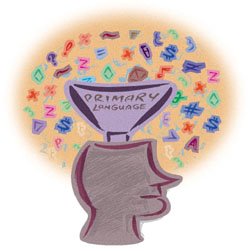
Improving Achievement for English-Learners [EdWeek Commnetary]
Wed, 23 Aug 2006 16:54:28 -0400
Author Claude Goldenberg writes that the growing number of and the lack of adequate progress among English-learners is of critical concern given that some estimates predict that by 2025, one in four public K-12 students will come from a home where a language other than English is spoken. Goldenberg is the executive director of the Center for Language Minority Education and Research at California State University-Long Beach, where he is also an associate dean of the college of education. He was a member of the National Literacy Panel.
Education Week
July 26, 2006,
Vol. 25, Issue 43, Pages 34-36
Commentary
Improving Achievement for English-Learners: What the Research Tells Us
By Claude Goldenberg
http://edweek.org/ew/articles/2006/07/26/43goldenberg.h25.html
The education of language- minority children has long been controversial and politically charged. Its challenges will grow in proportion to the numbers. Five million public school students—nearly one in nine—are limited in their English proficiency, an increase of 150 percent over the last decade. In some sections of the country, the increase has been staggering: In Southeastern states, the population of English-language learners grew by more than 400 percent between 1993-94 and 2003-04. By 2025, some estimates claim, one in four public K-12students will come from a home where a language other than English is spoken. Many will be limited in their English proficiency when they begin school; some will remain less than completely fluent for years.
In part because many English-learners never fully master their new language, they fare poorly in school when compared with children who are English-speakers. English-language learners consistently perform worse on tests of academic achievement—not just English proficiency—and score lower on critical state and national exams. This discrepancy bodes ill for the society as a whole, since the costs of large-scale underachievement among large sectors of the populace are very high. The growing number of and the lack of adequate progress among English-learners—even many who were born in the United States or have lived here for years—should concern us all.
Two major, government-funded reviews of the research on English-language learners have recently been completed, one by the 13-member National Literacy Panel ("Education Department Won’t Put Its Stamp on English-Learners Report," Aug. 31, 2005), the other by researchers from the Center for Research on Education, Diversity, and Excellence, or CREDE. Three of the main conclusions from these reports can help forge a foundation for large-scale improvement in the education of these students.
1. Instruction in the primary language aids achievement. Academic instruction in the students’ home language should be part of the educational program of English-language learners, if at all possible. The National Literacy Panel conducted a meta-analysis of experimental studies and concluded—as had four previous meta-analyses—that teaching reading skills in the first language is more effective in terms of second-language achievement than immersing children in English. No other educational practice with which I am familiar can claim support from five separate meta-analyses conducted by researchers across the ideological spectrum.
The effects of instruction in the primary language are modest but real. The average “effect size” is around 0.40 (estimates range from about 0.20 to about 0.60). This means that primary-language instruction can boost student achievement in the second language by about 12 to 15 percentile points. To provide some perspective, the separate, congressionally mandated National Reading Panel estimated that the average effect size of phonics instruction is 0.44, only somewhat larger than the most likely average effect size of primary-language instruction. Let’s be clear: Primary-language instruction is no panacea, just as phonics instruction is no panacea. But, in general, it makes a meaningful contribution to cognitive and academic growth.
Beyond this, however, there is little we can say with confidence about the role of the primary language in English-language learners’ education. Is more instruction in the primary language, and for more years, more beneficial than less? (The CREDE report concluded yes; the NLP report concluded that we do not know.) Is primary-language instruction more beneficial for some learners than for others? In an English-only situation, what is the most effective way to use the primary language to support children’s learning in the second language? We cannot say.
The NLP review found that Spanish and English reading can be taught simultaneously (at different times in the school day), with mutual benefit to literacy development in both languages. “Transfer” is the likely explanation for this finding, and for the more general finding that primary-language instruction promotes achievement in a second language. Most people find this contrary to common sense: How can instruction in one language lead to better achievement in another? But this is why we do research. If we relied solely on common sense, we would still think the earth is flat.
In point of fact, evidence suggests that literacy and other skills and knowledge transfer across languages: If you learn something in one language (which is easiest to do in the language you know best)—phonological or comprehension skills, for example, or a concept like democracy—you either know it or can more easily learn it in a second language. There is also the added benefit that primary-language instruction helps maintain the first language (which studies have resoundingly demonstrated is an outcome of bilingual education). Being biliterate and bicultural confers clear advantages intellectually and economically.
2. Good instruction for English-language learners is similar to good instruction for other, English-speaking students. Primary-language instruction is often not feasible for any of several reasons. But educators still have some important principles and findings on which to base practice. The best evidence we have suggests that English-language learners learn much the same way as their non-English-learning peers, and that good instruction for students in general tends to be good instruction for English-language learners in particular. Even when taught in English, a language they are simultaneously learning to speak and to understand, English-language learners do well with instruction that is similar in important respects to what is effective instruction for non-English-learners.
Policies that block use of the primary language and limit instructional accommodations for English-learners are simply not based on the best scientific evidence available.
Just as their English-speaking peers do, ELL students benefit from clear goals and objectives, well-designed instructional routines, active engagement and participation, informative feedback, opportunities to practice and apply new learning and transfer it to new situations, periodic review and practice, opportunities to interact with other students, and frequent assessments, with reteaching as needed. Existing studies suggest that what is known about effective instruction in general ought to be the foundation of effective teaching for English-learners. But accommodations are needed when instructing these students in English.
With regard to learning to read, English-learners benefit from instruction in discriminating and manipulating the sounds of the language (phonemic awareness), decoding words (phonics), and instruction designed to enhance vocabulary, reading fluency, and comprehension—all of which are components of effective literacy instruction for English-speakers, as the National Reading Panel reported in 2000. Writing instruction also makes a contribution to English-language learners’ literacy development.
Progress in the development of literacy seems to be similar among English-learning and English-speaking students. Phonological skills, including phonological awareness and decoding, are foundational. With good, structured, explicit teaching, English-language learners can make progress comparable to that of other students in the early stages of learning to read. Their language limitations begin to slow their progress as vocabulary and content knowledge become increasingly important, around the 3rd grade. It is thus critical that, from the very beginning, teachers work to develop these students’ English-language skills, particularly vocabulary. Vocabulary development is important for all students, but particularly for English-language learners. What constitutes effective vocabulary instruction for ELLs is not well understood; but there can be little doubt that explicit attention to vocabulary development—everyday words as well as more specialized academic words—should be part of English-learners’ school programs.
3. English-language learners require instructional accommodations. While general principles of effective instruction should be the basis for instructing English-learners, these students do need certain accommodations. An important finding from the National Literacy Panel was that the impact of instructional interventions is weaker for English-learners than it is for English-speakers, suggesting that additional supports, or accommodations, are needed in order for ELLs to derive as much benefit from effective instructional practices. These additional supports or accommodations, which have not yet been adequately validated by research, might include the following:
• Strategic use of the primary language;
• Predictable, clear, and consistent instructions, expectations, and routines;
• Extended explanations and additional opportunities for practice;
• Redundant information, such as visual cues and physical gestures;
• Focusing on the similarities/ differences between English and the native language;
• Building upon students’ knowledge and skills in their native languages;
• Identifying and clarifying difficult words and passages;
• Consolidating text knowledge through summarization;
• Providing extra practice in reading words, sentences, and stories;
• Targeting vocabulary and checking comprehension frequently; and
• Paraphrasing students’ remarks and encouraging expansion.
Providing English-language-development instruction and opportunities to extend oral English skills is critical for ELL students. This places an increased burden on students and teachers alike, since every lesson should target both content and English-language development. It is essential for students to make rapid progress in their oral English skills if they are to enter the educational mainstream and derive maximum benefit from classroom instruction delivered in English. Unfortunately—and surprisingly—the CREDE report reveals that research to date can tell us very little about how to accelerate progress in oral English-language development among ELL students, or which English-language-development approach is most effective.
What is known about effective instruction in general ought to be the foundation of effective teaching for English-learners.
Accommodations must also be made because of ELL students’ different experiential bases. The National Literacy Panel found that when students read texts with more-familiar material, their comprehension improved. (Readers’ proficiency in the language of the text, however, influenced comprehension much more than readers’ familiarity with passage content did.) Given the formidable language challenges English-language learners face, teachers should be especially aware of how they can help these students experience additional success by regularly providing reading matter with some degree of familiarity.
Many educators have also suggested that effective instruction for ELL students must be tailored to the cultures of the students, that is, incorporate the behavioral and interactional patterns rooted in students’ cultures. Although some studies have indicated that culturally accommodated instruction can promote engagement and higher-level participation during lessons, the NLP found no research demonstrating that culturally compatible instruction enhances the achievement of English-language learners.
------------------------------------------------------------------------
What do these findings, collectively, mean for the education of this growing segment of the school population? In numerous areas, there is insufficient research on which to base policy and practice. We can, nonetheless, lay claim to some things that matter. Chief among these are that (1) primary-language instruction enhances English-language learners’ academic achievement; (2) in many important respects, English-learners learn in the same way as non-English-learners; and (3) certain accommodations must be made when ELL students are instructed in English, and these accommodations probably must be in place for several years, until students reach sufficient familiarity with academic English to permit them to be successful in mainstream instruction.
Local or state policies, such as those in California, that block use of the primary language and limit instructional accommodations for English-learners are simply not based on the best scientific evidence available. As a profession and as a society, we have useful starting points for a renewed national, state, and local effort to improve the achievement of this fastest-growing segment of the school-age population. We must insist that practice and policy be based on the best evidence we have, rather than on politics or predilections.
Claude Goldenberg is the author of Successful School Change: Creating Settings to Improve Teaching and Learning (Teachers College Press, 2004). He is the executive director of the Center for Language Minority Education and Research at California State University-Long Beach, where he is also an associate dean of the college of education. He was a member of the National Literacy Panel.
------------------------------------------------------------------------
Check out AOL.com today. Breaking news, video search, pictures, email and IM. All on demand. Always Free.
--
Deborah K. Palmer
Assistant Professor in Curriculum and Instruction
Multilingual Studies: Bilingual Education
University of Texas at Austin
1 University Station, SZB 440E, D5700
Austin, TX 78712
debpalmer@mail.utexas.edu
ph: 512-232-4015
fax: 512-471-5550
Subscribe to:
Posts (Atom)