In the heart of Waelder, Texas, Lucille Contreras is restoring a relationship that was nearly lost to history. As founder of the Texas Tribal Buffalo Project (TTBF), she begins each day greeting the l’yane—buffalo in her Lipan Apache language—that roam freely across her ranch. What started with just nine buffalo has grown into a thriving herd of more than twenty, part of a larger vision to “rematriate” the land, restore Indigenous knowledge, and reconnect Texas Native peoples with their ancestral relatives. Through regenerative herding, cultural events, children’s camps, and even buffalo meat sales, TTBF blends tradition with sustainability, making the buffalo once again central to community life.
Contreras’ journey back to Texas—and back to her Indigenous roots—was sparked during the pandemic, with the encouragement of environmental activist Winona LaDuke. Now, TTBF is more than a ranch; it’s a gathering place for cultural renewal, genealogy, and community healing.
The project is expanding to a new 150-acre site in Floresville, where more events, workshops, and community gatherings are planned. For Contreras, this work is both personal and collective: reconnecting to her Lipan Apache heritage, linking families once separated, and nurturing a shared vision of resilience. As she says, “The chance to reconnect with the buffalo is a chance to reconnect with everything that the buffalo once was for so many people.”
-Angela Valenzuela
The Texas Tribal Buffalo Project is educating people about the state’s native buffalo in the Southern Plains

by Kaiya Little | Texas Highways
Overlooking sprawling mesquite grass and patches of native honeysuckle,
 |
Lucille Contreras, co-founder of Texas Tribal Buffalo Project in Waelder, Tx |
With a fresh cup of coffee in hand, Contreras’ days start with a trip around the property to greet the l’yane—which means buffalo in Contreras’ Lipan Apache language—as they play their usual game of hiding around different parts of the ranch. On the days where she finds them all together, she says the moment is nothing short of beautiful. “It gives me good peace of mind and helps me to realign and refocus,” Contreras says.
The operation rehabilitates herds of buffalo while also offering workshops and opportunities for visitors to volunteer in ranch activities and take part in cultural events for all ages. At their children’s day care and camp events, guests can experience tipi housing and Indigenous medicine-making on the property. The ranch also sells buffalo meat in various cuts at farmers markets and through their online shop.
Caught in the feeling of isolation during the pandemic from her previous home in South Dakota in 2020, Contreras followed advice from her mentor and member of the Ojibwe tribe, Winona LaDuke, to use the time as an opportunity. LaDuke, an internationally renowned writer and environmentalist, taught Contreras to embrace the uncertain.
“There was a pandemic portal where people could actually change the trajectory of their lives,” Contreras says. “Where it seemed during this time like the world stood still.”
Having grown up in San Antonio, Contreras decided to return to Texas where she applied for the USDA Beginning Farmer and Rancher loan program. Leaning on her background in ranching programs, she received 77 acres on the ancestral lands of the Lipan Apache to found the TTBF. In 2019, the state of Texas recognized the Lipan Apache, who currently have various groups and thousands of enrolled members around the state.
Texas is home to a handful of Indigenous communities, three of which—the Alabama-Coushatta Tribe of Texas, the Kickapoo Traditional Tribe of Texas, and the Ysleta del Sur Pueblo—are federally recognized. Historically, the Lipan Apache were located around Central Texas where Contreras planted her ranch’s roots. “My heart, my spirit, always yearned to be out in the country, out in the wilderness,” Contreras says.
Contreras began her herd with nine buffalo. She set out to achieve rematriation, a concept used by Indigenous women that seeks to restore the land and its relationship with Indigenous communities through traditional knowledge and practices. Contreras also centers a practice known as “regenerative herding.” This technique refers to a holistic approach toward soil and water care that allows the biodiversity to thrive naturally and the buffalo to freely move and graze.
“It was absolutely a dream come true to be able to come back home and fulfill my destiny of having this buffalo herd,” Contreras says. “And being able to teach our Texas indigenous lineal descendants.”
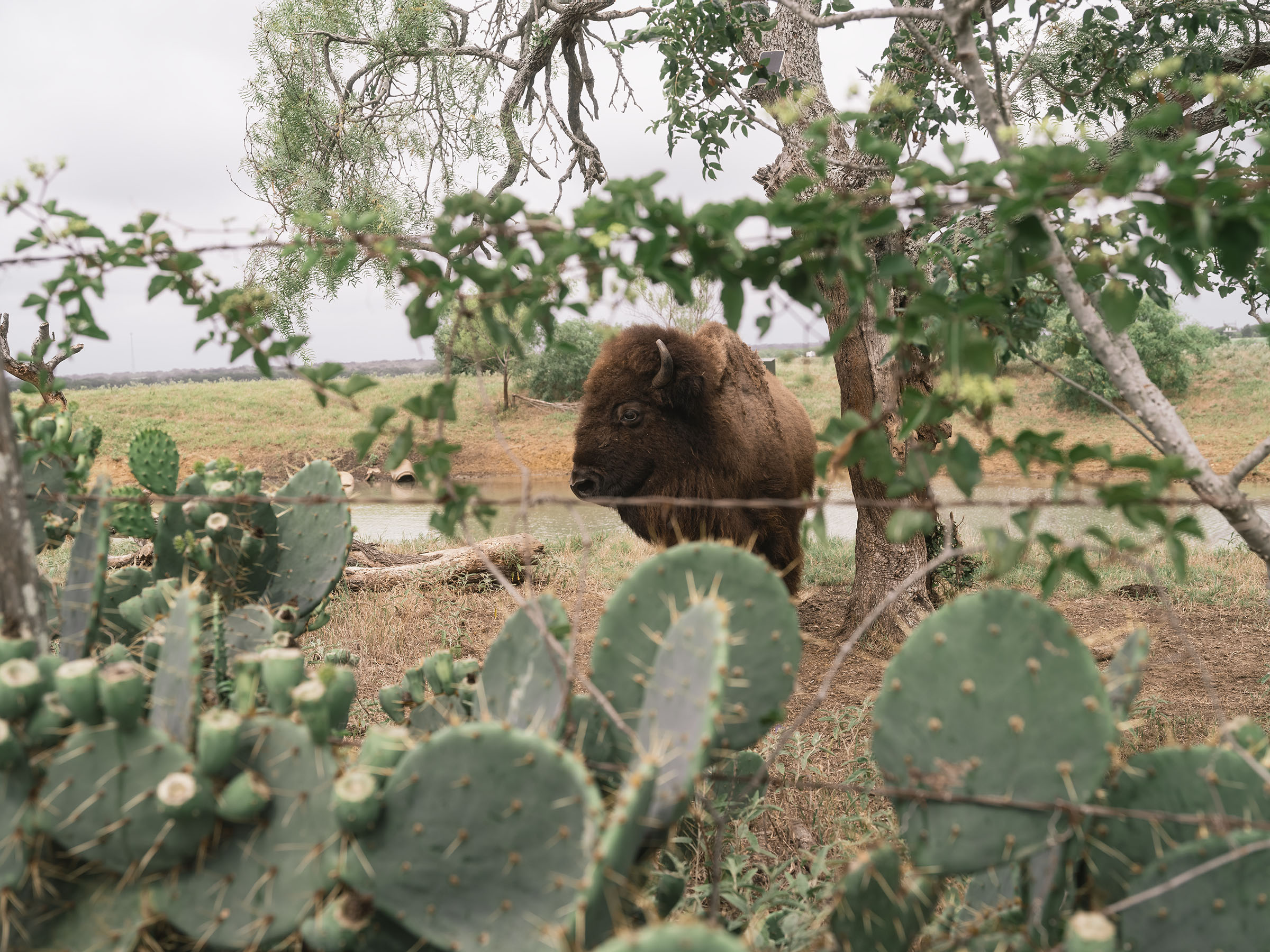
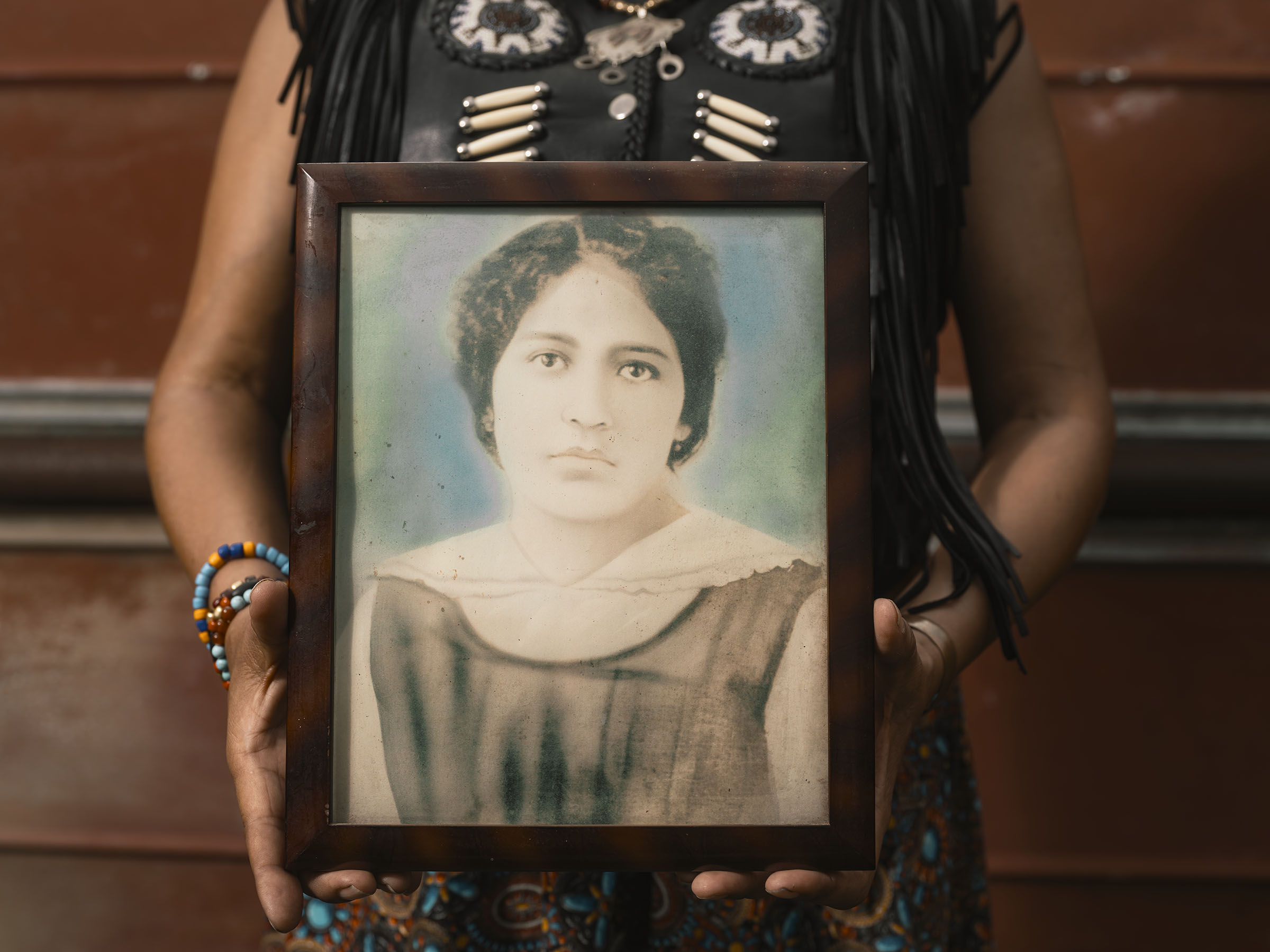
Located on the traditional homelands of the Lipan Apache, the ranch is also placed in the buffalo corridor, an area between Canada and Mexico that Contreras says was once home to millions of buffalo and traveled by generations of Indigenous groups—linking their journeys and establishing the relationship between people and animals as relatives, she explains. “The chance to reconnect with the buffalo is a chance to reconnect with everything that the buffalo once was for so many people,” Contreras says.
While she searched for ranch volunteers, Contreras’ work caught the attention of Tricia Whitman, another member of the Lipan Apache and director of the TEX INDIGI DNA project, an effort to create a genetic database similar to that of platforms like 23andMe. She started with her grandma’s DNA sample and oral histories collected from family throughout the 1990s. Through community connections, Whitman was eventually able to generate enough data to draw lineal relationships to Indigenous people across the state by 2018.

Contreras learned she was connected to a couple members of her staff, including Whitman. “We were really excited, because our lineage is difficult to trace, which is the pattern that we see with our indigenous lineages here in Texas,” Whitman says. “We rely on DNA trails to connect us, and it falls in line with history during that time [when the state of Texas was formed]. A lot of families were disconnected.”
Contreras didn’t become aware of her Indigenous roots until her twenties when her father revealed their Lipan Apache heritage. When she learned the news, Contreras says she almost fell out of her chair. “Everything in my life made sense,” Contreras says. “Once I stepped on to the path that I was meant to be on, doors continued to open.”
In October of 2024, TTBF announced plans to expand their initiatives in Waelder with an additional 150 acres in Floresville, a town about 80 miles southwest of the original location. As they build the new ranch, visitors and volunteers can expect events such as community meet-ups, a Veteran’s Day barbecue, and the site’s inaugural open house on June 21.
Through the Tribal Buffalo Project, Contreras says she has only continued being guided in the right direction as she works with the ranch and community. “There are many other Texas Indigenous nations and tribes that are coming within the fold of the Texas Tribal Buffalo Project, or within the herd, so to speak,” Contreras says. “We’ve all been waiting for each other.”

No comments:
Post a Comment