Translate

Showing posts with label Indigenous knowledge. Show all posts

Monday, November 08, 2021

This tribe helped the Pilgrims survive for their first Thanksgiving. They still regret it 400 years later.

It made me sad to read this story of the Wampanoags who suffered directly the consequences of settler colonialism. Not that we all have not, but no one can tell this specific story but them. As we embark on the Thanksgiving holiday, let's not turn a blind eye toward the injustices of the past as these find ongoing expression in the present. 

To alleviate injustice, we can each do our part. We must educate ourselves, for example, on a core issue of Indigenous Food Sovereignty. Accordingly, here is a May, 2021 report [pdf] on the matter authored by Olivia Chan and Joel Anderson titled, "Cultivating Resilience in Indian Country An Assessment of COVID-19's Impact on Tribal Food Systems." 

The authors document a chronic problem of barriers to food access and land that directly impacts environmental and economic problems Native Americans face in Indian Country today that the pandemic has exacerbated. Moreover, their food and land sovereignty is a matter of self interest to the whole as good nutrition and well-being is of benefit to all.

In this vein, here is a breathtaking piece I just came across on ancestral knowledge and wisdom in relation to "forest gardens" in British Columbia titled, "Pacific Northwest's ‘forest gardens' were deliberately planted by Indigenous people." Technological achievements like these—and there are many—rival anything we might imagine as singular or exceptional in the Western world. Without a doubt, Indigenous ancestral knowledge and wisdom is life-saving knowledge both for ourselves and the planet.

-Angela Valenzuela

This tribe helped the Pilgrims survive for their 

first Thanksgiving. They still regret it 400 years 

later.

Long marginalized and misrepresented in U.S. history, 

the Wampanoags are bracing for the 400th anniversary 

of the first Pilgrim Thanksgiving in 1621


Anita Peters, who is Mashpee Wampanoag and goes by the name Mother Bear, packs up the traditional clothing and furnishings from the wetu, a traditional bark-covered wood-framed building that is part of the Mashpee Wampanoag Indian Museum 30 miles from Plymouth, Mass. (Josh Reynolds for The Washington Post)

By Dana Hedgpeth | Nov. 4, 2021
Today at 8:00 a.m. EDT

PLYMOUTH, Mass. — Overlooking the chilly waters of Plymouth

Bay, about three dozen tourists swarmed a park ranger as he recounted 

the history of Plymouth Rock — the famous symbol of the arrival of the 

Pilgrims here four centuries ago.


Nearby, others waited to tour a replica of the Mayflower, the ship that carried the Pilgrims across the ocean.


On a hilltop above stood a quiet tribute to the American Indians who helped the starving Pilgrims survive. Few people bother to visit the statue of Ousamequin — the chief, or sachem, of the Wampanoag Nation whose people once numbered somewhere between 30,000 to 100,000 and whose land once stretched from Southeastern Massachusetts to parts of Rhode Island.


Long marginalized and misrepresented in the American story, the Wampanoags are braced for what’s coming this month as the country marks the 400th anniversary of the first Thanksgiving between the Pilgrims and Indians.


But the actual history of what happened in 1621 bears little resemblance to what most Americans are taught in grade school, historians say. There was likely no turkey served. There were no feathered headdresses worn. And, initially, there was no effort by the Pilgrims to invite the Wampanoags to the feast they’d made possible.


Just as Native American activists have demanded the removal of Christopher Columbus statues and pushed to transform the Columbus holiday into an acknowledgment of his brutality toward Indigenous people, they have long objected to the popular portrayal of Thanksgiving.


Thanksgiving’s hidden past: Plymouth in 1621 wasn’t close to being the first celebration


For the Wampanoags and many other American Indians, the fourth Thursday in November is considered a day of mourning, not a day of celebration.


Because while the Wampanoags did help the Pilgrims survive, their support was followed by years of a slow, unfolding genocide of their people and the taking of their land.


To learn the history of the Wampanoags and what happened to them after the first Thanksgiving, a visitor has to drive 30 miles south of Plymouth to the town of Mashpee, where a modest, clapboard museum sits along a two-lane road. Outside, there’s a wetu, a traditional Wampanoag house made from cedar poles and the bark of tulip poplar trees, and a mishoon, an Indian canoe.

0:04 / 2:58
In this video, Native Americans demonstrate how their ancestors lived, and retell the relationship 
between the Wampanoag tribe and the English Pilgrims. (Courtesy of SmokeSygnals/Plymouth 400)

in

In this video, Native Americans demonstrate how their ancestors lived, and retell the relationship between the Wampanoag tribe and the English Pilgrims. (Courtesy of SmokeSygnals/Plymouth 400)


Inside the three-room house sits Mother Bear, a 71-year-old Mashpee Wampanoag, hand-stitching a deer skin hat. She’s lived her whole life in this town and is considered one of the keepers of the Wampanoag version of the first Thanksgiving and how the encounter turned into a centuries-long disaster for the Mashpee, who now number about 2,800.


That story continues to get ignored by the roughly 1.5 million annual visitors to Plymouth’s museums and souvenir shops. The Wampanoag museum draws about 800 visitors a year.

Paula Peters, a Mashpee Wampanoag who is an author and educator on Native American history, said “we don’t acknowledge the American holiday of Thanksgiving … it’s a marginalization and mistelling of our story.”


‘The Great Dying’


A statue of Ousamequin, the chief, or sachem, of the Wampanoag Nation, overlooks Plymouth Bay. (AP Photo/David Goldman)


The Wampanoags, whose name means “People of the First Light” in their native language, trace their ancestors back at least 10,000 years to southeastern Massachusetts, a land they called Patuxet.


In the 1600s, they lived in 69 villages, each with a chief, or sachem, and a medicine man. They had “messenger runners,” members of the tribe with good memories and the endurance to run to neighboring villages to deliver messages.


They occupied a land of plenty, hunting deer, elk and bear in the forests, fishing for herring and trout, and harvesting quahogs in the rivers and bays. They planted corn and used fish remains as fertilizer. In the winter, they moved inland from the harsh weather, and in the spring they moved to the coastlines.


They had traded — and fought — with European explorers since 1524.


In 1614, before the arrival of the Pilgrims, the English lured a well-known Wampanoag — Tisquantum, who was called Squanto by the English — and 20 other Wampanoag men onto a ship with the intention of selling them into slavery in Malaga, Spain. Squanto spent years trying to get back to his homeland.


During his absence, the Wampanoags were nearly wiped out by a mysterious disease that some Wampanoags believe came from the feces of rats aboard European boats, while other historians think it was likely small pox or possibly yellow fever.


Known as “The Great Dying,” the pandemic lasted three years.


By the time Squanto returned home in 1619, two-thirds of his people had been killed by it. The English explorer Thomas Dermer described the once-populous villages along the banks of the bay as being “utterly void” of people.


In 1620, the English aboard the Mayflower made their way to Plymouth after making landfall in Provincetown. The Wampanoags watched as women and children got off the boat.


They knew their interactions with the Europeans would be different this time.


“You don’t bring your women and children if you’re planning to fight,” said Paula Peters, who also runs her own communications agency called SmokeSygnals.


Powhatan and his people: The 15,000 American Indians shoved aside by Jamestown’s settlers


Continue reading here-->


Monday, June 28, 2021

Happening tomorrow. Linguistic Connections of the Americas - Nahuatl and Ute

Super exciting! Happening tomorrow. A conversation across borders about the Uto-Aztecan language family, investigating linguistic correspondences, including identities. Scroll down for more information.

-Angela Valenzuela


Linguistic Connections of the Americas - Nahuatl and Ute

Date: Tuesday, June 29

Time: 1-2:30 p.m. MST

Locations: YouTube (Spanish) and Zoom (English and Spanish channels)

Learn more: Webpage

Please note: You have the option to join us via YouTube or Zoom based on your preference. If you join us through Zoom, you will need to register in advance to receive the Zoom link.  

In partnership with the Consulate of Mexico in Salt Lake City, join us for a virtual discussion with experts as they discuss two indigenous language groups, Ute and Nahuatl. Ute and Nahuatl occupy opposite ends of the Uto-Aztecan language family -- not only geographically but also linguistically. This presentation will highlight some of the similarities and differences between the two languages and cultures and explain why linguists are nevertheless convinced that they belong together.


Thank you,

Meredith Medina


Events and Communications Coordinator

International & Area Studies

University of Utah, CTIHB 210

801.581.6518

www.ias.utah.edu


Facebook Small Instagram Small Pinterest Small Twitter Small Linkedin Small Youtubesmall

Sunday, February 14, 2021

Lee Klinger – Indigenous-based forest management – looking to the past for a way forward •Nov 14, 2019

Friends,

I'm happy to introduce you to the work of Lee Klinger that appears in this book by Jacobs, D. T. [Four Arrows] (2006). Unlearning the language of conquest: Scholars expose anti-Indianism in America (University of Texas Press). He is the only non-Native American contributor to this anthology and his work is outstanding. His specific contribution is titled, "Ecological Evidence of Large-Scale Silviculture by California Indians," pp. 153-165. It debunks myths about Indigenous peoples of the Americas as lacking in technological know-how. 

Far from it. Silviculture refers to the extraordinary scientific knowledge and wisdom of our Indigenous ancestors to maintain and preserve forests.  Modern humans are mostly not even able to think at the level about which he writes and speaks as in this video appearing below.  That is, our Native ancestors to this continent tended not only gardens and farms, but actual forests and woodlands. They set trees and forests on fire with great knowledge and intention, yielding the impressive groves of the giant sequoias and redwoods in the Northwestern regions of the country, known as California and Oregon today.

If we are to save ourselves and the planet, we would do well to revitalize and embrace Indigenous languages, wisdom, knowledge, and ways of knowing and being in relation with Mother Earth. Thankfully, as you can hear in this video presentation, this is exactly what Klinger is doing.

Check out an earlier illuminating blog where I post a piece on Four Arrows titled, "The Indigenization Controversy  For Whom and By Whom?"

Finally, Unlearning the Language of Conquest  is an excellent addition to your bookshelf, as well.

-Angela Valenzuela

Sunday, November 29, 2020

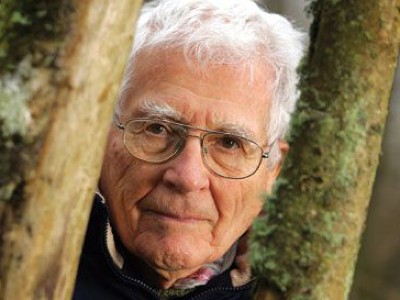
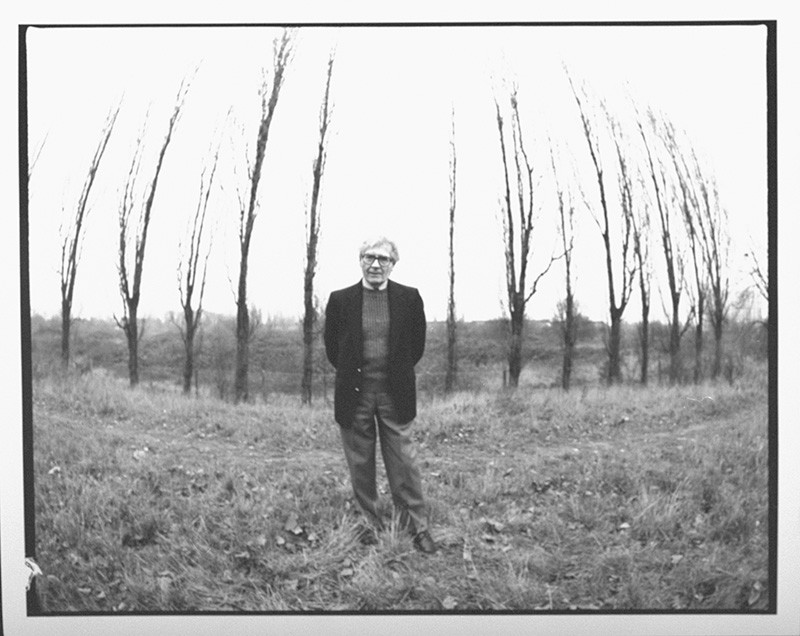
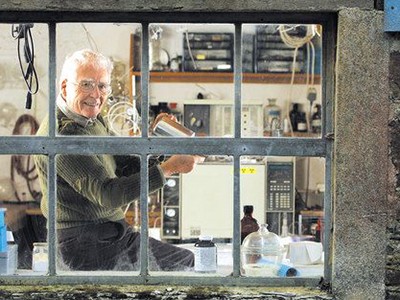
James Lovelock at 100: the Gaia saga continues by Tim Radford in Nature.com

It's always neat to learn from people with out-of-the-box thinking. Since this piece was published last year, scientist James Lovelock is now 101 years old. As addressed in this piece below, Lovelock advanced the "Gaia Hypothesis" in 1972 to make the case that others have also made, that the Earth is a living organism that is self-regulating. NB: "Gaia" is ancient Greek for Earth.

This is a central epistemological standpoint for Native peoples, that is, that Earth, Mother Earth, is a sentient, living organism (also read: The Earth is a Sentient Living Organism), a not-so-radical notion the pandemic has perhaps made clear. Little different from viruses and bacterias that help constitute the building blocks of life as we know it, we are all a part of Earth and the cosmos and our evolution as homo sapiens is entwined with Her, with Gaia, and the cosmos. What a profound thing to contemplate.

Lovelock is clearly a rock-star centenarian, geophysiologist. Although he has very interesting potential solutions to climate warming, I am skeptical about his optimism in Artificial Intelligence (AI), particularly cyborgs' expected capacity to avert humans' species extinction. I would much rather that we pay attention for once to our Indigenous elders who still have the wisdom and knowledge for humans' self-preservation.

For example, read this encouraging NPR piece out of California in the wake of the state's devastating fires: California Teaming Up With Native American Tribes To Prevent Wildfires.

These measures of teaming up with Native peoples must be taken up everywhere globally and not in a way that appropriates Native knowledge, but in a way that humbly and respectfully includes them, in partnership, as full-fledged partners to the solutions of an Earth that is severely out of balance.

Great food for thought on a Sunday morning.

-Angela Valenzuela

James Lovelock at 100: the Gaia saga continues
Tim Radford reassesses the independent scientist’s groundbreaking body of writing.

by Tim Radford | Nature.com


James Lovelock proposes that Earth will be saved by artificial intelligence.Credit: Tim Cuff/Alamy


James Lovelock will always be associated with one big idea: Gaia. The Oxford English Dictionary defines this as “the global ecosystem, understood to function in the manner of a vast self-regulating organism, in the context of which all living things collectively define and maintain the conditions conducive for life on earth”. It cites the independent scientist as the first to use the term (ancient Greek for Earth) in this way, in 1972.

On 26 July, Lovelock will be 100; his long career has sparkled with ideas. His first solo letter to Nature — on a new formula for the wax pencils used to mark Petri dishes — was published in 1945. But, unusually for a scientist, books are his medium of choice. He has written or co-authored around a dozen; the latest, Novacene, is published this month.

As that book’s preface notes, Lovelock’s nomination to the Royal Society in 1974 listed his work on “respiratory infections, air sterilisation, blood-clotting, the freezing of living cells, artificial insemination, gas chromatography and so on”. The “and so on” briefly referred to climate science, and to the possibility of extraterrestrial life. The story of Gaia began with a question posed by NASA scientists while Lovelock was a consultant at the Jet Propulsion Laboratory in Pasadena, California. That is, how could you tell if a planet such as Mars harboured life?


Final warning from a sceptical prophet


With microbiologist Lynn Margulis, Lovelock published a series of papers on the subject. In 1974, they developed a view of Earth’s atmosphere as “a component part of the biosphere rather than as a mere environment for life” (J. E. Lovelock and L. Margulis Tellus 26, 2–10; 1974). Earth’s atmosphere contains oxygen and methane — reactive gases, constantly renewed. That disequilibrium radiates an infrared signal, which Lovelock later described as an “unceasing song of life” that is “audible to anyone with a receiver, even from outside the Solar System”. Thus, the answer to NASA’s question was already written in the static Martian atmosphere, composed almost entirely of non-reactive carbon dioxide.

That was the beginning of a sustained and developing argument, in the face of sometimes dismissive criticism, that recast Earth as, in effect, a superorganism. Lovelock’s Gaia theory states that, for much of the past 3.8 billion years, a holistic feedback system has played out in the biosphere, with life forms regulating temperature and proportions of gases in the atmosphere to life’s advantage. Earth system science is now firmly established as a valuable intellectual framework for understanding the only planet known to harbour life, and increasingly vulnerable to the unthinking actions of one species. Colleagues and co-authors acknowledge that the argument continues, but endorse the importance of Lovelock and Margulis.
Entwined evolution

“The insight that the oceans and the atmosphere are thoroughly entwined with the living biosphere, and must be understood as a coupled system, has been completely vindicated,” says marine and atmospheric scientist Andrew Watson of the University of Exeter, UK. Lee Kump goes further. “Lovelock also showed us that Darwin had it only half right,” says Kump, a geoscientist at Pennsylvania State University in University Park. “Life evolves in response to environmental change, but the environment also evolves in response to biological change.” Despite severing formal links with universities decades ago, Lovelock has been showered with honorary degrees and awards from bodies as varied as NASA and the Geological Society of London.

The procession of engaging books began in 1979 with Gaia: A New Look at Life on Earth. Each volume made its case more forcefully than the last, exploring what was known first as the Gaia hypothesis, then simply as Gaia, and the hazards facing either the biosphere or humanity. The books include his endearing autobiography Homage to Gaia (2000), increasingly urgent warnings of climate devastation in The Revenge of Gaia (2006) and The Vanishing Face of Gaia (2009), and the less apocalyptic A Rough Ride to the Future (2014).


James Lovelock pictured in 1989.Credit: Terry Smith/The LIFE Images Collection/Getty

Novacene picks up from that note of hope, and showcases another big idea. Gaia might, after all, be saved — by the singularity. This artificial-intelligence takeover, which so alarms many doomsayers, will be our redemption. Lovelock argues that increasingly self-engineering cyborgs with massive intellectual prowess and a telepathically shared consciousness will recognize that they, like organisms, are prey to climate change. They will understand that the planetary thermostat, the control system, is Gaia herself; and, in tandem with her, they will save the sum of remaining living tissue and themselves. The planet will enter the Novacene epoch: Lovelock’s coinage for the successor to the informally named Anthropocene.

Lovelock welcomes this. “Whatever harm we have done to the Earth, we have, just in time, redeemed ourselves by acting simultaneously as parents and midwives to the cyborgs,” he writes. He takes the long view on this rescue, however. Climate change is a real threat to humanity, but Earth will inevitably be overtaken by a ‘big heat’ in a few billion years, as the Sun slowly waxes more fierce.

Although co-authored with journalist Bryan Appleyard, Novacene reads like undiluted Lovelock. From the start of his writing life — no matter how tortuous the narrative or complex the argument — Lovelock has written persuasively. In his debut, Gaia, he sidestepped evolution’s first and biggest obstacle (how to get from organic chemistry to a living, devouring, excreting, replicating organism) in two sentences that seem to me models of clarity and brevity: “Life was thus an almost utterly improbable event with almost infinite opportunities of happening. So it did.”


No place like home


In The Ages of Gaia (1988), a richer and more closely argued restatement, he answered the vexed question of how life contradicts the second law of thermodynamics. Life, he wrote, “has evolved with the Earth as a highly coupled system so as to favour survival. It is like a skilled accountant, never evading the payment of the required tax but also never missing a loophole.” This metaphoric brilliance is no rarity. A few pages on, he reminds us that Gaia is “a quarter as old as time itself. She is so old that her birth was in the region of time where ignorance is an ocean and the territory of knowledge is limited to small islands, whose possession gives a spurious sense of certainty.”

Lovelock’s Gaia theory is only one aspect of his nonconformism. His vigorous support for nuclear power annoys many environmentalists. Brought up as a Quaker, he registered as a conscientious objector in 1940, then changed his mind and prepared for military action in 1944 (the National Institute for Medical Research in London considered him more useful in the lab). Later, he became a consultant for the security services of Britain’s defence ministry. Among his inventions is an electron capture detector sensitive enough to identify vanishingly small traces of pollutants — such as the pesticides that spurred Rachel Carson to write the 1962 book Silent Spring — and chlorofluorocarbons, later implicated in damage to the ozone layer. In Novacene, he writes teasingly that he now sees himself as an engineer who values intuition above reason.

Lovelock to the last, he even has a kind word for the Anthropocene, marked by degradation of natural resources and the devastation of the wild things with which humanity evolved. He gives a “shout of joy, joy at the colossal expansion of our knowledge of the world and the cosmos”, and exults that the digital revolution ultimately “empowers evolution”. Is he right? Some of us might live to find out. In the meantime, if you want a sense of hyperintelligence in bipedal form, Novacene is a good place to start.