Translate

Showing posts with label teaching profession. Show all posts

Wednesday, August 03, 2022

122 Teachers Speak: Surviving Student Learning Loss, Behavior Challenges

It's profound to consider all the havoc wreaked by the pandemic and how it has implications for children's development. However, this piece focuses on just how brutal it has been for teachers that today accounts for teachers resigning and leaving the profession in great numbers. Read, for example, this deeply concerning Aug 1st piece in the Houston Chronicle titled, Houston districts trying to fill thousands of teacher vacancies just 2 weeks before school starts.

The irony for us here in Texas, and presumably throughout the U.S., as well, is this Charles Butt Foundation report that I previously posted which shows that respect for teachers in Texas has been increasing among parents with school-aged, children, and is at an all-time high as a result of the pandemic. Accordingly, I quote one of their key findings on page 3 as follows:

“Texas public school parents’ ratings of their community’s public schools have surged since the onset of the coronavirus pandemic, signaling broad appreciation of schools’ – and teachers’ – efforts to respond amid closures and controversy.” (p. 3)

Report citation:

o   Charles Butt Foundation. (2021). Connected Through Our Schools: The 2022 poll on Texans' attitudes toward public education. [Report]

While these are precarious times for public education, let's not squander this good will and let's pass policies that pay all teachers well, that diversify the teacher workforce through Grow Your Own teacher programs and other measures, and address working conditions, especially the toxic environment created by high-stakes assessment and accountability to make the profession attractive to current and future teachers. And while we are at it, let's be sure to defend public education against vouchers schemes and privatization proposals.

-Angela Valenzuela

#TheGreatResignation

122 Teachers Speak: Surviving Student Learning Loss, Behavior Challenges

In survey, teachers reflect on students’ struggles with raising hands, forming sentences, using scissors, crayons, tying shoes, and angry outbursts

By Marianna McMurdock, Jasmine De Leon & Meghan Gallagher | August 1, 2022The 2021-22 school year was a tough one for America’s children. 

From regular f-bombs and bullying to difficulty finishing assignments, raising hands or buttoning pants, young people across the country are struggling to adjust to classrooms after lengthy pandemic isolation. 122 teachers from 37 states and Washington, D.C. painted a picture of a generation emotionally anxious, academically confused and addicted to technology, in a survey created by The 74.

Educators from coast to coast noted students had difficulty with common classroom routines — writing down homework, raising their hands to speak, meeting deadlines. And for the youngest learners, underdeveloped motor skills made it difficult to use scissors, color, paint and print letters. 

In their responses, teachers plead for parents and other adults in their life to lead with “grace”: ask questions, read to them every day, listen to frustrations and model behavior.

“We have a huge problem we’re facing with kids now as a result of the pandemic, which isn’t over,” said Pedro Noguera, sociologist of education and dean of USC’s Rossier School of Education. “I hear it directly from teachers — talking about a kind of chronic absenteeism, kids not wanting to come, kids not being motivated when they do come, and then the behavior challenges that come when they are present.” 

And while states iron out summer programs and tutoring initiatives for next year, made possible by pandemic relief funds, teachers have identified a summer wishlist for how parents and guardians can help the young people in their life.

The skills typical of age groups have seemingly shifted, teachers reported in the survey. Elementary students fumble to form sentences, use scissors and pencils; middle school students can’t quite grasp the concept of multiplying and dividing fractions. High schoolers are silent during discussions, averting the gaze and judgment of peers. 

And racist, homophobic and transphobic language is on the rise, teachers say, as part of an a pattern of more aggressive behavior

“This year’s students had significantly more behavioral problems than most previous groups of students. They made inappropriate racial remarks, struggled with owning the issues they created, made disrespectful comments to staff, engaged in bullying and even physical altercations,” a 7th grade teacher observed in Nebraska. 

In Kentucky, an elementary educator asked a school mental health practitioner to lead social skills peer groups to curb conflict and get kids talking about their emotions. 


Above are the words teachers used to describe student behavior and discipline challenges in the 2021-22 school year.

One fifth grade teacher in Arizona said students struggled to manage emotions and respect each other: “…Being honest about social issues (never heard so many lies before), tidiness, respecting others property [or] space. Arguments and competition [are] getting out of control.”

“Any little thing can wreck their whole day,” they added.

Young people now need extra practice with staying organized, taking notes, managing their time and following through with deadlines, many teachers told The 74. As one Texas high school English teacher said of their students’ executive functioning skills, due dates would “snowball… They quickly became overwhelmed.” 

“Their fuses are just shorter and the concept of respect seems different. You can’t push them too much or they turn off … Their emotional state is still in turmoil, partly because they are teens, but also since the concept of school is new again,” one California English teacher said. 

Accordingly, educators are adapting policies and class time to help students manage workloads. 

“I’ve learned to be much more understanding to what’s going on at home. I’ve also scaled back on ‘homework’ and deadlines due to absences and personal situations,” said a 7th grade English teacher in southern California. I’ve also used class time to help students organize themselves or catch up on work. Some often just appreciate time to clean out their backpack.”

ACADEMIC CHALLENGES

In elementary and middle school, teachers observed a host of language challenges. Students found phonics and reading aloud difficult, along with forming grammatically correct sentences and capitalization. 

Reading longer texts, inferring meaning, and thinking critically were challenging for students of all ages, educators said. 

In math, elementary school children struggled to understand numbers and order of operations. 

“4th graders came having major gaps in basics of arithmetic … operations, number sense, problem solving,” said Stafford, Virginia teacher Jill Lottes, whose students could also not speak or write in full sentences when they returned in-person last fall.

Educators across state lines and grade levels noticed shorter attention spans and a lack of “stamina” or motivation to focus — listening to peers in class, and on most assignments. 

In response, teachers incorporated more learning by doing; slowed down the pace of lessons; and added reading and writing activities to classes that never usually reviewed them, like math and Spanish. 

“I am very firm with procedures and expectations, and saw much more success this year. I was able to build relationships with the students because they knew what my expectations were, but also that I cared,” said Andrea Calderon, a 7th grade English teacher in southern California. 

For one first grade teacher in northern California, the biggest change in her teaching was devoting regular class time throughout the year to talk about behavior — how they treat each other, and why. It felt counterintuitive, given how much academic growth needed to happen.

“I think that a lot of last year for them was sitting in front of an iPad for a few hours at home, and then watching TV the rest of the time,” the teacher said. “I don’t know how much time most of the parents of our students spend with their kids talking with them, problem-solving with them, engaging with them.” 

Challenges with motor, executive functioning skills 


Above are the words teachers used to describe motor and executive functioning skills students were missing in the 2021-22 school year. 

Across ages, teachers also observed students’ difficulty keeping track of their work and collaborating with their peers. 

“Students really struggled with completing group [or] partner activities … having to wait their turn or share materials wasn’t something that was as big of an issue in middle school prior,” said one 7th grade teacher in Columbia, South Carolina. 

Elementary school teacher Catherine Graber noticed similar trends in Louisville, Kentucky: “Social awareness and relationship skills were areas of growth. I worked with the school mental health practitioner to facilitate social skills peer groups for some small groups of students.”


Behavior challenges

As compared to pre-pandemic school years, many teachers noticed a rise in behavioral concerns, including fighting, bullying in person and on social media, and using sexual and racial slurs. 

“The last two years have been some of the most divisive in American society … Show the kids what it looks like to respect each other and stop treating everyone like an enemy,” said Illinois middle school teacher Anthony Modica. 

For young children, behavior changes were more subtle. 

“It was fairly obvious to me that they probably hadn’t had a lot of adult interaction over the last year or two, and they were just so talkative, so needy, just sort of over the top in terms of how much energy they needed and wanted from me and the other adults in our classroom,” said a first grade teacher from Emeryville, California. 

Key for most educators was getting to the root of behavior and showing kids what it looks like to talk through emotions. 

“I still took time to ask questions about how or why a student was feeling or acting out negatively,” said a 2nd grade ESL teacher in Carrollton, Texas. “I also took the time to apologize to them when I overreacted and explain my feelings in a child friendly way. This went a long way in building trust and respect between us.”

Virtually all 122 educators surveyed acknowledged that behavior and academic challenges are challenging but not unexpected given the pandemic and exacerbated youth mental health crisis. 

“We can’t just expect kids are going to just pop right back into where they were pre-pandemic,” a third grade teacher outside of Minneapolis said in an interview with The 74. “We’re going to have to do a lot more work to settle them into what school really is like and make them feel safe…”

And academics like Pedro Noguera say children will need much more than just academic recovery to feel like school matters. 

“We have to bring some joy to learning and to being in school, so that kids want to be there,” said Noguera. “A sense of joy comes from a sense of belonging…So music, theater, sports have to be more integrated into the academic program, and not treated as an afterthought.”

Marianna McMurdock is a staff reporter at The 74.

@marimcmurdock marianna@the74million.org


Friday, March 25, 2022

Seven Texas Teachers on the State of Education: “I’m Tired of Getting Punched.”

Interlocking crises are ruinous to public education. Teachers are burning out. There is way too much stress and pressure on our teachers—to the point of unreasonableness. No, this isn't at all a true year of what teaching is. However, that's of little consolation to overly-stressed teachers who are bearing the brunt of two years of a pandemic.

If we can do one thing, based on what we read here, let's stop testing these students and let's refocus on the relational, healing, uplifting aspects of education. All of our youth are capable of achieving at high levels. What they need, however, is for their needs to get attended to. So many are traumatized and they need how to move forward in their relationships, make friends, and resolve problems. Let's indeed tackle the hard problems so that our youth and teachers can get on with learning.

-Angela Valenzuela

Seven Texas Teachers on the State of Education: “I’m Tired of Getting Punched.” After two years of hell, Texas teachers are burned-out, angry, tired—and sounding the alarm about public education.

Even in the best of times, teaching is a challenging profession. In Texas, K–12 educators have long contended with relatively low pay, a Byzantine school finance system, high-stakes standardized testing, and indifferent politicians. But the COVID-19 pandemic—now in its third year—has introduced extraordinary new obstacles. There’s severe understaffing, heated debates over critical race theory, and plummeting standardized test scores, not to mention the slew of difficulties that accompany remote learning. These interlocking crises can sometimes make the classroom feel like a pressure cooker. And yet teachers—most of them, at least—keep showing up. To understand the toll this is taking, Texas Monthly spoke with a dozen current and recently departed teachers about burnout, COVID fears, learning loss, the upcoming STAAR tests, staffing shortages, the effect of the pandemic on students, whether to keep teaching or to quit, and the future of the profession. They are a diverse bunch, representing a racial and ethnic cross section of Texas educators. They teach at elementary, middle, and high schools at school districts across the state. What follows are lightly edited versions of the stories of seven teachers at the education front lines.


I. On Burnout

This year is like none other for me.”

It’s no surprise that many Texas teachers are burning out. For two years, they’ve been asked to do far more than just juggle the usual demands of classroom instructions; they’re also counseling students reeling from the pandemic, breaking up fights, and giving up their planning periods to cover for other educators who are out sick or have quit. Teachers are also stressing about the full return of the STAAR exams in May, after they were canceled in 2020 and made optional in 2021. Many say they are being pushed to the breaking point. 

Alex Marquez, formerly seventh- and eighth-grade special education, Northside ISD, eleven years of experience: Beginning in 2020, I saw levels of anxiety I had never seen before. I ended up having to start medication just to build up the courage to walk into the classroom every single day, not knowing what circumstances I was going to be walking into—not even knowing, in many cases, if any of my students were sick; always wondering about my colleagues; always wondering, “When am I going to finally get sick? When am I going to bring COVID home to my family?” And always having that over your head in addition to the demands from administration, demands from parents, trying to also be there to support students. It made not only emotional and mental impacts on my life, but also physical and physiological ones—stomachaches, headaches, anxiety, insomnia, lack of appetite. It was just not a good state to live in. At the end of the day, I can’t pour from an empty cup. I can’t be there for my students if I can’t even be there for myself.

Friday, January 28, 2022

Stress, Hypervigilance, and Decision Fatigue: Teaching During Omicron," by Katy Farber

Education in our state is in crisis. This gripping Edweek piece authored by teacher Katy Farber does a good job of illustrating just how hard things are for teachers right now. This is so incredibly concerning, particularly in light of recent news reports on many Texas superintendents quitting their jobs together with teachers not staying beyond their first year

Let's consider positive structural changes to the teaching profession right now. Among other things, we need to reduce the number of standardized tests that they are required to administer currently. This robs children and teachers of precious instructional time. Low teacher salaries are also a culprit, as well as working conditions. They need more time to prepare instructional units and to enjoy the healthy lifestyle that they need and deserve.

My daughter is a music teacher and feel like I have a front-row seat to this crisis. She would echo everything expressed in this piece. If you have a child in school, be sure to show love to their teachers. And to their principals and office staff, too! 💗

-Angela Valenzuela


Stress, Hypervigilance, and Decision Fatigue: Teaching During Omicron


And, no, “self care” isn’t the answer
By Katy Farber — January 24, 2022


“I have no words to describe what it is like to be a teacher right now.”

That is what I tweeted at the end of a day earlier this month, sitting on the couch while COVID-19 cases surged everywhere. As a writer and a teacher, I had no words to describe what was happening.

After sitting down to write this essay, I found a few words.

Teachers are in hypervigilance mode. We have been for the past two years. Teaching already had problems with attrition before the pandemic. And now? Those problems are all magnified, and we’ve added hypervigilance, times 10.

Teachers’ nervous systems have been in overdrive, firing constantly, during this pandemic. At first, way back in 2020, we were consumed with getting kids what they needed for remote learning. And then we had to figure out how to lead remote learning meaningfully. How do you use a new modality to deliver instruction? Why didn’t that student show up on screen today? Am I even being effective?

Then we went back to school in person. There were a lot of new protocols to follow. Many were unmanageable—including limited or no planning time, daily cleaning, physical distancing in small classrooms, open windows on cold winter days, no touching each other or surfaces. We got used to wearing masks for seven hours at a time. (Tell me, again, why it’s so hard to wear them at the grocery store?)

Our students were happy to be back in school. We went about trying to care for them, to provide joy, learning, and belonging in a fractured society, during an ongoing health crisis. This fall, life loosened a bit, and we carried on, teaching as best we could with restrictions in an environment that was constantly changing. We thought the worst was behind us.

As teachers, we heard a lot about self-care, in suggestions to practice mindfulness, yoga, or gratitude. It was our responsibility as teachers to “self-care” our way through this pandemic. But better outcomes happen when we change systems. For example, teachers can’t take “care” of ourselves unless we are given daily prep time or enough sick time to care for a family member that has to quarantine.

With the spread of omicron, the first week of the new year felt like a year. The virus is ripping through communities. Staff and students are getting sick. Almost everyone I know is a close contact. The hypervigilance we feel for the safety of the students in our care and our colleagues is at an all-time high. But now, there are fewer protocols in place and no plan for if or when to go remote. We are in a lion’s den with no clear directions about how to get to safety.

Our bodies and brains are in a constant state of hypervigilance at every level:

How can I keep my students calm, happy, safe, and protected? From guns. From abuse. From hunger. From a virus. This feels impossible, but we try and try each day to help them feel OK in a world that feels far from OK.

How can I best support my students who are stuck at home because of illness or quarantine? What is the best modality for each family? Remote? Printed packets? And all this while trying to also teach in person, while filling in for sick colleagues, while wondering if I am going to get sick next. How will the school run if I do call in? The worry never stops.

Hypervigilance bleeds into our home lives as parents and caretakers. Are the kids OK? Are they depressed? Do we do sleepovers? Good for mental health, bad for a possible spread. Do we see our elders? Good for mental health, bad for a possible spread. Do we test? Do we pose a threat? The hamster wheel goes round and round.

Before COVID-19, I sometimes struggled with simple decisions at the end of the teaching day, like what to make for dinner, what shampoo to pick. This is called decision fatigue. But now? The decisionmaker part of my brain is currently tapped out.

Some nights, we can’t turn our brains off because from the minute we got up to the minute we hit the bed, our nervous system was on high alert.

Teachers have dealt with every scenario at school—physically, emotionally, intellectually. That’s why our loved ones sometimes see an empty stare at the end of the day. We teachers have used up all our energy for decisions, protection, care, safety, emotions at school. There is often nothing left at the end of the day. No tolerance for big toddler tantrums, long conversations, negotiations with tweens and teenagers, making plans and logistics. We are often unable to respond to the needs of our own families with active, compassionate listening, decisionmaking, or planning.
The hypervigilance continues well into the night with emails and texts. Close contacts. New cases. Changing plans. Substitute plans and shortages. New protocols. We nervously check our phones for news of cut pensions, wildly increasing COVID-19 cases, crowded hospitals. We try to sleep. But some nights, we can’t turn our brains off because from the minute we got up to the minute we hit the bed, our nervous system was on high alert.

Nature helps. Meditation helps. Rest helps. It still feels like holding up a tsunami with our hands and a snorkel mask. We can only do it for so long.

And this is what I am experiencing in a highly vaccinated state in New England with strict mask requirements in schools. I cannot imagine how much worse this sense of dread, doom, and fear is in states where largely unvaccinated students and staff members are not wearing masks.

I worry about my colleagues. How many incredible people will we continue to lose to attrition; to mental illness; to diseases related to stress, inflammation, lack of sleep; to a delayed surgery, delayed treatments? Or to COVID?

I worry about missing moments with my daughters, time I won’t ever get back. I worry about the times I might be there physically while my mind is still working.


Wednesday, November 29, 2017

More Latinas are becoming teachers and reshaping our nation's classrooms


More Latinas are becoming teachers and reshaping our nation's classrooms

Latinas in education make up the largest category of Latina professionals.

by Stephen A. Nuño /


File photo of children at the Mary D. Lang Kindergarten Center in Kennett Square, Pa.Matt Rourke / AP file

The growth of the Latino population in the United States will have a lasting cultural and intellectual impact beyond the arts, food and celebrations. More and more, it's Latina teachers who our shaping our classrooms and our children's education, argues Glenda Flores, a sociologist in the Department of Chicano/Latino Studies at UC Irvine.
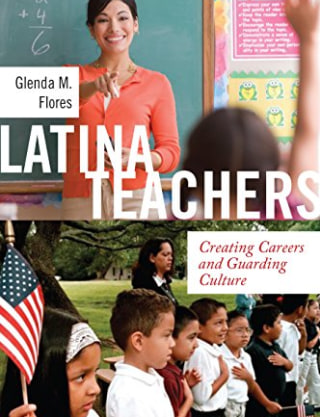
In her new book Latina Teachers: Creating Careers and Guarding Culture, Flores' research shows the impact of the growing numbers of Latinas who are going into teaching.
Latinas in education make up the largest category of Latina professionals, outpacing the next largest category, nursing, by three times. Data from the Department of Labor shows that Latinas make up the fastest growing non-White group to be entering the teaching profession.
 Latino Teachers: Creating Careers and Guarding Culture New York University Press
Flores writes that the influx of Latinas in education comes from a confluence of historical and social factors she calls the class ceiling. Difficulties in balancing family obligations along with managing structural social forces of gender, ethnicity, and demographic changes channeled Latinas into education.
Women of Latino origin are more than 18 percent of teachers in California, creating a "Latinization" of the profession, whereas they were once a token of the profession in the 1980s.
Beyond the language barriers that Latina teachers help bridge are culture-specific pedagogies that go unappreciated when the teaching population is not diverse. One aspect Flores brings attention to is children with immigrant parents who seek help from their parents on their math homework. Mathematics, says Flores, is not a universal language, and approaches to problem-solving in division and multiplication, for instance, often differ in the United States than they do in Mexico. Immigrant parents who were trained to solve problems using different techniques, Flores found, were hampered when trying to help their children. Latina teachers, however, were able to recognize this from their own experiences with math and were more open to alternative methods that ultimately served the students better.

Related

Emma Cadena is a self-identified Latina teacher born to an Irish mother and Mexican-American father. Her blond hair and green eyes may seem out of place in Santa Ana, where Latinos make up 78 percent of the population and have an all-Latino city council, but Cadena was raised by her father in Santa Ana. Her classroom is adorned with lessons in Mexican culture, from the Diego Rivera painting on her classroom wall to her ensemble of Mexican crafts, including Day of the Dead skeletons and a Lucha Libre mask. Cadena also hangs a poster of Cesar Chavez in her classroom, the civil rights leader who helped lead the struggle to unionize farm workers in California and a reminder of how Latinos have shaped our national history.
California has gone through a demographic transformation since the time of Governor Pete Wilson's infamous politicization of immigrants through Proposition 187 in the 1990's, the law that institutionalized citizenship screening processes for access to public services, such as education.
Latinos now make up 52 percent of all K-12 students in California. According to Pew Research, 64 percent of the Hispanic population in California is native born. Astonishingly, the median age of this group is 19 years, less than half the median age of foreign-born Hispanics, which is 43 years old. The median age of non-Hispanic whites in California is 45 years old. In other words, despite any future walls on the border with Mexico, it won't do much to prevent the Golden State from turning a golden brown.
 Glenda Flores Steve Zylius / UCI Steve Zylius / UCI
While California was going through rapid demographic changes, the need for bilingual teachers also grew throughout the 1980s and 1990s, until bilingual education was eventually banned by law in 1998. However, the demand for these teachers, along with the shifts in population, had created a perfect storm of sorts that established a pathway for Latinas into the field.
California recently reinstated bilingual education with the passing of Proposition 58, ending the English-only teaching era that is sure to continue California's transformation. Today, California students are twice as likely than other Americans to speak a language other than English, at 45 percent.
Flores says she became interested in education, because growing up in Santa Ana she too thought about becoming a bilingual elementary school teacher. However, as she continued her education she got a Ph.D. at the University of Southern California and began looking at statistics, noticing the trends in Latina teachers. She began her research to see how these trends were impacting students and her research landed her a job as a professor at UC Irvine's Department of Chicano/a Studies.

Related

Recent headlines have focused on the political gains made by Latinas — in Virginia, Elizabeth Guzmán and Hala Ayala recently made history as the first Latinas elected to the state's House of Delegates, beating Republican male incumbents. Latinas made headlines in Santa Barbara, CA and Topeka, KS as well; Cathy Murillo became the first Latina mayor of Santa Barbara and Michelle De la Isla the first one in Topeka.
But leadership in government is not the only sphere impacted by growing numbers of Latinas running for office. Flores' research in Santa Ana, CA illustrates that our children's formative years will be increasingly shaped by Latinas, as well.

FOLLOW NBC LATINO ON FACEBOOK, TWITTER AND INSTAGRAM.

Saturday, November 11, 2017

Among UT grads, Latina women earn less than white men

This wage gap is systemic and this wage-gap differential is massive, even impacting graduates today from the University of Texas at Austin. 

The 54 cent pay gap for Latinas represents the average across all states, but in Texas, Latinas earn 44 cents for every $1 a white male makes, according to a 2017 National Partnership for Women and Families report.

 It's not as simple as Latinas working in lower-earning fields like teaching.  We should also as a society value the teaching field as we value any other and pay teachers well. Let's not shunt our responsibiities here and blame the victim. 

-Angela

Among UT grads, Latina women earn less than white men

Photo Credit: Rena Li | Daily Texan Staff
Public relations senior Joy Puder worries she will not earn what her white male counterparts earn after graduation.
“A Latina woman, to make the same amount of money a white man does in a full year, has to work the whole year and up to November just to get what he does,” said Puder, who is Latina herself. “She has to work, like, twice as hard.”
Latinas in the U.S. earn on average 54 cents for every $1 a white male earns, according to the National Women’s Law Center. Last Thursday marked Latina Equal Pay Day, the day an average Latina would catch up to a white male’s yearly earnings from 2016.
The national gender pay gap consists of women earning 80 cents for every $1 a white male makes regardless of industry, according to the National Women’s Law Center. 
“In general, Latinas are going to be (some) of the lowest earning individuals by race and gender,” said Megan Fasules, an author of a 2017 report about earnings for UT System graduates.
Fasules said the gender pay gap among UT System college graduates often results from differences in the fields women tend to be attracted to for majors and careers. For example, more women tend to go into education, which is a lower-earning field compared to the more male-dominated science, technology, engineering and math fields.
“A big factor is what women choose to major in,” Fasules said. “We tend to have different interests than men, and, unfortunately, our interests tend to earn us less money.”
The 54 cent pay gap for Latinas represents the average across all states, but in Texas, Latinas earn 44 cents for every $1 a white male makes, according to a 2017 National Partnership for Women and Families report.
“In the nation as a whole, Latinas, once they get a bachelor’s degree … do tend to have higher median earnings,” Fasules said. “In Texas, that’s not the case.”
According to the study, Latina UT System graduates earned 75 percent of what white male graduates earned in the three years following graduation. The pay gap between males and females exists among UT graduates of all races. When compared to Latino graduates, Latina graduates earn 93 percent of their pay. White women earn 83 percent of what white male graduates do.
Lecturer Victoria DeFrancesco Soto said fixing the general pay gap can be hard because women also lose wages when they become mothers. She said Latinas tend to usually have more children, widening the pay gap.
“The truth is that Latinas, in general, have a lower educational attainment than other groups, and we also tend to have more children,” DeFrancesco said.
Fasules said providing students with more information about their potential earnings in different fields could help increase the number of Latinas and females in higher-earning fields. UT students can explore earnings by career through the online tool SeekUT.
Puder, who is graduating in December, said she wishes she knew more about entry-level wages when she began her search for public relations jobs.
“It’s important for me, because I’m a woman of color, and I want to get paid the same because I work just as hard as white men,” Puder said.