Translate

Showing posts with label white backlash. Show all posts

Sunday, August 20, 2023

"The Fire This Time: The Insurrection of American Public Education Is Being Fueled by Racism," by Street, M. & Garcia-Medina, W.

In total agreement that, as stated below, that "Now more than ever, we need for an accurate and comprehensive understanding of slavery." Kim Yancey's statement calling what's happening in curriculum an "insurrection" against public, inclusive education. It echoes Hakeem Jefferson and Victor Ray's perspective as posted earlier to this blog: "White Backlash Is A Type Of Racial Reckoning, Too."

Insurrection. Backlash. White racial reckoning. What's this all about?

I'm reading Heather McGee's book, The Sum of Us, right now. She points to the work of Kinder & Sanders (1996)  who offer an in-depth look at white racial resentment in the context of political opinion surveys. McGee's larger and quite compelling argument is that anti-black racism is not only harmful to blacks, but also to the U.S., as a whole.

-Angela Valenzuela

References

Kinder, D. R., & Sanders, L. M. (1996). Divided by color: Racial politics and democratic ideals. University of Chicago Press.

McGhee, H. (2021). The Sum of Us: What Racism Costs Everyone and How We Can Prosper Together. One World Press. 


The Fire This Time: The Insurrection of American Public Education Is Being Fueled by Racism

by Sister Syllabus | Aug. 7, 2023 | Medium.com

By Mia Street, MEd and Dr. William Garcia-Medina

Insurrection: rebellion, revolt, uprising, mutiny, revolution, insurgence, rising, rioting, riot, sedition, civil disobedience, civil disorder, unrest, anarchy…

Pedagogy of the Oppressor…

In July of 2022, a group of nine Texas educators submitted an idea to the State Board of Education that would be the beginning of dismantling truth-telling in public education. The idea? Public schools in Texas would now begin to learn to describe slavery as “involuntary relocation” under new social studies standards proposed to the state’s education board. A few phone calls and social media posts later condemning this false interpretation of enslavement resulted in going viral. The responses made me feel like perhaps Texas would not fall to the erosion of truth-telling in schools. I was wrong. Since then, legislators across the country have created policies that tear down decades of equity gains in education work. Texas NAACP Education Chair, Councilwoman Kimberley Yancy quite accurately called this an Insurrection of Public Education and it is.

In recent years, a disturbing trend has been emerging within American public education — a surge of racist ideologies and practices that undermine the goal of creating inclusive and equitable learning environments. From anti CRT bills to anti DEI legislation- this insurrection has rolled back years of progress. The insurrection of public education is fueled by racism within schools and has far-reaching consequences that perpetuate systemic racism and hinder the progress towards a truly just society. Several incidents and policy decisions across the country serve as evidence of this vitriol permeating our education system.

One of the most egregious examples can be found in Florida, where Governor Ron DeSantis recently ignited a firestorm of controversy by attacking the teaching of slavery in schools. As reported by Politico, even Black Republicans were left livid and disgusted by DeSantis’ comments, which attempt to downplay the significance and effects of slavery in American history. This attempt to whitewash the curriculum not only erases the suffering and contributions of Black Americans but also perpetuates a distorted narrative that minimizes the impact of white supremacy and systemic racism.

The Guardian, in a scathing critique, highlights the harmful consequences of DeSantis’ stance on curriculum about enslavement in America. By refusing to acknowledge the full extent of the horrors inflicted upon enslaved individuals, Florida risks perpetuating a cycle of ignorance and denial. This insurrection not only undermines the education of students but also hampers efforts to foster empathy and understanding among future generations.

Echoing those concerns, The New York Times argues that DeSantis’ actions are part of a broader pattern of continuing to perpetuate lies to hide the aspects of American history that show how disgusting, degrading and dehumanizing slavery really was. Now more than ever, we need for an accurate and comprehensive understanding of slavery, as it is an essential pillar in comprehending the foundations of racial inequity in the United States. By denying this history, DeSantis and others contribute to a poisonous atmosphere that perpetuates racism via a manufactured erosion of democratic principles attributed to free-thinking institutions such as schools. To borrow a quote from David Berliner and Bruce J Biddle’s book titled The Manufactured Crisis (1996), “the American tragedy of racism poses serious problems for our public schools, problems that are less evident in other Western countries that have lower levels of prejudice (pp.230).” Although this quote was written during the 90’s, it remains true to this day. The January 6th insurrection of the White House is integrally connected to the nefarious legislation seeking to do away with truth-telling in public education and more generally, America.

Currently, we are facing extreme polarization fueled by direct acknowledgement and support for hatred against Black and Brown communities. DeSantis’ display of racism, for instance, takes shape via both direct racism and another subtle form of vitriol commonly known as color-blind racism.

Beyond the books…

The January 6th insurrection demonstrates how racism has shifted back into its direct racism while claiming to be saving the United States from wokeism and extreme leftism. While many politicians holding political power are behaving as ventriloquists, controlling uninformed folks across the country for political gain, far-right political groups are working hard to shift power to shape, distort and censor the curriculum that is taught to our students. The impact of this insurrection against inclusive education extends beyond Florida. Across the country, legislation is being introduced that seeks to limit diversity and equity efforts in schools. The Associated Press reports on the dangerous ramifications of such legislation, which undermines the progress made in creating safe and inclusive spaces for students who are marginalized. These policies disregard the needs of students from disenfranchised communities and also perpetuate systems of oppression and discrimination for the purpose of continued racial domination. Sociologists Matthew Desmond and Mustafa Emirbayer refer to racial domination being based on: 1) Institutional Racism: Systemic White privilege in institutions such as schools, corporations, universities, etc, and 2) Interpersonal Racism: Racism in everyday interactions. The impact of recent insurrections against inclusive education and the dismantling of affirmative action are prime examples of racial domination.

By using “wokeism” as an excuse to pass racist legislations against the teaching of inclusive history and ignoring the incitement of racial domination, it adheres to fallacies that garner support by many people in the country, thus increasing divisions and social mayhem. Beyond the books, the insurrection of public education is having detrimental effects on discipline practices and exacerbating racial disparities within the system. Dallas CORE Chief Executive Officer and Community Organizer, Jazmyn Ferguson stated, “when attempting to understand discipline, it is clear that those with power have a stake in ensuring that society functions as it does because it preserves their power and ability to survive and thrive.”

In a joint effort between the Intercultural Development Research Association (IDRA), Lubbock NAACP and families of Lubbock, Texas, demand for an end to school-based racial discrimination. One of the key concerns raised by these organizations and families is the disproportionate discipline practices being employed in schools. Historically, African American and LatinX students are subjected to harsher disciplinary actions compared to their white counterparts. After the district’s inaction and flat out lying and denial of receiving complaints, students and families of the Lubbock-Cooper Independent School District and Slaton ISD, along with the Lubbock NAACP and the IDRA filed civil right complaints against the school districts. The violation claims have been submitted to the US Department of Education.

The case of the Mamaroneck School District in New York, as reported by Gothamist, serves as a stark reminder of the consequences of inaction. Black students and other students of color were regularly the targets of racial epithets and sexually offensive harassment. According to OAG Leticia James:

The OAG’s investigation concluded that Mamaroneck UFSD’s failure to address student bullying and harassment constituted a violation of Title VI and Title IX. Black students and other students of color were regularly the targets of racial epithets and sexually offensive harassment. The OAG found that Mamaroneck UFSD, despite promptly investigating these incidents, failed to engage in necessary responses to limit this behavior in the future.

The district faced criticism for its failure to address racial bullying effectively, prompting calls for reform. Instances like these highlight the urgent need for schools and districts to prioritize the development of anti-racist policies and procedures that ensure the safety and well-being of all students. White denial from school administrators and policy makers reveal a return to Jim Crow ideologies in terms of surveilling and restricting disenfranchised communities via racial domination.

Similar to Mamaroneck, Carrollton Farmers Branch Independent School District (CFBISD), a suburb of Dallas, Texas has recently come under scrutiny, again, due to allegations of racial bias and discrimination. In a disturbing incident that went viral the spring of 2021, a middle school quiz administered in CFBISD contained derogatory anti-Asian stereotypes. Then in 2022, OCR complaints were filed because district leadership blatantly segregated their district administrators. Just last month, Wendy Eldredge, their new superintendent, was quoted saying derogatory statements about African American and LatinX students and their parents. Even after being brought to light, school leadership and the school board allowed for these clear acts of discrimination to go unchecked. The Texas State Historical Association reveals that the district was part of a segregated system until the late 1960s. This historical background (and most recent incidents) raise questions about how deeply ingrained and prevalent systemic racism is within the district’s policies and practices. Instances like these highlight the urgent need for schools and districts to prioritize the development of anti-racist policies and procedures that ensure the safety and well-being of all students.

The insurrection of American public education fueled by racism is not only attacking inclusive pedagogy, continuing unjust discipline practices but in some states, Black and Brown communities are fighting against the erosion of democracy of public education. This week, Texas Education Agency (TEA) imposed a state takeover of Houston ISD by dismantling local control, replacing the superintendent and elected school board members. Thus, diminishing the influence of parents, students and local educators who intimately understand the needs of their community. This top-down approach undermines the very essence of democracy and denies students, especially those from historically marginalized backgrounds, the chance to shape their own educational experiences. It perpetuates a cycle of inequity that hinders the progress of Black and Brown children, who already face systemic barriers within education. In response to the takeover, activist Lauren Ashley, in a now viral video, passionately expressed the concerns of her community with the newly appointed superintendent Mike Miles. Our “good sis” Lauren Ashley’s concerns included HISD falling into the same charter school pitfall that New Orleans went into after Katrina and the loss of the community being able to choose their school board. Also, another concern is that the takeover is a strategy executed by Texas republicans as a way to punish a very democratic leaning city and its Black and Brown majority. Additionally, Superintendent Mike Miles is also under fire for his recent decision to convert some school libraries into “team centers” where students placed in these centers for disciplinary actions will watch their class on Zoom and complete individual assignments. State takeovers, such as the one imposed on HISD, often lack evidence of their effectiveness in improving student outcomes.

Collective action…

At such challenging times, it is crucial for parents and supporters like Lauren Ashley to speak out against the actions of TEA and individuals like Mike Miles. By raising our collective voices and advocating for equitable policies and practices, we can push back against the erosion of democracy and demand a fair and just education system for all students. It is imperative for policymakers, educators and communities to confront the insurrection of education head-on by implementing anti-racist curriculum, supporting inclusive policies and creating safe spaces for all students, educators and parents. Only through collective action can we dismantle the structures that perpetuate racism within our schools and pave the way for a truly equitable education system.

We cannot fail to heed the warnings of the January 6th insurrection. If we do not take this time to atone as a country and work towards racial equity the chickens will come home to roost. As they always do.

About the Authors:

Mia Street, MEd

An award winning educator, her journey in education led her to teaching and eventually becoming a district administrator leading transformational work. Her work inside and outside of the classroom has helped to create equitable educational spaces. She currently consults with different organizations and specializes in leveraging partnerships with educational agencies and industry professionals to promote, create and increase equity in education. She currently holds the following roles: Kidada Education Design, Founder, BH365 Foundation, Executive Director, Dallas CORE Chief Growth Officer, NAACP Texas State Education Committee Member and co-author of the upcoming book entitled Sister Syllabus. Website KidadaEd.com

Dr. William Garcia-Medina

Dr. García-Medina is currently a Charles Phelps Taft Post-Doctoral Fellow at the University of Cincinnati. His research focuses on Black diasporic public humanities, AfroLatinx education, cultural studies, and museum studies. García-Medina has provided educational consulting,training, and workshops for numerous organizations, universities, school districts, and museums. He has taught courses in Latino Studies, American Studies, and Black Studies and has published in these fields in academic journals, blogs, and podcasts. García-Medina has contributed to Latino Rebels since 2015 and has been a guest on national broadcast radio such as Latino USA and NPR. He tweets from @afrolatinoed

Monday, July 03, 2023

SCOTUS Decision on Affirmative Action Represents Their Own Racial Reckoning in U.S. Society

My colleague, Dr. Liliana Garces, hits the nail on the head in the recent, anti-affirmative action SCOTUS decision as per this Chronicle of Higher Education report: 
“We have moved away from thinking of higher education as a public good to more of an individualistic, how-I’m-going-to-get-ahead perspective,” Liliana M. Garces, a professor of higher education at the University of Texas at Austin, told The Chronicle in a recent interview. “But if we come back to the public mission of higher education and its role in advancing the democratic goals of a multiracial society, we understand that institutions trying to build a diverse student body is advancing interests that benefit all of us in a multiracial democracy, by building capacity for diverse students to become leaders. If you ground yourself in that public role and mission of higher education, college admissions is not a zero-sum game.”

Dr. Garces calls out these two competing views, namely, the attainment of higher education as a public good, beneficial to society as a whole. This is diametrically opposite from the neoliberal view of higher education "consumers" enjoying a "market of options." Ample research shows how racially and ethnically diverse classrooms are better than non-diverse ones. That is, they prepare our youth for diverse working environments. Moreover, in terms of fairness, we all pay taxes for education such that all groups should benefit equitably—not equally considering that not all students are equally privileged.

Southern Methodist University Associate Professor Dominique J. Baker's statement compliments that of Garces, expressing that “The majority’s opinion rejects the reality of structural racism," including the real-world notion of privilege as evidenced in legacy admissions.

What I would add is that it's frankly convenient for SCOTUS to eschew a public goods perspective because in doing so—as affirmative action does—this readily takes one down the path of remedying the wrongs of structural inequality by compensating for these through policy tools that take race/ethnicity and other factors like class, gender, and ability into account.

The U.S. Supreme court agreed with Students for Fair Admission that race-consciousness equals racial discrimination. The logics of this decision are so patently mystifying because race-consciousness is how and not whether one sees race. Why is this so? The answer is because we live in a society and world where access to the good life that higher education affords, is circumscribed by race and class—with significant overlap between the two. One doesn't go a single day in this country without news of some kind that are expressly about race. Next to guns, it's our national obsession such that one can only be willfully blind to race. Hence, it's next to impossible not to see race. 

The issue is rather how one sees race. Does one see it as a basis for inclusion or exclusion, as a means to uplift or derogate? In contrast, so-called "racial discrimination" is an expression of individualist privilege and entitlement that ironically benefits white people, i.e., a racial group, in U.S. society.

Hakeem Jefferson and Victor Ray (2022) also recently nailed it when they anticipated even more consequential repercussions following the January 6 attack on U.S. Capitol that reveals rioters' own racial reckoning as a "white backlash to a perceived loss of power and status."

In the meantime, people of color are ascendant demographically, and to a certain extent socially, because of just policies like affirmative action and diversity, equity and inclusion—even if vast inequities in places like higher education remain (Ellsworth, Harding, Law & Pinder, 2022). 

Universities are tasked with creating pipeline programs and recruiting students of color to apply. We should continue along the trajectory, as well, of limiting the use of standardized tests for admissions purposes. In Texas, we should also double-down on percent plans in higher admissions. This brings not just our black and brown communities and coalitions into conversation, but white rural communities, as well. As with vouchers, there is a shared interest and natural constituency for a way forward.

In general, young people and the broader public need to grasp for themselves that higher education is a public good and join the struggle wherever you are for educational justice. Yes, this is a symbolic blow to the goals of diversity, equity and inclusion, but this is not the end, but rather still the beginning of this struggle.

-Angela Valenzuela

References

Jefferson, H. & Ray, V. (2022, Jan. 6) "White Backlash Is A Type Of Racial Reckoning, Too," By Hakeem Jefferson and Victor Ray | FiveThirtyEight


The Supreme Court’s Decision Reveals a Gulf Between Two Views of Race and Merit
By Eric Hoover
JUNE 29, 2023

ILLUSTRATION BY THE CHRONICLE; PHOTOS BY TOM WILLIAMS, CQ-ROLL CALL, INC.,
GETTY IMAGES; ISTOCKChief Justice John G. Roberts Jr. of the U.S. Supreme Court.

The U.S. Supreme Court looked behind the curtain. Then it knocked over the table and chairs. Now, colleges are left with one big mess and a slew of questions that will define a new era for college admissions in a nation riven by racial disparities.

In its long-awaited decision on Thursday, the court held that the way Harvard College and the University of North Carolina at Chapel Hill had considered applicants’ race violated the 14th Amendment’s Equal Protection Clause. The ruling, split along the court’s ideological lines, essentially struck down four and a half decades of legal precedent allowing institutions to consider race as one of many factors in their evaluations. The decision, every bit as drastic as many college officials had long feared, will shift the way many admissions offices assess students. And it will very likely change, perhaps dramatically, the racial and ethnic makeup of many campuses.

The ruling was a resounding victory for Students for Fair Admissions, known as SFFA, which sued Harvard and UNC, in 2014. For all the complexities contained within the two cases, SFFA’s argument in each boiled down to this: Race-consciousness is no different than racial discrimination. And in the end, the court agreed.

Writing for the majority, Chief Justice John G. Roberts Jr. forcefully rejected Harvard and UNC’s race-conscious admissions practices. Anyone who reads the opinion closely will detect the same apparent impatience with colleges, the same mistrust of their methods, that he and other conservative justices expressed during oral arguments last fall. The court concluded that Harvard and UNC’s stated goals were too elusive, too difficult to measure, to withstand strict scrutiny.

Above all, the court agreed with SFFA’s contention that the Constitution requires colorblindness in all federal laws, a notion that derives from a particular reading of the 14th Amendment, which guarantees “the equal protection of the laws” to all U.S. citizens. An applicant, Roberts wrote, “must be treated based on his or her experiences as an individual — not on the basis of race. Many universities have for too long done just the opposite. And in doing so, they have concluded, wrongly, that the touchstone of an individual’s identity is not challenges bested, skills built, or lessons learned but the color of their skin. Our constitutional history does not tolerate that choice.”

Friday, March 25, 2022

"How White Backlash Controls American Progress," by Lawrence Glickman

As outlined in this piece by Lawrence Glickman in The Atlantic, the underpinnings of modern conservativism are premised on zero-sum logic, paranoia, and fear which dictate that African American and minority gains, in general, equate to white loss and victimization. For white "backlashers," a loss of "white tranquility” finds expression in other backlashes like we're seeing today against women, undocumented immigrants, transgender youth, and in the attack on the teaching of race in schools and universities.

Glickman nails these backlashes as not quite a series of discrete actions, but rather as a reactionary tradition 

"that is deeply woven into American political culture and that extends back to the era of Reconstruction, at least. And the backlashes are powerful not only for the fury they represent, but in the fear they instill in political leaders, even progressives, who hesitate to push things 'too far.'"

May this piece serve as a cautionary tale to liberals and progressives. After all, to give sway is to support not just "creeping fascism," but full-blown fascism manifest as anti-diversity, sexism, homophobia, transphobia, genocidal racism together with systematic campaigns against the right to vote and the republican agenda to not only legislate but also police how we are to think and teach, all in the interest of preserving "white tranquility," however punishing, regressive, or unconstitutional.

This "White Backlash" framework helps explain why Donald Trump’s MAGA discourse and politics found fertile ground in America, that for fascists, conveniently exposed a gaping hole that Putin and his minions could exploit by helping get Trump elected and softening Republicans' posture toward Russia (read: Donald Trump Softened the GOP on Russia—At Least for Now).

I'll conclude with my thoughts this morning by providing you with this apt quote here by the beloved and legendary educator, Deborah Meier who once expressed, "If there's a problem with democracy, the answer is always more democracy, not less democracy."

-Angela Valenzuela

How White Backlash Controls American Progress

Backlash dynamics are one of the defining patterns of the country’s history.


About the author: Lawrence B. Glickman is a history professor at Cornell University. He is the author, most recently, of Free Enterprise: An American History.

MAY 21, 2020 Updated at 10:41 a.m. ET on May 22, 2020 | The Atlantic

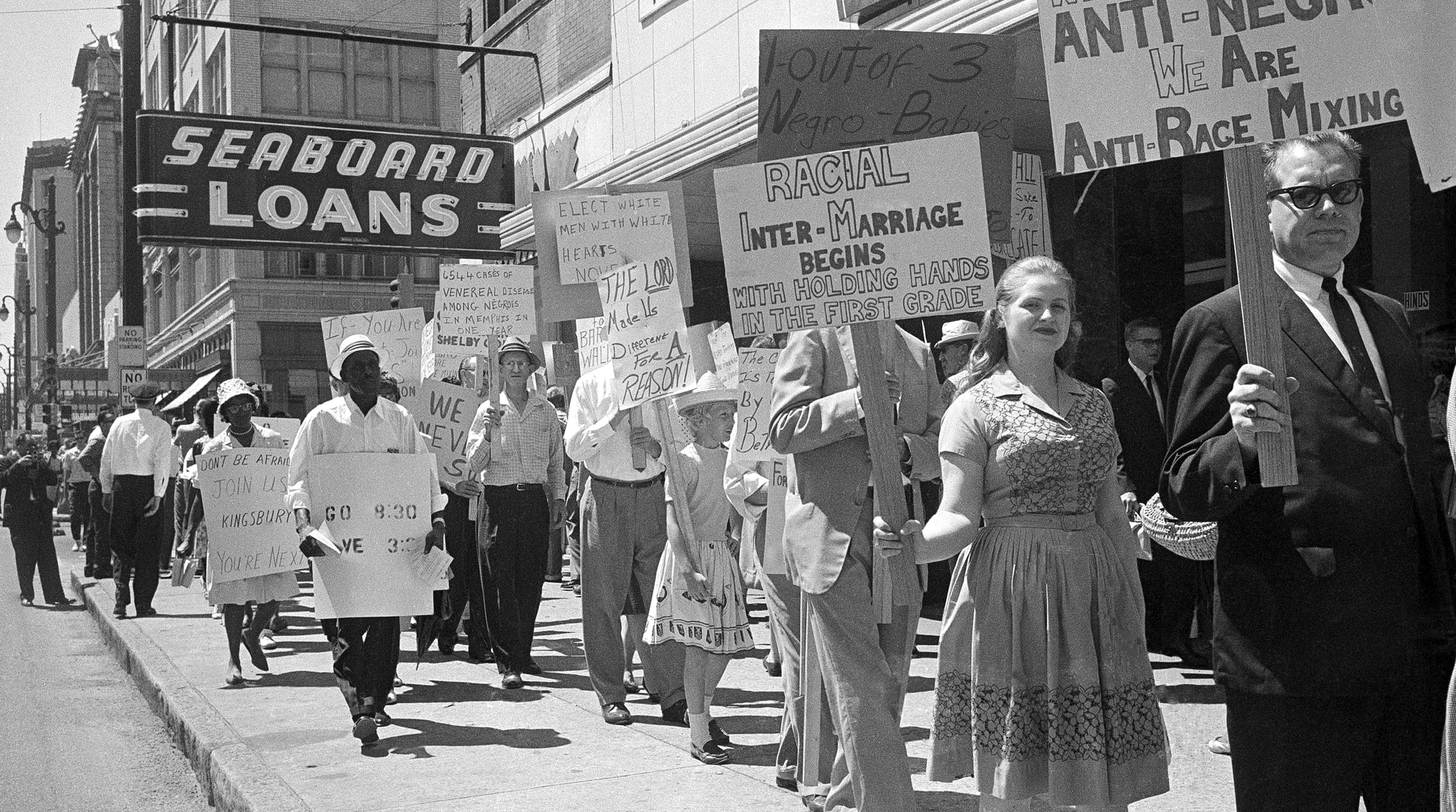
The word backlash gained popularity in the summer of 1963, when, after dallying on the issue for the first two years of his presidency, President John F. Kennedy proposed significant civil-rights legislation. In response, the word, which had primarily denoted the recoil of a fishing line, was repurposed, usually as “white backlash,” to refer to opposition to the increased pace of African American civil-rights activism or the Kennedy (and, after his assassination in November 1963, the Lyndon B. Johnson) administration’s legislative proposals and executive actions, or both.

In 1966, a commentator, speaking of “the grand new word, backlash,” claimed without much exaggeration that “just about everything that happened could be (and was) attributed to some form of backlash.” The word came to stand for a topsy-turvy rebellion in which white people with relative societal power perceived themselves as victimized by what they described as overly aggressive African Americans demanding equal rights. Backlash, as the New York Times columnist Tom Wicker wrote, “is nothing more nor less than white resentment of Negroes.”

Moving beyond an opposition to civil rights, the word backlash—less frequently qualified as “white”—quickly became a synonym for a new and growing conservative force, signifying a virulent counterreaction to all manner of social movements and cultural transformations that became central to American politics. Over time, observers noted manifestations of this reaction in a “Southern backlash,” a “male backlash,” a “heterosexual backlash,” a “property tax backlash” and a “backlash against environmentalists.” Just a month after the passage of the Civil Rights Act, a journalist described the United States as being in the midst of “a multitude of backlashes.” But as one commentator pointed out, “The word which gave rise to all sorts of other ‘lashes’ was coined in reference to white opposition to Negro gains.”

Backlash may have burst onto the scene as “the word of the year in American politics” in 1964, but it described one of the oldest and deepest patterns in American politics, one that is once again playing out today in the right-wing campaign against social distancing. Backlashes appear as seemingly serial and discrete events—against the civil-rights movement in the 1960s, or the women’s movement in the ’70s, or the gay-rights movement in the ’90s. But this obscures an underlying continuity: These individual backlashes are all instances of a reactionary tradition, one that is deeply woven into American political culture and that extends back to the era of Reconstruction, at least. And the backlashes are powerful not only for the fury they represent, but in the fear they instill in political leaders, even progressives, who hesitate to push things “too far.”

During Reconstruction, opponents of the black-freedom struggle deployed preemptive, apocalyptic, slippery-slope arguments that have remained enduring features of backlash politics up to the present. They treated federal support for African American civil rights, economic and social equality—however delayed, reluctant, underfunded, and incomplete it may have been—as a cataclysmic overreaction and framed it as a far more dangerous threat to liberty than the injustice it was designed to address. In 1867, not even two years after ratification of the Thirteenth Amendment, the Brooklyn Daily Eagle decried the placement of political power “in the hands of a property-less and ignorant class of the population,” and pronounced that “the pending Reconstruction scheme must be abandoned.”

Since then, such framing has done more than merely shape the politics of reaction in the United States; it has also constrained putatively supportive political leaders, who live in fear of setting off backlashes. Responding to a moderate plan to enfranchise only free blacks in Louisiana in 1864, the Union general Nathaniel P. Banks, worrying about a negative response from the state’s whites, who were being defeated in the Civil War, said, “Revolutions which are not controlled and held within reasonable limits produce counter-revolution.” That obeisance to a defeated group in 1864 was an extreme version of a general pattern that has remained a hallmark of backlashes ever since: solicitousness to white fears.

For many white backlashers in the 1960s, the era of what the historian C. Vann Woodward called the “second Reconstruction,” the first Reconstruction remained a negative model. They viewed its reform as overly fast-paced, and felt that it foregrounded black civil rights at the cost of white people’s peace of mind. They associated civil-rights activism with what popular historians and commentators of the day called the “excesses” of Reconstruction, by which they meant a combination of “militant” African American demands for basic equality with overweening, aggressive, and hasty federal action in support of interracial democracy. Thurman Sensing of the Southern States Industrial Council, a conservative business group, described the civil-rights movement in 1966 as an effort to force “the Reconstruction of American customs,” showing the degree to which the post–Civil War campaign for racial equality remained a central metaphor for white backlashers. The journalist in December 1963 who noted the political power of those opposed to “Negro pressure for equal opportunity and the Federal Government’s pace on the Civil Rights front,” could just as easily have been describing the origins of the counterrevolution of the 1870s.

There was, then, nothing particularly novel about the constituent elements of white backlash to the civil-rights movement: its smoldering resentment, its belief that the movement was proceeding “too fast,” its demands for emotional and psychological sympathy, and its displacement of African Americans’ struggles with its own claims of grievance.

What is particularly noteworthy is that the white backlash in this case was in place before the passage of the Civil Rights Act in July 1964. The pattern is this: American reactionary politics is nearly always preemptive, predicting catastrophe and highlighting potential slippery slopes. “White backlash,” after all, got its name in 1963, just months after African Americans in Birmingham risked attacks from police dogs and high-pressure fire hoses in order to demand justice, and immediately after Kennedy mooted the idea of substantive legislation—both events taking place well before the Civil Rights Act became law. What one reporter called “white panic” was driven by fears of “favoritism” and “special privileges” for African Americans—that white “workers would be forced out of their jobs to make way for Negroes,” as one article put it that year, when Jim Crow still prevailed. “Many of my people think the Negroes want to take over the country,” a midwestern Republican politician said in a Wall Street Journal article published on April 10 of the following year, still months before the Act’s passage. “They think there are things in the bill that just aren’t there, like forced sales of housing to Negroes and stuff like that.” White backlashers imagined coercion where it did not exist. They embraced a lexicon and posture of victimization that hearkened back to the era of Reconstruction and anticipated the deceiving, self-pitying MAGA discourse that drives reactionary politics in Donald Trump’s America.


Residents of Levittown, Pennsylvania, are shown during a rally on 
August 17, 1957, to protest plans by William Myers, a black man, 
to move into a home in the all-white community of 60,000 people.
(Bill Ingraham / AP)

Thursday, February 17, 2022

"White Backlash Is A Type Of Racial Reckoning, Too," By Hakeem Jefferson and Victor Ray | FiveThirtyEight

This piece by Hakeem Jefferson and Victor Ray is a bit disheartening, but real, capturing quite well the this moment we find ourselves in of white ethnonationalist backlash and retrenchment. 

Here is where a full accounting of history is much-needed in our state curriculum and public schools, yet this is also what sits at the crosshairs of right-wing, ethnonationalist public policy enthusiasts. In the meantime, if you're in Texas, advocates for teaching the truth need to be present at the April 5, 2022 meeting of the Texas State Board of Education to testify on the K-12 Social Studies Standards. More on this later as the date approaches. 

In the meantime, check out these pertinent news: Scholar who called Biden election a 'literal coup' advising Texas social studies curriculum review. Clearly, we need credible members on these curriculum review teams. If you're interested in being on one of these teams, reach out to whoever represents you and ask to be on one of the teams. In particular, it would be helpful to get historians and social studies experts, professors, graduate students, and teachers to serve as evaluators, in particular, to counter-balance Professor 

Stephen Balch who is a conspiracy theorist.
This link gives you access to the implications of Senate Bill 3, Texas' "anti-Critical Race Theory bill," to state curriculum: Senate Bill 3, 87th Texas Legislature, Second Called Session – Update to Instructional Requirements and Prohibitions.

The Texas State Board of Education has always been a space of contestation. The stakes are as high today as they've ever been. Let's defend the teaching of truth in history and in our social studies curriculum, generally. 


From an organizing perspective, now, more than ever, our African American, Latina/o/x, Asian American and Native American communities with white allies need to come together and form coalitions of conscience so that we can effectively challenge the white backlash we're witnessing right now in local, state, and national-level politics.

We also all need everybody to vote. If you're in Austin, here is the info on
Travis County: Early Voting Locations 2022. If you're not in Austin, here is an informational County Elections web page from the Texas Secretary of State where you can locate voting information for every county statewide.

-Angela Valenzuela

Reference

Jefferson, H. & Ray, V. (2022, Jan. 6). White backlash is a type of racial reckoning, too, FiveThirtyEighthttps://fivethirtyeight.com/features/white-backlash-is-a-type-of-racial-reckoning-too/

JAN. 6, 2022, AT 6:00 AM

White Backlash Is A Type Of Racial Reckoning, Too


By Hakeem Jefferson and Victor Ray | FiveThirtyEight

Filed under Racial reckoning


PHOTO ILLUSTRATION BY EMILY SCHERER / GETTY IMAGES