Translate

Showing posts with label ESB-MACC. Show all posts

Tuesday, July 21, 2026

South to Freedom: Silvia Hector Webber, Mexican American Allies, and the Underground Railroad to Mexico, by Angela Valenzuela, Ph.D. July 21, 2026

South to Freedom: Silvia Hector Webber, Mexican American Allies, and the Underground Railroad to Mexico

by

Angela Valenzuela, Ph.D.

July 21, 2026

Silvia Hector Webber’s life illuminates a little-known but essential chapter ofTexas history: the Underground Railroad did not lead only north. For many enslaved Black people in Texas and other parts of the Southwest, freedom lay south—across the Rio Grande and into Mexico. Their journeys depended first upon their own extraordinary courage, but they were also assisted by networks of Black, Mexican, Mexican American, and white residents who provided food, shelter, directions, transportation, and protection (Baumgartner, 2020; Hammack, 2024).

Born into slavery in 1807 in Spanish West Florida, in an area that later became part of eastern Louisiana, Silvia was sold at the age of 12 for $550, roughly equivalent  to $11,568 in U.S. dollars 2025 according to Wikipedia, 2025).

She later came to Mexican Texas as the enslaved property of John Cryer. Between 1826 and 1829, she met John Ferdinand Webber, a white settler and business associate of Cryer. By 1834, while Silvia remained enslaved, she had given birth to three children with Webber (Hammack, 2024).

Any account of their relationship must recognize the profoundly unequal and coercive conditions created by slavery. Silvia did not possess legal control over her own person, and under the doctrine governing slavery, her children could also be treated as property. Whatever bonds developed between Silvia and John existed within a system that denied her autonomy and placed her and her children in continual danger of sale, separation, and exploitation.

On June 11, 1834, Silvia and John negotiated with Cryer to secure freedom for Silvia and their three children. Cryer did not demand payment simply in money or land. He required that the Webbers provide him with a two-year-old enslaved boy and provide a three-year-old enslaved girl to one of his relatives (Hammack, 2024). Later records discussed in the Wikipedia account indicate that the Webbers did not deliver the children and ultimately forfeited a substantial portion of their Webberville property to settle the debt associated with Silvia’s and her children’s freedom (Wikipedia, 2025).

This episode exposes the moral horror at the center of slavery: freedom for one Black woman and her children was assigned a price to be paid through the enslavement of other children. Silvia’s story must therefore be remembered not only as one of perseverance and eventual liberation, but also as evidence of slavery’s immense suffering—the sale of children, the commodification of Black bodies, the vulnerability of families to separation, and the ability of enslavers to extract wealth from the human desire to keep one’s family together.

Even after Silvia and her children gained their legal freedom, they continued to experience severe anti-Black racism. The Webber children were prohibited from attending the local school with white children, requiring the family to hire a live-in tutor. Although some neighbors respected Silvia for her intelligence, kindness, and generosity, they did not treat her as a social equal (Hammack, 2024; Wikipedia, 2025).

Conditions deteriorated further after Texas separated from Mexico and established the Republic of Texas in 1836. The new republic expanded and protected slavery, outlawed interracial marriage, and severely restricted the rights that free Black people had possessed under Mexican law. As settlers from the slaveholding South moved into Central Texas, the Webbers faced growing hostility, discriminatory treatment, and threats of violence. They also feared that slave catchers or so-called "Blackbirders" might kidnap Silvia or the children and sell them into slavery (Wikipedia, 2025).

By the early 1850s, the danger had become so great that the family left Webberville and relocated to the Rio Grande Valley. They eventually settled near present-day Donna, Texas, across the river from Reynosa, Mexico. There, they established the Webber Ranch and operated a ferry across the Rio Grande (Hammack, 2024).

Family histories and regional accounts identify the Webber Ranch as a possible station on the southern Underground Railroad. Silvia was widely remembered for opening her home to people who were hungry, destitute, or seeking refuge. The Webbers reportedly fed and sheltered freedom seekers and used their ferry to help fugitives from slavery cross the Rio Grande into Mexico. Their neighbors, Matilda and Nathaniel Jackson, another interracial family, were also known to assist people escaping enslavement (Hammack, 2024; Wikipedia, 2025).

The Webbers were part of a much broader history of resistance. Research on the Underground Railroad to Mexico demonstrates that Mexican residents and Mexican Americans participated in these freedom networks. People of Mexican descent guided escapees, shared information about routes and conditions across the border, offered food and hiding places, and sometimes helped freedom seekers evade slave catchers. Some endured intimidation and violence from slaveholders precisely because they assisted enslaved Black people seeking freedom (Baumgartner, 2020).

This history is important because it challenges the familiar geography of the Underground Railroad, which is usually imagined as moving north toward free states and Canada. It reminds us that another vital path led south through Texas and into Mexico. It also complicates histories that portray slavery and abolition exclusively through a Black-white framework. Mexican and Mexican American communities were not merely observers of enslaved people’s flight to freedom; some were active participants in making that freedom possible.

The story of Silvia Hector Webber therefore reveals a profound history of Black resistance, Mexican and Mexican American assistance, interracial family struggle, and cross-border solidarity. At the same time, it exposes the long reach of slavery and anti-Black racism: the buying and selling of children, the denial of education, the threat of kidnapping and re-enslavement, the dispossession of property, the displacement of free Black families, and the persecution of those who opposed slavery and the Confederacy.

This important history will be addressed this coming Saturday, July 25, 2026, with Webber family members and descendants present at the Emma S. Barrientos Mexican American Cultural Center in Austin. The symposium, “Visibilizing a Freedom Fighter, Silvia Hector Webber: A Legacy of Resistance & Black Freedom in North America,” will bring descendants, scholars, genealogists, and community historians together to honor Silvia’s legacy and deepen public understanding of Black freedom-seeking, Mexican American solidarity, and cross-border resistance.

The free symposium will take place from 10:00 a.m. to 7:00 p.m. at the ESB-MACC, 600 River Street, Austin, Texas. As I shared in an earlier blog post, the gathering is part of the Webber Family Preservation Project and will highlight both the Webber family’s history and the important work descendants are undertaking to recover and preserve their ancestral histories, cultures, and historic sites (Valenzuela, 2026).

Source note: This account draws principally on historian María Esther Hammack’s archival research on Silvia Hector Webber, including her discovery and transcription of the 1834 freedom papers that secured freedom for Silvia and her three young children. It also draws on Hammack’s authoritative biographical entry in the Handbook of Texas Online and the Wikipedia entry “Silvia and John Webber.” Broader historical context regarding the southbound Underground Railroad and Mexico’s importance as a destination for freedom seekers comes from Alice L. Baumgartner’s South to Freedom: Runaway Slaves to Mexico and the Road to the Civil War.

References

Baumgartner, A. L. (2020). South to freedom: Runaway slaves to Mexico and the road to the Civil War. Basic Books.

Hammack, M. E. (2024, March 20). The life and legacy of Silvia Webber: A pioneer of freedom in Texas (1807–1892). Handbook of Texas Online. Texas State Historical Association. https://www.tshaonline.org/handbook/entries/webber-sylvia-hector

Wikipedia. (2025, May 28). Silvia and John Webber, Wikipedia. https://en.wikipedia.org/w/index.php?title=Silvia_and_John_Webber&oldid=1292671328

Valenzuela, A. (2026, July 17). Invitation: “Visibilizing a freedom fighter, Silvia Hector Webber: A legacy of resistance & Black freedom in North America” at the ESB-MACC, Sat., July 25, 2026. Educational Equity, Politics & Policy in Texas. https://texasedequity.blogspot.com/2026/07/invitation-visibilizing-freedom-fighter.html

Friday, July 17, 2026

INVITATION: “Visibilizing a Freedom Fighter, Silvia Hector Webber: A Legacy of Resistance & Black Freedom in North America” AT THE ESB-MACC, Sat., July 25, 2026

Friends:

I am honored to share this important community symposium, “Visibilizing a Freedom Fighter—Silvia Hector Webber: A Legacy of Resistance,” taking place Saturday, July 25, at the Emma S. Barrientos Mexican American Cultural Center in Austin.

Bringing together descendants, scholars, genealogists, and community historians, the symposium will illuminate Silvia Hector Webber’s extraordinary legacy and the broader histories of Black resistance, freedom-seeking, and cross-border liberation in North America. It will also recognize the vital work descendants are leading to preserve their families’ histories, cultural traditions, and historic sites.

The symposium is part of the Webber Family Preservation Project, with funding from the Mellon Foundation. Sponsors and partners include the City of Austin, the Emma S. Barrientos Mexican American Cultural Center, Academia Cuauhtli, the Tejano Genealogy Society of Austin, and the League of United Latin American Citizens.

The event is free and open to the public. Please join us for a powerful day of learning, remembrance, and community.

-Angela Valenzuela, Ph.D.


Visibilizing a Freedom Fighter Silvia Hector Webber: A Legacy of Resistance. A Symposium For Descendant & Scholars.

Saturday, July 25
10:00 a.m. - 7:00 p.m.
Emma S. Barrientos Mexican American Cultural Center
600 River Street, Austin TX 78701
Free to Attend


RSVP on Eventbrite


Our symposium “Visibilizing a Freedom Fighter, Silvia Hector Webber: A Legacy of Resistance & Black Freedom in North America” will be held at the Emma S. Barrientos Mexican American Cultural Center in Austin Texas on Saturday July 25, 2026. This symposium will not only highlight the Webber Family history in Texas but other descendants who have taken the lead in the preservation and restoration of their history, culture, and sites. Join us for a day of learning, empowering, and sharing.

This symposium is part of the Webber Family Preservation Project’s ongoing work with funding provided by the Mellon Foundation. Our partners and sponsors in this symposium are the City Of Austin, The Emma S. Barrientos Mexican American Cultural Center, Academia Cuauhtli, Tejano Genealogy Society of Austin, and The League Of United Latin American Citizens.
EVENT SCHEDULE (subject to change)

10:00-10:15 am

Welcome & Introduction of Keynote Speaker Dr. María Esther Hammack


10:15-11:00

Inaugural Keynote by Dr. Cheryl LaRoche


11:00-11:10

Brief Break

11:10-12:00 noon

Panel 1: The Legacy of Silvia Hector Webber & the Role of Her Descendants in Reclaiming Her Story. Chair: Dr. Theresa Gatling. Speakers: OJ Treviño, Sofia Bravo, ZaDarius Webber, Victorianna Mejia.

12:00-1:00 pm

Panel 2: Beyond Harriet Tubman: Visibilizing Black Women’s Resistance in North America. Chair: Dr. Angela Valenzuela. Speakers: Dr. Jazma Sutton, Dr. Rolonda Teal.

1:00pm-1:55pm

Catered Lunch

2:00pm-3:15 pm

Panel 3: Bridging Underground Railroads: A Continental Overview of Freedom Pursuits. Chair: TBD. Speakers: Kimberly Simmons, Corina Torralba, Russell Contreras.


3:15pm-3:30pm

Break

3:30pm-4:30 pm

Panel 4: The Consequence of Reclaiming Your Ancestors’ Stories. Chair: Dr. DL Grant. Speakers: Tamara Lanier, Windy GoodLoe, Roger Sashington.

4:30pm-4:40pm

Brief Break

4:40pm-5:40pm

Panel 5: The Webber Geographies of Resistance: A Digital Mapping Project. Chair: Leslie Treviño. Speakers: Dr. Javier Wallace, Colby Coppinger.

5:40pm-6:40pm

Panel 6: Silvia’s Story in the Context of Mexican History & Black Liberation in North America. Chair: Victorianna Mejia. Speakers: Jumko Ogata Aguilar, Dr. María Esther Hammack.

6:45pm-7:00pm

Concluding Remarks, Dr. Angela Valenzuela

RSVP on Eventbrite.

Wednesday, June 03, 2026

Emma S. Barrientos Mexican American Cultural Center Grand Reopening—Saturday, June 6 from from 11:00 a.m. - 9:00 p.m.

Friends,

What a joy to welcome the grand reopening of the Emma S. Barrientos Mexican American Cultural Center—Juntos de Nuevo—this Saturday, June 6, from 11:00 a.m. to 9:00 p.m.

Home to Academia Cuauhtli (meaning "Eagle Academy" in Nahuatl), this reopening is more than a celebration of a beautifully renovated building. It is a testament to our resilience as a community, the strength of our cultural memory, and the ongoing vitality of Mexican American, Latina/o/e, and Indigenous arts, music, dance, food, and storytelling in Central Texas.

At a time when so-called “culture wars” seek to divide us—and when some would have us believe that honoring our histories somehow diminishes others—the MACC reminds us of a deeper truth: we are not at war with anyone. Our culture is not a threat. It is a gift. It is life-giving, bridge-building, future-making, and beautifully ascendant.

The reopening of the ESB-MACC signals real progress in the life of an important community institution. It points to a more inclusive and prosperous future—not only for our communities, but for all of Austin and Central Texas.

May this be a day of reconnection, celebration, and joy.

¡Juntos de nuevo! Together again!

—Angela Valenzuela

Emma S. Barrientos Mexican American Cultural Center Grand Reopening
June 6th from 11:00 a.m. - 9:00 p.m.
600 River St, Austin, TX 78701

RSVP on Facebook or Eventbrite!

The ESB-MACC welcomes the community back to our newly renovated facility with Juntos de Nuevo -a day of reconnection, celebration, and cultural expression. This free family-friendly event is free and open to all.

This reopening is more than a milestone. It is a celebration of identity, creativity, and the enduring cultural legacy of Austin’s communities. The City of Austin’s Arts, Culture, Music and Entertainment department is honored to invite you to visit the renovated Emma S. Barrientos Mexican American Cultural Center.

Get Involved
Upcoming Events 
RSVP on Eventbrite


Arrival and Parking

  • The address of the ESB MACC is 600 River Street, at the intersection of Rainey Street and River Street.
  • The ESB MACC parking lot will be closed to the public from Thursday, June 4th to midnight on Saturday, June 6th. There is no public parking on-site for the Grand Reopening on June 6th.
  • Parking is free in the Holly Street neighborhood. Parking is also available at the Austin Convention Center Parking Lot 5th St. Garage (601 E. 5th St) with a special flat rate of $5 from 10:00am-2:00pm.
  • There will be a free shuttle bus giving rides from the Sanchez Elementary parking lot to the ESB MACC and back from 10:30am-10:00pm. Please look for the "shuttle stop" signs.
  • The ESB MACC building is accessible from Rainey Street and the Ann and Roy Butler Hike & Bike Trail. For an exact location to the entrance of the ESB MACC on the Hike & Bike trail, type in "Trail of Tejano Legends" on Google Maps.
  • Ridesharing and public transit are encouraged. Bicycle parking is available on site.
  • The June 6th Reopening coincides with the reopening of the Waterloo Greenway's Confluence
View the MACC on Google Maps

Featured Artist & Performance Times on June 6th

Performance TimeFeatured ArtistLocation within the MACC 
10:45am-11:45amMariachi SuroesteRibbon Cutting Ceremony at the Gran Entrada (Puerta 3)
11:45am-2:30pmDJ Mira Mira (Xochi Solis) Main Stage, Outdoor (Zocalo)
1:45pm-2:30pmBallet Folklorico de AustinAuditorium, Indoor 
2:30-3:30pmFuzion (Mariachi) Main Stage, Outdoor (Zocalo)
4:00-5:00pmAndrea DanielaMain Stage, Outdoor (Zocalo)
5:00pm-5:30pmLos Fandangueros de AustinSnakepath Head, near Trail (outdoor)
5:30-6:30pmLa Moña LocaMain Stage, Outdoor (Zocalo)
6:30-7:00pmBallet Folklorico MaricruzMain Stage, Outdoor (Zocalo) - dancers in front of stage
7:00pm-8:15pmLos Sabrosos de La CumbiaMain Stage, Outdoor (Zocalo)
8:40pm-9:00pmDanza Azteca GuadalupanaMain Stage, Outdoor (Zocalo) - dancers in front of stage
Event Highlights- June 6th
  • 3 stages with live music under the Zocalo. The main "Zocalo Stage" is outside on our plaza. There will also be an outdoor stage at the edge of the Ann and Roy Butler Hike and Bike Trail, at the head of the "snake path". There are also performances in the Auditorium, inside.

  • Tours of newly renovated indoor & outdoor spaces. Tour times are 12:00pm, 12:30pm, 1:00pm, and 1:30pm. Anyone can join the tour- meet at the purple MACC tent which is in the middle of the Zocalo plaza.

  • All-ages arts, dance, music, theater, and culinary workshops. See workshop schedule below.

  • Free children’s art activities in the new youth education classrooms

  • Art exhibits on view in the NEW Community Gallery (1st floor), Sam Z. Coronado Gallery (2nd floor), and Auditorium Atrium (1st floor)

  • Community Resource Fair featuring local nonprofits.

  • Artisan Vendor Market supporting local Latino/a/e entrepreneurs.

  • Food trucks on site.

RSVP to the Grand Reopening

Friday, August 15, 2025

Shining the Light on Academia Cuauhtli: Where Community, Culture, and Young Voices Thrive in Austin, Texas🌟🌟🌟


Shining the Light on Academia Cuauhtli: Where Community, Culture, and Young Voices Thrive in Austin, Texas🌟🌟🌟

A huge gracias to Becky Morales for sharing this super-cool 9-minute video posted below about my career journey, my passions, and—most importantly—the community-rooted work we’ve built together through Academia Cuauhtli. It’s always humbling (and a little surreal!) to see your story told back to you, but what matters most here is the spotlight on our collective vision for the program and the young people it serves.

I appreciate Morales’ focus on Academia Cuauhtli because the work of nurturing young minds, sustaining cultural heritage, and building just communities is, at its core, collective work. It draws on the wisdom of our elders, the creativity of our youth, and the steadfast commitment of friends, colleagues, and partners who share the same vision. To act alone would not only diminish the richness of what we create together, it would also erode the very values—community, reciprocity, and shared purpose—that give this work its soul. 🧘‍♀️✨🕊️

I must interject quickly here, as well, that Academia Cuauhtli is an important site for research and here is a link to our publications.

But here’s the really exciting news: The City of Austin has officially approved funding for Academia Cuauhtli! 🎉 This support comes at a perfect moment, as we prepare to settle back into our home at the Emma S. Barrientos Mexican American Cultural Center (ESB-MACC) once our brand new classroom section is completed with our official move-in date happening in early January.

Entering our 12th year of existence, this space will be more than a location—it’s a cultural anchor where our children can learn, create, and connect with their heritage in deeply affirming ways. It's also a culture and language revitalization professional space for bilingual/dual language Central Texas educators, the majority of whom are certified teachers in the Austin Independent school district with whom we are also partnered. We have big dreams and plan to share them at the ESB-MACC's Día de los Muertos opening on Nov. 1, 2025 so stay tuned. 

Special thanks to our other partner, the City of Austin and all our city champions at City Hall, especially Council Member and Mayor ProTem Vanessa Fuentes and council members Chito Vela, José Velásquez, Marc Duchen, and Zo Qadri who represents the ESB-MACC.

While this journey has truly taken a village, I joyfully honor all who have recently poured their energy and heart into our program development and fundraising, including Martha Cotera, Dr. Emilio Zamora, Dr. Christopher Milk, Rosa Tupina Yaotonalcuauhtli, Patricia Nuñez, Ana Carrasco, Aldo Frausto, and Dr. Maria Unda, whose brilliant legwork kept our vision moving forward while many of us were out of pocket this summer.

Special thanks, as well, to Michelle Rojas, Katya Guzman, and Marie Ortiz at the ESB-MACC for their awesome support, creativity, and hospitality as we prepare to make our brand new space a vibrant home. Their dedication ensures that our cultural and educational mission will flourish within the walls of the ESB-MACC, enriching the lives of our students, families, and the broader Austin community.

So here’s to the next chapter: more storytelling, more community, and more young voices discovering the power of their own stories and histories. And here’s to the people—like Becky—who help share our story far and wide. 💛

-Angela Valenzuela

Angela Valenzuela is a professor in the Department of Curriculum & Instruction and the Department of Educational Leadership and Policy. She is a researcher and prolific published scholar, focusing on subtractive schooling and authentic caring. Valenzuela is a community advocate and policy activist, fighting against the misuse of standardized tests and their effects on students of color. She also is the founder of the Academic Cuauhtli, a school that celebrates the linguistic and cultural capital of the Latino students it serves. and curriculum expert.

Monday, June 30, 2025

Fund the Future: Support Academia Cuauhtli’s Growth at the ESB-MACC

Friends,

We are gathering signatures to show broad community support for continued funding—and future expansion—of Academia Cuauhtli, our beloved Saturday school in Austin, Texas. The signed letter will go to Mayor Kirk Watson.

With Phase B of the Emma S. Barrientos Mexican American Cultural Center (our physical home) scheduled for completion this November, we’re thrilled to return—and to grow. 

Thanks to our successful advocacy several years ago, we secured four classrooms with the intention of expanding our program to serve even more students as we enter our 12th year as a community-based initiative. However, in order for us to realize that vision, we need your support.

Please add your name to this community letter affirming your support: https://forms.gle/zBNACL1TJw5sahHN9

Your voice helps uplift our students, families, and educators. The letter with signatures will go to Austin Mayor Kirk Watson.

Thanks to Dr. Maria del Carmen Unda for taking the lead on this support letter.

Mil gracias for standing with us.

In community,

Angela Valenzuela

A Community Letter of Support for Academia Cuauhtli
Link to view signatures on this public better: https://tinyurl.com/SupportAcademiaCuauhtli


webpage: https://academiacuauhtli.com/
research: https://academiacuauhtli.com/publications/


For reference: EMMA S. BARRIENTOS MEXICAN AMERICAN CULTURAL CENTER ADVISORY BOARD RECOMMENDATION 20250305-6 https://services.austintexas.gov/edims/document.cfm?id=447154


Dear Mayor Kirk Watson and Austin City Council Members:

We write to you as parents, teachers, alumni, and community members who have directly and indirectly benefited from and deeply believe in the mission of Academia Cuauhtli (pronounced KWOWT-lee, meaning Eagle Academy). For more than a decade, this community-rooted program has transformed the educational experiences of hundreds of emergent bilingual students across Austin. We thank you for your past support and endorsement of our work. Today, we respectfully urge you to fully fund Academia Cuauhtli’s FY 2025–2026 $106,000 request put forward by the ESB-MACC for operations, alongside additional funding support for the establishment of a full-time Culture and Arts Education Supervisor position.

Located at the Emma S. Barrientos Mexican American Cultural Center (ESB-MACC), Academia Cuauhtli is more than a Saturday school—it is a lifeline. It provides free, high-quality, culturally sustaining education to our children in Spanish, English, and Nahuatl. It connects us as families, uplifts our heritage, and helps our children develop pride in who they are. The program has shown us that culturally relevant teaching is not only possible but powerful. Our children come home speaking about Tejano history, environmental justice, and ancestral knowledge—and they are excited to learn.

The program has supported over 800 AISD students, trained over 250 teachers, and generated more than 18 original curricular units. It has also helped parents access resources during the pandemic and created leadership opportunities for our youth. It has also become a pathway to master’s and doctoral degrees in educational careers at the University of Texas at Austin with whom we also partnered. Though we are also partnered with the Austin Independent School District, we lament that not a single dollar will go toward Academia Cuauhtli this coming school year.

Our community-driven, volunteer-based model ensures that every dollar goes directly into instruction, mentorship, and support for our families. However, we cannot sustain neither this impact nor our anticipated growth as we move back into our home at the ESB-MACC this November without your support. A full-time coordinator is urgently needed to manage and grow the program. For years, this work has been carried on the shoulders of volunteers and part-time staff. As the needs of our community grow, so must our ability to meet them. The funding request—part of the overall ESB-MACC budget—is modest compared to the transformational impact that Academia Cuauhtli has in our lives.

We ask you to stand with our teachers, children, families, and our community per the undersigned individuals and organizations. Please vote to approve both the ESB-MACC operations request as part of their budget request to the City of Austin for the $106,000 alongside additional funding support for the establishment of a full-time supervisor position. Investing in Academia Cuauhtli is an investment in equity, education, and community thriving which is so needed in these difficult times.

Sincerely,

Dr. Maria del Carmen Unda


Please Share widely !
View signatures on public letter: https://tinyurl.com/SupportAcademiaCuauhtli
Link to sign: https://forms.gle/zBNACL1TJw5sahHN9


Thursday, December 28, 2023

Today is my birthday and I am raising money for Academia Cuauhtli (Eagle Academy)

Friends:

Today is my birthday and I am doing something special to celebrate it. I am raising money for Academia Cuauhtli ("Cuauhtli" means "eagle" in Nahuatl). 

Located in Austin, Texas, we are a partnership-based school serving mostly elementary school children attending 6 schools in the Austin Independent School District (AISD). We are partnered with AISD and the City of Austin's Emma S. Barrientos Mexican American Cultural Center (ESB-MACC).

Our school is located in the heart of downtown Austin off of Town Lake at the ESB-MACC. One of the unique features of this school is danza Mexica, or traditional Aztec dance that is incorporated in both regular and summer programming. Danza invokes the ancestral and sacred spirit that guides all of our work.


Academia Cuauhtli Summer Camp students on their graduation day. Summer, 2023.

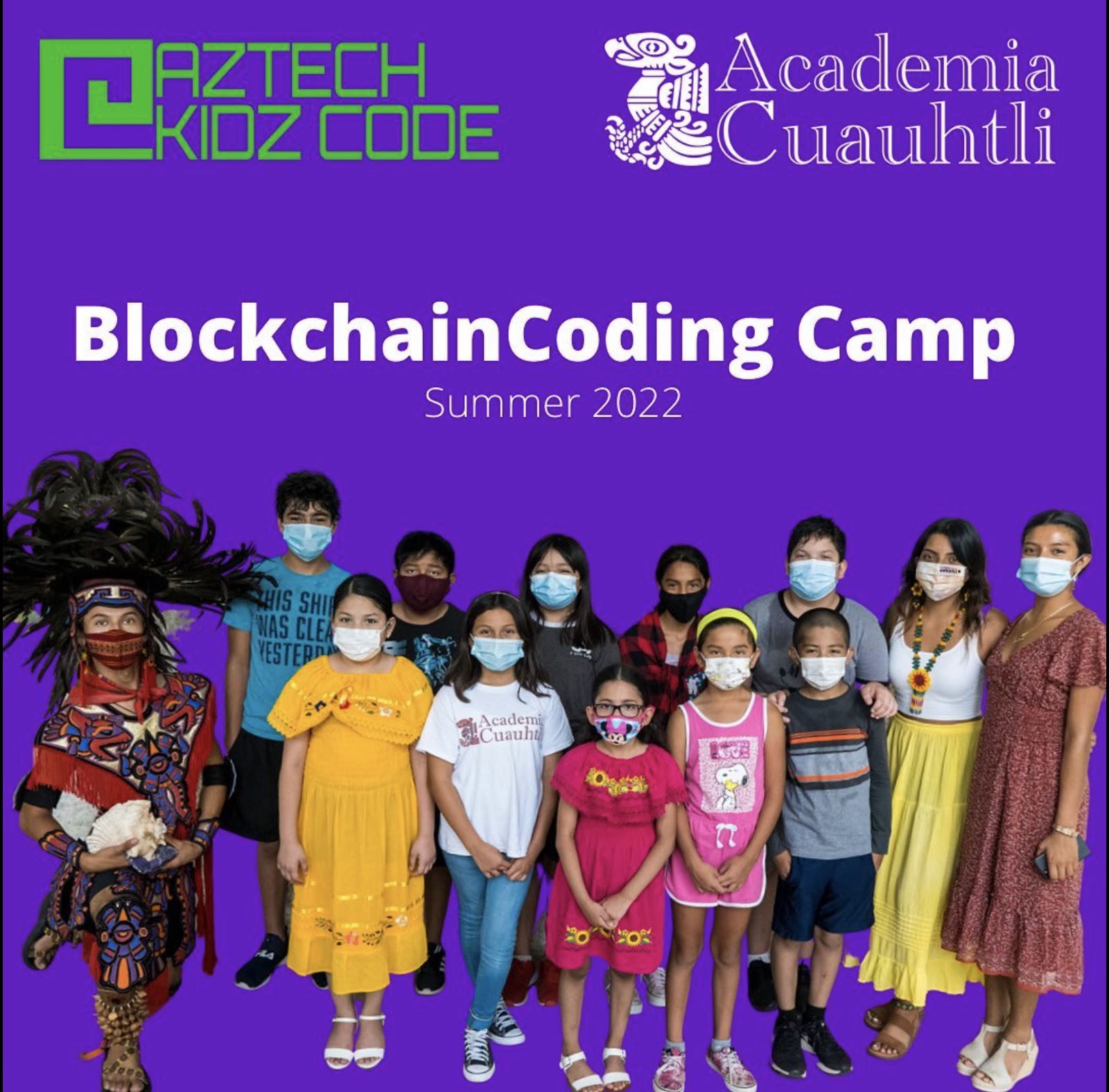
Now in our 10th year, we seek your support for our growing organization which consists of several components including a Summer school coding camp (Aztech Kidz Code), a learning collaborative (La Colaborativa Cuauhtli), and our community-based organization, Nuestro Grupo that meets regularly to plan the activities of our growing organization that gives us the honor and privilege of touching so many students' and families' lives in Austin, Texas.

We're planning a major anniversary celebration in March, 2024, and your contribution will help us to make it a success. 

No amount is too small.

Thanks to Dr. María Del Carmen Unda for organizing this! A special thanks, as well, to Texas State University Professor Dr. Chris Milk who oversees the writing of the fall curriculum and who is a regular presence on Saturdays. Abundant thanks, to our director, Katya Guzman, our maestras and maestros, and to our many volunteers without which this work would be impossible. 

This is a labor of love. 💗


During the fall, we made crafts together. It always so much fun for me to learn with them!

Wednesday, May 31, 2023

MEDIA ADVISORY: Aztech Kidz Code 3rd Annual Summer Camp—an Initiative of Academia Cuauhtli—Begins Soon!

Students, Friends & Colleagues:

Yes, the legislative session was devastating in so many ways and on so many levels. Hopefully, most of us still have an awesome life outside of the legislature where God's work is still getting done.

Accordingly, a number of you have followed our local community work at Academia Cuauhtli in Austin, Texas. Academia For the last couple of Summers, we have held our marvelous Aztech Kidz Code Summer Camp (see Press Advisory below).

Todos mis respetos, much respect, to founder Azteca Sirias, as well as to project manager, Maria Unda, who is a doctoral student in our Education Policy and Planning program in the Department of Educational Leadership and Policy in the College of Education at the University of Texas at Austin. Same for all our outstanding teachers shown in the photo below.

Seated left to right: Dr. Chris Milk, Santiago Sirias Angel, Azteca Sirias, Drs. Angela Valenzuela and Emilio Zamora, Maria Unda, Jenna Jacob. Katya Guzman, Irving Maldonado Salinas, and Mario Ramirez.

In its third year of existence—and with significant help from the City of Austin—AKC will serve over 180 students in three, 3-week summer programs throughout the summer, serving mostly immigrant, working class children in the district’s bilingual/dual language program. 

A few extra shout outs to Katya Guzmán, our newly-hired, full-time Academia Cuauhtli Coordinator, ESB-MACC Culture and Arts Manager Michelle Rojas, Division Manager of the Museums and Cultural Programs Division for the Austin Parks and Recreation Department Laura Esparza, and AISD Superintendent Matías Segura and his many amazing staff, together with Yvette Cardenas and Cody Fernandez in the AISD Multilingual Department.

At the city level, special thanks to City Council Members Vanessa Fuentes and Chito Vela for their incredible support for everything Cuauhtli.

Abundant thanks, as well, to Gerardo Gandy and our many friends at Gensler Architects for your books donation and our budding partnership. Last, but not least, abundant thanks to both Dr. Victor Saenz and UT College of Education Dean Charles Martinez for supporting our efforts over the years. It definitely takes a village.

Like us on Facebook and treat yourselves to this explanation of "Non-Fungible Tokens," or NFT’s, by Azteca Sirias here

Geez, I need to take this class! Just listening to this makes me feel both excited and lost. This, despite our young people being more than ready for this AP preparatory, Computer Science curriculum. 

Academia Cuauhtli and AKC come out of the Ethnic Studies Movement, the latter of which tends to focus on secondary and college level teaching, instruction, and curriculum development. Given this lack of focus on children and adolescents, both our regular and Summer programming helps fill this yawning gap. 

My heart is full.                                                                                                                                                                

-Angela Valenzuela

P.S. Emilio and I will be with another Academia Cuauhtli initiative, namely, La Colaborativa Cuauhtli—this June in Guanajuato, GTO, Mexico. Thanks to funding support from LILLAS at UT, we are bridging our work involving Central Texas bilingual/dual language education teachers with an initiative of the University of Arizona Tucson. Specifically, Emilio and I are this years' Richard Ruiz Scholars in Residence at Resplandor International, a special needs rural school for the rural children of  Guanajuato, GTO. Thanks to University of Arizona Professor Emeritus, Dr. Todd Fletcher, for honoring us with this invitation. More to come soon on La Colaborativa Cuauhtli.

*************


*MEDIA ADVISORY*


FOR IMMEDIATE RELEASE  

May 31, 2023 


CONTACT: María Del Carmen Unda

512-364-0700; academiacuauhtli@austin.utexas.edu


Austin, Texas - On June 5th, 2023, Academia Cuauhtli, the Austin Independent School District, and the Emma S. Barrientos Mexican American Cultural Center are hosting its third Aztech Kidz Code Summer Camp. As an initiative of Academia Cuauhtli, the camp consists of three, three-week camps serving 180 Black, Indigenous, and Latina/o low-income youth in the district’s bilingual/dual language education program. Youth of all ages will learn about coding, blockchain, gaming, and Artificial Intelligence, much of this from an Indigenous perspective that additionally involves Aztec ceremony and ancestral funds of knowledge. 


Azteca Sirias, a graduate of the University of Texas at Austin and founder of Aztech Kidz Code, expresses the following, “Indigenous pedagogies are a vital component of computer science education for our communities. By teaching about the rich algorithmic history and culture of our ancestors, we can help them to see themselves in the field and to develop a sense of belonging. It is also important for kids at 1-8th grades to be exposed to current technology trends because it helps them develop critical thinking skills, engage in the expanding tech landscape of Austin, and integrate positive forms of transformation in their everyday lives.”


Managed by Dr. María Del Carmen Unda, the camp takes place at Sanchez Elementary School and is offered bilingually in English and Spanish. With funding support from the City of Austin’s Parks and Recreation Department, Academia Cuauhtli co-founder Dr. Angela Valenzuela expresses, “There is tremendous demand in our city for exactly this kind of free, Summer programming for low-income, mostly immigrant youth who otherwise would not have access to opportunities like this. We are so grateful to our partners, and most especially to our staff and teachers, for carrying out this beautiful vision that merges the modern and postmodern with the ancient ancestral knowledge.”


We invite the press and public to any of the three following graduation ceremonies we are holding this Summer where we will engage in both ceremony and a sharing of the students’ creations as follows: Saturday, June 24; Saturday, July 15, and Saturday, August 5, 2023.


***