Translate

Showing posts with label Who Represents You. Show all posts

Wednesday, February 12, 2025

NIH Budget Cuts Are the ‘Apocalypse of American Science,’ Experts Say, Time Magazine

Friends:

This publication in Time Magazine explores how research institutions and hospitals, which serve our communities, operate. In short, the U.S. National Institutes of Health (NIH), the world’s largest biomedical research funder, recently announced major cuts to the "indirect expenses" covered in its grants—reducing them by nearly half. This is an agenda that Elon Musk is championing under the guise of "efficiency."

In case you don't know, "biomedical research" are fancy words for conducting research on diseases, medical conditions, and biological functions. Research of this kind explains all the innovations to treatments like cancer—that happens to be on the rise for young people in the U.S.—as well as therapies, and healthcare technologies. It consists of laboratory studies, clinical trials, and data analysis, all of which enhance medical advancements and improve patient care. 

I understand, for example, that there will soon be new, more effective chemotherapy treatments on the horizon that could revolutionize the treatment of cancer. Radiation therapy treatments are always improving, too. I should know. I'm the beneficiary of these technological advances.

However, the consequences of this decision could be dire, posing a significant threat to scientific progress. With fewer resources, layoffs, hiring freezes, and slowed research advancements are likely. Additionally, the funding reduction may discourage young scientists from entering the field. Experts warn that these cuts will delay the development of future medical treatments and limit the availability of new drugs in the years ahead.

In response, states across the country have mobilized against the policy change. While a temporary restraining order has given researchers some time to adjust, concerns remain about how the U.S. can maintain its leadership in biomedical research with significantly reduced NIH support.

As someone who has personally benefitted from biomedical research, I urge us all to get our voices heard.

What can you do? Reach out to whoever represents you in Congress and let them know how you feel about this horrible blow to the research enterprise.

Go to this link and put in your zip code so that you can find out.

Regardless of their party affiliation, believe me, it makes a difference for you to reach out to them via phone calls and emails. Phone calls are better, in my opinion, but both are good as this creates a record that impacts their decisions.

-Angela Valenzuela


NIH Budget Cuts Are the ‘Apocalypse of American Science,’ Experts Say

The main historical building of the National Institutes of Health (NIH) inside Bethesda campusGetty Images


The U.S. National Institutes of Health (NIH) is the largest funder of biomedical research in the world, and its grants create the foundation of basic science knowledge on which major health advances are built. On Feb. 7, the NIH announced that it would cut "indirect expenses" in the funding it provides to research grants by nearly half.

“We were all just dumbstruck,” says Dr. Richard Huganir, professor and chairman of the department of neuroscience at Johns Hopkins University School of Medicine, who relies on NIH grants for his research into therapies for autism and intellectual disabilities. “I’m calling it the apocalypse of American science. This will basically change science as we know it in the U.S.”

"We're going to see health research kneecapped," says Dr. Otis Brawley, professor of oncology and epidemiology at the Johns Hopkins School of Medicine and the Bloomberg School of Public Health. Brawley has overseen grants at the National Cancer Institute (which is part of the NIH) as well as received them for his cancer research.

The funding cut took effect on Feb. 9 and targets indirect costs, which include facilities and administration costs.

In an immediate response, 22 states sued the NIH and the U.S. Department of Health and Human Services (which oversees NIH), calling the action “unlawful” and saying it would “devastate critical public health research at universities and research institutions in the United States.”

Hours later, the Massachusetts Attorney General issued a temporary restraining order preventing the NIH from immediately cutting billions in the grants it issues to scientists and their institutions.

Here's what to know about the ongoing funding turmoil at the NIH.


What's an 'indirect cost'?

NIH awards around $30 to $35 billion in grants each year to a wide range of disease-related research projects. It helped fund the mRNA technology that eventually led to the recent COVID-19 vaccines, for example.

In a Feb. 7 post on X, the agency said about $9 billion of its annual research grant budget goes toward indirect costs, which are charged by academic institutions receiving the grants. Institutes that receive NIH grants negotiate indirect cost rates, taking into account how much they need to pay for things like heat, air conditioning, and electricity inside research facilities. Administrative costs include those required to comply with legal and regulatory requirements to conduct the research. Once a rate agreement is reached, it applies to all federal grants from NIH to that institution.

Indirect costs can range from nearly 30% to 70% of a research grant, depending on the institution. Certain non-academic institutes that have fewer resources than academic universities tend to have higher indirect rates, from 90% to 100%, says Brawley. In its X post, the NIH says Harvard has charged 69%, Yale 67.5%, and Johns Hopkins 63.7% in indirect costs. (Johns Hopkins' rate recently changed to 55%, Brawley and Huganir say.) Under its new policy, the NIH would cap indirect costs for all institutions at 15%.

Huganir says indirect costs are essential for modern-day research. In addition to keeping the lights on in labs, they cover maintaining and staffing critical scientific equipment and resources such as animal facilities, DNA sequencing, and imaging.

“Right now we are in the middle of developing therapies that could really cure certain forms of intellectual disability for millions of kids across the world,” he says. “We are terrified that the research is going to stop.”

Why is the NIH cutting indirect cost payments?

The NIH did not immediately respond to a request about what prompted the change, directing journalists to the agency’s Grants Policy Statement. However, Elon Musk—tasked by the Trump Administration to address efficiency in government spending—called out the high percentage of indirect costs that the NIH had been supporting. “Can you believe that universities with tens of billions in endowments were siphoning off 60% of research award money for “overhead?” he wrote on X on Feb. 7.

The 15% cap puts NIH grants in line with those from private philanthropic agencies that support research. The NIH says that these entities—such as the Gates Foundation, the Rockefeller Foundation, and the Chan Zuckerberg Initiative—allow a maximum of 10% to 15% of a research grant for indirect costs. But philanthropic foundations and academic institutes aren’t comparable to the federal government when it comes to funding science, Brawley and Huganir say, since foundations tend to support more focused and specific endeavors, such as individual faculty members or targeted projects.

Who will pick up the slack?

So far, it's unclear. In his post on X, Musk hinted that endowments should be part of the solution. But health experts say endowments aren’t a consistent or practical source of funding for overhead costs, since many outline narrow purposes or projects for the funds that are legally allocated and can’t be redirected to cover things like research expenses.

“Nobody else can really afford to pay for it,” says Brawley. “What’s worked nicely over the last 50 to 60 years is that the NIH does a lot of basic science research, asking questions that people can’t make money from. And the corporations, including biotech, can swoop in, and take that basic science information and do engineering and turn it into things you can sell and treat diseases with.”

How will the new NIH policy affect research?

Without the funding to support indirect costs, much of the scientific work that has been a mainstay of the U.S. biomedical field may not happen, or would take much longer. “The bottom line is that we are going to have a lot less resources, which obviously means we are going to have to lay people off, and research will be slowed down,” says Huganir.

Brawley is also concerned about the quashing effect such actions will have on young scientists to remain in the field and create new labs. “Nobody wins the Nobel Prize for what they did when they were 50,” he says. “I’m worried about the loss of creativity from young people; that’s where all the really good ideas come from.”

Read More8 Symptoms Doctors Often Dismiss As Anxiety

He also notes that while a lot of attention has been focused on large academic universities with big endowments and deeper financial resources, the policy will likely have an even stronger impact on smaller community hospitals that supply many of the patients who participate in clinical trials. “People who are getting treated in clinical trials now for cancer will find many of those trials will close down,” he says.

That will affect the pipeline of new treatments for diseases like cancer. Brawley says that drugs approved in the last six months have been tested in trials over the last decade, so curtailing funding in research today will slow down the pace of progress and eventually result in fewer drugs. “I anticipate that the number of drugs approved is going to go down dramatically in the next five to 10 years,” he says.

What will happen to current NIH research grants?

“We have been working all weekend trying to calm faculty and students and everybody who is concerned about future careers in science,” says Huganir. “We have lots of committees addressing different aspects of this, and we’re trying to come up with ideas about how we can compensate for any losses we are experiencing."

"That may mean laying people off and maybe putting hiring freezes on new faculty," he says. "We will have to make up for the difference through cost cutting in some way.’

With the temporary restraining order, NIH grantees have some time to come up with a plan for how they will try to maintain the pace of scientific research with much less NIH support.

“Perhaps we need to reimagine or re-envision our entire system for how we fund science and how people make money off of science,” says Brawley. “But the way to do that is not to threaten on Friday night to cut everybody’s indirect [costs] down to 15%.”

Ultimately, scientists say the American public will pay a price for the drastic funding cuts. “The American people should know that this is going to impact them—the health of their families and their children,” says Huganir. “And the economies of communities around these institutions that get a lot of NIH funding are going to be impacted as well.”

Wednesday, June 08, 2022

The G.O.P. War on Civil Virtue by Paul Krugman | New York Times | May 26, 2022

Texans deserve better than our current Texas Republican leadership, beginning with Gov. Greg Abbott, Attorney General Ken Paxton, and Senator Ted Cruz, and Lt. Gov. Dan Patrick. How the heck do they still get voted into office? Beats me.

This incredulity is the thrust of a May 29th opinion by the Editorial Board of the Austin American-Statesman titled, "After Uvalde, we must demand change," as well as this New York Times piece by Paul Krugman that calls out the GOP attack on civil virtue. To date, this gallery of reckless leadership has unilaterally decided that having fun with guns is more important than children's and teacher's lives. Worse yet, as Krugman states,

"if you take the proposals by Cruz, Patrick and others literally, they amount to a call for turning the land of the free into a giant armed camp." 

And arming teachers with guns is NOT a serious proposal as summed up well by this meme posted by Facebook group, Living Blue in Texas.

Short of Congress passing comprehensive gun legislation, our states can learn from Florida, as mentioned by the Statesman's Editorial Board:

"A Florida law enacted in 2018 after the Stoneman Douglas High School mass shooting imposed a three-day wait for gun purchases, raised the minimum legal age for buying guns from 18 to 21, and enacted stricter gun ownership measures for those with mental health problems."

Now is the time for "we the people" to "do something." And that something for right now can be reaching out to whoever represents you in office. 

You can visit this Texas Tribune who-represents-me website if you don't know. Also, Texas is holding an election on November 8, 2022 where you can vote for our state's next governor, attorney general, and so on. If you're a new voter, link here to start a new voter registration application.

-Angela Valenzuela

#Uvalde #UvaldeStrong #vote2022


The G.O.P. War on Civil Virtue

by Paul Krugman | New York Times | May 26, 2022

Monday, May 22, 2017

Texas Senate puts voucher-like program in school finance bill: Let's STOP HB21

Disgraceful.  House Bill 21 started out as a decent, do-able school finance bill, but now that its in the Senate, it has become a voucher bill.  This Texas Tribune piece by Aliyya Swaby (below) does a pretty good job of detailing the 11th-hour derailing of this bill by the Senate.  Succinctly, it allows for our hard-earned taxpayer dollars that would otherwise go to public school funding and gives it to private schools.  Very, very sad and shameless, to boot.

Lt. Governor Dan Patrick and many of our pro-privatization senators are bad news for public education and democracy in Texas.  Committee on Public Education Chair, Dan Huberty and many others put a lot of time and effort into this bill, only to see it deformed beyond recognition. Good, closing quote from within:

House Speaker Joe Straus shot back later that day, arguing that the Senate's budget proposal reduced the state's share of public education funding, leaving local property taxpayers with a heavier financial burden. "The House made a sincere effort to start fixing our school finance system, but the Senate is trying to derail that effort at the 11th hour," he said.

Check out one of my earlier posts on vouchers from this legislative session titled, Challenging the School Privatization Agenda: Let's Grow, Not Kill, Our Democracy.  It lays out the argument why vouchers and school privatization are really  bad policy.

I just called my representative in the House and urged him to put a stop to this bill.  Please consider doing so, as well.  Time is of the essence. Contact your legislators right away and consider doing the same. If you do not know who represents you, click here to find out.

Let's also be forward looking and let's get these people who are not particularly fond of the public good out of office.

Angela Valenzuela 

@vlnzl

Texas Senate puts voucher-like program in school finance bill

The Texas Senate voted to approve a bill that would simplify funding formulas for public schools and let parents use state money to send their kids with disabilities to private schools or pay for homeschooling.

 
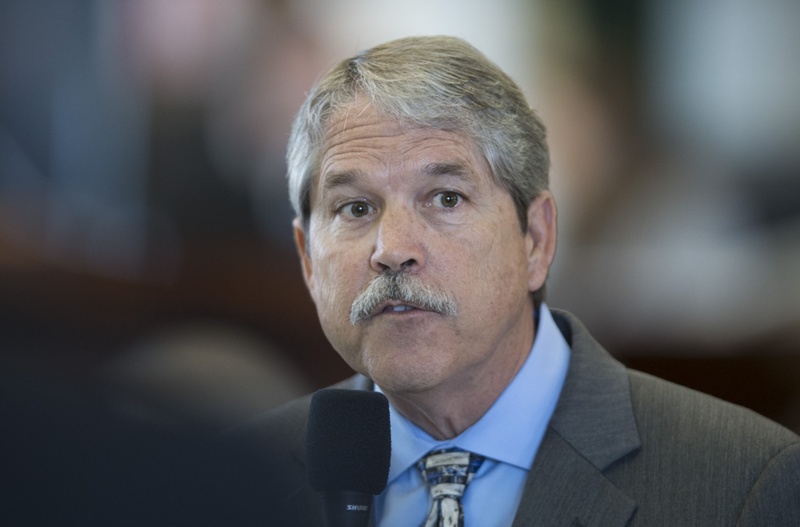
State Sen. Larry Taylor, R-Friendswood, discusses a bill amendment in the Senate on March 30, 2017. 
State Sen. Larry Taylor, R-Friendswood, discusses a bill amendment in the Senate on March 30, 2017.
Bob Daemmrich for The Texas Tribune

The Texas Senate on Sunday night approved a bill that would both simplify the formulas for funding public schools and allow parents of kids with disabilities to take state money to leave the public system for private schools or homeschooling.

Senators voted 21-10 to approve House Bill 21, which the House originally intended to reform a complicated system for allocating money to public schools and to provide a funding boost for most public schools.

Sen. Larry Taylor, R-Friendswood, changed the bill to include a provision the House hates and Lt. Gov. Dan Patrick very much wants: education savings accounts, which are state subsidies for parents who want to send their children with disabilities to private schools or need money for services to educate them at home.

"We're trying to fill a lot of different needs in the bill, and we're trying to keep our costs down," Taylor said while introducing the bill.

The bill now goes back to the House, where it will hit a major roadblock: Rep. Dan Huberty, R-Houston, the bill’s House author, has said he won’t accept a version that includes education savings accounts.

Patrick promised the House an extra $530 million for public schools if the education savings account program becomes law; he has been unsuccessfully advocating for similar voucher-like programs for the past decade. The House had originally budgeted a $1.5 billion boost for public schools, and with the promise of $530 million, the Senate went from offering little extra funding for public schools to meeting the House partway.

If the House doesn't approve HB 21 as amended by the Senate, public schools won’t get the extra $530 million, Taylor said. Under the Senate's version of the bill, about 93 percent of school districts would see more revenue by 2019, with 7 percent seeing no change in revenue, he said.

Taylor stripped the bill of several of the original tweaks from the House that were intended to either simplify the funding formulas or allocate money to specific student groups, saying they would cost too much money.

At the same time, he packed HB 21 with provisions from other bills in the House and Senate — including $100 million in first-time facilities funding for charter schools, $20 million in grants for schools running programs for kids with autism and a 15-member commission for long-term school finance reform.

Democrats challenged Taylor to explain why state money should be used to pay for private schools when they are not subject to state accountability, are not required to take all students and are not subject to federal law when it comes to offering services for students with disabilities.

“We don’t want someone to be forced to take a student they’re not set up to handle,” Taylor said. He argued private schools are subject to a higher level of accountability because parents can decide to leave a school that doesn’t fit them.

He said he didn’t understand why a small program that would affect just 5,000 students would stop legislators from approving half a billion dollars for public schools.

“This whole [education savings account] is a mouse, and this elephant is just freaking out,” he said. “The whole world is coming to an end over this little bitty thing.”

Sen. José Rodríguez, D-El Paso, unsuccessfully proposed an amendment to the school finance bill that simply crossed out the education savings account language.

Taylor succeeded in convincing rural conservative senators to vote for the Senate’s version of the bill despite the fact that they generally have fewer private schools in their legislative districts and serve constituents who are skeptical of “private school choice.”

Sen. Robert Nichols, R-Jacksonville, said the 101 public school superintendents in his district dislike the education savings accounts but like the provisions that would save small, rural schools money. Nichols ended up voting yes on the bill.

Public education advocates did an about-face on the bill once they saw it included education savings accounts, with about 40 organizations sending letters to all Senate offices asking them to vote against it.

“In the middle of the night, the Texas Senate voted for a voucher scheme that will rob taxpayer money from public schools and give it to private schools,” said Ann Beeson, executive director of the left-leaning policy group the Center for Public Policy Priorities. “What started as a good school finance bill in the Texas House turned into a voucher bill that does not help remodel our state’s school finance system.”

Patrick on Wednesday listed the bill as one of the priorities he wants the House to pass. In exchange for a vote on HB 21, he promised to concur with the part of the House's proposal for the school accountability system that would delay implementation of a controversial A-F grading system for schools and districts until 2019.

House Speaker Joe Straus shot back later that day, arguing that the Senate's budget proposal reduced the state's share of public education funding, leaving local property taxpayers with a heavier financial burden. "The House made a sincere effort to start fixing our school finance system, but the Senate is trying to derail that effort at the 11th hour," he said.

Read related Tribune coverage:
  • A Senate committee passed the House’s major school finance reform bill, after adding a controversial provision subsidizing private school tuition for special needs students — a move unlikely to go over well in the House.
  • The Senate Education Committee discussed a bill that would radically simplify the state's school finance formula, stripping it of some antiquated provisions. Parents and educators who testified wanted a few new provisions added in.