Translate

Showing posts with label ceremony. Show all posts

Wednesday, September 18, 2024

Xinachtli Pedagogy, Thinking Outside of the Box, and Addressing the Water Crisis in Texas

Friends:

Xinachtli means "seed" in Nahuatl and as described in this wonderful video as
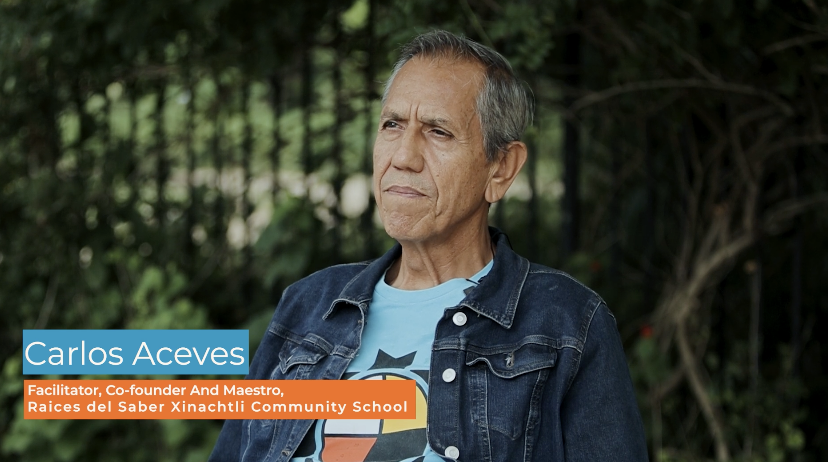
 a way of thinking "outside the box" of tradition, mainstream schooling in the U.S. Maestro Carlos Aceves shares, an Indigenous elementary school teacher his view that children do get a lot of information in schools, but they're objectified through processes and their corollary logics like high-stakes testing, tracking, drill and kill curriculum and the like, that reduce their sense of who they are and accordingly, their possibilities.
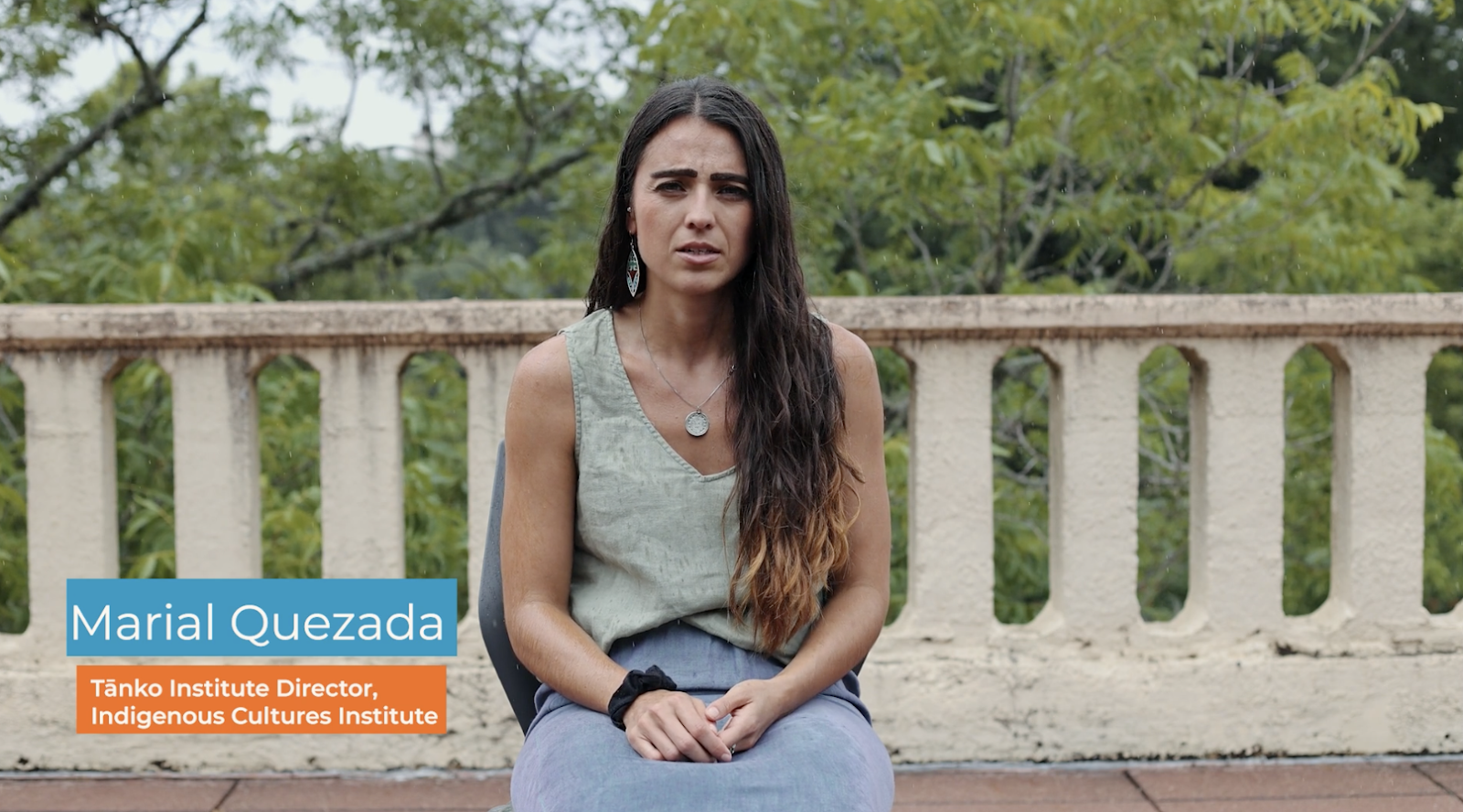
Indigenous Cultures Institute (ICI) Board of Elders Dr. Mario Garza and Maria Rocha and Director Marial Quezada, also a doctoral student in Cultural Studies at UT-Austin are featured in this film as the ICI regularly invites Maestro Aceves, who lives in El Paso, to provide instruction at the ICI's annual Tanko Institute both of which are in San Marcos, Texas. Our school, Academia Cuauhtli is partnered with the ICI with our teachers attending the Tanko Institute and a number engaged in Indigenous pedagogy. I see some of them in the video. 😊 Academia Cuauhtli students also annually attend the ICI's Sacred Springs powwow.

I recently corresponded with Maestro Aceves when I received one of his emails that expressed:

Restore the ceremonies, renew the covenants, return to the sacred places, and follow the story in the Sky.”

 As Natural Peoples we look to Creation for guidance. We were given ceremonies as textbooks, we made agreements with Natural Powers so that we can continue surviving as a people, we travel to special places of Creation on Earth to make offerings in appreciation of Life, and we learn the cycles above as patterns for our Natural Way of Life.

"Ceremonies as textbooks." These words touch me deeply. There is such beauty in his words that encourages us to think of the natural world differently. 

For Texans, this should be an urgent matter as according to a recent Instagram post by Progress Texas, our state is running out of water. Newsweek also has a recent story on this last week on September 11. It's shocking to learn from Agriculture Commissioner Sid Miller, "We lose about a farm a week in Texas, but it's 700 years before we run out of land, the limiting factor is water." Okay...  That's not a small "but" to me. In any case, you get the point.

What should also concern us is that recent statistics show that people from around the country are flocking to Texas because it's an affordable state. Long term, this places stress on our state's water supply that is additionally jeopardized by fracking. 

To combat all of this, we absolutely do need to address policy related to natural resources, but we also need a different kind of consciousness and permission structure where we are not estranged from the natural world but rather see ourselves as a part of it, even caught up with it as a form of destiny. If we change, the world changes. It's not either-or, but both-and. After all, it doesn't make sense to change policies when the thinking that got us to where we are remains in place.

This is what we are collectively about, Academia Cuauhtli, the ICI, the Tanko
Institute, and so many, if not all of us, in the Ethnic Studies Movement. Education is always about changing consciousness. Unfortunately, mainstream schooling with its colonial logics is often about reducing children to a number on a piece of paper—and not just the children, but their teachers and schools. This testing regime has been so terribly harmful. What is there not to love about spending time in nature and taking time to learn, not just from teachers, but from the natural world itself?  

For a paper I'm writing that is focused on our work at Academia Cuauhtli where I cite Maestro Aceves, I asked him how he identifies and this is what he shared,

Carlos Aceves Yolohuitzcalotl

Cihuacoatl for Kalpulli Tlalteca People of the Earth Community.

bilingual elementary school teacher

I have seen Maestro Aceves in action. He is the consummate Indigenous bilingual elementary school teacher. I would love to be in his elementary school classroom every single day, were it possible. 

Thank you, Maestro Aceves and thank you ICI for our partnership that from our own Xinachtli moment has grown and blossomed exquisitely over the years. 

-Angela Valenzuela


Tānko Institute || Xinachtli Pedagogy for Educators

Wednesday, June 01, 2022

Father of Uziyah Garcia speaks at prayer vigil for Uvalde victims in San Angelo, Texas

Friends:

Visit the actual KLST San Angelo page to hear Uziyah's father's gripping

statement. We should not be naive. The increased rate of gun violence in our country makes the unthinkable possible. 

Yes, let's all hug our kids and grandkids. Let's also work for change.

-Angela Valenzuela

#RememberUziyah #UvaldeStrong #WeAreAllWestTexas

Father of Uziyah Garcia speaks at prayer vigil for Uvalde victims

Monday, May 30, 2022

Remembering Uziyah Sergio Garcia (August 13, 2011 ~ May 24, 2022) of San Angelo, Texas, by Angela Valenzuela, Ph.D.

Remembering Uziyah Sergio Garcia (August 13, 2011 ~ May 24, 2022) of San Angelo, Texas

by

Angela Valenzuela, Ph.D.

My sister from my hometown of San Angelo in West Texas just sent me this obituary from the Gutierrez Funeral Home. It is of Uziyah Sergio Garcia, 

one of the 22 souls lost in Uvalde, Texas, last week. Born on August 13, 2011, he was only 10 years old, a beautiful child like all the others, whose lives were senslesly taken by gun violence.

Our visit to Uvalde's Town Square (see earlier posts by Emilio Zamora and me), where a shrine was set up to honor the victims, coincided with the time that Uziyah's family was there. 

Wearing white, printed t-shirts with Uziyah's picture, represented as an angel, on them, they caught my attention. His aunt told me that Uziyah was from San Angelo and that his body had been delivered there. Quenching my own tears, I told her that I am from San Angelo and that I was really sorry at what had happened.

They remembered him as a truly delightful boy. They said that he had great faith in God and would always tell everyone, "God bless you. God bless you." 

While referring to a class photo with the two fallen teachers, Ms. Irma Mireles and Irma Garcia, superimposed on it, family members, commented admiringly on how he always liked to be in front.


(Manny Renfro / Associated Press)

This experience fills me with so many thoughts and feelings. One thing that struck me is how we are all connected. "We are all West Texas," was impressed upon my heart. This is familiar territory and I got reconnected to it. And all I can tell you about that is that it's complicated.

West Texas has a history and a story that needs to be told (especially see Emilio's reflection on this). Another thing that struck me is that this is a family that prays. Having grown up in the church in West Texas, this was recognizable to me. Perhaps not all, but all that they shared seemed to align. How assuring. How helpful.

Prayer, meditation, Indigenous ceremony, and all the healing arts, provide great protection—especially when practiced daily—in this time of great need and vulnerability. 

I myself am in deep prayer and meditation for all the children and families impacted. Action and advocacy often also have a positive impact on healing while motivating commonsense reforms. Gov. Abbott should most definitely call a special legislative session to address this matter alone. He should do this soon. He should stop playing politics and should understand instead that immediately calling a special session will contribute enormously to our healing. To not do so is to perpetuate this violence.

We are not solely living a moment that is "polarized," my friends. It is first and foremost a spiritual battle anchored in a culture that espouses harmful ways of knowing and being in the world, and with policies, rules, and regulations to match. 

We must all humble ourselves so that Creator can work miracles in this time of great pain, suffering, and trauma for the families and communities impacted by this massive loss of life—all of whom were treasures, greatly loved and supremely adored.

How could they not be? They were brimming with life and purpose. Too young to be cynical, yet old enough to have exciting dreams for their lives and futures. 

How could this not be? They had great teachers, too.

I am so honored and touched to have been blessed by Uziyah's family whose love for Uziyah is eternal.

It didn't have to be this way. 

I trust that San Angelo will always remember you, Uziyah. 

I know I will.

-Angela Valenzuela

#RememberUziyah #UvaldeStrong #WeAreAllWestTexas


Uziyah Sergio Garcia
August 13, 2011 ~ May 24, 2022 (age 10)

Obituary & Services

Tribute Wall


Obituary

Uziyah Sergio Garcia, 10, of Uvalde, Texas, formerly of San Angelo, Texas passed away on May 24, 2022 in Uvalde, Texas. Services are pending with Gutierrez Funeral Chapels, 1002 North Oakes St, San Angelo, Texas.


To send flowers to the family or plant a tree in memory of Uziyah Sergio Garcia, please visit our floral store.

Tuesday, September 25, 2018

Smudging does a lot more than “clear evil spirits” new research reveals


I regularly burn sage.  When I burn it, I pray and meditate and it makes me feel better.  It helps to center me.  I write, think, and study better after burning it.  

Glad to see this piece on it that helps dispel stereotypes about burning or smudging—which equate to stereotypes against native people who practice smudging regularly, and have done so for millennia. 
The plant name, "sage," comes from Latin salvia, meaning "healing plant," and salvus, meaning "safe." The deeper takeaway should therefore be that our ancestors were scientists all along and that modernity has finally caught up, in at least this one aspect, and barely so.
Long overdue, I would say.
My only quibble with this piece is that it says that burning or smudging, as in incense, pre-dates Native American culture. Check out a substantive challenge, for example, to the Clovis hypothesis of North American Indian presence of 12,000 years by Indigenous scholar, Paulette Steves
“Counter to the western stories that we’ve been here 12,000 years, we’ve been here over 60,000 years, likely over 100,000 years, and there is a great deal of evidence to support that.”
So we can't really speak of "pre-dating" until we have a complete record that takes into account recent evidence that challenges just how long native peoples have been on "Turtle Island," the Indigenous name for the North American continent. 
That said, we have much to learn from Indigenous people.

My sage thoughts for today.  

Speaking from Turtle Island.
Thanks to Sean Arce for sharing.

-Angela Valenzuela 
“Fill your heart full of good things” – smudging is the ceremonial tradition of Indigenous people across North America, it cleanses your mind, body and soul.
Smudging is an ancient form of purification. It is scientifically backed as a way to release negative ions into the air, kill bacteria and germs, and promote wellness within ourselves and our environment. Smudging can be done at anytime for yourself or within a group and is traditionally done before taking part in any sort of important ceremony. It’s a “clean slate” of sorts. A way to release what is no longer serving you and clear away negative attachments so that you can focus on whatever work you are trying to do (meditation, ceremony, tarot, etc.). It can also be used to cleanse objects such as crystals, cards, or basically anything that might hold a negative attachment.
The smoke the herbs put off is said to cleanse negative energy and spirits, and even people and tools. Smudge smoke, like washing hands before eating food, was used as a way to cleanse people and places.
Smudging was commonplace in traditional societies. It has been used for thousands of years and even pre-dates Native American culture. The burning of incense also goes far into our past.
We can see some of the first instances of incense burning as far back as 1530 B.C.E. in Egypt and Israel.
Of course, with any spiritual practice, we have to look at it with critical eyes and be somewhat skeptical. Science has recently looked into the ritual to see if it goes beyond mere superstition.
In a 2006 study published in the Journal of Ethnopharmacology, researchers administered herbal and non-herbal remedies in smoke form. Their findings?
The most frequent medical indications were medicinal smoke are pulmonary (23.5%), neurological (21.8%) and dermatological (8.1%). Other uses of smoke are not exactly medical but beneficial to health, and include smoke as a preservative or a repellent and the social use of smoke

They found the smoke to be air purifying and highly effective at it too. Another paper, published a year later, found that medicinal smoke reduced airborne bacteria.
The authors state: “This study represents a comprehensive analysis and scientific validation of our ancient knowledge about the effect of ethnopharmacological aspects of natural products’ smoke for therapy and health care on airborne bacterial composition and dynamics.”
A long list of pathogenic bacteria were found to be absent in an open room 30 days after a smudging treatment.
“We have demonstrated that using medicinal smoke it is possible to completely eliminate diverse plant and human pathogenic bacteria of the air within confined space,” write the researchers.
These are all very fascinating developments and of course requires still some healthy skepticism and further research. What we can say is that it’s starting to look like burning sage and other herbs does a little more than make your house smell nice.
You can learn how to easily smudge in the video below:
Article from Higher Perspectives