This blog on Texas education contains posts on higher education, as well as preK-12 policy accountability, testing, bilingual education, immigration, school finance, race, class, and gender issues at both the state and national level. It also represents my digital footprint, of life and career, as a community-engaged scholar in Texas.
Here is another great resource on Native American children's books. As I indicated in my earlier post today, there are structural issues associated with access to culturally and linguistically relevant children's books, but that hardly means that they do not exist. Here is a great resource for you from TribalNationsMaps.com. The maps, by the way, are quite wonderful, too.
We're all realizing just how social we all really are and how much we depend on our relationships. For children for whom the shift to home felt sudden and punishing, they may be among those that need the most help. Good advice here for parents, as well as teachers and school district officials. Good and ongoing communication is essential. Zoom breaks, too. From what I'm hearing from teachers right now, an entire "school day" on Zoom is just too much—and particularly so when there are issues of connectivity or where parents lack computer literacy and do not speak English. This lengthens teaching to the entire day with teachers also playing that role of providing basic computer literacy skills and instruction so that children can "get on" the system and do their assignments and so on. Love your teachers, my friends. They are true heroes in this crushing moment. -Angela Valenzuela
In the past month, my 5-year-old has gone from being excited about video calls for school and virtual “play dates” to basically hating it all. Sometimes he’s into it — like yesterday, when he was totally engrossed in a 30-minute math class with his teacher and six friends. More often, he whines and mopes beforehand, then immediately after slips into a funk. That goes for official school meetings and for more casual digital hangouts with family and friends.
Zoom fatigue (or whatever your preferred video call platform) is a real issue for both adults and kids, which is, of course, a problem. Millions of children across America are doing the bulk of their schooling online right now, a scenario that could well continue into the next academic year. But lots of them are feeling, just, meh about the whole thing.
Are your kids completely over Zoom? Here’s what that is all about — and what you can do to help them through it.
First, understand that they might just be really sad
I’ve noticed that my 5-year-old gets especially upset on the morning of his weekly full-class Google Hangout. It’s a sweet idea — they ask each other questions and sing some songs. Afterward he crashes, without fail. He’ll have a totally unrelated meltdown. Or pick a fight with his brother. Or just kind of sink into a crappy mood.
Educational experts say video calls can be a sudden reminder to kids of how different things are in their worlds right now. They might be navigating their new at-home routines pretty well at this point, but seeing their friends and their teacher virtually can quickly snap them out of it.
“They’re tired of not being able to see people face to face,” said Lee Scott, chairwoman of the educational advisory board at The Goddard School, a private early education provider. “It’s a reminder they can’t do that.” Scott added that video chat removes all of the spontaneity that’s such a hallmark of kid friendships, particularly for the younger set.
“In natural friendships, they think, ‘Oh, I’ll go over and say “hi” to so and so,’” Scott said. They can’t do that at all right now, and video calls can be a hard reminder of that change.
So don’t try to fix it
“Children have experienced a loss. This is really sad for them,” echoed Nermeen Dashoush, an assistant professor of early childhood education at Boston University and chief curriculum officer at MarcoPolo Learning. Don’t underestimate how difficult that is to cope with emotionally, she said.
Instead of trying to fix their sadness by setting up more online playdates, help give them the vocabulary they need to express their feelings — and be open to hearing about what they’re going through.
“I do think that sometimes as parents we try too much to try and make things better for our kids,” said Dashoush, herself a parent who added that she often does the same thing. “A lot of research says, though, that what really helps is trying to help kids identify their feelings.” Then be on the lookout for more pronounced withdrawal, which could be a sign your child is struggling with depression or anxiety.
Give them some control over when they have video calls
Different teachers, classrooms, schools and districts have different expectations for what remote learning looks like, and what kind of daily schedules they’re setting. But if your kid is really pushing back against Zoom, it might be time to just give them a break.
“I do think there needs to be a healthy mindset around all of this,” said Stephen Cochrane, an associate professor for the California School of Education at Alliant International University. “Parents shouldn’t be too fearful that their child is going to slip and fall behind.”
So cancel Zoom dates with friends and family for a few days, and talk to your kid’s teacher about what they’re experiencing in order to come up with some strategies that can give them the time and space they need, while also staying on top of their schoolwork. That might mean calling into school meetups when they need to, but then spacing out the rest of their work a bit more.
“Let them have a say in how they break things up,” said Scott. “Give them some choices about how and when they do schoolwork that is required.”
Plan social calls with clear structure
If your kid is getting bored on Zoom calls with friends and family, it can be really helpful to give them a specific thing they’re going to do or talk about ahead of time. Maybe you have them play games with a friend, or have them cook a favorite recipe, suggested Scott. An older friend or relative might enjoy reading your kid a book. Maybe it’s a virtual dance party.
And that’s not just for younger kids. Older children might enjoy watching a movie with their friends, and there are extensions and apps that they can use to make it more of a viewing party.
“Try and have a plan,” Scott said.
Remember, in a lot of ways this is even harder for kids than it is for adults
Adults had at least been following the COVID-19 news before everything shut down, but kids’ worlds changed in an instant.
“A lot of them went to school one day, and the next day it was just ... over,” said Dashoush. So be patient with them if they just don’t feel like hopping on another Zoom call. Be open with them (in a developmentally appropriate way, of course) about how this all feels for you emotionally, too. Acknowledge that this feels really forced for a lot of us.
“It’s so different than the live interactions they have together,” said Cochrane. “When they’re in school, they’re not just learning content, they’re not just learning how to be a critical thinker. They’re developing relationships. That piece is difficult to replicate via video conference.”
Experts are still learning about the novel coronavirus. The information in this story is what was known or available as of press time, but its guidance around COVID-19 could change as scientists discover more about the virus. Please check the Centers for Disease Control and Prevention for the most updated recommendations.
Sister Simone is one of my heroes: she keeps speaking out about poverty when no one (most notably not even one of the presidential candidates in 2008 or 2016) is mentioning this growing crisis. She doesn't tolerate silence when there is injustice. She speaks candidly about the human costs of war, about fairness and equity.
And she is eloquent on the matter of the peoples whose perilous lives are bringing them to the US even when they know their dreams of a safe place for their children are now threatened by the policies of an administration hostile to them as people. (I won’t repeat the words the president and attorney general use to describe these, their fellow human beings – you’ve already heard them and I don’t want a word search to attach them to my name).
What Sister Simone sees at stake is the values and ethics of a nation complicit with the poor and inhumane treatment of immigrants, specifically immigrants crossing the Mexican border. Here is an article citing her condemnation of the use of the Bible to justify separation of families at the border.
What should we do?
She calls on us to treat migrants in a way that is “humane, just, and fraternal” by improving our detention and deportation practices. “It is a mandate of our faith and our nation. Laws that separate families are unjust and immoral and are no laws at all," she says in regard to the cruel immigration laws enforced by the Trump administration. Here is a Link to the Federal Policies Sister Simone and NETWORK supports as well as some Policy Solutions they have put forward (scroll down to see their ideas for solutions).
I could not be more grateful for the life, the work, the mission, the example of Sister Simone. She would ask us to turn that gratitude into action, that admiration into advocacy. Her example is powerful to the extent we follow it.
To share your ideas about Sister Simone, babies taken from their moms, and actions you are taking to end the immigration cruelty, please click on the “comments” pencil.
Do read with urgency this powerful, if painful, piece authored by First Focus President Bruce Lesley who makes the convincing argument that our current government is engaged in a war against our youth. We already knew it was (and is) against immigrants and the poor. Centering children and youth makes all of this ever more critical.
We are asking for the #DREAMAct by January 19, 2018.
In short, this a desperate call to action. Not only should we not divest from resources designed to help our children and youth, but we should also invest considerably in our children's and grandchildren's futures. Do read this in its entirety. And let's all work to get these hateful leaders at state and national levels out of office.
The year 2017 may go down as the worst year in decades for children in Congress.
Children’s Health: CHIP, Medicaid, and the ACA
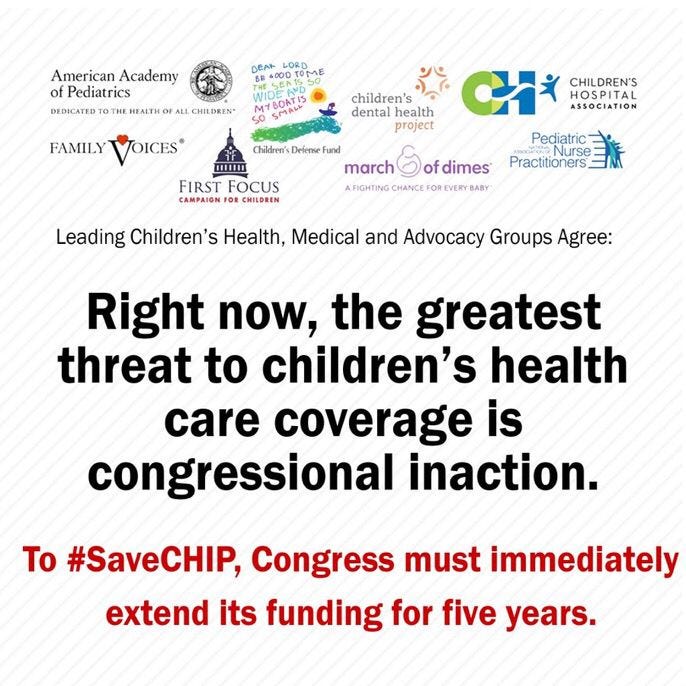
When the year begin, on January 3, 2017, the American Academy of Pediatrics, Children’s Defense Fund, Children’s Dental Health Project, Children’s Hospital Association, Family Voices, First Focus, and National Association of Pediatric Nurse Practitioners had one simple request of Congress when it came to the health of children Recognizing that 95 percent of children had health care coverage — a historic high — our organizations requested that Congress adopt a “do no harm to children standard.”
As these leading child advocates wrote:
Children
must not lose ground: any health reforms must build on achievements
already made to further improve coverage for children. We look forward
to working with you to ensure no child is worse off as changes to our
health care system are contemplated, and that we can work together to
make even more progress for children.
This request was neither ambitious nor complicated.
Considering that President-elect Trump promised to make the health system better, the request by child advocates to “do no harm” seemed rather modest and reasonable. In an interview with 60 Minutes a year ago, President Trump promised, “I am going to take care of everybody. . . Everybody’s going to be taken care of much better than they’re taken care of now.”
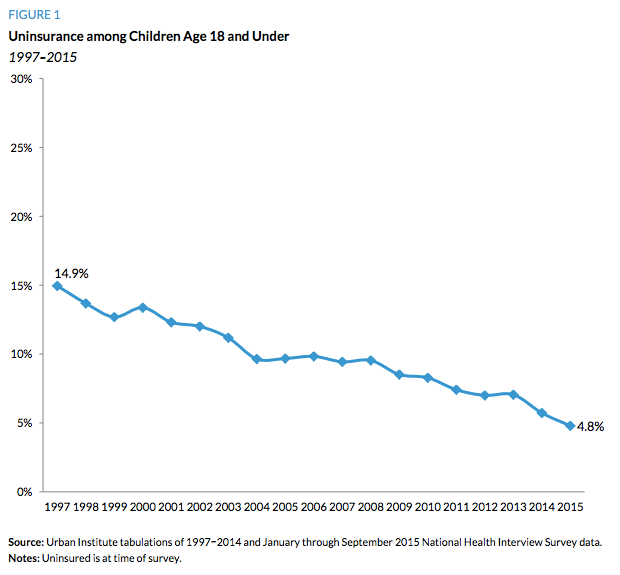
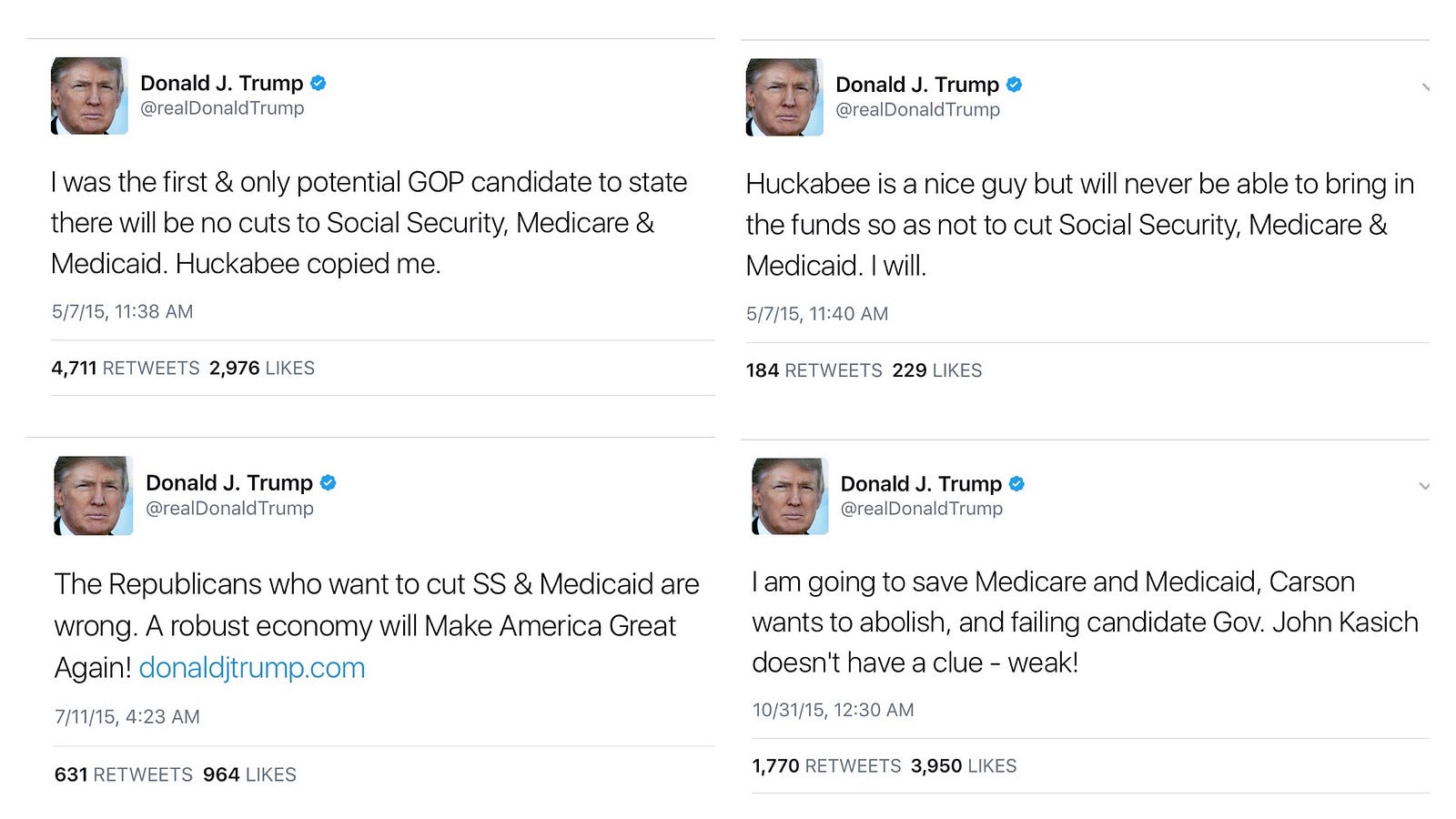
On the campaign trail and on Twitter, Trump also vowed to not cut Medicaid, which in tandem with CHIP, has helped cut the uninsured rate of children by two-thirds over the last two decades.
To meet a “do no harm” standard, Congress simply needed to take no action through its work on changes to the Affordable Care Act (ACA) or Medicaid that would leave children worse off. Congress also needed to simply “do its job” by extending funding for CHIP before its self-imposed expiration of the program in September, as inaction would threaten the health coverage for nine million children and pregnant women that are covered by CHIP.
Unfortunately, in a moment that foreshadowed what was to come, Senator Sherrod Brown (D-OH) offered an amendment last January that would have affirmed a “do no harm” standard for children by requiring the Congressional Budget Office (CBO) certify that any legislative changes to Medicaid, CHIP, or private health insurance “would not result in lower coverage rates, reduced benefits, or decreased affordability for children.” Under Brown’s amendment, if changes were to leave children’s coverage worse off, that bill could have been subjected to a point of order and require 60 votes to pass the Senate.
Despite numerous promises by President-elect Trump to cut Medicaid and by President-elect Trump and congressional leaders that “no one” would be harmed by Obamacare “repeal and replace” legislation, the Brown Amendment was defeated by a 49–49 vote (Roll Call Vote #25, 115th Congress).
Subsequently, in the House of Representatives, Rep. Jaime Herrera Beutler (R-WA) offered an amendment in the House Rules Committee that would have protected children’s health by barring the health bill from cutting, capping, or rationing Medicaid coverage for kids.
Unfortunately, the House Rules Committee not only rejected the Herrera Buetler amendment, but it prevented her amendment from even being offered on the House floor. Consequently, the Congresswoman voted against the legislation. In her words:
The
difficulties this bill would create for millions of children still need
to be addressed. For the last several weeks, I fought to include my
amendment to strengthen the Medicaid safety net for the kids who depend
on it for their health care. Protecting vulnerable children is a core
purpose of the Medicaid program and when the program fails to do so, it
fails entirely. I could not vote to let those kids fall through
the cracks.
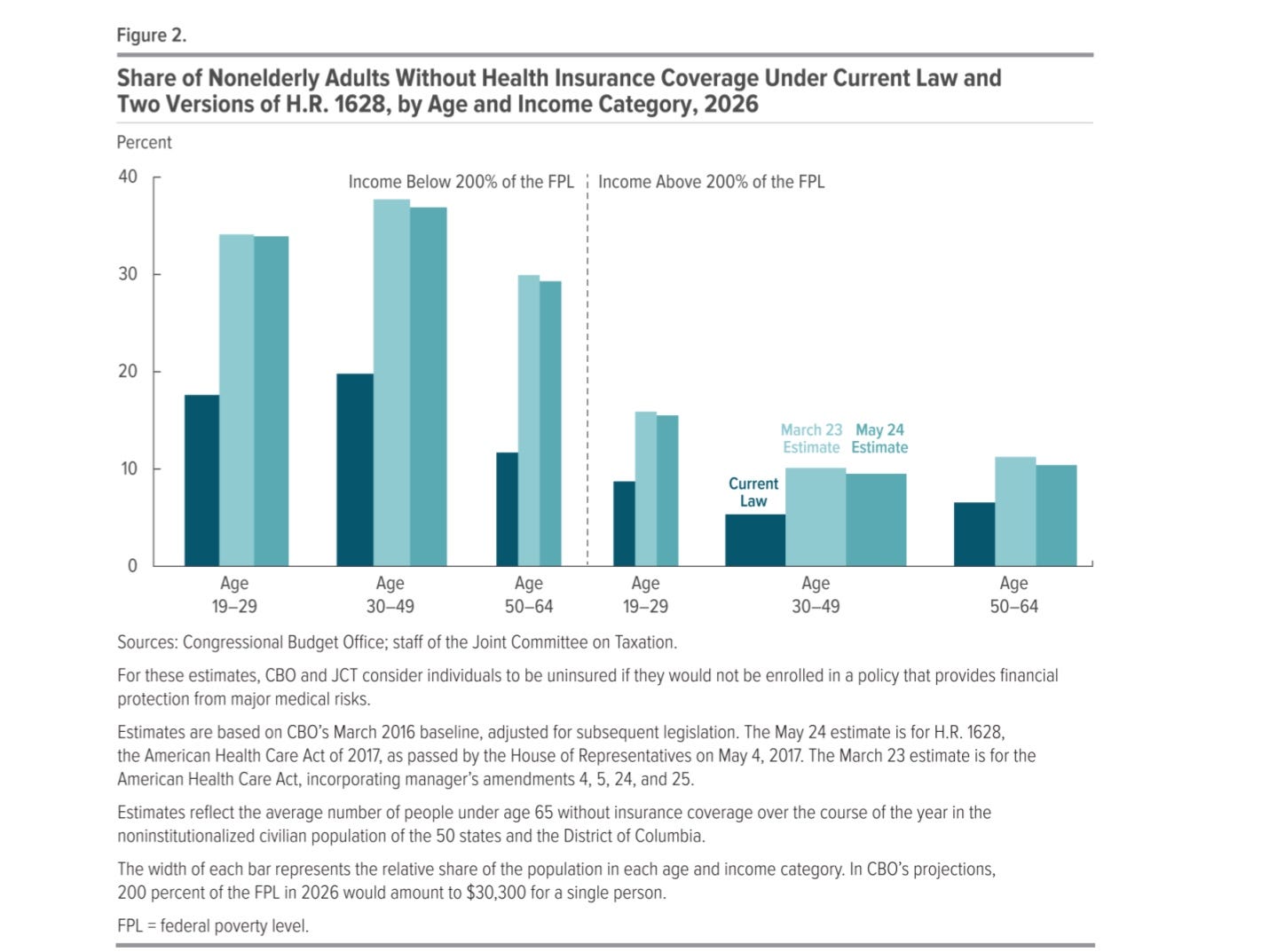
Estimates by the bipartisan Congressional Budget Office (CBO), found that millions of Americans, including children, would lose health coverage due to the Medicaid and ACA cuts in the House bill.
However, highlighting how children are far too often an afterthought in the halls of Congress, CBO’s own analysis provided data and the chart above as to how the bill would negatively impact coverage for adults, but it left out specifics on how children would be affected.
Moreover, despite President Trump’s campaign pledge not to cut Medicaid, the House and Senate bills proposed cuts to Medicaid by between $700 and $880 billion. These cuts would have certainly harmed low-income senior citizens, people with disabilities, and adults. And yet, during the nine-month debate, it was rarely acknowledged or understood by lawmakers that the cuts proposed by Congress would have been disproportionately damaging to children.
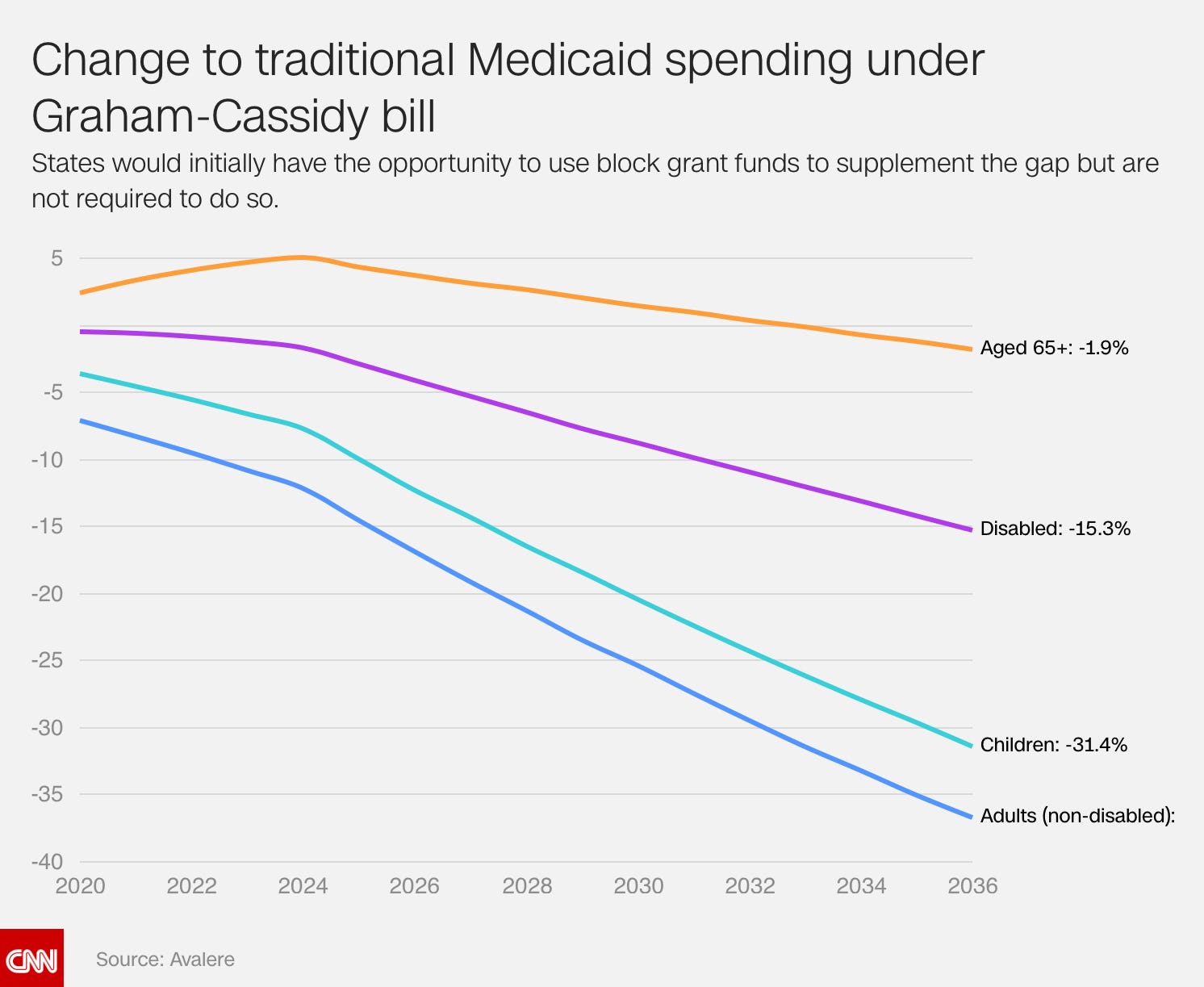
For example, in the Graham-Cassidy bill that was considered by the Senate in the waning days of September, Avalere Health estimated that the bill would have slashed Medicaid funding for senior citizens by 1.9 percent, people with disabilities by 15.3 percent, and children by an astounding 31.4 percent.
By definition, that is the opposite of “do no harm.” For example, Congress would have hurt children in a number of ways, including particular harm to newborns and children in foster care.
Despite pleas of child advocates, pediatricians, and even children, it is terribly disappointing that many lawmakers were fine to make such cuts to the health of vulnerable children.As Jimmy Kimmel said:
. . .no parent should ever have to decide if they can afford to save their child’s life. It just shouldn’t happen. Not here.
When the Graham-Cassidy proposal was finally withdrawn in the Senate in the last few days of September, promises were made to get a CHIP extension passed in early October. Unfortunately, Congress was then “too busy” to extend CHIP funding because it was focused on tax reform, which included a whole different set of threatens to the health of children, including the elimination of the medical expense deduction for children with special health care needs and disabilities and significant cuts to the Orphan Drug Tax Credit.
While child advocates were forced to work to get the medical expense deduction provision restored in the Senate after its elimination in the House, CHIP funding had expired on September 30th and has still not been fully extended — even more than 100 days later.
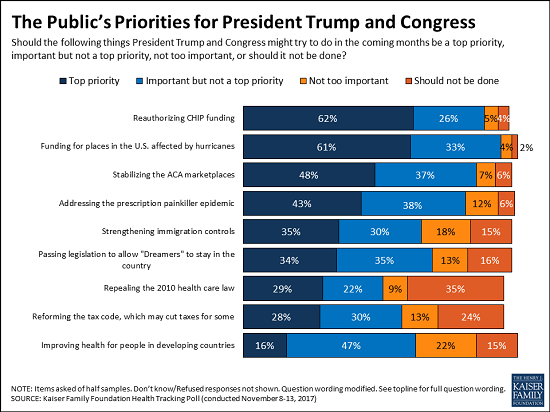
Throughout 2017, Congress ignored the public’s strong support for and prioritization of CHIP. In fact, according to a Kaiser Family Foundation poll, voters were more than twice as likely to say that President Trump and Congress should make CHIP a top priority (62 percent) than either reforming the tax code (28 percent) or repealing the Affordable Care Act (29 percent), even though Congress spent nearly the full year focused on the latter two issues while failing to extend CHIP funding.
Moreover, 88 percent of Americans said that CHIP should be either a top or important priority for President Trump and Congress, and yet, Congress is now more than 100 days past having failed to extend the program.
CHIP has been the victim of inattention, a double standard (the need for an offset has sidelined CHIP while Congress chose not to bother offsetting $1.5 trillion in tax cuts for wealthy Americans), and “hostage taking.”
Compounding that worry, Medicaid will also be under renewed threat in 2018.
This would be particularly devastating to children under the age of three, as nearly one-half of them rely on either Medicaid or CHIP for their health care. Urban Institute researchers note, “Because young children and their parents rely on Medicaid at higher rates than older children and their parents, contractions of Medicaid funding would have outsize effects on families with young children.”
Infant and Child Mortality
A nation’s infant mortality rate is often considered a benchmark for a society’s overall health. If so, we are failing our most vulnerable children. As Zoe Carpenter reports in The Nation:
Each
year in the United States, more than 23,000 infants die before reaching
their first birthday. Though the mortality rate varies widely by state
and county, the average in the United States is higher than in the rest
of the world’s wealth countries, worse than in Poland and Slovakia.
This is, by definition, a life-and-death issue that demands national attention and urgency. Carpenter quotes Bevan Baker, Milwaukee’s commissioner of health, as pointing out, “If 100 people died from tuberculosis, then you would have a whole different approach. People would say we have a public-health emergency.” And yet, 23,000 infants are dying annually with virtually no attention or focus by our nation’s lawmakers.
Moreover, in a disturbing recent study published in Health Affairs, the United States was found to rank last in child mortality among the nation’s wealthiest nations. The study authors found “if the United States had performed as well as its peer countries between 1961 and 2010, more than 600,000 childhood deaths could have been avoided over those 50 years.”
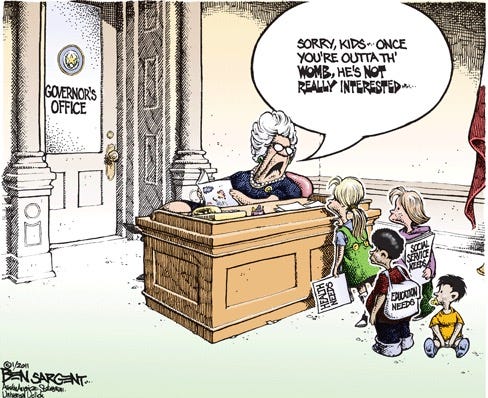
In the cartoon below, Ben Sargent perfectly captures the lack of interest in the health and well-being that children receive from many policymakers after they are born.
Cartoon by Ben Sargent in the Austin American-Statesman
Public Education
Public education was another area under assault from the first days of 2017. Beginning with the disastrous confirmation hearing and Vice President Mike Pence’s tie-breaking vote to confirm Betsy DeVos as Secretary of Education, the hits on our schools have been relentless. As Larry Ferlazzo summarizes the DeVos tenure in the Washington Post:
DeVos’s voucher proposals would not only undermine public schools, but NPR’s Cory Turner reports that students with disabilities could lose their federal protections with vouchers. This includes:
. . .guaranteed
free and appropriate public education (FAPE), including access to
necessary special education services and certified teachers. Another
guarantee: that the education take place in the “least restrictive
environment” possible. . . The law also includes some safeguards to make
sure students aren’t disciplined inappropriately for disruptive
behavior related to their disability.
At the state and local level, public school funding and investments in the education of our nation’s children continues to lag. In a study entitled “A Punishing Decade for School Funding,” the Center on Budget and Policy Priorities finds, after adjusting for inflation:
In
29 states, total state funding per student was lower in the 2015 school
year than in the 2008 school year, before the recession took hold.
In education, money matters (see here, here, and here. Unfortunately, many of our policymakers are failing our children.
Moreover, the inequity in school funding particularly shortchanges low-income children — the very children that would benefit most from added resources. As Nobel Prize winner Joseph E. Stiglitz points out:
Most
societies recognize a moral obligation to help ensure that young people
can live up to their potential. Some countries even impose a
constitutional mandate for equality of educational opportunities.
But in America, more is spent
on the education of rich students than on the education of the poor. As
a result, the US is wasting some of its most valuable assets, with some
young people — bereft of skills — turning to dysfunctional activities.
American states like California spend about as much on prisons as on higher education — and sometimes more.
Mineral Wells Independent School District Superintendent John Kuhn eloquently highlights this very problem within the Texas school finance system below.
Making matters even worse, policymakers also continue to fail children, teachers, and schools through their inappropriate reliance upon testing. As Diane Ravitch says:
For
the last 16 years, American education has been trapped, stifled,
strangled by standardized testing. Or, to be more precise, by federal
and state legislators’ obsession with standardized testing.
Children deserve so much better.
Tax Reform
Tax reform had the potential for having a positive impact on children and efforts to cut child poverty, as proposals by Sens. Marco Rubio (R-FL) and Mike Lee (R-UT) and Sens. Brown (D-OH) and Michael Bennet (D-CO) would have dramatically improved the Child Tax Credit (CTC).
Although the Senate bill was not quite as awful for children as the House package, the Senate failed children by rejecting the positive amendments by both Sens. Brown and Bennet and Sens. Rubio and Lee. In fact, despite the fact that 68 senators were supportive of one or both of the votes to improve the tax bill’s CTC provisions for children and families, the two amendments sadly failed by votes of 48–52 (Roll Call Vote #295, 115th Congress) and 29–71 (Roll Call Vote #296, 115 Congress), respectively. This cost low- and middle-class children and families tens of billions of dollars annually.
Rather than working across the aisle to help families with children, partisan voting precluded the passage of either amendment. As Washington Post columnist Michael Gerson writes:
In their tax bill, Senate Republicans gave a break to private jet owners but refused to increase the corporate rate by 0.94 percentage points to cover the cost of helping an estimated 12 million working-class families. . .
It was foolish of Senate Republican leaders not to see the obvious
political benefit of this change to a bill that is currently unpopular.
It was offensive that most Senate Democrats voted against the amendment,
on the crassly partisan theory that nothing they oppose should be
improved.
The
Senate could have put families first. Instead it put politics
first. . . The shameful failure of Republicans and Democrats to work
together is responsible for the absence of CTC reforms that would have
put the needs of the working class over those of the donor class.
Compounding the problem for the next generation, the final bill will increase the federal debt by between $1-to-2.2 trillion — a debt that will undoubtedly be passed on to our children to pay off.
We have seen this rodeo before. Here is an MoveOn ad that ran in January 2004 after the 2001 and 2003 tax cuts enacted during the George W. Bush Administration began to sharply increased the federal deficit.
In short, the tax bill just signed into law fails our nation’s children. As Ron Brownstein said in The Atlantic:
The
House and Senate measures shower enormous benefits on households at the
top of the economic ladder, a group that by all indications is older
and whiter than the population overall. Then it hands the bill for those
benefits largely to younger generations, who will pay through more
federal debt; less spending on programs that could benefit them; and,
eventually, higher taxes.
The Federal Budget
Quoting his father, Vice President Joe Biden has said, “Don’t tell me what you value. Show me your budget, and I’ll tell you what you value.”
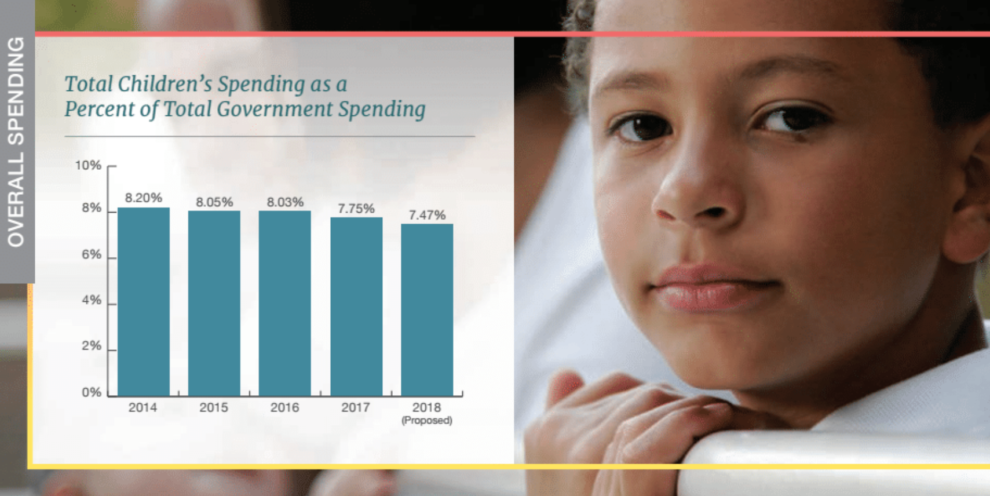
Unfortunately, Congress’s failure to make children a priority in the tax bill has been mirrored in the federal budget. The federal share of spending dedicated to children peaked in 2010 at 8.45 percent, but has since dropped rather dramatically.
According to our report, Children’s Budget 2017, the children’s share of all federal spending dropped to just 7.75 percent in FY 2017 and President Trump’s budget proposal for FY 2018 would have cut that further to just 7.47 percent.
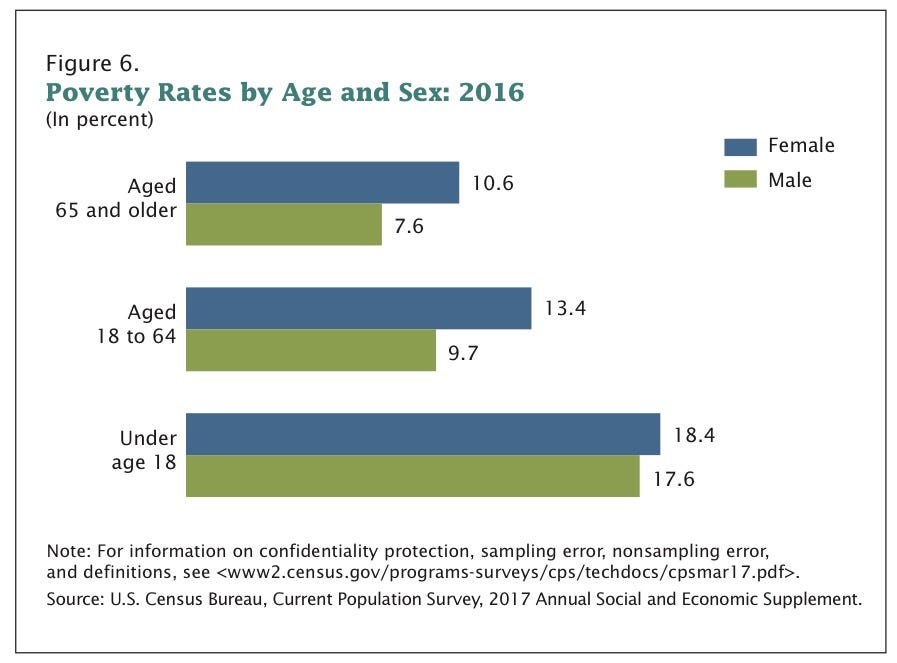
1 in 6 children were living in poverty in 2016. In the United States, children are living in poverty at a rate that is 63 percent greater than that in adults.
Members of the Child Poverty Action Group (CPAG), including First Focus Campaign for Children, Save the Children Action Network, Child Welfare League of America, National Center for Children in Poverty, American Federation of Teachers, UnidosUS (formerly the National Council of La Raza), PICO National Network, and the National Black Child Development Institute, have called upon Congress to adopt a Child Poverty Target as a national strategy and to commit to cutting the child poverty rate within a decade.
Sen. Bob Casey (D-PA) and Rep. Danny Davis (D-IL) introduction legislation, the “Child Poverty Reduction Act of 2017” (S. 1630/H.R. 3381), that would commit the nation to such a target. These bills deserve much greater attention in the coming year.
Home Visiting/MIECHV
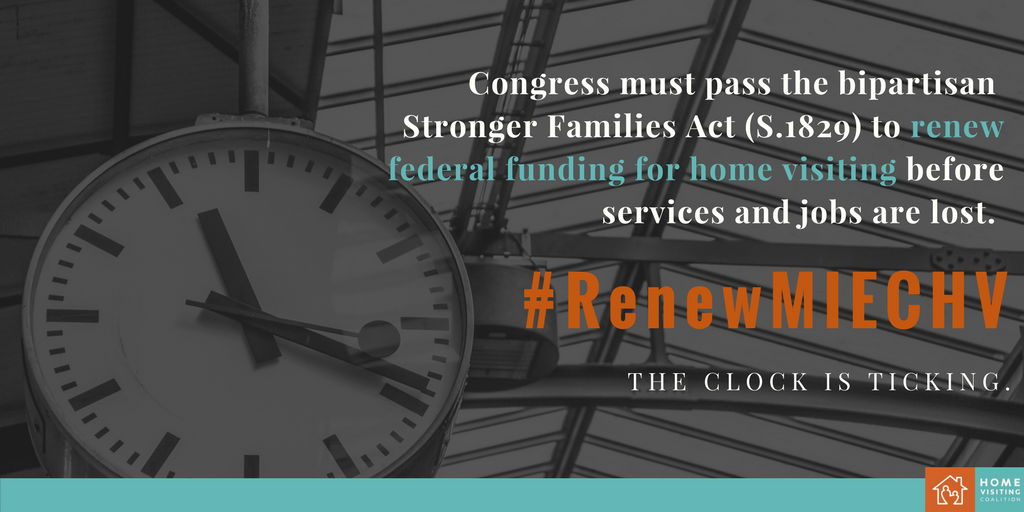
Members of the Home Visiting Coalition, which includes First Focus, have been working hard for well over a year to make the case to preserve and extend voluntary and evidence-based Maternal Infant Early Childhood Home Visiting (MIECHV) program.
Home visiting programs under MIECHV have been shown to improve outcomes for newborns, including improvements in prenatal care and birth outcomes, early childhood health and development, school readiness, parenting practices, and economic stability, while also reducing child abuse, neglect and injuries, juvenile delinquency and crime, and dependence on public assistance.
MIECHV has strong support from across the country and bipartisan support in Congress. Yet, just like CHIP, Congress did not make it a priority and failed to reauthorize the program before its expired at the end of September 2017. This is another program that demands reauthorization and full funding in 2018.
Child Abuse and Neglect
Research shows that keeping children in their families whenever it is safe to do so and providing supports for the family is much more cost-effective and causes less trauma to the child than foster care and group home settings. Consequently, child advocates and former foster youth have been working to push policymakers at the federal, state, and local levels to make investments in child abuse prevention, family support services, and kinship care as alternatives to foster care and group homes.
After there have been some important progress made over the last decade in reducing the number of children in the foster care system and improving services for children in improve outcomes, the number of foster children have been on the rise in recent years due in large part to the increase in parental drug abuse associated with the opioid epidemic.
. . .we
as a society simply have not made these kids our priority. . . Foster
youths are, by definition, wards of the state, but when was the last
time you heard any elected official talking about them?
It
is a heartbreaking paradox that few people in the nonprofit,
philanthropic or government sectors seem to think the foster care crisis
is their problem, even though it is at the root of so many problems,
such as mass incarceration and economic inequality, that they are so
diligently trying to resolve.
Children
in foster care desperately need their help. . . Our government must
treat the child welfare crisis like the emergency it is and respond with
more funding and better policies. We need more philanthropists,
advocates and celebrities to champion this cause and more families to
open their homes and hearts.
The Children of Immigrants
Approximately 1 in 4 children in the United States have at least one immigrant parent. The vast majority of these kids are American citizens. Their human potential is critical to the future success of our country, and yet, immigration policies pursued by the Trump Administration and some in Congress are detrimental to their progress.
How children will suffer in the latest immigration battle If we are going to treat the U.S.-born children of people living in the country illegally as second-class citizens, let…www.chicagotribune.com
Other Policy Issues Where National Leaders Are Failing Children
As if all of this isn’t quite bad enough, federal policymakers are failing children in a number of other ways as well.
First, despite the overwhelming evidence as to the importance of providing high-quality early childhood education for the cognitive, social, and moral development of our youngest citizens, the United States continues to rank well behind other developed nations in providing child care for and the education of young children.
In a survey of more than 26,000 young people and their families across the country, Chapin Hall at the University of Chicago found that 1 in 10 people ages 18 to 25 had experienced child and youth homelessness. According to Matthew Morton, a Chapin Hall research fellow, “Homelessness is young. It’s more common than people expect and it’s largely hidden.”
He adds that the findings from the survey are “staggering” but “not necessarily surprising. Many young people are getting hammered in this economy. . .and far too many youth have experienced trauma and lack stable family situations. You have a major affordable housing crisis.” To help address this problem, bipartisan legislation entitled the “Homeless Children and Youth Act” (S. 611/H.R. 1511) deserves much greater attention in 2018.
Child hunger remains a significant problem in our country. According to the U.S. Department of Agriculture, “. . .households with children had a substantially higher rate of food insecurity (16.5 percent) than those without children (10.5 percent).” Unfortunately, there is growing concern that, rather than working to reduce this problem, the Congress may instead work to cut the food stamps or Supplemental Nutrition Assistance Program (SNAP) in 2018.
Between 1991 and 2015, the teenage pregnancy rate dropped from 62 per 1,000 females to an all-time low of 22 per 1,000. And yet, in August, the Trump Administration notified 81 institutions receiving funding through the Teen Pregnancy Prevention Program (TPPP) that their grants would be cut short by two years. The Big Cities Health Coalition argues, “Cutting TPPP funding and shortening the project period will not only reverse historic gains made in the U.S. in reducing teen pregnancy rates, but also make it difficult to truly understand what practices are most effective in our communities across the nation.”
The long-term impact on the children of Puerto Rico and their physical, cognitive, and emotional development in the aftermath of Hurricane Maria will be immense. Unfortunately, the nation’s response to this crisis has been less than adequate.
With regard to lead poisoning, the opening line in a report entitled Children At Risk by Safer Chemicals, Healthy Families and released in January 2017 reads, “There is no safe level of lead in a child’s blood. Very young children are particularly vulnerable, even at low levels.” Due to the lack of federal action or update with the standards since 2001 on lead, in the waning days of 2017, a federal court ordered the Environmental Protection Agency (EPA) to update standards for lead in paint and dust to protect children’s health within 90 days. This is a critically important development, as the science has progressed over the years but the standards have not been updated since at least 2001.
Juvenile justice needs significant reforms to reduce the incarceration of youth, but instead, Attorney General Jeff Sessions has taken action to make the issue worse for children when he “rescinded legal guidance, written under the Obama administration, that urged state and local courts to reduce or eliminate juvenile fines and fees,” explains Nila Bala in Newsweek.
And finally, with respect to climate change, children have had to take matters in their own hands by suing the federal government over the issue.
Pediatrician Dipesh Navsaria sums up the status of children among policymakers in 2017 very well in an editorial published on New Year’s Day. As Dr. Navsaria writes:
Child
should not be used for leverage to accomplish other policy goals. All
of these make me wonder where our priorities lie when we proclaim our
love and support for the well-being of children but then consider
enacting budgets and policies that use them as pawns. Budgets and
policies are moral documents that show our true face as a society. Are
we comfortable with what we see?
Nobody concerned about the future of the next generation should be.