Translate

Showing posts with label sacred. Show all posts

Monday, August 25, 2025

The Impossible Choices of Love: A Mother’s Hope as We Search for Our Own by Cesar Cruz | Medium | August 24, 2025

Friends,

I invite you to take a few minutes to read Dr. César Cruz’s first sermon. It is powerful, tender, and deeply moving.

Here is what I shared on his Medium post:

César, your words bring me to tears. As a Chicana, I know too well how our mothers’ sacrifices have been erased or misnamed as failure, when in truth they are the most radical acts of love. From Tonantzin to La Llorona, from Jochebed to Dylcia Pagán, you remind us that mothers shape history, even through impossible choices.

Treat yourselves to this extraordinary testimony—a profound weaving of scripture, history, and lived experience that affirms the enduring power of a mother’s love.

-Angela Valenzuela

#MothersLove #ImpossibleChoices #MaternalSacrifice #SacredMotherhood
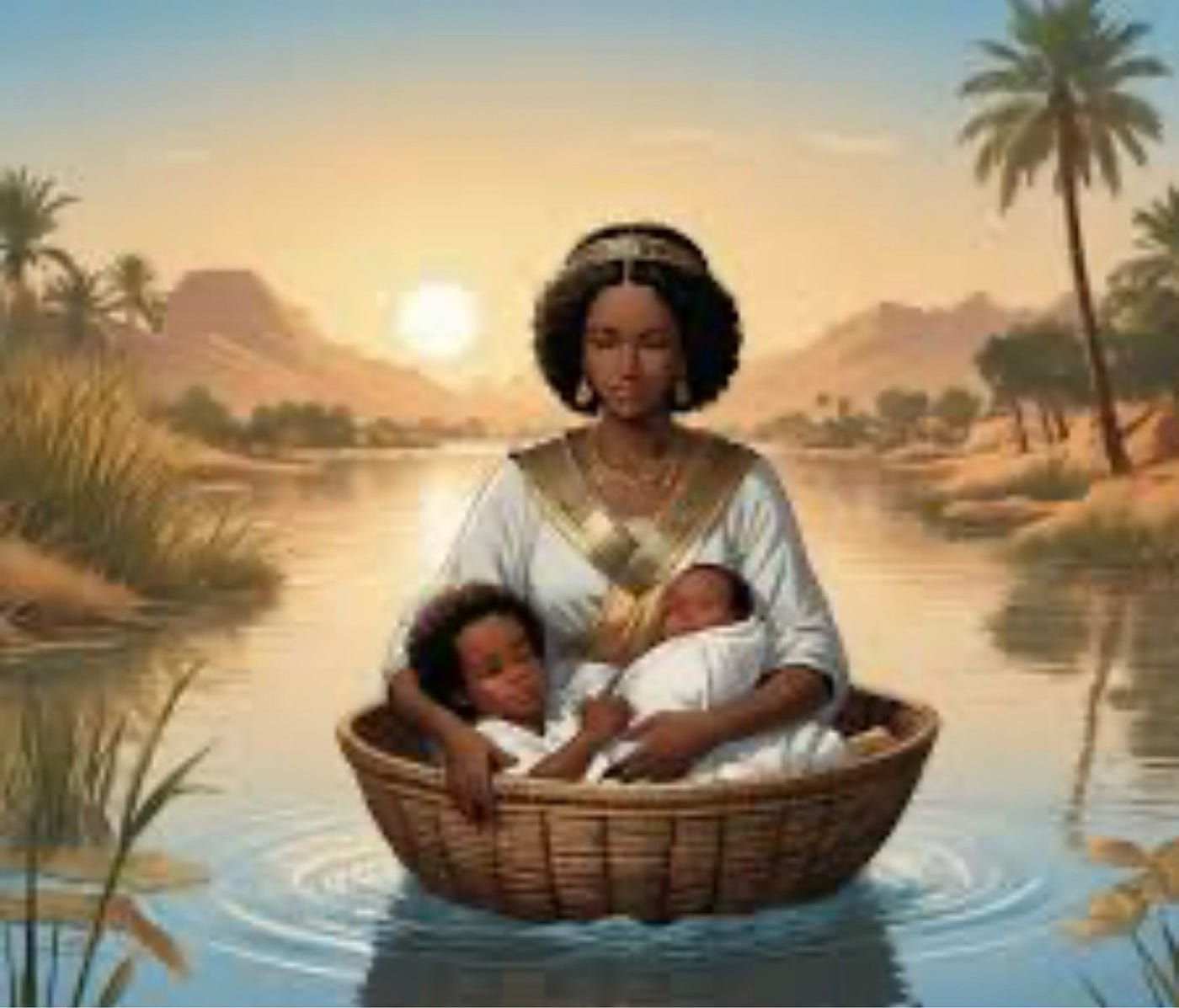
by Cesar Cruz | Medium | August 24, 2025

Throughout history, across cultures and continents, there exists a force more powerful than armies, more enduring than empires, more transformative than revolutions — the love of a mother who will sacrifice everything for her child’s future. This love transcends time, defies borders, and reshapes the very course of human destiny.

In the ancient story of Moses, we witness perhaps one of history’s most profound acts of maternal courage. Jochebed, a Hebrew enslaved woman, made an impossible choice when Pharaoh decreed that all Hebrew boys must die. Rather than watch her son perish, she wove a basket from bulrushes, waterproofed it with pitch, and placed her three-month-old baby in the reeds along the Nile River. As Exodus 2:3 tells us: “When she could hide him no longer, she got a papyrus basket for him and coated it with tar and pitch. Then she placed the child in it and put it among the reeds along the bank of the Nile.”

She chose to trust the unknown waters rather than accept certain death. She placed her child in the hands of God and fate, knowing that love sometimes means letting go. That baby would grow up to liberate an entire people, but it all began with a mother’s impossible choice to save her son by releasing him to the river.

Yet here is what strikes me most profoundly about this story: we know Moses’s name, we know Pharaoh’s name, we know the names of many men in this narrative — but Jochebed’s name appears only briefly. For most of scripture, she is simply “the mother of Moses,” as if her own identity, her own sacrifice, her own impossible courage were secondary to the son she saved. History has a way of rendering invisible the very women whose choices make history possible.

This sacred understanding of maternal love transcends all faiths and traditions. In the Quran, we read of Moses’s mother in Surah Al-Qasas: “And We inspired the mother of Moses, saying: Suckle him and, when you fear for him, then cast him into the river and fear not nor grieve. Lo! We shall bring him back unto you and shall make him one of Our messengers” (28:7).

The Buddha himself spoke of the boundless nature of maternal love, teaching: “Even as a mother protects with her life her child, her only child, so with a boundless heart should one cherish all living beings.”

In Indigenous Mexica(n) tradition, we find Tonantzin, the sacred mother goddess whose name means “Our Revered Mother.” She represents the earth itself as mother, the one who gives life and sustains all existence. When the Spanish conquistadores tried to erase Indigenous spirituality, the people preserved Tonantzin’s essence in the figure of Our Lady of Guadalupe — a brilliant act of spiritual resistance that protected the sacred understanding of motherhood while appearing to submit to colonial religion. Tonantzin teaches us that motherhood is not just personal but cosmic, not just individual but universal. She reminds us that every mother participates in the sacred act of creation itself.

But Indigenous tradition also gives us the haunting story of La Llorona — the Weeping Woman who, in her grief and rage, drowned her own children and now wanders eternally, mourning her loss. While often told as a cautionary tale, La Llorona represents something deeper: she is the embodiment of every mother who has been driven to desperation by impossible circumstances, every woman whose pain has been so great that it transformed her into something unrecognizable even to herself. She reminds us that maternal love, when twisted by trauma and stripped of support, can become its own form of tragedy. Her eternal weeping is not just for her children, but for all mothers who have faced choices no woman should have to make.

This pattern of ignoring or erasing mothers’ stories, rather than seeking to understand them, continues today. In 1991, a young rapper named Tupac Shakur wrote a song that forced America to confront a story it preferred to ignore. “Brenda’s Got a Baby” told the heartbreaking tale of a twelve-year-old girl named Brenda, molested by her own cousin, who became pregnant and — in her terror and confusion — threw her newborn baby into a trash dumpster.

The world was quick to judge Brenda. The headlines screamed about moral decay, about what was wrong with young people, about the failure of communities. But Tupac saw something different. He saw a child who had been failed by every adult who should have protected her. He saw a girl so young she barely understood what was happening to her own body, let alone how to care for another life. He saw someone whose desperation had driven her to an act that horrified even herself.

“Brenda’s got a baby, but Brenda’s barely got a brain,” he rapped, not to mock her but to illuminate the tragedy of a child forced into impossible circumstances by adult cruelty. The song wasn’t an anthem of judgment — it was a call for understanding, a demand that we look deeper than surface actions to see the pain and terror underneath.

But how did our society respond to Brenda’s story? Did we ask how a twelve-year-old girl could be molested by her own family and have nowhere safe to turn? Did we examine the systems that failed to protect her or support her when she became pregnant? Did we wonder what kind of terror and confusion must have driven her to such a desperate act? No. We judged. We pointed fingers. We used her story as evidence of moral decay while ignoring our own moral failure to protect our children.

Like Jochebed, like La Llorona, Brenda became invisible in her own narrative — reduced to a cautionary tale rather than recognized as a child who deserved protection and compassion.

Today, along the borderlands, in detention centers, in hospital rooms, and in courtrooms, there are mothers whose stories echo these ancient and recent acts of courage. They make choices that tear at the very fabric of their being, choices between different forms of love, different forms of loss.

There are the immigrant mothers who send their children on freight trains called “La Bestia” — The Beast — knowing the dangers but also knowing that staying means watching their children’s futures slip away. Picture a mother at dawn, pressing money into her eight-year-old’s small palm, whispering instructions about which train car is safest, teaching survival skills no child should need to know. These mothers don’t sleep for months, wondering if their children are hungry, cold, safe, alive.

And there are mothers like Dylcia Pagan, the Puerto Rican nationalist and revolutionary who understood that the fight for her people’s freedom required the ultimate personal sacrifice. When her baby was just an infant, she faced a choice that would shatter most hearts: she could keep her child close and watch him grow up under occupation, or she could entrust him to a revolutionary Mexican family who would raise him safely while she dedicated her life to the struggle for Puerto Rican independence and faced lifetimes in a cage (incarcerated).

She chose love over proximity. She chose her son’s future over her own comfort. She chose the agony of separation over the slow death of watching her child’s possibilities diminish under colonial rule. For years, she carried the weight of this decision — wondering about his first words, his first steps, his dreams, his fears — all while fighting tirelessly for the freedom that would one day benefit not just her son, but all the children of Puerto Rico.

When they were reunited years later, when her son was a teenager, the revelation shook the foundations of his understanding. He discovered he had been living what felt like a double life — that he was not Mexican but Puerto Rican, that the mother who had raised him with love was not his birth mother, and that his real mother was not absent by choice but was a freedom fighter whose sacrifice had made his very survival possible.

This is the legacy Dylcia Pagan left us: the understanding that revolutionary love sometimes requires revolutionary sacrifice, that fighting for collective liberation can demand the most personal of losses, and that a mother’s love for her child can become inseparable from her love for justice itself. When I had the chance to meet her and learn from her, I witnessed firsthand the strength of a woman who had transformed her maternal love into a force for historical change. May she rest in peace, knowing that her story illuminates the connections between personal sacrifice and political resistance, between individual love and collective freedom.

There are the survivors of sexual assault who face pregnancies conceived in violence. Some choose to carry the child, transforming an act of violence into an act of radical love. Others choose differently, refusing to let their attackers’ violence dictate their entire lives. Still others, like teenage Brenda, make choices born of terror that shock us all — not because they are evil, but because they are broken and afraid and utterly alone.

There are the mothers who lose their children to systems designed to protect — women who love desperately yet find themselves deemed unfit by courts and social workers. Perhaps layered forms of violence has stolen their ability to parent safely. Perhaps intergenerational poverty has devastated homes. Perhaps the trauma of their own childhoods has left them without tools to protect their babies. These mothers sit in courtrooms, watching judges decide their children’s fate, jumping through hoops set by people who have never lived their struggles, never faced their demons, never made their mistakes.

Before we speak of judgment, before we point fingers at mothers whose choices we cannot understand, let us remember the one truth that unites every person who has ever drawn breath: we all had a mother. Each of us exists because a woman — somewhere, somehow — carried us in her body, gave us life, and made the choice for us to be here.

Some of us may be estranged from our mothers. Some of us were raised by others — grandmothers, adoptive parents, foster families, dads. Some of us carry wounds from childhood, anger at choices our mothers made, pain from love we felt we never received. Some of us never knew our mothers, or lost them too soon, or struggled to understand them across barriers of trauma, addiction, mental illness, or simply the vast differences between generations.

But here is what remains true regardless of our relationship with the women who gave us life: we are here because they chose, in that moment, to give us breath. Whether that choice was made with joy or fear, with planning or surprise, with support or in isolation, with resources or in poverty — it was still a choice. And that choice, that act of bringing us into existence, deserves more than a pause. It deserves recognition of the sacred.

When we judge Brenda, when we condemn the immigrant mother who places her child on a train, when we dismiss the woman who loses custody or makes an adoption plan or faces an unwanted pregnancy — we forget that we too are the products of a woman’s impossible choice. We forget that our own existence began with someone else’s act of maternal courage, someone else’s decision to say yes to life even when life was uncertain.

I know this love intimately, though I have lived it from the other side. At five years old, my mother left me in Mexico while she sought a better life for us both. For decades, the world around me whispered the language of abandonment, tried to teach me that being left behind meant being unwanted, unloved, forgotten.

But I have come to understand something profound: what I experienced was not abandonment — it was the deepest kind of love imaginable.

My mother Martha didn’t leave me. She fought for me in the only way she knew how.

She carried me with her in every step she took toward opportunity, in every job she worked, in every night she lay awake planning our reunion.

I don’t carry an abandonment narrative.

I carry a narrative of love.

There is an invisible thread that connects these mothers to their children across miles, across borders, across years of separation, across systems that don’t understand their love, across circumstances that would break lesser hearts.

It is woven from lullabies sung to empty rooms, from money sent with prayers, from dreams of reunification that sustain them through the darkest nights.

From Jochebed placing Moses in the bulrushes, to Dylcia Pagan entrusting her infant son to a revolutionary family while she fought for Puerto Rican liberation, to contemporary mothers making impossible choices about pregnancies conceived in violence, to immigrant mothers watching trains disappear into the horizon carrying their children toward hope, to mothers fighting to regain custody of children taken by the state — these women all share a common thread.

They understand that sometimes the greatest act of love is the act of letting go.They know that keeping someone safe isn’t always about keeping them close. They know that love sometimes requires choices that break your heart but might save your child’s life.

Like Tonantzin, who reminds us that motherhood participates in the sacred act of creation itself, we must recognize these mothers for what they truly are: warriors of love who chose the agony of impossible decisions over the slow death of hopelessness.

Like the weeping La Llorona, we must understand that when we fail to support mothers, when we judge instead of protect, we create tragedies that echo through generations.

When we tell the stories of mothers’ love, let us tell them truly. Let us remember the mothers whose names history forgot — Jochebed, whose courage saved a liberator; Dylcia Pagan, whose revolutionary sacrifice shaped both her son’s life and her people’s struggle for freedom; the countless unnamed women whose sacrifices shaped the world; and yes, even Brenda, whose story should have moved us to protect rather than condemn.

Let us commit to creating a world where mothers face fewer impossible choices. Where survivors of assault receive compassion and comprehensive care. Where children like Brenda are protected from abuse and supported when harm occurs. Where systems designed to protect children also work to preserve families whenever safely possible. Where mothers fighting for justice and liberation receive support for both their political work and their parental responsibilities.

But most importantly, let us commit to seeing these mothers — truly seeing them. Not as cautionary tales or statistics or moral failures, but as human beings whose choices were shaped by circumstances we may never fully understand. Let us ask not just “How could she do that?” but “What drove her to such desperation?”

When we judge without seeking to understand, we perpetuate the very cycles that create these tragedies.

When we erase these mothers from their own stories, we lose the opportunity to learn and prevent future suffering.

Yet of little hope is I, not learning the lessons that my mother has always taught me — that love is not limited by circumstance, that the heart’s capacity to love and sacrifice knows no bounds.

From the spiritual matriarchs to contemporary mothers facing impossible choices, from Tonantzin’s sacred motherhood to La Llorona’s eternal grief, from Dylcia Pagan’s revolutionary sacrifice to the countless unnamed women who have transformed personal love into historical force — let us remember that sometimes the greatest act of keeping someone close is learning how to let them go.

And for those of us fortunate enough to understand this legacy, we know that we were never truly separated at all. We were held in hearts that crossed every border, sustained by love that knew no distance, protected by women whose greatest act of motherhood was sometimes the act of physically letting go while never, ever giving up.

This is the power of a mother’s love. This is the force that has shaped history, liberated peoples, and continues to change the world — one impossible choice at a time.

And I close by saying thank you in the way I know how, Mexica Tiahui, Asé, and Amen.

Dr. César Cruz

August 2025- my first sermon dedicated to my mother and all mothers

Tuesday, October 05, 2021

In Arizona, Drought Ignites Tensions and Threatens Traditions Among the Hopi

As if the the massive oil spill in Huntington Beach California were not worrisome enough, read this gripping story of Arizona's megadrought and its impact on Hopi farmers. This, despite masterful techniques that they have deployed over the centuries leading to the adaptability of seeds to dry climate as noted by archaeologists Wesley Bernardini and R.J. Sinensky:

"Forgoing pesticides, they focused on oasis-like mesas with farmable floodplains, moisture-retaining soils and springs, what Hopi call qatsi suphelawta, or the “perfect location for life."


What a beautiful thought, the “perfect location for life." May we all inhabit such places. For this to be a reality for all of Earth's creatures, we must halt the destruction of Mother Earth. Unfortunately, with springs that are drying up and sand dunes that keep on expanding, this once-in-a-thousand-year drought represents the worst possible situation for the Hopi.


I'm with local Austin artist Daniel Llanes. We need to go to that place of the sacred everywhere and do a rain dance. Daniel says that he likes to get children to do a rain dance, offering that "It usually rains!" 


It's a coincidence, but nevertheless synchronous, that as I spoke to a dear friend of mine last night in San Diego about Daniel Llanes and this very blog, the rain began to pour down with the water level nearly at the top of my friend's doorstep in minutes.


We both laughed. She thanked me, saying that she couldn't remember the last time it had rained in San Diego. I told her, "Don't thank me. Someone's doing a rain dance over there!" As you can see from the San Diego news yourselves, it wreaked a bit of havoc. I'm sure Mother Earth is happy for the nourishment. 

-Angela Valenzuela

The tribe has survived for more than a thousand years in the arid mesas. The megadrought gripping the Southwest is testing that resilience.


By Simon Romero


Oct. 2, 2021, 12:00 p.m. ET


MOENKOPI, Ariz. — On the bone-dry plateau where the Hopi people have lived for well over a thousand years, Robinson Honani pulled his truck to the side of a dirt road and pointed to a carcass.

“This is where the cows come to die,” Mr. Honani, manager of the Hopi Office of Range Management, said one morning in September as he spotted the remains nearby of another bovine decaying under the sun. It was at least the 10th dead cow Hopi range officials had found in recent weeks.

Alarmed by the two-decade drought that has dried up springs, withered crops and killed cattle, the Hopi Tribal Council ordered ranchers in August to slash their herds in a bid to preserve water supplies and avoid the cruelty of an even larger death toll.


But an outcry by Hopi cattlemen, who say they are providing families with locally raised food, compelled the council to rescind its edict, a decision that has unleashed a fierce discussion across the reservation over what traditions to safeguard in a time of climate change. The tensions involve farmers who need water to grow crops and ranchers who need water for their cattle. Some Hopi leaders say the tribe should do everything it can to preserve dry farming, a tribal tradition in which crops grow despite scant rainfall through drought-resistant seeds, small fields and terraced gardens.


What both the farmers and ranchers appear to agree on is that the difficult choices feel unfair to the Hopi, who are thought to descend from some of the Southwest’s earliest inhabitants. They have been forced to feud over restrictions, they said, at the same time that cities in Arizona, experiencing breakneck population growth, have been depleting the state’s strained reservoirs.


“Why isn’t the governor cutting off water resources to southern Arizona?” asked Clark Tenakhongva, vice chairman of the Hopi Tribe, which is in the northeast part of the state. “Cut out the pools. Cut out the water recreation areas. Cut out the golf courses, and you’ll start resolving some of the issues the state of Arizona is looking at right now.”

But while Arizona’s booming population consumes ever larger quantities of water, the flaring tempers in one of the state’s poorest corners have revealed how the drought, which has ranked among the most severe in recorded history, has inflicted pain unevenly around the West.

In a parched landscape where the Hopi honed water-harvesting methods over centuries, the tribe estimates the reservation has about 2,200 head of cattle that consume about 66,000 gallons of water a day.


Supporters and opponents of herd reduction both agree they are quarreling over ranching on a scale dwarfed by huge cattle operations elsewhere. The legendary King Ranch in South Texas, for instance, is home to more than 30,000 head of cattle.


“I only owned seven head before reducing that number myself to three because of drought,” said Makwesa Chimerica, a carver of kachina figures who lives in the village of Hotevilla. He said he was stunned when authorities then ordered him to sell or slaughter his remaining cows.

“I was raised going to the ranch with my grandfather,” said Mr. Chimerica, who also practices dry farming. “That’s the future I want for my two sons.”

Still, Hopi officials who pushed for the cattle-reduction measure counter that ranching was introduced by colonial powers, beginning with the churro sheep brought by the Spanish in 1540 before cattle became more common in the 20th century.

“The Hopi consider themselves farmers, first and foremost,” said Priscilla Pavatea, director of the tribe’s Office of Range Management. “Ranching comes after that. We urgently need to take steps to save our land base.”

Outsiders can find it hard to fathom how the Hopi squeeze harvests out of small farms without using ditches or modern irrigation methods in lands traditionally receiving only about 8.5 inches of rainfall a year.


But over the course of centuries, Hopi farmers developed techniques and seeds adapted to the dry climate. Forgoing pesticides, they focused on oasis-like mesas with farmable floodplains, moisture-retaining soils and springs, what Hopi call qatsi suphelawta, or the “perfect location for life,” according to the archaeologists Wesley Bernardini and R.J. Sinensky.


The Hopi have long endured challenges to this tradition, declining to bend to modern farming techniques. But the drought that has gripped the Southwest since 2000 is thought to be as bad or worse than any in the region over the last 1,200 years.

Researchers have estimated that human-influenced climate change has contributed considerably to the severity of the drought. On the ground level in the Hopi Reservation, such conditions are reflected in disappointing crop yields and disappearing springs.

“The sand dunes don’t stop growing,” said Curtis Naseyowma, 58, a Hopi rancher who raises cattle near the village of Moenkopi. “I see this with my own eyes because I’m out there with my cattle every day.”

Mr. Naseyowma said it was possible to ranch sustainably even during times of drought. Before the tribal council’s order, he had already reduced his herd on his own from 23 head to eight since the start of year, he said.

“I understand where they’re coming from, but I don’t get why they didn’t talk to the ranchers first,” Mr. Naseyowma said. “This whole mess could have been avoided.”


The dispute has raised uneasy comparisons with how federal authorities pressured both the Hopi and their Navajo neighbors to reduce sheep herds after the Great Depression because of drought and overgrazing, erasing a crucial source of income.

While some Hopi later shifted to raising cows, supporters of scaling back cattle ranching say that the tribe now has little choice but to move forcefully to preserve water supplies for farmers struggling to grow crops like corn, beans and squash.

“We’re not the dry farmers that we were even 20 years ago,” said Mr. Tenakhongva, the tribe’s vice chairman, who is running for re-election this year. “Maybe I’ll have a few less rancher votes,” he added, “but livestock come and go. Corn is our lifeline.”


An unusually strong monsoon season over the summer has done little to improve the fortunes of Hopi farmers, and in some places made things worse. Water levels remain precariously low even after flooding washed away fields in parts of the reservation.

At the same time, the drought has rekindled some tensions between the Hopi and the Navajos. The tribal nations speak radically different languages and hew to an array of distinct cultural traditions, but they have lived side by side, often amicably, for centuries.


Credit...Tomás Karmelo Amaya for The New York Times

Boundaries drawn by the United States nurture some of the disquiet. The Navajo Nation, which spreads over 27,413 square miles, completely surrounds the Hopi reservation, with a size of 2,532 square miles. The Navajo Nation’s population is also much larger, with more than 399,000 enrolled members on and off the reservation, compared with the Hopi Tribe’s 19,000.

Ancestral migration pathways obscured by the mists of time also left their own legacies. While some Navajo creation stories suggest their ancestors entered the world at a sacred site in northwestern New Mexico, other accounts propose that the Navajos arrived in the Southwest sometime between 1100 and 1500 as part of an Athabaskan migration from what is now Canada.

That would make the Navajos relative newcomers compared to the Hopi. “Hopis say about the Navajos, ‘They just came yesterday,’” said Mr. Honani, the Hopi range management official.

As the drought drags on, herds of feral horses on both reservations have emerged as another point of contention. Like cattle, the horses consume water supplies coveted by farmers and households.


Horses who died from thirst have also recently been found on the Hopi reservation, leading to more finger pointing over whether off-reservation neighbors had been dropping off sickly horses on Hopi land.


“The Navajos know we’ll get rid of them,” Mr. Honani said, explaining how the Hopi Tribe occasionally rounds the horses up and sells them for anywhere from $10 to $50 apiece to a buyer in Gallup, N.M. “This land isn’t meant to take this number of animals.”

Simon Romero is a national correspondent based in Albuquerque, covering immigration and other issues. He was previously the bureau chief in Brazil and in Caracas, Venezuela, and reported on the global energy industry from Houston. @viaSimonRomero

A version of this article appears in print on Oct. 3, 2021, Section A, Page 14 of the New York edition with the headline: Unrelenting Drought Ignites Tensions in Arizona’s Hopi Mesas.


Others in the reservation say the tribe is also now grappling with the legacy of mining operations, now discontinued, that pumped billions of gallons of water from the aquifer that both the Hopi Tribe and the Navajo Nation rely on for drinking water. For decades, the coal giant Peabody Energy used the water for a slurry mixture needed to produce electricity for cities like Los Angeles and Phoenix.

report this year by the U.S. Geological Survey found that over 50-plus years, there was a median decline of 40 feet in water levels under the 5,400-square-mile Black Mesa area where the aquifer is the primary source of groundwater; water levels also dwindled in 15 of 18 wells measured in the area.

Still, some officials argue that the tribe also needs to face relatively new problems involving rising temperatures and shifting rainfall patterns that are squeezing water supplies. “This isn’t a Peabody thing,” Ms. Pavatea, the range management director, said. “This is climate change.”

Thursday, June 11, 2015

Deeper Learning in Practice and an Everday Sense of the Sacred

"Deeper learning" is a great concept to learn and operationalize in ways that are suggested herein.

To this, I add my own thinking:
We need to cultivate in ourselves and in
society a consciousness that adheres to an everyday sense of the sacred.  Even as we strive to make the world a better
place, this consciousness humbly recognizes life's brevity, beauty's capacity to motivate positive change, and
the transformative power of love in all of our relations.
–Angela Valenzuela

Across
the education sector, we define what students need to know and should
be able to do for succeeding in college and career. We know that they
need more than just the ability read and write -- today's constantly
changing workforce shows that they must be able to master academic
content, communicate and collaborate effectively, think critically, and
become life-long learners.

Supporting students as they develop these skills, understandings, and
mindsets often requires a shift in how we think about classroom
learning and the competencies needed by teachers to facilitate that
learning.

6 Categories of Deeper Learning Skills

What does this type of learning look like in practice? Educators across the country are using the deeper learning framework,
developed by The William and Flora Hewlett Foundation, in their
classrooms. Through design thinking challenges, project-based learning
activities, Genius Hours, and more, teachers can ensure that students
are engaged, motivated to persist, and developing key skills.

For example, students in a sixth grade robotics classroom might build
controllers for swimming robots. One group experiments with settings to
sink the robots by filling a bladder with water. Another works to
perfect the speed controls on the motor. Yet another tests the robot
design to ensure that it can easily move through the water. Students are
engaged and focused as they apply math, engineering, and science
knowledge to their work.

These students are engaged in the six categories of Deeper Learning skills described below.

1. Master Academic Content

In addition to building foundational academic skills in reading,
math, science, and social studies, teachers use many approaches to
support students taking their learning and exploration to the next
level. These approaches -- such as rooting projects in real-world
problems or mapping facts and concepts to help build on prior knowledge
-- enable students to connect ideas and apply knowledge across content
areas.

In the aforementioned robotics classroom, students engage deeply with
math and physics as they measure and assess the impact of the changes
they are making to control their robots' speed, agility, and water
displacement.

2. Think Critically and Solve Complex Problems

As students seek to tackle problems, they must be able to analyze
those problems, develop solutions, and carry out plans to address them.
Teachers integrate these skills into instruction through engaging
activities that rely on competencies such as researching, brainstorming,
and design thinking.

The robotics students are testing their hypotheses and designing
solutions to the unexpected challenges they confront in their robot
design.

3. Work Collaboratively

Working collaboratively in school helps students become better team
members in the future as they learn to identify strengths, assign
responsibilities, and reflect on successes. By planning thoughtful group
activities, creating expectations around group work, and encouraging
conversations about open-mindedness, teachers support these skills.

In each robotics group, students have created team agreements, identified group leaders, and divided responsibilities equally.

4. Communicate Effectively

Students develop their communication skills throughout their academic
careers as writers, presenters, artists, and team members. Teachers
strengthen those skills by providing students tools to communicate
clearly, effectively, and persuasively across all grades and subjects.

After the students have perfected their robots, they will present
them to their classmates to explain the adjustments they made to the
controllers.

5. Learn How to Learn

In addition to guiding students through instruction, teachers help
them become self-directed learners who drive their own exploration. With
support from their teachers, students set goals, track their progress,
reflect on their strengths and areas for improvement, and can turn
setbacks into opportunities for growth.

In robotics class, students identify daily goals for their robot
design in their groups, create challenges for their teams, and push
their own learning to meet these goals.

6. Develop Academic Mindsets

Beyond learning academic skills, students need to become life-long
learners who take initiative, are persistent, and build relationships to
access resources. Teachers support these mindsets through activities
and discussions that focus on ethical behavior, resilience, and
mindfulness.

While not every experiment that the students try with their robots
will be successful, they will not rest until they have found the best
approach. Once the robots are complete, students will enter them in the
Robot Olympics to determine the fastest, most agile, and most creative
robots!

Earning Micro-Credentials

Digital Promise recently released a report, "Developing a System of
Micro-Credentials: Supporting Deeper Learning in the Classroom," that
further explores the six categories above. The report also showcases 40
educator micro-credentials
that Digital Promise designed to recognize educators who have developed
competencies that support deeper learning. Micro-credentials recognize
teachers for the skills and competencies they develop throughout their
careers.

Through the deeper learning micro-credentials, educators identify and
demonstrate key competencies they can apply in their classrooms to
ensure that their students enter college and the workforce ready to
tackle complex challenges. Micro-credentials allow these educators to
share these competencies with their peers, building a stronger
professional learning community. As teachers seek to strengthen their
instruction, it is vital that we support them in developing these
competencies and provide meaningful recognition for those who do.

What does deeper learning mean to you? How do you engage students
with deeper learning experiences in your classroom and beyond? What
competencies have supported your success? We'd love to hear what you
think in the comments below.