Translate

Showing posts with label timeline. Show all posts

Wednesday, February 25, 2026

Academic Freedom Under Revision at Texas A&M: Family Values, Forbidden Fields, and the Closure of Women’s and Gender Studies, by Angela Valenzuela, Ph.D.

Academic Freedom Under Revision at Texas A&M: Family Values, Forbidden Fields, and the Closure of Women’s and Gender Studies

by

Angela Valenzuela, Ph.D.
February 25, 2026

The Republican Party frequently invokes “family values” and moral order as justification for policies targeting LGBTQ+ communities, trans youth, and gender-related scholarship. Yet public rhetoric often collides with private reality—as seen in widely reported spikes in activity on Grindr—an LGBTQ social networking platformduring Republican National Conventions. According to Keller (2024), the app crashed during the RNC in Milwaukee (also see McFall, 2025).

To be clear, I am not suggesting that Texas Republicans themselves are part of this apparently large group of Grindr users. Sexual orientation exists across all political affiliations. The issue is not who uses a dating app. The issue is that the party apparatus leans into anti-LGBTQ+ rhetoric and policy agendas while evidence suggests that sexuality is far more politically diverse and privately complex than its public messaging implies. That contradiction is what deserves scrutiny.

That tension is instructive as Texas A&M eliminates its Women’s and Gender Studies program, ending a field of study that had been part of the university since 1979 (Blinder, 2026; Panigrahi, 2026). Students currently enrolled may finish their degrees, but no new students can enter the program. At the same time, new policies restrict how race, gender, and sexuality can be discussed in classrooms unless explicitly approved by university leadership.

This is not an isolated administrative decision. It reflects a broader pattern across several states where women’s and gender studies, LGBTQ+ studies, and diversity initiatives are being reduced or dismantled under the language of neutrality and oversight. What is framed as restoring balance is, in practice, narrowing inquiry.

The deeper issue is governance. When elected officials condemn LGBTQ+ communities publicly while private behavior reveals a far more complex reality, and when universities respond by limiting academic exploration of gender and sexuality, the message is clear: this is less about morality than about control—including, perhaps, members within their own party where lived realities do not always align neatly with official policy platforms.

Academic freedom does not disappear all at once. It contracts. Programs close. Courses are reviewed. Speech is pre-approved. And gradually, the boundaries of legitimate knowledge are redrawn by political actors rather than scholars.

When one of the nation’s largest public universities eliminates a decades-long academic program focused on gender and power, it signals more than curricular change. It signals a struggle over who decides what can be studied—and ultimately, what kind of democracy we are willing to sustain.

References

Blinder, A. (2026, January 30). Texas A&M ends women’s studies and overhauls classes over race and gender. The New York Timeshttps://www.nytimes.com/2026/01/30/us/texas-am-gender-ethnic-womens-studies-academic-freedom.html

Keller, E. (2024, July 19). Grindr dating app crashes in Milwaukee during RNC: Everything we know, Newsweekhttps://www.newsweek.com/grindr-app-crashes-milwaukee-rnc-1927750

McFall, M. R. (2025, Aug. 14) Are gay dating apps threatening to expose republicans? What we know, Newseek. https://www.newsweek.com/gay-lgbtq-dating-app-republicans-supreme-court-marriage-2113522

Panigrahi, E. (2026, February 24). Texas A&M’s women’s and gender studies closure signals a wider crackdown on academic freedom. Ms. Magazine. https://msmagazine.com/2026/02/24/texas-am-women-gender-studies-academic-freedom-dei-diversity-equity-inclusion/


Texas A&M’s Women’s and Gender Studies Closure Signals a Wider Crackdown on Academic Freedom

PUBLISHED 2/24/2026 by Emersen Panigrahi


Texas A&M Aggies athletes cheer on a teammate in the Women’s 500 Yard Freestyle Finals during the Division I Women’s Swimming and Diving Championships on March 21, 2024, in Athens, Ga. (Alex Slitz / NCAA Photos via Getty Images)

In many parts of the U.S., students and professors are left navigating a rapidly narrowing space for inquiry and expression

Texas A&M University announced late last month it will eliminate its women’s and gender studies program, effective immediately. At the same time, the university enacted new policies that heavily restrict classroom discussions related to diversity, race and gender, unless a course has been previously approved by the campus president. While students currently enrolled in the women’s and gender studies program will be able to complete their degrees, new students can no longer enroll.

With over 81,000 students, 17 colleges and schools on its main campus, three campuses across the state (plus several satellite locations, including one in Washington, D.C.) and more than 140 undergraduate degrees, Texas A&M is one of the nation’s largest public university systems. It began instruction in 1876 and began offering women’s and gender studies courses in 1979. The elimination of the program marks the abrupt end of a decades-long academic offering—and, coupled with new and dangerous policies regarding race, gender and sexuality, sets a disturbing precedent and furthers a chilling, anti-education agenda.
Timeline: How A&M Dismantled Gender and LGBTQ+ Programs, Step by Step

March 2023 — At West Texas A&M (Texas A&M’s northernmost campus), university president Walter Wendler blocked an on-campus drag show. The student group hosting the show, Spectrum WT, filed a lawsuit in response. The case remained active until recently, when federal judge Matthew Kacsmaryk upheld the university’s decision, ruling the school did not violate the First Amendment.

August 2024 — Texas A&M stopped offering gender-affirming care to their students, forcing those receiving care to seek providers elsewhere.

November 2024 — The university eliminated its LGBTQ+ studies minor, previously housed within the women’s and gender studies program.

February 2025 — Texas A&M’s Board of Regents (all appointed by Republican Gov. Greg Abbott) attempted to ban drag shows across system campuses. This particular ban was temporarily blocked.

September 2025 — A&M’s university president Mark A. Welsh III fired lecturer Dr. Melissa McCoul following a classroom dispute over a lesson on gender identity. McCoul is now suing the university, alleging violations of her free speech and due process rights.

November 2025 — As a result of a unanimous Board of Regents decision, the university reviewed more than 5,400 course syllabi, cut six courses entirely, granted 48 special exceptions, and required hundreds more to be modified.

January 2026 — Texas A&M announced it would eliminate its women’s and gender studies program.

From Florida to Ohio to Texas, the Same Playbook Is Unfolding

Texas A&M is not alone. Across the United States, institutions including New College of Florida, Wichita State University and the University of Toledo have reduced or eliminated women’s and gender studies programs. Hundreds of universities have also scaled back or rebranded diversity, equity and inclusion initiatives in response to political pressure and new state laws.

The closure of Texas A&M’s program reflects a broader national trend: mounting restrictions on how gender, race and sexuality can be studied and discussed in public higher education. For students and faculty, these changes reshape not only what can be taught, but what kinds of scholarship and inquiry are permitted on campus. The elimination of a long-standing academic program at one of the country’s largest public universities signals how quickly these shifts can take hold, and how widely they may spread.

Being concerned is no longer enough. It’s time for us to stand up and actively protect these programs.

Students, educators and advocates are increasingly being asked to document and challenge the dismantling of academic programs and protections across the country.

Ms. Classroom wants to hear from educators and students being impacted by legislation attacking public education, higher education, gender, race and sexuality studies, activism and social justice in education, and diversity, equity and inclusion programs. Cue: a new series from Ms., ‘Banned! Voices from the Classroom.’ Submit pitches and/or op-eds and reflections (between 500-800 words) to Ms. contributing editor Aviva Dove-Viebahn at adove-viebahn@msmagazine.com. Posts will be accepted on a rolling basis.

Saturday, April 06, 2024

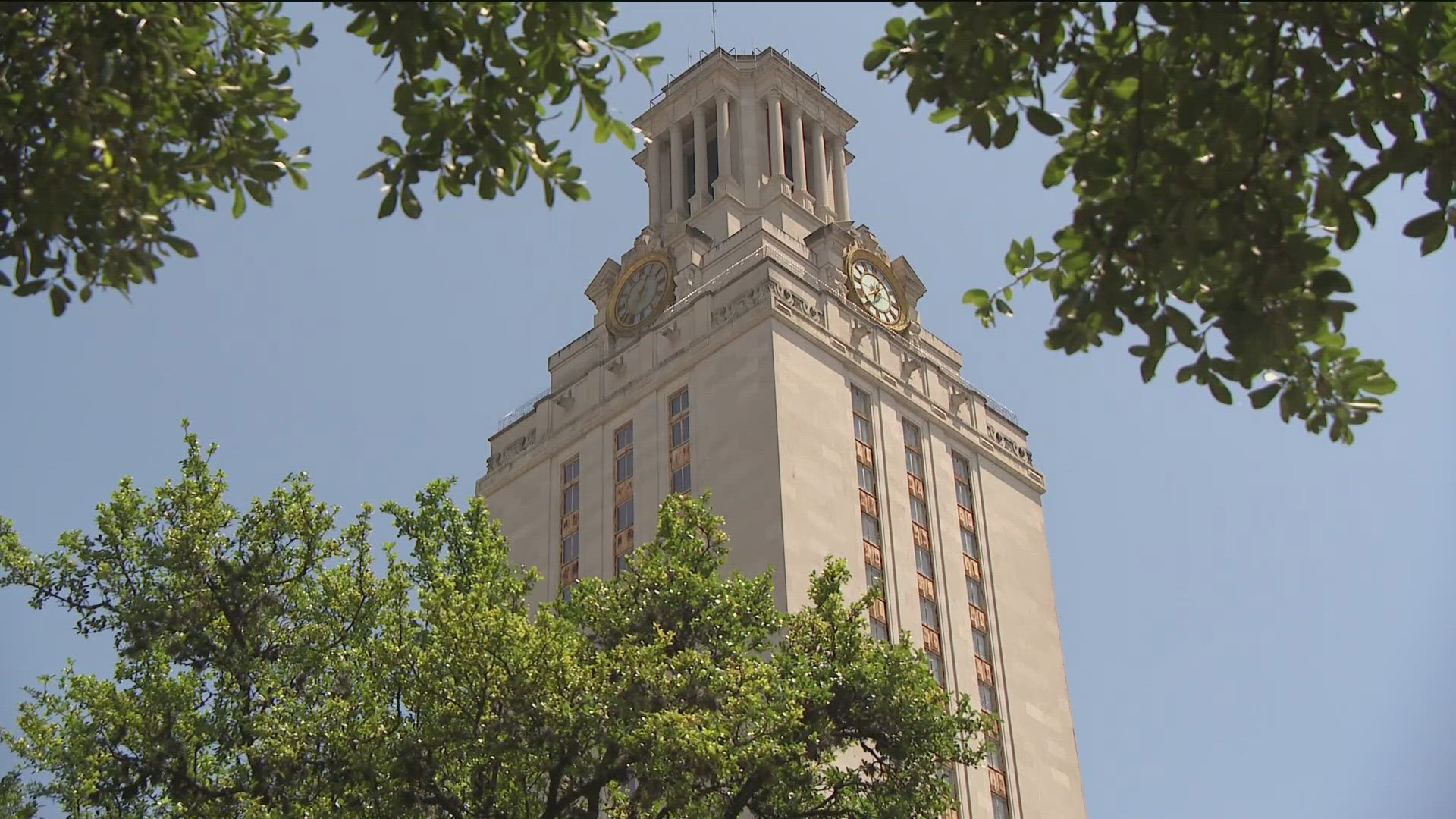
A Timeline of Challenges to Diversity, Equity, and Inclusion (DEI) at the University of Texas at Austin

Friends, 

As promised in my previous blog post, here is a chronology or timeline of recent events at the University of Texas at Austin (UT) that highlights public statements. on Senate Bill 17 and its implementation. Understanding that the timeline is listed out by date of publications, it's not a strict timeline. That said, what I am seeing is that the publications do track closely to the playing out of events at UT Austin.

The struggle began much earlier, of course, during the 88th (2023) Texas legislative session, much of which I have already captured on this blog.

This is most definitely a dark moment in the history of UT and Texas. Have courage, my friends, and be sure to reach out to whoever represents you to let them know your thoughts and feelings about this negative and harmful attack on diversity in our state. Also, be sure to vote and to get others around you to vote. Your vote is your voice. Su voto es su voz!

In the meantime, also read this New York Times piece by Confesossore (2024) titled, "America is under attack”: Inside the anti-D.E.I. crusade," as this will provide some context. Moreover, given that this is a national "crusade," folks in other states can keep current via the DEI tracker appearing below.

My plans are to update this specific blog regularly. My goal is not to be exhaustive, but as informative as possible. This is going to be playing out for some time.

-Angela Valenzuela

ANTI-DEI LEGISLATION TRACKER


***

CHRONOLOGY

Editorial board. (2023, March 10). Editorial: Abbott's attack on diversity policies is a step backward, Austin American-Statesman Editorial Board. 

American Association of University Professors (2023, Sept. 27). Faculty in red states express concerns over political interference. https://aaup-utaustin.org/2023/09/27/faculty-in-red-states-express-concerns-over-political-interference/

Confessore, N. (2024, Jan. 20) “America is under attack”: Inside the anti-D.E.I. crusade. https://www.nytimes.com/interactive/2024/01/20/us/dei-woke-claremont-institute.html

Texas Public Policy Foundation (2024, Feb. 13). TPPF Announces Top Priorities for the Texas Legislative Session [website]

Svivastava, N. (2024, March 25). Native student organization moves powwow off campus


Brandon Creighton  letter to Chancellor Williams and the Board of Regents of University of North Texas System: https://senate.texas.gov/members/d04/press/en/a20240326a.pdf (cited in the Creighton press release above)


Hartzell, J. (2024, April 2). Organizational Changes. University of Texas at Austin. (also Hartzell letter below )

Mangan, K.  (2024, April 2). After DEI Ban, UT-Austin Eliminates a Division and Lays Off Its Former Diversity Staff, Chronicle of Higher Education


Joint Press Release by Texas AAUP & Texas NAACP. (2024, April 2). UT Austin Staff Laid Off in new SB 17-related development.


Bryant, J. & Appleby, C. (2024, April 3). These states’ Anti-DEI legislation may impact higher education. https://www.bestcolleges.com/news/anti-dei-legislation-tracker/

CBS News. (2024, April 3). Austin Fires Dozens to Comply with Texas TEI Law. https://www.cbsnews.com/texas/video/ut-austin-fires-dozens-to-comply-with-texas-d-e-i-law/


Executive Committee of the UT Austin advocacy chapter of the American Association of University Professors (AAUP). (2024, April 4). Protest Letter to Jay Hartzell.

Editors. (2024, April 7).The harsh consequences of the Texas GOP's fervor to crush DEI at UTAustin American-Statesman

Kepner, L. (2024, April 12). 'This was a breach of trust': TX NAACP confirms 66 former UT DEI jobs lost at UT, Austin American-Statesman.

Gretzinger, E. (2023, April 17). 'A Pawn in a Game' Why Texas A & M's lone Black professor of nursing called it quits, Chronicle of Higher Education

Irwin, L. (2023, April 18).  UT Austin students protest layoffs over new DEI banThe Hill.

Kepner, L. (2024, June 11). UT Austin initiates discipline for student protesters, places hold on transcripts, Austin American-Statesman


Miscellaneous Pertinent Documents
National Urban League. (2024). WE DEMAND DIVERSITY! Advocacy Toolkit
National Urban League. (June 3, 2024). Active Campaign Dates.


April 2, 2024

Dear UT community,
Soon after the passage last year of Senate Bill 17 — which prohibits many activities around diversity, equity, and inclusion (DEI) — the University embarked on a multiphase process to review campus portfolios and end or redesign the policies, programs, trainings, and roles affected by the new law. Our initial focus was to ensure we made the required changes by SB 17’s January 1 effective date, but we knew that more work would be required to utilize our talent and resources most effectively in support of our teaching and research missions, and ultimately, our students. 

Since that date, we have been evaluating our post-SB 17 portfolio of divisions, programs, and positions. The new law has changed the scope of some programs on campus, making them broader and creating duplication with long-standing existing programs supporting students, faculty, and staff. Following those reviews, we have concluded that additional measures are necessary to reduce overlap, streamline student-facing portfolios, and optimize and redirect resources into our fundamental activities of teaching and research. 

For these reasons, we are discontinuing programs and activities within the Division of Campus and Community Engagement (DCCE) that now overlap with our efforts elsewhere. Following these changes, the scale and needs of the remaining DCCE activities do not justify a stand-alone division. As a result, we are closing DCCE and redistributing the remaining programs. This means that we will continue to operate many programs with rich histories spanning decades, such as disability services, University Interscholastic League, the UT charter schools, and volunteer and community programs. Going forward, these programs will be part of other divisions where they complement existing operations. We know these programs and the dedicated staff who run them will continue to have positive impacts on our campus and community.

Additionally, funding used to support DEI across campus prior to SB 17’s effective date will be redeployed to support teaching and research. As part of this reallocation, associate or assistant deans who were formerly focused on DEI will return to their full-time faculty positions. The positions that provided support for those associate and assistant deans and a small number of staff roles across campus that were formerly focused on DEI will no longer be funded.

I recognize that strong feelings have surrounded SB 17 from the beginning and will shape many Longhorns’ perceptions of these measures. It is important that we respect the perspectives and experiences of our fellow Longhorns as the changes we are announcing today take effect. It is also important that this continues to be a welcoming, supportive community for all.

Respect for our students, faculty, and staff will be essential as we make these changes. The Division of Student Affairs will work to ensure that current student-facing services will continue to be available for the rest of this semester, and student workers also will retain their positions through the end of this term. Staff members whose positions are being eliminated will have the opportunity to apply and be considered for existing open positions at the University, and resources will be made available to support them.

UT Austin is a world-class public research university serving all of Texas and more than 50,000 incredible students. Our students, alumni, faculty, and staff continue to affect the world in meaningful ways each day. Other campus leaders and I appreciate your ongoing efforts as we seek to maximize the impact of our teaching and research.
Sincerely yours, 

Jay Hartzell
President