This is a sobering, must-read piece by Michael Hardy (2022) in The Texas Monthly that helps explain why Republicans' are at odds with most Texans, generally, on such issues as abortion and gun rights.
"Neither of these measures enjoys broad public support; polls show that most Texans hold moderate positions on abortion, gun rights, and many other key issues. But state lawmakers have made sure that doesn’t matter."
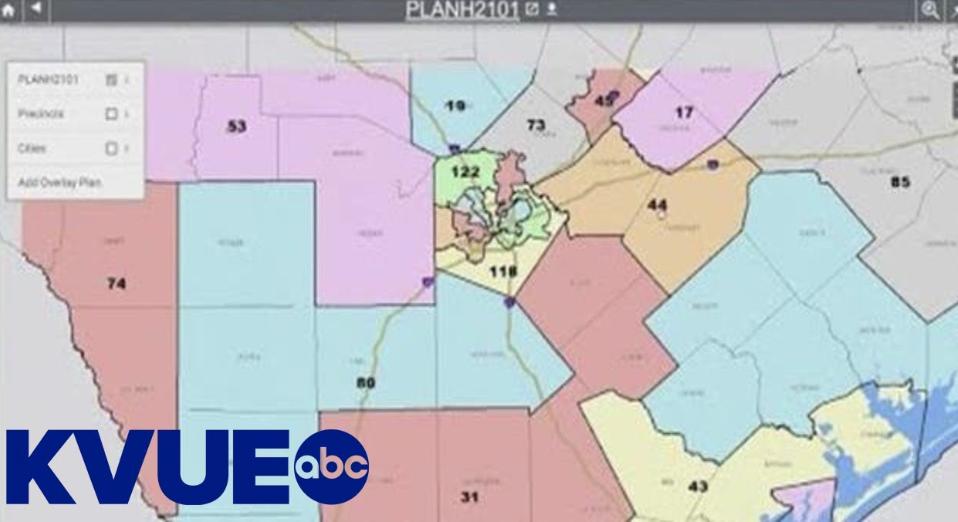
To grasp this, one must understand that out of 30 million Texans and 22 million eligible voters and 17 million registered voters only 2 million vote in GOP primaries, leaving ultimately one million, or three percent of Texans, to elect our state leaders. Despite the tremendous growth of the Latino population, Republicans have gerrymandered districts—that in 2020, "reduce the number of majority-Hispanic districts from six to five." Republicans have rigged the system by Latino packing voters into specific districts. What this means is...
"a candidate such as Governor Greg Abbott or Lieutenant Governor Dan Patrick needs the support of only a million or so primary voters, representing just 3 percent of all Texans, to win the Republican nomination."
To be sure, this has consequences for all communities. I appreciate Hardy's story of Asian Texans for Justice leader, Lily Trieu and how the Asian American community in Sugar Land, located near Houston, is structured out, leaving her community with no meaningful representation.
As I had previously blogged (read: The Awful 88th Legislative Session: Losers included taxpayers, teachers, trans youths, and anyone who uses electricity—Texas Observer ), the ever-curtailing of voting rights in
-Angela Valenzuela
References
Ura, A. (2022, Sept. 15). Hispanic Texans may now be the state’s largest demographic group, new census data shows, Texas Tribune. Retrieved: https://tinyurl.com/bwb5whw9
Minority Rule: How 3 Percent of Texans
Call the Shots for the Rest of Us
Statewide officials and legislators are far to the right of most Texans. Why? Low primary-election turnout and an anemic Democratic party.

Illustrations by Brian Rea
If you want to see the future of Texas, take a drive down Synott Road, in Sugar Land, the booming suburb twenty miles southwest of Houston. Start at the intersection with Old Richmond Road. Here, tucked beside a Texaco station, you’ll find a Mexican food truck and DD’s Ejide African Restaurant, which serves aromatic specialties such as oxtail pepper soup. Heading south along Synott, you’ll soon pass Hindu, Buddhist, and Cao Dai temples, a mosque, an apostolic church, and a halal grocery store.
Sugar Land is the largest city in Fort Bend County, one of the fastest-growing and most diverse areas in the United States. Between 2000 and 2020 the county more than doubled in size, to a population of 823,000. A preponderance of that growth is attributable to Asians, who now account for one in every five residents. As recently as 2000, non-Hispanic white Texans made up nearly half the population of Fort Bend County; today, that group makes up just 30 percent of the population, followed by Hispanic (26 percent), Asian (22 percent, about half being of Indian descent), and Black (22 percent) Texans. It’s also one of the best-educated counties in the state, with nearly 20 percent of the adult population holding a graduate or professional degree.
The county’s political evolution has been equally dramatic. Between 1968 and 2016, it voted Republican in every single presidential election. In Congress, the majority of the county was represented by the likes of libertarian icon Ron Paul and former Republican majority leader Tom DeLay. But over the past decade, the pendulum has swung. In 2016 Hillary Clinton beat Donald Trump here by seven percentage points, becoming the first Democrat to carry the county since Lyndon Johnson. In 2020 Joe Biden won Fort Bend County by eleven points—part of a nationwide suburban backlash against Trump. “Trump made a lot of people uncomfortable,” said County Judge KP George, an Indian American Democrat and the county’s top elected official. “About thirty percent of our population is foreign-born. They didn’t like his rhetoric.”
Fort Bend County is what economists call a leading indicator. Between 2010 and 2020, Texas grew by nearly four million residents, with people of color responsible for 95 percent of that growth. The state is now 40 percent non-Hispanic white, 40 percent Hispanic, 13 percent Black, and 6 percent Asian—with the latter the fastest-growing demographic. As in Fort Bend County, that transformation has been accompanied by political change. Although no Democrat has won a statewide race in Texas since 1994—and no Democratic presidential candidate has carried the state since Jimmy Carter in 1976—the party has been chipping away at the Republican advantage over time. In 2012 Mitt Romney won the state by sixteen points. In 2020 Trump won by less than six.
But as the state as a whole has moved toward the political center, its Republican party has lurched to the right, enacting some of the country’s most reactionary policies and helping make Texas an international byword for extremism. During the 2021 legislative session, the Republican majority banned abortion after six weeks, promising a $10,000 bounty to any citizen who reports a violation. (The Supreme Court’s overturning of Roe v. Wade this summer triggered another law banning all abortions except to save the life of the mother.) And they passed a bill allowing Texans 21 and older to openly carry a handgun without a license or training.
Neither of these measures enjoys broad public support; polls show that most Texans hold moderate positions on abortion, gun rights, and many other key issues. But state lawmakers have made sure that doesn’t matter. During a special session last fall, legislators created new districts for themselves (and for members of Congress) as part of the once-a-decade redistricting process that occurs after every census. Drawn behind closed doors, using highly sophisticated computer models, the new maps guaranteed that most incumbents, both Republican and Democratic, remained in safely red or blue districts. As a result of this gerrymandering, few legislators have to worry about the general election. Their only vulnerability comes during the spring primary, in which a small number of voters choose their parties’ nominees. Primary elections are all about ideological purity, about appealing to hard-core activists. Moderation is not a quality in high demand.

