Translate

Showing posts with label U.S. Census. Show all posts

Sunday, February 09, 2025

Trump administration’s data deletions set off ‘a mad scramble, by Mike Stobbe & Mike Schneider

Friends: 

The U.S. statistical system—renowned globally for its excellence—is facing a critical threat that could erode public trust and compromise the integrity of essential data. Researchers are expressing grave concerns over recent removals of data, which they rightfully fear may set a dangerous precedent.

Beth Jarosz, a senior program director at the Population Reference Bureau, warns, 

"This sets a really dangerous precedent that any administration can come in and delete whatever they don't like. Regardless of your politics, this should alarm you since this is taxpayer-funded data and it belongs to the public."

We must act now to protect the transparency and reliability of data that serves as the foundation of informed decision-making and public policy. The integrity of this data is a public right, funded by taxpayers and critical to the nation's wellbeing. Let your voice be heard. Reach out to whoever represents you and demand accountability and the safeguarding of our data.

-Angela Valenzuela


By MIKE STOBBE and MIKE SCHNEIDER

February 3, 2025

NEW YORK (AP) — Researchers are in what one described as “a mad scramble” to sort out what public data the Trump administration has deleted from government websites and electronic publications.

Late last week, federal agencies took down scores of government webpages as staffers hurried to comply with President Donald Trump’s order rolling back protections for transgender people, which required the removal of “gender ideology” language from websites, contracts and emails.

Some of the sites were back online Monday, but data analysts say it’s not clear exactly what was removed or changed.

“You go looking for something and it’s just not there,” said Amy O’Hara, a Georgetown University researcher who is president of the Association of Public Data Users.

Social science researchers and other federal data users on Monday described feeling like a five-alarm fire was triggered when they discovered late last week that vital federal datasets were inaccessible.

It sparked “a mad scramble right now” to grab copies of whatever federal data was posted before, O’Hara said.

While the administration’s stated goal was to delete gender and transgender terminology, O’Hara said some researchers worry that other politically charged topics — such as climate change or vaccines — might be removed or altered.

A expert panel affiliated with the Centers for Disease Control and Prevention demanded a meeting on the deletions.

The committee, chartered by Congress to advise the CDC director, asked the agency’s acting director, Susan Monarez, for an explanation about why it had cut off access to datasets “that allow people across the country to understand the health of their communities.”

The panel had yet to receive a response, said committee member Dr. Joshua Sharfstein, a former federal health official who is now a health policy expert at Johns Hopkins University.

Experts say datasets and summaries were affected, but so too were codebooks that explain different variables. They say they also saw changes to published research that used affected datasets, and even redactions to lists of publications about certain topics.

“The scale of this is quite stunning,” O’Hara said.

Researchers are still stumbling on what was taken down or changed, she added.

“We are finding out about omissions when somebody goes searching for it,” O’Hara said.

On Monday, for instance, when a query was made to access certain data from the U.S. Census Bureau’s most comprehensive survey of American life, users got a response that said the area was “unavailable due to maintenance.”

The CDC’s official public portal for health data, data.cdc.gov, was taken down entirely on Friday but went back up over the weekend, albeit with a yellow ribbon at the top saying: “CDC’s website is being modified to comply with President Trump’s Executive Orders.” The agency’s Youth Risk Behavior Survey data was restored too, but with at least one of the gender columns missing and its data documentation removed.

CDC officials did not immediately respond to a request for comment.

Some researchers took steps to make sure federal information stays available. On Monday, the American Sexually Transmitted Diseases Association posted federal STD data and treatment guidelines that were hastily downloaded from the CDC website Thursday night.

“Taxpayers paid to collect those data, to analyze those data, and to make them public for people to use,” explained Abigail Norris Turner, an Ohio State University medical researcher who is the association’s president.

“Executive orders don’t change who has STIs or who needs evidence-based care for them,” she added. “We wanted to make sure that rigorous information continued to be available to people to provide the best possible care.”

The U.S. statistical system is considered the best in the world and researchers fear that the removals will undermine trust and put the integrity of the data at risk.

“This sets a really dangerous precedent that any administration can come in and delete whatever they don’t like,” said Beth Jarosz, a senior program director at the Population Reference Bureau. “Regardless of your politics, this should alarm you since this is taxpayer-funded data and it belongs to the public.”

In a joint statement, the presidents of the Population Association of America and the Association of Population Centers called the takedowns “unacceptable” and called on Congress and the Trump administration to restore the datasets.

Paul Schroeder, executive director of the Council of Professional Associations on Federal Statistics, said people looking for data may have to resort to suing for access or submitting Freedom of Information Act requests for the datasets.

“The removal of several public datasets from agency websites goes against everything the statistical agencies stand for and were intended for,” Schroeder said Monday. “Public data users are being left in the dark about what is going on.”

Schneider reported from Orlando, Florida. AP data journalist Kasturi Pananjady contributed to this story.
___


The Associated Press Health and Science Department receives support from the Howard Hughes Medical Institute’s Science and Educational Media Group and the Robert Wood Johnson Foundation. The AP is solely responsible for all content.

Saturday, June 17, 2023

Minority Rule: How 3 Percent of Texans Call the Shots for the Rest of Us, by Michael Hardy, Texas Monthly

This is a sobering, must-read piece by Michael Hardy (2022) in The Texas Monthly that helps explain why Republicans' are at odds with most Texans, generally, on such issues as abortion and gun rights. 

"Neither of these measures enjoys broad public support; polls show that most Texans hold moderate positions on abortion, gun rights, and many other key issues. But state lawmakers have made sure that doesn’t matter."

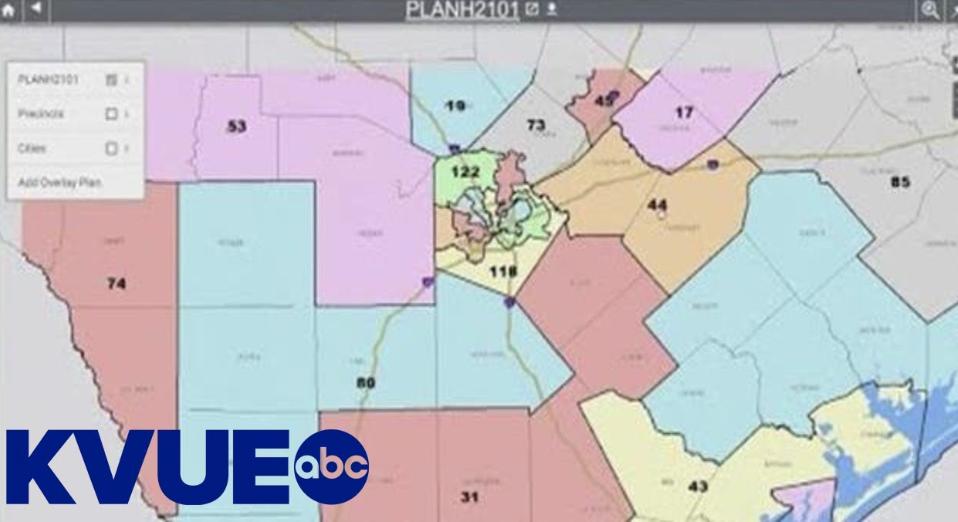
To grasp this, one must understand that out of 30 million Texans and 22 million eligible voters and 17 million registered voters only 2 million vote in GOP primaries, leaving ultimately one million, or three percent of Texans, to elect our state leaders.  Despite the tremendous growth of the Latino population, Republicans have gerrymandered districts—that in 2020, "reduce the number of majority-Hispanic districts from six to five." Republicans have rigged the system by Latino packing voters into specific districts. What this means is...

"a candidate such as Governor Greg Abbott or Lieutenant Governor Dan Patrick needs the support of only a million or so primary voters, representing just 3 percent of all Texans, to win the Republican nomination."

To be sure, this has consequences for all communities. I appreciate Hardy's story of Asian Texans for Justice leader, Lily Trieu and how the Asian American community in Sugar Land, located near Houston, is structured out, leaving her community with no meaningful representation.

As I had previously blogged (read: The Awful 88th Legislative Session: Losers included taxpayers, teachers, trans youths, and anyone who uses electricity—Texas Observer ), the ever-curtailing of voting rights in

Democratic Party strongholds combines with gerrymandered districts that do not reflect, in particular, the growth of the Latino community. 

According to the 2021 American Community Survey of the U.S. Census, Latino Texans represent 40.2% of the state’s population while Anglo, non-Hispanic Texans account for 39.4% (Ura, 2022).

The Latino vote has been rising (Gamboa & Acevedo, 2022), but as the story out of Sugar Land illustrates, it literally doesn't make a difference in those districts where they have been structured out.

-Angela Valenzuela

References

 & Youth, Latino mobilization paid off in the midterms. Now groups gear up for 2020. Retrieved: https://tinyurl.com/mr2d96zu

Ura, A. (2022, Sept. 15). Hispanic Texans may now be the state’s largest demographic group, new census data shows, Texas Tribune. Retrieved: https://tinyurl.com/bwb5whw9


Minority Rule: How 3 Percent of Texans 

Call the Shots for the Rest of Us

Statewide officials and legislators are far to the right of most Texans. Why? Low primary-election turnout and an anemic Democratic party.

By 


Illustrations by Brian Rea

If you want to see the future of Texas, take a drive down Synott Road, in Sugar Land, the booming suburb twenty miles southwest of Houston. Start at the intersection with Old Richmond Road. Here, tucked beside a Texaco station, you’ll find a Mexican food truck and DD’s Ejide African Restaurant, which serves aromatic specialties such as oxtail pepper soup. Heading south along Synott, you’ll soon pass Hindu, Buddhist, and Cao Dai temples, a mosque, an apostolic church, and a halal grocery store. 

Sugar Land is the largest city in Fort Bend County, one of the fastest-growing and most diverse areas in the United States. Between 2000 and 2020 the county more than doubled in size, to a population of 823,000. A preponderance of that growth is attributable to Asians, who now account for one in every five residents. As recently as 2000, non-Hispanic white Texans made up nearly half the population of Fort Bend County; today, that group makes up just 30 percent of the population, followed by Hispanic (26 percent), Asian (22 percent, about half being of Indian descent), and Black (22 percent) Texans. It’s also one of the best-educated counties in the state, with nearly 20 percent of the adult population holding a graduate or professional degree. 

The county’s political evolution has been equally dramatic. Between 1968 and 2016, it voted Republican in every single presidential election. In Congress, the majority of the county was represented by the likes of libertarian icon Ron Paul and former Republican majority leader Tom DeLay. But over the past decade, the pendulum has swung. In 2016 Hillary Clinton beat Donald Trump here by seven percentage points, becoming the first Democrat to carry the county since Lyndon Johnson. In 2020 Joe Biden won Fort Bend County by eleven points—part of a nationwide suburban backlash against Trump. “Trump made a lot of people uncomfortable,” said County Judge KP George, an Indian American Democrat and the county’s top elected official. “About thirty percent of our population is foreign-born. They didn’t like his rhetoric.”  

Fort Bend County is what economists call a leading indicator. Between 2010 and 2020, Texas grew by nearly four million residents, with people of color responsible for 95 percent of that growth. The state is now 40 percent non-Hispanic white, 40 percent Hispanic, 13 percent Black, and 6 percent Asian—with the latter the fastest-growing demographic. As in Fort Bend County, that transformation has been accompanied by political change. Although no Democrat has won a statewide race in Texas since 1994—and no Democratic presidential candidate has carried the state since Jimmy Carter in 1976—the party has been chipping away at the Republican advantage over time. In 2012 Mitt Romney won the state by sixteen points. In 2020 Trump won by less than six.  

But as the state as a whole has moved toward the political center, its Republican party has lurched to the right, enacting some of the country’s most reactionary policies and helping make Texas an international byword for extremism. During the 2021 legislative session, the Republican majority banned abortion after six weeks, promising a $10,000 bounty to any citizen who reports a violation. (The Supreme Court’s overturning of Roe v. Wade this summer triggered another law banning all abortions except to save the life of the mother.) And they passed a bill allowing Texans 21 and older to openly carry a handgun without a license or training.  

Neither of these measures enjoys broad public support; polls show that most Texans hold moderate positions on abortion, gun rights, and many other key issues. But state lawmakers have made sure that doesn’t matter. During a special session last fall, legislators created new districts for themselves (and for members of Congress) as part of the once-a-decade redistricting process that occurs after every census. Drawn behind closed doors, using highly sophisticated computer models, the new maps guaranteed that most incumbents, both Republican and Democratic, remained in safely red or blue districts. As a result of this gerrymandering, few legislators have to worry about the general election. Their only vulnerability comes during the spring primary, in which a small number of voters choose their parties’ nominees. Primary elections are all about ideological purity, about appealing to hard-core activists. Moderation is not a quality in high demand. 


Friday, May 12, 2023

Gains in Educational Attainment, Enrollment in All Hispanic Groups, Largest Among South American Population [U.S. Census]

Such great news from the U.S. Census indicating that Hispanics' educational attainment has increased over the past several decades. According to researchers, Erik L. Hernandez and Kevin McElrath, "the Mexican population had the largest increase in college enrollment with a 12-percentage-point increase from 21% in 2005 to 33% in 2021."  

The authors don't mention a pandemic effect, but Fig. 2 suggests as much with a dip in educational attainment in 2021.

With the attainment of bachelor degrees going up for all Hispanic subgroups between 2005 and 2021 (Fig. 4), the data are encouraging and suggest that bachelor degree attainment is becoming more of a norm for the college-age population, as a whole. That said, these gains have clearly come at much sacrifice for Hispanic students and families. 

-Angela Valenzuela


Gains in Educational Attainment, Enrollment in All Hispanic Groups, Largest Among South American Population


May 10, 2023


by Erik L. Hernandez and Kevin McElrath


The nation’s fast-growing Hispanic population made dramatic strides in educational attainment in recent decades — especially among younger age groups.

The number of people of Hispanic or Latino origin (referred to as the Hispanic population in this article) more than quadrupled from 14.6 million 1980 to 62.1 million 2021, and their share of the U.S. population jumped from 6.2% to 18.7%.

As the Hispanic population grew so did its educational attainment, especially high school graduation rates.

In 1996, 58.2% of the Hispanic population ages 25 to 29 graduated from high school; by 2021, the share increased to 88.5%, according to the U.S. Census Bureau’s Current Population Survey data tables.


The number of Hispanic people ages 18 to 24 enrolled in college increased to 2.4 million in 2021, up from 1.2 million in 2005. 


Trends in educational attainment were particularly relevant for the nation’s Hispanic population given its low median age (30.5 in 2021).

For many Hispanic people in the United States, educational milestones are recent events. In 2021, the majority of Hispanic adults were between ages 25 and 34.

This young segment of the Hispanic population had the highest rate of college completion (bachelor’s degree or higher) as well as the lowest rate of not completing high school. 

Educational Expansion for Young Hispanic People

We looked at 2005-2021 estimates of educational attainment among the young Hispanic population by four education categories: less than a high school degree; high school only; some college; and a bachelor’s degree or higher. A growing number of Hispanic people reached higher educational attainment over this time span (Figure 1).


In 2005, one-third of Hispanic people ages 25-34 had some college: 2.7 million had less than a high school education; 2.3 million only had a high school degree; 1.6 million had some college; and fewer than 1 million had a bachelor’s degree or higher.


By 2021, over half of young Hispanic people had some college. The number with less than a high school degree dropped 45.8% to 1.5 million. There were increases in all other categories: high school only (up 28.3% to 2.9 million); some college (up 76.5% to 2.9 million); and a bachelor’s degree or higher (up 145.2% to 2.2 million).

Increasing College Enrollment

From 2005 to 2021, an increasing number of Hispanic people enrolled in college and became a greater share of the total student population (Figure 2).


The number of Hispanic people ages 18 to 24 enrolled in college increased to 2.4 million in 2021, up from 1.2 million in 2005.

The share of all college students ages 18 to 24 who were Hispanic grew, too. The lowest share during the period (11.4%) was in 2006; by 2021 it had swelled to nearly 20%. 

Educational Differences Between Hispanic Origin Groups

From 2005 to 2021, the percentage of 18-24-year-olds in all Hispanic origin groups enrolled in college or graduate school grew (Figure 3). 


But there were different growth patterns. For example, Cuban and South American populations started with relatively high levels of college enrollment in 2005 and saw relatively small or non-statistically significant increases.

In contrast, other groups had lower levels of college enrollment in 2005 and larger gains over the period.

The Mexican population had the largest increase in college enrollment with a 12-percentage-point increase from 21% in 2005 to 33% in 2021. Puerto Rican, Dominican, Central American and other Hispanic or Latino populations also experienced enrollment increases of 7.5 percentage points or higher.

It became more common for all Hispanic origin groups to earn a bachelor’s degree from 2005 to 2021:


South American (46%) and Cuban (35.9%) groups had higher levels of bachelor’s degree attainment than all other Hispanic origin groups in 2021 and for the entire 16-year period. The South American population had the biggest increase (12%) of any detailed Hispanic origin group.

Mexican and Central American groups each saw increases of around 10 percentage points.

Puerto Rican, Dominican, and other Hispanic or Latino populations had similar growth, starting between 15% and 20%, and increasing to between 27% and 28%. 


Within the larger educational trends of the Hispanic population, there were different starting points and patterns of growth for detailed Hispanic origin groups (Figures 3 and 4).


Erik L. Hernandez and Kevin McElrath are survey statisticians in the Census Bureau’s Social, Economic, and Housing Statistics Division.

Sunday, September 18, 2022

A Few Thoughts on News from Last Week on Hispanics Being the largest demographic group in Texas: Census

Other news from last week that reminds me of former state demographer, Dr. Steve Murdock, and his many predictions more than 2 decades ago. Read, for example, this 2011 piece in the El Paso Times where he expresses the following:

"I used to say the Texas of today is the U.S. of tomorrow," he said. "I no longer have to say that because the U.S. is where we are in many, many ways in terms of its demographics."
In light of these shifts, we absolutely need leadership prepared to abide by democratic principles. These include shared decision-making across political majorities and minorities and who abide by the rule of law, while embarking on the progressive project of restraining the power hoarding of the political and economic elite, while eliminating poverty and in so doing, reducing society's gaping inequalities.


This is all within reach, but we must elect folks to office with an inclusive, racially just, progressive vision for our state and country. 


In the best of cases, this leadership is knowledgeable and considerate of the wide-ranging diversity within the Latino community itself. We're not all "Mexicans," itself a referent to the modern notion of nation states that comes into being with European expansionism together with the conquest and colonization of America's native peoples.


Accordingly, we're also Indigenous, Afro-Indigenous, and Afro-Latina/o. We are queer, straight, transgendered, immigrant, Spanish-speaking or English monolingual, and economically diverse and stratified. Hence, for us to be in good hands, we need future leaders with a textured understanding for an increasingly diverse demographic that understands well and can speak constructively and positively to this diversity in terms of policy proposals and on-the-ground practices and priorities in such places as work, schools, and in our religious communities.


I get it that for white folks and others—including many Latinas/os themselves—they are feeling a tad de-centered and perhaps a bit poorly armed for this future. Here is where a good and virtuous education comes in, especially Ethnic and International Studies, as well as dual language and bilingual education. Policy studies, too.


These are the areas of study that are uniquely poised to equip us all intellectually, emotionally, and spiritually for what I truly hope will be a movement beyond a past and present that is racially and ethnically charged, to one that is not just tolerant, but epistemically curious and open to the many changes ahead that I sincerely think are mostly promising and hopeful.

Sí se Puede! Yes we can!

 -Angela Valenzuela


Hispanics are now largest demographic group in Texas: Census


Wednesday, July 20, 2022

U.S. Census Bureau reports "Latinos Rise to Record-High 18.9% of U.S. Population"

Here are informative statistics out of the U.S. Census Bureau, showing a marked increase of the U.S. Latino population which, as we know, is highly diverse. Not shown here, but other data show that Mexican-origin people are just above 60 percent of all Latinos/Hispanics. As addressed more fully in a recent post to this blog, what it means to be "Latino," "Latina" or "Latinx" is a social construction, accounting for why we don't all vote the same and why pan-ethnic "Latina/o" or "Latinx" identities might be more salient in some places and times than in other places and times. 

To be sure, there is a lot of richness and complexity to what we might call the "Latino experience." Thanks to Dr. Victor Saenz for sharing.

-Angela Valenzuela


Latinos Rise to Record-High 18.9% of U.S. Population


by  July 19, 2022

Population growth among Latinos


The U.S. Latino population has risen to 62,647,044, representing 18.9% of the nation’s population, according to new Census Bureau estimates.

The number of Latinos in the U.S. grew by 767,907 from 2020 to 2021, an increase of 1.2%, according to the newest data.

Here is everything you need to know.

What Defines “Hispanic Origin” on the Census?

Individuals filling out the Census can choose between two ethnicities, “Hispanic or Latino” or “Not Hispanic or Latino”

What defines being “Hispanic or Latino” when filling out the Census?

According to the Census website, the U.S. Office of Management and Budget (OMB) defines “Hispanic or Latino” as a person of Cuban, Mexican, Puerto Rican, South or Central American, or other Spanish culture or origin regardless of race.

The Census Bureau has conducted content tests to improve the design and function of different questions on race and ethnicity since the 1970s.

With the growth in diversity and population, individuals may find the ethnic categories confusing or wish to see their specific on the census questionnaire.

Census research showed that, over time, an increasing number of people do not identify with any of the official OMB race categories, contributing to a rise in respondents who are racially classified as “Some Other Race” (SOR).

The Census website reports, “This was primarily due to reporting by Hispanics, who make up the overwhelming majority of those classified as SOR, not identifying with any of the OMB race categories.”

The Census Bureau has continued to conduct research and outreach regarding race and ethnicity. Read more about the usage of the terms Latinx, Latino, and Hispanic.

How Fast is the Latino Population Growing?

The Latino population continues to grow rapidly.

In 2010, Latinos accounted for 16% of the U.S. population.

Latinos reached 18.5% of the U.S. population in 2019, and they have now reached 18.9% as of 2021, according to the new Census Bureau data.

“Hispanic (of any race) was the largest gaining and second-fastest-growing race or Hispanic origin category, increasing by 767,907 or 1.24% [from 2020 to 2021],” according to the data.

The Hispanic origin category increased by 1.54% in the 12-month period between 2020 and 2021.

Of the current 62,647,044 U.S. Latinos, there are 31,716,199 Latino males (50.6%) and 30,930,845 Latina females (49.4%).

Where Is the Latino Population Rising or Falling?

Census Population

The states of California, Florida, and Texas continue to have the biggest Latino populations, but other states have seen growth as well.

Maine and Montana were the fastest-growing states for Latinos, both at a 5.4% rate.

Only two areas experienced declines in Latino population, including New York with a 1.1% decrease and the District of Columbia 2.5% decrease.

The median Latino population for counties in 2021 was 1,217 people. Los Angeles County had the largest Latino county population at 4,824,989 people, followed by Harris County, Texas (2,097,602) and Miami-Dade County, Florida (1,838,864).

California saw the largest Latino population with a total of 15,754,605.

What is the Median Age of U.S. Latinos?

The Census Bureau also reported that the “median age for most states also increased from 2020 to 2021, indicating their populations are getting older overall.”

2021 Census Population Estimates show that the national median age has increased by 3.4 years, with the largest single-year gain of 0.3 years coming in 2021, bringing it to 38.8 years.

While Latinos are much younger than the national median age, the median age of Latinos increased from 30.2 in 2020 to 30.5 in 2021. This is older than the median age of Latinos in 2010 (27.3 years).

Why Is Latino Health Important?

The rapid growth of the Latino population means the nation’s future health depends on it.

Yet Latinos face vast health inequities that contribute to health disparities in cancerAlzheimer’sCOVID-19, and other health conditions.

Inequities include:

Systemic change is needed to address the inequities to achieve health equity, where Latinos and all people have a fair, just opportunity to be their healthiest.

How Can You Improve Health Equity for U.S. Latinos? 

You can speak up for Latino health in your community.

Enter your county name to receive a Salud AmericaHealth Equity Report Card.

The report card serves as a data dashboard tool that auto-generates Latino-focused and local data with interactive maps and comparative gauges.

This can help you visualize and explore health-related factors in your area compared to your county to the rest of the state and the nation.

The data from the report card can help start or support a conversation about solutions to inequities that impact your community! Share it with local leaders and on social media!

Get your Health Equity Report Card!