Translate

Showing posts with label voter suppression. Show all posts

Monday, December 01, 2025

Paxton’s Attack on Jolt Echoes a Long History of Silencing Latino Political Power, by Angela Valenzuela, Ph.D.

Paxton’s Attack on Jolt Echoes a Long History of Silencing Latino Political Power

by

Angela Valenzuela, Ph.D.
December 1, 2025

While I do not pretend to know the particulars beyond what has been reported by Nguyen and Klibanoff in the Express-News (2025), the effort by Texas Attorney General Ken Paxton to shut down the Jolt initiative—one of the state’s most effective Latino civic-engagement organizations—most certainly fits into a well-established pattern. It echoes a long Texas history of suppressing Latino political power through intimidation, manufactured crises, and the selective use of state authority.

To truly understand this moment, we must see it in its historical and decolonial context. For well over a century, Texas has deployed legal, political, and bureaucratic tools to police and shrink the political power of Latino communities. From poll taxes, white primaries, English-only ballots to literacy tests, voter purges, and now “election integrity” scare tactics, the state has continuously reengineered the political landscape to maintain racial hierarchy.

Today’s version of that old project further includes gerrymandering—most notably the failed attempt, under pressure from Donald Trump, to draw five new congressional districts designed to dilute rising Latino voting power and secure permanent Republican control. That map was ultimately too extreme even for Texas courts, but the message was unmistakable: Latino political participation is to be contained, not cultivated (Guo, 2025).

Paxton’s attack on Jolt follows the same logic. It stems from a thoroughly debunked 2024 social-media rumor alleging that migrants were being registered to vote at driver’s license offices in North Texas—a claim that local officials, including Republican leaders, dismissed outright. Yet Paxton seized on this fiction to launch an intrusive investigation into groups working primarily with Latino voters.

When his initial efforts faltered in court, Paxton simply pivoted, filing a new lawsuit accusing Jolt of orchestrating an “unlawful voter registration scheme,” despite providing no evidence of noncitizen voting. Instead, he targets the organization for conducting voter registration drives at DMV locations—community hubs where working-class Latinos naturally gather. In a telling distortion of Texas election law, he now frames a volunteer’s explanation of the parent-agent provision as evidence of wrongdoing.

The point is intimidation, not truth.

Taken together, these actions reveal a disturbing theory of democracy: Latino civic participation is inherently suspect, and any infrastructure that supports it must be dismantled. Whether through extreme gerrymanders designed to nullify Latino voting strength, or legal assaults on organizations registering Latino youth, the goal is the same—maintain political power by shrinking the electorate.

A decolonial lens makes this continuity visible. Latino civic organizations like Jolt are not just registering voters; they are challenging a longstanding colonial logic that extracts labor while denying civic belonging. When young Latinos organize, vote, and assert political agency, they interrupt the racial order Texas has spent generations protecting. That is the disruption Paxton is attempting to crush.

And this is not new. Texas officials have repeatedly equated Latino civic engagement with disorder or fraud, from the surveillance of Chicano activists in the late 1960s and early 1970s (Contreras, 2025) to the recent attempt to shut down El Paso’s Annunciation House (see Paxton v. Annunciation House, Inc. 2025). Each episode follows the same pattern: when Latinos build power, the state responds by declaring that power illegitimate.

see Contreras (2025)

Jolt is simply the latest target.

That said, it surely concerns the political establishment that approximately 200,000 Latina and Latino youth in Texas turn 18 every year (as Jolt notes on its webpage). This rising generation of Gen Z voters represents a profound demographic shift—one that makes efforts to suppress Latino civic engagement not only predictable, but deeply revealing of the racialized anxieties driving state power.

The lawsuit against Jolt is not about voter fraud—it is about fear. It is about a political establishment that recognizes the demographic reality of Texas and is scrambling to freeze the electorate in place. It is about denying young Latinos the tools they need to participate in public life. It is, at its core, an attempt to preserve a political order that can no longer command the consent of a changing population.

Texas cannot claim to be a democracy while treating the political participation of its largest communities of color as a threat to be neutralized. Jolt’s resistance is not only a legal fight—it is an act of collective self-determination. It affirms what generations of activists, elders, and organizers before us have insisted: we belong here, our voices matter, and our political engagement strengthens, rather than threatens, the fabric of this state. We need and deserve organizations like Jolt that do the essential work of cultivating young leaders, expanding civic participation, and ensuring that Latino communities can exercise the full rights of citizenship. To defend Jolt is to defend democracy itself.

The struggle for Latino political power in Texas is far from over, but the outcome of this case will say much about who this state believes democracy is for.

Reference

Contreras, R. (2025, January 6). Scoop: CIA releases docs on Latino civil-rights-era surveillanceAxioshttps://www.axios.com/2025/01/06/cia-releases-docs-latino-civil-rights-era-surveillance?utm_source=chatgpt.com

Guo, K. (2025, July 10). As Texas Republicans prepare for mid-decade redistricting, cautionary tales loom from the pastTexas Tribune. https://www.texastribune.org/2025/07/10/texas-redistricting-congressional-districts-past-mistakes-overreach/?utm_source=chatgpt.com

Nguyen, A., & Klibanoff, E. (2025, November 11). Texas Latino civic group sues to block AG Ken Paxton from shutting it down. San Antonio Express-Newshttps://www.expressnews.com/news/article/texas-latino-civic-group-sues-to-block-ag-ken-21163598.php

Paxton v. Annunciation House, Inc., No. 24-0573 (Tex. Sup. Ct. May 30, 2025). https://law.justia.com/cases/texas/supreme-court/2025/24-0573.html


By ,Nov 11, 2025


Jolt Initiative, a nonprofit that aims to increase civic participation among Latinos, is suing Texas Attorney General 
Ken Paxton to block his efforts to shut them down. Paxton announced Monday that he was seeking to revoke the nonprofit’s charter, alleging that the group had orchestrated “a systematic, unlawful voter registration scheme.”

This is not the first legal back-and-forth between Jolt and Paxton’s office. Last year, the organization successfully sued to stop the state’s investigation into their voter registration efforts. In the new suit, Jolt’s lawyers argue Paxton’s efforts to shut them down are retaliation. The attorney general’s office has also in recent years targeted other organizations aiding Latinos and migrants, such as the effort to investigate and shut down El Paso-based Annunciation House.
Saturday, June 17, 2023

Minority Rule: How 3 Percent of Texans Call the Shots for the Rest of Us, by Michael Hardy, Texas Monthly

This is a sobering, must-read piece by Michael Hardy (2022) in The Texas Monthly that helps explain why Republicans' are at odds with most Texans, generally, on such issues as abortion and gun rights. 

"Neither of these measures enjoys broad public support; polls show that most Texans hold moderate positions on abortion, gun rights, and many other key issues. But state lawmakers have made sure that doesn’t matter."

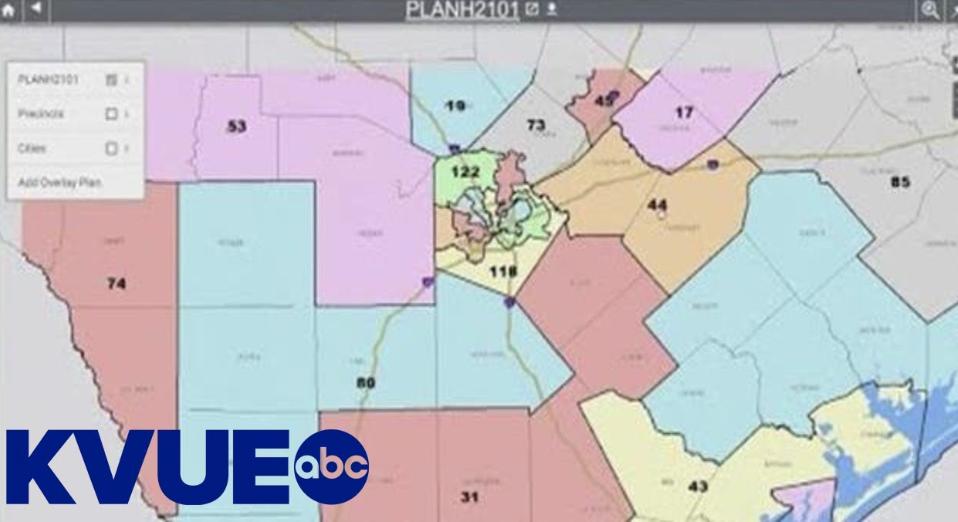
To grasp this, one must understand that out of 30 million Texans and 22 million eligible voters and 17 million registered voters only 2 million vote in GOP primaries, leaving ultimately one million, or three percent of Texans, to elect our state leaders.  Despite the tremendous growth of the Latino population, Republicans have gerrymandered districts—that in 2020, "reduce the number of majority-Hispanic districts from six to five." Republicans have rigged the system by Latino packing voters into specific districts. What this means is...

"a candidate such as Governor Greg Abbott or Lieutenant Governor Dan Patrick needs the support of only a million or so primary voters, representing just 3 percent of all Texans, to win the Republican nomination."

To be sure, this has consequences for all communities. I appreciate Hardy's story of Asian Texans for Justice leader, Lily Trieu and how the Asian American community in Sugar Land, located near Houston, is structured out, leaving her community with no meaningful representation.

As I had previously blogged (read: The Awful 88th Legislative Session: Losers included taxpayers, teachers, trans youths, and anyone who uses electricity—Texas Observer ), the ever-curtailing of voting rights in

Democratic Party strongholds combines with gerrymandered districts that do not reflect, in particular, the growth of the Latino community. 

According to the 2021 American Community Survey of the U.S. Census, Latino Texans represent 40.2% of the state’s population while Anglo, non-Hispanic Texans account for 39.4% (Ura, 2022).

The Latino vote has been rising (Gamboa & Acevedo, 2022), but as the story out of Sugar Land illustrates, it literally doesn't make a difference in those districts where they have been structured out.

-Angela Valenzuela

References

 & Youth, Latino mobilization paid off in the midterms. Now groups gear up for 2020. Retrieved: https://tinyurl.com/mr2d96zu

Ura, A. (2022, Sept. 15). Hispanic Texans may now be the state’s largest demographic group, new census data shows, Texas Tribune. Retrieved: https://tinyurl.com/bwb5whw9


Minority Rule: How 3 Percent of Texans 

Call the Shots for the Rest of Us

Statewide officials and legislators are far to the right of most Texans. Why? Low primary-election turnout and an anemic Democratic party.

By 


Illustrations by Brian Rea

If you want to see the future of Texas, take a drive down Synott Road, in Sugar Land, the booming suburb twenty miles southwest of Houston. Start at the intersection with Old Richmond Road. Here, tucked beside a Texaco station, you’ll find a Mexican food truck and DD’s Ejide African Restaurant, which serves aromatic specialties such as oxtail pepper soup. Heading south along Synott, you’ll soon pass Hindu, Buddhist, and Cao Dai temples, a mosque, an apostolic church, and a halal grocery store. 

Sugar Land is the largest city in Fort Bend County, one of the fastest-growing and most diverse areas in the United States. Between 2000 and 2020 the county more than doubled in size, to a population of 823,000. A preponderance of that growth is attributable to Asians, who now account for one in every five residents. As recently as 2000, non-Hispanic white Texans made up nearly half the population of Fort Bend County; today, that group makes up just 30 percent of the population, followed by Hispanic (26 percent), Asian (22 percent, about half being of Indian descent), and Black (22 percent) Texans. It’s also one of the best-educated counties in the state, with nearly 20 percent of the adult population holding a graduate or professional degree. 

The county’s political evolution has been equally dramatic. Between 1968 and 2016, it voted Republican in every single presidential election. In Congress, the majority of the county was represented by the likes of libertarian icon Ron Paul and former Republican majority leader Tom DeLay. But over the past decade, the pendulum has swung. In 2016 Hillary Clinton beat Donald Trump here by seven percentage points, becoming the first Democrat to carry the county since Lyndon Johnson. In 2020 Joe Biden won Fort Bend County by eleven points—part of a nationwide suburban backlash against Trump. “Trump made a lot of people uncomfortable,” said County Judge KP George, an Indian American Democrat and the county’s top elected official. “About thirty percent of our population is foreign-born. They didn’t like his rhetoric.”  

Fort Bend County is what economists call a leading indicator. Between 2010 and 2020, Texas grew by nearly four million residents, with people of color responsible for 95 percent of that growth. The state is now 40 percent non-Hispanic white, 40 percent Hispanic, 13 percent Black, and 6 percent Asian—with the latter the fastest-growing demographic. As in Fort Bend County, that transformation has been accompanied by political change. Although no Democrat has won a statewide race in Texas since 1994—and no Democratic presidential candidate has carried the state since Jimmy Carter in 1976—the party has been chipping away at the Republican advantage over time. In 2012 Mitt Romney won the state by sixteen points. In 2020 Trump won by less than six.  

But as the state as a whole has moved toward the political center, its Republican party has lurched to the right, enacting some of the country’s most reactionary policies and helping make Texas an international byword for extremism. During the 2021 legislative session, the Republican majority banned abortion after six weeks, promising a $10,000 bounty to any citizen who reports a violation. (The Supreme Court’s overturning of Roe v. Wade this summer triggered another law banning all abortions except to save the life of the mother.) And they passed a bill allowing Texans 21 and older to openly carry a handgun without a license or training.  

Neither of these measures enjoys broad public support; polls show that most Texans hold moderate positions on abortion, gun rights, and many other key issues. But state lawmakers have made sure that doesn’t matter. During a special session last fall, legislators created new districts for themselves (and for members of Congress) as part of the once-a-decade redistricting process that occurs after every census. Drawn behind closed doors, using highly sophisticated computer models, the new maps guaranteed that most incumbents, both Republican and Democratic, remained in safely red or blue districts. As a result of this gerrymandering, few legislators have to worry about the general election. Their only vulnerability comes during the spring primary, in which a small number of voters choose their parties’ nominees. Primary elections are all about ideological purity, about appealing to hard-core activists. Moderation is not a quality in high demand. 


Monday, June 12, 2023

The Awful 88th Legislative Session: Losers included taxpayers, teachers, trans youths, and anyone who uses electricity—Texas Observer

I concur with this report by the staff of the Texas Observer. I know that it's difficult to summarize an entire legislative session in one article, but the attack on higher education via anti-DEI bills—as covered in this blog—was notable, albeit absent in this report. It appropriately makes note over the lost fight over Gov. Abbott's dream for school vouchers. Never think for a moment, however, that this agenda for public school privatization is dead. It seems to always come back, session after session, in some form. Without a doubt academic freedom, DEI initiatives, and public education, as a whole, remain at risk in our state under our current leadership.

It is also a bit curious that the Texas Observer staff didn't mention the vicious attack on Harris County elections in this report where it would have fit perfectly in any description of just how awful the last session was. I am aware that they were struggling for financial solvency this session, too.

To wit, the legislature itself engaged in outright election subversion. This should be illegal!

Remember that Houston's Harris County went for Biden over Trump by a wide margin (read: In Texas, Biden’s urban wins couldn’t offset Trump’s millions of votes in rural, red counties). Harris County is thusly a Democratic stronghold. We'll see if that holds in the next general election considering the changes Republicans made this session.

Specifically, Republican leaders in the form of both Senate Bill 1750—that eliminated the non-partisan position of elections administrator and Senate Bill 1933—that gives the Secretary of State, a partisan appointee, the authority to take over elections administration, are beyond worrisome.

When we consider that Texas Attorney General Ken Paxton joined six states in suing the U.S. government over alleged election fraud in four states, namely, Georgia, Michigan, Pennsylvania, and Wisconsin, the Texas Republican party's credibility is strained. Fortunately, the U.S. Supreme Court threw out the case, albeit for procedural reasons (read: U.S. Supreme Court throws out Texas lawsuit contesting 2020 election results in four battleground states).

These dangerous affronts to democracy are tantamount to political repression in our state where voter disenfranchisement, in the forms of Senate Bill 1750 and Senate Bill 1933, bear the imprimatur of legislative legitimacy—when they're anything but legitimate.

Clearly, we need to expand, rather than limit, voting rights. And state government itself should not be used as a tool to protect the incumbencies of those in power. That's why we have elections.

Rather than winning the hearts and minds of the electorate, a morally degenerate party has opted to cut into the heart of a democratic stronghold like Harris County. Harris County was thus also a major loser this legislative session.

My best guess is this will continue to occur unless people of good conscience unite to vote these election thieves out of office. Aside from this, we must all come to democracy's vigorous defense, lest we lose, in effect, the franchise without which democratic governance is impossible.

-Angela Valenzuela


View online here.

by TEXAS OBSERVER STAFF  JUNE 6, 2023, 2:12 PM, CDT

As the 88th session of the Texas Legislature opened in January, Texas Observer writers scanning the political horizon noted a faint glimmer of hope that, perhaps this time, lawmakers would locate their statesman-like qualities and, at long last, spend the spring giving relief to taxpayers, the environment, electricity-users, public schools, teachers, and other long-neglected government workers.

Well, it was only ever a faint hope. Instead, the Lege lived down to its reputation, and, for the most part, spent this session in, as Observer Senior Writer Justin Miller imagined it then, a race to the bottom that took us to depths “previously unknown and unimaginable.” Think of it as the Awful 88th.

Republicans, riding a wave of authoritarian successes, wasted most of the session on an assortment of cruel social policy proposals aimed at making points with their far-right supporters and, as feared, failed to address truly important things like the electric grid, gun control, and school funding. They didn’t even accomplish their own top priority, which was property tax cuts. It wasn’t all bad, but parts were very, very bad, especially for LGBTQIA+ Texans. And now there’s a special session for added thrills. Here are a handful of highlights and a lot of lows.

Wednesday, August 11, 2021

Texas State Senator Carol Alvarado (D-Houston) is Filibustering Against Voter Suppression Bill—SB 1—Right Now!


You can listen to Texas State Senator Carol Alvarado (D-Houston) filibuster HERE against Senate Bill 1 via livestream on the Texas Tribune website.

Tune in right now and reach out to whoever represents you and urge them to support democracy and vote against the deeply troubling anti-democratic, voter suppression bill, SB 1.

So proud of you, Sen. Alvarado!

-Angela Valenzuela

Wednesday, June 02, 2021

Statement of Concern: The Threats to American Democracy and the Need for National Voting and Election Administration Standards

I hope that we're all hearing the alarm bells sound of threats to democracy. Texas' voter suppression Bill SB 7 is evident of one such threat. I am so proud of Texas democrats who killed the bill last Sunday night, by denying a quorum for the vote by walking out. The bill would have disproportionately impacted voters of color, for example, by limiting early voting hours, criminalizing mail-in ballot applications, and eliminating both drive-through and 24-hour voting.

Check out this discussion on NPR on how what we do here in our country is impacting countries world-wide. There, you can listen to Ari Shapiro who interviews former White House aide during the Obama administration, Ben Rhodes, whose memoir, After the Fall: Being American in the World We've Made, just got published. Rhodes urges us to continue to fight for what our country is supposed to be, namely, a model of democracy for the world.

Also read the statement below made by a hundred scholars, mostly political scientists, who note the rhetorical smokescreen of "electoral integrity" to prop up false claims of fraud.

Gov. Abbott will surely bring SB 7 up in special session of the legislature. This anti-democratic bill must never become law.

-Angela Valenzuela


Pro-democracy protesters take part in a Thanksgiving Day rally at Edinburgh Place 

on Nov. 28, 2019 in Hong Kong.

Chris McGrath/Getty Images 

Statement of Concern

The Threats to American Democracy and the Need for National Voting and Election Administration Standards
STATEMENT
June 1, 2021

We, the undersigned, are scholars of democracy who have watched the recent deterioration of U.S. elections and liberal democracy with growing alarm. Specifically, we have watched with deep concern as Republican-led state legislatures across the country have in recent months proposed or implemented what we consider radical changes to core electoral procedures in response to unproven and intentionally destructive allegations of a stolen election. Collectively, these initiatives are transforming several states into political systems that no longer meet the minimum conditions for free and fair elections. Hence, our entire democracy is now at risk.

When democracy breaks down, it typically takes many years, often decades, to reverse the downward spiral. In the process, violence and corruption typically flourish, and talent and wealth flee to more stable countries, undermining national prosperity. It is not just our venerated institutions and norms that are at risk—it is our future national standing, strength, and ability to compete globally.

Statutory changes in large key electoral battleground states are dangerously politicizing the process of electoral administration, with Republican-controlled legislatures giving themselves the power to override electoral outcomes on unproven allegations should Democrats win more votes. They are seeking to restrict access to the ballot, the most basic principle underlying the right of all adult American citizens to participate in our democracy. They are also putting in place criminal sentences and fines meant to intimidate and scare away poll workers and nonpartisan administrators. State legislatures have advanced initiatives that curtail voting methods now preferred by Democratic-leaning constituencies, such as early voting and mail voting. Republican lawmakers have openly talked about ensuring the “purity” and “quality” of the vote, echoing arguments widely used across the Jim Crow South as reasons for restricting the Black vote.

State legislators supporting these changes have cited the urgency of “electoral integrity” and the need to ensure that elections are secure and free of fraud. But by multiple expert judgments, the 2020 election was extremely secure and free of fraud. The reason that Republican voters have concerns is because many Republican officials, led by former President Donald Trump, have manufactured false claims of fraud, claims that have been repeatedly rejected by courts of law, and which Trump’s own lawyers have acknowledged were mere speculation when they testified about them before judges.

In future elections, these laws politicizing the administration and certification of elections could enable some state legislatures or partisan election officials to do what they failed to do in 2020: reverse the outcome of a free and fair election. Further, these laws could entrench extended minority rule, violating the basic and longstanding democratic principle that parties that get the most votes should win elections.

Democracy rests on certain elemental institutional and normative conditions. Elections must be neutrally and fairly administered. They must be free of manipulation. Every citizen who is qualified must have an equal right to vote, unhindered by obstruction. And when they lose elections, political parties and their candidates and supporters must be willing to accept defeat and acknowledge the legitimacy of the outcome. The refusal of prominent Republicans to accept the outcome of the 2020 election, and the anti-democratic laws adopted (or approaching adoption) in Arizona, Arkansas, Florida, Georgia, Iowa, Montana and Texas—and under serious consideration in other Republican-controlled states—violate these principles. More profoundly, these actions call into question whether the United States will remain a democracy. As scholars of democracy, we condemn these actions in the strongest possible terms as a betrayal of our precious democratic heritage.

The most effective remedy for these anti-democratic laws at the state level is federal action to protect equal access of all citizens to the ballot and to guarantee free and fair elections. Just as it ultimately took federal voting rights law to put an end to state-led voter suppression laws throughout the South, so federal law must once again ensure that American citizens’ voting rights do not depend on which party or faction happens to be dominant in their state legislature, and that votes are cast and counted equally, regardless of the state or jurisdiction in which a citizen happens to live. This is widely recognized as a fundamental principle of electoral integrity in democracies around the world.

A new voting rights law (such as that proposed in the John Lewis Voting Rights Act) is essential but alone is not enough. True electoral integrity demands a comprehensive set of national standards that ensure the sanctity and independence of election administration, guarantee that all voters can freely exercise their right to vote, prevent partisan gerrymandering from giving dominant parties in the states an unfair advantage in the process of drawing congressional districts, and regulate ethics and money in politics.

It is always far better for major democracy reforms to be bipartisan, to give change the broadest possible legitimacy. However, in the current hyper-polarized political context such broad bipartisan support is sadly lacking. Elected Republican leaders have had numerous opportunities to repudiate Trump and his “Stop the Steal” crusade, which led to the violent attack on the U.S. Capitol on January 6. Each time, they have sidestepped the truth and enabled the lie to spread.

We urge members of Congress to do whatever is necessary—including suspending the filibuster—in order to pass national voting and election administration standards that both guarantee the vote to all Americans equally, and prevent state legislatures from manipulating the rules in order to manufacture the result they want. Our democracy is fundamentally at stake. History will judge what we do at this moment.