This blog on Texas education contains posts on higher education, as well as preK-12 policy accountability, testing, bilingual education, immigration, school finance, race, class, and gender issues at both the state and national level. It also represents my digital footprint, of life and career, as a community-engaged scholar in Texas.
Give this a close read. Our governor himself is part of this horrible drama. He has no vision for the future unless destroying public education is a part of this narrative. Terrible leadership.
Greg Abbott is pushing as hard as he can to bury the actual truth of Strong Public Support for Public Education in Texas. Why is he even governor if he's working against parents' and communities' actual wishes?
That said, the story below is about how bad it really is right now in so many of our schools and districts. This anti-CRT movement is a convenient tool of the education privatizers about which I posted earlier today.
Without question, our schools are experiencing an unprecedented shake-up with retiring superintendents and fewer teacher applicants, losing career educators from the system. Crisis management is a new skill that any aspiring superintendent must have. I also think that they should take a college course in Critical Race Theory so that they can better defend their schools against this nonsense.
Several departures come after months of contentious fights over teaching about slavery, requiring pandemic precautions and limiting what books kids can access.
Former Richardson school district Superintendent Jeannie Stone said the increasingly contentious climate surrounding Texas public schools prompted her decision to step down. Cred Lauren Witte/The Texas Tribune
Educating kids is all Jeannie Stone ever wanted to do. She spent more than three decades in North Texas school districts, first as a teacher and eventually as an administrator.
After she was named Richardson Independent School District’s superintendent five years ago, she drew accolades for how well she advocated for district parents and the strides she made in closing the vast learning gap between students of color and white students. The Texas PTA named her superintendent of the year in 2019. Last year, the Dallas Business Journal named her a “leader in diversity.” Then it all came to a sudden stop.
Wow! This is major! Without a doubt, being a school leader in the current anti-equity and inclusion political climate in the throes of a seemingly never-ending pandemic has gotta' make this job one of the toughest jobs out there.
Every case is also unique, to be sure. Sounds like this could be a good dissertation.
I'm nevertheless saddened to see these leaders who—when added up altogether—literally have hundreds of years of experience in education. This creates a gaping loss for the thousands of students in their care and to the state of Texas, as a whole. I kid you not. These are very big shoes to fill.
Lot's of teachers are leaving the profession, as well.
I don't know about you, but when I read news like this, it all feels like a slow-moving train wreck. Children of what I term, the "COVID Generation," will definitely be impacted. What a crisis. Yet, as we know, with every crisis there's an opportunity out of which we can envision something grand and hopeful.
I think we should all thank these superintendents for their service and wish them the best. If you or your children are in an impacted school district, I encourage you to get involved and to do so in a good spirit, and with a good and positive intention. Our schools and districts are under way too much stress right now.
As parents and teachers across the country continue to try and find the balance of dealing with the current COVID-19 pandemic and sending students into the classroom, many are having to deal with a shift in their district's leadership team.
North Texas is in the middle of its own transition period. Since November 2021, eight superintendents from eight local school districts have announced they are leaving, resigning or retiring from their leadership positions. Three happened on the same day -- Jan. 13, 2022.
These eight superintendents include:
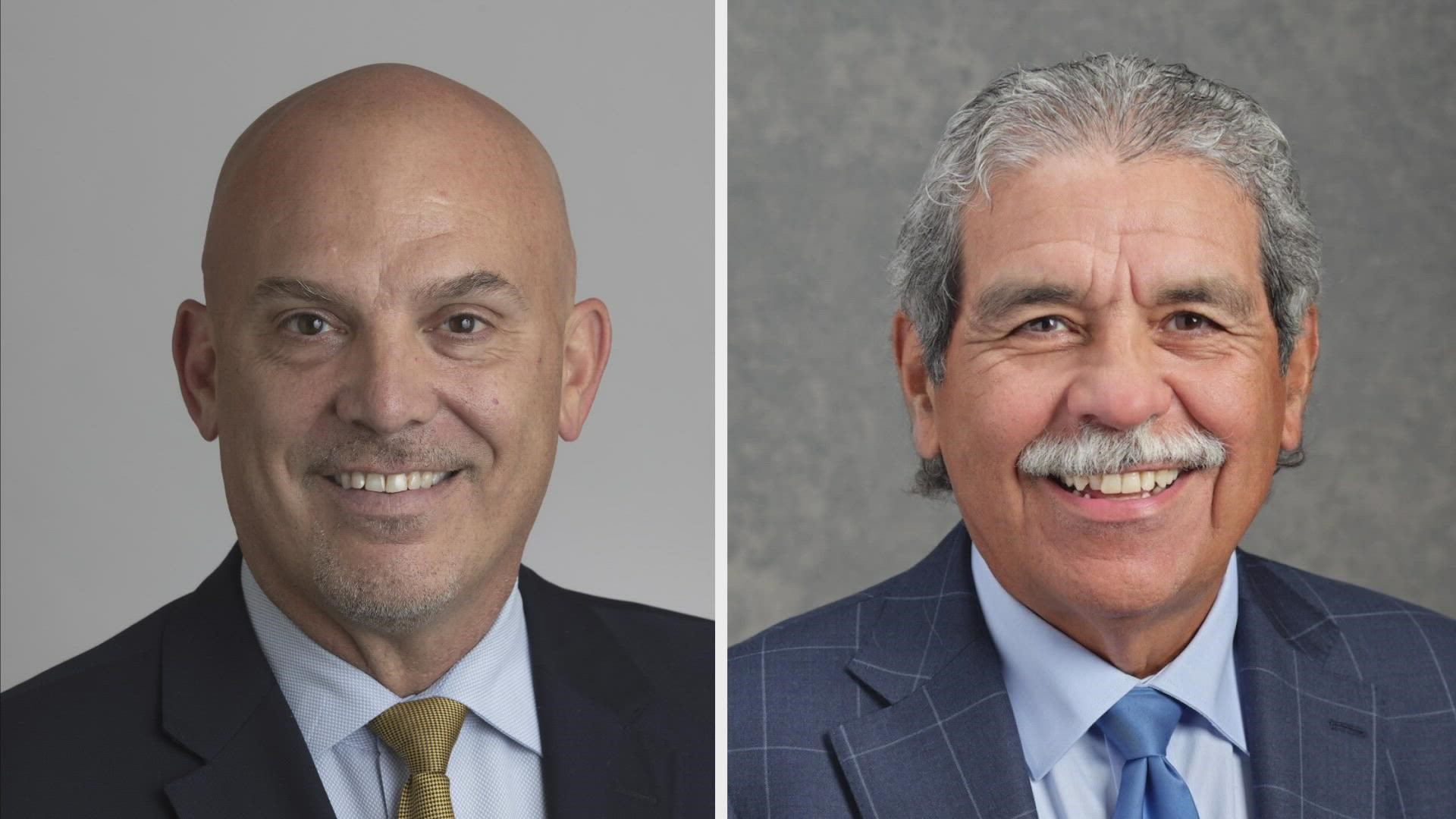
Dallas ISD superintendent Michael Hinojosa (announced Jan. 13, 2022)
Fort Worth ISD superintendent Kent Scribner (announced Jan. 13, 2022)
Richardson ISD superintendent Jeannie Stone (announced Dec. 13, 2021)
Lewisville ISD Superintendent Kevin Rogers (announced Nov. 2, 2021)
Northwest ISD Superintendent Dr. Ryder Warren (announced Jan. 13, 2022)
Dallas Independent School District Superintendent Dr. Michael Hinojosa is stepping down from the position after more than six years, according to a district press release sent out Jan. 13, 2022.
Hinojosa, who will leave in December 2022, spent 42 years in public education and 13 years with Dallas ISD overall. He had positions as a teacher, coach, assistant principal, central office staff member, and superintendent for five different districts in both Texas and Georgia.
Hinojosa said he has had talks with the board and that they knew he couldn't be superintendent for another 10 years.
"I think it was just a good time for us to do this," Hinojosa said. "I did warn the board that being a lame duck is no fun. But I also told them, 'I may be a lame duck, but I'm not a dead duck,' so people better listen to me because we have to get a lot of things done for kids."
The Dallas ISD Board of Trustees will begin a national superintendent search and outline details of the official process in the coming weeks.
“Dallas ISD and the Dallas Mavericks have made it a point to leverage our collective influence to improve our city in numerous ways, including during some of our most challenging times," Dallas Mavericks CEO Cynt Marshall said in a press release. "I’ve been blessed to have Dr. Hinojosa as my partner in this effort, and I wish him well in his future endeavors.”
During his tenure as superintendent for Dallas ISD, the district highlighted some of Hinojosa's accomplishments which included creating a universal curriculum, expanding dual-language programs and creating four career institutes
Hinojosa said there is still a lot of work to do with the district's procurement department, which is the office responsible for buying materials, supplies and services for teachers and students and staff.
"That's something that I've just struggled to fix," Hinojosa said.
The success and support of Black students in the district is also something Hinojosa said also needs to be improved and the next superintendent should work on.
"We've made progress," Hinojosa said. "We're moving better than the state, but we're still behind."
Hinojosa served an initial term as superintendent in Dallas ISD from 2005-2011 before he returned as interim superintendent in 2015. The Board of Trustees formally approved his second term in October 2015.
“Dr. Hinojosa came to do a job, and he accomplished it," Sen. Royce West also said in a press release. "He steered Dallas ISD through calm, choppy and yes, even treacherous waters and never lost site of the value of a good education. He will be remembered for his exhaustive work to ensure every Dallas ISD student receives the quality education they deserve. His efforts will live on in perpetuity as students and their families reap the benefits of his leadership for years to come.”
Fort Worth Independent School District Superintendent Dr. Kent Scribner announced on Jan. 13, 2022, he is stepping down from his position when his current contract is up.
Scribner tweeted Thursday that he informed the the district's Board of Trustees last month of his plans and a district press release said he officially informed them on Dec. 16, 2021. His contract officially expires on Aug. 31, 2024.
Scribner has led the district since Oct. 15, 2015.
Fort Worth ISD serves about 76,000 students and stands as one of the largest in the state.
Scribner effectively communicated with the board and was transparent through this process, according to Fort Worth ISD Board of Education President Tobi Jackson.
“Among his many accomplishments, we especially applaud his leadership in transforming our secondary schools with collaborative spaces and modern, career-focused classrooms that will benefit students for decades to come," Scribner said. "That is an outstanding legacy.”
The board is scheduled to discuss the superintendent’s plans to retire at a Jan. 18 Special Meeting Executive Session.
Scribner worked in education for more than 30 years and was a superintendent for 20 years. During his tenure with Fort Worth ISD, the district saw a 12-point gain in its state accountability rating, the press release said.
Before coming to Fort Worth ISD, Scribner served as superintendent in Phoenix. He began his education career as a high school Spanish teacher and guidance counselor in Philadelphia. He then became a principal and a central office administrator before serving as superintendent.
On Dec. 13, 2021, Richardson Independent School District announced in a press release the district's board had accepted the resignation of superintendent Dr. Jeannie Stone. The decision was made during a school board meeting.
During the pandemic, members of the school board and public had disagreements with Stone about COVID-19 precautions and mask-wearing rules as well as issues related to equity and inclusion programs.
In a joint statement with the board, Stone said she "thanks the present and past board of trustees for providing her with the opportunity to serve in the Richardson Independent School District and…her heartfelt appreciation to the staff and community for their support of the district’s programs and services during her term as superintendent."
Shortly after the board's decision, Stone was removed from the Richardson ISD website and replaced with information on the interim superintendent, Tabitha Branum.
Stone was Texas Superintendent of the Year three years ago.
Dr. Kevin Rogers, who was named Lewisville Independent School District Superintendent of Schools in May 2015, announced in November 2020 that he was going to retire, according to a district press release.
Rogers' last day will be Jan. 31, 2022. The Lewisville ISD Board of Trustees will soon begin the search for the district’s next superintendent, the press release said.
Rogers has been with Lewisville ISD his entire public education career for 36 years. He spent five years working for the Texas Department of Mental Health before joining Lewisville ISD in 1986 as a teacher and coach. He served as an assistant principal, principal and district administrator before being named superintendent.
“It has truly been my honor to serve LISD for my entire career in public education, but especially the last seven years as superintendent,” Rogers said in a press release. “Education is first and foremost about serving our students and staff, and I believe LISD has the best students and staff in the country. LISD has always been an incredible district, and I am grateful I was given the privilege to try and make it an even better place than it was when I started. And I think we did that, thanks to the tremendous support of our students, staff, parents and the communities we serve.”
Board of Trustees President Tracy Scott Miller said she was thankful for what Rogers has done for the district.
“I have known Dr. Rogers for a very long time, and there is no way we could ever thank him enough for the impact he has had on our district,” Miller said. “He is a man of integrity, and every decision he made was always about what was best for our students and staff.”
Northwest ISD
The Northwest Independent School District Board of Trustees announced Jan. 13, 2022, that Superintendent Dr. Ryder Warren will retire in July 2022. The board has begun the search process for his replacement.
Northwest ISD trustees said they will determine candidates for the position with help from Mansfield law firm Leasor Crass, which will search for candidates that meet trustees' desired traits and recommend those candidates to the school board.
Once candidates are selected, trustees will interview each candidate before selecting a finalist, the district said. After someone is selected, a state-mandated 21-day waiting period will begin before trustees can officially offer him or her the job.
The district said Northwest ISD families can expect additional communication about the search process in the coming weeks and months.
The DeSoto Independent School District Superintendent D'Andre Weaver submitted his resignation on November 2021, and the school Board of Trustees voted unanimously to accept it during a November board meeting.
It was unclear why Weaver resigned. In September 2020, Weaver resigned from the district but said he didn't want to resign and that the board "railroaded" him to do so. Then a few days later, the DeSoto ISD Board of Trustees voted unanimously to rescind his resignation in an emergency meeting.
"As a board, we are intent on getting back to work so that we can shift the focus from adult issues back to what really matters, and that is our students," Board President DeAndrea Fleming said.
A TEA audit of the district's finances released in October of 2021 showed the district mismanaged finances. The audit accuses district leaders of fraud, waste, and abuse in instances that occurred before Weaver was hired in 2018 under Superintendent David Harris.
Mesquite ISD Superintendent Dr. David Vroonland announced he would retire from his position on June 30, 2022, according to a district press release from Dec. 13, 2021.
“It has been an honor and a blessing to lead this district for the last seven years,” Vroonland said in a press release. “I want to thank our community and the Board for their trust and support. We have been through a lot together, and I am so proud of all we have accomplished for the children of Mesquite.”
Vroonland became superintendent of Mesquite ISD on July 1, 2015. He has been in education for more than 30 years, starting his career in 1986 as a teacher and coach in Carrollton-Farmers Branch ISD.
In 1991, he accepted a similar position at DuVal High School in Lanham, Md., followed by two and a half years as a coach and teacher in Akishima, Japan. In 1995, Vroonland returned to Texas to teach and coach at McNeil Junior High School in Wichita Falls ISD.
From 1999-2006, Vroonland held different administrative positions for many Texas school districts.
Vroonland said by announcing his decision now he hopes to give the board a sufficient amount of time to prepare for and find the next superintendent.
"Led by Board President Eddie Rose, I have every confidence that the board’s commitment to continued excellence will be shown as the members determine the path forward," Vroonland said. "I appreciate your dedication to our district and community. It has been a privilege to serve as your superintendent."
Hurst-Euless-Bedford Independent School District Superintendent Steve Chapman sent out a press release on Dec. 14, 2021, that said he would be retiring at the end of the school year.
Chapman has been in education since 1984, starting his career in San Angelo ISD before moving to HEB ISD in 1986. His first jobs with the district were teaching at Hurst Junior High School and then two years at Trinity High School.
In 2013, Chapman became HEB ISD Superintendent.
Chapman said while the district has challenges to deal with moving forward, they will bring about new opportunities along with them. He also said while he is moving away from his full-time position, he will still be a "champion and cheerleader" for HEB ISD students.
"It has been an honor and a privilege to serve the students and parents of this wonderful school district for the past thirty-two years," Chapman said in the press release. "During my three decades in the district, I have had the opportunity to work with students and families in a variety of capacities from classroom teacher to superintendent of schools. Each step in my HEB ISD journey allowed me the opportunity see the talent, creativity, and curiosity that children bring to the educational process. When students are given the necessary tools and support, the possibilities for how high they can soar are limitless. A quality education is truly the key to each student’s future!"
Editors Note: This article has been updated since its initial publication to include Hurst-Euless-Bedford Independent School District Superintendent Steve Chapman's retirement announcement.
What's next for the second-biggest school district in North Texas now that Fort Worth ISD Superintendent Kent Scribner is leaving?
Every Texas superintendent needs to listen to this excellent interview of Austin Independent School District Superintendent Dr. Stephanie Elizalde and Evan Smith of the Texas Tribune. She covers all the hard topics with such poise, ranging from the pandemic response, Critical Race Theory, banned books, culturally responsive teaching, attendance-based funding and budgeting, staff and teacher salaries, as well as her own ethnic identity as a Latina and how that matters in relation to student and teacher demographics. I think that we should all appreciate how research guides all her decisions and responses to Evan Smith's questions.
Dr. Elizalde is not only bold and fearless, but direct and eloquent. She is the model of the kind of school leader we need in this crucial time in public education that, as she correctly acknowledges, is under attack by anti-democratic, political forces currently at play in our state and nation.
Thank you, Dr. Elizalde for your intelligent, thoughtful, and courageous leadership, particularly considering this difficult and challenging role as our school district superintendent throughout these many months of the pandemic.
Felices Fiestas! Happy Holidays! You make us proud! 💖
-Angela Valenzuela
Austin ISD Superintendent Stephanie Elizalde joined Texas Tribune CEO Evan Smith on Monday, Dec. 13, 2021, to discuss what the COVID-19 pandemic has meant for public education in Austin.
The Texas Tribune’s Batch O’ Politics conversation event series features in-depth discussions with prominent elected officials and newsmakers moderated by journalists from The Texas Tribune. Find upcoming events in this series and more at texastribune.org/events.
This event was presented by the Loewy Law Firm and supported by TEXAS 2036, Raptor Technologies, Texas Association of School Business Officials, Raise Your Hand Texas, Make It Movement, Educate Texas, Philanthropy Advocates, Quest Diagnostics and Meadows Mental Health Policy Institute.
Get the latest on Texas education with our weekly roundup of education news: trib.it/edu-weekly.
- - - - - - - - - - - - - - - - - - - - - - - - - - - -
→ Subscribe for more videos: https://www.youtube.com/user/thetexas...
→ Like us on Facebook: https://www.facebook.com/texastribune
→ Follow us on Twitter: https://twitter.com/texastribune
Here is where voting in elections matter. We need to stop voting in fearful, anti-intellectual, narrow-minded people into positions of power who then give sway to no-nothing politics to whitewash an already whitewashed social studies curriculum by stoking suspicion and fear through what may be aptly termed, "memory laws," as outline by Yale History professor Timothy Snyder as captured in yesterday's post and reflection on this blog (see The War on History Is a War on Democracy," by Timothy Snyder | New York Times).
I was interviewed for this piece, as well. I appreciate Isabella Zou and Jason Kao's informed engagement of House Bill 3979 policy that goes into effect on September 1st of this year.
I really appreciate our Austin Independent School District Superintendent Dr. Stephanie Elizalde's commentary:
“I want to remind our teachers not to be too nervous or too concerned because we’ve handled these types of issues at the local level, regularly,” she said. “Ninety-nine percent of the time, our issues are able to be resolved at the campus level.”
I hope that all of our Texas superintendents similarly have some spine and support their teachers who frankly, don't get paid enough to bear the weight of a vague, intimidating, albeit, unenforceable policy that is designed to diminish them while robbing our children of their rightful access to the truths of history. Like "Red Scare McCarthyism" of old, this , too, shall pass, but promises to be a protracted battle connected to those we elect to serve us.
I trust and hope that our Texas Dems are making a difference in Washington, D.C., right now. After all, the right to vote impacts every other issue imaginable.
What can you do? Reach out to whoever represents you in Congress and urge them to pass the "For the People Act," as well as the "John Lewis Voting Rights Advancement Act" now. I just did.
Educators who spoke to The Texas Tribune overwhelmingly denounced the new social studies law going into effect Sept. 1. These are the provisions they say could cause problems for them — and Texas students.
When Texas teachers return to their public or open-enrollment charter school classrooms later this year, a new state law will restrict how they can discuss current events, encourage civic engagement and teach about America’s history of racism.
Texas educators who spoke to The Texas Tribune overwhelmingly denounced the new law, born from House Bill 3979 — the so-called critical race theory bill passed during this year’s regular legislative session. They say its sweeping language, which includes a ban on teaching that a student should feel guilt because of their race, will mean that classroom conversations about racism could unintentionally spur parents’ anger and cause teachers to be punished.
They say it will make it more difficult to creatively meet the curriculum standards given to them by the state and teach students to think critically. And they worry that the legislation altogether will chill discussions and lessons about social studies and current events in ways that give a generation of Texas students an incomplete and white-centric view of history and the world around them.
The Tribune interviewed more than two dozen teachers across the state to learn how the legislation’s provisions will impact them — and Texas students.
Texas’ majority white Legislature limited how race is taught to a generation of students
When Gov. Greg Abbott signed HB 3979 into law, Texas joined a broader national backlash against teaching about racism and sexism. The law was passed by a Texas Legislature that is far more white than the state’s public school students.
Republican officials say it is meant to ban critical race theory from K-12 classrooms, even though the term never appears in the bill. Academic experts say GOP leaders have repeatedly misrepresented the tenets of the academic framework, which is used to examine structural causes of racial inequity. Plus, experts and teachers say the theory is not being taught in K-12 schools.
State Rep. Steve Toth, R-The Woodlands, the bill’s author, said that much of the new law — especially the provisions meant to prevent critical race theory from being taught — came from concerns he heard from parents who feel their kids are being “indoctrinated.”
“We’ve heard, ‘You should feel guilty for what [white people have] done,’” he said. “We have heard, ‘You’re people of privilege, and you should feel guilty for that privilege.’”
The new law includes key provisions from template legislation that appears in other states’ bills that target what Republicans label critical race theory. Toth said that in crafting the legislation, he conferred with the template’s author, Stanley Kurtz, a conservative commentator and senior fellow at the Ethics and Public Policy Center, and collaborated with Christopher Rufo, a conservative activist who helped spur the current controversy over critical race theory.
Texas teachers and experts say the term is being used politically as a catchall phrase for any teachings that challenge or complicate dominant narratives about the role of race in the country’s history and identity, which are historically centered on white people’s perspectives.
“They have thrown social studies teachers out on the front lines of a cultural war,” said Kerry Green, a U.S. history teacher at suburban Sunnyvale High School east of Dallas.
The new law takes effect Sept. 1.
Teachers say a provision about students’ discomfort, guilt or anguish will chill necessary discussions
Critical race theory says racism is baked into American institutions — like education, government and the media — and it must be addressed not just by punishing individuals, but by shifting structures and policies. But Texas teachers point out that HB 3979’s language focuses on individual traits and feelings, opening the door for parents to litigate against them based on their children’s reactions to any lesson or discussion in the classroom.
Toth said the bill isn’t trying to ban lessons on slavery, Jim Crow laws or lynchings, which he said were portrayed as being “evil things” when he was in school.
“No one ever said, ‘Oh, you can’t teach me that, I don’t want you teaching my son or my daughter that’ — no one ever said that, and this bill doesn’t say that,” said Toth, who is white. “This bill simply says, ‘Don’t accuse my child of being part of that. Don’t blame my child for that.’”
But teachers say that the language makes them vulnerable to backlash from parents, in particular the clause forbidding teaching that individuals should feel “psychological distress” due to their race or sex. The law doesn’t apply to Texas colleges or universities, but University of Texas history professor and public historian Monica Martinez said the law’s vague language causes concern for public schools.
“Any parent could just say, my child felt embarrassed, or felt shamed, or felt guilt,” she said.
The potential chilling effect, teachers say, will further minimize opportunities to weave in the perspectives and historical contributions of people of color.
“The more we remove the ability to have these critical and crucial conversations, we are going to continue to whitewash the system that is already whitewashed,” said Shareefah Mason, a master social studies teacher at Zumwalt Middle School in Dallas.
In interviews and during legislative debates, lawmakers’ justifications for the new law focused on how white people could react to mentions of race. For example, Toth expressed outrage about “Not My Idea,” a children’s book examining how power and privilege affects white people that he claimed was being recommended to students in Highland Park schools, though the district said it was not being used.
“The more we remove the ability to have these critical and crucial conversations, we are going to
continue to whitewash the system that is already whitewashed,” says Shareefah Mason, a master
social studies teacher at Zumwalt Middle School in Dallas.
Credit:
But teachers say students of color already feel distressed when learning about racism throughout history.
David Kee, a seventh grade Texas history teacher at Hill Country Middle School in Austin, said he teaches a unit on slavery that usually includes screening “Roots,” the acclaimed 1970s miniseries that follows a Black man as he is enslaved and abused. One year, the one Black student in his mostly white class watched on the first day and said she felt uncomfortable, and he gave her an alternative assignment, assuring her that it wasn’t an issue.
Kerry Green, who teaches U.S. history at Sunnyvale High School, pointed out that movements aimed at progress for some Americans — like second-wave feminism starting in the 1960s — ignored Black and brown people.
“And so there’s all these kinds of things that history is just triggering,” she said.
Angela Valenzuela, an education policy professor at the University of Texas, said the law perpetuates the long-running practices of whitewashing history in schools and disregarding the lived experiences of people of color in public policy.
“It’s very much centering white people’s, white children’s feelings,” she said.
The law doesn’t specify how it will be enforced, leaving educators and school districts scrambling to prepare
Because the bill doesn’t specify how teachers should be punished for breaking its provisions, school districts and teachers are clambering to prepare for how it could impact them.
Angela Valenzuela, a professor in education policy at the University of Texas at Austin, said this lack of direction could make the bill even more dangerous to teachers than if it clearly stated how it would be enforced.
“Then, everybody’s an enforcer,” she said. “You create a watchdog situation.”
Districts have their own processes for parent grievances, Valenzuela said, and how complaints are handled will depend on the district. If a school board dismisses a parent’s grievance, there’s the possibility a lawsuit is filed. Until that happens, Valenzuela said, there’s no knowing how exactly the law will be interpreted. She anticipates that teachers would be protected by the first amendment.
But the mere specter of legal battles is already causing teachers to worry about conversations about race that come up in classrooms — even outside of social studies classes. Tania Tasneem, a science teacher at Kealing Middle School in Austin, said the law will influence teachers’ focus during such discussions.
“It’s not having a conversation with the kids, it’s ‘what is that going to translate to when a parent comes at me with legal stuff I won’t be able to afford?’” she said. “That’s the scariest part.”
Dallas school district Superintendent Michael Hinojosa said that after the law goes into effect, there will likely be a teacher who becomes a “test case” for how the law is interpreted and enforced.
“Some student is going to videotape a teacher, and then it’s going to go viral,” he said.
Tania Tasneem, an eighth grade science teacher at Kealing Middle School in Austin, says the prospect of legal action is “the scariest part” of the law. Credit: Sophie Park/The Texas Tribune
Austin Superintendent Stephanie Elizalde said she’s in conversation with other superintendents about how to address the law. She said that her school district would make it part of teachers’ upcoming professional development sessions to detail what to do in the case of a parent complaint and outline the support systems in place to protect them. She noted that parents often have different perspectives on topics than the ones teachers present, like evolution.
“I want to remind our teachers not to be too nervous or too concerned because we’ve handled these types of issues at the local level, regularly,” she said. “Ninety-nine percent of the time, our issues are able to be resolved at the campus level.”
A limit on current events discussions could stifle conversations in some classrooms — but not others
Teachers worry that clauses about current events in the new law will weaken a cornerstone in teaching and studying history — connecting the past with the present.
The law forbids them from being compelled to discuss current events or controversial policy issues. But they more urgently criticize the edict not to give deference to any one perspective if they choose to do so, pointing out that it’s vague and that there are cases where giving equal weight to all perspectives would be untruthful or harmful.
Kerry Green, a U.S. history teacher at Sunnyvale High School, said current events sometimes come up organically in discussions about historic events. For instance, one class discussion about genocide organically dovetailed into a conversation about lynching and racist violence in the 20th and 21st centuries.
“What if somebody else in that classroom felt like I was criticizing white people?” she asked. “Somebody could have complained, and with the critical race theory law, then that could have created a much more complicated conversation.”
In schools with mostly students and families of color, teachers are less fearful of retaliation from students or parents for these conversations.
Nitasha Walder is a teacher at Thurgood Marshall Elementary School in the Richardson school district. Credit:Shelby Tauber for The Texas Tribune
After George Floyd was killed last summer, Nitasha Walder talked to her fifth graders at Thurgood Marshall Elementary School in the Richardson school district, most of whom are Black, about methods to avoid being accused of stealing by police, and how to protect themselves in interactions with officers. Walder said the parents appreciate that she addresses these topics in the classroom — and she anticipates that won’t change after the new law takes effect.
“It’s very sad that at fifth grade, we have to have these conversations, but it’s just the reality that we’re in now,” she said.
Anaïs Childress, an International Baccalaureate history and African American studies teacher in the Dallas school district, said that this section of the law could ensure students get to discuss controversial issues without being reprimanded by teachers for their beliefs.
“I can only hope this will encourage teachers to really think about the types of conversations we have,” Childress said.
But Andrew Robinson, an eighth grade U.S. history teacher at Uplift Luna Preparatory in Dallas, voiced concern about the direction not to give “deference to any one perspective.” When the Capitol insurrection happened in January, he stopped class and played it on TV.
Andrew Robinson, an eighth grade history teacher at Uplift Luna Middle School in Dallas, says he’s concerned about the law’s edict not to give deference to any one perspective, Shelby Tauber, TT.
“Once the election is over and there is a winner, and the other one’s saying that our democracy is fake, that the winner wasn’t really a winner — at that point, I feel like staying neutral is wrong, I feel like no, there’s not two sides to the truth,” he said.
Eliza Gordon, principal of Wells Branch Elementary School in Austin, fears this clause could especially intimidate teachers who are new to discussing current events in the classroom.
“Teachers that were just starting to feel ready and had built up some confidence, and tried it, are now going to say, ‘There’s no way I’m gonna do that now. I’m gonna lose my job,’” she said.
Teachers say prohibiting activism and policy advocacy will curb civic engagement
Texas teachers worry that the new law’s ban on requiring or incentivizing political activism will prevent them from teaching the state’s next generation of citizens how to participate in politics and shaping policy. They say it goes against one of the core goals of a civics and social studies education — to create an engaged citizenry.
“This bill is going to prevent us from changing the trajectories of the most disenfranchised, marginalized and impoverished students — those who already do not have a voice,” said Shareefah Mason, a master social studies teacher at Zumwalt Middle School in Dallas.
Lucero Saldaña has taught Mexican American studies at the public school, community college and university levels. Credit: Chris Stokes for The Texas Tribune
Texas is the only state, as of July, to include a ban on political activism, according to new “critical race theory” laws tracked by Education Week, which covers K-12 news. The Texas law does not define political activism or social or public policy advocacy.
Lucero Saldaña has taught Mexican American Studies at the public school, community college, and university levels. While the ban on political activism only applies to required social studies classes, not elective ethnic studies classes that some campuses offer, Saldaña said it will take away opportunities for all students to learn how to participate in the political process on topics that are important to them.
“This bill is directly impacting our students to not have a voice and not be engaged with what’s currently going on in our society," said Saldaña, who currently teaches at San Antonio College and the University of Texas at San Antonio.
Sarah Wiseman, a humanities and African American studies teacher in the Frisco school district, often has students write letters to elected officials about current events, letting them choose who to write to and what to write about.
“It is teaching them a way to make a real difference in their world,” she said.
She fears the new law means she can’t give out such assignments. She’s also worried about the legality of the open-ended assignments she gives in which students research a topic that is interesting to them and create something about it.
“If a student chooses [letter writing] as their final product, could we get in trouble, even if it’s not something we’re requiring them to do?” she asked. “That’s pretty scary.”
The bill also prohibits districts from accepting private funding for materials or teacher training for courses that include political activism or policy advocacy as a component.
Meghan Dougherty, an instructional coach for social studies in the Round Rock school district, said she thinks this provision is a response to educators’ and advocacy groups’ unsuccessful push for legislation that would encourage students to be civically active.
“There’s a fear on the other side that that’s gonna lead to, like, the corruption of our youth, the dissolution of our social stability,” she said.
The law requires learning about several women and people of color, but GOP lawmakers are trying to walk that back
The new law requires students to learn about several dozen figures, events and documents. Most of those were African-American and Mexican-American writings and movements added to the bill by Texas House Democrats, even though many are already part of the state’s core social studies curriculum. Those include writings by Cesar Chavez, Dolores Huerta, Martin Luther King Jr. and Frederick Douglass.
But the law also adds several new required materials and subjects that aren’t currently in the curriculum.
Scott Frank, an 11th and 12th grade history teacher at IDEA Frontier in Brownsville, said the additions are the “only good clauses” of the bill.
“I’ve had kids that come up to me and say, obviously I was born in Mexico, and I live in the United States. Where am I on this test? Where am I in these textbooks?” he said. “‘I don’t feel fully American sometimes because whenever I look at the textbook, I’m not there.’”
Republican Texas senators tried unsuccessfully to strip many of the additions from the bill during the regular legislative session that ended in May. They tried again in this summer’s special legislative session, passing a bill that removes those requirements to teach that white supremacy is “morally wrong” and to teach about particular women and people of color. That move got little traction because House Democrats left the state in an attempt to block passage of voting restrictions bills.
Even if Republicans’ efforts to strip those provisions from the bill are ultimately successful, most of the items on the list will still be in the state curriculum as long as the State Board of Education doesn’t remove them. But Frank said that removing the new provisions would send a bad message.
“If you look at the American creed — e pluribus unum, out of many, one — this is missing the mark,” he said. “It’s saying that we’re only going to talk about white founding fathers, the white Anglo-Saxon Protestant version of the U.S.”
Prohibiting “The 1619 Project” is seen as intentionally targeting lessons on systemic racism that benefit all students
“How do I prepare my students to engage in conversations that are going to help them be critical thinkers and build towards racial reconciliation in this country?” asks history teacher Anaïs Childress. Shelby Tauber.Credit:
Teachers say the new law’s explicit ban on teaching “The 1619 Project,” a Pulitzer Prize-winning New York Times endeavor that centers the lived experiences of Black people and the enduring consequences of slavery in America’s narrative, makes it clear that lawmakers are specifically targeting lessons examining racism in America.
“They don’t mention ‘Mein Kampf,’ they don’t mention ‘The Communist Manifesto’ — they’re not mentioning writings by Fidel Castro, they’re not mentioning Mao Zedong,” said Scott Frank, the history teacher at IDEA Frontier charter school in Brownsville. “It’s ‘The 1619 Project’ that you can’t force kids to learn.”
Teachers emphasized that the law’s attempts to marginalize people of color in the curriculum, reduce spaces for them to make sense of their society, and curb opportunities to learn about political activism harm all students — not just students of color.
“How do I prepare my students to engage in conversations that are going to help them be critical thinkers and build towards racial reconciliation in this country?” said Anaïs Childress, an International Baccalaureate history and African American studies teacher in the Dallas school district.
Caroline Pinkston, a ninth grade English teacher in the Austin school district, said that ultimately, the bill makes teachers’ work harder as they deal with an ongoing pandemic and need more support than ever.
“The message we’re getting is, we don’t trust you to handle conversations about race in the classroom, and we’re going to have another thing for you to worry about, and micromanage you on,” she said. “And we’re going to make it harder for you to support your students in figuring out how to navigate the world around them.”
Disclosure: San Antonio College, The New York Times, the University of Texas at Austin and the University of Texas at San Antonio have been financial supporters of The Texas Tribune, a nonprofit, nonpartisan news organization that is funded in part by donations from members, foundations and corporate sponsors. Financial supporters play no role in the Tribune’s journalism. Find a complete list of them here.
Correction, Aug. 3, 2021: A previous version of this story misspelled the name of an American civil rights activist. It is Cesar Chavez, not Caesar Chavez.




:quality(70)/https://thumbnails.texastribune.org/Jsnb3entbqr0J8rwNB_Zgjm_qNk=/filters:quality(70)/https://static.texastribune.org/media/files/a2224c5bed56f6269e2b40820bed5d32/CRT%20Lucero%20Saldana%20CS%20TT%2001.jpg)


