Translate

Saturday, November 19, 2016

Proposed Mexican-American studies textbook decried as ‘racist’ scrapped

Fait accompli.  Improperly titled, "Mexican American Heritage" textbook just got doomed to the dustbin of history.  The scholars' report can be accessed here

I'll repeat what I said in last Tuesday's November 16, 2016 post:

Now let's shift our focus on the Texas State Legislature and get an ethnic studies bill passed there. 

Organizing, coalitions, press conferences, rallys, research, petitions, hard work (peer review), testifying, and being a collective voice and knowing your stuff matters, my friends.

 Great job, everybody!  May all have a happy and blessed Thanksgiving.

Angela Valenzuela

Proposed Mexican-American studies textbook decried as ‘racist’ scrapped


Highlights

The State Board of Education unanimously voted to reject “Mexican American Heritage.”
The board also approved reopening bids for ethnic studies books next year.
A Mexican-American studies textbook proposed for Texas public high schools has been dumped.
The State Board of Education voted unanimously on Friday to exclude “Mexican American Heritage” — a textbook that critics have for months said contained racist passages and factual errors — from a list of recommended textbooks.
“I am gratified that the board members were able to put aside differences about their views of the book and speak in favor of sound structural materials and the well-being of children in public schools,” said Emilio Zamora, a University of Texas history professor who served on a committee appointed by board member Ruben Cortez, D-Brownsville, that reviewed the book.
READ: Does a new Texas textbook whitewash Mexican-American history?
The board gave a preliminary vote on Wednesday to scrap the book with the board’s Vice Chairman Thomas Ratliff, R-Mount Pleasant, declaring that the move wasn’t meant to censor the authors.
Cynthia Dunbar — a former Republican board member who is now head of Momentum Instruction, which published the textbook — said earlier this week that the board would invite a lawsuit if it rejects the book.
She has denied any racist intent with the book and promised that she would address all errors if it were adopted.
She didn’t respond to a request for comment Friday.
The textbook has generated significant controversy since the Texas Education Agency released it online for public review in May.
Among the problems with the book, according to critics, were depictions of early Mexican-American activists as threats to American democracy. The textbook also came under fire for omitting contributions of Mexican-American women through history and suggesting that Mexican-Americans are lazy.
The book’s authors submitted 20 pages of corrections to the Texas Education Agency, including eliminating the reference to the “stereotype of Mexicans working idly,” but Zamora said the authors didn’t significantly address other major concerns that critics had.
One section of the book initially said that communism caused natural disasters. After this error was identified, authors changed the sentence to say communism “left in its wake famine, natural disaster and civil war.”
“Mexican American Heritage” was the only textbook proposed for any ethnic studies subject for the 2017-18 school year.
The board on Friday approved opening bids next year for additional textbooks in Mexican-American studies as well as in other ethnic area studies. The books would go into classrooms in the 2018-19 school year.

@TFN
#MexicanAmericanStudies


Friday, November 18, 2016

Dr. Emilio Zamora's Testimony before the Texas State Board of Education November 15, 2016


This testimony by University of Texas at Austin History Professor Dr. Emilio Zamora was delivered on Tuesday, November 15, 2016.

So very proud of the work that Dr. Emilio Zamora and the other historians--a collective effort involving up to 26 historians--including Professors Trinidad Gonzales and Christopher Carmona and a team of graduate students at UT.  As you will be able to hear from Dr. Zamora's testimony, they labored extensively to build a formidable case against this text that disrespects us as Mexican Americans and in so doing, relegates us to a feared and suspect class.  Our community issued a resounding "No" to this screed.

It is sobering to think that this text could very easily slipped under the wire.  Thankfully, SBOE Member Rubén Cortez let everybody know.

Had this been the case, it  would have surely have done damage to our children of all races and ethnicities in our state's and nation's schools. That publisher, Cynthia Dunbar, even got this far is incredible.

A final vote was taken today with a UNANIMOUS 15-0 vote against the adoption of the text authored by Jaime Riddle and Valarie Angle titled, Mexican American Heritage

Hats off to great teamwork with the REST Coalition (masfortexas.org), the NACCS Tejas Foco scholars, the Texas Freedom Network, MALDEF, our students, legislators, community and others in spirit for joining and leading along with our  to save the day.

Knowledge is power and speaking this truth to power is an awesome task and responsibility.

Now we look forward to a bill in the Texas state legislature that will require the Texas State Board of Education to offer an elective course, or courses, preferably in my view in Ethnic Studies.

 A big hug to Emilio, as well.  He had to put off his own book writing to focus on this one.

Today we celebrate! 💐🌹🌷😊

Angela Valenzuela

c/s

#RejectTheText
@TFN
#MexicanAmericanStudies


#MASTejas

Decisive Victory: Texas State Board of Education Votes UNANIMOUSLY 15-0 Against Racist Textbook


Just in. Happy to announce today's final vote on the Texas SBOE. Now we have to focus our attention on the Texas State Legislature with a bill that call for ethnic studies as an elective statewide.

This is a major victory of our NACCS Tejas scholars and our Responsible Ethnic Studies Textbook (REST) Coalition.

Now we have a lot to celebrate!


Angela Valenzuela
c/s

Thursday, November 17, 2016

Stephen Hawking: Humans will die out within 1,000 years unless we leave Earth

I totally agree with Professor Stephen Hawking that we should encourage public interest in space.  Our indigenous ancestors, native to this continent, most certainly did.  For many reasons, not the least of which involved, war, conquest, slavery, and colonization—that included a mystification of indigenous knowledge as if it were superstitious or pagan—we lost track of the cosmos as people of this continent.  Fortunately, and despite more than 500 years of colonization, it can still be accessed, albeit painstakingly so.  Entire careers and fields of scholarship are dedicated to such matters with actual convergences with such  communities occurring as integral aspects to such endeavors.  So Hawking is saying what our indigenous elders have already known and this should give us some pause...

Angela Valenzuela

c/s 

Stephen Hawking: Humans will die out within 1,000 years unless we leave Earth


Professor Stephen Hawking at the Oxford Union this week
Professor Stephen Hawking at the Oxford Union this week Credit: Roger Askew/Oxford Union/REX/Shutterstock 

Professor Stephen Hawking has warned that mankind will not survive another millenia unless it makes a home beyond Earth's atmosphere.
The celebrated physicist was addressing a lecture audience at the Oxford Union debating society on Monday evening when he gave the stark warning.
"Most recent advances in cosmology have been achieved from space where there are uninterrupted views of our Universe," he said "but we must also continue to go into space for the future of humanity.
"I don't think we will survive another 1,000 years without escaping our fragile planet. "I therefore want to encourage public interest in space, and I have been getting my training in early."

Continue reading here.

Latina/o Children's Literature Workshop Series for Teachers—UT Austin, Saturday, December 10, 2016, 1:00 – 5:00 PM


This looks exciting!
-Angela

Latina/o Children's Literature Workshop Series for Teachers


View this email in your browser

The Maya American Experience & Children’s Literature

Join LLILAS Benson Latin American Studies & Collections for a teacher professional development workshop:
  • Learn about the history of indigenous migration from Guatemala and the experiences and challenges Mayas face in the U.S.  
  • Create lesson plans and activities using a children’s book created by an indigenous Guatemalan youth collective
  • Receive 4 CPE credits, free books, and other free curriculum resources
Designed for teachers of grades 3-5, but educators of any grade level are welcome to attend. Limited space available. RSVP required. For more information and to RSVP, visit our Eventbrite page.

Saturday, December 10, 2016, 1:00 – 5:00 PM 

Benson Latin American Collection
2nd Floor Conference Room, SRH 1.208
The University of Texas at Austin
2300 Red River Street, Austin

 
Learn More & Register
Copyright © 2016, LLILAS Benson Latin American Studies & Collections, All rights reserved.

Our address is:
LLILAS Benson
SRH 1.304B, 2300 Red River Street D0800
Austin, TX 78712


My Testimony before the Texas State Board of Education by Angela Valenzuela Ph.D.


My Testimony Before the Texas State Board of Education*

by

Angela Valenzuela, Ph.D.

November 15, 2016


I would like to call out issues of confidence, trustworthiness, validity.

A textbook can be technically “correct” and still be biased. 

A textbook can be technically correct and still miseducate.

As Ms. Dunbar suggests, why is it political and ideological when it involves criticism by Mexican American scholars?  And why, in Dunbar’s world, is it not political or ideological when it involves the authors of this explicitly biased textbook?


I would like to address political and ideological concerns.

For starters, for a book-publishing-agenda of this importance to come forward precisely because of the demands for inclusion here in this space in 2014 by the Mexican American community, is inescapably political. 

Politics means power and its assertion.  The number one factor in majority-minority relations is power.  "Minority" is not a statement about numbers, but about power—social, cultural, political, and economic power.

That is, the desire—really for a course, but what ended up being a textbook—is precisely the result of an assertion of political power by the Mexican American community. 

Moreover, we do not only advocate for ourselves as a community.  We have a long history of advocating for all of our communities, women, minorities, the undocumented, and the LGBTQ community.

It should be noted that our political power as a Latino/Mexicano community is not equal to that of a Cynthia Dunbar who owns a publishing house. 

And that is systemic.  Believe me, if any of us owned a publishing house, we would be having a very different discussion today.

And maybe this is ultimately the hidden desire — for us never get to that point to where we ourselves are owners of a publishing house.

It’s mystifying to think that an unknown publishing company would assume this great and important task of responding to a community’s entire history of curricular exclusion by placing it in the assumptive hands of a self-appointed, unknown publisher written by equally unknown “curriculum developers” as if this were merely a technical exercise—and as if no expert authority beyond this were necessary.

Such little regard is itself an instantiation of privilege and minority-majority relations.

And then to give it the title, “Mexican American Heritage,” absent any concern over our communities’ lifelong, legendary struggle for respectful inclusion in the state curriculum, preempts this very opportunity for authorship with a title that should honor us, but instead disrespects us and relegates us as to a feared and suspect class.

History, like democracy, is much more than a market where our role as a public is limited to that of us as consumers.  History for us—for all of us, as minorities—is about authorship.  

And the misuse and abuse of privilege, robs us of our voice and authorship in an area about which we are deeply invested.

If this is not about ideological or political power, then nothing that was said today is ideological or political.  And we know this to not be true.

Thank you very much.

*Thanks to Alonzo Mendoza for recording this.

@TFN
#MexicanAmericanStudies

#MASforTexas

#MASTejas

#LibroTraficante
@NACCSTejasFoco

Vital Information for immigrant youth and families from @UNITEDWEDREAM

There are resources for immigrant youth and families, including a toolkit here from United We Dream.

These are hard times.  Check in regularly with family.  Suicide prevention hotline (English) 1-800-237-8255 (español) 1-800-784-2432.

Estos son tiempos dificiles. Habla con tus amigos y familiares.  Preguntales como estan. S alguien necesiate ayuda, llama a la linea directa para la prevencion del suicidio: 1-800-784-2432.

-Angela Valenzuela

  5 Important Things You Need To Know About DACA During a Trump Presidency

Para español, haga click aqui.


There is no doubt that we’re in a difficult moment. Below is our best thinking on how to move forward if you have DACA.

1. DACA still stands.


Deferred Action for Childhood Arrivals is a program under President Obama’s administration and it will remain until the end of his administration, January 20, 2017. #RealTalk, Trump has said he will end all of Obama’s executive actions, including DACA, and we won’t know for sure what he will do until he comes into office. For now, DACA still stands.

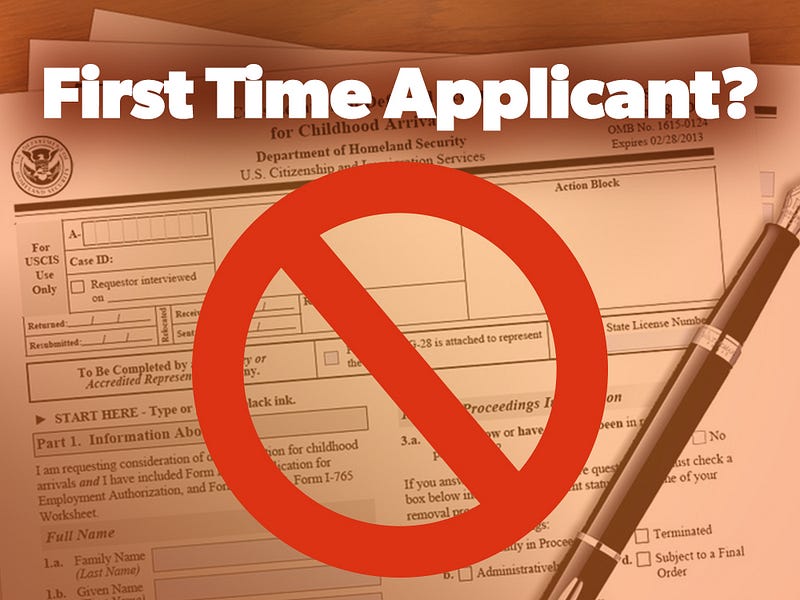
2. First time applying for DACA? Hold off.


If you are applying for DACA for the first time, we recommend that you hold off. The reality is that we have 70 days until the end of the Obama administration, that is not enough time to process new applications.

3. Applying for a DACA renewal? Move forward.


If you’re DACA is up for renewal we encourage you to apply for renewal.

4. Got advance parole? go travel, BUT come back.


If you have an approved advanced parole take advantage of it! BUT you MUST return before January 20th, 2017. We recommend that YOU contact advocacy@unitedwedream.org if you have any problems coming back in. If you’re planning on applying for advance parole, we recommend that you hold off!

5. You are not alone. We’ve got your back.


Immigrant young people like you made DACA happen when everyone though it was impossible. The reason we succeeded is because we dared to dream together and we had each other. In this moment of uncertainty one thing is certain, we are not alone. Join us in our #HereToStay campaign to fight to protect DACA!
Text HereToStay to 877877.

“They tried to bury us, they didn’t know we were seeds.”

#HeretoStay #DACAWorks #DACA

@UNITEDWEDREAM

Wednesday, November 16, 2016

We just made history: Unanimous vote AGAINST by the Texas State Board of Education Wed. Nov. 16, 2016


We just made history.

The Texas State Board of Education just voted AGAINST the racist textbook by Jaime Riddle & Valarie Angle. This is a major victory by our community. Now let's shift our focus on the Texas State Legislature and get an ethnic studies bill passed there.

Organizing, coalitions, press conferences, rallys, research, petitions, hard work (peer review), testifying, and being a collective voice and knowing your stuff matters, my friends.


For now, let's savor this victory!


Sí se puede! Yes, we can!

Angela Valenzuela
c/s

Here's the quote of the day today by the Texas Freedom Network:


Quote of the Day

"We work long and hard to obtain our doctorates. We put up with a lot of problems to be in a position now where we can speak with authority. When these people claim that they’re above our criticism, they’re challenging and questioning our authority … Is this racism or not? I don’t know, I can’t get in their heads. But I can tell you that I feel offended.”

– UT-Austin professor Emilio Zamora, on the deeply flawed Mexican-American studies textbook and how the text's authors have responded to critiques.

@TFN
#MexicanAmericanStudies

#MASforTexas

#MASTejas

#LibroTraficante

Great "After-the-Election" Resources for Teachers of English Language Learners from Colorín Colorado

After the Election: Ideas for Teachers of ELLs

As they have been throughout the entire presidential campaign, teachers are on the front lines when it comes to answering students’ questions about the election and its results, giving them an opportunity to discuss what they see in the news, helping them think about how big decisions may affect their lives, and managing interactions among students representing different points of view and backgrounds.
We have collected some helpful lesson plans as well as discussion guides for talking about the results of the 2016 election. For more ideas, see the message below from Colorín Colorado contributor Kristina Robertson. To see related resources, visit our Election 2016 section.


Current Events for Students

ELL Resources

Discussing the Election Results


Recommended Resources

Educational Services for Immigrant Children: What Schools Need to Know

The U.S. Departments of Education and Justice released fact sheets, FAQs, and enrollment guidance related to the educational services for immigrant children and families in January 2015. These fact sheets (also available in Spanish) and the Civil Rights information below provide a summary of what schools need to know.

Serving ELLs & Immigrant Students Tookits

Making Students Feel Welcome


A few words of wisdom

And finally, some closing thoughts from Christopher Breiseth, a lifelong educator, professor of history, former college president — and the father of Colorín Colorado manager Lydia Breiseth.
"It is important that all of us work hard to treat each other with respect, as members of the same national family. Through it all, we must demonstrate how to treat each other and hold to what we most believe in.  There will be ample opportunities to demonstrate how to behave well, how to address our common challenges, and how to make our civic lives more vibrant."