Translate

Showing posts with label weakening accreditation. Show all posts

Tuesday, February 17, 2026

The Heritage Foundation Drove Trump’s 2025 Higher-Ed Agenda. What’s Its Plan for 2026? By Rick Seltzer | The Chronicle of Higher Education | Feb. 13, 2026

Friends,

In a revealing interview in The Chronicle of Higher Education, reporter Rick Seltzer probes the next phase of the Heritage Foundation’s higher-education agenda following the rollout of Project 2025. What emerges is not merely a technocratic debate over accreditation but a sweeping ideological project. Heritage fellow Adam Kissel calls for severing the link between accreditors and federal student aid, effectively removing a long-standing buffer between federal funds and institutional quality review. 

In its place: state-level control, market discipline, and—ultimately—the privatization of federal student aid. 

The proposal frames accreditors as politicized enforcers of DEI and positions states as more trustworthy arbiters of “intellectual” and even “moral” development. 

Geez, how pathetic if not deeply cynical to cloak a project of political consolidation in the language of quality, virtue, and reform. The shift would dismantle a national accountability infrastructure and replace it with a fragmented 50-state experiment, where access, standards, and protections vary dramatically by geography and political climate.

Most alarming is the open embrace of reduced college access as a policy goal. Kissel states plainly, “I want college access to drop,” arguing that expanded access in the 20th century “overachieved” and left too many students with debt and no degree. The tradeoff, he suggests, is how many lives we are willing to “ruin” in order to help those deemed deserving. 

This stark calculus reframes higher education not as a public good but as a selective privilege governed by market sorting and state ideology. Combined with calls to privatize student loans, weaken federal oversight, and reshape curricula around contested visions of Western intellectual and moral formation, the agenda signals a profound reordering of higher education’s civic mission. 

If enacted, these reforms would not simply adjust policy levers; they would narrow pathways to opportunity, intensify political control over knowledge, and destabilize the fragile architecture that has long mediated between public investment and institutional autonomy. 

Forewarned is forearmed.

-Angela Valenzuela

By Rick Seltzer | The Chronicle of Higher Education | Feb. 13, 2026

Project 2025, the influential policy blueprint published by the Heritage Foundation, set a clear agenda for the Trump administration’s sweeping efforts to reform higher education in its first year in office. What comes next?

Heritage’s “Themes for Higher Education Reform,” published in January, give an indication. One item high on its list: stripping accreditors of their role as gatekeepers of federal funding. The Trump administration has already sought to shake up accreditation by bringing new agencies into the mix, but the Heritage proposal goes much further.

I dug into that proposal with Adam Kissel, a visiting fellow for higher-education reform at the Heritage Foundation and an author of the report. We started out wonky, but I was surprised to find us veer into deeper questions of moral development and college access. Our conversation shows that higher education and its critics have come to hold far fewer shared assumptions than those on campus might think. The following has been edited for length and clarity.

Why do you want to remove accreditors as gatekeepers of federal funding?

The decoupling of Federal Student Aid from accreditation would help accreditors focus on quality improvement, rather than quality assurance — meaning that quality assurance can continue to be done to some degree by the Department of Education, so long as it exists, but also by the states.

In other words, accreditors wouldn’t cease to exist.

Once they are decoupled from Federal Student Aid, there is no reason for them to be registered by the Education Department. They can continue to do whatever they like. I point to low graduation rates and low-ROI programs as evidence that institutional accreditors have dramatically failed to be reliable authorities as to the quality of institutions of higher education.

Without accreditors as gatekeepers, how would you ensure Federal Student Aid goes to institutions providing quality education?


The quality assurance will be certified by the state, either by their own assurance bodies or by third parties that they choose, which might still include accreditors, if that’s their plan.

Why are the states going to be better at this?

Returning education to the states means that we trust the state, and people of different political persuasions may trust certain states more than others, but that’s the 50-state-experiment idea that is integral to federalism.

We trust the states with billions and billions of taxpayer dollars already on a large variety of issues. It’s only Chicken Little scaremongers who would say that we can only trust these institutional accreditors who have demonstrated that they are already not good at it.

Accreditors aren’t just about quality assurance. They’re seen as insulation from politicization of higher education.

Did you read my paper from a year ago, called “The Politicization of Higher Education Accreditation”? [The paper argues that accreditors have used their gatekeeping role to impose diversity, equity, and inclusion on colleges while thwarting conservative reforms.]

I’m familiar with those criticisms. But whether accreditors are upholding the ideal of political insulation is a different question from whether we want direct state control in colleges that include private enterprises. 

Why would a state be better to dictate whether Ave Maria University or the University of Notre Dame can draw federal funding?

States already have a key role. The secretary of state, traditionally, in a state, decides which corporations are allowed to operate and the standards under which they are audited. It’s nothing new for states to decide who can operate in their state.

I’m not asking whether this is a new discussion. I’m trying to get at the inherent tradeoffs.

Ideally organizations would police themselves. They don’t, and that’s why accreditors or other outside parties are needed. And when accreditors also fail to do their jobs, different outsiders will come in, such as state and federal regulators and legislators, and then you’re kind of out of ideas, except to go to the consumer, and then the consumer votes with his or her feet, right?

So ultimately you want the market to police itself, and usually it does a pretty good job over time.

Government feels like it has an important say in the use of those dollars, at least not to discriminate against your own students or your own job applicants, and that’s what colleges do. Have the accreditors ever said “You can stop discriminating” as a matter of being allowed to operate? Has any accreditor ever told a college that its policies violate the First Amendment?

You’re referring to race-conscious admissions, DEI, and that kind of thing?

That was the first part of my comment. But to turn to the second part of the comment: Has any accreditor ever told a college that its policy violates the First Amendment and that matters for accreditation? Maybe never.

Eliminating accreditors from this role is very different than the solution Republicans have been pitching, which is to start new accreditors.

A lot of higher-education reforms have a Plan B. Plan A is politically unfeasible — to privatize student loans, return all money to the states, greatly diminish the amount of money coming from the federal government into education. All that is very challenging today, so instead, use the powers that are available for reform, and that’s Plan B.

I’m surprised we went down this road, because I expected you might talk about protecting the federal investment through accountability measures. The feds are arguably taking on more quality assurance by looking at outcomes measures, which is still a departure from the process review accreditors do. I expected you might talk about states doing the same.

Oh, I think states such as Florida, which have turned dramatically to performance-based funding, have demonstrated success in institutional improvement.

The point is not to have a federal standard for how colleges are assessed, but to have each state have its own assessment plan. I’m not against ROI for most programs, most of the time, but there are other things to do with your college time, such as develop intellectually, morally, and spiritually. Teachers, they barely even understand that there’s such a thing as intellectual development or moral development that they could focus on in college. It would be wonderful if colleges would measure intellectual and moral development, and if some states would figure out how to assess colleges by those standards.

Is it a state’s role to assess the intellectual and moral development of private actors?

Intellectual development, for sure. Moral development can be done in a viewpoint-neutral way, similar to how current accreditors focus on process rather than outcomes.

How much do you trust the state to protect whatever the minority in that state is?

Some will do better at that than others, and that’s part of the 50-state competition that you get.

The 50-state competition is certainly one of the checks that’s built into the country. Another is checks and balances between branches and levels of government. You may disagree with interpretations of the Commerce Clause, but the feds do have some role in governing interstate commerce. And if you’re talking about interstate competition and students crossing state lines, can it get muddy?

The federal government already has a role, separate from the accreditors and states, in assessing financial viability and administrative capacity.

Which it arguably has not done a particularly good job of.

No doubt we can agree on that.

What else would you like to discuss?

Making it much easier for a new accreditor to take its place among existing accreditors has been a priority in the current administration.

Why won’t that become a race to the bottom — to accreditors that offer rubber stamps?

As we get more and more transparency in ROI and syllabi and other areas, it will become more and more valuable for a college to show that it is accredited by an accreditor with standing in terms of high-quality outcomes for graduates. So why wouldn’t it be a race to the top?

Would any reform really change the dynamics that make it difficult to ensure quality instruction?

It wasn’t until a huge amount of money was in the federal system that we had to start working on this problem, and then put Band-Aids on it. The tough love is to rip all the Band-Aids off, privatize student loans and the federal-aid system, and then we wouldn’t have to worry as much about accreditation and accountability for the federal dollars, because there wouldn’t be any.

And then, arguably, college access drops.

I want college access to drop. Why do I want college access to drop? Do you want there to be colleges with a 12-percent graduation rate, 15 percent, after six years? You want federal dollars to go to that school?

We overachieved in terms of access in the 20th century. We took kids who would have had a great career as an electrician or in the military or as an entrepreneur, and we said, “No, go to college.”

They took six years not to graduate. Now they’re in debt, no good degree. They’ve been moved away from their home community for six years. Their life has been ruined because we told them they should go to college and we gave them enough money to do it.

That may apply to some students, but I might hesitate to say it to those who were able to earn a degree of value only because of federal financial aid.

Yep, totally agree with that critique. The tradeoff is how many students’ lives you want to ruin in exchange for helping students who deserve to be helped.

If a state wants to make its public universities merit-based in such a way that the kids who are smart but poor get a full ride, the states could easily do that. A number of state-scholarship programs probably do that.

Then you get into questions about which tier of institution those students should be able to access, which can be a problem in public-heavy states like California.

If you look at the Ivy League core curriculum and then you look at what a student can choose to take to graduate outside of STEM, these are not top-tier institutions. You take Beyoncé, you take Bad Bunny, as your course. I would rather have my niece stay at Florida State than go to Columbia.

Without having taken the classes, I can’t say for sure, but there may be some value to cultural critique.

I don’t think they’re doing cultural critique so much as cultural appreciation. I would rather have them reading the Iliad than listening to a Bad Bunny song.

An interesting thing to me is the idea that there is no space for both.

My critique is about the core curriculum. What are the things that you should expose an 18-year-old to, so by the time they’re 22 they can take their place among educated men and women of America in the West? They already know the Bad Bunny. They don’t need that in college.

A wonderful product of the market, right?

If you’re spending $80,000 a year and you’re saying, “I want to be educated. You all are pretty smart over there. You faculty, can you articulate what I should know and be able to do intellectually and morally?” And they say, “Here’s 400 courses, just choose any of them,” that’s not a very good use of my $80,000.

A shorter version of this interview appeared in Friday’s Daily Briefing newsletter.


We welcome your thoughts and questions about this article. Please email the editors or submit a letter for publication.


Rick Seltzer
Rick is a senior writer at The Chronicle and author of the Daily Briefing newsletter. He has been an editor at Higher Ed Dive and a reporter and projects editor at Inside Higher Ed. Before focusing on higher-education journalism, he covered business beats for local and regional publications.

Subscribe here to receive the Daily Briefing newsletter in your inbox each day.

Wednesday, September 03, 2025

A Stealth Threat to Academic Freedom That We Can Stop in Its Tracks: Ron DeSantis wants to use accreditation to control public higher ed.

Friends:

Most of us have seen the headline-grabbing attacks on higher education from Donald Trump and his allies—threats to strip funding, weaponized accusations of discrimination, and efforts to silence dissent. Those are serious enough. But beneath the surface lies a quieter, potentially more damaging move: reshaping the system of accreditation that governs colleges and universities.

Accreditation might sound bureaucratic, but it is what allows institutions to access federal funds. It also safeguards faculty rights, academic freedom, and shared governance by requiring policies that ensure faculty participation in decision-making. Without these standards, universities become far more vulnerable to political interference.

Enter Florida Governor Ron DeSantis. Along with allies in other states, he has spearheaded the creation of the Commission of Public Higher Education (CPHE), a new accrediting body designed to place public higher education under partisan political control. Unlike long-standing independent accreditors, this group’s vague standards and “efficiency” rhetoric would strip away faculty protections while allowing administrations and politicians to consolidate power. Accreditation would become a weapon to punish disfavored programs and reward ideological loyalty.

This is not a distant possibility. CPHE already has a draft set of principles, a business plan, and state leaders lining up to participate. Federal recognition could come as soon as 2027, but schools may begin joining much sooner. If successful, this move would alter higher education governance for a generation, reducing institutions to state-run agencies with little independence, eroding both academic freedom and democracy itself.

The good news is that resistance is still possible. Faculty, students, and allies can pressure campus leaders to slow down adoption of CPHE, giving time for advocacy at the state and federal level. National lawmakers and advisory bodies can push back against CPHE’s approval process. As Matthew Boedy of the AAUP warns, this is a “fast-moving train”—but one that can be stopped if enough people recognize the stakes and act collectively.

For a deeper dive into why accreditation matters and how it is being weaponized, I strongly encourage readers to check out the Academic Freedom on the Line podcast episode, "Accreditation," featuring John Warner and Bob Shireman (June 6, 2025). It unpacks how accreditation has historically safeguarded faculty rights and why today’s threats demand urgent attention.

I agree that the strongest argument for not joining CPHE is that it would diminish the power of the presidency.

Accreditation has always been the guardrail that protects universities from becoming tools of political power. To let DeSantis and others seize it for partisan ends would be to surrender the very independence that makes higher education a pillar of democracy.

-Angela Valenzuela, Ph.D.


A Stealth Threat to Academic Freedom That We Can Stop in Its TracksRon DeSantis wants to use accreditation to control public higher ed. 


JOHN WARNER |SEP 02, 2025


Donald Trump’s overt threats to higher education - stripping them of funding, making bogus accusations of discrimination - are headline news. These threats are real, severe, and must be resisted. But these are not the only current threats, and perhaps not even the most consequential threats long term. Executive actions can be reversed by a different executive.

But a changing of the governance and bureaucratic mechanisms that dictate the structures by which higher education institutions are expected to operate could have a literal generational effect on the rights of students, faculty, and staff working at colleges and universities.

The mechanism for enacting and cementing these changes is the system of accreditation. We issued an earlier, general warning about how this mechanism could be used to erase faculty rights in a podcast episode with Bob Shireman of The Century Foundation.


This week, Donald Trump issued yet another attack on institutional independence through a Department of Education letter declaring that Columbia University had violated the standards of accreditation and should be required to “establish a plan to come into compliance.”

The threats have moved well beyond the theoretical with an under-the-radar effort spearheaded by Florida Governor Ron DeSantis to create a new accrediting body, the “Commission of Public Higher Education,” which is specifically designed to put public higher education institutions across multiple states under the overt control of political partisans, with few (or any) allowances for faculty freedom or governance.

Matthew Boedy has been tracking and issuing warnings about this initiative, which has significant momentum, but can still be resisted. Previously, Boedy published a warning at the Academe blog, “The Time to Act Is Now,” and we figured we should use this platform to help spread the word of the threat and give people more information about how they can resist these attacks on academic freedom and our democratic society.

Matthew Boedy is the president of the Georgia conference of the AAUP. He is a professor at the University of North Georgia and the author of the new book The Seven Mountains Mandate: Exposing the Dangerous Plan to Christianize America and Destroy Democracy

John Warner: I think this situation is going to take a little bit of unpacking for people to appreciate its meaning and urgency. What are the origins of the Commission for Public Higher Education?

Matthew Boedy: The origins lie in the first Trump administration, when the Department of Education began proposing to simplify the accreditor review process. That slow-moving policy change was supercharged by Project 2025 and the executive order Trump signed in April. The order echoed language in the sweeping manifesto about the power of accreditation agencies. To kneecap that power, the order opened the door for state governments to start their own accreditors, or serve as accreditors themselves. The Commission for Public Higher Education is the fruit of that. In June, Florida Gov. Ron DeSantis, along with leaders of university systems in other southern states, announced the creation of the CPHE.

JW: Let’s back up a bit. My view is that accreditation is something faculty are aware of, but what we know tends to be narrow, focused on the specific demands of accreditors passed down by administrators as they do their work of satisfying the accreditation criteria. But what is the meaning of accreditation? How does accreditation impact the institution and the work and rights of faculty?

MB: Accreditation has an enormous impact. It allows a school access to federal funds. This is why the Department of Education has a process for assessing accreditation agencies - it doles out the reward for following its rules. The accreditation process includes making sure schools have the needed amount of faculty and policies that mandate some level of faculty involvement in decision-making, especially about academic topics. Accreditation standards also can include mandating policies on faculty evaluation and academic freedom. While faculty rights are often defined in state and campus policies, the demand for those policies comes from accreditation.

JW: And what is the structure of the system of accreditation? Who funds it? Where do the priorities that accreditors bring to institutions come from? Why are there even so many different accrediting bodies?

MB: Accreditation is run by independent, third-party organizations such as the Southern Association of Colleges and Schools or SACS. It is funded by the fees paid by the schools to which it offers accreditation. The principles and standards of accreditation are based on federal law and regulations. But they are also developed by the member institutions. The history of higher education accreditation was regional for decades - hence the SACS outline throughout the South. But that was erased in recent years and schools are now not limited to their regional accreditation. That may make it seem like there are a lot of agencies, but it merely means any school can choose from several regional agencies or create their own, as they have done in the South.

JW: So, as I understand it, what DeSantis is attempting is to establish a new accreditation agency that will significantly constrain faculty rights. What’s the mechanism? How will it work?

MB: The new accreditation group led by Florida uses the same mechanism as other agencies - a statement of accreditation principles, a board of directors, and an accreditation process. But this new group has argued that its completion is too burdensome to schools, forcing too much paperwork adhering to too many standards for too much money. Efficiency is their goal. This would constrain faculty rights because the vagueness and limited nature of fewer standards would give more power to administrations, both at the campus and state level. Secondly, the accreditation process through those standards has become weaponized to insert conservative ideology that could “punish universities whose faculty or academic programs they disapprove of, and to reward universities that promote their ideological preferences.”

JW: What I’m hearing is that this brand of accreditation would eliminate, as much as possible, any independent authority for the institution itself. College and university administrations would essentially be agents of the state itself, beholden to the ideology of the executive. If that’s right, it sounds pretty authoritarian to me.

MB: It’s why I call it a “state-run” accreditation system for a state-run higher education system. There are layers of influence here, but as we have seen in Florida, boards and governors have tremendous power, and they aim to expand that power.

JW: How far along are they? What is the timeline like, what hoops to they have to jump through, and what is the likelihood of success for that hoop jumping?

MB: The group’s business plan lays out an aggressive timeline to which they are keeping. While federal recognition may be two years away, the group already has a draft of accreditation principles it is shopping around for feedback, and some states like Georgia have already publicly named the person they want on the new group’s board. The creation of a board would be followed by the hiring of a chief executive. And then taking on its first school as a client. All those are planned to be completed by January. The federal approval process begins as soon as late 2027. That is based in part on showing the federal government that it has a legal accreditation process and has accredited schools.

JW: Let’s imagine a scenario where DeSantis gets what he’s after. What can we expect for institutions accredited by the Commission for Public Education?

MB: Let’s remind everyone that DeSantis has already completed much of his goals for higher education. And those laws passed in Florida began to start conflicts with its accreditor. This is why the CPHE was formed. Then imagine a new accreditation agency hand-picked by DeSantis and his allies in other states. This would effectively neuter the power of accreditation and allow schools to move faster and break more things. Closing programs, opening new ones, building new campuses, etc. All without a hefty accreditation review. And, of course, continuing to limit the role of faculty in decision-making. But Florida is not the only player in this arena. Federal lawmakers and Trump could not only end the Department of Education but move its accreditation approval functions to other agencies, effectively giving them little oversight. And if the state runs these new, freer agencies with the combination of new state laws like those in Florida, we have a totally different landscape.

JW: What power do we have to stop this before it gets further down the track? What is the approach to organizing, and then what actions should the organized be taking?

MB: This is a fast-moving train. While only one state, Florida, has officially voted to join the new group, others have already made moves to show they are in it. Stopping that official vote to join may be impossible. And because these states are weaponizing the independence of college systems - to make them free from ideology they don’t like - getting an audience with a Board of Governors or similar group for faculty may also be impossible. There could be pressure brought to bear on state lawmakers who have some say over university systems. But while not impossible, many of these lawmakers in the states who have joined to build the CPHE don’t like higher education for various reasons. One irony in this whole saga is that some states have passed laws mandating colleges change accreditors every five years. If your state has such a law, and has also said it is joining the new group, that presents an opportunity for advocacy.

While the CPHE is a Southern-focused group now, it wants to accredit schools across the nation. That calls for a national strategy. Federal lawmakers certainly could exert more pressure on the Department of Education to stop the approval process. There is also an outside advisory group at the federal level that opines on the application of new accreditation agencies. These are all places for advocacy. But for faculty, the quickest way may be to convince their campus leadership to slow roll the school becoming a client of the new group, giving time for the other avenues to work.

JW: What in your view is the best argument to make to that campus leadership? How do we convince them that such a move may break things that we want to preserve?

MB: I would make my case to campus leadership on self-interest. Presidents want to shape their institutions. This actually would take power away from them and move it up the ladder. And if they want to preserve their campus autonomy, if they want the politics to stop at the gate so they can serve all students better, this instead would flood their institution with politics.

The views expressed in this newsletter are those of individual contributors and not those of the American Association of University Professors (AAUP) or the AAUP’s Center for the Defense of Academic Freedom.

Monday, June 17, 2024

State laws threaten to erode academic freedom in US higher education: The public must stand up to this de-democratizing, billionaire agenda

Friends,

Here is an article appearing in Youth Today, authored by Trinity College, Hartford, Connecticut Professor Isaac Kamola, that provides a helpful over-arching sense of the ultra-conservative political landscape that should concern us all.

I am most impressed with Dr. Kamola's research unit, Faculty First Responders: Understanding Right-Wing Attacks on Faculty. Check out Kamola's list of books addressing the ways and means of today's "outrage peddlers," including this one by Wilson and Kamola (2021) that is now on my reading list:

Wilson, Ralph and Isaac Kamola. Free Speech and Koch Money: Manufacturing a Campus Culture WarPluto, 2021. (read the introduction).

I am most pleased with a burgeoning number of exposĂ©s that show just how profoundly higher education—like K-12—are in the throes of a well-heeled, conservative attack on higher education that is already wreaking enormous havoc on our institutions, including at places like UT-Austin, that have not only served us well but to which our hard-earned taxpayer dollars go.

The public must stand up to this de-democratizing, billionaire agenda.

-Angela Valenzuela

#FollowTheMoney

State laws threaten to erode academic freedom in 
US higher education


By 
Over the past few years, Republican state lawmakers have introduced more than 150 bills in 35 states that seek to curb academic freedom on campus. Twenty-one of these bills have been signed into law.

This legislation is detailed in a new white paper published by the Center for the Defense of Academic Freedom, a project established by the American Association of University Professors, or AAUP.

Taken together, this legislative onslaught has undermined academic freedom and institutional autonomy in five distinct and overlapping ways.

1. ACADEMIC GAG ORDERS

“ANTI-CRT” BILLS

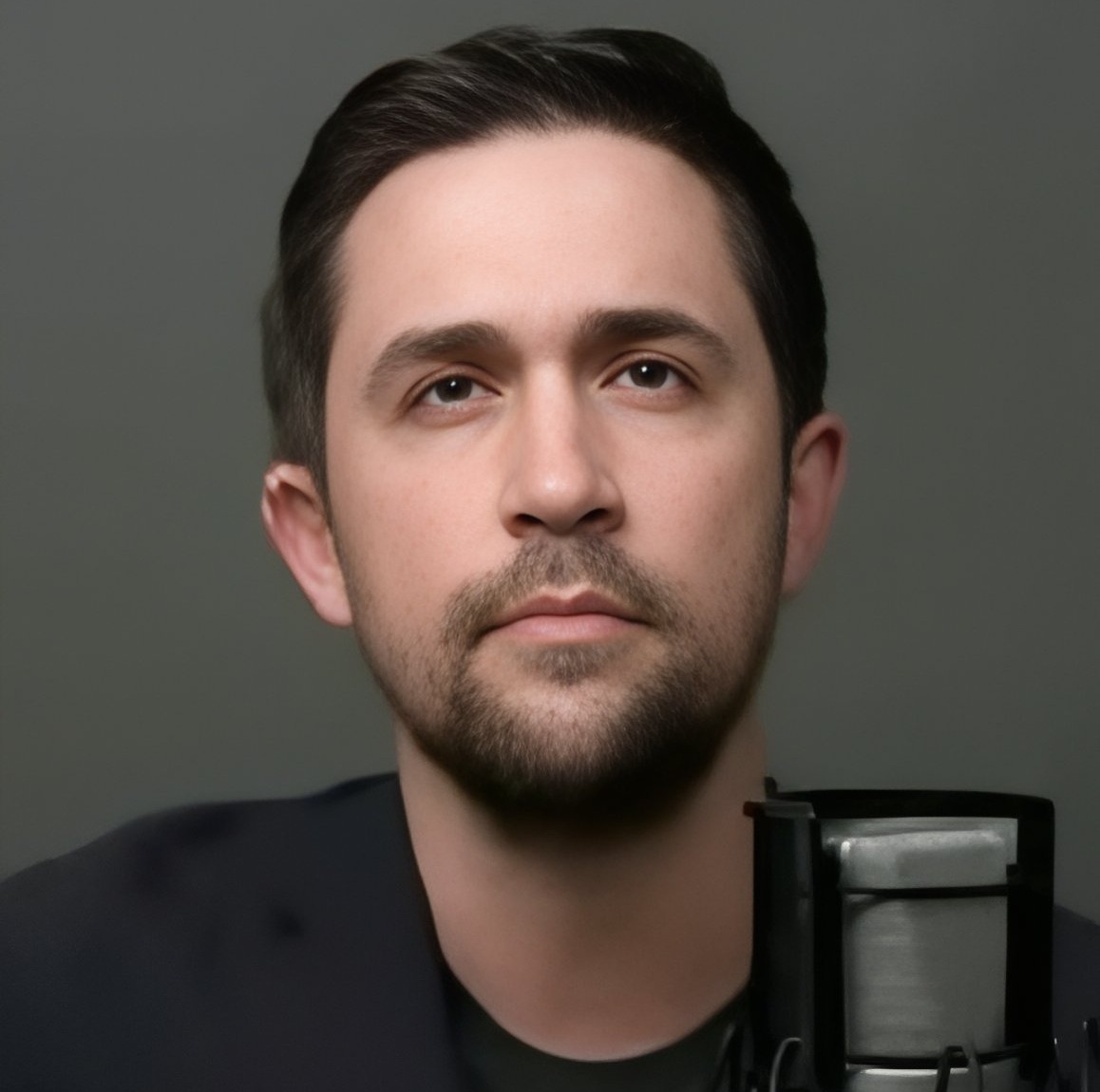
Academic Freedom: Man with dark brown hair, full beard and mustache in collarless black shirt with solemn expression

WIKIMEDIA/CC BY 3.0

Christopher Rufo

As detailed in the report, state legislators introduced 99 academic gag orders during legislative sessions in 2021, 2022 and 2023. All of the 10 gag orders signed into law were done so by Republican governors. These bills assert that teaching about structural racism, gender identity or unvarnished accounts of American history harm students.

These gag orders are widely known as “divisive concept” or “anti-CRT” bills. CRT is an acronym for critical race theory, an academic framework that holds racism as deeply embedded in America’s legal and political systems. The partisan activists, such as Christopher Rufo, have used this term to generate a “moral panic” as part of a political response to the 2020 Black Lives Matter protests.

FLORIDA’S “STOP WOKE ACT”

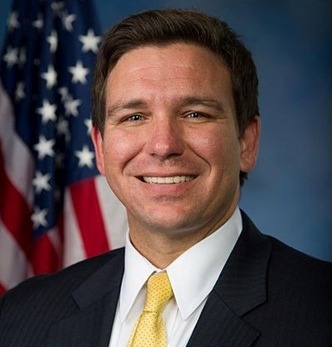
Academic freedom: Man with dark brown hair on black suit, white shirt and gold tie with part of USA flag in background

COURTESY OF DOS.FL.GOV

Florida Gov. Ron DeSantis

For example, in April 2022, Florida Gov. Ron DeSantis signed House Bill 7, the “Stop Woke Act.” The law defines a “divisive concept” as any of eight vague claims. They include claims that “Such virtues as merit, excellence, hard work, fairness, neutrality, objectivity, and racial colorblindness are racist or sexist.”

U.S. District Judge Mark Walker described this law as “positively dystopian.” He noted that the government’s own lawyers admitted that the law would likely make any classroom discussion concerning the merits of affirmative action illegal. The vague wording of these gag orders has a chilling effect, leaving many faculty unsure about what they can and cannot legally discuss in the classroom.

2. BANS ON DEI PROGRAMS

The expansion of diversity, equity and inclusion – or DEI – services on campus was a major outcome of the racial justice protests in 2020. By 2023, however, the legislative backlash was in full swing. Forty bills restricting DEI efforts were introduced during the 2023 legislative cycle, with seven signed into law.

For example, Texas’ Senate Bill 17 drew directly from model policy language developed by Rufo and published by the Manhattan Institute, a right-wing think tank. SB 17 banned diversity statements and considerations in hiring. It also restricted campus diversity training and defunded campus DEI offices at Texas’ public universities.

As detailed in the AAUP white paper, only a handful of people testified in favor of SB 17, and almost all had stated or unstated affiliations with right-wing think tanks. In contrast, more than a hundred educators and citizens testified, or registered to testify, against the bill. Since its passage, Texas public universities have seen the closing of DEI programs and reduced campus services for students from minority populations. For example, after the Legislature accused the University of Texas-Austin of violating SB 17, the school was forced to shut down its DEI office. This involved laying off 40 employees.

3. WEAKENING TENURE

Tenure was developed to shield faculty members from external political pressure. The protections of tenure make it possible for faculty to teach, research and speak publicly without fear of losing their jobs because their speech angers those in power.

FLORIDA AND TEXAS BILLS PASSED

As detailed in the report, however, during the 2021, 2022 and 2023 legislative sessions, 20 bills were introduced, with two bills weakening tenure protections signed into law in Florida and another in Texas.

In Florida, for example, SB 7044 created a system of post-tenure review, empowering administrators to review tenured faculty every five years. The law further empowers administrators to dismiss those whose performance is deemed unsatisfactory. The law also requires that faculty post course content in a public and searchable database.

The AAUP criticized the law, noting that SB 7044 has “substantially weakened tenure in the Florida State University System and, if fully implemented as written,” would effectively “eliminate tenure protections.” Now even tenured faculty have reason to fear that what they teach might be construed as a “divisive concept,” as CRT, or as promoting DEI.

4. MANDATING CONTENT

Lawmakers in several states have also passed legislation mandating viewpoint diversity, establishing new academic programs and centers to teach conservative content and shifting curricular decision-making away from the faculty.

FLORIDA’S BILL

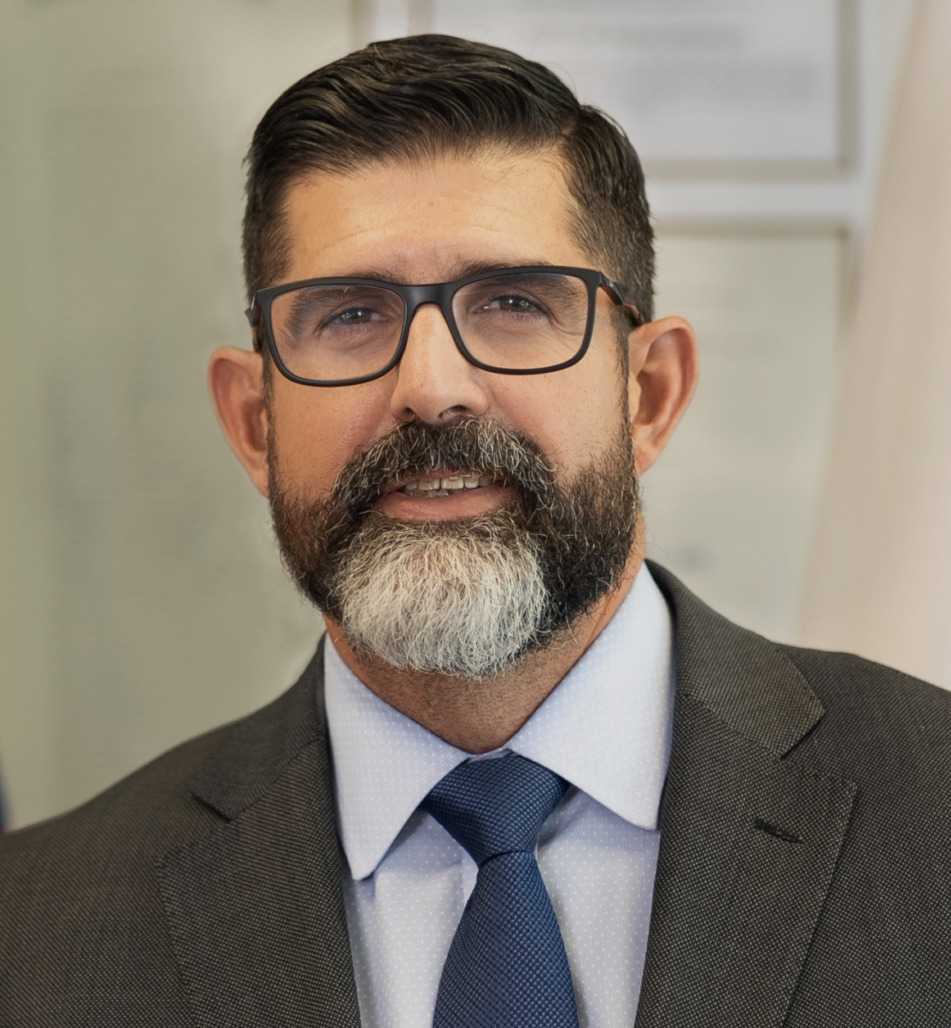
Academic freedom: Man with black hair and greying black beard and mustache on brown suit with blue shirt and tie stands between USA flag and Florida flag

COURTESY OF FLDOE.ORG

Manny Diaz, Florida education commissioner

For example, Florida’s Senate Bill 266 expanded the Hamilton Center for Classical and Civic Education at the University of Florida, without faculty input or oversight. The original proposal for the Hamilton Center stated that the center’s goal was to advance “a conservative agenda” within the curriculum.

SB 266 also gave the governing boards overseeing the university and college systems the authority to decide which classes count toward the core curriculum. This power was exercised in November 2023 after Manny Diaz, the education commissioner in Florida, requested that the boards remove an introduction to sociology course. He stated on social media that the discipline had been “hijacked by left-wing activists and no longer serves its intended purpose as a general knowledge course for students.”

5. WEAKENING ACCREDITATION

The accreditation process is an obscure area of academic governance whereby colleges and universities regularly subject themselves to external peer review. Nonprofit accrediting agencies conduct these institutional performance reviews.

As detailed in the report, during the 2021-23 legislative cycles, six bills were introduced – three of them were passed into law – weakening the accreditation process, thereby making it easier for political interests to shape university policy.

NORTH CAROLINA ALLOWS COLLEGES TO “SHOP” FOR AN 

ACCREDITING AGENCY

For example, University of North Carolina-Chapel Hill’s accreditor, the Southern Association of Colleges and Schools Commission on Colleges, warned the school’s board of trustees that establishing the School of Civic Life and Leadership without faculty oversight and consultation raised serious concerns about institutional independence. The Legislature responded with Senate Bill 680, which would require that North Carolina public universities choose a different accrediting agency each accreditation cycle. Eventually passed as part of the omnibus House Bill 8, this policy allows schools to “shop” for an accrediting agency less likely to object to such political interference in the curriculum.

These five overlapping and reinforcing attacks on academic freedom and institutional autonomy threaten to radically transform public higher education in ways that serve the partisan interests of those in power.

***

Isaac Kamola is an associate professor of political science at Trinity College, Hartford, CT. His research examines the political economy of higher education, critical globalization studies, and African anticolonial theory. His scholarly work has appeared in International Studies Quarterly, International Political Sociology, British Journal of Politics and International Relations, Millennium, Journal of Academic Freedom, African Identities, Journal of Higher Education in Africa, Third World Quarterly, Alternatives, Cultural Politics, Polygraph, and Transitions as well as numerous edited volumes.

Isaac is the creator of Faculty First Responders, a program that monitors right-wing attacks on academics and provides resources to help faculty members and administrators respond to manufactured outrage. And he currently serves as the director of the Center for the Defense of Academic Freedom at the American Association of University Professors (AAUP).

This article is republished from The Conversation under a Creative Commons license. 

The Conversation is a nonprofit, independent news organization dedicated to unlocking the knowledge of experts for the public good. They publish trustworthy and informative articles written by academic experts for the general public and edited by our team of journalists.