This blog on Texas education contains posts on higher education, as well as preK-12 policy accountability, testing, bilingual education, immigration, school finance, race, class, and gender issues at both the state and national level. It also represents my digital footprint, of life and career, as a community-engaged scholar in Texas.
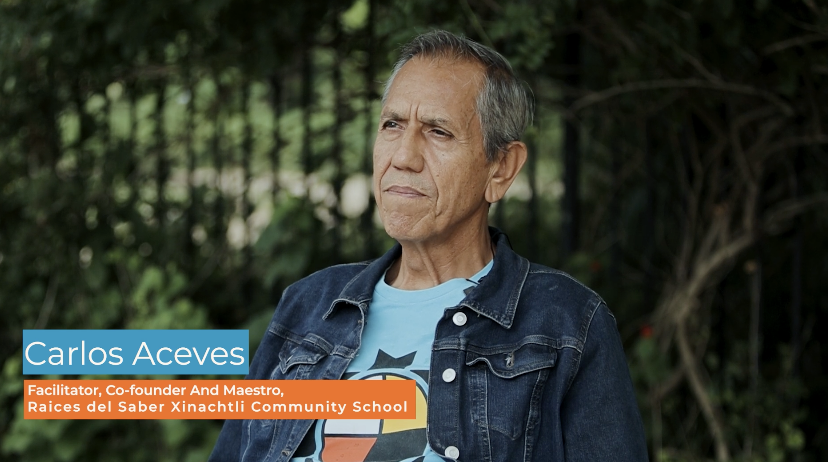
Xinachtli means "seed" in Nahuatl and as described in this wonderful video as a way of thinking "outside the box" of tradition, mainstream schooling in the U.S. Maestro Carlos Aceves shares, an Indigenous elementary school teacher his view that children do get a lot of information in schools, but they're objectified through processes and their corollary logics like high-stakes testing, tracking, drill and kill curriculum and the like, that reduce their sense of who they are and accordingly, their possibilities.
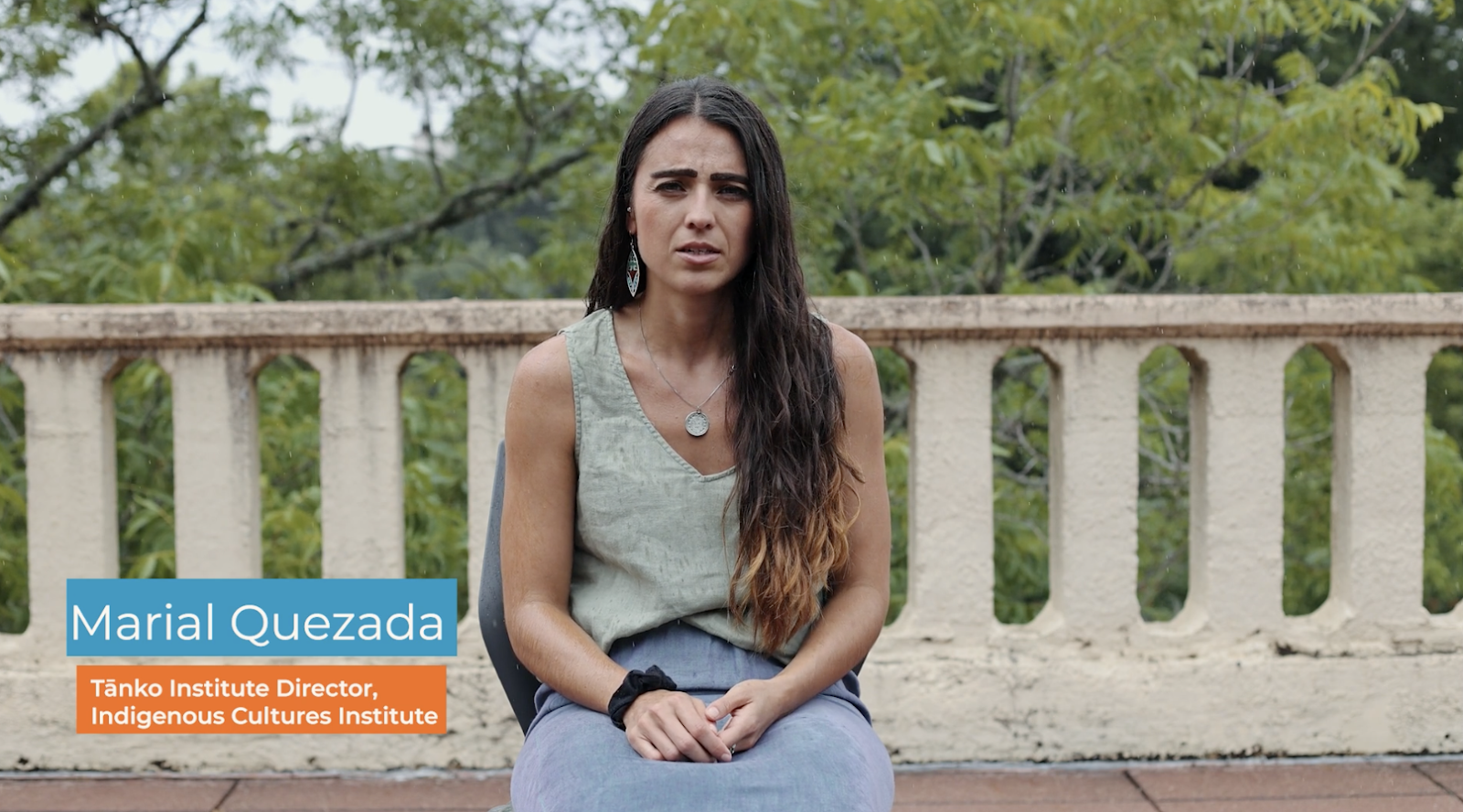
Indigenous Cultures Institute (ICI) Board of Elders Dr. Mario Garza and Maria Rocha and Director Marial Quezada, also a doctoral student in Cultural Studies at UT-Austin are featured in this film as the ICI regularly invites Maestro Aceves, who lives in El Paso, to provide instruction at the ICI's annual Tanko Institute both of which are in San Marcos, Texas. Our school, Academia Cuauhtli is partnered with the ICI with our teachers attending the Tanko Institute and a number engaged in Indigenous pedagogy. I see some of them in the video. 😊 Academia Cuauhtli students also annually attend the ICI's Sacred Springs powwow.
I recently corresponded with Maestro Aceves when I received one of his emails that expressed:
Restore the ceremonies, renew the covenants, return to the sacred places, and follow the story in the Sky.”
As Natural Peoples we look to Creation for guidance. We were given ceremonies as textbooks, we made agreements with Natural Powers so that we can continue surviving as a people, we travel to special places of Creation on Earth to make offerings in appreciation of Life, and we learn the cycles above as patterns for our Natural Way of Life.
"Ceremonies as textbooks." These words touch me deeply. There is such beauty in his words that encourages us to think of the natural world differently.
For Texans, this should be an urgent matter as according to a recent Instagram post by Progress Texas, our state is running out of water. Newsweek also has a recent story on this last week on September 11. It's shocking to learn from Agriculture Commissioner Sid Miller,"We lose about a farm a week in Texas, but it's 700 years before we run out of land, the limiting factor is water." Okay... That's not a small "but" to me. In any case, you get the point.
What should also concern us is that recent statistics show that people from around the country are flocking to Texas because it's an affordable state. Long term, this places stress on our state's water supply that is additionally jeopardized by fracking.
To combat all of this, we absolutely do need to address policy related to natural resources, but we also need a different kind of consciousness and permission structure where we are not estranged from the natural world but rather see ourselves as a part of it, even caught up with it as a form of destiny. If we change, the world changes. It's not either-or, but both-and. After all, it doesn't make sense to change policies when the thinking that got us to where we are remains in place.
This is what we are collectively about, Academia Cuauhtli, the ICI, the Tanko Institute, and so many, if not all of us, in the Ethnic Studies Movement. Education is always about changing consciousness. Unfortunately, mainstream schooling with its colonial logics is often about reducing children to a number on a piece of paper—and not just the children, but their teachers and schools. This testing regime has been so terribly harmful. What is there not to love about spending time in nature and taking time to learn, not just from teachers, but from the natural world itself?
For a paper I'm writing that is focused on our work at Academia Cuauhtli where I cite Maestro Aceves, I asked him how he identifies and this is what he shared,
Carlos Aceves Yolohuitzcalotl
Cihuacoatl for Kalpulli Tlalteca People of the Earth Community.
bilingual elementary school teacher
I have seen Maestro Aceves in action. He is the consummate Indigenous bilingual elementary school teacher. I would love to be in his elementary school classroom every single day, were it possible.
Thank you, Maestro Aceves and thank you ICI for our partnership that from our own Xinachtli moment has grown and blossomed exquisitely over the years.
Thoughtful political analysis below by Dr. Ed Rincón on the Latina/o vote from his Culture of Research blog. The short of it is greater outreach in English to Latina females who generally support Biden, especially the more educated. Note: This analysis is consistent with Voto Latino headed up by CEO María Teresa Kumar, another important read.
I agree with Dr. Rincón that fracking is a major health issue for our community, but needs to be languaged correctly. That is, while the industry has provided significant employment opportunities, "The reality, however, is that the oil and gas industry had already lost 118,000 jobs during the pandemic as demand and prices for oil fell dramatically...[and] it would take more than 16 years to recover the energy jobs lost since February." The jobs that will get created as a consequence of renewable energy is thusly the way to go.
The mishandling of the pandemic and the disparate effects of COVID on Latina/os deserves greater focus—so yes, an "immediate realignment" is needed, in general.
In a recent New York Times story,[i] writer Jennifer Medina discusses the curious support of Donald Trump by Hispanic voters, estimated at 30 percent by recent polls. Who are these “Latino Trumpers” and how do they justify their support for Trump given the numerous racists comments made by Trump about Latinos and immigrants in addition to the aversive policies targeted to Latinos?
In reviewing general polling results of Latino voters, Medina first discusses some demographic differences among Latino voters. For example, there is a large gender gap in preferences for the Biden vs. Trump: Hispanic males (35%) are more likely to support Trump than Hispanic females (23%), while Hispanic females (67%) are more likely to support Biden than Hispanic males (59%).[ii] This gender gap is partially explained by the higher tendency of Hispanic women to be college educated, while Hispanic men tend be over-represented in jobs related to law enforcement, such as the military, Border Patrol, and Immigration and Customs Enforcement. In addition, Trump reportedly shows more support from “American born” Latinos who are under 45 years old, non-college graduates, and evangelicals. In Florida, support is reportedly stronger among Cubans and Venezuelans who oppose communism.
To better understand the psychological profile of Latino male Trumpers, Medina analyzes the results of a research study of Mexican male Trumpers that captured their perceptions of Donald Trump. Little information was provided about the study methodology, so proceed with caution in generalizing her observations to other Latinos. Nonetheless, the writer points to the concept of “machismo” to describe Trump’s appeal to Hispanic male Trumpers – a concept that is often used in reference to Hispanic males who are dominant, over-bearing, and indifferent to the needs of others. This rationale for this allure to the “macho” image projected by Trump is described by the following phrases articulated by the Hispanic males who participated in this research study. To Hispanic male Trumpers, Donald Trump:
·Is forceful, wealthy and unapologetic
·Is a symbol of economic success
·Is confident of his own opinions
·Disdain for face masks is a sign of power
·Relies on his own research as a basis for denying medical guidance by experts
·Is committed to the military
In addition, Hispanic male Trumpers enjoy being the subject of curiosity for supporting Trump and willing to tolerate criticism for supporting Trump by friends and family members. Although the imagery associated with Joe Biden was minimal, these Trumpers described Biden as “weak” and deserving of the title “Basement Biden.” Thus, Hispanic male Trumpers appear to share the same beliefs and values as Donald Trump, and may not be deserving of attention by the Biden campaign.
Biden’s Campaign is Urged to Step it Up in Texas
Medina’s analysis further underscores several observations by industry experts that the Biden campaign has not invested enough financial resources to engage Hispanics, especially in Texas, where the Biden vs. Trump competition is close. In a recent news article,[iii] for example, both Julian Castro and Beto O’Rourke reinforced the message to the Biden campaign that they need to step up their game in Texas during the remaining days before the election on November 3rd. According to our recent analysis of Latino support for Biden in battleground states, [iv] about two-thirds of Latino voters voiced support for Biden while only one-third supported Trump. With less than 10 days until the election, a new poll by The Dallas Morning News/UT-Tyler of Texas likely voters showed strong continuing support by Latino for Biden (67%) while the support for Trump (20%) has declined --- which may be one reason that among all Texas likely voters, support for Biden (46%) is now slightly higher than Trump (44%). It is conceivable that a more aggressive investment of the Biden campaign towards increasing Latino voter turnout could prove to be a significant factor in turning the state blue.
Strategy Going Forward
Based on Medina’s recent review of the Latino voter profile and my own past experience in conducting surveys of U.S. Latinos, it seems that the Biden campaign needs to make some immediate changes in its Texas Latino voter strategy in the remaining weeks of the election. Following are some suggested ideas.
Delivery Vehicle for Campaign Messaging: First, after months of criticism to step up his game, the Biden campaign reportedly released a series of Spanish-language ads to engage Hispanics. However, a Spanish-language strategy is a tactical mistake if one is trying to reach native-born Hispanics, especially in Texas. Our past 45 years of experience in analyzing the media habits of U.S. Hispanics confirms that a majority of native-born Hispanics utilize English-language media for their news and information, while Spanish-language media is more effective in capturing immigrant audiences. Pew Research Center reports also confirm this trend. [v] So the delivery vehicle really needs to change as follows: 75 percent focus on English-language media and 25 percent on Spanish-language media.
Demographic Target: The most desirable demographic target for Biden should be Hispanic women. Why? Because Biden already enjoys great standing among Hispanic women, especially the college-educated, and they would be great ambassadors for convincing other Hispanics who are undecided or independent to support the Biden ticket. Moreover, Hispanic women are more likely than Hispanic males to be college graduates, politically active, and entrepreneurs. Hispanic males who share similar attributes as these Hispanic women would also be included as a target segment. However, since Latino male Trumpers share many of the same values and attributes as Donald Trump, it may be a waste of resources to change their fascination with Donald Trump at this point in time.
Message Strategy: Hispanic women should be reminded about the programs and policies advocated by Joe Biden that have benefited Hispanics as well as proposed future programs, especially as it concerns COVID-19, food insecurity, jobs, education, childcare, healthcare, a women’s right to choose, and business development.
Although climate and environmental issues have not been reported as major concerns in recent polls of Hispanic voters, the most recent Biden vs. Trump debate focused on Biden’s statements about limiting fracking because “the oil industry pollutes, significantly.” Fracking is a technological innovation that has brought fortunes to the economies of the oil and gas industry, especially in states like Texas and Pennsylvania. When Biden stated that he would not eliminate fracking but transition over time to other types of cleaner and renewable energy, President Trump and GOP members charged that Biden was trying to “destroy the oil and gas industry,” “kill many jobs,” “Democrats are coming hard for Texas’ oil and gas industry,” and “he just killed paychecks earned by hardworking families in Texas.” The reality, however, is that the oil and gas industry had already lost 118,000 jobs during the pandemic as demand and prices for oil fell dramatically. [vi] According to an industry research firm, it would take more than 16 years to recover the energy jobs lost since February. [vii] As underscored by Joe Biden, renewable energy is the best solution for the future, has surged sharply with the downturn in the oil and gas market, creating numerous jobs, and providing a cleaner environment for families.
The fracking debate should be a top concern for Texas Hispanic voters. While it has provided jobs and a significant boost to the Texas economy, fracking comes at a heavy cost to the environment and the health of Hispanics and other poor families who live in close proximity to these fracking sites. The following map shows the distribution of the 415,354 oil and gas facilities in Texas as of 2017 (black points) and the distribution of the state’s schools and day care facilities (lighter points). [viii]
The web site authors define a threat radius as the area within ½ mile of active oil and gas wells, compressors and processors. Persons who live within a threat radius have cause for concern about potential health impacts from oil and gas pollution. An estimated 782,627 students live within a threat radius. This pollution includes dangerous chemicals that have been associated with various medical illnesses to residents living in close proximity to these sites, including the following:
·Congenital heart defects
·Cancer
·Anemia
·Brain damage
·Respiratory tract infections
·Oral clefts and neural tube defects
In Texas, the oil and gas facilities are concentrated in highly populated Hispanic and lower income communities. In addition to a higher prevalence of these medical illnesses, the fracking process utilizes large amounts of water that is draining the water resources for many of these communities, some which are also experiencing drought conditions.
The conclusion for messaging seems clear: Joe Biden should be honored, not criticized, for taking the bold step to protect our environment and the health of our residents from the toxic pollutions that are generated by fracking sites. Hispanic campaign messaging should include information about the consequences of fracking to their families’ health and environments – a message that may resonate more strongly with Hispanic women but may also capture the attention of Hispanic males who are exposed to these toxic work environments.
A Final Thought: The profile of Hispanic male Trumpers describes a person that is fascinated with power and an indifference to factual information about Trump’s achievements. As a long shot strategy, it may be useful to include messaging for Hispanic male Trumpers to clarify the following misconceptions that were previously voiced about Donald Trump:
·Trump is a successful businessman. If Trump is so successful, why is he over $1 billion in debt, and why has he filed for bankruptcy several times in past years? [ix]
·By not using a mask, Trump shows that he has power. Rather than symbolizing power, not using a mask reveals ignorance of medical advice that is known to save lives. Hispanics, in particular, are experiencing more COVID-19 illnesses and deaths than other groups in the U.S. This is not power.
·Trump does his own research to reach his own conclusions. Trump has no medical training or knowledge and often ignores the scientific advice of experts, especially on health issues. An example of his ignorance was his advice for using Lysol disinfectant to treat the coronavirus.
·Trump respects the military. On the contrary, Trump has been disrespectful of war heroes like the late Sen. John McCain and called soldiers who died in European war “suckers and losers.” He avoided military service due to a supposed bone spur medical diagnosis arranged by his father. Trump often disparages our military leaders but idolizes world dictators who have historically oppressed their people.
·Trump shows confidence in his opinions, but his opinions are usually based on lies that contradict the scientific facts. If science does not matter, do you also ignore the advice of doctors that prescribe medications and perform surgeries --- both which are based on the results of scientific research?
·Trump is not a racist. If Trump is not a racist, why did his administration separate Hispanic children from their families? There are now 545 Hispanic children in U.S. custody who were separated by the Trump administration from their parents, and their parents cannot be found.
In summary, a successful strategy to turn Texas blue during this election may depend on the ability of the Biden campaign to accelerate their targeting of Hispanic voters, especially women, with the right messaging using English-language media. Let’s hope that Biden’s campaign manager is listening.
[iv] Rincon, E.T. Polls provide conflicting views of Hispanic support for Biden vs. Trump. The Culture of Research Blog, Accessed at https://thecultureofresearch.blogspot.com/2020/09/polls-provide-conflicting-views-of.html
Someday, the truth of the devastation of fracking shall be fully revealed—and sooner rather than later, I hope. All Texans and all states impacted by fracking, drought, water scarcity and frankly, by climate change—which means every state—need to read this piece. Since we know that water is life, then the deeper question of whether a resource so precious should even be owned. Never mind that we've already been socialized accordingly, and much to the satisfaction of the profiteers. A movie that features famous movie actor, Gael García Bernal titled, "Aún la lluvia," or in English, "Even the Rain," raises this very question. Check out the trailer and consider seeing this very impactful film either in English or Spanish to consider how things should be, rather than how they are. -Angela Valenzuela
Aquifer water is pumped into an irrigation canal at a Williams property this month near Fort Stockton, Texas.
By
Christopher M. Matthews | Photographs by Loren Elliott for The Wall Street Journal
FORT STOCKTON, Texas—Wildcatter Clayton Williams Jr. made his first fortune in oil. He aims to make another off a treasure buried beneath his family’s West Texas land. It’s a massive trove of water.
The plan is pitting neighbor against neighbor and rekindling a debate over who should control fresh water in a bone-dry region. Many of the region’s farmers and ranchers depend on income from selling their water to oil producers. Desert towns like Fort Stockton, near the Williams farm, fear their water sources will dry up.
“I don’t know why the hell you would want to pipe water out of the desert,” said Kirby Warnock, 67, whose family has owned a ranch near the Williams farm for nearly a century. “It’s like space shuttle astronauts selling their oxygen. It boggles my mind.”
Another influential Texas oil family is suing the local water regulator, hoping to limit how much the Williamses can pump. The family investment office of the Cockrells, for whom the University of Texas engineering school is named, is worried over-pumping could deplete water wells on their farm and put their 68,000 pecan trees at risk.
For the Williamses, the issue is straightforward: Under Texas law, they can pump water from under their land and use it for whatever commercial purpose they choose, with few limits. Their farm’s main product is alfalfa, used to make hay, which is sold to customers as far away as China.
“If we sell alfalfa to Saudi Arabia or China, it’s basically us exporting water there, so what’s the difference?” said Jeff Williams, 45, who runs the family farm for his father, in an interview last year. He didn’t respond to fresh inquiries this month.
Mark Tisdale, a lawyer for the family company, Clayton WilliamsCo s., said the area has more than enough water to support the Williamses’ plans.
Humans have fought over water for much of recorded history, especially in the American West, where it is scarce in many places and control of it can yield fortunes. The fight here comes as competition is heating up for water around the world, in dry regions and wet ones. Surging populations, rising demand for industrial-scale farming and manufacturing, and hotter temperatures are putting new stress on the constrained resource.
There has never been a better time to sell West Texas water, thanks to the fracking boom. Shale companies use large volumes in hydraulic fracturing, blasting underground rock with water, sand and chemicals to unlock oil and gas.
Frackers in the region pay an average 50 to 75 cents for a barrel of water, according to Bluefield Research, a water advisory firm. That amounts to more than $200,000 a well. Supplying water for fracking in the Permian is a roughly $1.2 billion industry annually, and including transportation and other costs, water spending for fracking there will surge to as much as $54 billion over the next decade, the firm said.
The Williams family has so far sold limited amounts of water for fracking, says Mr. Tisdale. The family wants to build a pipeline to sell water outside Pecos County—a process called “exporting”—to oil producers and others. It obtained a permit in 2017, following a decade of litigation that resulted in a settlement with the Middle Pecos Groundwater Conservation District, which regulates aquifer water levels.
The Cockrell family sued the groundwater district last July in the District Court of Pecos County, calling the settlement with the Williams “a sham” and arguing the family should have been allowed to weigh in on the Williamses’ plans.
Ernest Cockrell founded Cockrell Oil Corp. in 1901, and the family manages substantial oil-and-gas and real-estate assets. “We are a big believer in private property rights, but it’s also a shared resource and it’s a high-plains desert,” said Robert Hatcher, 56, who runs the family office, Cockrell Interests LLC.
The Cockrells are worried the Williamses, if they export water, will pump year-round, limiting the aquifer’s winter recharge. The lawsuit has been temporarily stayed as the parties attempt to negotiate how much of the aquifer can be drained at any given time before pumping must be halted.
‘Water is for fighting’
“What’s the old saying, ‘whiskey is for drinking, water is for fighting,’ ” said Jeff Williams. “My father always understood the value of water.”
SHARE YOUR THOUGHTS
Who should be able to benefit from underground water reserves? Join the conversation below.
The Williamses moved to Fort Stockton in the 19th century, establishing themselves as farmers and ranchers before striking it rich in oil in the 20th century. Tensions in Fort Stockton still run high decades after Clayton Williams Sr. and others began drilling water wells near town, pumping millions of gallons a day for industrial-scale farming in the 1950s.
Following the pumping, many of the farms on the east side of town lost their water supply, destroying livelihoods. The town’s Comanche Springs, which fed a swimming pool that hosted its annual Water Carnival, dried up. Today, the event is hosted at a chlorinated pool.
Water Strain
Water in Texas has been under stress for decades but is experiencing new demands from heightened oil activity in shale basins, including the Permian and Eagle Ford.
OKLAHOMA
NEW MEXICO
Dallas
PERMIAN
TEXAS
Fort Stockton
Austin
Baseline
water stress*
Houston
San Antonio
Extremely high
High
EAGLE FORD
Medium-high
Low-medium
Low
Arid/low water use
*When demand exceeds available water
Source: World Resources Institute
The local water district concluded the depletion was due to the pumping and sued Clayton Williams Sr. in 1951 on behalf of farmers who had lost their water, seeking to more stringently regulate pumping. The El Paso Court of Appeals sided with the Williamses and enshrined an unusual water law. Unlike many states, Texas follows the rule of capture, a common-law tenet dating to Henry IV that holds anything below a property belongs to its owner.
Clayton Williams Sr. would sell the farm years later, and his son spent decades buying it back. Known by his friends as “Claytie,” Clayton Williams Jr., now 87, struck it rich as an oilman, eventually selling his company to Noble EnergyInc. for $2.7 billion in 2017; he declined to be interviewed.
0:00 / 0:00
How the Permian Basin Became North America’s Hottest Oilfield
The U.S. has more than doubled its crude output over the last decade. Much of the growth is due to the Permian Basin of West Texas and New Mexico. WSJ traces the hotspot of North America’s crude oil boom, with a look at challenges that producers in the region face.
He is perhaps best-known as a Texas Republican gubernatorial nominee who lost to Democrat Ann Richards in 1990 after an acrimonious campaign still legendary in Texas—one of his campaign promises was to introduce first-time drug offenders to the “joys of bustin’ rocks.”
By the 1980s, Mr. Williams had amassed about 18,000 acres above a number of aquifers, deep deposits trapped in a natural underground dam some scientists believe an asteroid impact formed millions of years ago. The aquifers are valuable because they fill every winter from nearby mountains. The Williamses are Texas’ largest private water owners, some hydrogeologists estimate.
For years, Fort Stockton opposed the family’s plan to export water from the county. It backs the plan now, and in 2017, the city of about 8,000 reached its own deal to sell up to 390,000 barrels a day for around 10 cents a barrel to a company supplying the oil-and-gas industry, a move some residents criticize.
“Since becoming mayor, I don’t go out much anymore,” said Fort Stockton Mayor Chris Alexander. “I can’t go anywhere without someone coming up to me complain about water.”
Selling groundwater to oil companies is a lifeline for ranchers and farmers who struggle in a region that often gets less than 10 inches of annual rain. When an oil company leases land to drill, the contract often contains requirements it buy water for operations from the landowner.
“It basically saved them,” said Ty Edwards, general manager of the Middle Pecos water district. “Most of the farmers were bankrupt or about to be bankrupt.”
That growing demand has created friction with landowners. Oil producer Jagged Peak Energy Inc. has been drilling on Bob Hayter’s ranch in northern Pecos County, buying water from him for years. Around 2017, it bought a strip of land in the middle of his ranch about 150 yards wide and more than a mile long, he said.
“I thought I owned it, but I didn’t,” said Mr. Hayter, 69. “They only bought it for one thing, and that’s the water.”
The company drilled four water wells there for fracking, according to the water district. Mr. Hayter said they dried up a well on his property. Jagged Peak settled with the district in May for improperly drilling wells and paid it $25,000. The company disputes it drained Mr. Hayter’s well but has drilled him a new one to make amends.
David Eckelberger, a Jagged Peak vice president, said the company “is always trying to put its best foot forward and have good landowner relations.”
Water for oil
Clayton Williams Jr.’s original plan, according to his family and permit applications, was to sell water for municipal use to the cities of Odessa and Midland, the site of his primary residence, about 100 miles northeast of Fort Stockton. The farm has historical permits to use water for agricultural purposes and in 2009 applied for a license to export large amounts of water.
The Middle Pecos Groundwater Conservation District initially refused to consider the application, then rejected it in 2011. The Williams family sued the regulator in federal district court in Texas in 2010 alleging their rights were violated. In separate litigation, it also appealed the regulator’s 2011 decision in District Court of Pecos County.
Groundwater districts are primarily charged with permitting new wells and setting limits on how much water can be pumped. The Williamses’ core argument was that the district could limit only pumping, not what to do with the water.
The family lobbied extensively on the issue, tapping its sway in the Austin legislature. In 2016, Republican State Representative Lyle Larson, a family friend, held a hearing in Fort Stockton to examine whether the water districts were preventing growth in cities by blocking water exports.
Rep. Larson, who chairs the House Natural Resources Committee, in a June interview said the state, not local officials, needed to set water regulation to ensure Texas’ rapid population growth. “We have social scientist-wannabes in these water districts,” he said, “that are making decisions that are not their decision to make.”
In March 2017, Rep. Larson proposed legislation to review whether the Middle Pecos district should be disbanded. Within months, the district and the Williamses settled out of court. Under the terms, the farm can’t pump more water than it was permitted to use for crops but can export about 60% of its permitted historical volumes, around 9 billion gallons a year. The Williamses agreed to pay the district $404,000, drop all lawsuits and stop lobbying on related issues for several years.
The Williamses may have missed their window to send water to Midland and Odessa, which have found alternative sources, said Michael Thornhill, a hydrogeologist who works for the family. While their long-term hope is still to sell to the cities, he said, they are now trying to sell to drillers.
“What’s the highest and best use for our water?” said Jeff Williams. “It’s a subjective question. Personally I think it’s the municipal use, but I will sell to oil and gas in the meantime.”
The family has spoken to some of the area’s largest oil producers, but hasn’t signed any supply contracts, said Mr. Tisdale, the family-company lawyer. “It’s a function of what does it cost to get water to somebody,” he said.
The family farm has been relatively far from some of the hottest drilling areas, adding significant transportation cost. But drilling picked up this year in northern Pecos County, about 30 miles away.
“Am I worried about them pulling out too much water? Sure I am,” said Mr. Hayter, a neighboring rancher, of the oil producers. “Money and water, how volatile can you get it, especially in West Texas?”