Translate

Showing posts with label Anthropocene. Show all posts

Sunday, November 29, 2020

James Lovelock at 100: the Gaia saga continues by Tim Radford in Nature.com

It's always neat to learn from people with out-of-the-box thinking. Since this piece was published last year, scientist James Lovelock is now 101 years old. As addressed in this piece below, Lovelock advanced the "Gaia Hypothesis" in 1972 to make the case that others have also made, that the Earth is a living organism that is self-regulating. NB: "Gaia" is ancient Greek for Earth.

This is a central epistemological standpoint for Native peoples, that is, that Earth, Mother Earth, is a sentient, living organism (also read: The Earth is a Sentient Living Organism), a not-so-radical notion the pandemic has perhaps made clear. Little different from viruses and bacterias that help constitute the building blocks of life as we know it, we are all a part of Earth and the cosmos and our evolution as homo sapiens is entwined with Her, with Gaia, and the cosmos. What a profound thing to contemplate.

Lovelock is clearly a rock-star centenarian, geophysiologist. Although he has very interesting potential solutions to climate warming, I am skeptical about his optimism in Artificial Intelligence (AI), particularly cyborgs' expected capacity to avert humans' species extinction. I would much rather that we pay attention for once to our Indigenous elders who still have the wisdom and knowledge for humans' self-preservation.

For example, read this encouraging NPR piece out of California in the wake of the state's devastating fires: California Teaming Up With Native American Tribes To Prevent Wildfires.

These measures of teaming up with Native peoples must be taken up everywhere globally and not in a way that appropriates Native knowledge, but in a way that humbly and respectfully includes them, in partnership, as full-fledged partners to the solutions of an Earth that is severely out of balance.

Great food for thought on a Sunday morning.

-Angela Valenzuela

James Lovelock at 100: the Gaia saga continues
Tim Radford reassesses the independent scientist’s groundbreaking body of writing.

by Tim Radford | Nature.com


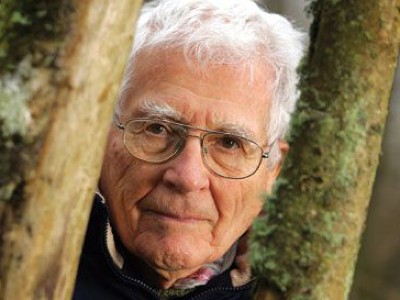
James Lovelock proposes that Earth will be saved by artificial intelligence.Credit: Tim Cuff/Alamy


James Lovelock will always be associated with one big idea: Gaia. The Oxford English Dictionary defines this as “the global ecosystem, understood to function in the manner of a vast self-regulating organism, in the context of which all living things collectively define and maintain the conditions conducive for life on earth”. It cites the independent scientist as the first to use the term (ancient Greek for Earth) in this way, in 1972.

On 26 July, Lovelock will be 100; his long career has sparkled with ideas. His first solo letter to Nature — on a new formula for the wax pencils used to mark Petri dishes — was published in 1945. But, unusually for a scientist, books are his medium of choice. He has written or co-authored around a dozen; the latest, Novacene, is published this month.

As that book’s preface notes, Lovelock’s nomination to the Royal Society in 1974 listed his work on “respiratory infections, air sterilisation, blood-clotting, the freezing of living cells, artificial insemination, gas chromatography and so on”. The “and so on” briefly referred to climate science, and to the possibility of extraterrestrial life. The story of Gaia began with a question posed by NASA scientists while Lovelock was a consultant at the Jet Propulsion Laboratory in Pasadena, California. That is, how could you tell if a planet such as Mars harboured life?

Final warning from a sceptical prophet


With microbiologist Lynn Margulis, Lovelock published a series of papers on the subject. In 1974, they developed a view of Earth’s atmosphere as “a component part of the biosphere rather than as a mere environment for life” (J. E. Lovelock and L. Margulis Tellus 26, 2–10; 1974). Earth’s atmosphere contains oxygen and methane — reactive gases, constantly renewed. That disequilibrium radiates an infrared signal, which Lovelock later described as an “unceasing song of life” that is “audible to anyone with a receiver, even from outside the Solar System”. Thus, the answer to NASA’s question was already written in the static Martian atmosphere, composed almost entirely of non-reactive carbon dioxide.

That was the beginning of a sustained and developing argument, in the face of sometimes dismissive criticism, that recast Earth as, in effect, a superorganism. Lovelock’s Gaia theory states that, for much of the past 3.8 billion years, a holistic feedback system has played out in the biosphere, with life forms regulating temperature and proportions of gases in the atmosphere to life’s advantage. Earth system science is now firmly established as a valuable intellectual framework for understanding the only planet known to harbour life, and increasingly vulnerable to the unthinking actions of one species. Colleagues and co-authors acknowledge that the argument continues, but endorse the importance of Lovelock and Margulis.
Entwined evolution

“The insight that the oceans and the atmosphere are thoroughly entwined with the living biosphere, and must be understood as a coupled system, has been completely vindicated,” says marine and atmospheric scientist Andrew Watson of the University of Exeter, UK. Lee Kump goes further. “Lovelock also showed us that Darwin had it only half right,” says Kump, a geoscientist at Pennsylvania State University in University Park. “Life evolves in response to environmental change, but the environment also evolves in response to biological change.” Despite severing formal links with universities decades ago, Lovelock has been showered with honorary degrees and awards from bodies as varied as NASA and the Geological Society of London.

The procession of engaging books began in 1979 with Gaia: A New Look at Life on Earth. Each volume made its case more forcefully than the last, exploring what was known first as the Gaia hypothesis, then simply as Gaia, and the hazards facing either the biosphere or humanity. The books include his endearing autobiography Homage to Gaia (2000), increasingly urgent warnings of climate devastation in The Revenge of Gaia (2006) and The Vanishing Face of Gaia (2009), and the less apocalyptic A Rough Ride to the Future (2014).
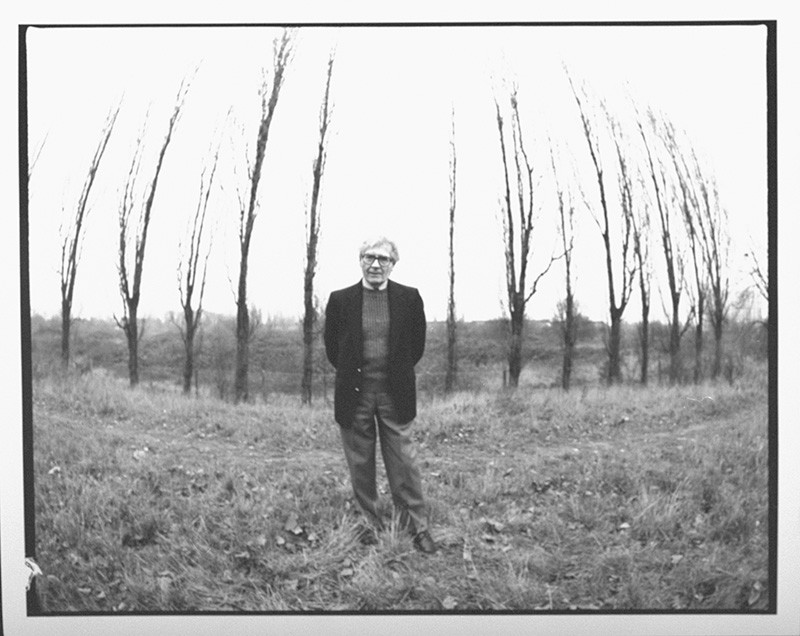

James Lovelock pictured in 1989.Credit: Terry Smith/The LIFE Images Collection/Getty

Novacene picks up from that note of hope, and showcases another big idea. Gaia might, after all, be saved — by the singularity. This artificial-intelligence takeover, which so alarms many doomsayers, will be our redemption. Lovelock argues that increasingly self-engineering cyborgs with massive intellectual prowess and a telepathically shared consciousness will recognize that they, like organisms, are prey to climate change. They will understand that the planetary thermostat, the control system, is Gaia herself; and, in tandem with her, they will save the sum of remaining living tissue and themselves. The planet will enter the Novacene epoch: Lovelock’s coinage for the successor to the informally named Anthropocene.

Lovelock welcomes this. “Whatever harm we have done to the Earth, we have, just in time, redeemed ourselves by acting simultaneously as parents and midwives to the cyborgs,” he writes. He takes the long view on this rescue, however. Climate change is a real threat to humanity, but Earth will inevitably be overtaken by a ‘big heat’ in a few billion years, as the Sun slowly waxes more fierce.

Although co-authored with journalist Bryan Appleyard, Novacene reads like undiluted Lovelock. From the start of his writing life — no matter how tortuous the narrative or complex the argument — Lovelock has written persuasively. In his debut, Gaia, he sidestepped evolution’s first and biggest obstacle (how to get from organic chemistry to a living, devouring, excreting, replicating organism) in two sentences that seem to me models of clarity and brevity: “Life was thus an almost utterly improbable event with almost infinite opportunities of happening. So it did.”

No place like home


In The Ages of Gaia (1988), a richer and more closely argued restatement, he answered the vexed question of how life contradicts the second law of thermodynamics. Life, he wrote, “has evolved with the Earth as a highly coupled system so as to favour survival. It is like a skilled accountant, never evading the payment of the required tax but also never missing a loophole.” This metaphoric brilliance is no rarity. A few pages on, he reminds us that Gaia is “a quarter as old as time itself. She is so old that her birth was in the region of time where ignorance is an ocean and the territory of knowledge is limited to small islands, whose possession gives a spurious sense of certainty.”

Lovelock’s Gaia theory is only one aspect of his nonconformism. His vigorous support for nuclear power annoys many environmentalists. Brought up as a Quaker, he registered as a conscientious objector in 1940, then changed his mind and prepared for military action in 1944 (the National Institute for Medical Research in London considered him more useful in the lab). Later, he became a consultant for the security services of Britain’s defence ministry. Among his inventions is an electron capture detector sensitive enough to identify vanishingly small traces of pollutants — such as the pesticides that spurred Rachel Carson to write the 1962 book Silent Spring — and chlorofluorocarbons, later implicated in damage to the ozone layer. In Novacene, he writes teasingly that he now sees himself as an engineer who values intuition above reason.

Lovelock to the last, he even has a kind word for the Anthropocene, marked by degradation of natural resources and the devastation of the wild things with which humanity evolved. He gives a “shout of joy, joy at the colossal expansion of our knowledge of the world and the cosmos”, and exults that the digital revolution ultimately “empowers evolution”. Is he right? Some of us might live to find out. In the meantime, if you want a sense of hyperintelligence in bipedal form, Novacene is a good place to start.

Tuesday, March 07, 2017

Getting Warmer: Historians on Climate Change and the Anthropocene

Fascinating article by Sadie Bergen published in Perspectives on History: The American Historical Association Annual Meeting. I learned a new word, too.  "Anthropocene" is a proposed epoch in relation to humans' impact on the Earth's geology, biosphere, or ecosystems.  Now I also know that there is a small, but growing subfield of HistoricalClimatology.  How necessary for historians to provide their own studied perspective of climate change.
-Angela

Getting Warmer: Historians on Climate Change and the Anthropocene

Sadie Bergen, February 2017 / Perspectives on History, Then and Now: The AHA Annual Meeting

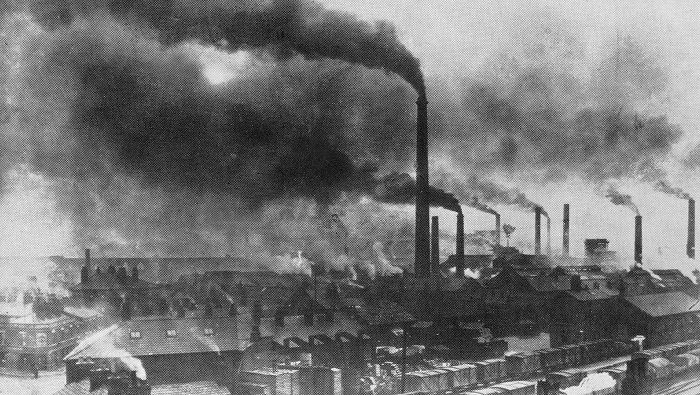
Some historians say the Anthropocene started during the Industrial Revolution (symbolized by 19th-century factories, like this one in Widnes, England). Wikimedia Commons


On January 18, the National Oceanic and Atmospheric Administration and NASAconfirmed 2016 as the hottest year on record. Just two days later, Donald Trump, who oncetweeted that global warming is a hoax created by China for its own benefit, was sworn into office as president of the United States. Among the first actions of his administration was to commit to eliminate President Obama’s “harmful and unnecessary” Climate Action Plan. But besides the uncertainty that lies ahead, climate change has a history, one that is wrapped up in the enormous impact humans have had on the environment. Scholars in the increasingly visible field of climate history have been thinking both about the dynamic interaction between humans and weather fluctuation historically, and about the contributions they can make to the public conversation on climate change.


At the January 6 AHA annual meeting session “New Directions in Environmental History: The Anthropocene in History,” a group of scientists and historians gathered to discuss the history of humanity’s long relationship with the earth’s land surface. Jed Kaplan, a paleo-ecologist and spatial modeler from the Institute of Earth Surface Dynamics at the University of Lausanne, started the conversation by pointing out one specific problem that historians could help solve—that “of defining the start of a geologic epoch.” Kaplan was referring to the Anthropocene, defined by the irreversible impact of human activity on the planet’s natural systems, and as of now only provisionally accepted by geologists.
The concept of the Anthropocene has recently gained popularity with scholars in the humanities as well as the natural and social sciences. It has also edged its way into the mainstream as a useful catchall for a host of threats—global warming, natural resource depletion, ocean acidification, and food and energy insecurity, to name a few—caused by the human forces of land use, colonization, urbanization, industrialization, and globalization. Kaplan is not the first to suggest that historians ought to be involved in defining the Anthropocene’s limits. While there is broad consensus that human activity has decisively altered the planet, the question of when exactly that alteration began remains up for debate.
This is precisely where historians can help—by adding layers of context to scientific evidence that suggest several possible starting points. Some agree with the hypothesis Kaplan presented: that if the Anthropocene is to be defined by human influence or agency on the biosphere, historians ought to consider the earliest example—the “first land use revolution” of fire among hunter-­gatherers that caused “large-scale transformation” across the European peninsula 21,000 years ago. Others contend that the start date ought to be the spread of agriculture in the early Bronze Age. In 2015, geographers Simon L. Lewis and Mark A. Maslin proposed the year 1610, citing the dip in atmospheric carbon dioxide prompted by the decimation of Native populations after 1492. Among the most supported suggestions is the onset of the Industrial Revolution in the 18th century, but there is also evidence to argue for the “Great Acceleration” of energy use, population growth, and greatly increased greenhouse gas emissions following World War II.
For historians, however, the Anthropocene is only one scale at which to study the history of the earth’s climate. Another is the hyper-local, as with responses to extreme weather events. Climate, while not deterministic of culture or behavior, is hugely important in the development of societies, and historically, societies have been “vulnerable to very small changes,” says Dagomar Degroot of Georgetown University. Whenever a state or community has been forced to adapt to an unstable climate, the particulars of that adaptation—and its success or failure—have depended on a host of factors, from geography and dependence on certain natural resources to economic arrangements, political priorities, and social structure.
Degroot gives the example of the Little Ice Age (1565–1720), during which the Dutch thrived while cultures reliant on agriculture suffered. This was in part because the Dutch economic system relied heavily on trade with other regions of the world and because the Dutch were able to turn to peat and wind, accessible alternative energy sources “that allowed them to exceed boundaries of the economies that surrounded them,” explains Degroot. He hopes that sharing evidence of resilience in response to climate change, as well as examples of failure, will help people think about ways of adapting to the planetary warming we are already “locked into.”
By focusing on the political, social, and economic history of climate change, historians can also help disseminate information about the causes and consequences of climate change in ways that their colleagues in the natural sciences might not be trained to. Information about climate change, for example, is often publicly communicated in graphs of greenhouse gas concentrations or visualizations of rising sea levels, mediums that do little to ground those threats in people’s daily lives. Mark Carey’s (Univ. of Oregon) In the Shadow of Melting Glaciers: Climate Change and Andean Society (2010) argues that in its focus on scientific climate reconstruction and future climate modeling, research has “overlooked the human aspects of climate change, thereby limiting our understanding of how people actually respond to it.” Carey writes, “People respond to climate change based not only on their scientific knowledge of environmental processes, but also on their worldviews and social relations.”
But Kavita Philip (Univ. of California, Irvine), the single historian who spoke in the session about the Anthropocene at the annual meeting, urged caution when crafting environmental narratives. Too often, she said, these narratives focus on “dramatic weather events for inspiring action” that employ a broadly threatened “we” who ought to care about the future. She questioned who that “we” includes, likening it to an “18th-century ideal type, the humanist figure of man.” Instead, she focused on complicated, local stories of the interaction between communities and their environments.
Climate history is still a small field. As Sam White (Ohio State Univ.) explained in an interview, even though most environmental history involves science, studying climate history requires a working knowledge of the specific vocabulary of climate science. This is challenging, but it also opens up opportunities for interdisciplinary collaboration. Scientists and historians have already forged some mutually beneficial relationships when it comes to studying climate history. As environmental historian John R. McNeill (Georgetown Univ.) explains, historians can “frequently add new data points and refine older ones by ferreting out textual evidence” in instances where data obtained from natural sources like tree rings and ice cores is spotty. Furthermore, as White explains, because historians of past climates must become familiar with different kinds of evidence to do their work and are trained to tell stories, they are also particularly well equipped to communicate across the many subdisciplines that comprise climate science.
After a third straight year of record-setting temperatures, exploring the history of humanity’s impact on and response to the climate, whether at the smallest or the largest scale, is more important than ever. Working on a topic that has reverberations in the unfolding crisis of global warming demands interdisciplinary conversations of the kind that took place at the annual meeting—where the historian’s knowledge of the past can offer, as Degroot puts it, “new ways to think about the future.”
Sadie Bergen is assistant editor at the AHA. She tweets @sadiebergen.
For more information on climate history and current scholarship in the field, visit The Climate History Network and HistoricalClimatology.com