Translate

Showing posts with label Spanish colonial history. Show all posts

Sunday, February 27, 2022

Mexico’s First Liberated City Commemorates Its Founding, by Karen Juanita Carrillo, JSTOR

It's beyond interesting to learn of these otherwise-buried histories of liberation that continue to inspire many generations today in Mexico and throughout the Americas. Specifically, this is a story about a member of the Angolan or Gabon royal family that was enslaved and taken to Mexico where he resided outside of the City of Yanga located 93 miles from the port city of Veracruz after which he led a successful rebellion. I also learned from this piece that according to the 2020 Census, 2.5 million people in Mexico self describe as Afro-Mexican or Afro descendant. Many, if not most, among them, are Afro-Indigenous, as well—which, of course, can be separate from how they identify, considering that Mexico has a long history of vilifying it's many Indigenous peoples. Such is the long arm of colonization...

Thanks to NAACP President Gary Bledsoe for sharing. 

-Angela Valenzuela


Mexico’s First Liberated City Commemorates Its Founding


The City of Yanga was founded after a group of enslaved Africans, led by Gaspar Yanga, who four hundred years ago rebelled against Spanish colonial rule.


Karen Juanita Carrillo | Oct. 20, 2021 | JSTOR Daily

Mexico has spent the year 2021 celebrating its bicentennial: it has been 200 years since the nation won its War of Independence from Spain. About two hundred years before Mexico’s independence, in 1609, the city known today as Yanga, located in the state of Veracruz, won an important battle against the Spanish crown, paving their way to freedom and becoming the first self-liberated and independent town in the Americas.

Yanga is commemorating its history with receipts: it now has digitized and certified copies of the city’s founding documents––paperwork originally received from the Spanish monarchy in 1618, now on display on the ground floor of Yanga’s city hall. To celebrate, Apolinar Crivelli Díaz, the current mayor of Yanga, recently held a ceremony with Leticia López Landero––the mayor of the neighboring city of Córdoba––where they showed off copies of Yanga’s founding papers. These copies of Yanga’s founding documents had been held for years in the archives department in Córdoba, a city initially established as a military base specifically because it was close enough to Yanga to monitor the Black population there.

Located in east-central Mexico, the city of Yanga is named in honor of Gaspar Yanga, an African who was reportedly born in 1545 and who led the rebellion that led to its founding. Yanga, who was said to be a direct descendant of royalty in either Angola or Gabon, was captured and sold into slavery in Mexico, known at the time as New Spain.

Yanga was enslaved on the Nuestra Señora de la Concepción sugarcane plantation, in an area just 93 miles from Veracruz, a major port city originally founded in April of 1519 by Spanish conquistador Hernan Cortés, who designated it La Villa Rica de la Vera Cruz (The Rich Town of the True Cross). Veracruz very quickly became an important harbor for African enslavement in Mexico. Enslaved Africans and Indigenous people were captured and sold there into a brutal caste system that privileged Spanish colonialists.

Yanga’s mayor, Apolinar Crivelli Díaz, and city representatives in front of the city statue that honors Gaspar Yanga. (Maria Toriz Caredo/City Council Press Officer.)

The historian William H. Dusenberry noted that, in Veracruz, enslaved Africans lived under strict laws in New Spain’s viceroyal system. Those Africans who were able to liberate themselves from slavery were treated even worse:

…the Negro or Negro woman absent from the service of his or her master for four days shall suffer fifty lashes of the whip… and if they should be away more than eight days, for a distance exceeding one league, each of them shall suffer a hundred lashes, iron fetters weighing twelve pounds shall be tied to their feet with a rope, which they shall carry for two months and shall not take off under pain of two hundred lashes for the first offense; and for the second, each shall take two hundred lashes and shall not take the weights off for four months.

Yanga would be only one of many enslaved Africans to rebel against this horrific slave system.

Yanga’s rebellion, in the year 1570, was comprised of several hundred enslaved Africans, who, once free, fled to shelter near the summit of the Veracruz mountains. Roaming from Cofre de Perote to the Sierra de Zongolica and to the highest mountain in Mexico, the Pico de Orizaba, the self-emancipated rebels established a palenque—a small town––where they could live on their own. For 30 years the Yanguícos harvested their own foods (reportedly sweet potatoes, sugar cane, tobacco, beans, chile, squash, and corn) and raised livestock. Similar to other groups who roamed the highlands, they frequently used machetes and sticks to raid supplies from passing Spanish caravans.

Locals would transport goods in caravans that traveled from the Veracruz port to Mexico City. But as African and Indigenous people fled slavery and sought refuge in the surrounding mountain range, they took to raiding those caravans. These Yanguícos were a threat to the viceroyal system’s colonial order. In 1609, when a rumor started circulating that the Yanguícos were planning to overthrow local Spanish authorities in the neighboring towns and appoint Yanga as the king, the Spanish Crown’s Viceroy Luis de Velasco sent a battalion of a few hundred troops to subdue them. Both the Yanguícos and Spanish suffered serious casualties during the ensuing battles, but Yanga and his compatriots could not be defeated. Yanga ultimately negotiated a ceasefire: the Spanish Crown consented to a treaty that in 1618 allowed the Yanguícos to establish their own government and live in peace.

In an 11-point agreement, Yanga, as leader of the rebellion, negotiated a peace settlement with the Catholic priest, Alonso de Benavides, and Captain Manuel Carrillo, which granted the Yanguícos freedom as long as they did not allow other fugitives from slavery to join their ranks. Although the Spanish Crown tried to back out of this peace treaty several times, it remained in effect until Mexico gained independence in 1821.

Since 1976, Yanga has held “Festival of Negritude,” and “Primer Pueblo Libre de las Américas” (Festival of the First Free Pueblo in America) celebrations commemorating the towns’ founding.

The triumph of Yanga serves as an inspiration for the ever-growing Afro-Mexican movement: Yanga’s achievement was impactful—and many scholars of Black history in the Americas record it as a seminal event in the story of how enslaved Africans freed themselves from captivity.

Afro-Mexican activists, who are today fighting for wider recognition of the 2.5 million people who self-described as Afro-Mexican or Afro descendant in the 2020 Census, turn to the image of Yanga as a model for political activism. “Yanga, the prince, is considered the founder of America’s first Free People,” enthused Isidro Ramírez López, president of the Afro-Mexican organization,  Socpinda. “In 2017, the Socpinda AC organization established the “Prince Yanga” School for the Training of Afro-descendant Social Leaders in his honor.”

Some Mexicans have even lauded Yanga as a national hero, a figure to be admired as the nation recalls the independence struggles that pushed Mexico to its national liberation. But Sagrario Cruz-Carretero, professor of anthropology at the University of Veracruz, cautions that Yanga has only been associated with the Mexican independence movement by the nation’s intellectual elite. “Yanga is mainly seen as a symbol for those of us in the Afro Mexican movement,” she said. “In Mexico itself, your average Mexican most likely does not know who Yanga was.”

The artist Frida Kahlo also taught painting to a politically active group of muralists known as Los Fridos, who she encouraged to venture to areas like Veracruz, says Dr. Cruz-Carretero:

Los Fridos came to Xalapa––here where I live in Veracruz––and they were the ones who painted the large majority of the murals here in Xalapa which have Yanga in them. These were the first images of Yanga in murals, and they represented him as a leader. But this was thanks to Los Fridos––and, in fact, the actual statue of Yanga, in the town of Yanga, was sculpted by one of Los Fridos, his name was Erasmo Vásquez Lendechy. But, to this day, the government of Mexico has not included lessons about Yanga for our children, in our schools.

The name of the municipality has changed over time: first it was called San Lorenzo de los Negros, then San Lorenzo de Cerralvo, and, finally, Yanga, in honor of its founder. Those who visit the UNESCO Slave Route project-designated city will encounter the Vásquez Lendechy statue of Gaspar Yanga in the town square. It depicts a large, muscular man, wielding a machete: an African who has broken the chains of slavery.


Thursday, December 13, 2018

The argument against the use of the term “Latinx”

I disagree, generally, with this piece published in The Phoenix out of Swarthmore College. However, I find the argumentation fascinating. Check out the comments that follow. Click to the piece to get there.
It's a great piece—together, I insist, with the helpful commentaries that follow—for teachers that want to sort these kinds of things out in their classrooms. Without a full airing, however, you do risk getting people really angry. And we must always remember no matter what that Spanish for us in the U.S. is alway the colonizer's language, an artifact of the colonization of our indigenous tongues and that colonization in these very ways, continues into the present.
Moreover, we can simultaneously love the Spanish language as we can and should love any language, and be critical of it's violent, imperialistic origins.
It also shows just how emotional a conversation this is. So tread carefully, my friends.

As we continually search for ways to improve gender inclusivity in Spanish, we have come up with a myriad of broad language such as Latino/a and Latin@. The most recent of these solutions is the term “Latinx.” In our opinion, the use of the identifier “Latinx” as the new standard should be discouraged because it is a buzzword that fails to address any of the problems within Spanish on a meaningful scale. This position is controversial to some members of the Latino community here at Swarthmore and beyond, but the other positions within the community also deserve to be heard. We are Latinos, proud of our heritage, that were raised speaking Spanish. We are not arguing against gender-inclusive language. We have no prejudice towards non-binary people. We see, however, a misguided desire to forcibly change the language we and millions of people around the world speak, to the detriment of all. Under the “degenderization” of Spanish advocated by proponents of words such as “Latinx” words such as latinos, hermanos, and niños would be converted into latinxs, hermanxs, and niñxs respectively. This is a blatant form of linguistic imperialism — the forcing of U.S. ideals upon a language in a way that does not grammatically or orally correspond with it.
The term “Latinx” is used almost exclusively within the United States. According to Google trend data, “Latinx” came into popular use in October of 2014 and has since been widely popularized by American blogs and American institutions of higher education. The term is virtually nonexistent in any Spanish-speaking country. This is problematic for many reasons. It serves as a prime example of how English speakers can’t seem to stop imposing their social norms on other cultures. It seems that U.S. English speakers came upon Spanish, deemed it too backwards compared to their own progressive leanings, and rather than working within the language to address any of their concerns, “fixed” it from a foreign perspective that has already had too much influence on Latino and Latin American culture. The vast majority of people in Latin America from personal experience, would likely be confused and even offended by this attempt to dictate for them how their language is to be structured and how they ought to manage their social constructs. It is interesting to observe how many “Latinx” activists become outraged when a non-Latino person wears traditional Latino costumes such as sombreros without understanding the significance of what they are wearing when they themselves participate in a form of reverse appropriation. To be clear – this is not to say these Latinos are detached from the culture, but rather taking American ideals and social beliefs and inserting into a language that has widespread use in places outside of the U.S. Rather than taking from a culture or people a part of them without respect or reverence for it, this reverse appropriation aims to put into a culture a part of one’s own beliefs. This is not the forced and unwarranted taking of culture but rather the forced and unnecessary giving of incompatible segments of U.S. culture.
Perhaps the most ironic failure of the term is that it actually excludes more groups than it includes. By replacing o’s and a’s with x’s, the word “Latinx” is rendered laughably incomprehensible to any Spanish speaker without some fluency in English. Try reading this “gender neutral” sentence in Spanish: “Lxs niñxs fueron a lx escuelx a ver sus amigxs.” You literally cannot, and it seems harmless and absurd until you realize the broader implication of using x as a gender neutral alternative. It excludes all of Latin America, who simply cannot pronounce it in the U.S. way. It does not provide a gender-neutral alternative for Spanish-speaking non-binary individuals and thus excludes them. It excludes any older Spanish speakers who have been speaking Spanish for more than 40 years and would struggle to adapt to such a radical change. It effectively serves as an American way to erase the Spanish language. Like it or not, Spanish is a gendered language. If you take the gender out of every word, you are no longer speaking Spanish. If you advocate for the erasure of gender in Spanish, you then are advocating for the erasure of Spanish.
What then, is the solution if not “Latinx”? It may surprise you to learn that a gender-neutral term to describe the Latin-American community already exists in Spanish. Ready for it? Here it is: Latino. Gender in Spanish and gender in English are two different things. Even inanimate objects are given gendered -o/s and -a/s endings, although it is inherently understood that these objects are not tied to the genders assigned to them. In Spanish, when referencing  groups, we only use the feminine ending when referring to an exclusively female group. On the other hand, when we refer to groups using the masculine ending, the group could either be exclusively males or a mix of people. For example, when someone says “los cubanos” an English speaker may instinctively interpret this as “the male Cubans,” but a Spanish speaker simply hears “the Cubans.”  In fact, the only way to refer to a group that is not exclusively female in Spanish is by using the masculine ending. Therefore, according to the grammatical rules of Spanish, the term “Latinos” is already all-inclusive in terms of gender. For those that want the singular form of “Latino” without the association with gender, alternate forms exist — one can state their ancestry (“soy de Cuba/Mexico/Venezuela/etc”) or “soy de Latinoamerica”. Ultimately, the problem here is that “Latinx” does not fit within Spanish, and never will. X as a letter at the ends of words in Spanish is unpronounceable, not conjugatable, and frankly confusing. These alternate options both respect those on the non-binary spectrum and respect the dignity of the Spanish language.
We understand that some people may still support the term “Latinx”. Ultimately, we will never attempt to force anyone to personally define themselves in any way. If after reading this article anyone still feels that calling themselves “Latinx” instead of any other term brings them more happiness, we will respect that choice. However, we are strongly opposed to and cannot support this particular terminology becoming the new norm or creeping any further into a language it does not belong in. Some may be put off by gender in Spanish. But we are offended by the attempted degradation of our language at the hands of a foreign influence. “Latinx” undoubtedly stems from good intentions but is ultimately also clearly representative of a poorly thought out and self-defeating execution as well as a lack of respect for the sovereignty of Spanish.

Saturday, March 17, 2018

Spain's influence on Texas education

This piece by Dr. Lino Garcia, Professor Emeritus of Spanish Literature at the University of Texas Rio Grande Valley, is quite informative about our early Texas educational history. 

It is interesting to consider that the concept of compulsory education together with the idea of "public free" schooling in Texas, the Southwest, and in the U.S., generally, begins with the Spanish during the colonial period.  Later, when Texas became a republic, it is noteworthy to consider that it was the Tejanos—and not the Anglos—who advocated for a system of education in the new country.  Accordingly,

The irony of all of this is of course the achievement gap and harmful stereotype that Mexican Americans do not value education when the roots for this run deeply in not only a diametrically opposite direction but in one that has had a defining role with respect to the evolution of education in Texas and the U.S., as a whole.  

True, our indigenous forbears valued education just as much, but the taking away of their lands and identities undercut tribal governance, including education.
 
When we speak of the potentially redemptive power of culturally relevant curriculum and Ethnic Studies, these are the kinds of subjugated histories and knowledge that can make a difference for our youth.   

Palabra! / In Truth!

Angela Valenzuela
c/s

Spain's influence on Texas education


By Lino Garcia
Tejano Talks
Hispanics have always enjoyed a penchant for education, and especially for endowing their children this love of learning.
Long before Spain began the colonization of the Americas in 1521, it had developed top universities noted for their excellence in all aspects of university life.
During the Middle Ages, King Alfonso X had already outlined the different segments comprising these institutions of higher learning when he wrote his “Las Siete Partidas (The Seven Portions).”
We know that the oldest known university in Spain is the Universidad de Salamanca, which was established in 1218 by King Alfonso IX.  
The Universidad de Oviedo was founded in 1608, and offered instructions in Arts, Canon, Law, and Theology to its students.

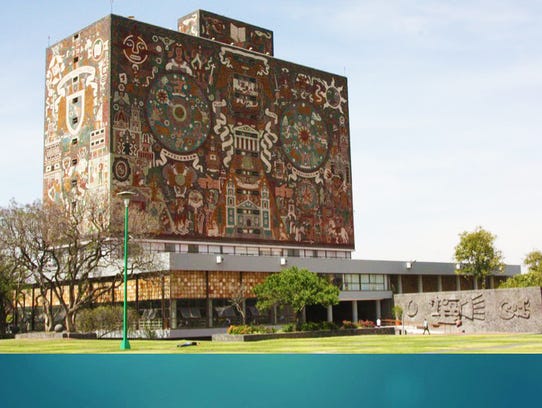
The Spanish brought to the Americas that penchant for learning first established in the Iberian Peninsula. The Universidad Autónoma de México in Mexico City was established in 1551 by a Royal Decree of King Carlos V. (Photo: Tejano Talks)

Nursing this love for education in their citizens, the Spanish authorities brought to the Americas that penchant for learning first established in the Iberian Peninsula. We know the Universidad Autónoma de México in Mexico City was established in 1551 by a Royal Decree of King Carlos V, King of Spain and Emperor of the Holy Roman Empire.
It was first known as the Royal Pontífice Universidad de México, and in 1910 became known as the Universidad Nacional Autónoma de México or UNAM.
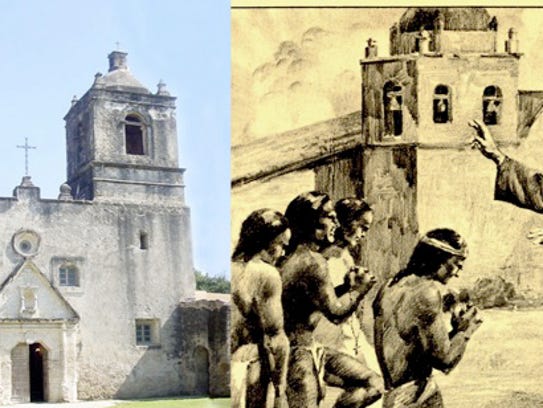
So, when the call came from the Spanish authorities seeking faculty members and well-trained priests, hundreds of young men left Spain to dedicate their entire lives to establishing schools designed to educate the Native Americans, Spanish soldiers and their children. They followed the Queen Isabela and King Fernando decree that, during the Age of Discovery in the 15th Century, had declared a desire to convert newly discovered civilizations to the “Santa Fe (Holy Faith),” and made them loyal subjects of the Spanish Crown. Thus, were born the Spanish Christian Missions in Texas and other parts of the then Spanish Southwest, where educational components were established.

As the Spanish meandered into what is now Texas, they brought priests who would not only Christianize the Indians but would become the educators of the native tribes of the Lone Star State as well as the children of the Spanish soldiers stationed in missions and presidios throughout the land. From El Paso to San Antonio and La Bahia, education thrived. (Photo: Tejano Talks)

Max Berger in his “Education in Texas during the Spanish/Mexican Periods” tells us about the efforts by the citizens of Colonial Spanish Texas to establish the first system of public schools.  Thus, every mission had as its component an industrial school for instructions in industry and agriculture. The first mission with its educational component was established in Texas in 1690, and within five or more years 25 more were also erected. The first settlement in Texas by Spanish families and soldiers was the founding of San Fernando de Béxar (later San Antonio) in 1718. The first such non-mission school began its operation in San Antonio in 1746. Another such school was opened in San Antonio in the year 1789, but closed in 1792.
In 1802, the Spanish government of Texas called for a school to operate that prescribed compulsory attendance, penalizing parents for any failure to comply, The schools were to be tuition-free with lay teachers, who were to be provided a small salary.  That set the stage for the “Public Free Primary School” that Mexican authorities supervised after 1821.
At La Bahía, a soldier named Galán taught a class of 18 children, receiving donations of meat, lard, salt, and the small salary he received as a soldier. It was difficult to sustain an educational system during the turbulent years of unrest between 1810 and 1821, when Texas was also liberated by the Independence Movement — El Grito — of 1810. In 1828, then governor of Texas José María Viesca encouraged parents to send their children to the best schools possible.
Classes were held from 6 to 10 in the morning during the summer, and 7 to 12 in the winter months; with classes held in the afternoon from two to six during the whole year.
The instructor was to open the school with a prayer, and observe religious events. The lessons included the “three R’s,” with lessons in manners, morals and religion. The teacher was hired on a four-year contract at a salary of $500 a year, payable in monthly installments.
These early schools in Spanish/Mexican Colonial Texas existed until the year 1834. A teacher from the north was hired, but was soon released for lack of proper documented passport to be in the Texas of that time. Northerners arriving with Stephen F. Austin after 1821 were required to erect schools in each new colony, and all instructions were to be given in Spanish.

Both Navarro and Seguín attempted to donate thousands of their own land for the purpose of establishing the first university. (Photo: Tejano Talks)

Early advocates of schools after 1836 were such Tejano patriots as Lorenzo de Zavala, Antonio de Navarro, and Juan Seguín.
It was Zavala who introduted legislation to establish the first system of higher education in Texas.
Both Navarro and Seguín attempted to donate thousands of acres of their own land for the purpose of establishing the first university.
In addition, in the 19th century land-owners — both Hispanic and Anglo — set up schools to educate the children of the vaqueros in the ranchos across Texas.
Despite obstacles encountered in the New World, the Spanish settlers found ways to bring education to all.
Today, Hispanics students make up 52 percent of all students enrolled in Texas public schools, well forecasting the future workforce now taking shape.  We can thank the early Spanish/Mexican efforts in establishing institutions of learning that now benefit all Texans.
Lino Garcia Jr. is an eighth-generation Tejano from Brownsville. He holds the chair of Professor Emeritus of Spanish Literature at the University of Texas Rio Grande Valley and is a supporter of the Tejano Civil Rights Museum and Resource Center in Corpus Christi.

Thursday, March 16, 2017

On the erasure of Spanish colonial history in Texas....

U.S. history ignoring Spanish, Mexican contributions

As many of us learned in elementary school, March 2, 1836, is Texas Independence Day.
Oddly, Texas is no longer independent since in 1845 (only a short nine years later), Anglo immigrant insurgents who illegally declared Texas’ independence from Mexico traded their independence to join the U.S. as a slave state.

And contrary to what we were taught in grade school about the 1836 Texas revolt, the independence journey began in 1810. As such, the birth of Texas independence undeniably comes with a Spanish-Mexican pedigree. Yet the struggle for liberty’s formula leaves this out and is typically ignored in mainstream Texas history.

Spanish explorer Juan de Oñate, in a rendering by El Paso artist Tom Lea, colonized the El Paso area. Along with Francisco Vasquez de Coronado and Hernando de Soto, such explorers are given short shrift in U.S. and Texas textbooks. Photo: /Houston Chronicle / Handout
Photo: /Houston Chronicle
Sadly, much more of U.S. (and Texas) history is left out of textbooks. For example, at the national level, both Roanoke and Jamestown, representing the earliest English settlements in what is now the United States, already had Spanish footprints.

Likewise, in Texas, most people don’t realize that Sam Houston’s endeavors for Texas independence took over a work in progress. Tejanas and Tejanos had already done the heavy lifting, sacrificing and dying for Texas independence. For example, on April 6, 1813, Texas’ first president, José Bernardo Gutiérrez de Lara, proclaimed the first Texas Declaration of Independence to jubilant Bexareños outside the Spanish Governors Palace. He signed the first Texas Constitution a week later.
As such, the significance of March 2 “Texas Independence” is — at best — only an episode in a much older chain of events.

The fact is that in rendering overall U.S. history, the roles of Spanish people, places and events, when mentioned at all, are typically distorted, discarded or dismissed.

So, it is with Francisco Vásquez de Coronado (1510-54), a strong courageous leader who figures prominently in the early history of both Texas and the United States. Still, he is often mocked in U.S. history books for what mainstream historians perceive as an outlandish quest, searching for the mythical city of Quivira.

Likewise, students in U.S. classrooms learn about the Spaniards’ lust for gold, search for imaginary places and brutality toward Native Americans. Rarely are they tutored about Spanish explorers’ positive impact in U.S. history.


Based on slanted lesson plans, students are most likely to recall unflattering details, not positive attributes. In fact, the English, Dutch, French and U.S. colonists own a significant share of brutal treatment toward Native Americans.

The fact that Spanish royal and religious leaders forbade ill treatment of indigenous people is well documented. They labored endlessly in attempts to avoid it but were generally hampered by the great distance involved. Many of the more ignoble violators of human rights were arrested, charged with crimes and fairly punished in Spanish courts.

So, a summary of the life of Vásquez de Coronado is in order. To start, here’s a little-known aspect of his story: Throughout his life, Francisco never used the last name of Coronado by itself. He used one of two last names, Vásquez or Vásquez de Coronado.

Vásquez de Coronado developed the first detailed exploration reports and the first glimpse of the people, vegetation and terrain of the Southwest (New Mexico), the Texas Panhandle, Oklahoma, Arkansas and Kansas. Attesting to their accuracy, his travel logs were used for years as authoritative documents for later explorers and settlers.

As with other explorers of his day, Vásquez de Coronado was fascinated by a prevailing myth of a mysterious island called Antilia, far into the Atlantic Ocean. Ancient maps even included the site. Supposedly, the Muslim invasion of Spain had caused seven Portuguese bishops to load all they owned in boats, and they sailed off and resettled far away in the sea. As such, when Columbus reached Española in 1492, European experts believed he had reached the Island of Antilia, and so named the group of islands. That name — the Antilles — remains to this day.

Most, if not all, 15th-century Europeans believed in the Antilia legend and the Strait of Anián, along with other legends. When famous explorer John Cabot first landed on the upper eastern shore of America, sailing for the king of England, he named the land “Seven Cities.” He believed he had found Antilia.
 
In initiating his 1539-40 journey, Vásquez de Coronado, governor of Nueva Galicia, was also hoping to equal the good fortunes of Hernán Cortés and Francisco Pizarro by finding another Aztec empire in the north. After dispatching forward parties, the explorer was encouraged by promising reports. He split up his large expedition, totaling nearly 400 military men, families, more than 2,000 Native American allies, and large herds of horses, cattle and sheep.

This is verified as the first massive movement of Europeans into New Mexico. At times, contact with hostile natives was vicious. Even so, Capt. Garcia López de Cárdenas, leading one of Vásquez de Coronado’s subgroups, was among the first Europeans to see the Grand Canyon.

In 1541, the Spanish traveled through a grassy area they equated with a never-ending sea (Llano Estacado) in northern New Mexico and the Texas Panhandle. Of special note to Texans is the fact that on May 29, 1541, Father Juan Padilla, a priest in the Vásquez de Coronado expedition, offered the first American Thanksgiving Day religious ceremony in the Palo Duro Canyon in the Texas Panhandle. A historical plaque identifies the site.

Although Vásquez de Coronado and Hernando de Soto visited the same region at the same time in Kansas and Arkansas, they missed each other by about 300 miles. Three intrepid Spanish explorers were the first Europeans to travel in today’s middle United States — Vásquez de Coronado, de Soto and Juan de Oñate. Thrown from his horse in 1542, Vásquez de Coronado was greatly limited by his injuries. He returned to Mexico City where his health worsened.

Francisco Vásquez de Coronado died in 1554 at the young age of 44.

Most explorers in America seem to have Spanish rather than English names. When you understand this, you understand that they have earned their place in history. The strong foundation of the authentic story of the U.S. rests on logs and cartography prepared by Spaniards Alonso Alvarez de Piñeda, Estéban Gómez, Lucas Vásquez de Ayllón, Pedro de Salazar, Fortún Jiménez, Juan Rodriguez Cabrillo, Bartolomé Ferrer and so many others.

They merit but rarely receive their fair share of recognition, respect and equal treatment with Anglo Saxon characters in U.S. history books.

It’s time to render U.S. and Texas history in a seamless manner. Mainstream U.S. historians must learn to enfold vital Spanish contributions to our nation’s founding. In Texas, pre-1836 Spanish-Mexican people, places and events must no longer be arbitrarily edited out of Texas history just because they don’t fit the Stephen F. Austin and Sam Houston models.

Likewise, the Texas State Board of Education must stop using 1836 as the Texas history baseline.
Finally, if you want to learn more of the Spanish-Mexican pioneers who founded this great place we call Texas, plan to attend the 38th Texas State Hispanic Genealogical and Historical Conference, Sept. 28-30, sponsored by the Tejano Genealogy Society of Austin, at the Crown Plaza Hotel in Austin.

José “Joe” Antonio López was born and raised in Laredo and is a U.S. Air Force veteran. He lives in Universal City and is the author of four books. His latest is “Preserving Early Texas History (Essays of an Eighth-Generation South Texan).” This article was first published by the Rio Grande Guardian International News Service.