Translate

Showing posts with label gerrymandering. Show all posts

Sunday, September 07, 2025

Gavel Down, Mic Drop: Rep. Vincent Pérez Ends Session with Facts

Gavel Down, Mic Drop: Rep. Vincent Pérez Ends Session 

with Facts

Sine Die might be Latin for “the end,” a towering Rep. Vincent Pérez stood firm—not just in opposition, but in defense of democracy. He made damn sure the 89th Second Special Session of the Texas Legislature didn’t close without a reckoning—to which the video below attests and about which Substack author Michelle H. Davis writes.

While Republicans used this session to pass gerrymandered maps, ramp up voter suppression, and double down on attacks against women, trans people, students, and anyone who doesn’t fit neatly into their dystopian playbook— it was Rep. Pérez who reminded Texans what public service is supposed to look like.

Before the gavel dropped, Republicans introduced HR 128—a petty, authoritarian stunt masquerading as a rule change. The goal? Punish future quorum breakers with everything from fines and budget cuts to taking away parking spots like this was high school. But Rep. Pérez wasn’t having it. He stood up and made it clear: this wasn’t about enforcing “duty.” It was about silencing dissent.

And he said so — loud and unapologetically.

Rep. Vincent Pérez

“This is not discipline for a member, but disenfranchisement for the people who sent them here.”

He didn't stop there.

When Rep. Tony Tinderholt tried to derail the conversation — turning it into a petty debate about per diems and attendance—Pérez flipped the script.

“The maps before this body were the most segregated since the 1965 Voting Rights Act. It was my duty to stand up against that injustice.”

Then came the knockout punch. When Tinderholt pushed harder on the per diem issue, Pérez fired back with a line that deserves to be carved into the chamber walls:

“There are representatives on both sides of the aisle, both republicans and democrats, who sit in this chamber who collect the $221...and are about as useful as the chairs they sit on.”

It was more than a zinger. It was a gut-check—not just for Tinderholt, but for everyone watching this session spiral into yet another exercise in intimidation disguised as governance.

Let’s be clear: Pérez didn’t just win the argument. He reframed it. He forced the chamber to confront the moral rot at the heart of what the Texas GOP is doing — from rigging maps and expanding the STAAR test, to criminalizing abortion and policing public restrooms.

He called out structural racism. He defended the right to dissent. He reminded everyone that elected office belongs to the people—not to the party in power.

In a session defined by fear, fascism, and manufactured outrage, Rep. Vincent Pérez stood apart.

We need more of that. More fire. More clarity. More courage.

So yes, Sine Die — this special session is over. But if Texas is going to have any kind of democratic future, voices like Pérez’s can’t just echo in the chamber. They need to echo across the state.

Because dissent isn’t disorder. It’s democracy.

And Rep. Vincent Pérez just gave us all a masterclass in both.

-Angela Valenzuela

The Texas Legislature called Sine Die on the 89th Second Special Session. How bad is the damage?

MICHELLE H. DAVIS
SEP 04, 2025


Two weeks into the 30-day special session, Republicans decided they’ve done all the damage they can do for now and called Sine Die late last night.

But did they pass flood relief?

SB3 mandates outdoor warning sirens in Texas flood-risk areas. It uses state grants to help pay for sirens, but makes them legally required for local governments in disaster-designated regions. SB5 is a funding bill for Texas’s FEMA match and disaster needs, gauges, as well as forecasting and weather technology.

Both of these bills passed both chambers unanimously.

Several bills regarding disaster preparedness died. Another bill that was debated aimed to synchronize communication equipment (walkie-talkies and radios) across agencies. That bill died, too.

SB1 prevents youth camps from getting licensed if cabins are in a floodplain. HB1 overlaps with SB1 but is somewhat broader in accountability and enforcement.

Is it enough? Would it have prevented the July 4th tragedies? Will it prevent more tragedies in the future? The sirens are needed. The gauges are needed. Changing the license and regulation requirements for youth camps is needed.

Republicans wanted to premise this special session (and last) as flood relief, even though it was all about a power grab for the pedophile protectors in DC. That was their “emergency items.” It ought to be enough for them NOT to call a third special session. 

Vince Perez (D-HD77) was definitely the breakout star of the Second Special Session.

He did it again last night. Before Republicans called it quits on the Special Session last night, they introduced HR128 to “punish” would-be quorum breakers. Higher fines, censure, loss of seniority, loss of operating budget, loss of chairmanships, loss of parking places, and a bunch of other nonsense.

Representative Perez did not hold back. He reminded members that their oath of office wasn’t about perks or power, but about stewardship and that every seat in the chamber belongs not to the politician, but to the people who sent them there. Perez said, a direct attack on the communities Republicans don’t value, “not discipline for a member, but disenfranchisement for the people who sent them here.”

Then came the clash with Rep. Tony Tinderholt (R-HD94). True to form, Tinderholt tried to boil the whole debate down to money and duty. Where was Perez during the quorum break? Shouldn’t he be in Austin? Shouldn’t he pay taxpayers back for the per diem?

Perez wasn’t having it. He turned the conversation right back to the root cause: “The maps before this body were the most segregated since the 1965 Voting Rights Act,” he said. “It was my duty to stand up against that injustice.” Perez hammered Tinderholt for defending maps that give white Texans three times the political power of Latinos and five times that of Black Texans, calling it what it was. Structural disenfranchisement.

When Tinderholt pressed him on the $221-a-day per diem, Perez cut deep. “There are people in this chamber who collect the 221 bucks and are about as useful as the chairs they sit on,” he said. And reminded everyone (most of all Tarrant County residents) how Tinderholt is leaving the Legislature to run for a county commissioner seat stolen from the Black community.

Perez flipped the attack into a full indictment of GOP gerrymandering, racism, and small-minded politics. It was a reminder that while the GOP is busy rewriting House rules to punish dissent, Democrats like Perez are the ones reminding Texans why dissent matters.


So, what else did Republicans do in this special session?

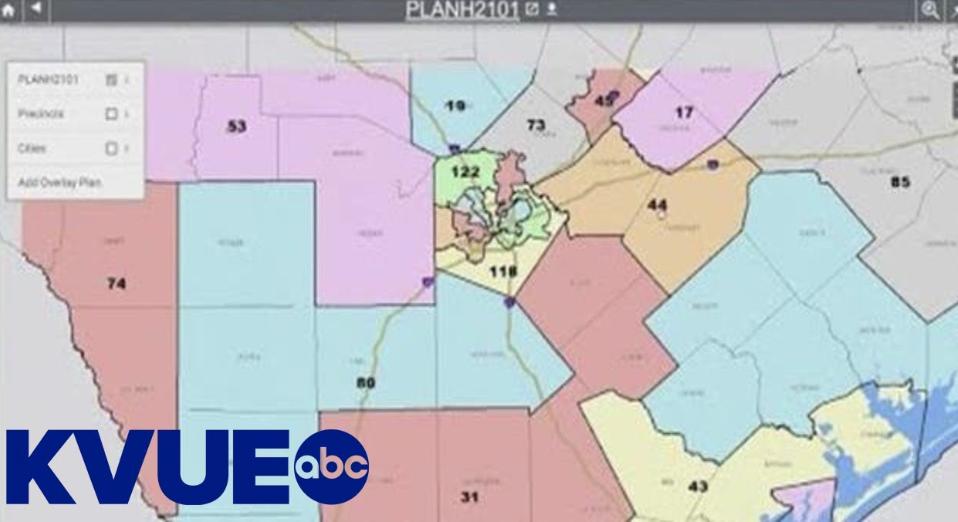
They passed the gerrymandered maps. Then, a resolution was passed to punish would-be quorum breakers.

They passed HB8, which expands the STAAR test. Yes, you heard that right. Texans wanted the state to eliminate the STAAR test. Instead, they expanded it, quadrupling the number of tests students will have to take in a year. Every Republican voted in favor of it. The Democrats who joined them:

Cesar Blanco (SD29)

Chuy Hinojosa (SD29)

HB7 passed. This bill bans the manufacturing, mailing, prescribing, or distributing of abortion pills in Texas and creates $100,000 bounties on women who take them. Because our maternal mortality rate is higher in Texas than anywhere else in the developed world, and Republicans want more women to die. Chuy Hinojosa was the only Democrat who voted in favor of this bill.

Then, of course, the Republicans enacted the “Pee Pee Police” bill with SB8. This bill segregates bathrooms, locker rooms, showers, and other multi-user facilities strictly by biological sex. While they haven’t done it yet, they always add to their oppression each session. So, if we don’t flip the House in 2026, expect that in 2027 Republicans will be looking to station a DPS officer at the door of every public restroom in Texas, to look under the skirts of suspected transgender women.

SB12 gives the Texas Attorney General direct authority to prosecute all criminal offenses under Texas election law. But now that Paxton’s leaving office, they’re just hoping to get lucky with another crook in office to target people of color and the elderly with made-up crimes again.

Of course, there was also HB25, which makes Ivermectin available over the counter.

SB54 makes it harder for voters who have recently moved to cast a full ballot because it would be a Legislative Session, special or regular, without some form of Republican voter suppression. Renters, students, and low-income people who move often will be disproportionately disenfranchised. Which means we have to work twice as hard to register those voters, y’all.

HB26 allows sheriffs and constables in Harris County to contract directly with local governments (cities, MUDs, school districts, etc.), property owners’ associations, and private landowners. It prohibits the Harris County Commissioners’ Court from stopping or restricting these contracts. HB192 prevents Harris County from reducing police budgets without a countywide election, as enforced by the governor’s office and comptroller. This is part of the broader GOP playbook to punish and control Harris County (the state’s most populous Democratic stronghold).

Then there was HB16, which flew under the radar despite its size. It’s a judiciary “clean-up and reorganization” bill. It makes hundreds of tweaks across the court system, touching everything from judicial districts to clerk duties, salaries, jurisdiction, and municipal court security.

SB18 creates a new permit exemption in Texas water law. It cuts regulatory red tape for small, locally operated flood-control dams. I see both good and the potential for harm in this bill, and I always worry about anything framed as “deregulation.” However, the Sierra Club testified in favor of it.

SB11 gives victims of sex trafficking a legal shield in court, ensuring that juries can consider coercion as a defense. It was ironic that it was passed, considering the party in charge is the same party protecting the Epstein pedophile ring in DC. But I suspect they just tacked this one in there to pretend like they were actually doing something good for the people of Texas.
When you stack it all up, Texans didn’t get real flood relief, didn’t get accountability, didn’t get protection from the next disaster.

What we got was more criminalization, more voter suppression, more privatized policing, more attacks on women, kids, and trans people, and more power consolidated in the hands of a Republican Party that governs like the Constitution is optional. This was a session about control. The fascist drumbeats of Republican rule grow louder with every session, every new map, every gag order on dissent.

So let’s call it what it was. Another round of Republican cruelty packaged as governance. And let’s pray it stays dead until 2027.

Saturday, July 26, 2025

Texas Republicans aim to redraw House districts at Trump’s urging, but there’s a risk, Nicholas Riccardi & Nadia Lathan, AP News, July 21, 2025

Friends:

What’s unfolding in Texas, as reported by Nicholas Riccardi and Nadia Lathan (2025) for AP News, is yet another brazen power grab—this time through mid-decade redistricting at the urging of Donald Trump as contained in a directive from the Department of Justice that then showed up in Governor Abbott's special called legislative session (Abbott, 2025).

With a special legislative session underway for a short total of 30 days, Texas Republicans are preparing to redraw congressional maps in a high-stakes maneuver to secure five additional GOP seats. Districts like that of Rep. Vicente Gonzalez in the Rio Grande Valley are in the crosshairs. But let’s be clear: this is not about fair representation—it’s about gerrymandering political lines to entrench power.

The risks, as Riccardi and Lathan highlight, are both political and legal. In seeking to scatter Democratic voters and weaken the voting strength of communities of color, Texas Republicans are not only courting so-called “dummymanders,” but also opening themselves to renewed legal challenges under the Voting Rights Act. We’ve seen these tactics before—pack, crack, divide, and conquer. But history reminds us that such strategies, while harmful, can also ignite grassroots resistance—an ever-present source of hope, no doubt. 

That said, based on a long record of gerrymandering in our state, the greatest risk will be borne by our Black and Brown communities who pay taxes like everybody else, but who have not and will not be able to elect the candidate of their choice. After all, redistricting is about incumbents picking their voters rather than voters picking their candidates for office. This was expressed throughout the entire hearing on redistricting that I participated in last Thursday (Valenzuela, 2025).

I testified before this politically motivated redistricting committee, calling out the entire process as a weapon of mass distraction and that their focus should be on the ecological and infrastructure crises before us, "exclusively," I said.

I do like what I'm seeing, including a well-attended, last-minute rally yesterday evening at the Delco Center where an excited audience, myself included, got to hear powerful presentations by Rep. Gina Hinojosa, Rep. James Talarico, Congressman Gregory Casar, Congresswoman Jasmine Crockett, Congressman Joaquin Castro, and Beto O'Rourke. We are not lacking in very talented Democratic Party leadership in Texas. Quite the opposite.

What we do need is folks to educate themselves quickly on what redistricting consists of and how the outcome is so vital to our democracy. What will ultimately resolve all of this is for folks to get out and vote these officials out of office. It's crazy to see the lengths they'll go to please Donald Trump—like lemmings going over a cliff. I'll continue posting on this as much as I can. You can view the total hearing at Valenzuela (2025).

Texas Democrats, once again, are contemplating a walkout—echoing the defiant stand they took in 2021. The stakes could not be higher—not just for the 2026 midterms, but for the very integrity of democracy both in Texas and the nation. The future of this state cannot, and must not, be redrawn in secret, behind closed doors.

–Angela Valenzuela

References

Abbott, G. (2025, July 9). Governor Abbott announces special session agenda [Press release]. Office of the Governor of Texas. https://gov.texas.gov/news/post/governor-abbott-announces-special-session-agenda-

Riccardi, N., & Lathan, N. (2025, July 21). Texas Republicans aim to redraw House districts at Trump’s urging, but there’s a risk. AP News. https://apnews.com/article/texas-redistricting-trump-gonzalez-democrats-walkout-2025

Valenzuela, A. (2025, July). Our line in the sand: A Texas rebellion against sin vergüenza politics [Blog post]. Texas Ed Equity. https://texasedequity.blogspot.com/2025/07/our-line-in-sand-texas-rebellion.html


Texas Republicans are poised to redraw the state’s congressional map during a special session that starts Monday in Austin.

By NICHOLAS RICCARDI and NADIA LATHAN | AP News
Updated 4:20 PM CDT, July 21, 2025

AUSTIN, Texas (AP) — U.S. Rep. Vicente Gonzalez, a Texas Democrat who represents a slice of the Rio Grande Valley along the border with Mexico, won his last congressional election by just over 5,000 votes.

That makes him a tempting target for Republicans, who are poised to redraw the state’s congressional maps this coming week and devise five new winnable seats for the GOP that would help the party avoid losing House control in the 2026 elections. Adjusting the lines of Gonzalez’s district to bring in a few thousand more Republican voters, while shifting some Democratic ones out, could flip his seat.

Gonzalez said he is not worried. Those Democratic voters will have to end up in one of the Republican districts that flank Gonzalez’s current one, making those districts more competitive — possibly enough so it could flip the seats to Democrats.

“Get ready for some pickup opportunities,” Gonzalez said, adding that his party is already recruiting challengers to Republicans whose districts they expect to be destabilized by the process. “We’re talking to some veterans, we’re talking to some former law enforcement.”

Texas has 38 seats in the House. Republicans now hold 25 and Democrats 12, with one seat vacant after Democrat Sylvester Turner, a former Houston mayor, died in March.

Gonzalez’s district — and what happens to the neighboring GOP-held ones — is at the crux of President Donald Trump’s high-risk, high-reward push to get Texas Republicans to redraw their political map. Trump is seeking to avoid the traditional midterm letdown that most incumbent presidents endure and hold onto the House, which the GOP narrowly controls.

Trump’s push comes as there are numerous political danger signs for his presidency, both in the recent turmoil over his administration’s handling of the Jeffrey Epstein case and in new polling. Surveys from The Associated Press-NORC Center for Public Affairs Research show most U.S. adults think his policies have not helped them and that his tax cut and spending bill will help the wealthy.

Republicans risk putting their own seats in jeopardy

The fear of accidentally creating unsafe seats is one reason Texas Republicans drew their lines cautiously in 2021, when the constitutionally mandated redistricting process kicked off in all 50 states. Mapmakers — in most states, it’s the party that controls the legislature — must adjust congressional and state legislative lines after every 10-year census to ensure that districts have about the same number of residents.

That is a golden opportunity for one party to rig the map against the other, a tactic known as gerrymandering. But there is a term, too, for so aggressively redrawing a map that it puts that party’s own seats at risk: a “dummymander.”

The Texas GOP knows the risk. In the 2010s, the Republican-controlled Legislature drew political lines that helped pad the GOP’s House majority. That lasted until 2018, when a backlash against Trump in his first term led Democrats to flip two seats in Texas that Republicans had thought safe.

In 2021, with Republicans still comfortably in charge of the Texas Statehouse, the party was cautious, opting for a map that mainly shored up their incumbents rather than targeted Democrats.

Still, plenty of Republicans believe their Texas counterparts can safely go on offense.

“Smart map-drawing can yield pickup opportunities while not putting our incumbents in jeopardy,” said Adam Kincaid, executive director of the National Republican Redistricting Trust, which helps coordinate mapmaking for the party nationally..

Democrats contemplate a walkout


Republican Gov. Greg Abbott called a special session of the Legislature, which starts Monday, to comply with Trump’s request to redraw the congressional maps and to address the flooding in Texas Hill Country that killed at least 135 people this month.

Democratic state lawmakers are talking about staying away from the Capitol to deny the Legislature the minimum number needed to convene. Republican Attorney General Ken Paxton posted that any Democrats who did that should be arrested.

Lawmakers can be fined up to $500 a day for breaking a quorum after the House changed its rules when Democrats initiated a walkout in 2021. Despite the new penalties, state Rep. Trey Martinez Fischer, who led the walkout in 2021, left open the possibility of another.

“I don’t think anybody should underestimate the will of Texas Democrats,” he said.

Texas is not the only Republican state engaged in mid-decade redistricting. After staving off a ballot measure to expand the power of a mapmaking commission last election, Ohio Republicans hope to redraw their congressional map from a 10-5 one favoring the GOP to one as lopsided as 13-2, in a state Trump won last year with 55% of the vote.

GOP sees momentum after 2024 presidential election


Some Democratic leaders have suggested that states where their party is in control should counter the expected redraw in Texas. “We have to be absolutely ruthless about getting back in power,” former Texas Rep. Beto O’Rourke said Sunday on CNN.

But Democrats have fewer options. More of the states the party controls do not allow elected partisans to draw maps and entrust independent commissions to draw fair lines.

Among them is California, where Gov. Gavin Newsom has floated the long shot idea of working around the state’s commission.

The few Democratic-controlled states that do allow elected officials to draw the lines, such as Illinois, have already seen Democrats max out their advantages.

Trump and his allies have been rallying Texas Republicans to ignore whatever fears they may have and to go big.

On Tuesday, the president posted on his social media site a reminder of his record in the state last November: “Won by one and a half million Votes, and almost 14%. Also, won all of the Border Counties along Mexico, something which has never happened before. I keep hearing about Texas ‘going Blue,’ but it is just another Democrat LIE.”

Texas has long been eyed as a state trending Democratic because of its growing nonwhite population. But those communities swung right last year and helped Trump expand his margin to 14 percentage points, a significant improvement on his 6-point win in 2020.

Michael Li, a Texas native and longtime watcher of the state at the Brennan Center for Justice in New York, said there’s no way to know whether that trend will continue in next year’s elections or whether the state will return to its blue-trending ways.

“Anyone who can tell you what the politics of Texas looks like for the balance of the decade has a better crystal ball than I do,” Li said.
Aggressive redistricting also carries legal risks

One region of the state where Republican gains have been steady is the Rio Grande Valley, which runs from the Gulf of Mexico along much of the state’s southern border. The heavily Hispanic region, where many Border Patrol officers live, has rallied around Trump’s tough-on-immigration, populist message.

As a result, Gonzalez and the area’s other Democratic congressman, Henry Cuellar, have seen their reelection campaigns get steadily tighter. They are widely speculated to be the two top targets of the new map.

The GOP is expected to look to the state’s three biggest cities to find its other Democratic targets. If mapmakers scatter Democratic voters from districts in the Houston, Dallas and Austin areas, they could get to five additional seats.

But in doing so, Republicans face a legal risk on top of their electoral one: that they break up districts required by the Voting Rights Act to have a critical amount of certain minority groups. The goal of the federal law is to enable those communities to elect representatives of their choosing.

The Texas GOP already is facing a lawsuit from civil rights groups alleging its initial 2021 map did this. If this year’s redistricting is too aggressive, it could trigger a second complaint.

“It’s politically and legally risky,” Li said of the redistricting strategy. “It’s throwing caution to the winds.”

___

Riccardi reported from Denver.

Thursday, May 22, 2025

"Federal trial opens to determine whether Texas discriminated in redrawn redistricting maps," by Sameea Kamal | Texas Tribune | May 22, 2025

Friends:

Glad to see that this federal trial on gerrymandering is getting off the ground. For over half a century, federal courts have repeatedly found that Texas has discriminated against voters of color in its redistricting practices, and 2021 was no exception. 

In a word, this practice is termed "gerrymandering." Gerrymandering is the practice of redrawing electoral district lines to give an unfair advantage to a particular political party or group. Though often justified as a partisan tactic, it frequently undermines the voting power of racial and ethnic minorities—especially when district boundaries are deliberately drawn to fragment communities of color and weaken their collective voice at the ballot box.

.Here are the member statistics from the Legislative Reference Library at the Capitol that, interestingly, no longer disaggregate by race or ethnicity. How convenient for those in power, right?

These data also show that the average age of our representatives is between 50 and 59 years old and that women are significantly underrepresented in both chambers.

Although in the 2020 U.S. Census communities of color accounted for 95 percent of the state’s population growth—Latinos alone making up more than half—the Republican-controlled Legislature chose not to expand representation for these growing populations. Instead, it reinforced white political control, sidelining the very communities driving Texas’s demographic future.

It drew 23 majority-white congressional districts and just seven Latino-majority ones out of 38, flagrantly disregarding the state’s demographic reality. This is not simply partisan maneuvering; it is a modern form of racial gerrymandering designed to fracture Black and Latino voting power and insulate those in power from democratic accountability.

To claim that these maps were drawn “blind to race” is not just disingenuous—it’s dangerous. Texas had ample opportunity to draw additional Latino-majority districts in rapidly diversifying regions like Dallas-Fort Worth and Harris County but chose not to. 

The claim that partisan interests, not racial bias, were the basis for the maps ignores the deeply racialized nature of partisanship in Texas. Gerrymandering in this context is not just a political strategy—it is a structural assault on civil rights, one that perpetuates disparities in health, education, income, and political voice. This is discrimination by design, and it strikes at the heart of representative democracy.

-Angela Valenzuela

Reference

Kaplan, A. (2021, October 26). Greg Abbott approves Texas redistricting that preserves GOP power, dilutes voters of color. Salon. https://www.salon.com/2021/10/26/greg-abbott-approves-texas-redistricting-that-preserves-power-dilutes-of-color/

Federal trial opens to determine whether Texas discriminated in redrawn redistricting maps
by Sameea Kamal | Texas Tribune | May 22, 2025


Maps based on the 2020 census designating districts within Texas for state and congressional 
offices are the focus of a discrimination case that is being heard in federal court. 
Credit: Ben Torres for The Texas Tribune

Do Texas’ district maps discriminate against some Black and Latino voters? That’s what advocates will allege in court Wednesday, while the state will argue that those communities can elect the candidates they want.

Some advocates will also argue in a set of cases four years in the making that the state intentionally discriminated — while the state will combat that claim.

A panel of three U.S. district judges in El Paso will hear the cases over the next month that allege the state violated federal law in its redistricting process — the once-a-decade redrawing of congressional and state district maps after every U.S. Census to ensure that all districts have approximately the same number of people.

The plaintiffs include the League of United Latin American Citizens, Mexican American Legal Defense and Educational Fund and the Texas chapter of the National Association for the Advancement of Colored People. They plan to argue that in 2021, the Republican-majority Legislature deliberately drew its congressional, state House and senate districts in a way that split up voters of color and diluted their political power.

The case has been delayed while the parties fought over what information legislative members are required to disclose.

Plaintiffs point to data around the racial makeup of the state and those of the districts in their arguments: though whites and Latinos made up nearly the same share of the population in Texas in 2020, the state drew 23 white-majority districts out of 38 total congressional districts, while Latino voters made up majorities in only seven. The remaining eight districts had no majority group.

According to the 2020 Census, Texas added 4 million residents in the prior decade and gained two congressional districts. Of the population growth, 95% was among communities of color, with more than half of the growth among the Latino community.

“The inflated number of majority-white districts does not reflect the Census data and does not allow for fair representation,” Marina Jenkins, executive director of the National Redistricting Foundation, an advocacy group supporting the plaintiffs in the congressional case, said at a news conference this week. “It is clear that Texas’ congressional map denies Latino voters an equal opportunity to participate in the political process and elect candidates of their choice, in violation of Section 2 of the Voting Rights Act.’”

If a court finds that to be true, it wouldn’t be the first time: in every decade since the Voting Rights Act was enacted in 1965, Texas has been found by a federal court to have violated federal law by illegally discriminating against voters of color. The law prohibits voting practices that discriminate based on race, color or those who belong to a language minority group.

After the 2010 redistricting cycle, for example – in a battle with similar arguments — federal judges ruled that Texas lawmakers intentionally discriminated against Hispanic and Black voters by unnecessarily crowding them into certain districts.

The allegations that the state violated the Voting Rights Act don’t require the plaintiffs to prove the state intended to discriminate — only that the effect of the maps does so. Some of the plaintiffs are bringing additional claims that the state violated the 14th Amendment by intentionally discriminating against them, which does require proving the state acted in bad faith.

Various groups have sued the state since 2021, even before the maps were ratified. The U.S. District Court for the Western District of Texas, El Paso Division ordered those groups to consolidate their cases into the one that begins Wednesday.

The groups allege the state could have drawn a Latino-majority district in the state senate and congressional districts that encompass Dallas-Fort Worth and Harris counties, but failed to do so.

In the House maps, plaintiffs allege the Legislature failed to create Latino-majority districts where there was opportunity to do so in those counties, as well in Central and West Texas, and Bexar, Denton/Wise and Brazoria counties.

The NAACP also alleges the state intentionally discriminated against Black voters in all three maps.

The state plans to defend the maps on the basis that partisan interests, not race, were the primary factor in drawing the maps.


“The Texas Legislature drew the maps blind to race,” the state’s pre-trial brief says. “The redistricting lawmakers did not mince words: they intended to design maps that advanced partisan interests and other traditional redistricting principles.”

The Republican-led Legislature drew the maps, while the advocates who brought the lawsuits are arguing on behalf of Black and Latino voters who historically have aligned with the Democratic party.

The state’s brief says the legislative record will show both Republican and Democratic lawmakers acknowledged the Legislature’s “partisan motivations for drawing districts” — although in pre-trial proceedings leading up to Wednesday, the Legislature’s chief map drawer, Houston Republican Sen. Joan Huffman, declined to share some of the reasoning behind the maps, citing “legislative privilege,” a protection afforded by the state constitution.

The state also plans to argue that population growth was uneven, and that in some areas, such as El Paso County, declining population led to the reduction in the number of House districts where there was a Latino majority.

The governor’s office and attorney general’s office did not respond to requests for comments on the case.

Though the Legislature passed the bills creating the maps in 2021, lawmakers that session were unable to ratify the maps due to a Democratic walkout over a separate bill related to election processes. The next Legislature in 2023 then ratified the maps.

In the meantime, two primary and two general elections have taken place under those maps.

That includes the primary election in 2022, after the Court sided with the state on allowing the map for Senate District 10 to be used. Plaintiffs tried to appeal the case to the Supreme Court, but they dismissed the appeal because it was filed too late.


For Jenkins, with the National Redistricting Foundation, the impacts of a map that potentially violates the law means less of a voice for some Texans.

“The long-term effects of depriving a community of a seat at the table can be seen in disparities in multiple aspects of life, such as higher poverty and unemployment rates, lower incomes and being underrepresented in public office,” she said at the briefing. “This case isn't just about the congressional map, it's about representation and living up to the fundamental ideal that should guide our democracy, that every individual has the right to exercise self determination at the ballot box.”

Saturday, June 17, 2023

Minority Rule: How 3 Percent of Texans Call the Shots for the Rest of Us, by Michael Hardy, Texas Monthly

This is a sobering, must-read piece by Michael Hardy (2022) in The Texas Monthly that helps explain why Republicans' are at odds with most Texans, generally, on such issues as abortion and gun rights. 

"Neither of these measures enjoys broad public support; polls show that most Texans hold moderate positions on abortion, gun rights, and many other key issues. But state lawmakers have made sure that doesn’t matter."

To grasp this, one must understand that out of 30 million Texans and 22 million eligible voters and 17 million registered voters only 2 million vote in GOP primaries, leaving ultimately one million, or three percent of Texans, to elect our state leaders.  Despite the tremendous growth of the Latino population, Republicans have gerrymandered districts—that in 2020, "reduce the number of majority-Hispanic districts from six to five." Republicans have rigged the system by Latino packing voters into specific districts. What this means is...

"a candidate such as Governor Greg Abbott or Lieutenant Governor Dan Patrick needs the support of only a million or so primary voters, representing just 3 percent of all Texans, to win the Republican nomination."

To be sure, this has consequences for all communities. I appreciate Hardy's story of Asian Texans for Justice leader, Lily Trieu and how the Asian American community in Sugar Land, located near Houston, is structured out, leaving her community with no meaningful representation.

As I had previously blogged (read: The Awful 88th Legislative Session: Losers included taxpayers, teachers, trans youths, and anyone who uses electricity—Texas Observer ), the ever-curtailing of voting rights in

Democratic Party strongholds combines with gerrymandered districts that do not reflect, in particular, the growth of the Latino community. 

According to the 2021 American Community Survey of the U.S. Census, Latino Texans represent 40.2% of the state’s population while Anglo, non-Hispanic Texans account for 39.4% (Ura, 2022).

The Latino vote has been rising (Gamboa & Acevedo, 2022), but as the story out of Sugar Land illustrates, it literally doesn't make a difference in those districts where they have been structured out.

-Angela Valenzuela

References

 & Youth, Latino mobilization paid off in the midterms. Now groups gear up for 2020. Retrieved: https://tinyurl.com/mr2d96zu

Ura, A. (2022, Sept. 15). Hispanic Texans may now be the state’s largest demographic group, new census data shows, Texas Tribune. Retrieved: https://tinyurl.com/bwb5whw9


Minority Rule: How 3 Percent of Texans 

Call the Shots for the Rest of Us

Statewide officials and legislators are far to the right of most Texans. Why? Low primary-election turnout and an anemic Democratic party.

By 


Illustrations by Brian Rea

If you want to see the future of Texas, take a drive down Synott Road, in Sugar Land, the booming suburb twenty miles southwest of Houston. Start at the intersection with Old Richmond Road. Here, tucked beside a Texaco station, you’ll find a Mexican food truck and DD’s Ejide African Restaurant, which serves aromatic specialties such as oxtail pepper soup. Heading south along Synott, you’ll soon pass Hindu, Buddhist, and Cao Dai temples, a mosque, an apostolic church, and a halal grocery store. 

Sugar Land is the largest city in Fort Bend County, one of the fastest-growing and most diverse areas in the United States. Between 2000 and 2020 the county more than doubled in size, to a population of 823,000. A preponderance of that growth is attributable to Asians, who now account for one in every five residents. As recently as 2000, non-Hispanic white Texans made up nearly half the population of Fort Bend County; today, that group makes up just 30 percent of the population, followed by Hispanic (26 percent), Asian (22 percent, about half being of Indian descent), and Black (22 percent) Texans. It’s also one of the best-educated counties in the state, with nearly 20 percent of the adult population holding a graduate or professional degree. 

The county’s political evolution has been equally dramatic. Between 1968 and 2016, it voted Republican in every single presidential election. In Congress, the majority of the county was represented by the likes of libertarian icon Ron Paul and former Republican majority leader Tom DeLay. But over the past decade, the pendulum has swung. In 2016 Hillary Clinton beat Donald Trump here by seven percentage points, becoming the first Democrat to carry the county since Lyndon Johnson. In 2020 Joe Biden won Fort Bend County by eleven points—part of a nationwide suburban backlash against Trump. “Trump made a lot of people uncomfortable,” said County Judge KP George, an Indian American Democrat and the county’s top elected official. “About thirty percent of our population is foreign-born. They didn’t like his rhetoric.”  

Fort Bend County is what economists call a leading indicator. Between 2010 and 2020, Texas grew by nearly four million residents, with people of color responsible for 95 percent of that growth. The state is now 40 percent non-Hispanic white, 40 percent Hispanic, 13 percent Black, and 6 percent Asian—with the latter the fastest-growing demographic. As in Fort Bend County, that transformation has been accompanied by political change. Although no Democrat has won a statewide race in Texas since 1994—and no Democratic presidential candidate has carried the state since Jimmy Carter in 1976—the party has been chipping away at the Republican advantage over time. In 2012 Mitt Romney won the state by sixteen points. In 2020 Trump won by less than six.  

But as the state as a whole has moved toward the political center, its Republican party has lurched to the right, enacting some of the country’s most reactionary policies and helping make Texas an international byword for extremism. During the 2021 legislative session, the Republican majority banned abortion after six weeks, promising a $10,000 bounty to any citizen who reports a violation. (The Supreme Court’s overturning of Roe v. Wade this summer triggered another law banning all abortions except to save the life of the mother.) And they passed a bill allowing Texans 21 and older to openly carry a handgun without a license or training.  

Neither of these measures enjoys broad public support; polls show that most Texans hold moderate positions on abortion, gun rights, and many other key issues. But state lawmakers have made sure that doesn’t matter. During a special session last fall, legislators created new districts for themselves (and for members of Congress) as part of the once-a-decade redistricting process that occurs after every census. Drawn behind closed doors, using highly sophisticated computer models, the new maps guaranteed that most incumbents, both Republican and Democratic, remained in safely red or blue districts. As a result of this gerrymandering, few legislators have to worry about the general election. Their only vulnerability comes during the spring primary, in which a small number of voters choose their parties’ nominees. Primary elections are all about ideological purity, about appealing to hard-core activists. Moderation is not a quality in high demand. 


Sunday, January 08, 2023

"What to expect from the 2023 Texas Legislative session," by Rhonda Fanning and Glorie Martinez in the Texas Standard

This Texas Standard article touches on what to expect from the 88th (2023) Texas legislative session. My sources tell me that it's going to be a tough one particularly considering  election results that, as we know, is an artifact of Texas' gerrymandered electoral map in a state where people of color account for 95 percent of the state's population growth between 2010 and 2020 (Li & Boland, 2021). A good read on this is from researchers Li and Boland (2021) out of the NYU Brennan Center for Justice titled, "Anatomy of the Texas Gerrymander: Here's How Texas Republicans crafted one of the most politically and racially skewed maps of this redistrictricting cycle. 

The problem is less of one that people don't vote, but rather that their votes do not count as a result of this electoral engineering. Sadly, resolving this through the courts will take years.

Accordingly, Barragán's forecast with respect to the recent election outcomes sound right.

"If, in 2020, Republicans felt like they had a mandate to go and push all the social conservative legislation that they felt the voters wanted, I don’t see how this will be any different. They’ve grown their majorities in both the House and in the Senate. So, I think we’ll probably expect to see another pretty conservative session."

A major issue for our community in K-12 education is school funding, that is, increasing the "basic allotment" so that school districts can have the resources they need to increase teacher salaries and provide greater resources to schools. 

Raise Your Hand Texas Texans Advocating For Meaningful Student Assessments, and other organizations will also be calling for changes to high-stakes testing and assessment policies, as well as tackling vouchers and charter school bills that compromise traditional public education. There are still the lingering infrastructural issues related, in particular, to fixing Texas' power grid, as well as lowering property taxes and border issues. None of this is exhaustive, of course, but is nevertheless a respectable starting layout.

The regular session always lasts a mere 140 days so let's buckle our seat belts and get on with it!

-Angela Valenzuela

By Rhonda Fanning and Glorie MartinezJanuary 2, 2023 4:17 pm

What to expect from the 2023 Texas Legislative session

With only a few days before the start of the next legislative session, politics reporters Niki Griswold and James Barragán preview what’s on the agenda for state lawmakers.


 There’s just over a week left before the start of the 2023 Texas Legislative session. Property taxes, gun control and the power grid are among the top issues on the agenda for state lawmakers.

» TELL US: What do you want to see from the Texas Legislature in 2023?

To take a closer look at what to expect, the Standard was joined by political journalists Niki Griswold, state politics reporter for the Austin American-Statesman, and James Barragán, politics reporter for the Texas Tribune. Listen to the story above or read the transcript below.

This transcript has been lightly edited for clarity:

Texas Standard: This could be a very exciting session. I’m curious how much you see this session being a contrast with the previous legislative session, which went into several overtimes. James?

James Barragán: If, in 2020, Republicans felt like they had a mandate to go and push all the social conservative legislation that they felt the voters wanted, I don’t see how this will be any different. They’ve grown their majorities in both the House and in the Senate. So, I think we’ll probably expect to see another pretty conservative session.

That was the thing about the previous legislative session. There seemed to be a lot of socially conservative hot button issues. How much do you think that this legislative session is going to differ from the previous session, Niki? 

Niki Griswold: From what I’ve seen so far. I think the so-called culture war issue that will really take center stage this legislative session is surrounding LGBTQ rights and also education —how curriculum on the topics of race and sexuality can be discussed in the classroom. 

We’ve already seen a number of bills filed to target the rights of transgender children, as well as battles in the classroom and in libraries over what books should be made available to children, with a lot of focus being on removing subject matter that validates LGBTQ identities. So, I think we’ll have to see how much of a focus that issue is this session versus the more bread and butter issues of lowering property taxes and tackling public school funding. 

The bread and butter issues may well collide with these other culture war issues. I’m thinking back to a couple of sessions in which the so-called bathroom bill emerged, and then there was a push back from corporations and businesses out of concern that it might hurt Texas economically if lawmakers were to move forward. Do you think we’re going to see anything like that emerge, Niki? 

Niki Griswold: It’s funny. Texas does pride itself on being a very business friendly state and hands off government when it comes to the economy. But we did see that fight play out a little bit during the pandemic over vaccine and mask mandates, with the governor pulling back on efforts to require mask mandates. 

We did see some businesses push back against the state’s pretty extreme abortion ban. But so far, the economy is still booming. We still have plenty of industries focusing on expanding their presence in Texas or moving here to do so. So, I don’t know how much of an empty threat it is when businesses say they will be taking their business elsewhere if Texas lawmakers pursue these really conservative policies. 

Judging by the $27 billion budget surplus, business has been pretty good in Texas. There are a lot of interests across the Lone Star State wanting a little piece of that action. How do you see that playing out, James? 

James Barragán: Yeah, it’s a $27 billion surplus. Actually, Comptroller Glenn Hegar said that it might be more. The big thing is property taxes. He wants it spent on that. The governor has said he wants half of it spent on that. But the House Speaker says, “hold on, wait a minute, maybe we should spend it on infrastructure, a one time expenditure, rather than having to use it over and over and over our property taxes.”

I expect that to be a big fight and that may lead to some horse trading on some of these socially conservative issues and the bread and butter issues that we’re talking about. 

Lt. Gov. Dan Patrick outlined his legislative priorities back in December. Property tax relief is high on his agenda, as are electric grid fixes and border security. Do you think his agenda is going to line up with the governor’s and that of the House Speaker? Do we know who the House Speaker is going to be yet, James? 

James Barragán: We know who’s the current speaker, but we know that Representative Tony Tinderholt has mounted a challenge. Frankly, some people do see this as a check to see how supportive the House is of Speaker Dade Phelan. It looks like he’s got the support. The Republican caucus voted almost unanimously to support Speaker Phelan. But there are some of the more conservative legislators who say, “hey, we’ve got to go further, we’ve got to do more.”  We’ll find out on that first day of the legislative session, if Phelan gets a second session with the gavel.

Niki, do you see any link between the governor, the lieutenant governor and the incumbent Speaker Dade Phelan? Do you detect any tension or any wiggle room among those three? 

Niki Griswold: I think the biggest difference between the lieutenant governor’s priorities for this session and the governor’s priorities is just how to make that property tax relief happen. Gov. Abbott has made it very clear he wants the legislature to spend half of that budget surplus on lowering property taxes for Texas homeowners. But the lieutenant governor has pushed back on that. He’s not supportive of busting the constitutional spending cap to achieve that and is more interested in other funding and budget workarounds to make property tax relief happen. 

The House Speaker has indicated he is a little bit more interested in using that budget surplus for one time investments such as improving infrastructure in the state. That budget surplus is not a sustainable source of funding. So, if the governor were to get his way, it would be a one time only property tax relief for Texas homeowners. I think the big battle will be over those dollars and how to effectively spend that money while still achieving the big priorities, including property tax relief and border security. 

James, is there any chance we’re going to go into overtime in this legislative session like we did the last one?

James Barragán: There’s always that possibility. It’s too early to tell right now. You mentioned the electric grid and the lieutenant governor did say he wants more fixes on that. He did say during a press conference a couple of weeks ago that he doesn’t see himself going home at the end of the spring unless there have been more changes. So, there is that possibility. 

Niki, what do you think? 

Niki Griswold: The lieutenant governor has a lot of power in the state legislature. If he doesn’t feel like one of his priorities might make it across the finish line, he does have the power to hold things up and make sure that the governor can’t get his priorities passed as well. I think we’ll have to see how the dynamic between the big three looks as lawmakers start going to committee hearings. 

If you’re a Democrat in Texas, what are your expectations for the coming year? Where do you see politics headed? 

James Barragán: Well, I think it’s the same conundrum they’ve been in for two plus decades at this point. They go into this legislative session thinking, “defense, defense, defense.” How can I kill off bills that are bad for me and for my constituents? How can I do some deals, make some trades here for legislation? The reality is that Republicans hold the majority in both houses of the legislature, and that’s the way things go. 

Do you think we’re going to see this continued battle between the state leadership and leaders of some of the big cities, Niki? 

Niki Griswold: I absolutely think that is going to be top of mind. Local control versus state government control has been played out for many sessions and I anticipate the same for this session. At the end of the day, I think the Texas legislature also prides itself on allowing for more bipartisan cooperation than you might see in D.C. So, I think there is some overlap in terms of interests for both parties. I’ve heard from plenty of Democrats that they see room for cooperation when it comes to public education funding. I think Democrats are going to be focusing on the issues where they can maybe wrangle some bipartisan support and like James said, play defense on the other issues. 

If you found the reporting above valuable, please consider making a donation to support it here. Your gift helps pay for everything you find on texasstandard.org and KUT.org. Thanks for donating today.