Translate

Showing posts with label Alvaro Huerta. Show all posts

Friday, June 26, 2020

An Open Letter to California Governor Gavin Newsom on Ethnic Studies [AB1460] by Alvaro Huerta, Ph.D.


June 24, 2020
An Open Letter to California Governor Gavin Newsom on Ethnic Studies
Dear Governor Gavin Newsom:
As one of the few tenured Latina/o faculty members at the California State University (CSU) — the largest public university system in the country — I’m requesting that you sign Assembly Bill 1460 or AB 1460 (ethnic studies bill), once it reaches your desk. As a son of Mexican immigrants who was born in the State Capital, I’m neither asking nor begging. This is not a “mother may I” or “pretty please” ask. As part of a racial justice movement led by faculty of color, students of color and community activists, this is a formal request for you to do the right thing. While I don’t believe in settling for crumbs — where all CSU’s should have a College of Ethnic Studies! — AB 1460 represents a small, yet important first start to diversify CSU’s curricula with a 3-unit ethnic studies course for graduation. It usually takes 120 units to graduate, as I documented in my recent essay, “The Right to Ethnic Studies in Higher Education”(Inside Higher Ed, 05/15/20).
In a time when the curtains of white supremacy are being torn down by the masses on the streets and countless others in divergent spaces, this is not the time to oppose a bill aimed at teaching tomorrow’s leaders about the history and plight of the racialized, marginalized and otherized. Given that you represent the most powerful person in California, if anything, do it for your legacy. You don’t want to follow in the disgraceful steps of former Governor Pete Wilson with his support in 1994 of Proposition 187 — a failed, racist proposition aimed at immigrants. Too often, politicians talk a good game about racial justice and equity, but when it comes to action, they hide behind the same rules, regulations and protocols that brutalize and dehumanize racialized groups and others.
At the end of the day, a 3-unit ethnic studies course is a minor request. This formal request doesn’t include the abolition of police forces, prisons and immigration detention centers in California, representing racist institutions that beat, murder and cage mostly brown and black bodies. Hence, given that AB 1460 doesn’t threaten the status quo in a radical or transformative manner, I’m not sure why you haven’t already committed to signing it?
While I’m aware that the predominately white CSU leadership, including Chancellor Timothy P. White, opposes AB 1460, you should consider the fact that the majority of CSU students are non-white. For example, 21 out of 23 campuses consist of Hispanic-Servicing Institutions (HSIs). Don’t be fooled by the CSU’s diluted “Ethnic Studies and Social Justice” graduation requirement, which includes and goes beyond AB 1460’s four designated groups: Latinas/os, African Americans, Native Americans and Asian Americans. By going beyond these four groups to include all types of “hierarchy and oppression” under the sun, this nonsense seeks to appease everyone, like the racist “All Lives Matter.” To counter this diluted measure, I’m compelled to borrow from Dr. Aaron Wildavsky’s 1973 article on urban planning: If “ethnic studies and social justice” is everything, maybe it’s nothing.
This open letter is not simply an individual request, as noted above. This is part of a racial justice movement led by faculty of color, students of color and community activists. This also includes the CSU Task Force on the Advancement of Ethnic Studies, the California Faculty Association and others who seek to transform higher education to reflect the changing demographics of this nation.
As a member of the Academic Senate at California State Polytechnic University, Pomona (or Cal Poly Pomona), I’m happy to report that we recently approved an anti-racist resolution which includes support for an ethnic studies graduation requirement (06/17/20), following the examples of San Diego State University (SDSU) and California State University, Stanislaus. It’s also great that California State University, Northridge’s (CSUN’s) Academic Senate explicitly includes AB 1460 in their resolution (02/20/20).
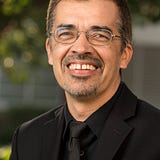
Finally, like Bob Dylan’s famous song, “The Times They Are a-Changin,” I hope that you, as governor of the great state of California (formerly part of Mexico!), “…heed the call” to what we — the racialized, marginalized and otherized — are demanding during these dark times: to be listened to; to be treated with dignity and respect.
Cordially,
Álvaro Huerta, Ph.D., Associate Professor, Academic Senate Member
California State Polytechnic University, Pomona

Alvaro Huerta, Ph.D.
WRITTEN BY

Dr. Álvaro Huerta is an Associate Professor in Urban & Regional Planning and Ethnic & Women’s Studies at California State Polytechnic University.

Monday, May 18, 2020

The Right to Ethnic Studies in Higher Education

There's a major battle playing out right now regarding making Ethnic Studies a requirement at both the Cal State University and University of California systems levels.  I am total in agreement that this is about our right as minoritized groups to this curriculum.  

That Anglos and other groups have also been denied this history and curriculum merits emphasis.  A critical, higher-order-thinking education is optimally always understood as for all if we can only get past the politics...  I've always said that someday, this will be simply called "a good education."

-Angela Valenzuela


Especially given the demographics, asks Alvaro Huerta, why shouldn't colleges require students to learn about others' histories, struggles and successes in this country?
By 

May 15, 2020


Dr. Alvaro Huerta
It’s racist to oppose ethnic studies in higher education and K-12.

Now that I have your attention, allow me to explain. In California, while we’ve done a relatively good job of enforcing home isolation (for those with homes) and social distancing during this crisis, a debate is ongoing in the state Legislature and higher education about whether or not to mandate an ethnic studies course for undergraduates. More specifically, a state bill, Assembly Bill 1460, introduced by Assembly Member Shirley Nash Weber and co-authored by other members, is pending. If passed by the Legislature and signed by Governor Gavin Newsom, it would make the 23 California State University campuses require all students to take one course of three units in ethnic studies to graduate. (The CSU represents the “nation’s largest four-year public university system.”) As approved by the CSU Board of Trustees in early 2013, CSU students need a minimum of 120 semester units to graduate for most bachelor’s degrees. Hence, if a student is required to take one three-unit ethnic studies course, it only represents 2.5 percent of the total to graduate.

“So why is it racist to oppose ethnic studies, Dr. Huerta?” I’m glad you asked. To answer this question, let’s consider the demographic composition of CSU students. In fall 2018, the CSU system enrolled 481,210 students, including postbaccalaureate and graduate students, of which only 110,570, or 23 percent, were white. That means that the majority, or 77 percent, of the university system’s students were nonwhite. While 76,386 students were Asian/Pacific Islanders, African Americans represented 19,301, or 4 percent, of the student body. And Latinas/os were the largest ethnic/racial group, consisting of 199,521 students, or 41.5 percent, of the total. Moreover, 21 of the 23 campuses meet the criteria for Hispanic-serving institutions. Thus, why would the opponents of ethnic studies deny a majority of racialized (or “otherized”) CSU students the opportunity to learn about their histories, struggles and successes in this country with its dark past and dark present?

Speaking of America’s dark past, in terms of structural racism in higher education, the struggle for ethnic studies dates back to the late 1960s. In fact, student organizers and others at a CSU campus, San Francisco State University, played a key role in demanding and establishing ethnic studies not only in California, but also throughout the nation. Founded in fall of 1969, SFSU’s College of Ethnic Studies’ website sheds light on this important movement:

In 1968 and 1969, the Black Student Union, Third World Liberation Front, select staff and faculty, and members from the larger Bay Area community organized and [led] a series of actions against systematic discrimination. Protestors spoke out against lack of access, misrepresentation, and the overall neglect of indigenous peoples and people of color within the university's curriculum and programs. Their specific demands included the establishment of four departments: American Indian Studies, Asian American Studies, Black Studies, and La Raza Studies within a College of Ethnic Studies. These demands reflected a respect for the diverse intellectual traditions and cultural expressions of scholars, activists, and artists of color and indigenous people throughout the United States.

It took 50 years for another CSU campus, California State University at Los Angeles, to follow in SFSU’s footsteps to establish a College of Ethnic Studies, going beyond a department or series of ethnic studies courses. Its mission statement also shines a bright light on the importance of ethnic studies:
The College of Ethnic Studies is the first such college to be established at a university in the U.S. in 50 years. We will develop leaders who engage in rigorous, self-reflexive study that motivates critical engagement, self-determination and decolonial understandings of the world. The college provides an interdisciplinary intellectual space that centers the histories, traditions, cultures, experiences, struggles and accomplishments of diasporic communities of color, making connections between the local and transnational.

As an interdisciplinary scholarly field, ethnic studies is about self-respect and self-determination. It’s about racialized groups -- workers, students, scholars, organizers and others -- refusing to be viewed or gazed upon from a Eurocentric paradigm as inferior or less than. It’s about rejecting the scholarly practice of being objects of studies. Instead, we demand to be the subjects in this equation. As subjects, we don’t need outsiders writing our stories, narrating our histories and planning our futures.

As subjects, we, too, create knowledge!

Today, as we confront the dire consequences of the COVID-19 pandemic, especially given the inept and negligent federal response from the White House and GOP-controlled Senate, racialized/marginalized communities are suffering disproportionately in terms of rates of infections and deaths, according to the Centers for Disease Control and Prevention. That includes Latinas/os, African Americans and Native Americans, among others. It especially includes immigrants; the Trump administration is wreaking havoc among los de abajo (those on the bottom) with its draconian and xenophobic policies. Moreover, we are witnessing an increase in racism and hate crimes against Asian Americans and Pacific Islanders in this country due to COVID-19, which is fueled in large measure by President Donald Trump and his Republican lackeys referring to it as the “Chinese virus.”

¡Ya basta!

The impacts of COVID-19 pandemic clearly and strongly demonstrate the need for ethnic studies. But as those of us who support such studies make the case for them, we must also reject being tokenized. It will not be progress if a minority of brown scholars (and other racialized groups) “make it,” while the majority of brown and black kids in America’s barrios and ghettos are denied quality K-12 schools and equal access to higher education, limiting their opportunities to get ahead. And let’s not forget about Native Americans on reservations and beyond.

“College isn’t for everyone!” Yeah, I’ve heard that line before while growing up on the mean streets of East Los Angeles and pursuing higher education. Now that I’m a Chicano scholar-activist and survivor of white studies with undergraduate and master’s degrees from the University of California, Los Angeles, and a Ph.D. from the University of California, Berkeley, I often contemplate if white students from privileged backgrounds are also told (or conditioned to believe) this anticollege message that’s primarily aimed at racialized and working-class groups. It’s yet one more reason why I continue to say, “Viva ethnic studies!”

Alvaro Huerta holds a joint faculty appointment in urban and regional planning and ethnic and women’s studies at California State Polytechnic University. Among other scholarly publications, he’s the author of Reframing the Latino Immigration Debate: Towards a Humanistic Paradigm and Defending Latina/o Immigrant Communities: The Xenophobic Era of Trump and Beyond. He holds a Ph.D. in city and regional planning from the University of California, Berkeley, and an M.A. in urban planning and a B.A. in history from the University of California, Los Angeles.

Saturday, February 15, 2020

Another Five Lessons for Democrats to Defeat Trump in 2020 (OPINION)

Like Dr. Alvaro Huerta, I am personally very concerned about the 2020 Presidential election and how the importance of the African American and Latina/o vote needs to be taken seriously into account.  Our communities should not get treated as an afterthought but rather dealt with centrally.  From that standpoint, I do agree with Dr. Huerta that the most valid contenders are Warren, Sanders, and Biden.  These, in comparison to the rest, would excite these combined electorates. 

My hope is, of course, that whoever the candidate ultimately is, that we all rally behind that candidate in order to get Trump out of office.

-Angela Valenzuela

Another Five Lessons for Democrats to Defeat Trump in 2020 (OPINION)

By:  FEB 13, 2020


As part of my last two essays on how Democrats can beat President Trump (here and here) I’ve added another five lessons. As a registered Independent (as noted in my last essay), I’ve consistently been critical (to the present) of Democrats and Republicans in the areas of race, class, place, immigration, etc. My most recent book on defending Latina/o immigrants shares more reasons why. Also, since I’m offering these perils of wisdom to the Democrats on a pro bono basis, don’t blow it, Democrats!

African American and Latina/o Support Is Key

Without the majority support and enthusiasm of African American and Latina/o voters, the ultimate Democratic candidate to take on Trump will lose. Let’s not get confused or bothered by the recent Iowa caucus fiasco or the New Hampshire primary. These primarily white states, where Iowa is 91% white and New Hampshire is 93% white, will not determine who wins the White House given the importance of more diverse states with large populations of African Americans, Latinas/os, Asian & Pacific Islanders and others. At 94% white, a state like Vermont might as well be next to make sure that we secure the whitest possible candidate. For Democratic leaders and voters, this should be part of the criteria to defeat Trump, mimicking former President Barack Obama’s diverse coalition.
That said, given that Pete Buttigieg, Amy Klobuchar, Michael Bloomberg and Tom Steyer don’t have a strong record with African Americans and Latinas/os, they should all drop out now. That includes Tulsi Gabbard and Deval Patrick. Not sure why Gabbard and Patrick are still in the race since they’re polling in the subzero range? 
What makes Buttigieg think that he can fix this country’s structural racial problem if he couldn’t get the job done at the local level? In terms of Bloomberg, he’ll never secure the majority support of African Americans and Latinas/os due to his racist stop-and-frisk policy. A convenient and self-serving apology won’t help. This also explains why Kamala Harris never had a chance, given her background as a prosecutor with America’s incarceration problem related to African American and Latinas/os.

From 11 Candidates to Three

As of early February, 2020, there should really only be three candidates left: former Joe Biden, Senator Bernie Sanders and Elizabeth Warren. I’m not implying here that these candidates have strong records in terms of race or racial justice issues. For example, while Biden was part of Obama’s Deporter-in-Chief campaign, Sanders and Warren focus too much on class issues. While class is very important, so is race.
Given the importance of the 2020 president election, we can’t have too many Democratic candidates at this stage when Trump doesn’t have to deal with internal competition. In short, while the existing Democratic candidates compete against each other for individual donations and voters, Trump has the field all to himself.
This is a recipe for disaster for Democrats.

Stop With the Cannibalism

By attacking each other during primary debates and on the campaign trail, Democrats are only increasing Trump’s chances to get re-elected. While I believe in debate and differences of opinion, this is not the time to engage in WWE takedowns, where the ultimate Democratic candidate will be hobbled going against Trump. Why give Trump more ammunition? This makes no sense to me. Given that Trump has solidified his white nationalism base and agenda, like any tyrannical leader in world history, he’s consistently espousing and implementing his Draconian agenda with limited or obstacles. With the help of the GOP-led Senate, Senate Majority Leader Mitch McConnell and his racist base, Trump can actually “stand in the middle of Fight Avenue and shoot somebody” without political repercussions. If this were to occur, I wonder if Attorney General William Barr will just look the other way, like a good subordinate in the mafia?


Money Does Matter in Elections

If billionaires like Bloomberg and Steyer want to help the country (and the world), they should invest their billions in helping defeat Trump through donations to the ultimate Democratic candidates, direct ads against Trump and other legal avenues. This includes recruiting other billionaires and millionaires to pitch in. While the existing Democratic candidates are dividing the American donation pie among each other, Trump is raking in millions of dollars solely for himself and his white nationalist agenda. This includes the RNC, which, like the GOP-dominated Senate, is beholden to Trump. With millions of dollars at his disposal, Trump will continue to hold his white nationalist rallies and buy ads on television, radio and social media to secure his re-election.
This is another recipe for disaster for Democrats.

Unity and Clear Message on Progressive Values

In order for Democrats to win the White House in 2020, they must immediately unify around one candidate (with a strong VP candidate from a diverse background) and advance an agenda based on progressive values. This includes access to health care for all Americans residents/citizens, affordable housing, good-paying jobs and opportunity to pursue higher education without getting into massive debt. This also includes no brown kids in cages! While there are more issues, Democrats should keep the message clear and simple for all open-minded voters to understand.
In short, the ultimate Democratic candidate (and VP candidate) must speak in a
language that most voters understand, energizing millions of Americans (state-by-
state) to get to the ballot box on Tuesday, November 3.
***
Dr. Alvaro Huerta holds a joint faculty appointment in Urban & Regional Planning and Ethnic & Women’s Studies at California State Polytechnic University, Pomona. Among other publications, he’s the author of Defending Latina/o Immigrant Communities: The Xenophobic Era of Trump and Beyond. He holds a Ph.D. (city and regional planning) from UC Berkeley. He also holds an M.A. (urban planning) and a B.A. (history) from UCLA.

Saturday, August 10, 2019

The Mexican: An Endangered or Hunted Species by Alvaro Huerta, Ph.D.

I find it interesting to see news commentators always resistant to saying the word, "Mexican," much less "anti-Mexican."  They always seem to want to say "Hispanic" or "Latino."  I think that this penchant is part and parcel, albeit at a subterranean level, to this same anti-Mexicanism about which Dr. Alvaro Huerta writes.

For U.S.-Mexicans, the terms is an ethnic and not a national identifier whereas for Mexican nationals, it is, of course, a national identifier.  

This nuance even frequently confuses Mexican nationals.  We need to have a broader public conversation just on this...what it means to be Mexican.  That way, we can speak more accurately and meaningfully about anti-Mexicanism in our country today.

Thanks for encouraging this thinking and conversation, Dr. Huerta.


-Angela Valenzuela


Photo Credit: Cartoon appears courtesy of Lalo Alcaraz © 2019 Andrews McMeel Syndication


The Mexican: An Endangered or Hunted Species by Alvaro Huerta, Ph.D.

Mexicans have officially become members of an endangered or hunted species in the U.S. (I’m not referring to our enormous demographics, as we’ll continue to multiply in el norte—where individuals of Mexican origin represent over 40 million citizens/residents—despite the racist fantasies of Donald J. Trump and his immoral ilk. Throughout the early 1800s to the present, Mexicans have been robbed of their lands, lynched, killed, imprisoned, segregated, subjugated, vilified, scapegoated, sterilized, raped, beaten by white mobs, brutalized by cops, racially targeted with violence, etc.
Today, the guilty of these heinous acts and crimes include the most powerful racist in the world (Trump), the morally bankrupt political party (GOP), state media (Fox “News”), deplorable Trump supporters, capitalists and state agents.
While Trump wants us to believe that there are “good people” among those who espouse (and act upon) white supremacy, racial hatred/violence and those who oppose the worst elements in our midst, we are currently living in another dark period in American history when people must take sides. When the government targets a particular racialized group with brutal policies and programs (e.g., slavery, reservations, Jim Crow, internment camps, children in cages), you are either in favor of the state’s inhumane policies and programs or you are against them.
When it comes to injustice, there’s no neutrality.
According to the late educator and philosopher Paulo Freire in the Pedagogy of the Oppressed, the oppressors or those in power who dehumanize the oppressed or the vulnerable, in the process of dehumanizing others, they become dehumanized. For instance, when the government of the U.S. and its agents/apologists separate children from their parents/guardians and force the children into cages, those responsible for these inhumane acts become dehumanized.
At the end of the day, history will condemn the oppressors or guilty!
In my most recent book, Defending Latina/o Immigrant Communities: The Xenophobic Era of Trump and Beyond, while I discuss the plight of Latina/o immigrants in general, I argue that anti-Mexicanism in particular has deep roots in American history. As part of my topical and timely book, as a guest essayist, Dr. Juan Gómez-Quinones provides a brilliant analysis and paradigm on the question of anti-Mexicanism in el norte: “Anti-Mexicanism is a form of nativism practiced by colonialists and their inheritors.”
As I’ve previously argued, anti-Mexicanism has become one of America’s favorite pastimes, like baseball. Yet, unlike this favorite American sport, anti-Mexicanism goes back to the 1820s when white American immigrants first settled in what is now known as the state of Texas. Back then, it was Mexican territory, where many white American immigrants originally settled with and without permission. Once Mexico outlawed slavery in 1830, according to the late Dr. Ronald Takaki in A Different Mirror: A History of Multicultural America, the white settlers, in conjunction with slave owners, engaged in warfare against the Mexican government and annexed Texas in 1836 as The Republic of Texas. It appears to me that the white American settlers or greedy gringos took the Mexicans literally when my people graciously said, “Mi casa es su casa.”
¡Ya Basta!
In short, it’s long overdue for all individuals of Mexican origin (sin los vendidos) and our sympathizers/supporters to collectively speak out, organize and take action to defend our human rights in el norte and el sur!

About: Dr. Alvaro Huerta holds a joint faculty appointment in Urban & Regional Planning and Ethnic & Women’s Studies at California State Polytechnic University, Pomona. Among other publications, he’s the author of Reframing the Latino Immigration Debate Towards a Humanistic Paradigm and Defending Latina/o Immigrant Communities: The Xenophobic Era of Trump and Beyond. He holds a Ph.D. in City and Regional Planning from UC Berkeley. He also holds an M.A. in Urban Planning and a B.A. in History from UCLA.