Paxton’s Attack on Jolt Echoes a Long History of Silencing Latino Political Power
While I do not pretend to know the particulars beyond what has been reported by Nguyen and Klibanoff in the Express-News (2025), the effort by Texas Attorney General Ken Paxton to shut down the Jolt initiative—one of the state’s most effective Latino civic-engagement organizations—most certainly fits into a well-established pattern. It echoes a long Texas history of suppressing Latino political power through intimidation, manufactured crises, and the selective use of state authority.
To truly understand this moment, we must see it in its historical and decolonial context. For well over a century, Texas has deployed legal, political, and bureaucratic tools to police and shrink the political power of Latino communities. From poll taxes, white primaries, English-only ballots to literacy tests, voter purges, and now “election integrity” scare tactics, the state has continuously reengineered the political landscape to maintain racial hierarchy.
Today’s version of that old project further includes gerrymandering—most notably the failed attempt, under pressure from Donald Trump, to draw five new congressional districts designed to dilute rising Latino voting power and secure permanent Republican control. That map was ultimately too extreme even for Texas courts, but the message was unmistakable: Latino political participation is to be contained, not cultivated (Guo, 2025).
Paxton’s attack on Jolt follows the same logic. It stems from a thoroughly debunked 2024 social-media rumor alleging that migrants were being registered to vote at driver’s license offices in North Texas—a claim that local officials, including Republican leaders, dismissed outright. Yet Paxton seized on this fiction to launch an intrusive investigation into groups working primarily with Latino voters.
When his initial efforts faltered in court, Paxton simply pivoted, filing a new lawsuit accusing Jolt of orchestrating an “unlawful voter registration scheme,” despite providing no evidence of noncitizen voting. Instead, he targets the organization for conducting voter registration drives at DMV locations—community hubs where working-class Latinos naturally gather. In a telling distortion of Texas election law, he now frames a volunteer’s explanation of the parent-agent provision as evidence of wrongdoing.
The point is intimidation, not truth.
Taken together, these actions reveal a disturbing theory of democracy: Latino civic participation is inherently suspect, and any infrastructure that supports it must be dismantled. Whether through extreme gerrymanders designed to nullify Latino voting strength, or legal assaults on organizations registering Latino youth, the goal is the same—maintain political power by shrinking the electorate.
A decolonial lens makes this continuity visible. Latino civic organizations like Jolt are not just registering voters; they are challenging a longstanding colonial logic that extracts labor while denying civic belonging. When young Latinos organize, vote, and assert political agency, they interrupt the racial order Texas has spent generations protecting. That is the disruption Paxton is attempting to crush.
And this is not new. Texas officials have repeatedly equated Latino civic engagement with disorder or fraud, from the surveillance of Chicano activists in the late 1960s and early 1970s (Contreras, 2025) to the recent attempt to shut down El Paso’s Annunciation House (see Paxton v. Annunciation House, Inc. 2025). Each episode follows the same pattern: when Latinos build power, the state responds by declaring that power illegitimate.
 |
| see Contreras (2025) |
Jolt is simply the latest target.
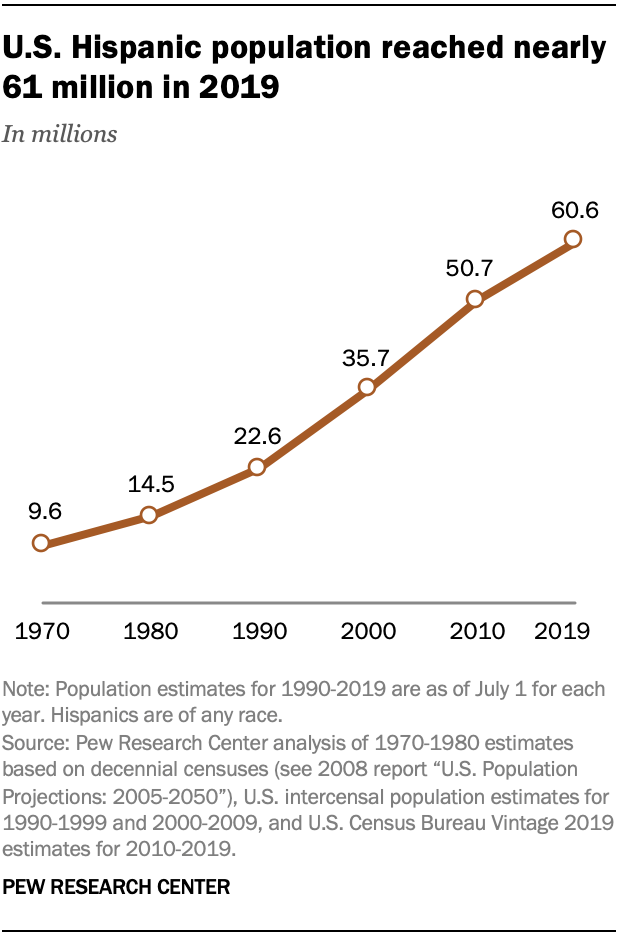
That said, it surely concerns the political establishment that approximately 200,000 Latina and Latino youth in Texas turn 18 every year (as Jolt notes on its webpage). This rising generation of Gen Z voters represents a profound demographic shift—one that makes efforts to suppress Latino civic engagement not only predictable, but deeply revealing of the racialized anxieties driving state power.
The lawsuit against Jolt is not about voter fraud—it is about fear. It is about a political establishment that recognizes the demographic reality of Texas and is scrambling to freeze the electorate in place. It is about denying young Latinos the tools they need to participate in public life. It is, at its core, an attempt to preserve a political order that can no longer command the consent of a changing population.
Texas cannot claim to be a democracy while treating the political participation of its largest communities of color as a threat to be neutralized. Jolt’s resistance is not only a legal fight—it is an act of collective self-determination. It affirms what generations of activists, elders, and organizers before us have insisted: we belong here, our voices matter, and our political engagement strengthens, rather than threatens, the fabric of this state. We need and deserve organizations like Jolt that do the essential work of cultivating young leaders, expanding civic participation, and ensuring that Latino communities can exercise the full rights of citizenship. To defend Jolt is to defend democracy itself.
The struggle for Latino political power in Texas is far from over, but the outcome of this case will say much about who this state believes democracy is for.
Reference
Contreras, R. (2025, January 6). Scoop: CIA releases docs on Latino civil-rights-era surveillance, Axios. https://www.axios.com/2025/01/06/cia-releases-docs-latino-civil-rights-era-surveillance?utm_source=chatgpt.com
Guo, K. (2025, July 10). As Texas Republicans prepare for mid-decade redistricting, cautionary tales loom from the past, Texas Tribune. https://www.texastribune.org/2025/07/10/texas-redistricting-congressional-districts-past-mistakes-overreach/?utm_source=chatgpt.com
Nguyen, A., & Klibanoff, E. (2025, November 11). Texas Latino civic group sues to block AG Ken Paxton from shutting it down. San Antonio Express-News. https://www.expressnews.com/news/article/texas-latino-civic-group-sues-to-block-ag-ken-21163598.php
Paxton v. Annunciation House, Inc., No. 24-0573 (Tex. Sup. Ct. May 30, 2025). https://law.justia.com/cases/texas/supreme-court/2025/24-0573.html
Jolt Initiative, a nonprofit that aims to increase civic participation among Latinos, is suing Texas Attorney General Ken Paxton to block his efforts to shut them down. Paxton announced Monday that he was seeking to revoke the nonprofit’s charter, alleging that the group had orchestrated “a systematic, unlawful voter registration scheme.”
 This is not the first legal back-and-forth between Jolt and Paxton’s office. Last year, the organization successfully sued to stop the state’s investigation into their voter registration efforts. In the new suit, Jolt’s lawyers argue Paxton’s efforts to shut them down are retaliation. The attorney general’s office has also in recent years targeted other organizations aiding Latinos and migrants, such as the effort to investigate and shut down El Paso-based Annunciation House.