Translate

Showing posts with label K-12. Show all posts

Friday, January 08, 2021

A Seat at the Table With Education Week: Testing & Accountability, featuring Dr. Lorrie A. Shepard and Dr. Angela Valenzuela

Friends:


I'm happy to invite you to a conversation that I am honored to be having next week with Dr. Lorrie A. Shepard on the very important topic of testing and accountability in a conversation moderated by Peter Dewitt for his online talk show at Education Week. The event is free and open to the public. It takes place next Wednesday, January 13, 2021,  from 2:00 p.m. -3:00 p.m. EST.


You can listen to the program here: TEMPLATE: Editorial Webinar.

-Angela Valenzuela


The pandemic has disrupted lives and schooling for nearly a year—and some in the education space—and beyond—worry about lost learning. One way to know what has been lost is through testing, but is it reasonable to hold students—or their teachers—accountable for one of the most challenging years in recent memory? This year’s National Assessment of Educational Progress, or NAEP—often referred to as “the Nation’s Report Card—has been postponed because of the pandemic. What impact will this decision have on education in this country?

Join Peter DeWitt as he sits down with researcher Lorrie Shepard, past president of the American Educational Research Association and the National Council on Measurement in Education, as they discuss this critical topic, especially given the circumstances.


Education Week maintains sole editorial control over the selection of the guests and content for this virtual event. References to products or services in the course of this webinar do not constitute endorsements by Education Week or Editorial Projects in Education.


Closed-captioning is available for this event. On the date of the event, you can log in as early as 15 minutes before the start of the webinar. Open the “Closed-Captioning” link from the “resource list” (located at the bottom of the console) to access Communication Access Realtime Translation (CART). A transcript will be available for download from the resource list within five business days after the event.


Your e-mail address may be used to communicate with you about your registration, related products and services, and offers sent to you directly from sponsors. Use of your personal information is otherwise protected according to our privacy policy.


SPEAKERS


Lorrie A. Shepard

Distinguished Professor and Dean Emerita,  University of Colorado Boulder


Lorrie A. Shepard is University Distinguished Professor?at the University of Colorado Boulder in the?Research and Evaluation Methodology program.? Her research focuses on psychometrics and the use and misuse of tests in educational settings.? Her technical work has contributed to validity theory, standard setting, and statistical models for detecting test bias.? Her research studies on test use have addressed the identification of learning disabilities, readiness screening for kindergarten, grade retention, teacher testing, effects of high-stakes accountability testing, and, most recently, the use of classroom assessment to support teaching and learning.


Dr. Shepard is past president of the American Educational Research Association and the National Council on Measurement in Education.? She was elected to the National Academy of Education in 1992 and served as president from 2005-2009.


Angela Valenzuela

Professor, Department of Curriculum & Instruction and the Department of Educational Leadership and Policy,  University of Texas at Austin

Angela Valenzuela is professor in the Department of Curriculum & Instruction and the Department of Educational Leadership and Policy at the University of Texas at Austin. Valenzuela is director of the Texas Center for Education Policy. Previously, she taught in the Department of Sociology at Rice University in Houston, and she was a visiting scholar at the Center for Mexican American Studies at the University of Houston. She completed her Ph.D. at Stanford University. Angela is the award-winning author of the book, Subtractive Schooling: U.S.-Mexican Youth and the Politics of Caring (1999). Valenzuela serves on the LULAC National Task Force on Higher Education, and is the executive director of the National Latina/o Education Research and Policy Project (NLERAPP), a consortium of ten institutions that enhances teaching for high school youth in Texas, California, Wisconsin, Chicago, New York, Colorado, New Mexico, and Arizona.


MODERATOR


Peter DeWitt


FOLLOW

Opinion Contributor,  Education Week

Peter DeWitt is a former K-5 public school principal turned author, presenter, and independent consultant.

* twitter

* linkedin

Related Tags:

Student Learning

For all webinars broadcast by Education Week after August 1, 2019, Certificates of Completion are available to all registered live attendees who attend 53 minutes or more of this webinar. Educators can download a PDF certificate verifying 1 hour of Professional Development credit. As with all professional development hours delivered, Education Week recommends each educator verify ahead of the webinar broadcast that the content will qualify for professional development in your school, district, county, or state with your supervisor, human resources professional, and/or principal or superintendent’s office.


Wednesday, June 14, 2017

An unscholarly work helped push an academic Chicano movement

We're making a difference, my friends.  This is not only good for the Latino community, by the way, but for all children and youth.

-Angela

An unscholarly work helped push an academic Chicano movement

June 11, 2017
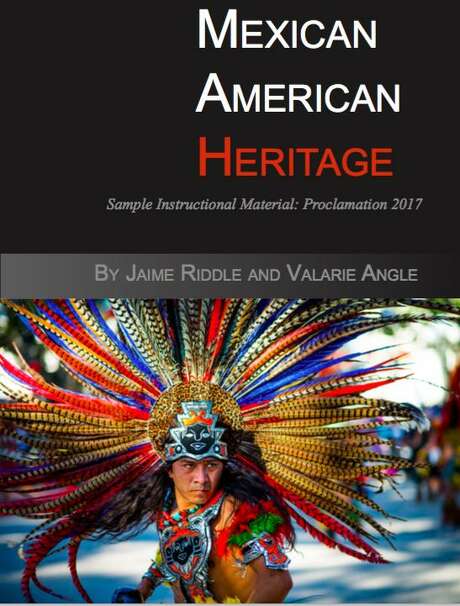
Mexican American Heritage
Mexican American Heritage“Mexican American Heritage,” a controversial text rejected last year by the Texas Board of Education, failed on many levels but succeeded in getting Latino academics to respond in force. The racist, offensive text, riddled with errors and falling below any kind of recognizable academic standard, also galvanized the Mexican American Studies movement.

The MAS community of Texas, which gathered in San Antonio over the weekend, can thank the unknown Momentum Press that published it and the equally unknown, unqualified authors who wrote it.

Christopher Carmona, assistant professor at the University of Texas Rio Grande Valley, described the fight over the book as “a wake-up call.” Angela Valenzuela, professor at the University of Texas-Austin, called it “a game changer.”

More than 200 educators gathered at the second annual Statewide Summit on Implementing Mexican American Studies in Texas Schools. Led by the National Association for Chicana & Chicano Studies’ Tejas Foco Committee on Mexican American Studies, it focused on pre-K through 12 curricula. The state group may have surpassed the national in its activity and organization.

Its goal is clear: to implement Mexican American Studies in Texas at all grade levels. On the most basic levels, they’re sharing information and collecting data, even on individual teachers fighting the good fight, sometimes alone. They’re encouraged by finding them, and they ask teachers to self-report online at MAStxeducation.com.

“It’s encouraging and exciting,” Carmona says, when they find evidence of progress. He points to the Donna Independent School District, which offers a Mexican American history class.

Valenzuela said El Paso ISD passed a policy on ethnic studies, though it remains to be implemented. Austin ISD followed suit and this fall will offer an ethnic studies class in six high schools. By fall 2018, all its high schools will offer the class.

In San Antonio, a community-based effort called MAS for the Masses continues to reach students. A local KIPP charter school and Southwest High School offer MAS dual credit classes in conjunction with Palo Alto College. And Stevens High School in Northside ISD offers a Mexican American literature class. UTSA offers summertime MAS teacher training.

San Antonio’s strength also can be counted in the support of the MAS conference. UTSA hosted it and its co-sponsors included PAC’s Center for Mexican American Studies, the advocacy group Somos MAS, the Comparative Mexican American Studies Program at Our Lady of the Lake University and San Antonio College’s Center for MAS.

Chicano scholars involved can’t help but feel energized every time they find an ally — a town that shows interest, a teacher who hunts down the resources to teach a class.

“There’s a teacher in Ben Bolt, a little town in the middle of nowhere, teaching Mexican American History I and II,” Carmona said. “We found her at one of the conferences.”

Lucero Saldaña at the KIPP Camino Academy on the city’s West Side used popular films to teach a Mexican American history elective to sixth- through eighth-graders. They’ve learned about events in the Chicano Civil Rights Movement; attended a youth conference; heard United Farm Workers co-founder Dolores Huerta speak; and attended the Martin Luther King Jr. and Cesar Chavez marches.

Her counterpart taught a class on civil rights that included studying current political movements such as Black Lives Matter and the push to expand the rights of lesbian, gay, bisexual and transgender Americans.

“It has empowered students,” Saldaña said. “They’re finally seeing themselves in the curriculum, in media and in history.”

Curriculum, standards and textbooks are in development at various grade levels. Chicano academics critical of Momentum’s book will have to be just as critical of new efforts that go before the State Board of Education, which meets later this month.

They’re already concerned about rolling out ethnic studies statewide. “We don’t want coaches teaching it, or substitute teachers,” or the only teacher of color in a school, for that matter, Valenzuela said.

They’ve been at work for decades. They know the power of newfound knowledge on students, of being transformed by reading for the first time how one’s own ancestors played roles in making Texas and the United States. Such enlightenment can change a person. History is powerful.

“Mexican American Heritage,” a failed effort at Mexican American Studies, was powerful, too. It did its job of building an academic force that’s itself transformational.

eayala@express-news.net

Twitter: @ElaineAyala