Translate

Showing posts with label Kimberlé Crenshaw. Show all posts

Monday, August 03, 2026

The Rot We Refuse to Name: Montgomery, Alabama, and the Living Legacy of Racial Terror, by Angela Valenzuela, Ph.D., August 3, 2026

The Rot We Refuse to Name: Montgomery, Alabama, and the Living Legacy of Racial Terror

by

Angela Valenzuela

August 3, 2026

Legacy Museum link

Last week, during a weeklong stay in Montgomery, Alabama as part of the Legacy Summit hosted by the the African American Policy Forum (AAPF), I visited the Equal Justice Initiative’s Legacy Museum—an experience that unsettled me in ways I am still trying to process. I am deeply grateful to Dr. Kimberlé Crenshaw and for everyone at the AAPF—as well as to American Association of University Professors and the Center for the Defense of Academic Freedom, for making the visit possible for me and so many others.

Inside the museum, the history of racial terror ceased to feel like a distant past. It became immediate and embodied: a history carried in names, voices, stories, images, places, and lives, and one whose consequences remain painfully present. I encourage all to consider this opportunity next Summer or alternatively, to take some time off yourself to visit the various sites in Montgomery to get a complete experience.

While there, you must also visit the National Memorial for Peace and Justicethe Freedom Monument and Sculpture Park, and Montgomery Square. Together, these places illuminate the extraordinary decade of struggle that helped transform the United States and, without exaggeration, changed the world. They also remind us that the rights secured through that struggle are neither permanent nor self-sustaining. They are now being challenged by forces of religious nationalism that seek to reverse many of the democratic gains for which earlier generations sacrificed so much.

The museum itself stands on the sacred grounds of a former cotton warehouse where enslaved Black people were once held and forced to labor. From that location, it traces a historical continuum linking the transatlantic slave trade and enslavement to the violent overthrow of Reconstruction, racial terror lynching, Jim Crow, mass incarceration, and the contemporary criminal legal system. Personal testimony, archival evidence, art, and data reveal not a succession of unrelated injustices, but the recurring adaptation of racial domination as older systems were challenged and new ones took their place.

What struck me most forcefully was the depth and pervasiveness of the terror that Black people throughout the South endured. Terror was not limited to the moment when a person was seized, tortured, or killed. It was directed at entire communities. It instructed Black parents about what could happen to their children. It warned Black veterans against wearing their uniforms with pride. It threatened Black citizens who attempted to vote, acquire land, build businesses, organize workers, attend better schools, or insist upon being addressed with dignity.

Lynching was not simply spontaneous mob violence committed by a few extremists. It was a system of public terrorism intended to restore white supremacy after emancipation and suppress Black civil and political rights. The Equal Justice Initiative has documented at least 2,000 Black women, men, and children killed in racial terror lynchings during Reconstruction and more than 4,400 racial terror lynchings between 1877 and 1950. These acts were often committed publicly and with impunity, sometimes before crowds that included community leaders, elected officials, and children.

#JusticeForJamesCooper

I pause here to acknowledge James Cooper, whose body was found hanging from a utility pole in Metcalfe, Mississippi. Jay Fletcher first reported on the unresolved questions surrounding Cooper’s death in 2024 with the Delta Democrat-Times revisiting the case two years later (Fletcher, 2024, 2026). Kim Dockery (2026) has also drawn renewed attention to the case and the family’s continuing demand for answers. Although local authorities ruled Cooper’s death a suicide, his family and members of the community dispute that conclusion and are calling for a federal investigation.

Cooper’s story reminds us why the thousands documented by the Equal Justice Initiative cannot remain an abstraction. Each number represents a person with a name, a life, relationships, aspirations, and a community forced to live with the terror and injustice surrounding that person’s death. Naming him here is one small act of refusing the erasure upon which racial terror has long depended.

The museum makes clear that the targets of this violence were not only the people who were murdered. Terror entered homes, churches, schools, workplaces, and everyday relationships. It constrained movement, speech, aspiration, and political participation. It produced forced migration as Black families fled communities where the threat of violence had become unbearable. It also taught white communities that violence against Black people would be tolerated, celebrated, or ignored. Geez, isn't this what's getting "taught" anew with each unresolved case today like James Cooper's?

This is what makes the history so difficult to absorb. The cruelty was not incidental to the social order. It helped create and maintain that order.

Emancipation formally ended enslavement, but it did not eliminate the ideology that had justified it. The mythology of Black inferiority was transformed into new presumptions: that Black people were dangerous, criminal, incapable of citizenship, or naturally suited for subordination. During Reconstruction, violence sought to destroy emerging Black political power. After Reconstruction, lynching and Jim Crow enforced segregation and racial hierarchy. As the museum demonstrates, these narratives did not disappear with the end of legally mandated segregation. They became embedded in policing, prosecution, sentencing, imprisonment, and capital punishment.

After getting back to the hotel, I reached out to my husband, Emilio Zamora, professor emeritus of history at the University of Texas at Austin, to share the anger and sorrow I felt as I confronted this sustained history of racial terror and injustice. His response was that it represents the “rot” of this country

The word stayed with me.

By “rot,” he did not mean only a shameful chapter in an otherwise unblemished national history. He meant something deeper: a foundational moral and institutional decay that has been repeatedly covered over without being removed. The legal forms have changed, but the underlying presumption of Black guilt, dangerousness, and disposability has remained disturbingly resilient. 

Although this system is rooted most fundamentally in anti-Blackness, its logics have extended outward, shaping the criminalization and punishment of Latino men, immigrants, Indigenous people, and other racialized communities. Through policing, immigration enforcement, detention, incarceration, and unequal sentencing, these groups have also been cast as dangerous, foreign, or undeserving of full protection under the law. Recognizing these connections should not blur the distinct history of Black oppression; rather, it reveals how institutions built through anti-Black racial domination have generated broader systems of surveillance, exclusion, and punishment.

According to the Bureau of Justice Statistics, at year-end in 2023, 1,862 Black males per 100,000 Black male U.S. residents were serving sentences of more than one year under state or federal correctional jurisdiction—more than five times the corresponding rate for white males, 341 per 100,000 (Mueller & Kluckow, 2025). 

See Table 13 in Mueller & Kluckow (2025).

The Equal Justice Initiative aptly describes the modern death penalty as a direct descendant of racial terror lynching and links the terror era to racially biased capital punishment, excessive sentencing, wrongful convictions, and the continuing presumption of Black criminality.

This does not mean that lynching and imprisonment are identical. It means that institutions of punishment developed within a society that had never fully repudiated the racial assumptions underlying enslavement and racial terror. Black men who were once portrayed as threats requiring mob violence have continued to be treated as presumptively dangerous within schools, courts, prisons, and systems of capital punishment. The rope, the electric chair, the execution chamber, and the prison cell belong to different historical moments, but the Legacy Museum compels us to examine the ideas about race, guilt, innocence, and human worth that connect them.

Montgomery also reminded us that terror and resistance have always existed alongside one another. Black people did not merely endure this history. They built families, churches, schools, businesses, civic organizations, freedom movements, and cultures of extraordinary beauty and intellectual depth. They organized against slavery, challenged lynching, fought segregation, registered voters, contested wrongful convictions, and continued to demand that the nation honor principles it repeatedly denied them.

That resistance, however, should never be used to soften our understanding of the terror they endured and endure. Celebrating Black resilience without confronting the conditions that made such resilience necessary can become another way of avoiding the truth. The moral burden belongs not to those who survived oppression, but to the institutions and communities that produced it, benefited from it, tolerated it, or refused to remember it.

I left the Legacy Museum with a clearer understanding that racial injustice cannot be overcome through commemoration alone. Museums and memorials matter because they interrupt national amnesia. They restore names, lives, and histories that official narratives have—have long suppressed—and, in many cases, continue to suppress. So remembrance must also change how we understand contemporary policy and practice. It must shape how we approach policing, incarceration, sentencing, voting rights, education, housing, and the death penalty.

The rot persists whenever racial inequality is treated as accidental, whenever Black suffering is explained without reference to history, and whenever institutions celebrate true heroes like the Reverend Dr. Martin Luther King or civil rights victories while continuously, if hypocritically, reproducing the conditions those movements opposed.

Our week in Montgomery left me grieving, but it also left me more convinced of the necessity of truth-telling. We cannot repair what we refuse to name. We cannot understand mass incarceration without understanding enslavement, Reconstruction, lynching, and Jim Crow. And we cannot claim to oppose racial terror while accepting institutions that continue to treat Black lives, and especially the lives of Black men, as inherently suspect or expendable.

The Legacy Museum asks the nation to do more than remember. It asks us to confront the rot—to expose it, remove it, and build institutions no longer dependent upon the degradation, terror, and punishment of Black people. To this, I will only add that it was a validating experience in terms of the policy battles we are fighting and have fought in coalition as Latinas and Latinos with the Black community.

Reference

Dockery, K. [@thicknpretty215]. (2026, August 3). James Cooper’s family continues to seek answers concerning his death in Metcalfe, Mississippi, and is calling for a federal investigation [Video]. Instagram. https://www.instagram.com/p/DbeCtzFB1nA/

Fletcher, J. (2024, May 8). Update on the James Cooper case. Delta Democrat-Times. https://www.ddtonline.com/crime-communities-local-content/update-james-cooper-case

Fletcher, J. (2026, August 3). One year later seeking justice for James. Delta Democrat-Times. https://www.ddtonline.com/communities-crime-local-content/one-year-later-seeking-justice-james

Mueller, D., & Kluckow, R. (2025). Prisoners in 2023—Statistical tables (NCJ 310197). U.S. Department of Justice, Bureau of Justice Statistics. https://bjs.ojp.gov/document/p23st.pdf

Saturday, March 28, 2026

Civil Rights, Reversed: When “Equality” Masks Inequality, by Angela Valenzuela, Ph.D.

 Civil Rights, Reversed: When “Equality” Masks Inequality

by

Angela Valenzuela, Ph.D.
March 28, 2026

There is a through line connecting two arguments that, at first glance, may appear distinct but are in fact deeply aligned. One, advanced by Christopher Rufo, calls for a “colorblind” reinterpretation of civil rights law—one that would prohibit any consideration of race, even for remedial purposes. The other, emerging from more radical libertarian circles, goes further: it claims that the Civil Rights Act of 1964 itself is an illegitimate infringement on freedom of association and suggests it should be dismantled altogether. 

What links these positions is not merely their skepticism of race-conscious policy, but a shared project of narrowing—if not undoing—the legal architecture of civil rights itself. For a revealing articulation of this trajectory, see Ross Douthat’s interview with Rufo in The New York Times (Douthat, 2025).

Taken together, these positions mark not a debate over policy nuance, but a coordinated redefinition of civil rights. One narrows its meaning to the point of inversion. The other seeks its outright elimination. Both rest on the same premise: that efforts to address inequality are themselves the problem.

Let us begin with the “colorblind” argument. Its appeal lies in its simplicity: no advantages or disadvantages based on ancestry; no consideration of race in admissions, hiring, or public policy. Equality, in this view, is achieved by ignoring history and the politics of difference altogether.

Digital graphic by Angela Valenzuela

But this formulation depends on a false premise—that we are operating on a level playing field. We are not. 

What this argument ultimately masks is not neutrality, but grievance politics reframed as principle. Under the banner of “colorblind equality,” what is being advanced is a narrative of injury—that white Americans, and particularly those aligned with dominant institutional power, are now the true victims of discrimination. This is not a legal argument so much as a political one. It converts historically grounded efforts at remedy into perceived acts of injustice, recasting inclusion as exclusion and equity as unfairness. 

Digital graphic by Angela Valenzuela

In doing so, it mobilizes resentment while disavowing it, presenting grievance as constitutional fidelity. But grievance politics, however carefully dressed in the language of rights, does not resolve inequality—it obscures it. And in the current Texas context, it provides the affective fuel for policies like anti-DEI Senate Bill 17 and Senate Bill 37 where the rhetoric of neutrality legitimates the restructuring of institutions in ways that ultimately consolidate, rather than challenge, existing hierarchies.

The United States did not arrive at inequality by accident. It was produced through centuries of law and policy: enslavement, segregation, exclusion from housing and employment, and systematic disinvestment. The Jim Crow laws were not merely social customs; they were legal regimes that structured access to opportunity. The Civil Rights Act was enacted precisely to dismantle those regimes and, crucially, to enable remedies where their effects persisted.

To collapse race-conscious remedies into “racial favoritism,” as Rufo does, is to erase this history. It is to treat corrective measures as equivalent to the harms they were designed to address. This is not legal reasoning; it is what I would call policy theater—a reframing of institutional retrenchment as moral clarity.

We see the consequences of this reframing most clearly in Texas.

With SB 17, the state has effectively banned DEI initiatives across public universities, invoking the language of neutrality while triggering widespread anticipatory compliance. Programs have been dismantled, trainings canceled, and academic units reorganized in ways that extend well beyond the statute’s text. At the University of Texas at Austin, the consolidation of departments focused on race, ethnicity, and gender signals not simply administrative efficiency, but a reorientation of institutional priorities.

SB 37 builds on this foundation by weakening faculty governance and centralizing authority, reducing the capacity of academic communities to respond collectively to these changes. The result is not a neutral landscape, but a managed one—where the boundaries of permissible knowledge are increasingly shaped by political directives.

This is the paradox of the “colorblind” project: in the name of limiting the role of the state, it invites a different kind of state intervention—one that withdraws protections while actively restructuring institutions.

Digital graphic by Angela Valenzuela

The libertarian argument takes this logic to its endpoint. If any government mandate for nondiscrimination is an infringement on liberty, then civil rights law itself must be dismantled. Businesses, employers, and institutions should be free to associate—or refuse to associate—on any basis, including race.

At first glance, this may appear as a principled defense of freedom. In reality, it rests on a deeply flawed understanding of both freedom and history.

Freedom of association has never been absolute, particularly in the public sphere. Once an entity opens itself to the public—whether a restaurant, a university, or an employer—it becomes part of a broader civic infrastructure. The rules that govern that space are not arbitrary constraints; they are conditions that make participation possible.

Without such protections, “freedom” becomes asymmetrical. Those with power retain the freedom to exclude, while those without it bear the consequences.

This is not a hypothetical concern. It is a historical fact.

Prior to the Civil Rights Act, discrimination in public accommodations, employment, and education was not episodic—it was systemic. Entire populations were excluded from the basic institutions of public life. To suggest that market forces alone would have corrected these injustices is to ignore the depth and durability of structural inequality.

Here, the libertarian argument converges with the “colorblind” one. Both assume that inequality is either no longer significant or irrelevant to the question of justice. Both prioritize formal neutrality over substantive fairness. And both, in doing so, risk entrenching the very inequalities they claim to transcend.

As Eduardo Bonilla-Silva has argued, colorblind ideology functions by masking structural inequality, allowing it to persist under the guise of neutrality (Bonilla-Silva, 2018). And as Kimberlé Crenshaw reminds us, civil rights law has always been contested terrain—expanded through struggle, and vulnerable to retrenchment (Crenshaw, 1988).

What we are witnessing now is a moment of such retrenchment.

The language of civil rights is being repurposed to constrain remedy. The concept of freedom is being narrowed to exclude considerations of equity. And the institutions tasked with fostering knowledge and opportunity are being reshaped accordingly.

The stakes are not abstract.

They are visible in classrooms where faculty hesitate to engage certain topics. In departments that are merged or dissolved. In students who find fewer spaces where their histories and experiences are taken seriously as objects of study. In a broader climate where the line between policy and politics grows increasingly difficult to discern.

The question before us is not whether we believe in equality. It is what kind of equality we are willing to defend.

Digital graphic by Angela Valenzuela

Is it an equality that ignores history, overlooks power, and quietly reproduces existing hierarchies? It is an equality that recognizes the unfinished work of democracy—one that understands that justice requires more than neutrality—one that requires attending to the conditions that make inequality endure?

In Texas, this question is no longer theoretical. It is legislative. It is institutional. And it is unfolding in real time.

The answer we choose will determine not only the future of civil rights law, but the meaning of freedom itself.

References

Bonilla-Silva, E. (2018). Racism without racists: Color-blind racism and the persistence of racial inequality in the United States (5th ed.). Rowman & Littlefield.

Crenshaw, K. (1988). Race, reform, and retrenchment: Transformation and legitimation in antidiscrimination law. Harvard Law Review, 101(7), 1331–1387.

Douthat, R. (2025, March 7). The anti-D.E.I. crusader who wants to dismantle the Department of Education. The New York Times.

Sunday, March 05, 2023

‘Just the tip of the iceberg’: Kimberlé Crenshaw warns against rightwing battle over critical race theory

Important read and interview in The Guardian of Dr. Kimberlé Crenshaw, founder of the African American Policy Forum and CRT pioneer. For me, this is the best quote in the whole piece.

“Wokeness has become the oppression, not the centuries of enslavement and genocide, and imperialism that has shaped the lives of people of color, in ways that continue into the present,” said Crenshaw.

Authoritarianism is definitely what is on the table here. We must stand against "racial tyranny," as Crenshaw aptly notes. Please have your voice heard and stand with us in solidarity.

Black Brown Dialogues on Policy hosts Virtual Town Hall next Sat. March 11, 2023 from 10:00 AM—4:30PM CST


We must not let democracy die in silence.

-Angela Valenzuela

#TeamBlackBrown #DontLetDEIDie

Exclusive: Author and academic cautions pushback against racial justice education feeds revival of segregationist policies

T

he professor who is a leading voice on critical race theory has warned that the rightwing battle against racial justice education not only threatens US democracy, but encourages a revival of segregationist values and policies. Kimberlé Crenshaw is among top American academics and authors recently stripped from the latest draft of the advanced placement (AP) African American studies course being piloted in US high schools, after Florida’s rightwing governor, Ron DeSantis, led an aggressive backlash against it.

The Columbia University and UCLA law professor and co-founder of the African American Policy Forum thinktank, believes that the escalations against racial history teaching, in Florida and elsewhere represent “the tip of the iceberg” of rightwing efforts to retract the progress since the civil rights era and push America towards authoritarianism.

“Are [schools] on the side of the neo-segregationist faction? Or are [they] going to stick with the commitments that we’ve all celebrated for the last 50, 60 years?” Crenshaw asked, referring to headway made on equal opportunities since the 1960s.

“The College Board fiasco, I think, is just the tip of the iceberg. There are a lot of interests that have to make this decision,” she said.

The College Board, the organization that administers college readiness exams and AP courses for high schoolers to earn college credits, denied bending to political pressure amid accusations that the curriculum has been watered down.

But in what many viewed as a response to DeSantis’s ban, the work of Crenshaw and other high-profile progressive Black figures, such as Ta-Nehisi Coates, were relegated from required reading to “optional” within the course.


People hold signs during a gathering outside a bookstore where the Florida governor was expected to be signing copies of his book. Photograph: Marco Bello/Reuters

Crenshaw said that the “frightening” choice in the new AP course to make contemporary lessons optional follows a similar logic to how corporations navigated Jim Crow segregation.

Crenshaw noted that Donald Trump and the right’s Make America Great Again (Maga) extremism is directly linked to the College Board’s decision – and further back to strategies used during decades of racial segregation laws that prevailed from post-Reconstruction to the 1960s.

“One of the truly, bone-chillingly frightening things about the aspiration to ‘make America great again’ that’s amplified by what’s happening with the College Board is that one of the most sustained features of segregation in the past was the fact that businesses were not only enablers, they facilitated segregation,” she said, driven by the profit motive and the white supremacy movement.

“So when businesses and segregation were aligned, it was a chokehold on Black freedom aspirations,” she said.

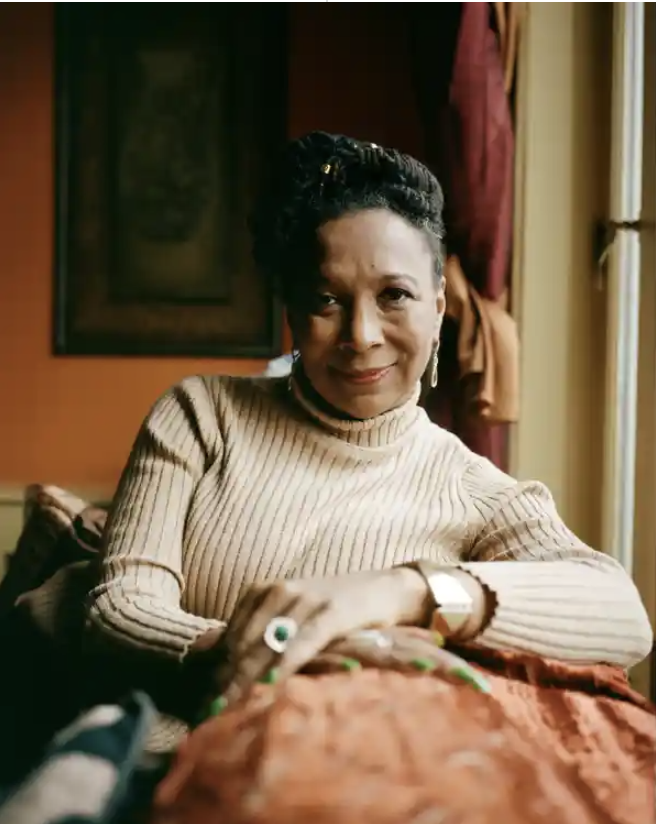
Crenshaw spoke to the Guardian from the sunlit living room of her New York home. A nearby desk that Crenshaw calls the “graveyard” is stacked with commonly banned books – books that Crenshaw herself hands out as part of her Books Unbanned tour, such as Toni Morrison’s The Bluest Eye.

It’s called ‘make America great again’. So what is it about this America now that this faction finds wanting?

She urges a stronger, concerted pushback to this latest manifestation of racist history. “What was brilliant about the civil rights movement is that they really pressured national interests, corporate interests, to break with their policies of simply facilitating segregation in the south,” she said.

Crenshaw believes that the College Board development reflects just one part of a continuous strategy from the right to target and disenfranchise minority groups.

“It’s called ‘make America great again’. So what is it about this America now that this faction finds wanting?” she asked.

“The energy and power structure of the Maga [movement] is really this desire for a time where there isn’t a sense of ‘I have to share this country with people who don’t look like me, [and] what we are born into was never an even playing field,’” she said.

So when the “idea of greatness” harks back to the time of racial tyranny, she noted, far-right forces attempt to forgo the teaching of said history, so that “future generations have no tools, no exposure, no ability to critique the present as a reflection of the past”.

Today’s most influential Republicans have made inclusive education a target and taken the supreme court further to the right, undermining other democratic institutions, as well as playing down the 6 January 2021 insurrection where extremist Trump supporters tried to stop the certification of Joe Biden’s victory over Trump and some carried Confederate flags inside the US Capitol after breaking in.

In Crenshaw’s view, this is all with the goal of transforming the “decades-long journey towards greater social justice” into what the right admonishes as “wokeness” – which is in fact the encouraging of racial justice and equity.

If parents can be convinced that there is a wrong happening in public schools, they might be convinced to agree to the dismantling of public education across the board

“Wokeness has become the oppression, not the centuries of enslavement and genocide, and imperialism that has shaped the lives of people of color, in ways that continue into the present,” said Crenshaw.

Crenshaw traces the aggressive disinformation campaigns about critical race theory to a September 2020 executive order passed by then president Donald Trump that restricted federal agencies and contractors from providing diversity and equity training.

“When that happened it was a five star alarm for me. Because if this can happen with the stroke of a pen, it means that our entire infrastructure that we’ve built since Brown [v Board] is weakened,” said Crenshaw, noting the landmark supreme court case that prohibited segregation in US public schools, adding that several elite universities rushed to comply with Trump’s mandate.

Soon after, she became acutely aware that Trump and activist Republicans were twisting the term critical race theory and critiquing Black history taught in schools, or slamming research such as the New York Times’ 1619 project in order to spread moral panic.

“The ban on anti-racism is so profound, that even the story of a kindergarten or first grade integrating an all-white school runs counter to [the new laws],” said Crenshaw, referring to the memoir of activist Ruby Bridges, the first Black child to integrate an elementary school in the American south in 1960.

‘This court stands poised to really gut the entire civil rights infrastructure that was built by blood, sweat and tears,’ says Crenshaw. Photograph: Jasmine Clarke/The Guardian

“So, white kids’ feelings are more important than black kids’ reality.”

She continued: “They got their marching orders and into the school boards they went, and into the legislatures they went.”

She warned: “If parents can be convinced that there is a wrong happening in public schools, they might be convinced to agree to the dismantling of public education across the board.”

Colleges and universities have faced similar assault, Crenshaw noted, as professors are targeted under state laws.

Crenshaw further laments the risks of conservatives’ steady takeover of the supreme court and the dismantling of federal voting rights protection and threat to affirmative action in higher education.

“This court stands poised to really gut the entire civil rights infrastructure that was built by blood, sweat and tears,” said Crenshaw.

Overall, Crenshaw exhorts Democrats and the media to employ much more vigor and urgency in addressing escalating attacks on US institutions, noting that many news outlets frame “the push towards authoritarianism as a [mere] rebrand”.

“It was wishful thinking to believe that once the campaign was over, this was going to go away,” said Crenshaw, referring to the Biden-Harris victory in the 2020 election.

But Crenshaw remains buoyed by hope that the next generation can overcome attempts at retrenchment from the far right: “This is the next generation’s lap to run. And we’ve got to hand them a baton that they can carry.”

In the meantime, Crenshaw says there must be more acknowledgment of what’s at stake.

“At some point, there has to be a recognition that we’re fighting for the soul of the country,” she said.