Translate

Showing posts with label race. Show all posts

Thursday, July 13, 2023

‘Racist,’ ‘grooming’: Why parents are trying to ban so many picture books

Friends:

I would read this in tandem with today's earlier post. The extent of book banning signals the existence of a well-funded campaign to discredit public schools teachers, books, and librarians. Not that some parents' complaints aren't legitimate, but rather that it's hard to separate this from the reactionary policy climate we're seeing in our legislatures throughout the nation. It's curious that author, Hannah Natonson didn't mention this.

-Angela Valenzuela


‘Racist,’ ‘grooming’: Why parents are trying to ban so many picture books

The culture war over what children can read has reached illustrated texts for the youngest readers


by Hannah Natonson | Washington Post | July 12, 2023

“Dangerous.” “Grooming.” “Reckless.” “Racist.” “Lying.”

All are adjectives that adults applied to children’s picture books as they sought to ban the titles from schools last year. These illustrated texts, intended for the youngest readers, are a surprising focus of the historic spike in efforts to restrict literature in classrooms and K-12 libraries, according to a first-of-its-kind Washington Post analysis of schoolbook challenges.

The discontent with children’s picture books overwhelmingly centers on titles with LGBTQ characters and storylines, which were targeted in 75 percent of such challenges, The Post found. The top motive, cited in 64 percent of the picture-book complaints, was a wish to prevent children from reading about lesbian, gay, bisexual, transgender, nonbinary and queer lives. The next most-common reason was books’ “inappropriate” nature, cited in 44 percent of challenges, and the third most-common reason was that books were “anti-police,” a charge included in 25 percent of challenges.

“This book … opens up conversations that lead to grooming and does not separate education from moral beliefs,” an Idaho woman wrote in a filing against “Pride: The Story of Harvey Milk and the Rainbow Flag.”

A Pennsylvania woman alleged that the book “Julián Is a Mermaid,” featuring a boy who dresses as a mermaid, will “confuse a child … to use drag clothing and makeup.”

And a man in Virginia wrote that the book “A Place Inside Of Me: A Poem to Heal the Heart,” which explores a Black child’s reaction to the police killing of a girl in his hometown, has “very dark and sinister parts,” including the fact “law enforcement is depicted as villains throughout this work.”

Want to know more about my reporting on school book challenges? Submit your questions for a live chat next week.

The Post requested and analyzed roughly 2,500 pages of book challenges filed in more than 100 districts nationwide throughout the 2021-2022 academic year. Picture books made up nearly 10 percent of all the titles challenged in the 1,000-plus complaints, The Post found. The free expression advocacy group PEN America, too, concluded that more than 300 picture books were challenged at school in the 2021-2022 school year.


“Part of me is like, ‘Wow, people are really putting all this emphasis on picture books?’” said Kaylani Juanita, who illustrated “When Aidan Became a Brother,” which features a transgender protagonist. The title was the second most-challenged picture book identified by The Post. “They’re treating these books like weapons.”

It is par for the course that political topics du jour are shaping a debate about kids’ books, said Carol Tilley, an associate professor at the University of Illinois at Urbana-Champaign who researches children’s print culture. She pointed out that, in the 1950s, adults in Alabama crusaded against “The Rabbit’s Wedding,” which told the story of a black and white rabbit getting married.

“That didn’t play well in segregationist states at the time,” she said. “I think that you see a long pattern: Concerns tend to mirror whatever the big social changes are at any particular time.”

Objection to sexual, LGBTQ content propels spike in book challenges

As conflicts rage over what and how children should learn about race, gender and sex at school, public opinion seems split. A late-2022 Post-KFF poll found that more than 70 percent of adults feel it is inappropriate for teachers to discuss trans identity in kindergarten through fifth grade, while slightly more than half of adults also believe the topic is inappropriate for grades six through eight. At the same time, 77 percent of Americans say they are “extremely” or “very” concerned by book restrictions in schools, according to a March poll from Fox News.


(Washington Post illustration; HarperCollins Publishers; iStock)

It is also the case, said Skidmore College professor Catherine Golden, who teaches a class on 19th-century children’s literature, that objections are surging because the number of visual-rich picture books portraying what it’s like to have gay parents or be transgender has exploded.

“Picture books are now taking these LGBTQ issues on,” she said. “And the picture makes it easier to jump on it, the picture makes it easier to criticize, because it visualizes something that people might see as objectionable.”


Parent challengers argue some picture books must be banned to spare children uncertainty, mental health problems and racist beliefs.

Reading about gender identity will yield “social isolation, violence, hypersexualization … reduced economic opportunities, anxiety, depression, lack of self identity, and so much more,” wrote Sashell Dragich in Florida’s St. Johns County School District. Dragich, who did not respond to requests for comment, was objecting to “Peanut Goes for the Gold,” a book about a nonbinary guinea pig by Jonathan Van Ness, star of the Netflix series “Queer Eye.”

Sylvia Loosveldt in Washington state wrote in a challenge that Ibram X. Kendi’s “Antiracist Baby Picture Book” should be pulled from schools because it “is teaching young students to become racist” by “telling young children they should look at others only on the basis of skin color.”

Loosveldt said in an interview that she became aware of “Antiracist Baby” when a librarian friend with the Kennewick School District flagged its presence in two elementary schools. She read the book and grew disturbed, especially by an image of a White kid climbing a complete ladder while a Black kid climbs a ladder that is broken at the top. Loosveldt, 64, is retired but said she spent more than three decades teaching kindergarten and first-grade, so she knows firsthand the stakes of what goes into children’s books.

“Those kids just believe everything that you tell them,” she said. “If teachers tell you you can be any gender you want, or that you’re bad because you’re White, kids are going to believe you.”


(Washington Post illustration; Penguin Random House; iStock)


Reaction from picture-book creators, meanwhile, range from bemused to heartbroken to defiant. Illustrator Juanita said, “at this point, I’m just so filled with disappointment and rage.” Zetta Elliott, author of “A Place Inside of Me,” said she believes adults’ fixation on certain kinds of picture books reflects a discomfort with darker moments in American history, especially episodes of racism and police brutality.

“It flows from a certain group of parents who are afraid of having difficult conversations,” she said. “But this idea that adults should not be permitted to help children interrogate difficult subjects is just ludicrous.”

And Rob Sanders, author of “Pride,” the book about assassinated LGBTQ rights activist Harvey Milk, said he is far from shocked: He expected the title would draw complaints as soon as he penned it in 2015. He was inspired to write the book when he saw the White House illuminated in rainbow colors the night after the Supreme Court struck down the Defense of Marriage Act, paving the way to legal recognition of same-sex marriage. A schoolteacher, he wanted his students to understand how the rainbow flag came to represent LGBTQ rights.

In Nebraska’s Wauneta-Palisade Schools, Vanessa Fanning filed to remove “The Undefeated” — a Caldecott Medal-winning poem by Kwame Alexander about Black America — due to her concerns that the book sends an “anti-police message” and because it “insinuates white lives do not matter.”

The book “divides children into two groups,” wrote Fanning, who declined to comment. “Those who look like the pictures and those who were ‘responsible’ for those racial injustices. It keeps racism alive.” She added that the book “probably would make a child of a police officer uncomfortable.”

In New Jersey’s Westfield Public Schools, a challenger — whose name school officials redacted — wrote in a filing that “Our Skin: A First Conversation About Race,” by Megan Madison and Jessica Ralli, lies to children. The challenger quoted a line from the book stating that “Racism is … the things people do and the unfair rules they make about race so that white people get more power.”

“Racism is not something that only white people do or are capable of,” the challenger wrote. “As a Jewish American, I have personally experienced racism based on my Jewish ethnicity, despite my skin color being what most would describe as ‘white.’ ”

And in Texas’s Prosper Independent School District, another anonymized challenger sought to eliminate “When Wilma Rudolph Played Basketball,” a biography of a Black sprinter who overcame childhood polio to win Olympic medals and become the fastest woman in the world in the 1960s. The book “opines prejudice based on race,” the challenger wrote, pointing to page 15, which depicts Rudolph as saying of segregationist America, “There’s something not right about all this … White folks got all the luxury, and we black folks got the dirty work.”

The book’s author, Mark Weakland, said in an interview that the quotes on page 15 come from Rudolph herself: They are words she spoke.

Elliott, the author of “A Place Inside of Me,” agreed that the subjects evoked in that title and other children’s books she’s written — including America’s history of lynching, gun violence and brutality perpetrated by police against Black citizens — are thorny. But that’s why her work is necessary, she said: There are millions of Black and brown children in the United States whose families and communities do not have a healthy relationship with police.

“So what do you do with this complicated relationship Black people have to the United States?” she said. “I wanted to write something that would give a child an opportunity to honor all of their emotions.”


(Washington Post illustration; Macmillan Publishers; iStock)

Other reasons for challenging picture books varied.

An adult in Texas’s Plano Independent School District took issue with “Skippyjon Jones,” by Judy Schachner, which tells the story of an adventurous kitten who sings, “My name is Skippito Friskito. / I fear not a single bandito. / My manners are mellow, / I’m sweet like the Jell-O, / I get the job done, yes indeed-o.”

“This book promotes negative stereotypes towards Mexicans and the Spanish language,” wrote the complainant. “Throughout the book -O is added to the end of the word to sound like Spanish.”

Elsewhere in the same state, an adult in the Lamar Consolidated Independent School District objected to Colin Hynson’s book “You Wouldn’t Want to Be An Inca Mummy!,” part of a series which showcases some of the less wonderful aspects of ancient societies.

The book “talks about child sacrifice … as if to be sacrificed is a ‘great honor,’” the challenger wrote. It “makes these subjects glamorized or they try to make it appealing. … It introduces topics that children should not need to think about during elementary years.”


Story editing by Adam B. Kushner. Copy editing by Dorine Bethea. Design by Lucy Naland.

Monday, March 27, 2023

"Statue of Liberty Wears Chains and Shackles Honoring Freed Slaves" by Sharon Kyle | The LA Progressive

This is a largely unknown story about Lady Liberty's shackles and the cover up that's ensued since 1865. This is the first that I learn that the Statue of Liberty was, I quote:  "given to the U.S. as a monument to acknowledge the end of one of its biggest mistakes  — slavery."  It's really interesting that the original depiction of Lady Liberty had her "holding broken chains in her left hand, with more broken chains and broken shackles at her feet."

But, what most people don’t know, even today, is that Bartholdi left the broken shackles and chains that were at her feet (my emphasis).  These symbols of state-sponsored bondage, human chattel and the hypocrisy of American exceptionalism remain there on the Statue of Liberty as a permanent reminder of the slaves that contributed to the building of the United States.

This project was the brainchild of Edouard de Laboulaye, a French person behind on of our nation's most important icons.  Laboulaye was an abolitionist from France and co-founder of the French Anti-Slavery Society.  The sculptor, also French, was named Frederic Bartholdi.  The two planned all of this in 1865, the very year the U.S. passed the 13th amendment to the U.S. Constitution officially abolishing slavery.  However, due primarily to financing issues, and possibly, ideological ones, as well, as this story intimates, the actual installation on Liberty Island occurred 21 years later in 1886. Bartholdi ultimately had to compromise on this or jeopardize the financing of the project.

As the author muses, perhaps the financiers of this project themselves profited from slavery and were thus resistant to this representation.  Or maybe they were just exercising their privilege—and thusly, their power over representation and—much like many folks do today to appear as less racist than they really are, thinking, I suppose, that this detail would get lost over the generations.  Only more research can tell.  

In any case, a new book by Yasmin Sabina Kahn titled, Enlightening the World: The Creation of the Statue of Liberty, delves into this story which is deserving of our attention. Kahn refers to
Bartholdi's original depiction where she held broken chains on her left hand, and broken shackles at her feet, symbolizing the end of slavery in the U.S.

This history is totally buried in American lore about Lady Liberty. Geez, what we are not taught or ever told and that our legislatures want to keep us from learning.

-Angela Valenzuela

#TeachTheTruth

Reference

Khan, Y. S. (2010). Enlightening the world: the creation of the Statue of Liberty. Ithaca, NY: Cornell University Press.

Statue of Liberty Wears Chains and Shackles Honoring Freed Slaves


The LA Progressive ran a story in the spring of 2011 that began with a
video of Sarah Palin being interviewed at Liberty Island. In it she is
asked about the symbolism of the Statue of Liberty, she responded:

https://youtu.be/AM2CmpFMnSY

“It is, of course, the symbol for
Americans to be reminded of other countries because this was gifted us,
of course by the French—other countries warning us to never make the
mistakes that some of them had made.”

Paraphrased, Palin was saying that France gave the United States the
statue to warn the U.S. not to commit the mistakes other countries 
committed.

The problem with her response –American exceptionalism and word salad aside
— is that it has no basis in fact. In other words, it is WRONG.

Historians tell us that the Statue of Liberty represents the OPPOSITE of
what Palin suggests. Instead of reminding the United States not to make
mistakes made by other countries, the Statue of Liberty was given to
the U.S. as a monument to acknowledge the end of one of its biggest
mistakes  — slavery.


When we ran the story in 2011, we got lots of feedback from readers
who were surprised to learn that our Statue of Liberty was in any way
connected to American slavery. However, several of our readers did some
checking on their own and commented that they couldn’t find information
corroborating our story. Some mentioned that the U.S. National Park
Service (the federal agency responsible for the Statue of Liberty)
offered information on their site that did not line up with what we were
reporting.


In 2011, the U.S. Park Service made no mention of the chains or the
connection between the emancipation of the American slaves and the gift
from France — the Statue of Liberty.  Even though the U.S. Parks Service
was fully aware of the story, they did not mention it on their website
or any of the pamphlets given to tourists when visiting Lady Liberty.
But sometime between 2011 and 2014 the U.S. Parks Service made a
dramatic change. Today, the National Park Service website tells
the story of how the Statue of Liberty came to be in New York’s harbor
and its relationship to slavery. Following is an abbreviated version.

Statue of Liberty Wears Chains and Shackles

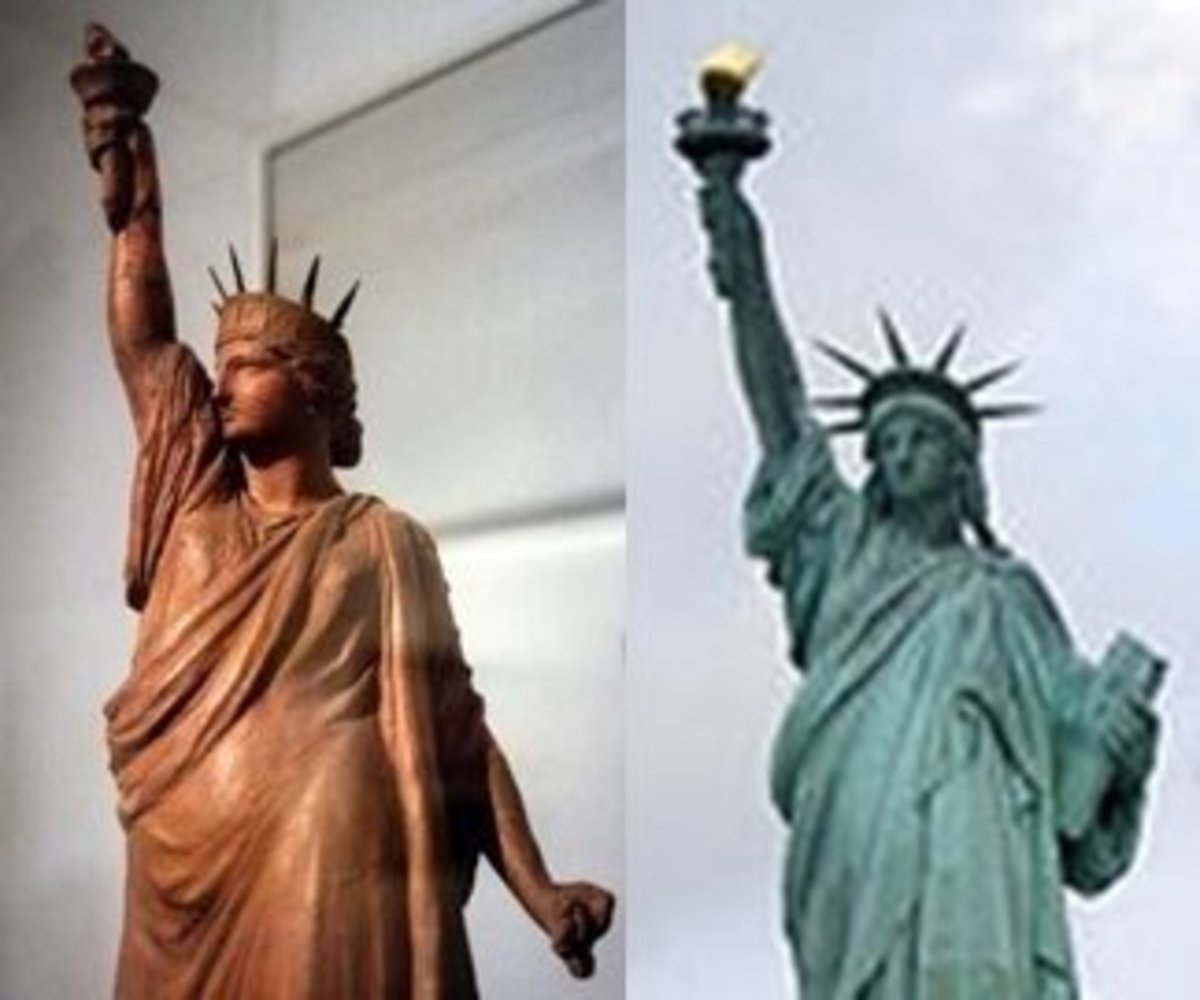
The statue on the left is a copy of an early version of the statue with chains in hand. The one on the right is the way she appears today. The Statue of Liberty that today sits on Liberty Island in New York harbor is known to have been the brainchild of noted Frenchmen and abolitionist Edouard de Laboulaye, a man so dedicated to the eradication of slavery that he co-founded the French Anti-Slavery Society. The idea for establishing a monument
specifically to honor the emancipation of slaves in America was
discussed between Laboulaye and Frederic Bartholdi, a French sculptor in 1865, the year the U.S. abolished slavery.

In addition to his abolition work, Laboulaye was also a U.S.
Constitution expert. Although we cannot know this for sure, one can only
imagine that the 1865 signing of the 13th amendment to the U.S.
Constitution would be very important to an abolitionist and likely
fueled Laboulaye’s desire to have the monument built. So, in 1865 he
shared this idea with Bartholdi, who later became the designer of the
statue, working closely with Laboulaye to make Laboulaye’s vision a
reality.

The connection between the Statue of Liberty and the abolition of
slavery is one that has been denied for 125 years. Almost from the start
of the project, the American financiers wanted no mention of slavery
and for 125 yrs they got their wish.

Although Laboulaye and Batholdi had envisioned a statue holding
broken chains and shackles (as shown in the image above on the left),
the early financiers that funded the project did not want chains on the
monument. It was the American backers who were most opposed to the
notion that the statue should in anyway acknowledge slavery. Because the
French, who were paying for the statue, were facing difficult economic
times, Laboulaye and Bartholdi relied on Americans to pay for and build
the pedestal where the statue would stand. This was an essential part of
the monument. Without American financial backing, the project could not
be completed, but the American financiers were adamant that Laboulaye
lose the chains and shackles. One can only surmise that some of the
backers may have made their fortunes directly or indirectly
through slavery.

In her book, Enlightening the World: The Creation of the Statue of Liberty,
Yasmin Sabina Kahn explained that although Laboulaye came upon the idea
and communicated it to Bartholdi in 1865, the political climate in
France at the time and a lack of funding made it impossible to raise
enough money to get the project off the ground for several years.
Indeed, it took the sculptor years to raise the funds. According to
Kahn, “Bartholdi’s original depiction of Lady Liberty had her holding
broken chains in her left hand, with more broken chains and broken
shackles at her feet. The chains were symbolic of the end of slavery in
the United States.”

Feet of the Statue of Liberty with chains
In lectures and on speaking tours, noted professor Dr. Joy DeGruy,
frequently talks about the chains that were part of the original
renderings of the Statue of Liberty. DeGruy explains that Bartholdi
intended the statue to represent democracy and to symbolize the end of
all types of oppression. However, according to DeGruy, the American
decision-makers of the day rebuffed Bartholdi for including the chains
and shackles and insisted that he remove them. Bartholdi was adamant
that they remain, although he eventually was forced to compromise
because he didn’t want to risk losing the financial support that was
making the project possible. Finally, he removed the chains from Lady
Liberty’s hand, replacing them with a book.

But, what most people don’t know, even today, is that Bartholdi left
the broken shackles and chains that were at her feet. These symbols of
state-sponsored bondage, human chattel and the hypocrisy of American
exceptionalism remain there on the Statue of Liberty as a permanent
reminder of the slaves that contributed to the building of the United
States.


Because the height of the pedestal built to support the statue makes
it impossible to see the chains and shackles from the ground, most
people visiting Liberty Island remain unaware of them. This is where the
U. S. Parks Service plays a pivotal role.

While it is not surprising that Sarah Palin got it wrong, it should be noted
that if asked, most of us would likely get it wrong too.


Clearly, the chains were obvious when the statue was delivered and installed 125 years ago but that knowledge quickly faded from memory. Aided by the fact that the height of the
pedestal made the chains and shackles impossible to see unless one were
viewing the statue from a helicopter, the wishes of the original funders
were fulfilled. No one need know the true meaning of the Statue of
Liberty. For most of the years since the statue’s installation at
Liberty Island, its true meaning has been kept in the dark. Even the
U.S. agency tasked with the responsibility of caring for and educating
the public about the statue had a hand in keeping the true meaning
hidden.

One contention of those in opposition to the idea that the statue
celebrated the end of slavery was the date the statue was proposed. Due
to lack of funding, more than 20 years passed between the time the
statue was first proposed in 1865 and the actual installation on Liberty
Island in 1886. Those who wanted to downplay the connection between the
statue and slavery insist that the year 1865 played no role in the idea
to build the monument.  In a report released by the U.S. Park Service
in 2000, the Park Service claimed that noted abolitionist Edouard de
Laboulaye did not propose the idea of constructing a monument in 1865.
Their report states:

sharon-kyle-moreThis story is a legend. All available evidence points to its conception in 1870 or 1871. The dinner party legend is traceable to a single source —
an 1885 fund-raising pamphlet written by the statue’s sculptor, Auguste
Bartholdi, after the death of Laboulaye.


But somewhere along the way, the U.S. Parks Service changed its position. They now admit that

  • the year 1865 was a key element of the story;
  • Laboulaye is the father of the idea for the monument; and
  • he was an abolitionist who wanted to honor the emancipation of the slaves.
Perhaps pressure was brought to bear on the agency forcing them to
change their literature and their website but today they devote pages to
the history of the statue and prominently state that the statue was a
gift to the United States from the people of France to celebrate “the
Union’s victory in the American Civil War and the abolition of slavery.”
You can find this and more at The National Parks Service website.

sharon kyleI started this piece with the video of Sarah Palin partly because any mention of Sarah somehow catches people’s attention but mostly because Sarah Palin’s understanding of the symbolism of the Statue of Liberty is probably not very different from most Americans. So while it is not surprising that Sarah Palin got it wrong, it should be noted that if
asked, most of us would likely get it wrong too.

As an American who is a decendent of slaves, I find it all the more shameful that this country continues to have countless monuments honoring men known to have been slaveholders but nothing honoring the millions whose blood, sweat and tears built this country. 

From that perspective, the story of the Statue of Liberty and how it came to be a part of our national landscape is as important as the story of Paul Revere’s Midnight Ride and should be as widely known. The National Park Service took an important step towards that end when it changed its position. And people like Dr. Joy DeGruy and others likely had a hand in making that happen.

To all who made that happen, I say thank you.

Sharon Kyle

Publisher, LA Progressive


(Dr. Joy DeGruy can be seen in the video below. She talks about the
statue at about 43 seconds into the video. She’s a great storyteller.
Watch it – you won’t be disappointed.)

https://youtu.be/gMYwsxVkc6s


Monday, April 20, 2020

Who Are We? We're Finding Out Together | Filling Out the U.S. Census

The U.S. Census is vitally important for all of us to fill out.  It's a far from perfect system, but it's a way to get resources to our communities.  Someone in EVERY household in the U.S, needs to do so.  
-Angela Valenzuela 
out.

    Code Switch
Once a decade, every household in the United States is required by law to participate in the U.S. census. For many people, most of the questions on the census seem pretty straightforward: How many people live in a household? Is the household rented or owned? But things get a little trickier when people are asked to identify their race.
Throughout the month of April, Code Switch will be looking at some of the complicated questions that arise when we're all, collectively, asked to think about our racial identity.
There are 15 boxes that people can choose from on the census form, and within some of those categories, respondents have the option to get more granular. They can specify that they're Black Jamaican, for instance, or a white person of Serbian descent. People are also allowed to check as many boxes as they want, including "some other race."
But despite the many options, we know that people's identities rarely fall neatly into these boxes. For instance — where do Middle Easterners belong? When collecting data on race and ethnicity, federal agencies, including the Census Bureau, are required to categorize people of Middle Eastern descent as white, but we heard from one Arab American woman who said that is not how she identifies. (The Census Bureau had considered adding a category for people of Middle Eastern and North African descent but decided against it in 2018 because the bureau concluded more research was needed.)
Then there's the question of Hispanic/Latino/Spanish origin. It's not considered a race on the census so Latinx people can choose to identify from a range of racial identities. But growing confusion about that question has lots of Latinx people debating what race to choose instead. It also underscores how fraught some of these categories really are. After all, "Mexican" by itself was a racial category on the 1930 census. Ten years later, it had disappeared.


The census helps us understand how race has morphed and changed throughout U.S. history. In 1890, when the one-drop rule — in which even one black ancestor meant a person was considered black — informed much of racial thinking, "mulatto," "quadroon," and "octoroon" were all listed as categories. Until 1940, "Indians not taxed" were not included in the total population counts used to redistribute each state's share of seats in the U.S. Congress. "Hindu" became a racial category on the 1920 census and was gone again by 1950.
We're wading into territory that's as complicated as the racial history of the United States, which the census has tried to make sense of since its inception. We look at dark chapters in census history that have led to decades of wariness about giving detailed personal information to the government. We'll also revisit an extremely controversial treaty between the U.S. government and the Cherokee Nation, which simultaneously gave the nation representation in the U.S. Congress and led to the Trail of Tears.
We're also questioning the very nature of what it means to identify as part of a racial group. We look at an effort in Puerto Rico to persuade more of the island's residents to self-identify as black, after a longstanding denial of African heritage. Then, we'll grapple with the fraught question underlying a lot of debates about reparations: What does it mean to be black? Later, we'll talk to a filmmaker who thinks a lot about his relationship to whiteness, and how other white people think about it, too.
We'd love to hear your thoughts about the census and race, and how you're filling it out for your household. How are you going to identify your race and ethnicity, and what does it mean to you to do that? Email us at CodeSwitch@npr.org with your thoughts — we look forward to hearing from you.

Friday, January 18, 2019

Why Do We Keep Using the Word ‘Caucasian’? When a term signifies something that does not exist, we need to examine our use of it


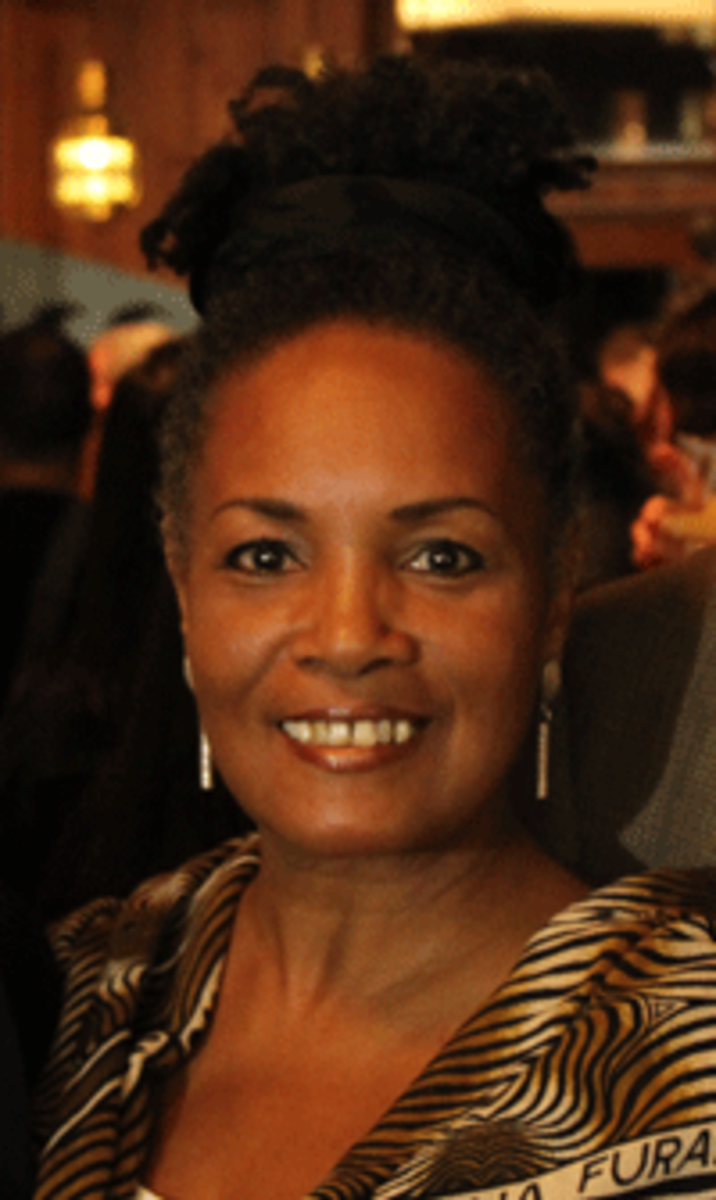
 Dr. Yolanda Moses, former president of the American Anthropological Association, is on target.  The continued use of "caucasian," has got to stop for reasons that are well-argued within.  It's so handily used and accepted that it's not exposed as a fiction.  

We can do better than that.

-Angela Valenzuela

Why Do We Keep Using the Word ‘Caucasian’?

When a term signifies something that does not exist, we need to examine our use of it


By Yolanda Moses
The word “Caucasian” is used in the U.S. to describe white people, but it doesn’t indicate anything real. It’s the wrong term to use! My colleague and one of my longtime writing partners, Carol Mukhopadhyay, has written a wonderful article, “Getting Rid of the Word ‘Caucasian,’” that is still relevant today for how it challenges us to critically examine the language that we use. It’s obvious that language shapes how we perceive and see the world. And we know how powerful the concept of race is and how the use of words related to the notion of race has shaped what we call the U.S. racial worldview. So why do we continue using the word “Caucasian”?
To answer that question, it is helpful to understand where the term came from and its impact on our society. The term “Caucasian” originated from a growing 18th-century European science of racial classification. German anatomist Johann Blumenbach visited the Caucasus Mountains, located between the Caspian and Black seas, and he must have been enchanted because he labeled the people there “Caucasians” and proposed that they were created in God’s image as an ideal form of humanity.

And the label has stuck to this day. According to Mukhopadhyay, Blumenbach went on to name four other “races,” each considered “physically and morally ‘degenerate’ forms of ‘God’s original creation.’” He categorized Africans, excluding light-skinned North Africans, as “Ethiopians” or “black.” He divided non-Caucasian Asians into two separate races: the “Mongolian” or “yellow” race of Japan and China, and the “Malayan” or “brown” race, which included Aboriginal Australians and Pacific Islanders. And he called Native Americans the “red” race.


Blumenbach’s system of racial classification was adopted in the United States to justify racial discrimination — particularly slavery. Popular race science and evolutionary theories generally posited that there were separate races, that differences in behavior were tied to skin color, and that there were scientific ways to measure race. One way racial differences were defined was through craniometrics, which measured skull size to determine the intelligence of each racial group. As you can imagine, this flawed application of the scientific method resulted in race scientists developing a flawed system of racial classification that ranked the five races from most primitive (black and brown races), to more advanced (the Asian races), to the most advanced (the white, or Caucasian, races). Even though the five-race topology was later disproven, “Caucasian” still has currency in the U.S.
One reason we keep using the term “Caucasian” is that the U.S. legal system made use of Blumenbach’s taxonomy. As early as 1790 the first naturalization law was passed, preventing foreigners who were not white from becoming citizens. But according to Mukhopadhyay, Blumenbach’s category of “Caucasian” posed a problem because his classification of white also included some North Africans, Armenians, Persians, Arabs, and North Indians. The definition of Caucasian had to be reinvented to focus the ideological category of whiteness on northern and western Europe. The term, even though its exact definition changed over time, was used to shape legal policy and the nature of our society.
A second reason the term has had staying power is that, as new immigrants began to stream into the country in the 20th century, political leaders and scientists supported a new racial science called eugenics that built on 19th-century notions of race. Eugenicists divided Caucasians into four ranked subraces: Nordic, Alpine, Mediterranean, and Jew (Semitic). I’m sure you will not be surprised to learn that the Nordics were ranked highest intellectually and morally. These rankings were used by our government to design and execute discriminatory immigration laws that preserved the political dominance of Nordics, who were largely Protestant Christians.
Today, the word “Caucasian” is still used in many official government documents, and it continues to carry a kind of scientific weight. For example, it is found in social science and medical research, and is used by some colleges and universities in their data collection and distribution of student, staff, and faculty statistics. In Mukhopadhyay’s research, she sampled government websites and official documents and was surprised to learn how many government offices, including the U.S. Census Bureau, still use the word.


So“Caucasian” became entrenched in our legal, governmental, scientific, and social lives. And although the U.S. government reluctantly denounced or at least played down racial science after the atrocities of Adolf Hitler’s regime were fully exposed at the end of WWII, the term has not been discarded.
What can we do to change it? We need to acknowledge that the word “Caucasian” is still around and that its continued use is problematic. We should use terms that are more accurate, such as “European-American.” Doing so would at least be consistent with the use of descriptive terms like “African-American,” “Mexican-American,” and others that signify both a geographical and an American ancestry.
The bottom line is that it is time for a modern — and accurate — terminology. The use of an outdated and disproven term that falsely purports to describe a separate race of people has no place in the U.S.


Yolanda Moses is a professor of anthropology and a former associate vice chancellor for diversity, equity, and excellence at the University of California, Riverside. Her research focuses on the broad question of the origins of social inequality in complex societies. Moses has explored gender and class disparities in the Caribbean, East Africa, and the United States. More recently, her research has focused on issues of diversity and change in universities and colleges in the United States, India, Europe, and South Africa. She has co-authored two books about race: Race: Are We So Different?, written with Alan Goodman and Joseph Jones, and How Real Is Race?: A Sourcebook on Race, Culture, and Biology, with Carol Mukhopadhyay and Rosemary Henze. In 2017 she received a Fulbright Distinguished Chair in Cultural Competence at the University of Sydney, in Australia. Moses is a former president of the American Anthropological Association.