Translate

Showing posts with label white supremacy culture. Show all posts

Wednesday, June 03, 2026

The Origins of White, Christian Supremacy: Can 15th-century doctrine explain today's culture wars? by David R. Brockman, Texas Observer, September 21, 2023

Today is David R. Brockman day. Here is another piece by him that explores the origins of White Christian nationalism, a focus of mine these days, as well. 

-Angela Valenzuela

The Origins of White, Christian Supremacy: Can 15th-century doctrine explain today's culture wars?

by David R. Brockman, Texas Observer, September 21, 2023, 11:11 AM, CDT

America is undergoing an identity crisis, author Robert P. Jones writes. As revealed in recent studies by Jones’s research organization, Public Religion Research Institute, dramatic demographic shifts have rendered once-dominant white Christians a minority; the nation is more ethnically, culturally, and religiously diverse. So it’s no surprise we find ourselves embroiled in bitter debates over who we truly are.

Many in Texas still insist (despite historical evidence) that we’re a Christian nation, founded by godly (white) men. Countering this mythos, the 1619 Project locates the nation’s genesis in the year Africans were first brought against their will to Great Britain’s American colonies, framing our subsequent history as one of stubbornly systemic racism.

In the new book, The Hidden Roots of White Supremacy and the Path to a Shared American Future, Jones offers an intriguing alternative, which analyzes our racist and violent past and suggests a path to a more pluralistic democracy.


The Hidden Roots of White Supremacy and
the Path to a Shared American Future

Robert P. Jones, Simon & Schuster,
September 2023
Though he applauds the 1619 Project, Jones argues that it neglects Europeans’ prior violence toward Indigenous peoples and “obscures the headwaters” of European colonialism. Jones locates those headwaters in the late 1400s, in the so-called Doctrine of Discovery. Promulgated in papal edicts, this doctrine proclaimed the superiority of Christian civilization and authorized Europeans to claim ownership of any newly “discovered” lands inhabited by non-Christians. The doctrine became part of U.S. law in an 1823 Supreme Court ruling that held the U.S. government had “an exclusive right to extinguish the Indian title of occupancy.”

Jones views the doctrine as a “Rosetta Stone” for understanding the “sense of divine entitlement, of European Christian chosenness, [that] has shaped the worldview of most white Americans.”

To show how whites’ sense of entitlement has played out in America, Hidden Roots examines three localities, each the site of white outrages against African-Americans: the Mississippi Delta, site of the 1955 murder of Emmitt Till; Duluth, Minnesota, where in 1920 a mob of more 10,000 whites lynched three Black men; and Tulsa, Oklahoma, where in 1921, whites descended on the prosperous Black district of Greenwood, burning homes and businesses and killing between 100 and 300 people. In each case, the whites responsible faced little or no punishment.

These atrocities were foreshadowed by earlier white violence in those areas toward Native Americans. A century before Till’s murder, the U.S. government forcibly removed the Choctaw people from the Mississippi Delta, clearing the land for white settlement and a plantation economy exploiting Black slave labor. Jones then shares tales of white depredations against Native Americans in Minnesota and Oklahoma. In 1862, some Dakota people in Minnesota rebelled against white mistreatment and treaty violations. At the end of the five-week uprising, the U.S. government hanged 38 Dakota men after sham military trials, most lasting “only a minute or two,” Jones notes, in the largest mass execution in U.S. history. 
Author Robert P. Jones (Noah Willman)

As for Oklahoma, Jones writes poignantly of the Osage people, who suffered forced assimilation, violence at the hands of white mobs hungry for their land, and then, after oil was discovered, a “Reign of Terror” in which whites systematically swindled and murdered them.


Yet Hidden Roots speaks of hope as well as horror.

Interracial groups in all three areas are taking steps to confront the legacy of white violence. Thanks to the work of the interracial Emmitt Till Memorial Commission, the Mississippi Delta has seen what Jones—a Mississippi native who previously authored The End of White Christian America—calls “an explosion of cultural memory work” around Till’s legacy. Duluth and Tulsa have seen similar efforts of truth-telling and reconciliation.

Though Hidden Roots doesn’t directly address the Lone Star State, Jones notes that “[e]very U.S. state contains similar legacies of white racial violence, because every … state was built on the same foundation … the conviction that America was divinely ordained to be a new promised land for European Christians.”

How did Christianity, which purports to proclaim God’s loving-kindness to all humanity, end up legitimizing racism and violence?

That’s certainly the case with Texas. Consider, for instance, the Battle of Village Creek, which took place just six miles from my Fort Worth home, not long after the removal of the Choctaw from Mississippi and for much the same reason: white hunger for Native American lands. In 1841, a company of Texan volunteers under General Edward Tarrant attacked an extensive settlement of Caddos, Cherokees, and Tonkawas; burned down huts; then engaged in a running gunfight, killing 12 Native Americans and wounding many more. In the wake of the attack, the tribes were forced to desert the settlement.

Four years before the 1920 Duluth lynchings, Waco saw its own gruesome act of white mob violence when Black teenager Jesse Washington “was beaten, stabbed, mutilated, hanged and burned to death” before thousands of “screaming, cheering spectators.” Viewed through Jones’s historical and religious lens, these Texas atrocities are not isolated acts, but part of a broader legacy of racism with religious underpinnings.

While Hidden Roots explores white supremacy’s origins, it begs another question: How did Christianity, which purports to proclaim God’s loving-kindness to all humanity, end up legitimizing racism and violence?

My book No Longer the Same traces this hypocrisy to Christianity’s long theological tradition of regarding non-Christians as largely ignorant of divine truth. Christianity’s confidence that it alone has “the way, the truth, and the life” has too often resulted in the exclusion and mistreatment of religious others. But such theological questions lie beyond the frame of Hidden Roots.

Instead, Jones’s religio-political perspective offers a compelling picture of who Americans are and where we came from. Thought-provoking, solidly researched, and skillfully written, Hidden Roots is a clear-eyed indictment of white supremacy and its religious foundations, one that can help us make sense of our troubled past and envision possibilities for remembrance and renewal.


David R. Brockman, Ph.D., is an author, Christian theologian, and nonresident scholar in the Religion and Public Policy Program at Rice University’s Baker Institute. He teaches at Texas Christian University.

Sunday, May 03, 2026

When Faith Becomes Power: The Long History Behind Today’s Religious Politics of Controlling Culture in Texas, by Angela Valenzuela, Ph.D.

 When Faith Becomes Power: The Long History Behind Today’s Religious Politics of Controlling 
Culture in Texas

by

Angela Valenzuela, Ph.D.

May 3, 2026

Before you read further, take a few minutes to watch this chilling snapshot of Texas history narrated by Drew McCoy on his Youtube channel, "Genetically Modified Skeptic." What it documents is not just “interesting history.” It is a chilling and largely buried account of state-sanctioned and vigilante violence in Texas—targeting German immigrants whose only real crime was thinking differently.

Many of these settlers were freethinkers, abolitionists, and skeptics of organized religion. For that, they were surveilled, harassed, and in some cases murdered. Their communities were policed not just for political loyalty, but for ideological and religious conformity. This is Texas history—but not the version that makes it into textbooks.

We should be asking why.

Because what this video reveals is not an anomaly. It is a pattern.

There’s a moment in the video where the past collapses into the present. What initially appears to be a critique of religion opens into something far more consequential: a genealogy of power. This is not simply about belief systems. It is about how dominant religious ideologies—particularly forms of conservative Protestantism—have historically aligned themselves with political authority to discipline populations, define belonging, and consolidate control over public life.

What begins as theology becomes governance. And what cannot be controlled becomes a threat—in this case, German “freethinkers,” white people stripped of belonging—exposed as not white enough when they refused ideological conformity.

At its core, the video underscores a critical truth: the modern religious right—also known today as “Christian nationalists”—did not emerge out of nowhere. It is the product of long-term, strategic organizing rooted in earlier histories of exclusion, enforcement, and at times, outright violence. From the suppression of dissenting religious communities to contemporary campaigns around “family values,” education, and national identity, the throughline is clear—power is maintained by controlling culture.

And culture is controlled, in large part, through education.

If that sounds abstract, consider what is happening right now in Texas.

At the K–12 level, battles over the State Board of Education’s social studies TEKS standards have become proxy wars over history itself—what counts as legitimate knowledge, whose stories are centered, and which truths are softened, distorted, or erased. The same impulse that once targeted German freethinkers now operates through curricular gatekeeping—policing how young people come to understand democracy, race, religion, and dissent.

At the university level, the struggle over Ethnic Studies—and more recently, the passage and implementation of SB 17 and SB 37—extends this project. Programs, scholarship, and entire fields that interrogate power, colonialism, and racial hierarchy are cast as threats to the state. Faculty governance is restructured. Academic freedom is narrowed. Knowledge itself is disciplined.

The tactics are strikingly familiar:

The manufacturing of moral panic.

 The targeting of educators, intellectuals, and marginalized communities.

The insistence that dominant norms are under siege.

These are not new strategies. They are recycled technologies of power.
And they work.

This is why the video matters now. Because the battles we are witnessing across Texas—over curriculum, DEI, academic freedom, and even the right to teach truthful histories—are not isolated skirmishes. They are the latest expression of a much longer project: the regulation of knowledge in the service of ideology.

In this light, policies like SB 17 and SB 37 do not stand alone. They are part of a broader architecture of governance that seeks to narrow what can be known, said, and taught. This is not simply policy—it is the institutionalization of a worldview.

A worldview that has always required enemies.

What Drew McCoy ultimately offers is not just historical recovery, but a warning. Movements built over generations do not disappear when challenged. They adapt. They rebrand. They relocate their battles—from churches to school boards, from pulpits to legislatures, from doctrine to policy.

And they continue.

So the question is not whether this history is relevant.

It is whether we are willing to confront what it reveals about the present.

Because once you recognize the pattern—the suppression of dissent, the policing of thought, the fusion of faith and state power—it becomes impossible to dismiss what is happening now as accidental or benign.

This is not new.

It is simply returning in a different form.

If this history troubles you, it should. And it should move you—not just to reflection, but to action. The next battleground is already set. The Texas State Board of Education will meet June 22–26, 2026, where proposed, deeply reactionary social studies standards will be debated—standards that will shape what millions of Texas students are allowed to know about their own history. 

Show up. Testify. Bear witness. Refuse the erasure. And stay connected to those organizing on the ground by following Social Studies Advocate on Instagram. The struggle over knowledge is not abstract. It is happening now—and it requires all of us.


Sunday, November 26, 2023

How social-emotional learning became a frontline in the battle against CRT

I came across this earlier piece and read it in tandem with this one in Vox titled, "Conservatives’ war on emotions in the classroom." While it's not always a good thing to give outrageous ideas any oxygen, both pieces point to how this remains an issue in various legislatures throughout the country while clarifying how SEL has turned into a "boogeyman." The reason seems to be that it, like CRT, is mis-represented as an identity-based curriculum that is not actually taught as such in schools. Moreover, identity-based curricula, it is presumed, equates to "indoctrination." This is an off-putting word that works primarily to put folks on the defensive.

Even if these were somehow "identity-based," it's mystifying how that's a horrible thing. We all have multiple identities. I'm not just a Mexican American, Chicana, or Indigenous, I am also a woman, a mother, grandmother, university professor, policy advocate, scholar, a loving wife, daughter, preacher's kid, military brat, and a member of the human race who dreams of an Earth-conscious, loving world of unity consciousness where our differences are honored and where all, beginning with children, are treated with dignity and respect.

Why not make all of this and more part of the curriculum? That's where it's at anyway, where the action is. It may be technically "soft," but clearly among the hardest work imaginable considering the seemingly interminable violence, war-mongering, and wars that threaten our very existence as human beings on this planet.

SEL is but a step in this direction as stated:

"You can't have those [SEL] conversations without talking about identity ... Social-emotional learning is so that people can get along better. We also have to talk about why people don't get along," Simmons says.

The story below about a school member who faces parents' concerns over SEL in actual conversations, resonates as a way to steer them in positive directions. This actually proves the point that directly addressing emotions in conflictive situations is a kind of skill and practice that helps build trust and that more of us need to have. SEL puts us on just such a path of being more intelligent with our lives and emotions.

-Angela Valenzuela

How social-emotional learning became a frontline in the battle against CRT


Lucy Engleman for NPR

It's hard to pinpoint when exactly the questions started coming in. Angelyn Nichols, an administrator for Virginia Beach City Public Schools, thinks it was sometime in early 2021.

What she does know is that no one really expected them in the first place, and no one expected them to keep coming – week after week, and now, year after year.

That's because the questions involved a decades-old teaching concept many educators thought was settled, uncontroversial territory: the idea that, in order to learn, students need to know how to manage themselves and get along with others.

"Principals were being asked, 'Can you talk to me about how you use social-emotional learning in your school? Are there connections to critical race theory?" says Nichols, who coordinates professional learning for the district. "Families were asking at a PTA meeting. Parents were asking their child's classroom teacher."

But one of the most visible places these concerns emerged was at the school board meetings.

"Our school board meetings have been tense and they've gotten heated," says Natalie Allen, the district's chief communications and community engagement officer. "We saw multiple terms being linked to critical race theory. Social-emotional learning just seems like the latest."

Virginia Beach is not an anomaly.

Although its core concepts have been around nearly as long as public education itself, social-emotional learning is emerging as the latest lightning rod in the battles over what gets taught in schools nationwide.

Across the country, parents and community members have protested angrily at school board meetings, administrators have distanced themselves from the term and legislators have introduced bills trying to ban it. In the last two years, NPR found evidence of disputes specifically concerning social-emotional learning in at least 25 states.
What is social-emotional learning?

Essentially, social-emotional learning teaches students how to manage their emotions, how to make good decisions, how to collaborate and how to understand themselves and others better.

It's more common in younger grades: All 50 states have standards related to SEL in preschool, and more than half have standards in K-12.

It has existed under different names across the decades: character education, 21st century skills, noncognitive skills. In the adult world, they're often called soft skills.

"It was just part of what a good teacher does," says Aaliyah Samuel, president and CEO of the Collaborative for Academic, Social, and Emotional Learning, or CASEL.

Samuel says social-emotional learning can be broken down into five areas: self-awareness, self-management, social awareness, relationship skills and responsible decision-making.

"Let's say a student is working on a really difficult algebra problem and they get so frustrated because they can't remember what the next step is," says Samuel. "They have to be self-aware enough to say, 'You know what? I'm feeling frustrated. How do I handle this?' "

A student solving a hard math problem, for example, might use all these skills to recognize and deal with their frustration and ask another student or a teacher for help. Think of any situation that happens in a school, and social-emotional skills probably come into play.

"All academics also have a social-emotional component," says Lisa Xagas, an assistant superintendent for student services in Naperville, Ill. "It's impossible to tease them apart because you can't have academics if you don't have social-emotional learning."

Research shows this type of approach pays off. In 2011, researchers looked at more than 200 SEL programs across the country and saw improvements in behavior and academic achievement. A 2015 study found students deemed more socially competent in kindergarten were more likely to graduate from high school on time, complete a college degree and get a stable job in young adulthood. From an economic point of view, another 2015 study found SEL programs yield $11 for every $1 spent on them, by reducing crime, increasing earnings and contributing to better health.
Conservatives began connecting social-emotional learning to CRT

All of which is why the educators in Virginia Beach were puzzled when those questions started coming in.

"Everything related to social-emotional learning that we are putting out there is research-based and it's in demand," says Allen, who handles community engagement at the district. "Very often there's been a narrative created that's not accurate."


In the last year, in states across the country, parents and community members have increasingly been fighting the teaching of social-emotional learning in schools – largely because social-emotional learning has become linked with another flashpoint in public education: critical race theory, or CRT.

Critical race theory, a decades-old legal framework, is the concept that racism goes far beyond the individual: It is systemic and deeply entrenched in our laws, policies and institutions. Nearly 900 school districts experienced anti-CRT protests between September of 2020 and August of last year, according to a report released this year from the Institute for Democracy, Education, and Access at the University of California, Los Angeles.

"We've seen a real freak-out on the right about the so-called teaching of critical race theory in schools. And usually the terms of that freak-out are white children are being taught to hate themselves and all children are being taught to hate America," says Natalia Mehlman Petrzela, an associate professor of history at the New School in New York City and the author of Classroom Wars: Language, Sex, and the Making of Modern Political Culture.

But critical race theory itself is not something that is explicitly taught in K-12 schools.

"The defense of most educators has been: 'I don't even know what critical race theory is. I've never heard of it until you, the conservative at the school board, brought it to my attention,' " says Andrew Hartman, a professor and historian of educational trends at Illinois State University. "But of course, all educators now know what social-emotional learning is. It's something much more tangible. It's a curriculum that is officially being implemented in schools all across the country."

A few years ago, conservatives began to connect the two concepts. A 2021 article in the Washington Examiner said conservative activists were calling social-emotional learning a "Trojan horse" for both critical race theory and transgender advocacy. In April of this year, a conservative group referred to it as a "new variant of the "CRT-virus."

"It will be concealed as a number of different things," another article published on the right-wing website The Federalist says. "Most common is something including 'social justice,' 'equity and diversity,' 'multicultural education,' or 'social-emotional learning,' which is the most deceptive because it doesn't sound like it involves race at all!"

An "IndoctriNation Map" on the website of the conservative group Parents Defending Education tracked "incidents" in schools related to gender ideology, ethnic studies and social-emotional learning. The conservative Center for Renewing America includes social-emotional learning in its glossary of "CRT-related terms."
How the SEL-CRT narrative is impacting schools

In some places, these attacks have had real consequences. In Georgia, an administrator tasked with leading a district's diversity, equity and inclusion efforts was forced to resign before she even started, with one protester referring to social-emotional learning as "synonymous" with critical race theory.

In Wisconsin, Republican lawmakers introduced a bill last year trying to limit how educators talk about race and racism in the classroom. One of those lawmakers, Rep. Chuck Wichgers, added an addendum of terms he thought were associated with CRT, including social-emotional learning.

And when the Florida Department of Education issued specifications for this year's social studies textbooks, it indicated: "Critical Race Theory, Social Justice, Culturally Responsive Teaching, Social and Emotional Learning, and any other unsolicited theories that may lead to student indoctrination are prohibited."

Rick Hess, the director of education policy studies at the conservative-leaning American Enterprise Institute, says some of the angry debates about social-emotional learning are a direct reaction to the stories about SEL that conservatives are seeing on social media, Fox News and elsewhere.

"I think a lot of people wind up wedged into these debates about something like SEL, not because they necessarily have paid a lot of attention and have decided that, 'Gosh, you know, in good faith, we really disagree,' " Hess says. "It's more a gut level reaction to the other team and to be with your guys, than it is to really parse like, 'What are we arguing about here? And is there a more constructive way to solve this?' "

For some parents, the outrage is rooted in mistrust – particularly of organizations that provide SEL resources and recommendations to school districts.

Hess says many parents feel "this is a case of big, deep-pocketed, liberal, coastal foundations coming in, led by people who went to elite colleges who aren't from their communities, pushing ideological agendas that they find problematic and then calling them racists and idiots when they push back."

"If there's anything more likely to turn skepticism into full blown rebellion, it's hard to think of what it might be," he added.
SEL has always had an identity component

Hess says many conservatives ultimately feel social-emotional learning spends too much time talking about identity.

But Hartman, the Illinois State University historian, says there actually is an important identity component to teaching students how to get along with others.

"It's pretty impossible to do social and emotional learning without larger social issues coming into play. It's not just about individuals. It's about how an individual is situated in a society," Hartman says. "If you're going to be a healthy, emotional individual, you're going to have to understand your own identity relative to society."

CASEL is quick to emphasize that social-emotional learning is not tied to any political viewpoints. But the organization acknowledges that questions of identity and culture might come up, for example, in conversations about social awareness, one of the organization's key SEL competencies.

"Social awareness is about developing a better understanding of people around you so that you understand different perspectives and build healthy relationships," Samuel, the CEO, says. "For students, this might mean learning about different cultures, reading about different people's experiences and perspectives, or studying historical figures and their strengths."

Some SEL advocates want those conversations to be more explicit about systemic racism.

Dena Simmons, the founder of LiberatED, an organization which aims to center racial social justice in social and emotional learning, says being able to talk about social-emotional learning without talking about identity is an example of white privilege.

"You can't have those conversations without talking about identity ... Social-emotional learning is so that people can get along better. We also have to talk about why people don't get along," Simmons says. "If we don't apply an anti-racist, abolitionist, anti-oppressive, anti-bias lens to social-emotional learning, it can very easily turn into white supremacy with a hug."

Some prominent SEL programs do talk about racial justice and racism. The website for Second Step, for instance, has a section dedicated to Anti-Racism and Anti-Bias Resources. When educators don't acknowledge that identity component, it can make things worse, Mehlman Petrzela at the New School says.

"I know it's really hard to have these nuanced conversations, especially when often some of these attacks are scary, and they're bad faith, and they're distracting from teaching kids," she says. "But I do think it's really incumbent upon people to paint the full picture of what's going on here. Because without that, I don't really think we can move forward."
The fear that teachers are indoctrinating children is not new

The actual term "social-emotional learning" has existed since at least the 1990s. In 1997, researchers at CASEL published a book titled Promoting Social and Emotional Learning: Guidelines for Educators. But social-emotional learning, in a broader sense, has existed for much longer.

"One of the great ironies of the backlash around teaching morality or values in American education through social-emotional learning today is that American schools have always been about teaching values and character," says Mehlman Petrzela. "And for much of American history, that focus has been on pretty conservative values, quite honestly."

In the mid-1800s, small books called McGuffey readers sought to instill morals in young readers. Around the same time, Horace Mann, an education reformer and proponent of public education, saw schools as the "great equalizer" in society.

"This is where you impart in children not only academic learning, but the sort of beauty of the American experiment that one can transcend," Mehlman Petrzela says. "You work hard. You are industrious. You don't lie. You are a good member of your community. Those are values."

In the early 20th century, John Dewey advocated for the idea that schools should educate the "whole" child. By the 1950s, there was "life adjustment" education, which focused on social order and patriotism as a response to growing fears of communism. Coronet Instructional Films were shown in schools, with titles like "marriage is a partnership" and "mind your manners."


Volume 90%


Credit: Coronet Instructional Films

Then the 1960s happened. Some teachers began to address topics like social justice and racial equality – and, much like we're seeing today, those teachers faced a backlash.

The fear that teachers are trying to brainwash or indoctrinate children has been around for a while. Today, it's present not just in the disputes over SEL and CRT, but also in the current debates around sex education, transgender rights and banned books, says Mehlman Petrzela.

"I sometimes cannot believe how much what we are experiencing right now feels so similar to what we have gone through in other moments, particularly in the 1960s and 70s," she says. "The rhetoric is the same."
How one school district is finding common ground with parents

But in places like Virginia Beach, educators weren't there 50 years ago. They're in schools now, stuck in the middle of a political fight that feels new, at a time when many students are struggling and need more support managing their emotions, not less.

Angelyn Nichols, the district's lead for social-emotional learning, says 2020 put a heightened scrutiny on public education – one that's been rapidly evolving. First, it was about COVID policies. Then, after the police murder of George Floyd and the subsequent protests against racism, the conversation shifted to critical race theory. Now, it has spread to any topic deemed to be related to critical race theory.


That's when Aaron Spence, superintendent of Virginia Beach City Public Schools, wrote an op-ed for The Virginian Pilot.

"Conflating good and longstanding work — such as our work around social and emotional learning — with things that simply aren't happening in our schools, debating who is more invested in our children, and undermining the credibility of public education with accusations of indoctrination is disappointing at best and debilitating at worst," he wrote.

Spence asked community members to look for common ground. For Nichols, that's been easier to find outside of the school board meetings, in one-on-one conversations with parents.

"We can sit down together and say, 'Can you share with me what part of this is a concern for you? Which skill here do you feel is a threat, feels like indoctrination, or is of a concern for you?' " she says. "I've never exited one of those conversations where both parties didn't say, 'I actually think this is really important.' "

She feels good about the progress they've made so far this year. In September, the school board passed a resolution that, in part, supports the continued teaching of social-emotional learning in schools.


Monday, March 27, 2023

"Statue of Liberty Wears Chains and Shackles Honoring Freed Slaves" by Sharon Kyle | The LA Progressive

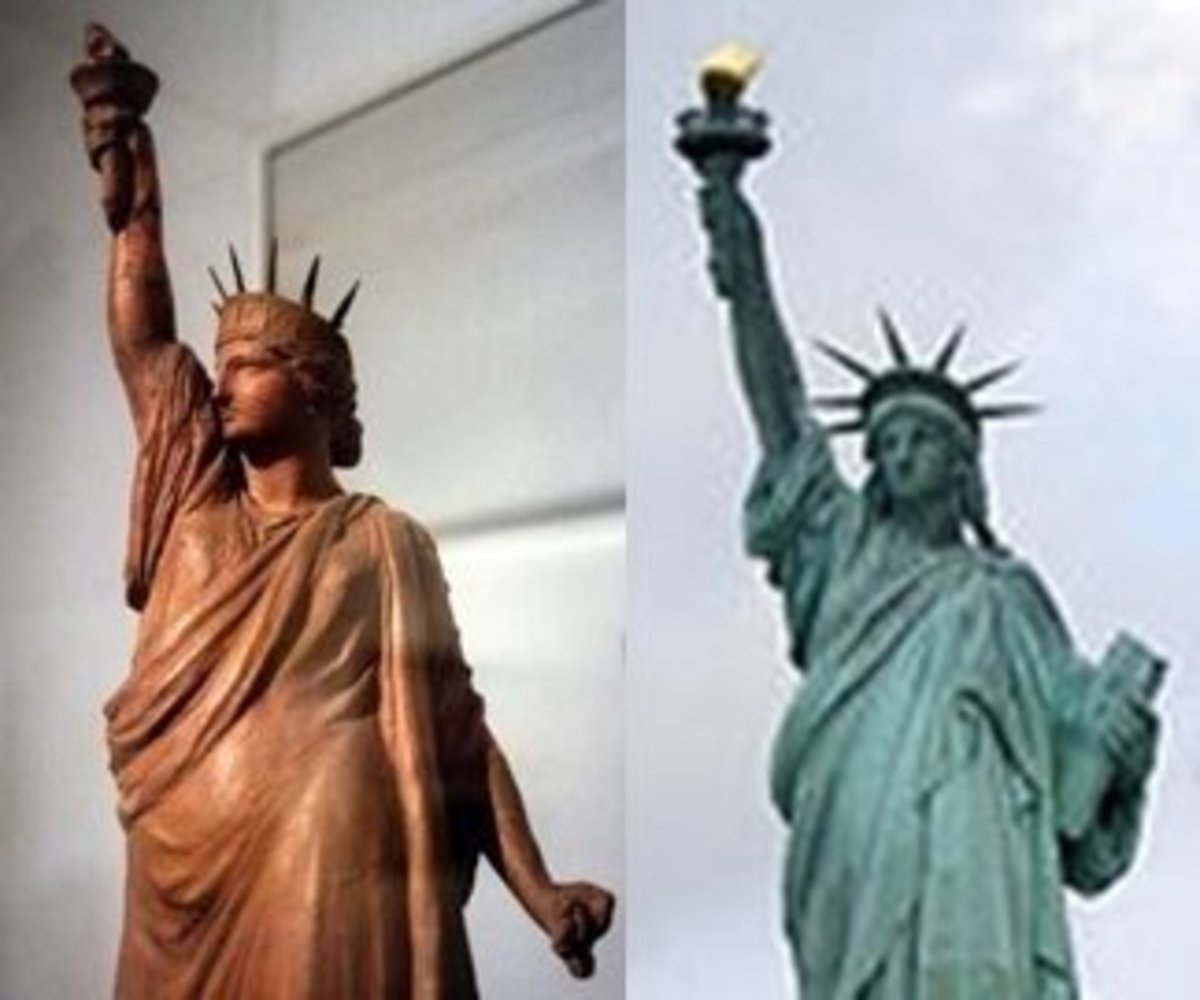
This is a largely unknown story about Lady Liberty's shackles and the cover up that's ensued since 1865. This is the first that I learn that the Statue of Liberty was, I quote:  "given to the U.S. as a monument to acknowledge the end of one of its biggest mistakes  — slavery."  It's really interesting that the original depiction of Lady Liberty had her "holding broken chains in her left hand, with more broken chains and broken shackles at her feet."

But, what most people don’t know, even today, is that Bartholdi left the broken shackles and chains that were at her feet (my emphasis).  These symbols of state-sponsored bondage, human chattel and the hypocrisy of American exceptionalism remain there on the Statue of Liberty as a permanent reminder of the slaves that contributed to the building of the United States.

This project was the brainchild of Edouard de Laboulaye, a French person behind on of our nation's most important icons.  Laboulaye was an abolitionist from France and co-founder of the French Anti-Slavery Society.  The sculptor, also French, was named Frederic Bartholdi.  The two planned all of this in 1865, the very year the U.S. passed the 13th amendment to the U.S. Constitution officially abolishing slavery.  However, due primarily to financing issues, and possibly, ideological ones, as well, as this story intimates, the actual installation on Liberty Island occurred 21 years later in 1886. Bartholdi ultimately had to compromise on this or jeopardize the financing of the project.

As the author muses, perhaps the financiers of this project themselves profited from slavery and were thus resistant to this representation.  Or maybe they were just exercising their privilege—and thusly, their power over representation and—much like many folks do today to appear as less racist than they really are, thinking, I suppose, that this detail would get lost over the generations.  Only more research can tell.  

In any case, a new book by Yasmin Sabina Kahn titled, Enlightening the World: The Creation of the Statue of Liberty, delves into this story which is deserving of our attention. Kahn refers to
Bartholdi's original depiction where she held broken chains on her left hand, and broken shackles at her feet, symbolizing the end of slavery in the U.S.

This history is totally buried in American lore about Lady Liberty. Geez, what we are not taught or ever told and that our legislatures want to keep us from learning.

-Angela Valenzuela

#TeachTheTruth

Reference

Khan, Y. S. (2010). Enlightening the world: the creation of the Statue of Liberty. Ithaca, NY: Cornell University Press.

Statue of Liberty Wears Chains and Shackles Honoring Freed Slaves


The LA Progressive ran a story in the spring of 2011 that began with a
video of Sarah Palin being interviewed at Liberty Island. In it she is
asked about the symbolism of the Statue of Liberty, she responded:

https://youtu.be/AM2CmpFMnSY

“It is, of course, the symbol for
Americans to be reminded of other countries because this was gifted us,
of course by the French—other countries warning us to never make the
mistakes that some of them had made.”

Paraphrased, Palin was saying that France gave the United States the
statue to warn the U.S. not to commit the mistakes other countries 
committed.

The problem with her response –American exceptionalism and word salad aside
— is that it has no basis in fact. In other words, it is WRONG.

Historians tell us that the Statue of Liberty represents the OPPOSITE of
what Palin suggests. Instead of reminding the United States not to make
mistakes made by other countries, the Statue of Liberty was given to
the U.S. as a monument to acknowledge the end of one of its biggest
mistakes  — slavery.


When we ran the story in 2011, we got lots of feedback from readers
who were surprised to learn that our Statue of Liberty was in any way
connected to American slavery. However, several of our readers did some
checking on their own and commented that they couldn’t find information
corroborating our story. Some mentioned that the U.S. National Park
Service (the federal agency responsible for the Statue of Liberty)
offered information on their site that did not line up with what we were
reporting.


In 2011, the U.S. Park Service made no mention of the chains or the
connection between the emancipation of the American slaves and the gift
from France — the Statue of Liberty.  Even though the U.S. Parks Service
was fully aware of the story, they did not mention it on their website
or any of the pamphlets given to tourists when visiting Lady Liberty.
But sometime between 2011 and 2014 the U.S. Parks Service made a
dramatic change. Today, the National Park Service website tells
the story of how the Statue of Liberty came to be in New York’s harbor
and its relationship to slavery. Following is an abbreviated version.

Statue of Liberty Wears Chains and Shackles

The statue on the left is a copy of an early version of the statue with chains in hand. The one on the right is the way she appears today. The Statue of Liberty that today sits on Liberty Island in New York harbor is known to have been the brainchild of noted Frenchmen and abolitionist Edouard de Laboulaye, a man so dedicated to the eradication of slavery that he co-founded the French Anti-Slavery Society. The idea for establishing a monument
specifically to honor the emancipation of slaves in America was
discussed between Laboulaye and Frederic Bartholdi, a French sculptor in 1865, the year the U.S. abolished slavery.

In addition to his abolition work, Laboulaye was also a U.S.
Constitution expert. Although we cannot know this for sure, one can only
imagine that the 1865 signing of the 13th amendment to the U.S.
Constitution would be very important to an abolitionist and likely
fueled Laboulaye’s desire to have the monument built. So, in 1865 he
shared this idea with Bartholdi, who later became the designer of the
statue, working closely with Laboulaye to make Laboulaye’s vision a
reality.

The connection between the Statue of Liberty and the abolition of
slavery is one that has been denied for 125 years. Almost from the start
of the project, the American financiers wanted no mention of slavery
and for 125 yrs they got their wish.

Although Laboulaye and Batholdi had envisioned a statue holding
broken chains and shackles (as shown in the image above on the left),
the early financiers that funded the project did not want chains on the
monument. It was the American backers who were most opposed to the
notion that the statue should in anyway acknowledge slavery. Because the
French, who were paying for the statue, were facing difficult economic
times, Laboulaye and Bartholdi relied on Americans to pay for and build
the pedestal where the statue would stand. This was an essential part of
the monument. Without American financial backing, the project could not
be completed, but the American financiers were adamant that Laboulaye
lose the chains and shackles. One can only surmise that some of the
backers may have made their fortunes directly or indirectly
through slavery.

In her book, Enlightening the World: The Creation of the Statue of Liberty,
Yasmin Sabina Kahn explained that although Laboulaye came upon the idea
and communicated it to Bartholdi in 1865, the political climate in
France at the time and a lack of funding made it impossible to raise
enough money to get the project off the ground for several years.
Indeed, it took the sculptor years to raise the funds. According to
Kahn, “Bartholdi’s original depiction of Lady Liberty had her holding
broken chains in her left hand, with more broken chains and broken
shackles at her feet. The chains were symbolic of the end of slavery in
the United States.”

Feet of the Statue of Liberty with chains
In lectures and on speaking tours, noted professor Dr. Joy DeGruy,
frequently talks about the chains that were part of the original
renderings of the Statue of Liberty. DeGruy explains that Bartholdi
intended the statue to represent democracy and to symbolize the end of
all types of oppression. However, according to DeGruy, the American
decision-makers of the day rebuffed Bartholdi for including the chains
and shackles and insisted that he remove them. Bartholdi was adamant
that they remain, although he eventually was forced to compromise
because he didn’t want to risk losing the financial support that was
making the project possible. Finally, he removed the chains from Lady
Liberty’s hand, replacing them with a book.

But, what most people don’t know, even today, is that Bartholdi left
the broken shackles and chains that were at her feet. These symbols of
state-sponsored bondage, human chattel and the hypocrisy of American
exceptionalism remain there on the Statue of Liberty as a permanent
reminder of the slaves that contributed to the building of the United
States.


Because the height of the pedestal built to support the statue makes
it impossible to see the chains and shackles from the ground, most
people visiting Liberty Island remain unaware of them. This is where the
U. S. Parks Service plays a pivotal role.

While it is not surprising that Sarah Palin got it wrong, it should be noted
that if asked, most of us would likely get it wrong too.


Clearly, the chains were obvious when the statue was delivered and installed 125 years ago but that knowledge quickly faded from memory. Aided by the fact that the height of the
pedestal made the chains and shackles impossible to see unless one were
viewing the statue from a helicopter, the wishes of the original funders
were fulfilled. No one need know the true meaning of the Statue of
Liberty. For most of the years since the statue’s installation at
Liberty Island, its true meaning has been kept in the dark. Even the
U.S. agency tasked with the responsibility of caring for and educating
the public about the statue had a hand in keeping the true meaning
hidden.

One contention of those in opposition to the idea that the statue
celebrated the end of slavery was the date the statue was proposed. Due
to lack of funding, more than 20 years passed between the time the
statue was first proposed in 1865 and the actual installation on Liberty
Island in 1886. Those who wanted to downplay the connection between the
statue and slavery insist that the year 1865 played no role in the idea
to build the monument.  In a report released by the U.S. Park Service
in 2000, the Park Service claimed that noted abolitionist Edouard de
Laboulaye did not propose the idea of constructing a monument in 1865.
Their report states:

sharon-kyle-moreThis story is a legend. All available evidence points to its conception in 1870 or 1871. The dinner party legend is traceable to a single source —
an 1885 fund-raising pamphlet written by the statue’s sculptor, Auguste
Bartholdi, after the death of Laboulaye.


But somewhere along the way, the U.S. Parks Service changed its position. They now admit that

  • the year 1865 was a key element of the story;
  • Laboulaye is the father of the idea for the monument; and
  • he was an abolitionist who wanted to honor the emancipation of the slaves.
Perhaps pressure was brought to bear on the agency forcing them to
change their literature and their website but today they devote pages to
the history of the statue and prominently state that the statue was a
gift to the United States from the people of France to celebrate “the
Union’s victory in the American Civil War and the abolition of slavery.”
You can find this and more at The National Parks Service website.

sharon kyleI started this piece with the video of Sarah Palin partly because any mention of Sarah somehow catches people’s attention but mostly because Sarah Palin’s understanding of the symbolism of the Statue of Liberty is probably not very different from most Americans. So while it is not surprising that Sarah Palin got it wrong, it should be noted that if
asked, most of us would likely get it wrong too.

As an American who is a decendent of slaves, I find it all the more shameful that this country continues to have countless monuments honoring men known to have been slaveholders but nothing honoring the millions whose blood, sweat and tears built this country. 

From that perspective, the story of the Statue of Liberty and how it came to be a part of our national landscape is as important as the story of Paul Revere’s Midnight Ride and should be as widely known. The National Park Service took an important step towards that end when it changed its position. And people like Dr. Joy DeGruy and others likely had a hand in making that happen.

To all who made that happen, I say thank you.

Sharon Kyle

Publisher, LA Progressive


(Dr. Joy DeGruy can be seen in the video below. She talks about the
statue at about 43 seconds into the video. She’s a great storyteller.
Watch it – you won’t be disappointed.)

https://youtu.be/gMYwsxVkc6s


Monday, April 11, 2022

How the Fight Over Critical Race Theory Became a Religious War, by David French

It's sad to see the church getting so profoundly manipulated and mobilized against something that the church would totally benefit and grow from, namely, a greater understanding of race and race relations and how the church itself is profoundly implicated in the reinscribing of white supremacy.

At some point they'll understand that they're getting left behind by a no-nothing ideology that robs them individually, and the church, collectively, from the inner and outer engineering that must occur if we are to reform ourselves as individuals, and as a society and world. Whatever the reason or justification, to step out of—and even eschew—the race conversation is to abandon ship and avoid the inescapable fact that we all co-create the events of this world.

Hopefully, at some point, a real awakening will occur within the church that allows ministers and church members to see this, as well as to how they have been played. At the end of the day, these useless polemics amount to weapons of mass distraction in a world that is universally impacted by an ever-present pandemic, devastating forms of climate change, and a clear and present danger of nuclear holocaust.

Thanks to Jorge Haynes for sharing this piece that helps deconstruct the ideological qua theological elements that undergird the "religious war" that the church clearly wants to have. And what's so offensive in all of this is the deep sense of Christian righteousness and duty that have motivated so many of us on the left for generations—and continues to do so. 

Where would Jesus be on all of this? Clearly on the side of love. Let's all work to clear the smoke out so that in and through our differences—including religious ones—we can all find our way to that new world where we can co-create a deep, abiding sense of love toward one another, and our Earth mother where the threatened soils and seeds of life on this precious planet are contained.

In Lak' Ech! Tu eres mi otro yo. You are my other me.

Sí se puede! Yes we can!

-Angela Valenzuela


How the Fight Over Critical Race Theory Became a Religious War

This is the wrong time to close Christian hearts and minds to challenging debates about race and justice in the United States.


by David French | April 10, 2022 | The French Press


( Photo by Brendan Smialowski / AFP via Getty Images)

In the late summer of 1991 I arrived at Harvard Law School a devout Evangelical, conservative Republican. I grew up in a small town in Kentucky, attended a private Christian college in Nashville, and then walked into an intellectual home for a new theory I’d never encountered: critical race theory. 

I remember reading the some of the key early texts, including Kimberle Crenshaw’s seminal law review article, “Demarginalizing the Intersection of Race and Sex: A Black Feminist Critique of Antidiscrimination Doctrine, Feminist Theory and Antiracist Politics,” first published in 1989. I remember being assigned excerpts from Derrick Bell’s book, Faces At The Bottom Of The Well: The Permanence Of Racism. 

I remember being both challenged and frustrated by CRT. There were elements that, even in the moment, were immediately enlightening, such as Crenshaw’s discussion of the inability of contemporary antidiscrimination law to grapple with the nuances of “intersecting” identities. 

There were also troubling elements, including a pervasive pessimism about the ability of America’s classical liberal structures to achieve true racial equality and an unwillingness to acknowledge the extent of America’s racial progress. In addition, some of CRT’s most ardent adherents could be remarkably intolerant, sometimes even seeking to shout down competing ideas or suppress dissent.

What I did not think, at any point, was that I was reading an idea fundamentally at odds with orthodox Christianity.

If you wonder why I raise such a thought, you’re not following the grassroots debate about CRT closely enough. You don’t understand the reason for its raw intensity. The Republican attack on CRT isn’t just an attack on an academic idea. At the grassroots it’s seen as a defense of Christianity itself. The origin of this belief, like everything related to CRT, is complicated. But its elements are simple enough to explain. 

The process went like this: 

First, there was and is an interesting and highly technical academic and theological debate about the compatibility of Christianity and CRT, with a number of voices arguing that CRT clashed with the Christian faith.

Second, the definition of CRT was fundamentally and intentionally changed by conservative activists to encompass an enormous number of arguments and ideas about race, including arguments and ideas that have nothing to do with CRT.

Third, the result is that large numbers of Christians who now hear unfamiliar or unpopular arguments about race not only think those ideas are “CRT” but also that they’re positively unchristian and poisonous to their souls. 

Let’s start with the theological debate. The thoughtful Christian argument against CRT boils down to the notion that it’s, in essence, not so much an academic theory as an all-consuming worldview. As Christian writers and scholars Neil Shenvi and Pat Sawyer argued in an important piece in the The Gospel Coalition, critical theory (CRT is one aspect of critical theory)* purports to answer “our most basic questions: Who are we? What is our fundamental problem? What is the solution to that problem? What is our primary moral duty? How should we live?”

The authors contrasted what they described as the “metanarratives” of Christianity and critical theory. Christianity “provides us with an overarching metanarrative that runs from creation to redemption,” whereas “critical theory is associated with a metanarrative that runs from oppression to liberation.”

While the essay doesn’t claim that everything critical theory affirms as false, it asserts that the Christianity and critical theory’s “respective metanarratives will vie for dominance in all areas of life.” How does this work? Shenvi and Sawyer ask us to consider the question of identity: “Is our identity primarily defined in terms of our vertical relationship to God? Or primarily in terms of horizontal power dynamics between groups of people?”