Translate

Showing posts with label George I. Sanchez. Show all posts

Thursday, October 09, 2025

Leading with Conscience: Dr. George I. Sánchez, Dean Charles R. Martinez, Jr., and the Wisdom of Praxis, by Angela Valenzuela, Ph.D.

Leading with Conscience: Dr. George I. Sánchez, Dean Charles R. Martinez, Jr., and the Wisdom of Praxis

by

Angela Valenzuela, Ph.D.
Professor, Department of Educational Leadership and Policy
The University of Texas at Austin
October 9, 2025


It is a deep honor to pay tribute to the civil-rights legacy of Dr. George I. Sánchez—an intellectual, a trailblazer, and a visionary educator whose influence continues to reverberate across generations. The building where I work at the University of Texas at Austin bears his name, as does a local elementary school with its own civil-rights history—one that now faces possible closure under the rhetoric of “consolidation” and “re-sets.” However phrased, such moves threaten the educational lifeworlds of emergent bilingual children and, in doing so, wound Dr. Sánchez’s legacy. The community, true to his spirit, is resisting.


When we invoke Dr. Sánchez’s name, we are not simply recalling a historical figure. We are evoking a living tradition—one rooted in justice, scholarship, and an unwavering faith in the transformative power of education. As Carlos Blanton (2015) reminds us in his seminal work George I. Sánchez: The Long Fight for Mexican American Integration, Dr. Sánchez’s life exemplified the scholar-activist’s role in bridging research and advocacy, intellect and moral purpose. His work calls us to examine not only what we teach, but why we teach, for whom, and to what end.


For our students in the College of Education, three interwoven principles emerge from his legacy: critical consciousness, moral courage, and what Antonia Darder (2018)—drawing from Paulo Freire’s (2000) Pedagogy of the Oppressed—so beautifully calls the “wisdom of praxis.” This wisdom is embodied, ethical, culturally situated, and context-sensitive. It animates the work of transformative educators committed to teaching as a moral and liberatory practice.


Dr. Sánchez understood, as Freire later articulated, that education is never neutral. His research on testing and segregation in the 1930s and 1940s—especially his exposure of so-called “intelligence tests” as culturally biased—revealed how inequity hides beneath the language of meritocracy. Curriculum and assessment, he showed, mirror what society chooses to value—and whom it chooses to value.


For today’s students—future teachers, administrators, and researchers—this carries an urgent message: knowledge must not merely be absorbed; it must be interrogated. We must ask: Whose knowledge counts? Whose history is told? Whose future is imagined through our teaching? Critical consciousness, as Freire taught, is not awareness alone but the recognition that the world can be transformed—and that each of us is called to act as an agent of that transformation. Dr. Sánchez embodied this stance long before the term existed.


He also modeled moral courage. At a time when segregation was legal and challenging “English-only” schooling could cost one’s career, he stood firm. He used his scholarship to expose injustice and did so at great personal and professional cost. He was branded a radical, even a communist—but he understood that neutrality in the face of injustice is complicity.


Today, we inhabit a similar climate—one where honest conversations about race, gender, identity, and inequality are under attack; where diversity, equity, and inclusion are being dismantled; and where educators are urged to teach without touching the truth. Dr. Sánchez’s courage reminds us that education is not a technical profession but an act of moral and civic engagement. To teach authentically today requires bravery: the bravery to protect our students’ dignity, to nurture their full humanity, and to stand together in solidarity for the survival of public education as a cornerstone of democracy.


The third principle—what Darder calls the wisdom of praxis—lies at the heart of Freirean pedagogy: the unity of reflection and action upon the world in order to transform it. Darder expands this idea into a moral framework for educators, describing the deep discernment that arises when love, humility, and critical inquiry guide our practice.


Dr. Sánchez lived this wisdom. He used scholarship not only to critique injustice but to build bridges—between research and advocacy, between the university and community, between intellect and lived experience. For our students, the implication is profound: education must never collapse into compliance with policy or performance metrics. It must remain a site of reflection, relationality, and transformation.


Praxis demands that we learn with and from communities rather than impose solutions upon them. It calls us to enter classrooms and neighborhoods with humility, compassion, and the conviction that education must serve the cause of justice. Were he here today, I imagine Dr. Sánchez reminding our students that being an educator is not merely about pedagogy—it is about purpose. It is about thinking critically, acting courageously, and living that delicate wisdom of praxis that unites our hearts with our work.


Here at UT Austin, we have witnessed these very qualities embodied in Dean Charles R. Martinez, Jr. Throughout his leadership, Dean Martinez has modeled critical consciousness by naming inequities others overlook and by championing an education grounded in justice, inclusion, and belonging. He has shown moral courage in navigating political headwinds with integrity and composure, steadfast in his commitment to serve all learners. And he has lived the wisdom of praxis through a leadership style that is relational, reflective, and deeply humane—bridging policy and compassion, scholarship and service.


Dean Martinez’s work reminds us that Freire’s insistence on education as the practice of freedom is not an abstraction. It lives in the choices of leaders who refuse cynicism and act from hope. In many ways, he stands in the living lineage of Dr. Sánchez—a leader whose every decision reaffirms that education at its best is an act of love and conscience. His example challenges all of us—faculty, students, and community partners—to carry forward that same spirit of reflection, courage, and transformative action.


This brings us to the question: What does it mean to be a critical scholar today?


Dr. Sánchez was a public intellectual in the fullest sense—an educator whose expertise extended from classroom to courtroom, from the academy to the public square. His research and testimony informed landmark desegregation cases; his policy advocacy exposed inequalities others preferred to ignore. Yet he never divorced scholarship from ethics. For him, knowledge was not an end in itself—it was a means of liberation.


In our own time, to be a critical scholar is to connect knowledge to justice. We live amid profound contradiction: unprecedented access to information coexists with the weaponization of misinformation, the erosion of truth, and the narrowing of academic freedom. In this climate, we cannot retreat into abstraction or silence. As Freire might say, our vocation is not simply to interpret the world but to transform it—through teaching, research, and public engagement.


Dr. Sánchez refused the false divide between “academic” and “activist.” He understood, as Freire did, that the scholar’s moral task is to link reflection with action. Today, that work means producing public scholarship, mentoring students who feel isolated or fearful, testifying before legislatures, and defending the spaces where critical inquiry still breathes. It also means expanding our sense of who counts as an intellectual: community elders, parents, artists, organizers, and students all produce vital knowledge. Our role is not to dominate those conversations but to connect and amplify them.


The intellectual of today—like Dr. Sánchez and Dean Martinez—must be multilingual in the broadest sense: fluent in the languages of justice, solidarity, and hope. And we must model integrity in our work, understanding that the goal is not accolades but the cultivation of the public good. If our scholarship does not help people think more critically, act more humanely, or live more freely, we have lost sight of the moral purpose that animated Dr. Sánchez’s life.


Were Dr. Sánchez here among us, I imagine he would look upon the College of Education—this vibrant community of future teachers and scholars—and say, The work is not finished. He would remind us that democracy must be renewed with every generation, through the daily acts of teaching, mentoring, and standing up for what is right. And yes, I think he would encourage our faculty to join Texas AAUP-AFT, now 300 members strong at UT!


He would urge us to keep education tethered to humanity, compassion, and the belief that safeguarding every child’s potential is sacred work. He would ask each of us to reflect: Are we using our knowledge to open doors or to close them? Are we preparing students to comply with authority or to question it thoughtfully? Are we aligning with comfort or with conscience?


Here again, we find inspiration close to home.  Dean Charles R. Martinez, Jr. has modeled these very principles in his steady, visionary leadership. It is deeply disappointing that the university has chosen not to renew his contract (see Valenzuela, 2025). Yet in the spirit of Dr. Sánchez, Dean Martinez has shown us what it means to lead with critical consciousness, with moral courage, and with the wisdom of praxis—weaving reflection, research, and ethical action into a seamless practice of compassionate leadership.


His example reminds us that the legacy of Dr. Sánchez is not a monument to the past but a mandate for the present: to teach truthfully, to research courageously, and to live out what Darder (2018) and Freire (2000) together describe as the wisdom of praxis. It is a call to embody what Dr. Sánchez showed us so powerfully—that knowledge without justice is hollow, and that the most enduring scholarship—and the most meaningful leadership—are those that serve the dignity of all people.


References


Blanton, C. K. (2015). George I. Sánchez: The long fight for Mexican American integration. Yale University Press.

Darder, A. (2018). The student guide to Freire’s Pedagogy of the Oppressed. Bloomsbury Academic.

Freire, P. (2000). Pedagogy of the oppressed (30th anniv. ed.). Continuum. [pdf]

Tevis, M. (1976). George I. Sánchez: Pioneer in education and advocacy for Mexican Americans. Texas State Historical Association, Handbook of Texas. https://www.tshaonline.org/handbook/entries/sanchez-george-isidore

Valenzuela, A. (2025, September 16). Dean Charles Martinez and a legacy of equity, belonging, and impact. Educational Equity, Politics & Policy in Texas. https://texasedequity.blogspot.com/2025/09/dean-charles-martinez-and-legacy-of.html

Saturday, October 09, 2021

How George I. Sánchez helped dismantle Texas’ segregated schools for Latinos

It's so important for us to remember the many sacrifices of our ancestors like the legendary Dr. George I. Sanchez who dedicated his life to the fight against the segregation of Mexicans and Latinos. The building where I work at the University of Texas at Austin is named after him. I fear that people aren't either knowledgable or aware of either this history or his advocacy that directly impacted the school, life, and career trajectories of literally thousands upon thousands of school-age children subjected to Jim Crow policies and practices for generations. 


In addition to advocating for school integration, he opposed mental testing, and advocated strongly for bilingual education. He was a scholar-activist par excellence. Historian Julie Leininger Pycior described Dr. Sanchez as "the most important Mexican American intellectual of the civil rights generation."


To deepen your understanding of not solely this history but his many contributions, I encourage you to read the book by Dr. Carlos Blanton titled, "George I. Sánchez: The Long Fight for Mexican American Integration." One of my earlier posts similarly reflects on Dr. Sanchez' life and career. Primarily through the many students that he mentored and the research-based policies and practices he supported, his influence lives on, thankfully.

 -Angela Valenzuela

How George I. Sánchez helped dismantle Texas’ segregated schools for Latinos

Proponents of separation said it was necessary because Mexican Americans were not as smart as Anglo students, or were deficient in the English language. The former UT professor fought those claims.


By Estrella HernándezOctober 7, 2021


By the 1940s, over 120 Texas school districts had segregated schools for Latino children.

“They didn’t openly tell you the truth… that is, we don’t want Mexican kids sitting next to Anglo kids,” historian Ricardo Romo said.

Instead, proponents for separation pointed what they said were the students’ deficiencies in the English language. And to overall intelligence.

“The majority of schools around the country pretty much accepted that there were people with high intelligence and then there were people with low intelligence. And among the people with low intelligence, as they call it, were Mexican Americans and American Indians,” Romo said.

Romo, the former president of the University of Texas at San Antonio, has studied the life of George I. Sánchez. He says Sánchez challenged the use of IQ tests conducted in English to justify the intelligence argument.

“Whether it was Japanese, Navajo, Spanish, it didn’t make any sense and it seemed shocking to me when I read that. How, can anybody think that you could actually test intelligence… [using a test written] in a foreign language, it just doesn’t make sense,” Romo said.

Sánchez was an educator himself and would become known as the father of bilingual education.

George I. Sánchez was born in Albuquerque in 1906. He did well in school and, after graduation, began on his path towards teaching. He earned a bachelor’s degree in New Mexico, his master’s at UT-Austin, and then his doctorate in education from UC-Berkeley. At the time he earned his final degree in 1934, there were only a handful of Latino academics across the country.

“George I. Sánchez was one of the leading scholars in the 1940s, 50s, and 60s in education,” Romo said.

Sánchez saw the inequities of school systems in New Mexico and Texas. He found that rural schools got little funding and offered very little to Spanish-speaking students.

“He was one of the few that questioned it. Everybody just took it, accepted it,” Romo said.

Word War II shined new light on the issue. When the demand for fighting men meant getting non-English speaking Latinos into uniform, it became clear speaking Spanish did not equate with a deficiency.

“Many of them were stronger in Spanish than in English, and were tested differently and they thought, ‘this guy is intelligent,’” Romo said.

But there was still work to be done.

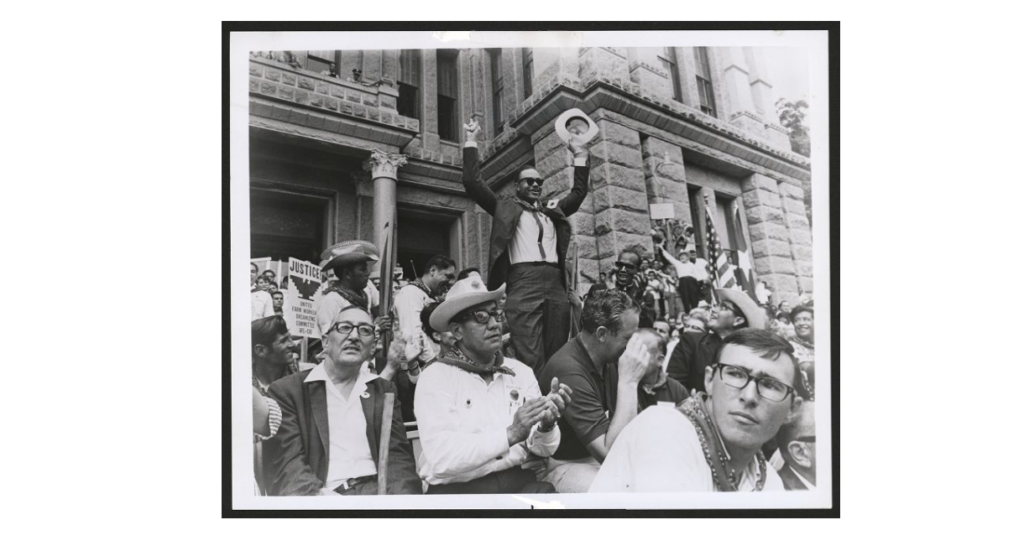
Courtesy Voces Oral History Center

Sánchez (far left) at a demonstration at the Texas Capitol.

In 1940, Sánchez left New Mexico to become a professor of Latin American studies at UT-Austin. His fight for equal educational opportunities for Mexican American children flourished.

“He fought against segregated schools, which were many… many across the state up until the 60s,” Romo said. “And those are the things that he saw as unfair, illogical, not good for how we prepare our Latino students to be leaders.”

Sánchez worked with Mexican American organizations to challenge discrimination through the courts. Some of the early cases of school desegregation were fought in California and in Texas. Still, Texas continued to argue that the Spanish-speaking children needed separate schools.

In 1941, Sánchez served as national president of LULAC. A decade later, he founded the American Council of Spanish Speaking People, a civil rights organization which funded litigation involving discrimination against Mexican Americans.

“His whole plan was to create an organization that would fight for the justice,” Romo said.

Sánchez also served as an expert witness in many legal cases involving Latinos.

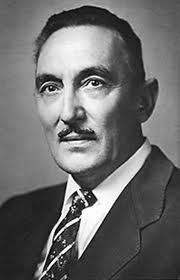
George I. Sánchez, Courtesy Voces Oral History Center

“He had been a lifelong absolute champion for Mexican Americans and someone you could count on to be in the battle for equal treatment,” Romo said.

Sánchez died in 1972. But he had a lasting influence on his students and the educational landscape. In 1995, UT-Austin named its education building in his honor.

This story was produced n collaboration with the Voces Oral History Center at UT Austin’s Moody College of Communication as part of Texas Standard’s recognition of Hispanic Heritage Month.

Sunday, November 05, 2017

Turning a million pageviews to my blog with the Memory of George I. Sanchez, the Father of Bilingual Education

What better way to turn a million page views (sometime soon) to this blog than with a post on Dr. George I. Sanchez (1906–1972), widely recognized as the "Father of Bilingual Education" in the U.S.  The building where I work at UT is named after him because the Mexican American community in Austin, Texas, fought for this in order to memorialize this historic giant.  In her review of Dr. Carlos Blanton's path breaking book titled, George I. Sánchez: The Long Fight for Mexican American Integration described by historian Dr. Julie Leininger Pycior as "the most important Mexican American intellectual of the civil rights generation."

Often at great risk to his personal safety and family's well-being, his numerous and substantive contributions to scholarship and advocacy included such policy and practice arenas as what was earlier termed "mental testing," bilingual education, and segregation. Because his contributions and sacrifices remain sadly obscure today in both Texas and New Mexican history, we need to consider ways that we can honor him and the importance of all the things that he fought for and that many of us continue.

Another way to remember and honor him would be to partner this school in Albuquerque, New Mexico (pictured here) named after him with the one named after him in Austin, Texas.  After all, both are dual language schools that honor and celebrate his memory and carry the torch for bilingual  and dual language education.


George I. Sanchez Elementary School in Albuquerque, NM.
Photo taken by Dr. Diane Torres-Velasquez


Here is an image of George I. Sanchez in Austin, Texas—otherwise called the "George I. Sanchez Aztecs."  Like George I. Sanchez on Facebook and check out this wonderful PowerPoint presentation (below) that gives you a helpful overview of his life. And consider purchasing and reading Dr. Carlos Blanton's book, too.
George I. Sanchez Elementary - Austin, Texas
Link to PowerPoint Presentation HERE  http://tinyurl.com/y73t7w4l 
.


The AISD Board wants to "consolidate" George I. Sanchez which means to end it. Symbolically, this stance is anti-bilingual education since it would mean closing a school whose very name is derived from the "father of bilingual education" himself.  We cannot let that happen. Plus, partnering, becoming sister schools, to honor George I. Sanchez here and there would be fun and interesting! 

Angela Valenzuela
Nov. 5, 2017

Sunday, January 15, 2017

Announcing Sanchez El Tour Dates for 2017-18 Enrollment

Just as Spanish-English bilingualism is an important skill for all of us to have and indeed cultivate in light of our context, dual language is an important focus in the Austin Independent School District.  

Fortunately, our Spanish-speaking community in Austin is a natural resource so that children (and adults) can become biliterate in both Spanish and English.  Here's one such opportunity for your children at Sanchez Elementary school named after educational pioneer, UT Professor and fierce advocate for children's rights, George I. Sanchez.  

No one better to carry the torch than Principal Azucena "Suzy" García, one of our most beloved principals in the school district—in great part, I might add, to the fidelity of her bilingual education program that prepares our children well for the future.  

I should know.  I see these children at Academia Cuauhtli, our Saturday academy, located at the Emma S. Barrientos Mexican American Culture Center a few minutes walk through the underpass across I-35.  Sanchez children are strong in their personas as bilingual, bicultural individuals and budding thought leaders.  And if not immediately, they soon become that way.

Principal García has been at Sanchez El for more than 20 years and in the district longer.  She is experienced, resourceful, and truly dedicated to program integrity.

We always talk about the importance of great leadership and great program designs with leaders that not only have a deep understanding of bilingual or dual language education, but also a demonstrated commitment, love of community, and thusly, our children.  Two tour options are still available.

Angela Valenzuela
@AISDProud

Saturday, December 03, 2016

Principal's Meeting with Nuestro Grupo, School Board Member Paul Saldaña, and ELL Director David Kauffman

So fortunate to have had a great meeting today with our city and district partners, including our participating principals, Nicole Anderson (Zavala El), Azucena Garcia (Sanchez El), and Ellen Diaz-Camarillo (Houston El), together with ELL Bilingual Education director David Kauffman, School Board Member Paul Saldaña, and the rest of us in Nuestro Grupo that work collectively in partnership on Academia Cuauhtli, our Saturday academy at the Emma S. Barrientos Mexican American Culture Center in Austin, Texas. We offer a co-constructed, researched-based curriculum in Tejano history, local history, cultural arts, immigration, and indigenous heritage. 

We'll expand soon to la mujer Tejana/Chicana/Latina, a couple of units on Islamophobia/Critical Islamic Studies, and LGBTQ studies instruction for the 4th graders that receive our curriculum. Our goal is for 100% of our curriculum to be available district-wide (only around 45% of it is currently available) in both English and Spanish. Another goal is to grow our own teachers so that they can grow up to be the critically-conscious, culturally relevant, community-anchored, social justice teachers that we so desperately need.

Many thanks to both the National Latino Education Research and Policy Project (NLERAP) and the Tejano Monument Curriculum Initiative for giving us an actionable framework and curriculum, respectively, as well as to our participating teachers, and so many other individuals and community and district leaders, faculty, undergraduate and graduated students, Rosa Tupina y los danzantes that have gifted us with ceremony, a way of knowing and being in the world that sets a very high bar.  


We don't just want for our children to just do good on tests ("score high")—at some arbitrary level of "proficiency" based on a cutoff score that is itself not a scientific, but rather political, decision.  Our deepest hope is that our young people get the opportunity to experience the abundant life of the community if for no other reason than the hope that it inspires—particularly important in an age of cynicism.

Thanks to all for nurturing a powerful and abundant sense of hope and possibility for a brighter tomorrow. This is a labor of love ❤️ that we hope becomes a model for the nation.

Sí se puede!  Yes we can! 

Angela Valenzuela
c/s

P.S. Like us on Facebook: https://www.facebook.com/AcademiaCuauhtli/ 

#AcademiaCuauhtli

Tuesday, May 17, 2016

The 66 Percent: Erasing Mexican Americans in the United States

-->
Digestion or In Digestion? Which shall it be?
 
This excellent piece by renowned author Dagoberto Gilb reminds me of something that the late Dr. George I. Sanchez wrote about in a piece of his on bilingual education that I read (1940s publication, as I recall) which expressed that Mexican Americans are not "digestible" by the dominant, Anglo society—or that Anglos suffer from "cultural indigestion" with respect to the Mexican American.  As this piece conveys, this is certainly how it is frequently felt and experienced by our communities.  In my own work, I refer to this as subtractive cultural assimilation (popularly known as just "assimilation") or in schooling contexts, as "subtractive schooling."


A good study would be to see how these politics of erasure differ, if at all, among the progeny of mixed marriages.  After all, there is a lot of mixing, too, and likely not without consequence—in a positive direction, I would hope—or at least, mostly so with respect to attitudes and intercultural relations.  
Minimally, ease and comfort in digestion. :-)


-Angela

The 66 Percent: Erasing Mexican Americans in the United States

by Dagoberto Gilb

TEXAS OBSERVER


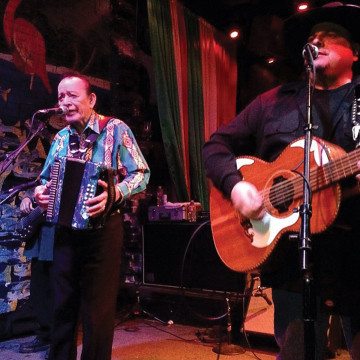
Flaco Jimenez and Max Baca on stage at Flamingo Cantina, Austin, in December 2013.
Flickr/Robotclaw Photo
Flaco Jimenez and Max Baca on stage at Flamingo Cantina, Austin, in December 2013.
If you’re from Texas, or the American Southwest for that matter, and a fan of its music, your ears surely perked up when the popular National Public Radio program Fresh Air focused an episode on the accordion. Many would say that the “squeeze box” is the region’s sound, and thus its most original contribution to America’s musical heritage. Yet that’s not what Fresh Air’s host had heard or knew anything about. Instead, she’d thought the instrument was about as exciting as the 1950s TV show with Lawrence Welk — which was for an already dated, slow waltz crowd in the years it was being produced. She considered accordions, therefore, corny and annoying, valuable only, maybe, for bar mitzvahs. But times changed, her ears were re-tuned, and with her show’s guest, we were to learn that the accordion was a surprisingly not dull instrument, loved in Cajun, avant garde, folk, indie pop, even something called klezmer, and that its sound’s reach was not just Eastern Europe, but Argentina, Madagascar and especially in a new French Musette “explosion.”
Out in the boonies of America’s West, where these national shows are well-heard, there lives a loud, boisterous tradition of music that dates from the turn of the last century that goes by the name “conjunto.” It is true that it belongs to a native people of the West, a peoples whose history can be traced back at least two centuries to what is American soil — born and raised within the geographical and historical boundaries of the United States — and this music, which at its big stage center is the accordion, has been its magnetic draw. Not only in the legendary sound of South Texas’s Narciso Martínez, or San Antonio’s Don Santiago Jiménez, but especially through his two sons, Santiago Jr., and Leonardo, better known as “skinny”: Flaco Jiménez’s fame, in particular, is so grand and wide that in 2015 he received a Lifetime Achievement Grammy Award for his accordion virtuosity and preeminence. And it was the Mexican American music — not South American, African, or European — that didn’t get a mention on Fresh Air’s one-hour episode.

Really there is nothing surprising or new about most of the country being unaware of the culture and community of MexAmerica. On the other hand, it is such a strange form of ignorance — let me hyphenate to adjust the connotation, make it ignore-ance — that one might want to call it utterly fascinating in that unique quality. It requires omitting consciousness that so much of the western landmass of continental United States has rivers, valleys, mountain ranges, states, cities, streets and people with Spanish-language names. Over the years (and by years I mean at least 50) historians and scholars are inclined to attribute that unawareness to an “invisibility” of the community.


But the implication of this becomes that it must be something of a quaint, natural character inside the MexAm people, and not the effect of poverty or consequence of a lack of political power. I’d suggest that it’s more a visual degeneration in the center of the dominant culture’s eyes. No faces, only hands serving enchilada plates and then busing away what’s left of the spicy yum yum. Beds are made after a fun vacation day, floors swept and waxed for the bright, bustling morning in the office, lawns mowed and edged, healthy veggies are in the grocery store: People are not seen, neighborhoods go unknown, songs unheard, deaths not mourned… no cries of birth, sighs of first love, screams of sports joy; no bandages for knees, catechisms for church, homework for teacher, pink socks or baseballs or first cars or skateboards or bad boyfriends or off to war or diplomas or retirement dinners or college or family potlucks or ’buelita turned 99. And though I believe most of the ignorance about MexAms is not conscious or willful, it is equally true that enough is, be it forced by racist politicians in Arizona, or an ongoing blow of American history that began with President James K. Polk’s want of the land by any means necessary.

Even now, too many media stories that do attach are about immigration from the border, inferring that the entire community is recent and, worse, invasive — which, ironically, would be more appropriately descriptive of the Anglo migration from the South in Texas and the Midwest in California. More ironic — bizarre? — is how much it loves, besides the food, everything about the region’s Mexican culture, art and architecture, yet is shocked that these “other” people live here. “Invisible” is not the best word, that is certain. The culture is everywhere, is highly accepted, as mainstream American as the taco has become. But just as the Spanish rejected the corn tortilla of the conquered indios, the essence of the MexAm culture is regarded as too “lesser” to be taken seriously.

Accustomed as its own nation is to treating Mexican Americans as negligible or dismissible, times are changing as demographics do. It is said that this century will be about the power of the Latino. Latino? Take away the 66 percent of this population, the MexAm proportion, that one so hidden away in its western homeland, and what national power then? With the other third divided into several single percentage groups, MexAms ought to receive a landslide of attention. Yet, already and again, the raw facts haven’t created any gain, let alone advantage. Money and political pull are on the East Coast, and the national media’s stories are about those who are there; Puerto Ricans, Cubans and Dominicans are more the voice of The Latino, following the last century’s big city paradigm of Italian, Irish and Jewish immigrants. MexAms don’t fly from New York to Mexico City, Los Angeles to Chihuahua. Instead, they are home in a poor city like El Paso or Ysleta or Eagle Pass, McAllen, San Antonio, Santa Ana, Riverside, Fresno, Chula Vista, Tucson, Nogales, Albuquerque, Denver, or Boyle Heights, El Monte, La Puente, Lynwood, South Gate. Though everybody’s house has family allá, most have never been farther across — across, meaning the “other side,” Mexico — than Matamoros, Juárez or Tijuana to look for cheaper prescription drugs or dentistry.

And so it goes with literature. The “national” scene knows the very least about Mexican American literature, historically or currently. Though it may not always be as clear as an Arizona school board banning material for ambitious, college-bound young Mexican American students who notice their culture’s absence in their curriculum, the offense, sadly, is the same, only larger in scale, when written voices and stories are passively ignored by all school districts, even when their student body is predominantly of Mexican American descent. Or even more: Why aren’t we going past wanting to educate MexAm children, in their own neighborhoods, to have ordinary pride in who they are and where they’ve come from, and asking how long all of our country can ignore a huge American region and heritage? How can it not want to understand or appreciate its people beyond enchilada or child-care talents, but as craftsmen, business owners, artisans and artists, thinkers, as purposeful voters, as the country’s future leaders? Too much to say as friends? As those who work alongside so many and have children who are in the same classes as their own? Is it possible to ignore and dismiss, to undervalue, an entire people without consequence? How should we educate all our own to each other?

[This essay is adapted from the recently published Mexican American Literature: A Portable Anthology. The featured image is via Flaco Jimenez/Facebook.
]